Sports
Busy rugby career keeps former Navy commander busy
Former Renegades coach is high-ranking International Gay Rugby official
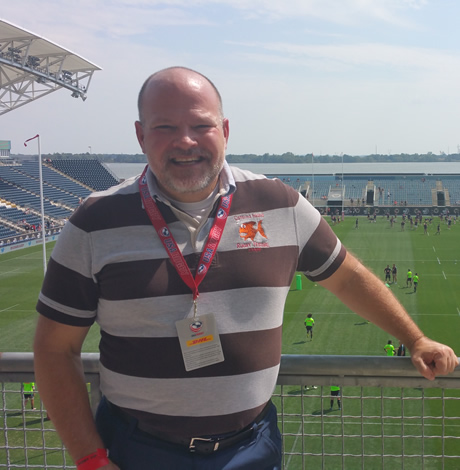
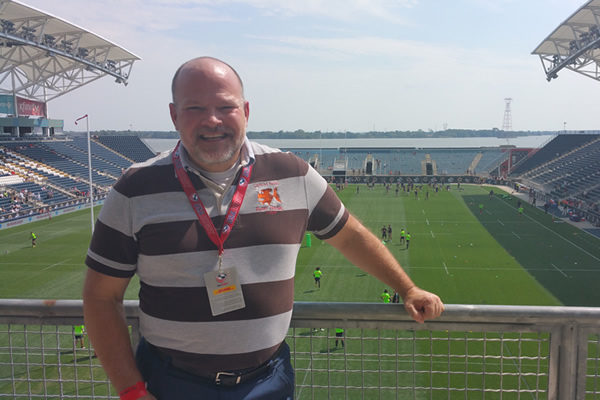
When rugby players reach the end of their playing career, they either leave the sport, become coaches or referees.
Gus Ventura was about eight years into his life as a rugby player when he tore his ACL for a second time. Knee injuries can be repaired, but the end of his playing career came with a direct order from his superior officer, an Admiral in the Navy.
“He said I always looked like I had been in a bar fight and it wasn’t a good look for a senior officer,” Ventura says. “As a Naval Commander in charge of people, the role of coaching was a good fit for me to stay in the sport of rugby.”
Ventura grew up in Tulsa and played baseball as a youth along with soccer on his high school team. As part of the Navy ROTC program at University of South Carolina, sports were replaced by the program’s fitness regimen.
He began a 20-year stint in the Navy as a surface warfare officer that bounced him to locations all over the world. His first exposure to rugby happened when he was serving in Australia.
He was reassigned to Washington in 1992 and while he was playing soccer on the National Mall, he was approached by players from the Potomac Athletic Club rugby team. He was hooked after the first practice and stayed with the club for eight years.
“I loved my teammates and playing with the club, but there was a lot of homophobic banter,” Ventura says. “I don’t think they realized how hurtful it was and I stayed in the closet for fear of rejection.”
In the late 1990s, Ventura responded to a Washington Blade ad about a new rugby team that was forming for gay players. The ad was placed by Mark Hertzog and the Washington Renegades would become the first men’s rugby club in the United States to actively recruit gay men and men of color.
“A lot of people don’t know that Mark’s original intent was to start a rugby fetish club. The people who showed up actually wanted to play so we began organizing practices,” Ventura says. “A couple of my Potomac Athletic Club teammates, who I did not know were gay, also showed up.”
After the ACL tear, Ventura became the first coach of the Renegades for three years before moving on to coach Catholic University for the next three years.
He was transferred by the Navy to California where he continued coaching with the San Diego Armada and helped start the Los Angeles Rebellion, both LGBT-based rugby teams.
After retiring from the Navy in 2008, Ventura returned to D.C. because he was accepted into the Ph.D program at George Washington University School of Engineering with a focus on emergency management.
Ventura’s work in the international rugby community started a few years before that when he began coaching the IGR World Barbarians in the 2006 Bingham Cup which is hosted biennially by International Gay Rugby (IGR).
IGR, which is based in London, is the umbrella organization for gay and inclusive rugby clubs around the world. The Bingham Cup held in Amsterdam in 2018 drew 2,200 players including local gay players.
“The IGR World Barbarians is made up of players who don’t have a team in their country. They come together to play every two years in the Bingham Cup,” Ventura says.
The IGR has grown faster than expected over the last four years leading its organizers to establish regional representation contact points, electing Ventura as the North America East representative and then the first trustee for North America.
“The sport of rugby builds a resilience in people and in teams which leads to a sense of connection,” Ventura says. “If you are lucky enough to be a part of something people care about, that means they also care about you. We are advocating for a sense of belonging for LGBT athletes.”
Extending that thought process to USA Rugby and the United States Olympic Committee, Ventura presented before them a plan to develop programs in youth and high school rugby for LGBT players. It led to the first rugby national governing body to sign on with International Gay Rugby.
Coming up for Ventura will be coaching three IGR World Barbarians teams at the International Inclusive Cup on October 5 in Tokyo. The event takes place during the Rugby World Cup 2019 and it marks the first openly gay rugby ever to be held in Japan.
Still based in D.C., Ventura finds time to work on his research patent and is enjoying married life with his husband, Jordan. The pair have been together since 2009 and though Ventura had already proposed, they sped up their wedding over marriage equality concerns after the election of our current president.
For Ventura, the belonging, the sense of purpose, the rugby brotherhood — they point to a place where people can be supported as individuals regardless of their body type, gender or identity.
“In rugby, it doesn’t matter what you weigh or how tall you are, there is a role for everyone, and everyone can be a contributing member,” Ventura says. “Gay athleticism is coming of age and it is having a wonderful impact on our community.”


Iran and Egypt on Friday faced off during the World Cup’s “Pride Match” in Seattle.
Iran is among the handful of countries in which consensual same-sex sexual relations remain punishable by death. Discrimination and persecution based on sexual orientation and gender identity is commonplace in Egypt.
Friday’s match coincided with Pride weekend in Seattle. The Egyptian Football Association and the Football Federation Islamic Republic of Iran both objected to playing in the “Pride Match.”
Egypt and Iran tied 1-1.
FIFA, for its part, allowed Pride flags inside the stadium during the match.
“The FIFA World Cup 2026 is an inclusive event that welcomes people from all backgrounds,” a FIFA spokesperson told the Washington Blade in a statement. “Fans of all sexual orientations and gender identities are welcome at matches and events. General statements of human rights, including rainbow flags and other flags representing sexual orientation and gender identity, are permitted under the FIFA World Cup 2026™ Stadium Code of Conduct and may be displayed inside stadiums provided they are used in a manner consistent with the code.”
Human Rights Watch welcomed FIFA’s decision to allow Pride flags inside the stadium. Outright International, a global LGBTQ and intersex rights group, distributed Pride flags in Seattle on Friday, which was Pride Match Day.
“Visibility matters,” said Outright International Executive Director Maria Sjödin. “Pride is now being celebrated in more than 100 countries, including this weekend in Seattle. For many LGBTIQ people, seeing a Pride flag in public is a reminder that they are not alone, and that their rights and dignity are recognized.”
FIFA President Gianni Infantino earlier this year told Die Weltwoche, a Swiss magazine, that “there will be no ‘Pride Match’ at the (FIFA) World Cup.”
“There will be a FIFA World Cup match in Seattle, and on the same day, events organized by external organizations will be taking place in the city,” said Infantino. “But that has nothing to do with the match itself.”
Peter Tatchell, a long-time LGBTQ activist from the U.K. who is director of the Peter Tatchell Foundation, was among those who traveled to Seattle for Friday’s match. Tatchell accused FIFA of not vetting World Cup teams — specifically Iran, Egypt, Saudi Arabia, Ghana, Senegal, Qatar, Tunisia, Morocco, Iraq, Uzbekistan, and Algeria — over whether they would allow gay players.
“FIFA is protecting LGBT+ visibility in the stands while failing to protect LGBT+ players on the pitch,” said Tatchell.
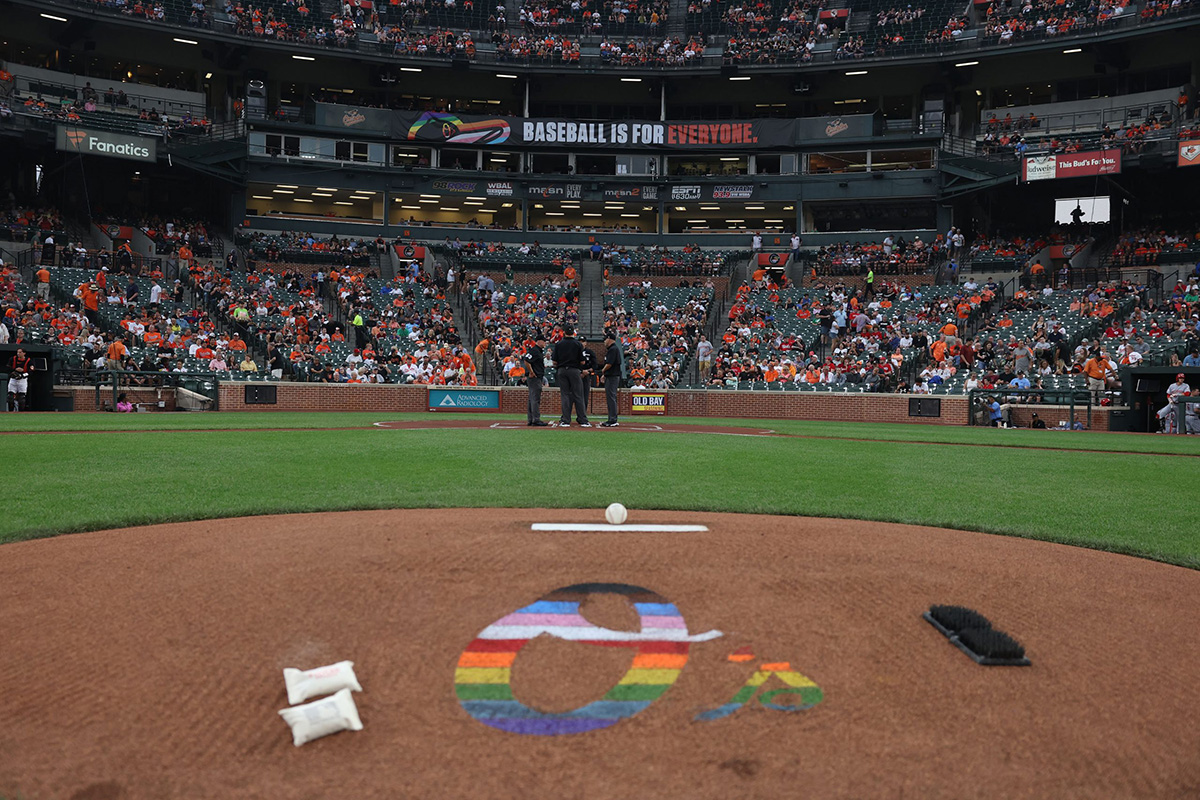
The Baltimore Orioles will take on the Washington Nationals on Friday, June 26 at 7 p.m. for Pride Night at Oriole Park.
The first 15,000 fans will receive an exclusive Pride Night Orioles jersey. The Washington Blade is a media sponsor of this event.
To purchase tickets, visit Orioles.com/Tickets.
Sports
Minor league team in York, Pa., forfeits Pride Night game after some players refuse to wear special jersey
City is roughly 20 miles north of Md. border
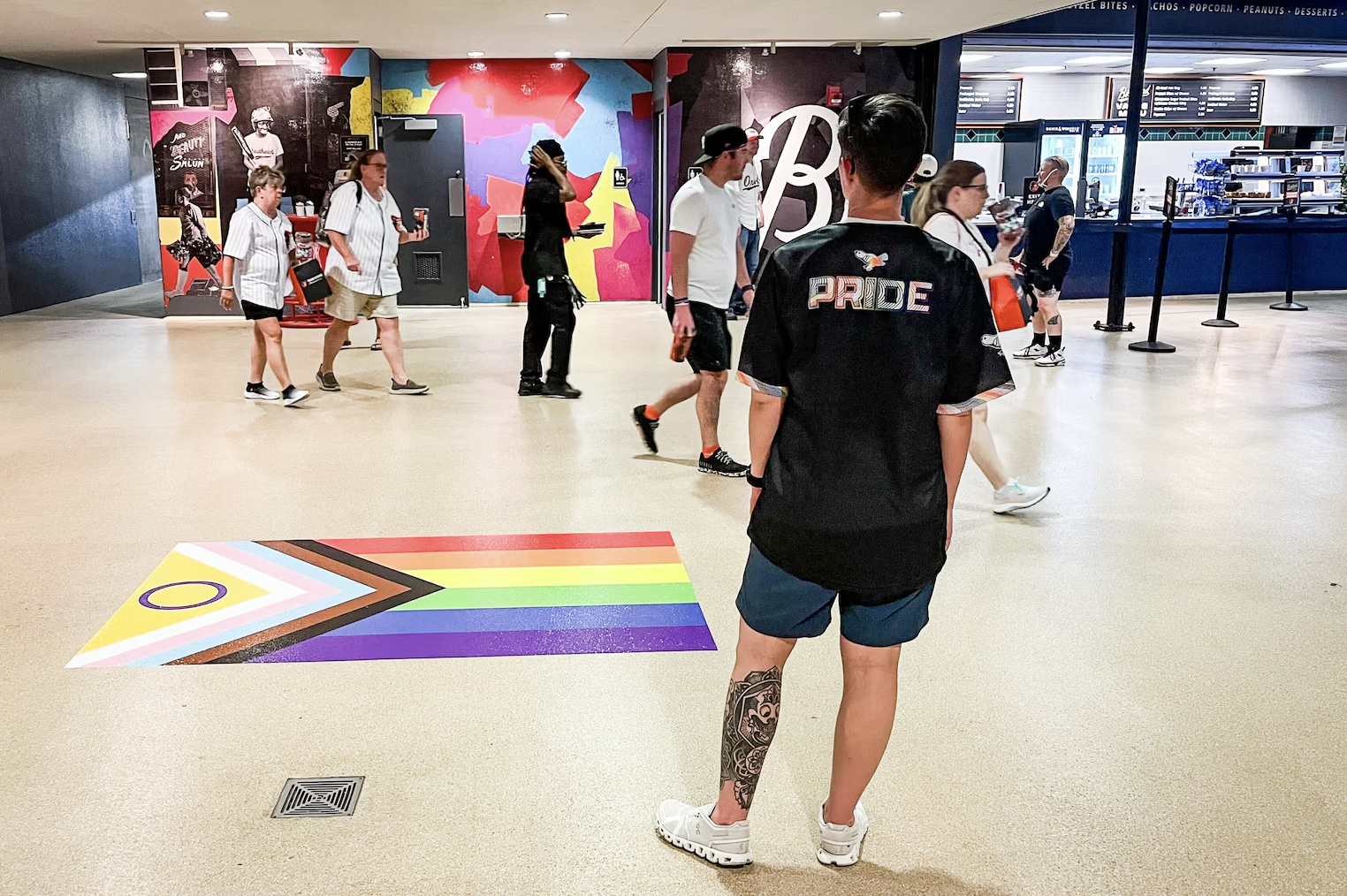
An independent minor league baseball team says it is forfeiting a game because some of its players refused to wear a special Pride Night jersey.
The Atlantic League Pro Baseball’s York Revolution were planning to hold their 11th annual Pride Night event Thursday for a game against the Southern Maryland Blue Crabs.
But the Revolution announced the day of the game that it wouldn’t be played. York is about 20 miles north of the Maryland line. The Blue Crabs play in Waldorf.
The rest of this article can be found on the Baltimore Banner’s website.

Gay librarian to discuss new novel at Green Lantern

Calendar: July 10-16

Gay Fla. Democrat Elijah Manley sees opportunity in Trump’s second term

Ron Singer, owner of popular Mount Vernon gay bar Leon’s, dies

Egyptian authorities refuse to allow gay cruise to dock in country

‘My Favorite Sociopath’ debuts at Shepherdstown’s CATF

Under-the-radar Delaware beach towns smart buyers are targeting

In Trump’s divided America, Michael Weinstein’s AHF responds

Turkish authorities refuse to allow gay cruise to dock in country

When a church fears the rainbow
-

 Theater5 days ago
‘My Favorite Sociopath’ debuts at Shepherdstown’s CATF
-
Real Estate5 days ago
Under-the-radar Delaware beach towns smart buyers are targeting
-
Politics4 days ago
In Trump’s divided America, Michael Weinstein’s AHF responds
-
Turkey4 days ago
Turkish authorities refuse to allow gay cruise to dock in country