Sports
New Blade sports series launch — Game Changers: John Jack Gallagher
Local photographer found circuitous route to sports glory
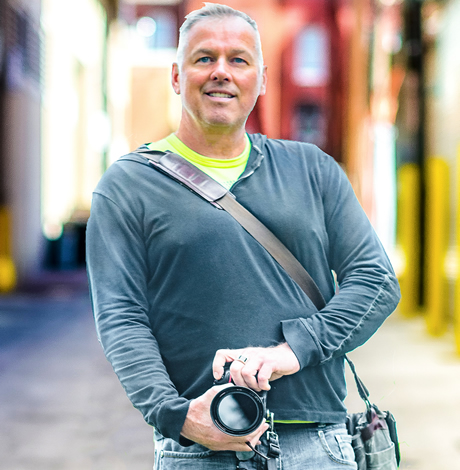
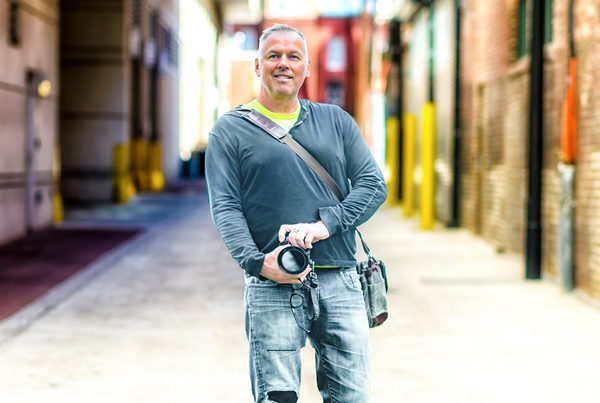
In the first installment of the Washington Blade’s Game Changers series, we meet a photographer who has been capturing LGBT athletes in action for close to a decade.
One thing that comes up in conversation with John Jack Gallagher is the preferred use of his first name.
Is it John or Jack?
He says that some people get frustrated and are afraid to ask.
“I get a lot of “Hey … there.” To set the record straight, I was Jack until kindergarten and was too shy to tell the teacher, so I started being called John. Over the years I answered to either name depending on whether it was in a work setting or with friends,” Gallagher says. “When Facebook came along, I started a page called John Jack Photography because I thought it would alleviate the confusion. People started calling me John Jack and it stuck. I am now John Jack.”
Gallagher was born in Pennsylvania and moved to Cherry Hill, N.J., at age 12. He participated in Little League and basketball as a youth and ran cross country and track in high school.
He was 6’4” tall by the eighth grade which drew interest from the high school basketball coaches. He tried out for the team but didn’t make the cut.
“I can’t jump and I am not competitive. I also didn’t care if I played basketball or not,” Gallagher says. “I had grown 13 inches in three years and the agility just wasn’t there. I still don’t understand how people can jump.”
For the social aspects Gallagher did play intramural basketball while attending college at St Joseph’s University. His 22-year career as an accountant with PricewaterhouseCoopers took him to Chicago and London before he transferred with his then-partner to D.C. in 2003.
Due to changes at his employer’s firm, Gallagher ended his accounting career early. Newly single and looking for something different, he joined the Washington Wetskins water polo team and began taking photography classes at the Smithsonian.
Gallagher had friends who were playing on one of the Stonewall Kickball teams during their inaugural season in 2010. He started showing up on Sundays to take pictures of his friends and began posting them on Facebook. One player asked him to photograph a wedding and his career as a photographer was launched.
Word of mouth and crossover among the LGBT sports teams led to him photographing for Stonewall Kickball, Stonewall Dodgeball, Stonewall Bocce, Federal Triangles Soccer Club, D.C. Gay Flag Football League, Rogue Darts and Rogue Cornhole.
He also traveled with Stonewall Sports this past summer to Raleigh where he photographed the seven sports being played in their annual Stonewall National Tournament.
Being on the sidelines watching the LGBT sports teams evolve has given Gallagher the opportunity to observe the rewards that players are experiencing from being a part of a larger community.
“This isn’t just a group of similar types of LGBT people, it is a diverse group who are forming bonds, experiencing camaraderie and finding second families through sports,” Gallagher says. “After living through decades of people being afraid to be seen with other LGBT people, it has been beautiful to see them all together in a safe space where they can be who they are and dress as they want. Short shorts, Speedos and wigs are now everyday sporting attire.”
As Gallagher’s work spreads over social media, the photos are being shared with his subject’s families and friends worldwide. His work has become a marker for his existence in the community.
“Once I became a photographer, I became more aware of the fact that this line of work would be more impactful than my previous career. I was moving from one accounting project to another and two years later my work didn’t matter anymore,” Gallagher says. “With photography, my work will live on after I am no longer here. This is my legacy and my way of giving back. I’m enjoying every minute of it.”




Sports
New IOC policy bans trans women from Olympics
New regulation to be in effect at 2028 summer games in Los Angeles
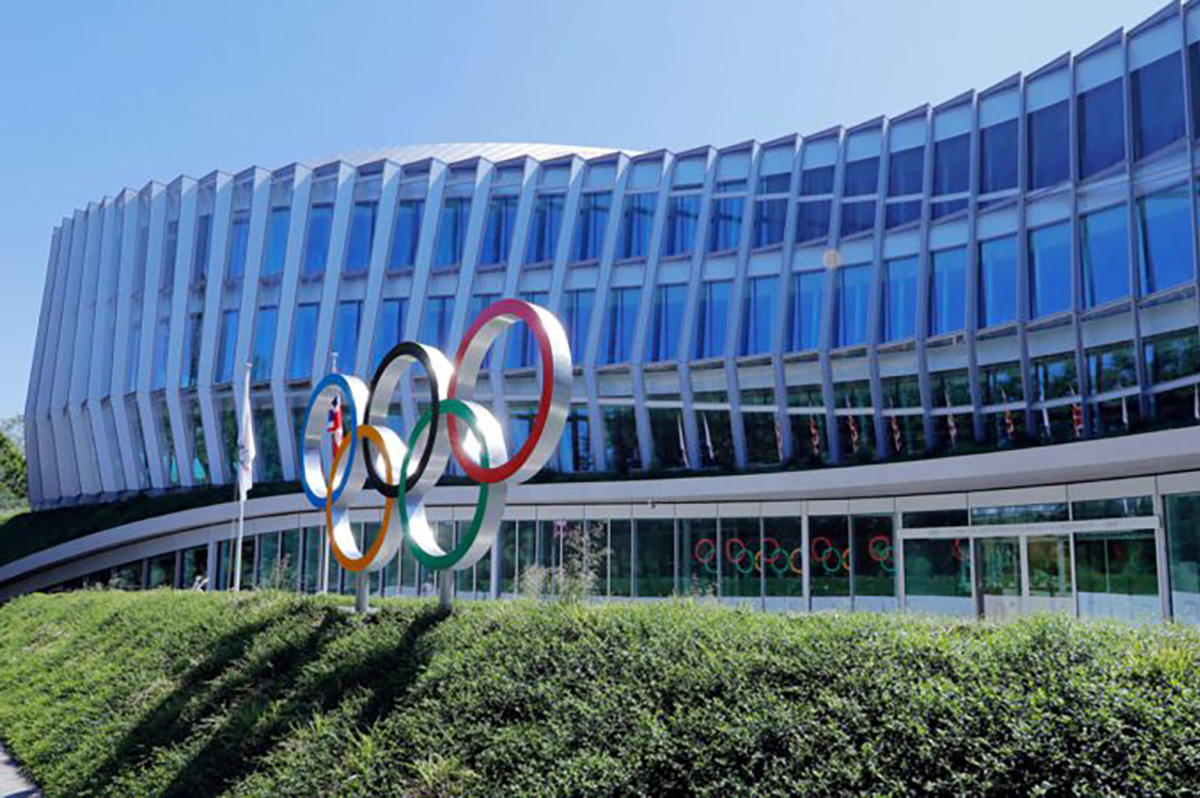
The International Olympic Committee on Thursday announced it will not allow transgender women from competing in female events at the Olympics.
“For all disciplines on the Sports Program of an IOC event, including individual and team sports, eligibility for any Female Category is limited to biological females,” reads the new policy.
The policy states “eligibility for the Female Category is to be determined in the first instance by SRY Gene screening to detect the absence or presence of the SRY Gene.”
“On the basis of the scientific evidence, the IOC considers that the SRY (sex-determining Region Y) Gene is fixed throughout life and represents highly accurate evidence that an athlete has experienced or will experience male sex development,” it reads. “Furthermore, the IOC considers that SRY Gene screening via saliva, cheek swab or blood sample is unintrusive compared to other possible methods. Athletes who screen negative for the SRY gene permanently satisfy this policy’s eligibility criteria for competition in the Female Category.”
The policy states the test “will be a once-in-a-lifetime test” unless “there is reason to believe a negative reading is in error.”
The new regulation will be in place for the 2028 Summer Olympics in Los Angeles.
“I understand that this a very sensitive topic,” said IOC President Kirsty Coventry on Thursday in a video. “As a former athlete, I passionately believe in the rights of all Olympians to take part in fair competition.”
“The policy that we have announced is based on science and it has been led by medical experts with the best interests of athletes at its heart. The scientific evidence is very clear: male chromosomes give performance advances in sport that rely on strength, power, or endurance,” she added. “At the Olympic Games, even the smallest margins can be the difference between victory and defeat. So, it is absolutely clear that it would not be fair for biological males to compete in the female category. In addition, in some sports it would simply not be safe.”
(Video courtesy of the IOC)
Laurel Hubbard, a weightlifter from New Zealand, in 2021 became the first trans woman to compete at the Olympics.
Imane Khelif, an Algerian boxer, won a gold medal at the 2024 Summer Olympics in Paris. Khelif later sued JK Rowling and Elon Musk for cyberstalking after they questioned her gender identity.
Ellis Lundholm, a mogul skier from Sweden, this year became the first openly trans athlete to compete in any Winter Olympics when he participated in Milan Cortina Winter Olympics in Italy.
President Donald Trump in February 2025 issued an executive order that bans trans women and girls from female sports teams in the U.S.
The U.S. Olympic and Paralympic Committee last July banned trans women from competing in female sporting events. Republican lawmakers have demanded the IOC ban trans athletes from women’s athletic competitions.
“I’m grateful the Olympics finally embraced the common sense policy that women’s sports are for women, not for men,” said U.S. Sen. Tom Cotton (R-Ark.) on X.
An IOC spokesperson on Thursday referred the Washington Blade to the press release that announced the new policy.
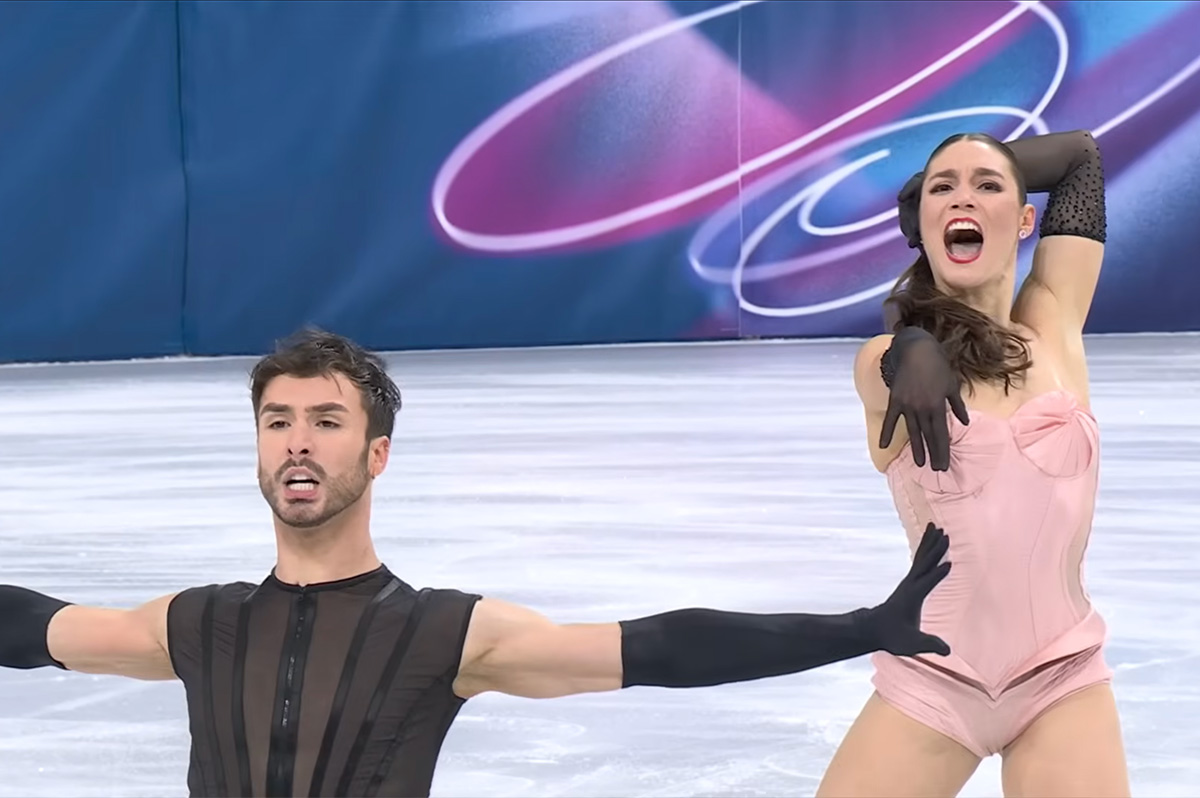
More than a dozen LGBTQ athletes won medals at the Milan Cortina Winter Olympics that ended on Sunday.
Cayla Barnes, Hilary Knight, and Alex Carpenter are LGBTQ members of the U.S. women’s hockey team that won a gold medal after they defeated Canada in overtime. Knight the day before the Feb. 19 match proposed to her girlfriend, Brittany Bowe, an Olympic speed skater.
French ice dancer Guillaume Cizeron, who is gay, and his partner Laurence Fournier Beaudry won gold. American alpine skier Breezy Johnson, who is bisexual, won gold in the women’s downhill. Amber Glenn, who identifies as bisexual and pansexual, was part of the American figure skating team that won gold in the team event.
Swiss freestyle skier Mathilde Gremaud, who is in a relationship with Vali Höll, an Austrian mountain biker, won gold in women’s freeski slopestyle.
Bruce Mouat, who is the captain of the British curling team that won a silver medal, is gay. Six members of the Canadian women’s hockey team — Emily Clark, Erin Ambrose, Emerance Maschmeyer, Brianne Jenner, Laura Stacey, and Marie-Philip Poulin — that won silver are LGBTQ.
Swedish freestyle skier Sandra Naeslund, who is a lesbian, won a bronze medal in ski cross.
Belgian speed skater Tineke den Dulk, who is bisexual, was part of her country’s mixed 2000-meter relay that won bronze. Canadian ice dancer Paul Poirier, who is gay, and his partner, Piper Gilles, won bronze.
Laura Zimmermann, who is queer, is a member of the Swiss women’s hockey team that won bronze when they defeated Sweden.
Outsports.com notes all of the LGBTQ Olympians who competed at the games and who medaled.
Sports
US wins Olympic gold medal in women’s hockey
Team captain Hilary Knight proposed to girlfriend on Wednesday
The U.S. women’s hockey team on Thursday won a gold medal at the Milan Cortina Winter Olympics.
Team USA defeated Canada 2-1 in overtime. The game took place a day after Team USA captain Hilary Knight proposed to her girlfriend, Brittany Bowe, an Olympic speed skater.
Cayla Barnes and Alex Carpenter — Knight’s teammates — are also LGBTQ. They are among the more than 40 openly LGBTQ athletes who are competing in the games.
The Olympics will end on Sunday.

‘Jonah’ an undeniably compelling but unusual memory play

The Oscar-losing performance that’s too good to miss

Trump tells Fox News he won the ‘gay vote’ — but polls tell a different story

Anti-trans visa ruling echoes Nazi regime destroying trans documents

Japanese Supreme Court to consider marriage equality

D.C. goes gaga for Gaga

Menaka Guruswamy celebrated as India’s first openly LGBTQ MP

HRC to host National Rainbow Seder

Gay priest credited with boosting church support for LGBTQ Catholics