Sports
GAME CHANGERS: Local volleyball player bridging deaf/hearing league gap
Des Moines native moves from basketball to volleyball
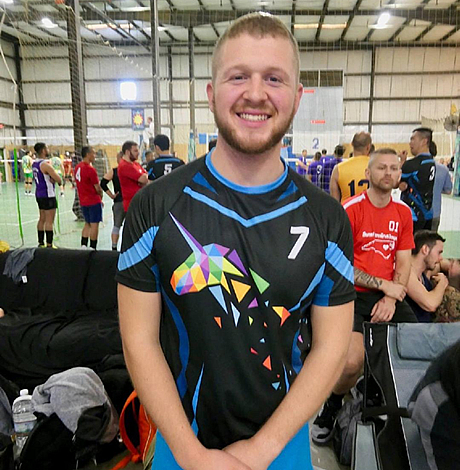
The LGBT sports community in Washington has a rich history of creating welcoming and inclusive spaces where all types of athletes can embrace the rewards that come from participating in sports.
This week in the Blade’s Game Changers series, we meet a gay athlete from theD.C. Pride Volleyball Leaguewho is helping bridge the gap between the deaf and hearing communities.
Growing up in Des Moines, John Isaacson didn’t pick up sports until high school where he was a three-sport athlete in basketball, football and track.
He ran track for four years at Gallaudet University and was a 400 meter and 400 meter hurdles specialist. Isaacson also ran cross country at Gallaudet for three years.
“I have always enjoyed running and being a hurdles specialist had parallels to what I experience in life,” Isaacson says. “I overcome barriers every day as a deaf person and combining my love of running with jumping hurdles was a great fit for me.”
Gallaudet University is the only higher education institution in the world in which all programs and services are specifically designed to accommodate deaf and hard of hearing students. Its enrollment is a mix of students from all over the world.
Isaacson served as captain of the track team for his final two years and points to the experience as a great opportunity to meet people from as far away as China.
“I really liked the team environment and meeting so many people with different life experiences,” Isaacson says. “I stayed in D.C. after graduating in 2017 because I love living in a stable deaf community.”
Isaacson was playing in social pick-up games with D.C. Pride Volleyball when he learned about their league which runs in the spring and fall. He wrapped up his fifth season at the end of 2019.
“Volleyball is a complete team effort and I love the strategies that are involved,” Isaacson says. “The sport has been a new thing for my mind and body, and it is great to be developing different skills.”
D.C. Pride Volleyball plays on the tournament circuit with the North American Gay Volleyball Association and Isaacson has competed locally as well as traveling to tournaments in Atlanta, Denver, New Orleans and New York City.
“My favorite position on the court is middle blocker,” Isaacson says. “I am a good jumper and I take a lot of pride in my blocks.”
Isaacson has also played with Stonewall Kickball and is now in his first season with D.C. Gay Basketball League. Playing gay team sports has helped him expand his social network.
“I wasn’t out in college — I would say I came out more internally,” Isaacson says. “The LGBT sports community has helped me grow as a person and has allowed me to be more myself. I am always seeing other players out and about in D.C.”
The D.C. Pride Volleyball League averages between three and six deaf players per season. Isaacson says everyone, even those without ASL skills, can be creative while communicating whether it be through gestures or texting in person.
Isaacson, who works at Access Interpreting as the scheduling coordinator, provided a well-attended one day ASL for Volleyball Seminar for the league players. Along with standard conversational exchanges, it included terms related to volleyball.
“I have always wanted to build a better bridge between the deaf and hearing communities,” Isaacson says. “It’s important for us to work together as a team to communicate more effectively.”





Sports
New IOC policy bans trans women from Olympics
New regulation to be in effect at 2028 summer games in Los Angeles
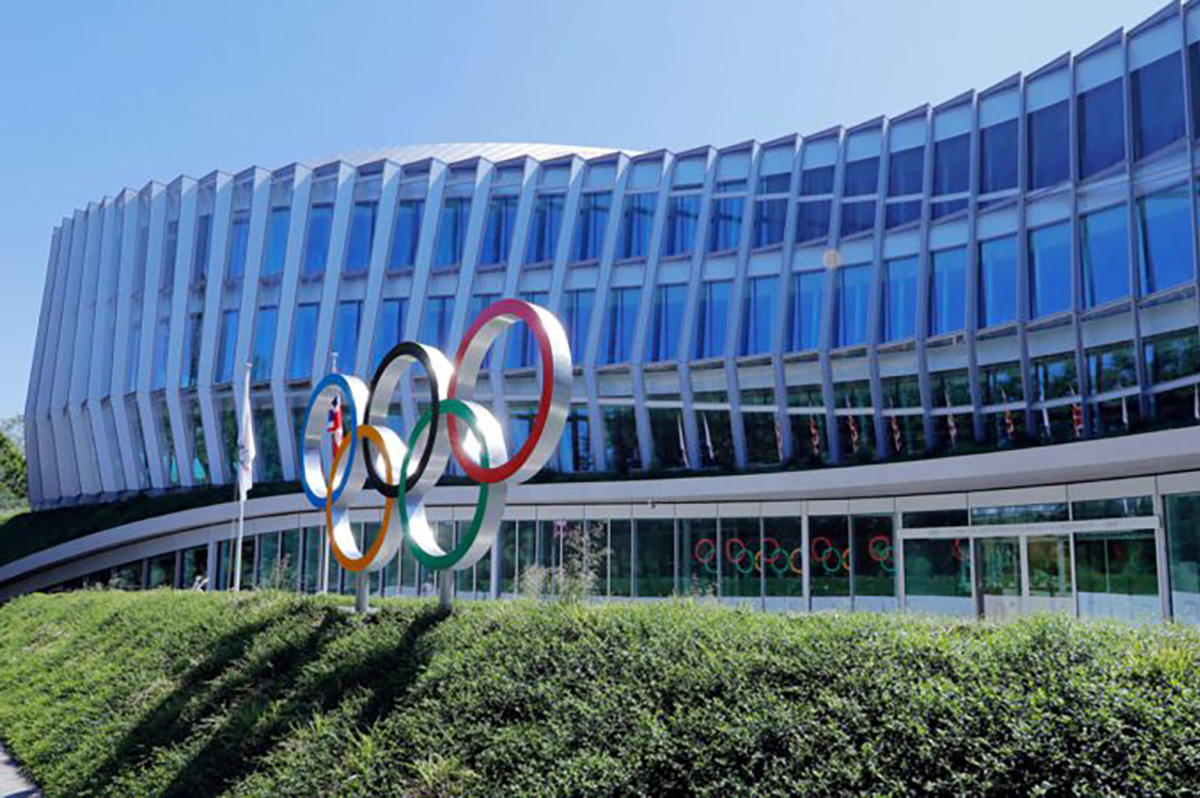
The International Olympic Committee on Thursday announced it will not allow transgender women from competing in female events at the Olympics.
“For all disciplines on the Sports Program of an IOC event, including individual and team sports, eligibility for any Female Category is limited to biological females,” reads the new policy.
The policy states “eligibility for the Female Category is to be determined in the first instance by SRY Gene screening to detect the absence or presence of the SRY Gene.”
“On the basis of the scientific evidence, the IOC considers that the SRY (sex-determining Region Y) Gene is fixed throughout life and represents highly accurate evidence that an athlete has experienced or will experience male sex development,” it reads. “Furthermore, the IOC considers that SRY Gene screening via saliva, cheek swab or blood sample is unintrusive compared to other possible methods. Athletes who screen negative for the SRY gene permanently satisfy this policy’s eligibility criteria for competition in the Female Category.”
The policy states the test “will be a once-in-a-lifetime test” unless “there is reason to believe a negative reading is in error.”
The new regulation will be in place for the 2028 Summer Olympics in Los Angeles.
“I understand that this a very sensitive topic,” said IOC President Kirsty Coventry on Thursday in a video. “As a former athlete, I passionately believe in the rights of all Olympians to take part in fair competition.”
“The policy that we have announced is based on science and it has been led by medical experts with the best interests of athletes at its heart. The scientific evidence is very clear: male chromosomes give performance advances in sport that rely on strength, power, or endurance,” she added. “At the Olympic Games, even the smallest margins can be the difference between victory and defeat. So, it is absolutely clear that it would not be fair for biological males to compete in the female category. In addition, in some sports it would simply not be safe.”
(Video courtesy of the IOC)
Laurel Hubbard, a weightlifter from New Zealand, in 2021 became the first trans woman to compete at the Olympics.
Imane Khelif, an Algerian boxer, won a gold medal at the 2024 Summer Olympics in Paris. Khelif later sued JK Rowling and Elon Musk for cyberstalking after they questioned her gender identity.
Ellis Lundholm, a mogul skier from Sweden, this year became the first openly trans athlete to compete in any Winter Olympics when he participated in Milan Cortina Winter Olympics in Italy.
President Donald Trump in February 2025 issued an executive order that bans trans women and girls from female sports teams in the U.S.
The U.S. Olympic and Paralympic Committee last July banned trans women from competing in female sporting events. Republican lawmakers have demanded the IOC ban trans athletes from women’s athletic competitions.
“I’m grateful the Olympics finally embraced the common sense policy that women’s sports are for women, not for men,” said U.S. Sen. Tom Cotton (R-Ark.) on X.
An IOC spokesperson on Thursday referred the Washington Blade to the press release that announced the new policy.
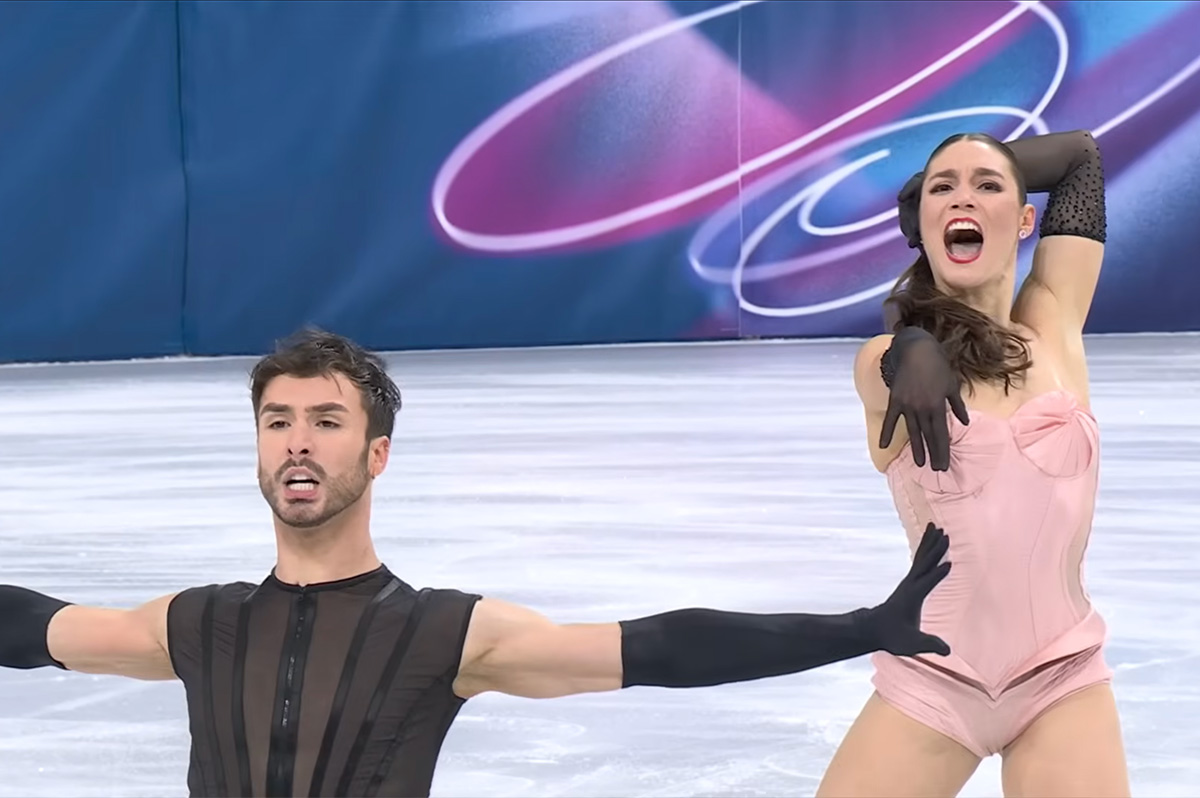
More than a dozen LGBTQ athletes won medals at the Milan Cortina Winter Olympics that ended on Sunday.
Cayla Barnes, Hilary Knight, and Alex Carpenter are LGBTQ members of the U.S. women’s hockey team that won a gold medal after they defeated Canada in overtime. Knight the day before the Feb. 19 match proposed to her girlfriend, Brittany Bowe, an Olympic speed skater.
French ice dancer Guillaume Cizeron, who is gay, and his partner Laurence Fournier Beaudry won gold. American alpine skier Breezy Johnson, who is bisexual, won gold in the women’s downhill. Amber Glenn, who identifies as bisexual and pansexual, was part of the American figure skating team that won gold in the team event.
Swiss freestyle skier Mathilde Gremaud, who is in a relationship with Vali Höll, an Austrian mountain biker, won gold in women’s freeski slopestyle.
Bruce Mouat, who is the captain of the British curling team that won a silver medal, is gay. Six members of the Canadian women’s hockey team — Emily Clark, Erin Ambrose, Emerance Maschmeyer, Brianne Jenner, Laura Stacey, and Marie-Philip Poulin — that won silver are LGBTQ.
Swedish freestyle skier Sandra Naeslund, who is a lesbian, won a bronze medal in ski cross.
Belgian speed skater Tineke den Dulk, who is bisexual, was part of her country’s mixed 2000-meter relay that won bronze. Canadian ice dancer Paul Poirier, who is gay, and his partner, Piper Gilles, won bronze.
Laura Zimmermann, who is queer, is a member of the Swiss women’s hockey team that won bronze when they defeated Sweden.
Outsports.com notes all of the LGBTQ Olympians who competed at the games and who medaled.
Sports
US wins Olympic gold medal in women’s hockey
Team captain Hilary Knight proposed to girlfriend on Wednesday
The U.S. women’s hockey team on Thursday won a gold medal at the Milan Cortina Winter Olympics.
Team USA defeated Canada 2-1 in overtime. The game took place a day after Team USA captain Hilary Knight proposed to her girlfriend, Brittany Bowe, an Olympic speed skater.
Cayla Barnes and Alex Carpenter — Knight’s teammates — are also LGBTQ. They are among the more than 40 openly LGBTQ athletes who are competing in the games.
The Olympics will end on Sunday.

Republicans attach five anti-LGBTQ riders to State Department funding bill

Calendar: May 1-7

The university that refuses to let go

Judge issues revised order in Capital Pride stalking case

New Zealand blood donation rules shift

House Republicans push nationwide ‘Don’t Say Gay’ bill

From red carpet to chaos: A first-person narrative of the WHCD shooting

LGBTQ people are leaving Orthodox Judaism behind

European Parliament backs EU-wide conversion therapy ban

Democracy Forward files FOIA request for State Department bathroom policy records
-

 Federal Government3 days ago
House Republicans push nationwide ‘Don’t Say Gay’ bill
-
The White House4 days ago
From red carpet to chaos: A first-person narrative of the WHCD shooting
-
News3 days ago
LGBTQ people are leaving Orthodox Judaism behind
-
European Union1 day ago
European Parliament backs EU-wide conversion therapy ban