News
Karine Jean-Pierre makes history in WH briefing, but skips over LGBTQ press
WH spokesperson first LGBTQ woman to hold briefing
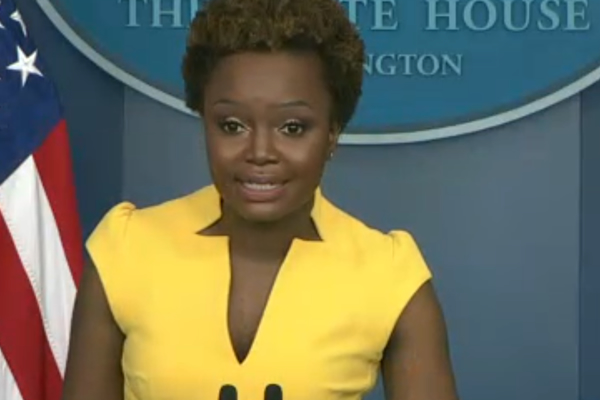
White House Deputy Press Secretary Karine Jean-Pierre made history on Wednesday by being the first Black woman in decades and the first openly LGBTQ woman to conduct a White House briefing, although she declined to mark the occasion by calling on the LGBTQ press in the room.
Jean-Pierre, asked during the White House briefing about the significance of her conducting it, recognized the milestone but also downplayed it in favor of praising the Biden administration.
“I appreciate the historic nature; I really do,” Jean-Pierre said. “But I believe that…being behind this podium, being in this room, being in this building is not about one person: It’s about what we do on behalf of the American people. Clearly, the president believes representation matters, and I appreciate him giving me this opportunity, and it’s another reason why we are so proud and this is the most diverse administration in history.”
Jean-Pierre, after repeating that it wasn’t about her, added “We’re going to be truthful, we’re going to be transparent and that’s the way, I believe, the president would want us to communicate to the American people.”
Many of the questions Jean-Pierre took were on new reports of intelligence the coronavirus may have been the product of lab engineering in Wuhan, China, which she addressed by deferring to an ongoing Biden administration review of the matter. Jean-Pierre, in response to another question about President Biden’s meeting with the George Floyd family on Tuesday, said the occasion was “deeply personal” for him.
Jean-Pierre is not the first openly LGBTQ person to conduct a White House press briefing. That distinction belongs to Eric Schultz, who was deputy White House press secretary during the Obama years and conducted his first briefing in 2015.
Other openly gay administration officials have served as principals during the White House briefing and answered questions, including acting Director of National Intelligence Richard Grenell during the Trump administration and current Transportation Secretary Pete Buttigieg.
Jean-Pierre, however, declined to mark the occasion by calling on the Washington Blade, which is the only LGBTQ outlet in the White House briefing room and in the seating rotation under coronavirus restrictions today to ask a question. The Blade was present in the room for its turn in the rotation and its reporter’s hand was raised for an inquiry the entire time.
Had the Blade asked a question, the topic would have been the upcoming Pride month and whether the White House would restore the practice during the Obama years of holding a reception, as well as any plans to light up the White House in rainbow colors as the Obama administration did in 2015.
Matt Hill, a White House spokesperson, was vague last week in response to a Blade inquiry via email over Pride plans within the Biden administration.
“President Biden is proud to have taken executive action since his first day in office to champion full equality and strengthen civil rights for LGBTQ Americans,” Hill said. “From reversing the transgender military ban, urging Congress to send the Equality Act to his desk, preventing discrimination in housing, healthcare, and lending, President Biden has sent a clear message to LGBTQ people at home and around the world: he has your back. During Pride Month, the Biden-Harris Administration will continue advancing the President’s commitment to equality and equity and we look forward to sharing more about our efforts throughout June.”
Another question the Blade would have asked — as the number of anti-trans laws enacted by state legislatures this year continues to pile up, including a measure last week in Tennessee requiring businesses to post signage if they have restroom policies respecting the gender identity of transgender people — is whether the Justice Department has given the White House any heads up about upcoming legal action against these measures.
Other journalists in the briefing room aside from the Blade also weren’t able to get a question in during the briefing the same day, including reporters from the New York Post, the Daily Mail and a representative from the foreign press. Although the Blade attempted to get a question before the briefing closed by shouting a request, another reporter from a conservative outlet largely drowned that out by interrupting at the end of the briefing by shouting questions on assertions Anthony Fauci perjured himself in testimony before Congress.
Netherlands
Amsterdam Pride Canal Parade draws hundreds of thousands
Gay Dutch Prime Minister Rob Jetten among participants

Editor’s note: International News Editor Michael K. Lavers and Photo Editor Michael Key are on assignment in the Netherlands through Aug. 10.
AMSTERDAM — Hundreds of thousands of people lined Amsterdam’s canals on Saturday for the city’s annual Amsterdam Pride Canal Parade.
Dutch Prime Minister Rob Jetten, who is openly gay, is among those who participated in the parade that featured more than 80 boats. Participants held signs and posters that, among other things, read “proud to be intersex” and “lesbians love you and a free Palestine.”
The Washington Blade saw at least two attendees holding fans that read “fuck Trump.” One of the boats also compared President Donald Trump and Russian President Vladimir Putin as “the kissing couple.”

(Washington Blade video by Michael K. Lavers)
(Washington Blade video by Michael K. Lavers)
The parade took place a week after a terrorist attack at Berlin’s Christopher Street Day left one person dead and more than two dozen others injured.
It passed the Homomonument, a memorial to gays and lesbians who have suffered persecution. The Homomonument has been transformed into a makeshift memorial to the victims of the July 25 terrorist attack in the German capital.
View on Threads
The Canal Parade took place during World Pride, which will end in Amsterdam on Aug. 9.
European Union
Poland’s top court rejects recognition of same-sex marriages from other EU countries
Ruling sets up potential clash with bloc

Poland’s top court this week rejected the recognition of same-sex marriages legally performed in other EU countries.
The EU Court of Justice in Luxembourg last November ruled in favor of a same-sex couple who challenged Poland’s refusal to recognize their German marriage. Poland’s Supreme Administrative Court in March reaffirmed the decision.
The couple, who lives in Poland, brought their case to Polish courts in 2019. The Supreme Administrative Court referred it to the EU Court of Justice.
The Polish government in May announced it will recognize same-sex marriages legally performed in other EU countries. Polish President Karol Nawrocki on July 17 vetoed bills that would have extended rights to same-sex couples.
The Constitutional Tribunal ruling, which it issued on July 28, was unanimous and final. It also sets up a potential clash between it and the EU Court of Justice.
Taiwan
Taiwan’s government has failed to update process to change gender markers on ID documents
Interior Ministry’s 2008 directive remains in place
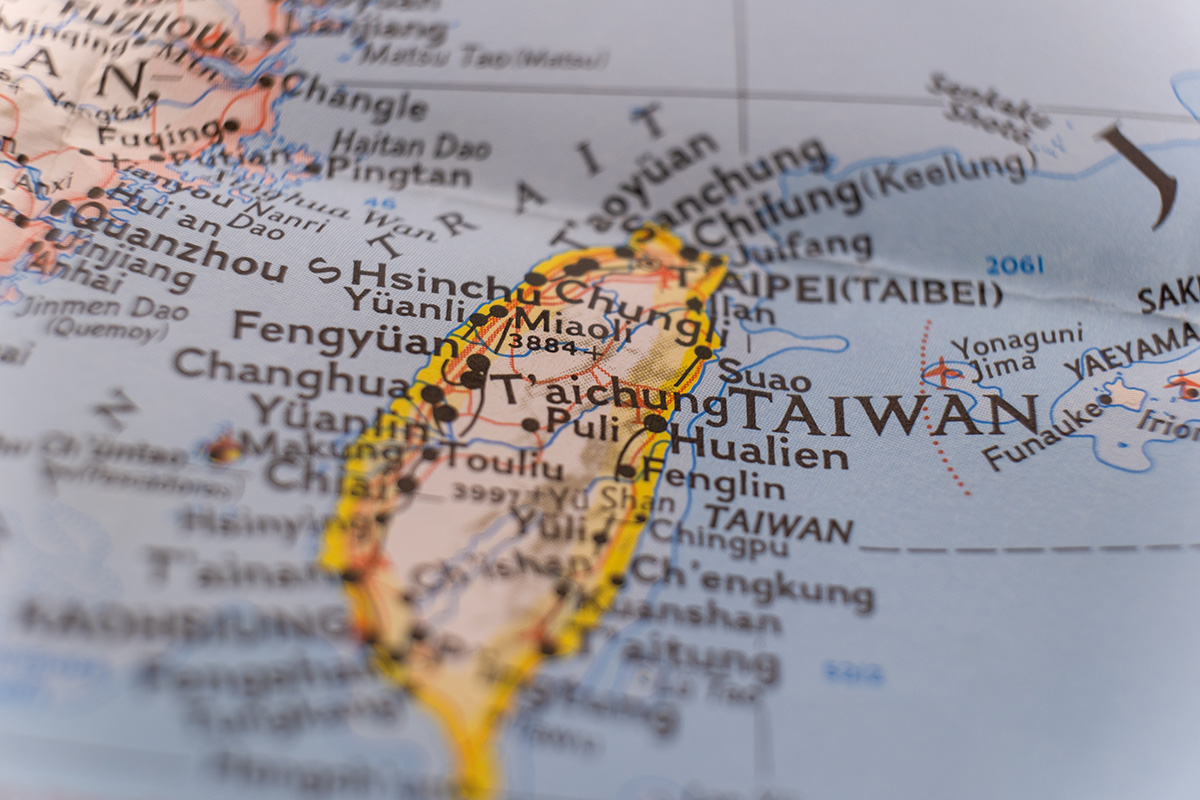
More than four years after Taiwan began formally studying legislation to overhaul its legal gender recognition system, and despite repeated recommendations from international human rights experts, the government has yet to introduce a bill that would replace decades-old administrative rules governing how transgender people can change the gender marker on official documents.
On May 15, an independent international review committee examining Taiwan’s implementation of the International Covenant on Civil and Political Rights and the International Covenant on Economic, Social and Cultural Rights urged the government to enact legislation governing legal gender recognition. The committee said Taiwan’s continued reliance on an administrative order, despite a 2023 Supreme Administrative Court ruling that mandatory gender-affirming surgery violates constitutional rights, has created legal uncertainty for transgender people, administrative authorities and judges.
In Taiwan, legal gender recognition has long been governed by a 2008 Interior Ministry administrative directive rather than legislation.
Under the directive, applicants seeking to change the gender marker on their national identification documents are generally required to provide diagnoses of gender dysphoria from two psychiatrists and proof that they have undergone gender-affirming surgery. For trans men, this typically involves the removal of the breasts, uterus, and ovaries, while trans women generally must undergo the removal of the penis and testicles. Because these requirements are established through an administrative directive rather than a law enacted by the legislature, trans rights activists and human rights organizations have argued they violate human rights.
Although Taiwanese courts have increasingly allowed trans people to change the gender marker on their official documents without undergoing gender-affirming surgery, the Interior Ministry’s 2008 directive requiring surgery remains in force. As a result, Taiwan’s administrative rules and judicial decisions are no longer fully aligned.
In a landmark ruling in May 2024, the Taipei High Administrative Court ordered a household registration office to approve a trans man’s application to change the gender marker on his household registration without requiring gender-affirming surgery. The court held that the Interior Ministry’s 2008 administrative directive, which requires applicants to submit proof of surgery, cannot be treated as an absolute prerequisite for legal gender recognition. Instead, it found that the applicant had provided sufficient medical evidence of a stable and long-standing gender identity and that denying the application solely because he had not undergone surgery was unlawful.
The Executive Yuan began work on legislation in April 2020, when it decided to commission an academic study examining international legal gender recognition systems rather than immediately drafting a law.
The government subsequently commissioned Shih Hsin University to prepare a report reviewing foreign legal models and developing legislative recommendations, including a bill. Since 2022, the Executive Yuan has held a series of inter-agency meetings involving multiple ministries to consider the study’s recommendations and legislation governing legal gender recognition, though no bill has yet been enacted.
In September 2023, Taiwan’s Supreme Administrative Court set aside a lower court ruling that had upheld the Interior Ministry’s refusal to change a trans person’s legal gender without proof of surgery and ordered the case to be reheard.
The court held that the ministry’s 2008 administrative directive requiring surgery could not be treated as the controlling legal standard because it lacked a clear statutory basis and implicated constitutional protections, including bodily autonomy and personality rights. Rather than treating surgery as an automatic prerequisite, the court instructed the lower court to determine whether the applicant had established a stable gender identity based on the evidence presented.
“From our perspective, the primary goal should be lowering the barriers to legal gender recognition, particularly by abolishing the mandatory surgery requirement,” the Taiwan Tongzhi (LGBTQ+) Hotline Association, a nonprofit LGBTQ advocacy and support organization founded in 1998, said in an email to the Washington Blade.
The Taiwan Tongzhi (LGBTQ+) Hotline Association said several factors have stalled progress toward comprehensive legislation.
The organization told the Blade the complexity of the issue and the lack of constructive dialogue are among the primary obstacles. It said legal gender recognition requires extensive discussion, with views differing even within the trans community itself. The Taiwan Tongzhi (LGBTQ+) Hotline Association added that opinions also vary widely within the legislature and across Taiwanese society, while effective channels for dialogue remain lacking.
The Taiwan Tongzhi (LGBTQ+) Hotline Association also attributed the lack of progress to what it described as a lack of political will and an over reliance on “social consensus.”
According to the organization, the executive branch lacks the political momentum to advance legal gender recognition reforms. The Taiwan Tongzhi (LGBTQ+) Hotline Association said the Interior Ministry and other relevant agencies have often adopted a passive approach in the face of opposition from conservative groups, delaying progress by arguing that there is no social consensus or that further discussion is needed.
The Taiwan Tongzhi (LGBTQ+) Hotline Association also said progress has been hindered by what it described as a backlash following the legalization of same-sex marriage. According to the organization, groups opposed to gender equality and trans rights, including some conservative religious and anti-trans organizations, shifted their focus to trans issues after marriage equality became law. The Taiwan Tongzhi (LGBTQ+) Hotline Association said these groups have promoted fear-based narratives, including concerns about safety in public restrooms, leading many politicians to view trans rights as a politically risky issue and reducing momentum for legislative action.
“The existing system makes changing one’s legal gender marker extremely difficult. Forced surgical removal of reproductive organs imposes a heavy financial burden since it must be paid out-of-pocket, and not every trans person can afford, desires, or is medically advised to undergo organ removal,” the Taiwan Tongzhi (LGBTQ+) Hotline Association said. “Additionally, requiring psychiatric evaluations is problematic because specialized medical resources are scarce and concentrated in major cities. These obstacles severely impact transgender individuals in their daily lives.”
The Taiwan Tongzhi (LGBTQ+) Hotline Association said the continued reliance on an administrative directive rather than legislation has created systemic uncertainty for trans people. The organization said the absence of a statutory framework allows executive agencies to alter requirements without legislative oversight, leaving trans people uncertain whether future policies will become more restrictive or more permissive. The Taiwan Tongzhi (LGBTQ+) Hotline Association added that while several trans people have secured favorable court rulings since 2023, those decisions apply only to the individual cases before the courts and do not guarantee similar outcomes for others. The group also said pursuing litigation requires significant time, financial resources, and emotional investment, making it an inaccessible path for many trans people seeking legal recognition.
The Executive Yuan and the Interior Ministry did not respond to the Blade’s requests for comment.

PHOTOS: Petal Release Party

Madonna headlines World Pride Music Festival in Amsterdam

Reggie White relishing first season as artistic director of Woolly Mammoth

PHOTOS: Amsterdam Pride Canal Parade

Amsterdam Pride Canal Parade draws hundreds of thousands

‘Heartstopper Forever’ delivers satisfying conclusion

Madonna to perform at World Pride in Amsterdam

BLADE ENDORSEMENT: Susan Stewart for mayor of Rehoboth Beach

PHOTOS: Lambda Legal in the Pines