World
Advocacy groups urge Biden to develop plan to protect LGBTQ Afghans
Taliban regained control of Afghanistan on Aug. 15
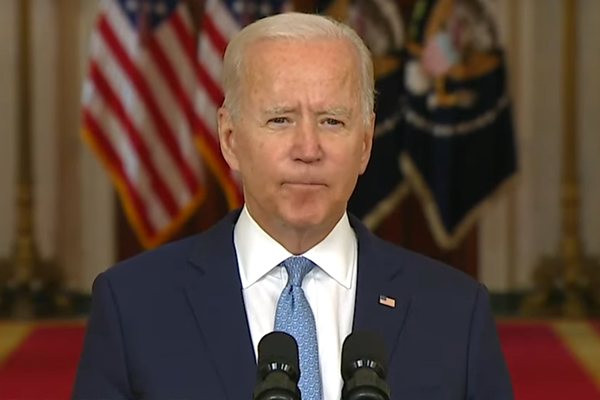
A group of six advocacy groups on Thursday urged the Biden administration to develop a 10-point plan to protect LGBTQ Afghans after the Taliban regained control of their country.
The Council for Global Equality; the Human Rights Campaign; Immigration Equality; the International Refugee Assistance Project; the Organization for Refuge, Asylum and Migration and Rainbow Railroad in a letter they sent to President Biden called for his administration to “prioritize the evacuation and resettlement of vulnerable refugee populations, including LGBTQI people, and ensure that any transitory stay in a third country is indeed temporary by expediting refugee processing.”
The nine other suggestions are below:
– Provide and effectively implement explicit “Priority 2” (P-2) access to the U.S. refugee program for the highly vulnerable population of LGBTQI individuals fleeing Afghanistan. Waive the application fee for any LGBTQI Afghan applying to relocate to the United States on an expedited basis via humanitarian parole and look favorably upon those emergency requests. Initiate a new program of Temporary Protected Status (TPS) for Afghans in the United States, including those paroled into the United States on an emergency basis.”
– Ensure that existing lists that have been collected by various governments of at-risk Afghans, including those who wish to flee because of their sexual orientation or gender identity, are carefully safeguarded so that they do not fall into Taliban or third-country hands and are not used to target individuals or family members. Use the lists as a basis for expedited P1 or P2 refugee processing or humanitarian parole for those who seek protection abroad.”
– Lift or expand the FY (fiscal year) 2022 refugee cap of 125,000 refugees accepted into the United States.
– Provide funding to support the temporary housing, livelihoods and security of LGBTQI refugees in third countries while they are being processed for refugee resettlement in the United States or elsewhere.
– Recognize NGOs that have been reliable partners in identifying and recommending LGBTQI Afghans to the State Department for protection and instruct U.S. embassies to process LGBTQI refugee applications on site when referred by these designated partners.
– Recognize for the purposes of refugee relocation, humanitarian parole or any other entry into the United States any same-sex Afghan partner as a spouse. Take an equally expansive view of the definition of family for LGBTQI relocation given the lack of legal recognition for LGBTQI partnerships in the region.
– Expand LGBTQI-sensitive resettlement programs in the United States and engage with NGOs and local communities to expand the U.S. capacity to absorb larger numbers of LGBTQI Afghan refugees in supportive and inclusive environments, including through new refugee sponsorship programs.
– Speak out forcefully against human rights abuses by the new Taliban regime and any increased targeting of vulnerable communities, including LGBTQI people, and use existing mechanisms to sanction and hold accountable perpetrators of human rights abuse. Negotiate explicit human rights monitoring access, with a particular focus on vulnerable communities including LGBTQI Afghans, when the mandate of the U.N. Assistance Mission in Afghanistan is renewed by the Security Council later this month.
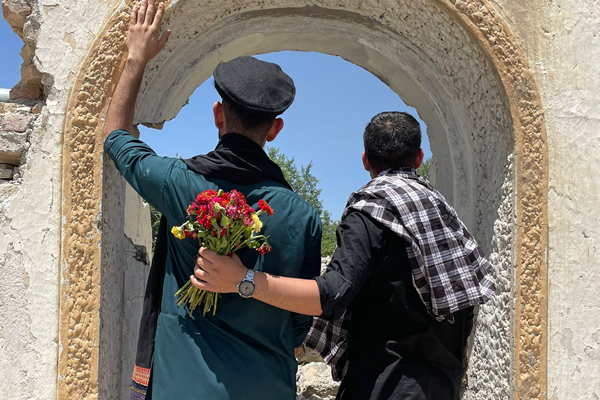
The Taliban entered Kabul on Aug. 15 and toppled then-President Ashraf Ghani’s government.
A Taliban judge in July said the group would once again execute people if it were to return to power in Afghanistan. A gay Afghan person with whom the Washington Blade spoke earlier this week said they and their family fled their Kabul home because of the Taliban.
“I’m scared,” they said. “I can’t go outside … everything has totally changed.”
The groups in their letter to Biden said the Taliban “takeover of Afghanistan has focused international attention on the safety and livelihood of many vulnerable populations, including women and girls, and lesbian, gay, bisexual, transgender, queer, and intersex (LGBTQI) Afghans.”
“As the decision to withdraw from Afghanistan will be part of your legacy, so too will be the actions your Administration takes to ensure the well-being of these populations,” reads the letter.
The letter also notes the groups “are deeply disappointed that your administration did not press to extend the Aug. 31 deadline to evacuate more at-risk refugees from Kabul, but we are heartened by your pledge to continue to support refugee evacuation and resettlement in the coming weeks.”
“The United States bears a special responsibility not to abandon those we have encouraged along the path to democracy and human rights, and to act expeditiously to ensure their safety,” it says.
Canada is thus far the only country that has specifically said it would offer refuge to LGBTQ Afghans. Immigration Equality earlier this week said it spoke “directly” with 50 LGBTQ Afghans before the U.S. completed its withdrawal from the country on Aug. 30. “
The international community must act in concert to protect vulnerable populations now placed at risk,” reads the letter to Biden. “We urge the United States to increase and prioritize its immediate, medium-term and long-term efforts on behalf of the LGBTQI community in Afghanistan using these 10 protection priorities.”




Colombia
Colombia withdraws from Equal Rights Coalition
International LGBTQ group ‘not a priority’ for country’s new government
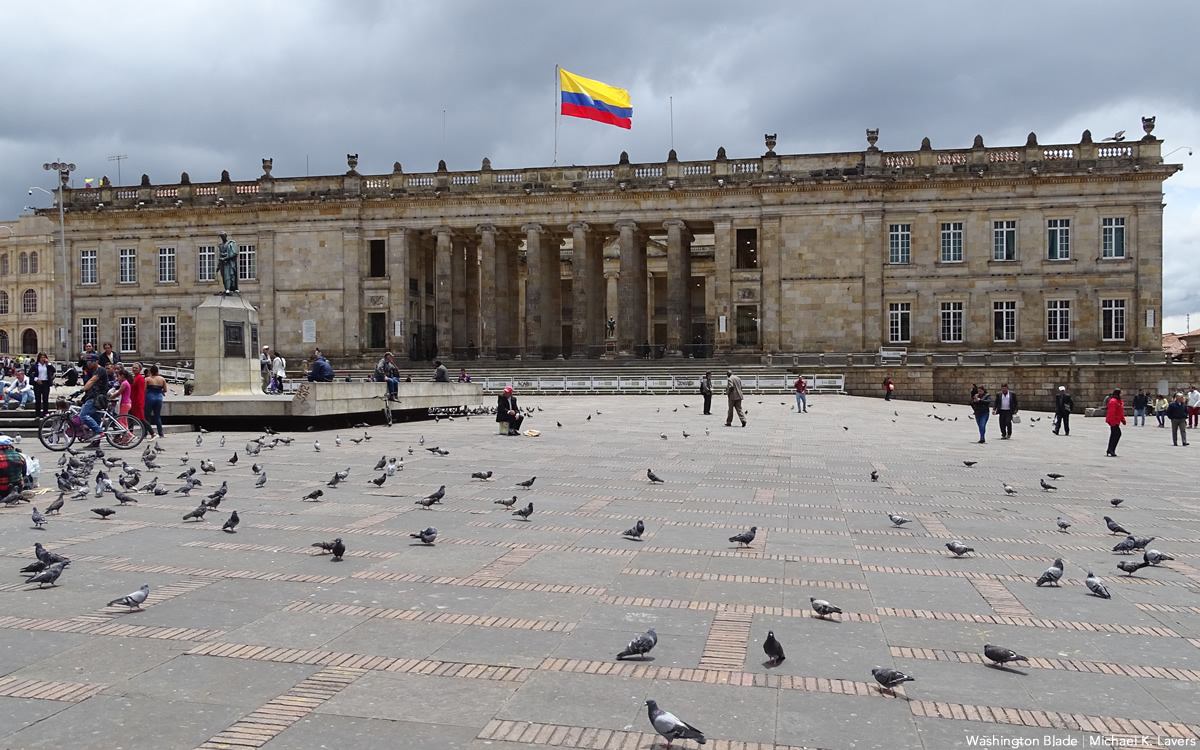
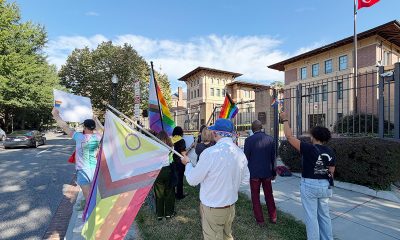
Colombia last week withdrew from a coalition of more than 40 countries that pledges to champion LGBTQ and intersex rights.
The Bogotá Post, an English-language news website in the Colombian capital, reported the country officially withdrew from the Equal Rights Coalition on Sept. 17.
The Equal Rights Coalition formed in 2016.
The group’s current members are Albania, Argentina, Australia, Austria, Belgium, Brazil, Canada, Cabo Verde, Chile, Costa Rica, Cyprus, the Czech Republic, Denmark, Ecuador, Estonia, Finland, France, Germany, Greece, Iceland, Ireland, Israel, Italy, Lithuania, Luxembourg, Malta, Mexico, Montenegro, Netherlands, New Zealand, North Macedonia, Norway, Portugal, Serbia, Slovenia, Spain, Sweden, Switzerland, Thailand, Ukraine, the U.K., and Uruguay. Civil society organizations from Colombia and dozens of other countries, including the U.S., work with the Equal Rights Coalition.
Colombia had co-chaired the group alongside Spain.
The decision to withdraw from the Equal Rights Coalition took place less than two months after far-right Colombian President Abelardo de la Espriella took office.
El Páis, a Spanish newspaper, reported Colombian Vice Minister for Consular and Migration Affairs Pedro Agustín Roa said the Equal Rights Coalition “is not a priority” for his government and the country’s participation in it was “something from a previous government.”
Caribe Afirmativo is a Colombian LGBTQ advocacy group that works with the Equal Rights Coalition. Wilson Castañeda, its director, criticized his country’s withdrawal from it.
Ecuador
Caso Karlina: Una sentencia histórica contra las terapias de «conversión»
Karlina Quiroz, una mujer trans de Chone, fue internada contra su voluntad
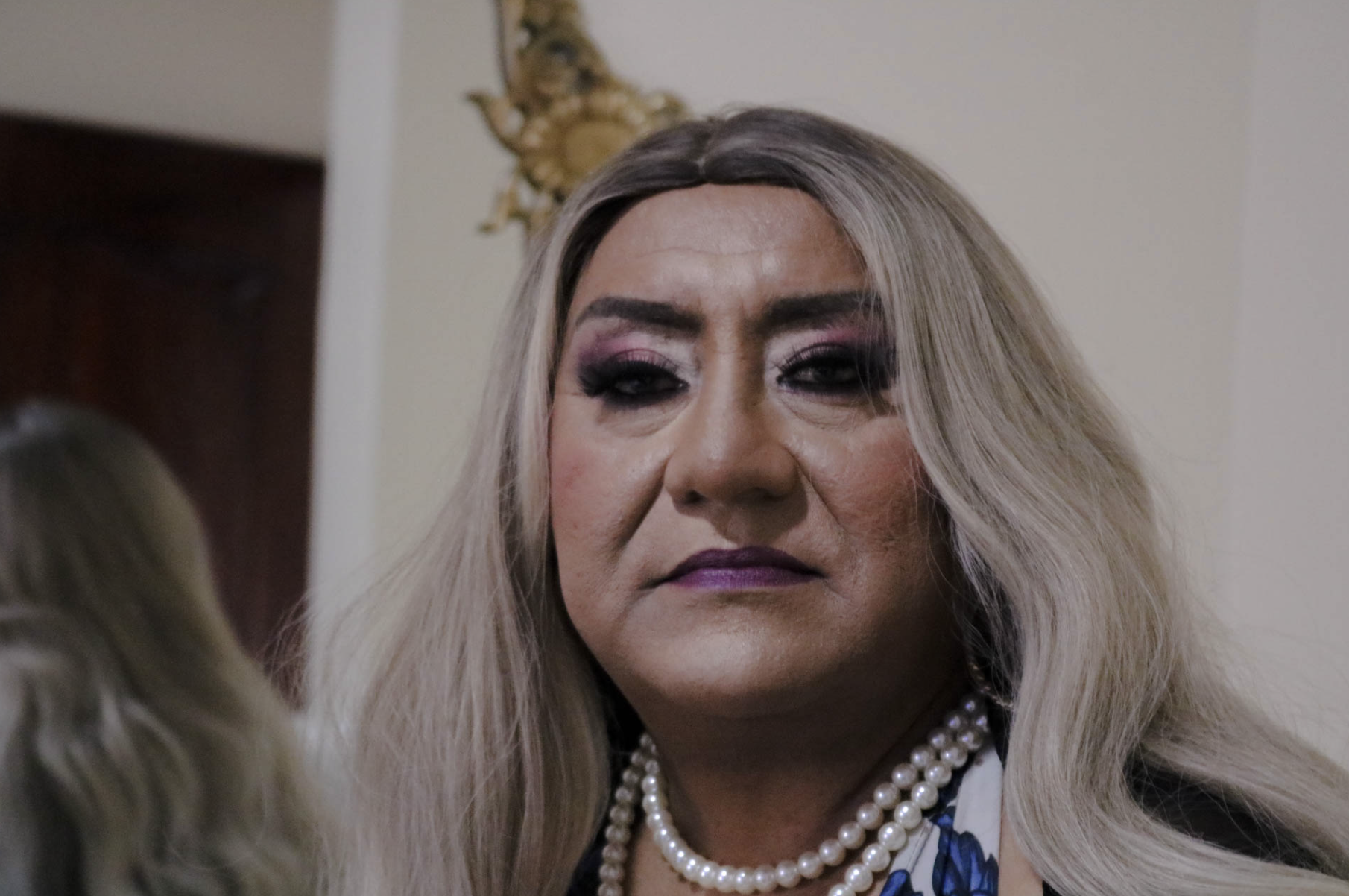
La última vez que Karlina Quiroz, una mujer trans de 57 años, salió sola a la calle en Chone, terminó encerrada contra su voluntad en un centro de rehabilitación donde intentaron “corregir” su identidad de género mediante humillaciones, amenazas y agresiones.
Han pasado cinco años desde ese episodio, ocurrido en 2021; y el 11 de septiembre de 2026 Karlina por fin obtuvo justicia.
La Fiscalía informó, el 14 de septiembre, que el Tribunal de Garantías Penales de Chone sentenció a seis personas por actos de odio contra Karlina, al ser víctima de violencia basada en su identidad de género.
Entre los seis sentenciados están sus dos hermanos, que —según la denuncia de Karlina— ordenaron su encierro a este centro.
El caso de Karlina refleja el odio y la violencia hacia personas trans en Ecuador y vuelve a poner bajo la lupa la existencia de centros conocidos como clínicas de “deshomosexualización” o espacios de “terapias de conversión”.
De acuerdo con la denuncia presentada por Karlina, en julio de 2021 fue interceptada por varios hombres y trasladada contra su voluntad a un centro para el tratamiento de adicciones ubicado en Chone, Manabí, en la vía a Pedernales. Allí permaneció retenida y sometida a tratos degradantes, violencia psicológica y agresiones físicas.
Según su testimonio, durante el encierro recibió insultos relacionados con su identidad de género y amenazas orientadas a “modificarla”.
Karlina denunció, además, que esta no habría sido la primera vez. Según su relato, en 2019 permaneció aproximadamente tres meses internada de manera forzada en otro centro de rehabilitación, también ubicado en la vía a Pedernales, en Chone. Durante ese período habría sido sometida a dinámicas similares de aislamiento, control y presiones dirigidas a modificar su identidad y expresión de género.
Según información de la Fiscalía, en septiembre de 2021, como parte de las diligencias investigativas, se allanó el centro clandestino en Chone. Allí se recabaron indicios relacionados con el internamiento forzoso de Karlina durante tres meses.
Con esos y otros elementos de convicción obtenidos durante la investigación, la Fiscalía inició un proceso penal contra las seis personas, quienes fueron luego llamadas a juicio.
El proceso, explicó Karlina, incluyó los dos casos: el de 2019 y 2021. “El crimen se investigó desde que comenzó la primera gota de sangre”, señaló Karlina, en alusión a la violencia física que sufrió en su primer encierro.
De los seis sentenciados, tres fueron condenados como autores directos a cuatro años de pena privativa de libertad. Se trata de los dos hermanos de Karlina y un sobrino, por ordenar su encierro al centro de adicciones.
Los otros tres recibieron una pena de dos años, como cómplices.
De acuerdo con Karlina, uno de ellos es el director del primer centro al que fue ingresada contra su voluntad en 2019 por tres meses, y los otros dos son quienes la interceptaron la segunda ocasión, en julio de 2021, para llevarla al centro. Ella los señala como “capturadores” de las personas que son recluidas en los centros.
“Cuando recibí la noticia (el viernes 11 de septiembre durante la audiencia de juzgamiento) no podía creerlo. Las piernas me temblaron y las lágrimas se me salieron. Estoy tranquila y satisfecha”, señaló Karlina en una llamada telefónica.
Para Pedro Gutiérrez, abogado especialista en derechos humanos, la sentencia es importante no solo por reconocer un delito de odio, sino también por las características de los hechos: el ingreso (por orden de sus hermanos) a un centro de “deshomosexualización” en el que se cometen actos de tortura y violencia física.
Durante la audiencia, constó el testimonio de Karlina. La Fiscalía también presentó el informe de reconocimiento del lugar de los hechos, la inspección ocular técnica, el levantamiento de evidencias y los testimonios de personas que confirmaron que los actos de violencia por perjuicio hacia su identidad de género fueron ejecutados de manera reiterada por los ahora sentenciados.
El caso volvió a poner la atención sobre las llamadas terapias de conversión en Ecuador, prácticas ampliamente cuestionadas por organismos internacionales de derechos humanos y señaladas como formas de tortura o violencia psicológica. Aunque el Estado ecuatoriano ha realizado operativos y clausuras de algunos centros en los últimos años, organizaciones sociales sostienen que estos espacios continúan funcionando de manera clandestina o bajo otras denominaciones.
La legislación ecuatoriana penaliza los actos de tortura con la intención de modificar la orientación sexual o identidad de género, pero no existe una sanción contra los centros que ofrecen las denominadas terapias de conversión.
En 2020, la Asamblea aprobó el Código Orgánico de Salud y una de sus disposiciones fue prohibir expresamente este tipo de terapias, pero fue vetado totalmente por el expresidente Lenín Moreno en medio de una campaña de sectores antiderechos.
La sentencia también dispuso, como reparación integral a favor de Karlina, tratamiento psicológico e indemnizaciones por daños materiales e inmateriales.
Gutiérrez considera que la reparación para Karlina es limitada, pues -por ejemplo- no hay llamados de atención al Ministerio de Salud o disculpas públicas a la víctima.
“Mi nombre es Ariel Karlina Zambrano, soy una mujer trans de Chone, Manabí. Desde niña supe que quería ser mujer, quería ser bonita, libre. Pero mi familia nunca lo aceptó. Mis hermanos y mi padre, profundamente machistas, me maltrataban constantemente”, contó Karlina en un testimonio en 2025 que recogió el Comité Permanente por la Defensa de los Derechos Humanos (CDH).
Para activistas y defensores de derechos humanos, el caso de Karlina evidencia además un patrón de violencia que suele permanecer oculto dentro de círculos familiares, religiosos y comunitarios. En muchos casos, explican, los internamientos forzados son promovidos bajo la idea de “corregir” orientaciones sexuales o identidades de género consideradas inaceptables.
Karlina intentó vivir en Chone, creyendo que con la denuncia y las medidas cautelares estaba a salvo, pero su hermano le pagaba a personas para que la acosaran, según su relato. Por ello, tuvo que esconderse por meses.
Las personas trans en Ecuador enfrentan altos niveles de discriminación, violencia y exclusión social, especialmente fuera de las grandes ciudades. Según la Encuesta Nacional sobre las Condiciones de Vida de la Población LGBTI+ del INEC, el 53,5 por ciento de las personas LGBTQ mayores de 18 años en el país ha sufrido algún tipo de discriminación o violencia a lo largo de su vida, siendo el entorno familiar uno de los principales espacios de agresión.
En materia de violencia letal, organizaciones como Asociación Silueta X y el Observatorio Runa Sipiy documentaron 30 asesinatos de personas LGBTQ y transfemicidios en Ecuador durante 2025. De esos casos, alrededor del 70 por ciento corresponden a mujeres trans, lo que las posiciona como el grupo más expuesto a crímenes de odio y violencia extrema.
Diversas organizaciones de derechos humanos han advertido además sobre la persistencia de centros de “deshomosexualización” o internamientos forzosos, prácticas denunciadas desde hace más de una década en Ecuador pese a prohibiciones estatales y operativos de control insuficientes.
El caso de Karlina pone a prueba algo más grande que una sentencia individual: si Ecuador está dispuesto o no a reconocer que estas prácticas siguen existiendo y que la violencia contra personas LGBTQ continúa ocurriendo, muchas veces con la complicidad o el silencio de sus propios entornos familiares.
“Con mi caso, debe quedar un precedente. Debemos luchar contra el odio que podemos encontrarlo dentro de nuestras propias familias. Por nuestra libertad y derechos, debemos luchar”, indicó Karlina.
Netherlands
Dutch prime minister visits Stonewall Inn
Rob Jetten is the Netherlands’ first openly gay prime minister
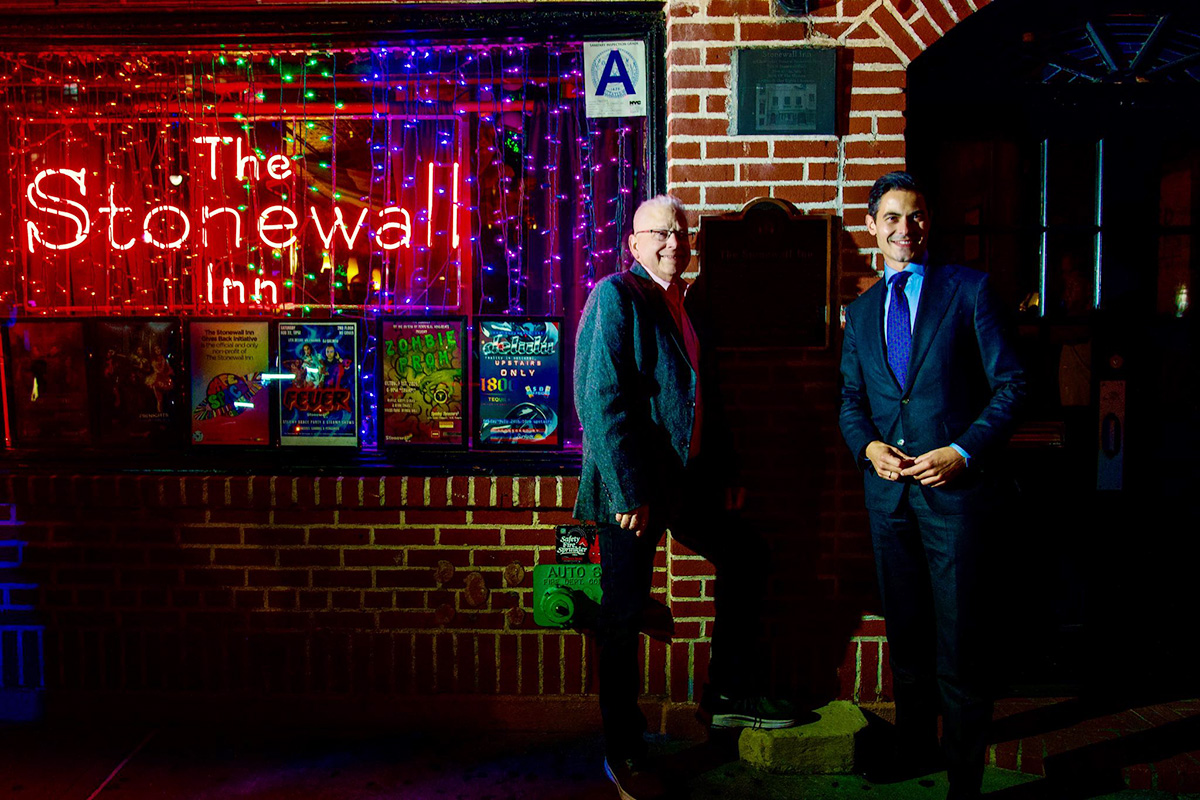
Dutch Prime Minister Rob Jetten on Monday visited the Stonewall Inn in New York.
“The Stonewall Inn is not just a gay bar in New York, but the place where in 1969 riots took place as a reaction to years of discrimination and police violence,” wrote Jetten on X. “This is seen as the starting point of the global LGBTIQ+ emancipation and activism. Nowadays, the bar is a national monument, dedicated to the LGBTIQ+ rights movement.”
“For me, it is impressive and moving to be here tonight. And also fitting, because the defense of human rights is an important part of our foreign policy,” he added. “The Netherlands stands alongside the Stonewall Inn community when it comes to everyone’s right to live openly, safely, and with pride, no matter who you are or who you love.”
De Stonewall Inn is niet zomaar een gay bar in New York, maar de plaats waar in 1969 rellen plaatsvonden als reactie op jarenlange discriminatie en geweld van de politie. Dit wordt gezien als startpunt van de wereldwijde lhbtiq+-emancipatie en activisme. Tegenwoordig is de bar… pic.twitter.com/hJmFYjF91Z
— Rob Jetten (@MinPres) September 23, 2026
Jetten in February became the Netherlands’s first openly gay prime minister.
He opened last month’s World Pride Human Rights Conference in Amsterdam. Jetten also participated in a panel with former Irish Prime Minister Leo Varadkar, former San Marino Captain Regent Paolo Rondelli, and other current and former heads of government who are gay or lesbian.
Jetten is scheduled to speak to the U.N. General Assembly on Thursday.

Charles Bowers, former owner of Baltimore gay bar the Hippo, dies

Being a female firefighter comes with unique risks, and rewards

Writing a play about Lincoln leads down a rabbit hole to a closet

Trump-appointed judge restores White House TV pool access