News
Melania Trump announced as guest for Log Cabin Republicans’ annual dinner
Former first lady Melania Trump is set to be a special guest at the annual “Spirit of Lincoln” dinner hosted by Log Cabin Republicans.
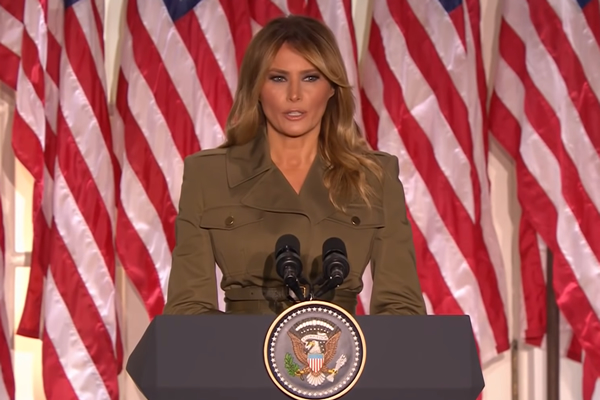
Former first lady Melania Trump is set to be a special guest at the annual “Spirit of Lincoln” dinner hosted by Log Cabin Republicans, the organization announced on Tuesday.
The event — which will take place Nov. 6 at Mar-a-Lago in Palm Beach, Fla., marking a change of tradition in holding the dinner in D.C. — will likely mark an attempt for Melania Trump to develop her image as an LGBTQ ally and tamp down the reputation the Trump administration was hostile to LGBTQ people.
Charles Moran, managing director for Log Cabin Republicans, hailed Melania Trump in a statement for her work as first lady and breaking barriers for the Republican Party.
“Melania Trump’s work as First Lady, from helping children reach their full potential to championing a more inclusive Republican Party, has been historic,” Moran said. “Her vocal support of Log Cabin Republicans has been a signal to Republicans everywhere that it is possible to simultaneously be conservative and support equality under the law for all Americans.”
According to the Log Cabin Republicans, Melania Trump at the dinner will be awarded with the 2021 Spirit of Lincoln Award. Other high-profile Republicans in the past who have appeared at the annual event are Carly Fiorina, Newt Gingrich, Massachusetts Gov. Charlie Baker and Mary Cheney.
Moran, in response to an email inquiry from the Washington Blade, said Melania Trump will not only be an award recipient, but is set to deliver remarks at the event.
It won’t be the first time Melania Trump has collaborated with Log Cabin. During the 2020 election, she appeared in a video for Outspoken, the media arm for Log Cabin Republicans, saying “nothing could be further from the truth” her husband, former President Trump, is against LGBTQ people.
Among the anti-LGBTQ policies under Trump were a transgender military ban, religious freedom carve-out seen to enable anti-LGBTQ discrimination and the U.S. Justice Department arguing against LGBTQ inclusion under civil rights law when the issue was before the U.S. Supreme Court. Nonetheless, Trump connected with a certain faction of LGBTQ people and his administration included high-profile LGBTQ appointees, such as Richard Grenell as the first openly gay person to serve in a Cabinet role.
As first reported by the Washington Blade, Melania Trump said in 2020 she wanted to light up the White House in rainbow colors similar to the display during the Obama years after the U.S. Supreme Court ruled for same-sex marriage nationwide. However, the vision never came to pass at a time when White House Chief of Staff Mark Meadows had a role in quashing an symbolic support for LGBTQ people in Pride Month.
The Log Cabin announcement comes at a time when Melania Trump is facing new scrutiny over her response to the Jan. 6 insurrection at the U.S. Capitol and whether she erroneously believes, like her husband, he was the winner of the 2020 election.
According to a preview in Politico, former White House press secretary and Melania Trump aide Stephanie Grisham says in her upcoming book she texted the former first lady on Jan. 6 to ask: “Do you want to tweet that peaceful protests are the right of every American, but there is no place for lawlessness and violence?”
A minute later, Melania replied with a one-word answer: “No,” Grisham reportedly writes of her account. At that moment, Grisham writes she was at the White House preparing for a photo shoot of a rug she had selected, according to Politico.
The Blade has placed a request in with the office of former President Donald Trump to confirm her appearance at the dinner and comment on what went into the Melania Trump’s decision to appear at the event.




Congress
Ritchie Torres says he is unlikely to run for NY governor
One poll showed gay Democratic congressman nearly tied with Kathy Hochul
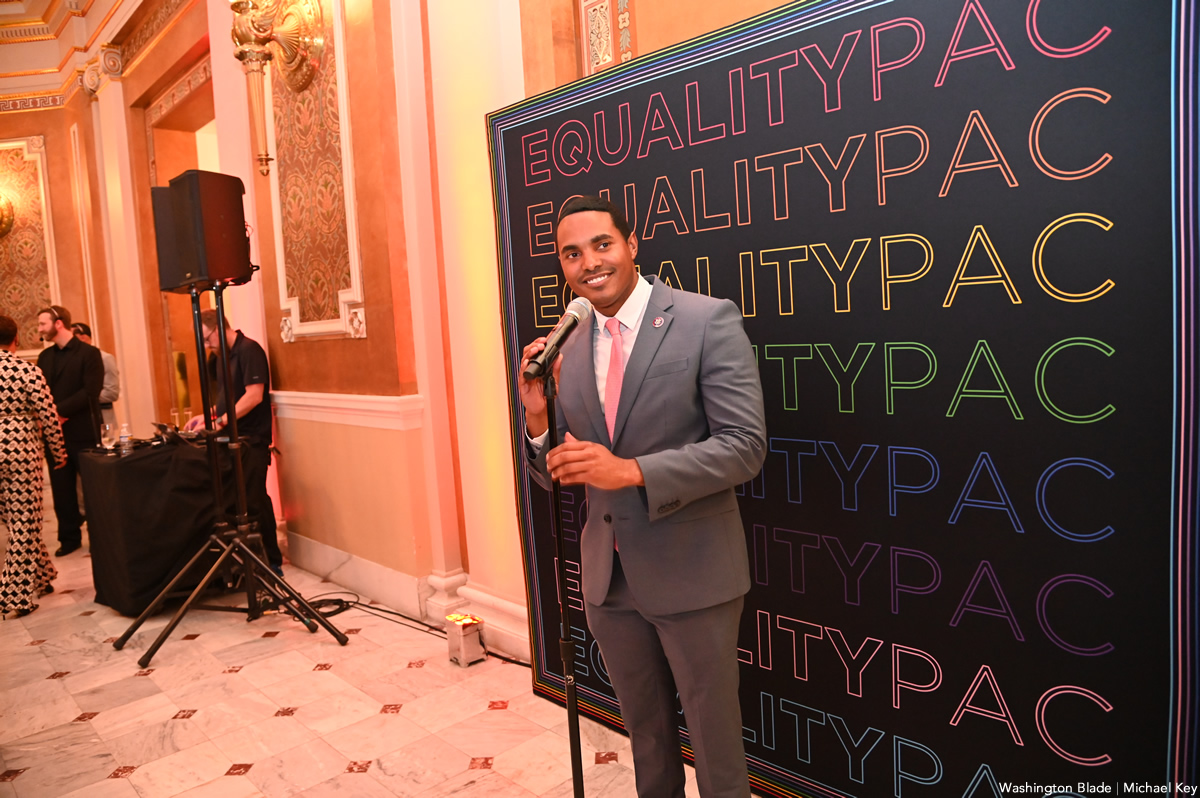
Gay Democratic Congressman Ritchie Torres of New York is unlikely to challenge New York Gov. Kathy Hochul (D) in the state’s next gubernatorial race, he said during an appearance Wednesday on MSNBC’s “Morning Joe.”
“I’m unlikely to run for governor,” he said. ““I feel like the assault that we’ve seen on the social safety net in the Bronx is so unprecedented. It’s so overwhelming that I’m going to keep my focus on Washington, D.C.”
Torres and Hochul were nearly tied in a poll this spring of likely Democratic voters in New York City, fueling speculation that the congressman might run. A Siena College poll, however, found Hochul leading with a wider margin.
Back in D.C., the congressman and his colleagues are unified in their opposition to President Donald Trump’s signature legislation, the “Big Beautiful Bill,” which heads back to the House after passing the Senate by one vote this week.
To pay for tax cuts that disproportionately advantage the ultra-wealthy and large corporations, the president and Congressional Republicans have proposed massive cuts to Medicaid and other social programs.
A provision in the Senate version of the bill that would have blocked the use of federal funds to reimburse medical care for transgender youth was blocked by the Senate Parliamentarian and ultimately struck from the legislation, reportedly after pressure from transgender U.S. Rep. Sarah McBride (D-Del.) and lesbian U.S. Sen. Tammy Baldwin (D-Wis.).
Torres on “Morning Joe” said, “The so-called Big Beautiful Bill represents a betrayal of the working people of America and nowhere more so than in the Bronx,” adding, “It’s going to destabilize every health care provider, every hospital.”
District of Columbia
GenOUT Chorus offers solace, strength to LGBTQ teens
Summer camp held from June 23-27
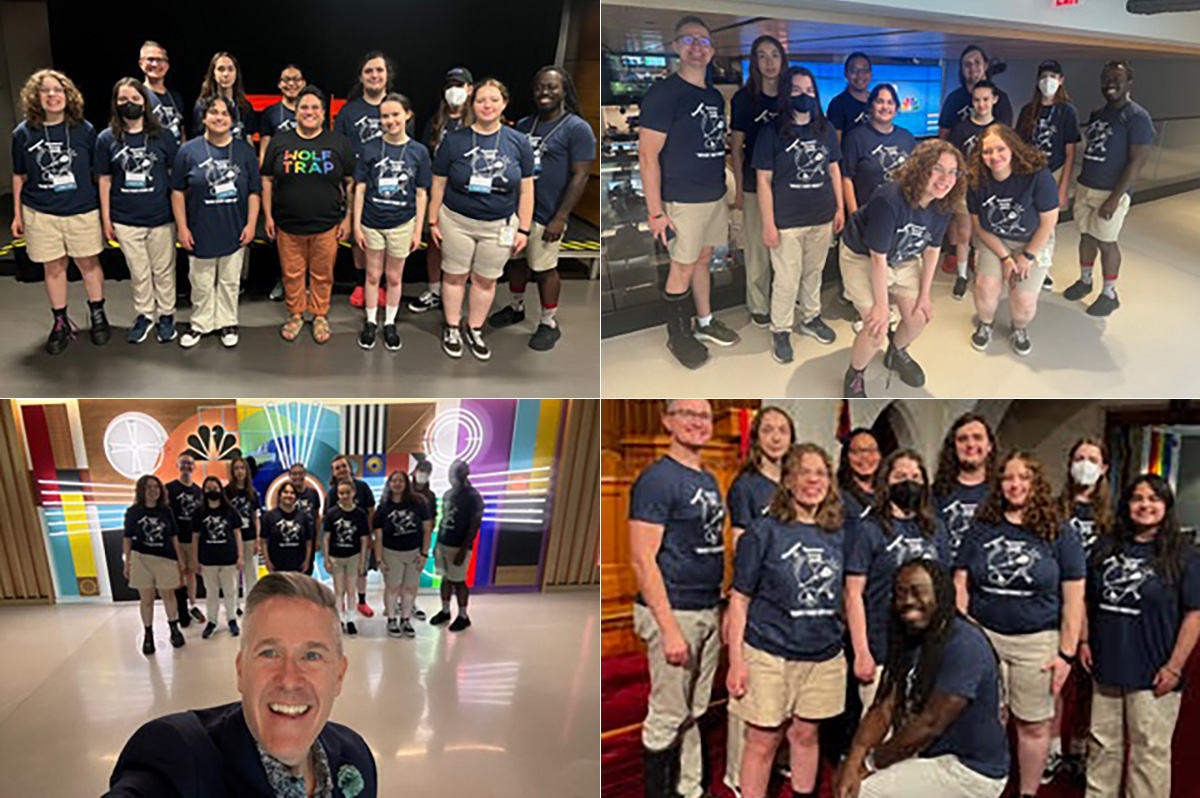
As Pride month draws to a close and Washington begins to take down its rainbow flags and WorldPride decorations, it can be easy to confine the ideas of LGBTQ liberation to June. One historic organization in Washington has been speaking out — or singing out if you will — to ensure that LGBTQ youth are allowed to explore and be themselves every month of the year.
The Gay Men’s Chorus of Washington is one of the oldest and largest LGBTQ choruses in the world. With more than 300 members and more than 40 years in the D.C. LGBTQ community, to say it is an institution would be an understatement.
Beginning in 1981, following an inspiring performance by the San Francisco Gay Men’s Chorus at the Kennedy Center, a group of 18 gay men — led by a “straight” woman and friend of Washington’s gay community, Marsha Pearson — created the GMCW. Since its establishment the organization has only grown in number and relevance within the city. From hosting multiple concerts a year, international equality trips, and creating a dedicated space to “inspire equality and inclusion with musical performances and education,” the GMCW is one of the cornerstone organizations in the Washington LGBTQ community.
One of the most remarkable parts of the GMCW is its youth outreach program and choir: GenOUT. The outreach ensemble specializes in providing a space for Washington’s LGBTQ and allied youth, ages 13-18, to find their voice through song and connect that voice to community. The GenOUT program has been around since 2001, and since 2015 has provided a platform for their voices to be heard — literally — making it the first LGBTQ youth chorus in the Washington area.
The Washington Blade sat down with GenOUT Director C. Paul Heins and member Ailsa Ostovitz to discuss why GenOUT, and more specifically the GenOUT summer camp, which was held from June 23-27, has become an essential space for LGBTQ youth in the D.C. area to find their voice amid less-than-supportive administration and rising anti-LGBTQ rhetoric in the nation.
“This is my 11th season with GenOUT, and also the 11th season with Gay Men’s Chorus of Washington,” Heins said when explaining how he ended up in the director role for the self-selected, no audition required youth outreach ensemble. “I was hired in August of 2014 to start GenOUT. I spent that first fall researching other choruses, figuring out the infrastructure, promoting the chorus, and building relationships with schools, organizations, and faith communities. And then we started in January of 2015 with nine brave singers and since then, we’ve had 150+ singers from 80 or more schools in the DMV participate.”
Ailsa Ostovitz, on the other hand, being in high school had not had as much experience with choirs — yet her commitment and unwavering passion for the work she — and the other performers within GenOUT provide to each other was unmistakable.
“I’ve been a part of the course since April of 2022, and that was like seventh grade— which is wild to think about,” Ostovitz said when reflecting on how long she had been a part of GenOUT. She explained how she had begun to develop a drive for filling leadership roles within GenOUT after gaining valuable experiences and education from the organization.
“This is my first year in leadership,” she added. “The rest of the years, I kind of hung back. I really wanted to — especially last season — kind of put myself in the position of a peer and think ‘What would I want from people that are supposed to represent me to the adults? What would I want out of that?’”
And with those questions in mind, Ostovitz explained she buckled down and worked hard to get to where she is now as a member of the leadership team within the GenOUT choir.
“I spent a lot of time working with my section leader, and, looking up at him and being like, ‘What are you doing now that I can do in the future?’ And so this year, I ran for leadership,” Ostovitz said. “I got section leader, and that was cool. I’ve just spent a lot of time — most of my time in this course — learning leadership skills to kind of help me in all sorts of things in life, because I like to take control of things, and I like doing stuff.”
These leadership skills are just a handful of the things that students like Ostovitz learn while participating in the program. This year’s theme was “Make Them Hear Us!: Empowering LGBTQ+ and Allied Youth Through Music, Media, and Community,” and provided multiple opportunities for GenOUT’s members to engage with new concepts, ideas, and experiences.
From field trips to mentoring opportunities to an end-of-camp performance, it becomes clear when speaking to those familiar with the GenOUT experience: it is not your traditional summer day camp.
“The title of the camp references the anthem that GMCW has sung for many years,” Heins said. “‘Make Them Hear You’ from the musical ‘Ragtime’ encourages us to share important stories — stories that honor the fights that we’ve been fighting, the rights that we have won, affirmations that we seek for every human being, and the focus on media — specifically developing young people’s understandings of the kinds of media that they can access and use to share their voice.”
The camp offers singing and dancing lessons, creative writing exercises, LGBTQ+ history lessons, and open discussions about identity — providing an outlet for students to figure out who they want to be and find their voice.
“What this camp does, I believe, is it helps foster young people’s voices and not only encourages them to speak, but to give them the skills to speak in a way that will be heard meaningfully,” Heins added. “I have noted that youth in queer choruses like GenOUT have said that singing in a chorus allows young people to express themselves more honestly and with greater passion than other forms of expression. They’ve also said that singing with others that understand you on a very deep, profound level, makes the expression much easier and more beautiful. I think that experience is what really makes this a special opportunity for young, LGBTQ and allied people.”
Ostovitz echoed Heins’s sentiment, emphasizing that the space GenOUT provides allows her to feel empowered in ways more than by creating leadership skills that will help her later in life. GenOUT has allowed for her to see the humanity and similarities LGBTQ youth all face in a straight world.
“Joining the chorus and being in this camp, it really gives people a chance to see that every person is going through the same experience you are, on a level of finding your own identity and being confident in that,” Ostovitz said. “It really, really serves a purpose by showing there are still queer people. They’re not fizzling out — young people are queer. We want to use our voices to express what we feel and how things are affecting us, and I think that using music to do that is probably one of the most powerful ways to do that.”
In addition to allowing for internal growth and honing their singing abilities, both Ostovitz and Heins pointed out the other valuable skills students learn while in the GenOUT program. Ostovitz explicitly highlighted the mentorship program GenOUT has with GMCW, and how it has helped students like her figure out their future.
“Because we are so connected with GMCW, we run a mentorship program where, if you want to explore career, identity, whatever, we can connect you with somebody from GMCW,” Ostovitz said. “You get to spend a whole semester with a person working on your voice or your career or your what you want to do in higher education. It’s not only for things related to your queer identity, but it’s also just for life. It’s really cool.”

This year’s theme, centering around media and the many ways people can share their voice, was highlighted through the camp’s field trips to two legacy media organizations — WAMU and NBC Washington — and a discussion with staff from the Washington Blade, including Publisher Lynne Brown and International News Editor Michael K. Lavers.
“GenOUT provides a chance to get to know people from all around this area, but it also connects you to older folks, It connects you to people from the past, as well as we learn about LGBTQ history,” Heins said. “I think a camp specific thing is we want young people to understand how they can share their stories beyond just talking to their friends. There are these forms of media that are out there to share your stories, to have your voices heard, and to have a sense that these media are there for everyone. It’s not just a thing for people aged 21 and over. That was something that Lynne and Michael from the Blade were sharing with; that anyone can write in a letter to the editor. It doesn’t mean it’s going to be published, but that anyone has that opportunity. And I think that’s a great way for them to say the Blade is open to you to share your voice.”
The concept that there are people who want to, or may need to hear queer voices represented is one that is not lost on Ostovitz.
“There is something Thea says that has kind of integrated into our chorus — that someone out there needed to hear you, needed to hear your voice, needed to hear your story,” Ostovitz said. “That’s something that I kind of live by in this chorus, where I’m like, ‘I believe that there is someone out there that needed to hear this song for whatever reason, whatever it did for them. And I’m hoping to learn how much more can this chorus do for not just our little community, but how much more can it do around the world or the country — especially now.”
Living in the political center of the U.S., Ostovitz explained, has impacted how she approaches her identity, her education, and the urgency of using her voice — both as a student and as a young queer person navigating an increasingly hostile national climate.
“Being so close to the political center of the country and also a student at the same time has not been the easiest thing in the world as of late,” she said. “You’re thinking a lot about ‘Oh, I wonder if this program in my school will still exist next year,’ because a lot of the funding for physics and science programs in general has been cut. So I’m fortunate enough that Maryland has been pretty good about going against this administration. And so being in this chorus gives me a second to step back from my academics and just go somewhere for the two hours of rehearsal.”
For Ostovitz, just having those two short hours a week to focus on music — without thinking about the political climate that paints her and her choir peers as nefarious for being LGBTQ — provides solace.
“Everybody else is going through the same thing as I am, but we’re all also working towards the same goal, which is acceptance and uplifting of everybody and everyone — no matter who they are,” she said. “It kind of settles you down and grounds you. And then you just make music with people, and it’s really like a stress reducer for me.”
“Is it too trite to say that that would make people feel less alone, knowing that it’s not just a DMV thing, but that there are queer people all over?” Heins asked Ostovitz.
“No, it’s not — for sure,” Ostovitz responded. “It was a bit eye-opening.”
“A lot of us are fortunate enough to have families that support us enough to trust us and help us be passionate and mean what we do with the work that we do in this chorus — because it is optional,” Ostovitz added. “It is optional to have the courage that we have to practice and commit as much as we do, and the fact that we have a whole organization backing us on that is pretty cool.”
“We often say that we sing for those who can’t sing in a chorus like ours,” Heins said. “We sing for people who don’t have the freedom or the option to live their authentic lives. I think that’s very powerful.”
“It’s a very unique experience to be surrounded by so many people that get it,” Ostovitz said. “It’s a very joyful experience when we perform our big shows at the Lincoln Theater, being part of that production is also a very unique experience. So I think everything about this chorus is very joyfully unique.”
“I feel very proud, and I feel very inspired,” Heins said. “I feel inspired by the young voices. I feel a sense of inspiration in my own music-making, when I am able to take a piece from its very beginning all the way to the stage in a polished form. And I feel that sense of pride in knowing that I’ve helped this group of young people develop their confidence to do really amazing things.”
“GenOUT sang 22 times last year, which for any chorus is a big deal, but for a youth chorus coming from thither and yon, it is really a big deal,” Heins added. “I’m just really inspired and proud, and know that when I am in a nursing home somewhere and these folks are still out working and I know the country will be in good hands.”
Federal Government
UPenn erases Lia Thomas’s records as part of settlement with White House
University agreed to ban trans women from women’s sports teams

In a settlement with the Trump-Vance administration announced on Tuesday, the University of Pennsylvania will ban transgender athletes from competing and erase swimming records set by transgender former student Lia Thomas.
The U.S. Department of Education’s Office for Civil Rights found the university in violation of Title IX, the federal rights law barring sex based discrimination in educational institutions, by “permitting males to compete in women’s intercollegiate athletics and to occupy women-only intimate facilities.”
The statement issued by University of Pennsylvania President J. Larry Jameson highlighted how the law’s interpretation was changed substantially under President Donald Trump’s second term.
“The Department of Education OCR investigated the participation of one transgender athlete on the women’s swimming team three years ago, during the 2021-2022 swim season,” he wrote. “At that time, Penn was in compliance with NCAA eligibility rules and Title IX as then interpreted.”
Jameson continued, “Penn has always followed — and continues to follow — Title IX and the applicable policy of the NCAA regarding transgender athletes. NCAA eligibility rules changed in February 2025 with Executive Orders 14168 and 14201 and Penn will continue to adhere to these new rules.”
Writing that “we acknowledge that some student-athletes were disadvantaged by these rules” in place while Thomas was allowed to compete, the university president added, “We recognize this and will apologize to those who experienced a competitive disadvantage or experienced anxiety because of the policies in effect at the time.”
“Today’s resolution agreement with UPenn is yet another example of the Trump effect in action,” Education Secretary Linda McMahon said in a statement. “Thanks to the leadership of President Trump, UPenn has agreed both to apologize for its past Title IX violations and to ensure that women’s sports are protected at the university for future generations of female athletes.”
Under former President Joe Biden, the department’s Office of Civil Rights sought to protect against anti-LGBTQ discrimination in education, bringing investigations and enforcement actions in cases where school officials might, for example, require trans students to use restrooms and facilities consistent with their birth sex or fail to respond to peer harassment over their gender identity.
Much of the legal reasoning behind the Biden-Harris administration’s positions extended from the 2020 U.S. Supreme Court case Bostock v. Clayton County, which found that sex-based discrimination includes that which is based on sexual orientation or gender identity under Title VII rules covering employment practices.
The Trump-Vance administration last week put the state of California on notice that its trans athlete policies were, or once were, in violation of Title IX, which comes amid the ongoing battle with Maine over the same issue.

Can we still celebrate Fourth of July this year?

Ritchie Torres says he is unlikely to run for NY governor

GenOUT Chorus offers solace, strength to LGBTQ teens

Is it time for DC to have new congressional representation?

UPenn erases Lia Thomas’s records as part of settlement with White House

Spanberger touts equality, reproductive rights in Arlington

Two new books on dining out LGBTQ-style

‘Andy Warhol in Iran’ a charming look at intersection of art, politics

Pragmatic presidents invest in America