World
Gay Brazilian senator confronts pro-Bolsonaro businessman
Fabiano Contarato challenged homophobic comments during hearing

Brazilian Sen. Fabiano Contarato on Sept. 30 won praise across the country when he publicly confronted homophobic social media attacks.
In a session of the Senate’s Parliamentary Inquiry Committee that is investigating Brazil’s response to the pandemic, Contarato, the country’s first openly gay senator, made a historic speech.
As businessman Otávio Fakhoury testified, Contarato, who was presiding over the hearing, questioned him about a homophobic social media post that personally attacked the senator. Fakhoury, a known supporter of President Jair Bolsonaro, is suspected of funding a fake news scheme during the pandemic.
Fakhoury’s post, mocking a spelling error in one of Contarato’s tweets, implied that the senator was flirting in the committee.
“You are not a teenager. You are married, you have children. Your family is no better than mine,” Contarato told the businessman.
“My family is no worse than yours because the same marriage certificate you have I also have. You talk about the Fatherland, you talk about legality, you talk about morality, but you are the main violator of that legality and morality. You speak of ‘God above all,’ but God is among us,” added Contarato, who became emotional.
Fakhoury later said that the comment was a joke with no intention of diminishing him, and apologized.
“I respect your family as I respect mine. I have friends from all sides, with preferences, orientations. Therefore, I declare that my comment was not intended to offend you,” he said. “I know I have offended you deeply and I apologize. I’m not a person who discriminates against race, color or sexual orientation.”






Indonesia
US funding cuts leave LGBTQ Indonesians with HIV more vulnerable
Human Rights Watch report notes increased legal, societal pressures in country
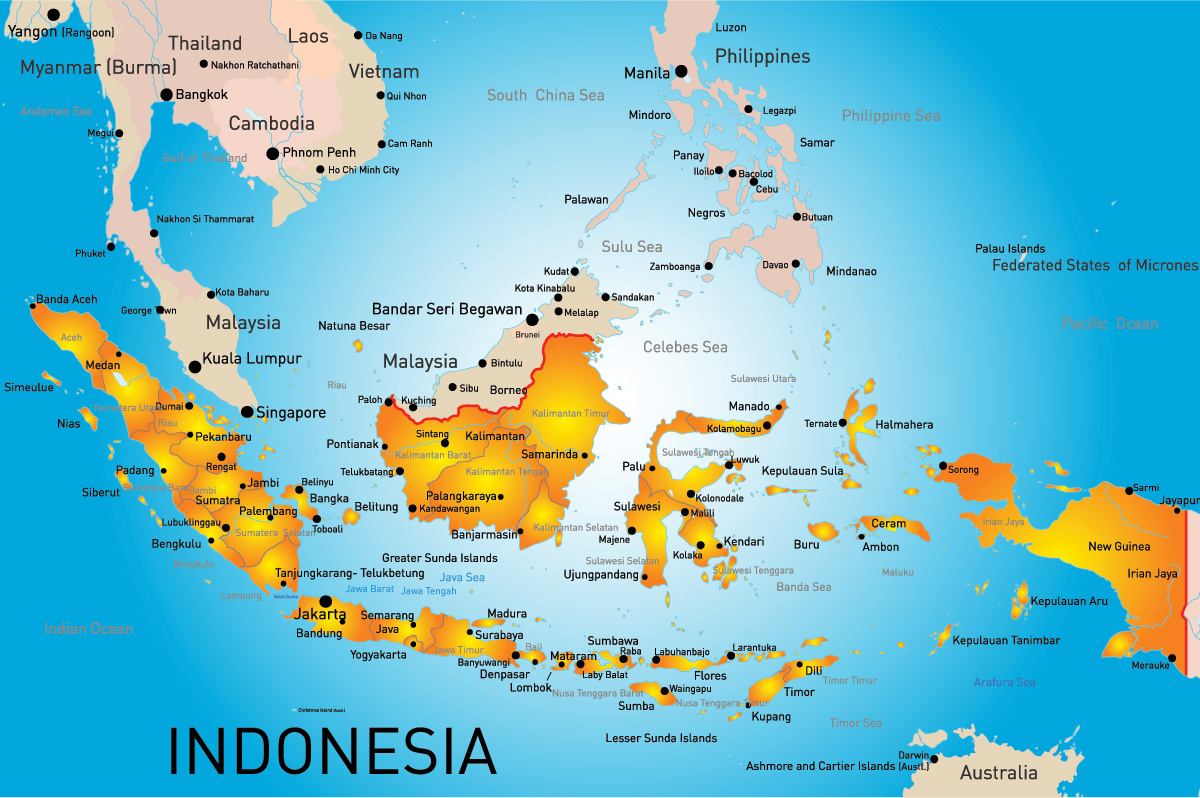
For many LGBTQ people in Indonesia, access to lifesaving HIV services depends on more than hospitals and clinics. It depends on community outreach workers who helped them get tested, obtain medication, and navigate a healthcare system often marked by stigma and discrimination.
When the U.S. cut foreign aid in 2025, many of those services disappeared, leaving vulnerable communities with fewer places to turn for care, according to a new Human Rights Watch investigation.
The 33-page investigation has documented how cuts to U.S. foreign aid disrupted HIV prevention and treatment services for LGBTQ communities in Indonesia.
The report, titled “We Want to Be Treated as Human: Impact of U.S. Foreign Aid Cuts on HIV/AIDS Prevention and Care in Indonesia,” traces the consequences of the Trump-Vance administration’s dismantling of the U.S. Agency for International Development, which ended funding for community-based programs serving people at greatest risk of HIV. Without those services, many face additional barriers to HIV testing, prevention, and lifesaving treatment. Human Rights Watch has urged Indonesia’s government and international donors to restore support for community-led HIV services.
Human Rights Watch based its findings on interviews with 35 people; including people living with HIV, outreach workers, activists, and academics. Researchers spoke to people in Jakarta, the country’s capital, and Depok and Serang during visits in November 2025 and June 2026, while also examining budget records and policy documents to understand how the funding cuts affected HIV services.
The U.S. and Indonesian governments were also given an opportunity to respond to the findings. Human Rights Watch said it had received no response from any of the three government departments it contacted.
The U.S. government’s foreign assistance records show that funding for HIV programs in Indonesia fell from $11.9 million in 2024 to $7.9 million in 2025. The reduction affected community-based prevention and care programs for LGBTQ people, including services previously supported by USAID.
The disparity is stark.
HIV affects about 0.4 percent of Indonesia’s general population, but the prevalence rises to 22 percent among men who have sex with men and 25 percent among transgender people, according to the report. Yet government spending has not reflected this divide.
In 2020, just 0.1 percent of Indonesia’s domestic HIV budget went towards programs for men who have sex with men, while none was allocated specifically for trans people. International donors funded 98 percent of HIV programs serving these communities, many of whom rely on community organizations and outreach workers to access healthcare because of stigma and discrimination in public health facilities.
The report describes how outreach workers served as a crucial link between LGBTQ people and HIV services. They distributed condoms and information about PrEP, helped people access confidential testing, accompanied them to clinics and supported adherence to antiretroviral treatment. Some also paid for clients’ transport and tests, advocated for them with clinic staff, and trained health workers to provide respectful care.
But after the funding cuts, outreach workers lost contact with some clients. The report says some people were collecting their medication late or missing doses, while local organisations no longer had the capacity to track new infections or identify interruptions in treatment.
“Just leaving the house as a trans person is scary,” said a trans outreach worker living with HIV, quoted in the Human Rights Watch report. “Without an outreach worker, the person will be alone and they won’t get care.”
The loss of those services came as LGBTQ people in Indonesia faced growing legal and social pressures.
The country’s new criminal code, which took effect on Jan. 2, 2026, makes sex outside marriage a criminal offense in certain circumstances, with cases subject to complaints by close family members. Human Rights Watch says the provisions effectively criminalize same-sex relations, adding another layer of risk for people already struggling to access healthcare.
The pressure extends beyond the new law.
Human Rights Watch says police have raided private gatherings and used condoms and suspected HIV medication as evidence in criminal cases. For people already wary of being identified or exposed, the consequences reach far beyond the threat of arrest. Carrying condoms, attending community outreach events, getting tested or seeking treatment can all become sources of fear.
For trans people, even a routine visit to a government office or health facility can bring the risk of humiliation. The report describes how those whose identity documents do not reflect their gender identity may be publicly addressed by a former name, exposing them to embarrassment and discrimination.
Outreach workers helped people navigate these barriers. They accompanied clients to clinics, intervened when they faced disrespectful treatment, helped them obtain identity documents and health insurance, and trained healthcare workers to treat them with dignity. With that support gone, many are left to negotiate a healthcare system that can be hostile to them on their own.
A gay activist living with HIV, quoted in the Human Rights Watch report, described the consequences in stark terms: “If you are LGBT and living with HIV, it’s the end of the story. You are doomed.”
The U.S. cuts were followed by reductions in HIV funding from other international donors, further shrinking the resources available to affected communities. The Human Rights Watch report notes that France, Japan, Germany, and other governments also withdrew funding for the HIV response.
The impact has been felt far beyond Indonesia.
In June, UNAIDS Executive Director Winnie Byanyima described the scale of the global disruption in stark terms.
“There’s no question that this is the most serious disruption in HIV response since the world came together to fight this disease,” she said.
Human Rights Watch says the Indonesian government must do more than simply fill the funding gap. It calls on the authorities to increase domestic funding for HIV prevention and treatment programs serving men who have sex with men and trans people, support community-led organizations, ensure a steady supply of antiretroviral medicines and train healthcare workers to provide care without discrimination.
The report also urges the government to repeal discriminatory laws, stop raids targeting LGBTQ people, and end the use of condoms and HIV medication as evidence of criminal activity. It calls for investigations into police abuses, accountability for those responsible and stronger protection for LGBTQ people facing vigilante violence.
The report also turns its attention to Washington, calling on the U.S. government to ensure that funding for PEPFAR, established in 2003, continues without interruption and is released on time. It urges the Trump-Vance administration to disclose the impact of programs it has terminated and withdraw its “Promoting Human Flourishing in Foreign Assistance Policy,” which restricts support for trans rights and related work.
Human Rights Watch also calls on international donors to increase their contributions to the Global Fund to Fight AIDS, Tuberculosis and Malaria, and to provide direct funding to LGBTQ-led community organisations working on HIV prevention and care in Indonesia.
Yudho Sudartio, an East Java representative of Jaringan Indonesia Positif, a national network and community-based organization of people living with HIV in Indonesia, told the Washington Blade the U.S. foreign aid cuts had not, so far, significantly affected access to antiretroviral therapy, HIV testing, or support services in the country.
“However, stakeholders and the government have already begun taking steps to ensure the sustainability to HIV programs through the mobilization of domestic resources,” said Sudartio. “One of the measures taken by the Indonesian government is the allocation of local funds and other domestic resources. Access to HIV treatment and testing continues to be supported through funding schemes provided by individual provinces and regencies.”
Israel
LGBTQ ally tapped to form new Israeli government
Gadi Eisenkot was Benjamin Netanyahu’s main rival in Oct. 27 elections

Israeli President Isaac Herzog has tapped Gadi Eisenkot to try and form a government after the country’s Oct. 27 elections.
Eisenkot was the Israel Defense Forces’ chief of staff from 2015-2019. He was a minister in Prime Minister Benjamin Netanyahu’s Cabinet after the Oct. 7, 2023, attacks — Eisenkot’s son, IDF Master Sgt. Gal Meir Eisenkot, died in combat in the Gaza Strip roughly two months after Hamas militants attacked Israel.
The International Criminal Court in 2024 issued arrest warrants for Netanyahu; former Israeli Defense Minister Yoav Gallant; former Hamas leader Yahya Sinwar; Mohamed Diab Ibrahim al-Masri, the head of Hamas’s military wing known as the Qassam Brigades; and Ismail Haniyeh, chair of the Hamas Political Bureau, after it accused them of committing war crimes and crimes against humanity in Gaza and Israel.
The Israeli government has strongly denied it has committed genocide in Gaza.
An Israeli airstrike on a compound in Khan Younis, a city in southern Gaza, on July 13, 2024, killed killed Deif, one of the alleged Oct. 7 masterminds. Israel less than three weeks later assassinated Haniyah in Tehran, the Iranian capital. IDF soldiers on Oct. 16, 2024, killed Sinwar in Rafah, a city in southern Gaza.
Gadi Eisenkot resigned in 2024. He founded Yashar!, a centrist party that means “Straight!” in Hebrew, in 2025.
Gadi Eisenkot was the main opposition candidate in the Oct. 27 elections.
Netanyahu, who chairs the right-wing Likud party, and his allies lost their majority in the 120-member Knesset.
The Likud bloc has 53 seats in the Knesset, compared to the 48 seats the Yashar! coalition has. Arab-led parties that could prove pivotal to Gadi Eisenkot’s efforts to form a government have 19 seats.
The new Knesset was sworn in on Tuesday.
Three MKs —Amir Ohana of Likud, Eitan Ginzburg of the center-right Beyachad party, and former Ramat Gan Mayor Israel Zari, a Yashad! member who is a former spokesperson for the Aguda, an Israeli LGBTQ rights group — are openly gay.
Ohana in 2022 became the Knesset’s first openly gay speaker and is the country’s first out Cabinet minister. The Knesset on Nov. 17 is scheduled to vote on who will will succeed Ohana in the post.
Gadi Eisenkot has six weeks to form a government. Herzog will then tap Netanyahu, who remains Israel’s caretaker prime minister, if Gadi Eisenkot fails. Another election could take place if neither man can form a new government.
Gadi Eisenkot’s party supports LGBTQ legislative package
Yashar!’s website states the “LGBT community is an integral part of Israeli society.”
“Its members bear the burden and are full partners in civic duties; but are not equal in rights and are exposed to violence, hatred, and incitement,” it reads.
The Yashar! website further states “the right to security is the right of every person,” but notes “those who serve, donate, and pay taxes feel threatened or discriminated against due to their sexual orientation and/or gender identity” and it “is a reality that cannot be accepted.” The party also says it “advocates for the right of every person to choose their lifestyle and to have equal rights as a citizen of the country, regardless of their sexual orientation or gender identity.”
“We will ensure that members of the LGBT community are safe in the public sphere, enjoy equal rights under the law, and receive all the social services that every citizen is entitled to by law,” it says.
Yashar! also supports the Sagi Laws for Equality, a package 10 legislative proposals that would expand rights to LGBTQ Israelis. They are named in honor of Sagi Golan, an IDF major who Hamas militants killed on Oct. 7 in Be’eri, a kibbutz that is near the Israel-Gaza border.
His fiancé, Omer Ohana, with the support of Israeli advocacy groups, successfully lobbied Israeli lawmakers to amend the country’s Bereaved Families Law to recognize LGBTQ widows and widowers of fallen servicemembers. A ban on so-called conversion therapy, stronger hate crimes and nondiscrimination laws, and civil marriage equality are among the other proposals in the Sagi Laws for Equality package.
The Aguda promoted it ahead of the Oct. 27 elections.
“Yashar! is committed to promoting equal rights for members of the LGBT community,” says Yashar! on its website, while reiterating its support of the legislative package to “restore the personal security of members of the LGBT community, to end existing discrimination in legislation, and to provide the necessary government responses in education, health, welfare, and all areas of life.”

Trinidad and Tobago
British appellate court strikes down Trinidad and Tobago sodomy law
Jason Jones challenged ruling that recriminalized homosexuality in Commonwealth country
A British appellate court on Tuesday struck down a Trinidad and Tobago law that criminalizes consensual same-sex sexual relations.
Jason Jones, an LGBTQ activist from Trinidad and Tobago who currently lives in the U.K., in 2017 challenged Sections 13 and 16 of the country’s Sexual Offenses Act.
High Court Justice Devindra Rampersad in 2018 found them unconstitutional. The country’s government appealed the ruling, and the Trinidad and Tobago Court of Appeal in 2025 overturned it in a 2-1 ruling.
Jones appealed the decision to the Privy Council, an appellate court for British territories that can also consider cases from Commonwealth countries. (King Charles III is not Trinidad and Tobago’s head of state, but the country remains part of the Commonwealth.) The Privy Council heard the case in July.
“I won,” Jones told the Washington Blade. “Nobody believed it was possible and made the impossible possible.”
Antigua and Barbuda, St. Kitts and Nevis, Barbados, and Dominica are among the countries that have decriminalized consensual same-sex sexual relations in recent years. (All four Caribbean nations are former British colonies.)
The Inter-American Commission on Human Rights in 2021 issued a decision that said Jamaica must repeal its colonial-era sodomy law. The Jamaican Supreme Court in 2023 ruled against a gay man who challenged it.
A judge on St. Vincent and the Grenadines’s top court in 2024 dismissed two cases that challenged the country’s sodomy laws.
U.N. Commissioner for Human Rights Volker Türk in his statement that celebrated the Trinidad and Tobago ruling urged other Caribbean countries to decriminalize consensual same-sex sexual relations.
“This would align with the strong regional trend of repealing outdated and harmful colonial laws and with the principle of equal treatment for everyone, regardless of who they are or whom they love,” he said.

VIDA Fitness owner ‘devastated’ over fatal shooting

‘Blue Wave’ proves transphobia is not a winning political strategy

Many ways to move forward after the elections

Authorities identify VIDA Fitness shooter

Witness describes scene inside Logan Circle gym during fatal shooting

Epic ‘La bola negra’ delivers powerful romance for the ages

Kim Kardashian gets the bio treatment in new book

Honoring LGBTQ+ veterans and advancing housing equality

Botswana’s marriage equality case and the politics of family values

New Orchestra of Washington to perform ‘Requiem for a People’
-

 Movies4 days ago
Epic ‘La bola negra’ delivers powerful romance for the ages
-
Books4 days ago
Kim Kardashian gets the bio treatment in new book
-
Real Estate4 days ago
Honoring LGBTQ+ veterans and advancing housing equality
-
Botswana3 days ago
Botswana’s marriage equality case and the politics of family values