Theater
Meet the husbands and creative partners behind ‘Christmas Angel’
A funny, redemptive world premiere with a diverse cast

‘The Christmas Angel’
Dec. 9-19
Creative Cauldron
410 South Maple Avenue
Falls Church, VA 22046
Tickets: $35. Students $20.
Masks and proof of vaccination are required
creativecauldron.org
“Ours is like a lava lamp,” says composer Matt Conner describing the collaborative creative process he shares with musical writing partner and husband Stephen Gregory Smith. “We move together in motion in a continual ebb and flow.”
A couple for 23 years, married for eight, and making musicals together for 11, the talented pair’s current offering is “The Christmas Angel,” opening on Dec. 9 at Creative Cauldron in Fairfax.
A musical adaptation of the same-named 1910 novel by Abbie Farwell Brown, it’s the story of Angelina Terry (Kanysha Williams), a wealthy embittered recluse who learns the lessons of Christmas from a box of old toys that she casts into the street. Also featured in the hour-long one-act are Ryan Sellers as Horton, Angelina’s butler, and Carl Williams who plays her brother. The angel and toys are brought to life by an ensemble of a dozen teens plucked from the company’s musical theater training program.
Via phone from their home in Arlington, Smith and Conner shared thoughts on their new show and working style. In attendance are pug dogs Edgar Allan Pug and Lord Byron, whom they call Eddie and Byron in public – otherwise “it’s just too much,” says Conner whose ultimate fantasy involves living on a pug farm where he’d write music and present the occasional show.
Rather than finish each other’s sentences, the duo (both Helen Hayes Award winners – Smith for acting and Conner for directing) expound on one another’s thoughts.
While Conner composes the music, Smith writes the book and lyrics, and together they co-direct. “But there’s no end and beginning where my job ends and his begins,” says Smith. “What we do complements each other’s work.”
Still, there are differences. Smith’s approach is focused. He writes pages at night and edits in the morning. Conner’s method is more relaxed, preferring to sit at the keyboard and talk rather than writing things down. But throughout the creative process, there’s never a moment when the project isn’t on their mind. They can be watching TV or buying milk when an exciting idea pops up, says Conner.
A clever nod to Dickens, the novel is more than just a female “Christmas Carol,” says Smith. And in some spots, he’s beefed up the 55-page book, fleshing out both storyline and characters including the toys whose shabby appearance belies a youthful confidence.
He adds, “Every holiday season you go to the attic and pull down the box, or boxes in my case, of holiday decorations and it’s all old but it’s new. That’s the nostalgic feeling of toys from the attic that we’re trying to find through the show.”
The music is a combination of traditional carols performed by a hand bell chorus, and original Christmas songs that intentionally sound very familiar. The score includes songs “Don’t Hide Your Light,” “The Sweetest Gift,” and “Yestermore” – the moment when the past, present, and future come together.
Also, there’s Angelina’s Bah! Humbug! number “Fiddlesticks,” her great renunciation of the holidays. She believes the world a disappointing place to be, and the sooner realized the better.
Conner and Smith aren’t new to Creative Cauldron. Through the company’s Bold New Works project, the team was commissioned to write five world premiere musicals in just five years. The result was “The Turn of the Screw,” “Monsters of the Villa Diodati,” “Kaleidoscope,” “Witch” and “On Air.”
Judging from some of the titles and their slightly macabre content, it seems the duo was better poised to write for Halloween than Christmas, but nonetheless, they were commissioned. Creative Cauldron’s producing director Laura Connors Hull brought them the obscure yet charming book that surprisingly had never before been reworked for stage or celluloid, and the pair got to work last spring.
Conner and Smith agree, “The show is a lot of things rolled up into one.”
Not only is it a funny, redemptive world premiere with a diverse cast, but it’s also a story largely unknown to today’s audiences. Additionally, the show boasts intergenerational appeal while holding messages about Christmas, family, and finding light when you’re in a darker place.
More information about Conner and Smith, including links to their music and popular podcast “The Conner & Smith Show,” can be found on their terrific website at connersmithmusicals.com.


Theater
‘Merrily’ is for Sondheim super fans, the uninitiated, and anyone in between
Experience it in an intimate setting with beautiful design, incredible cast
‘Merrily We Roll Along’
Through Nov. 1
Signature Theatre
4200 Campbell Ave., Arlington, Va.
Tickets start at $47
Sigtheatre.org
Unfaithful. Compromised. A sellout. Just a few descriptors that might fit Frank Shepard, the talented composer in the Stephen Sondheim musical “Merrily We Roll Along.”
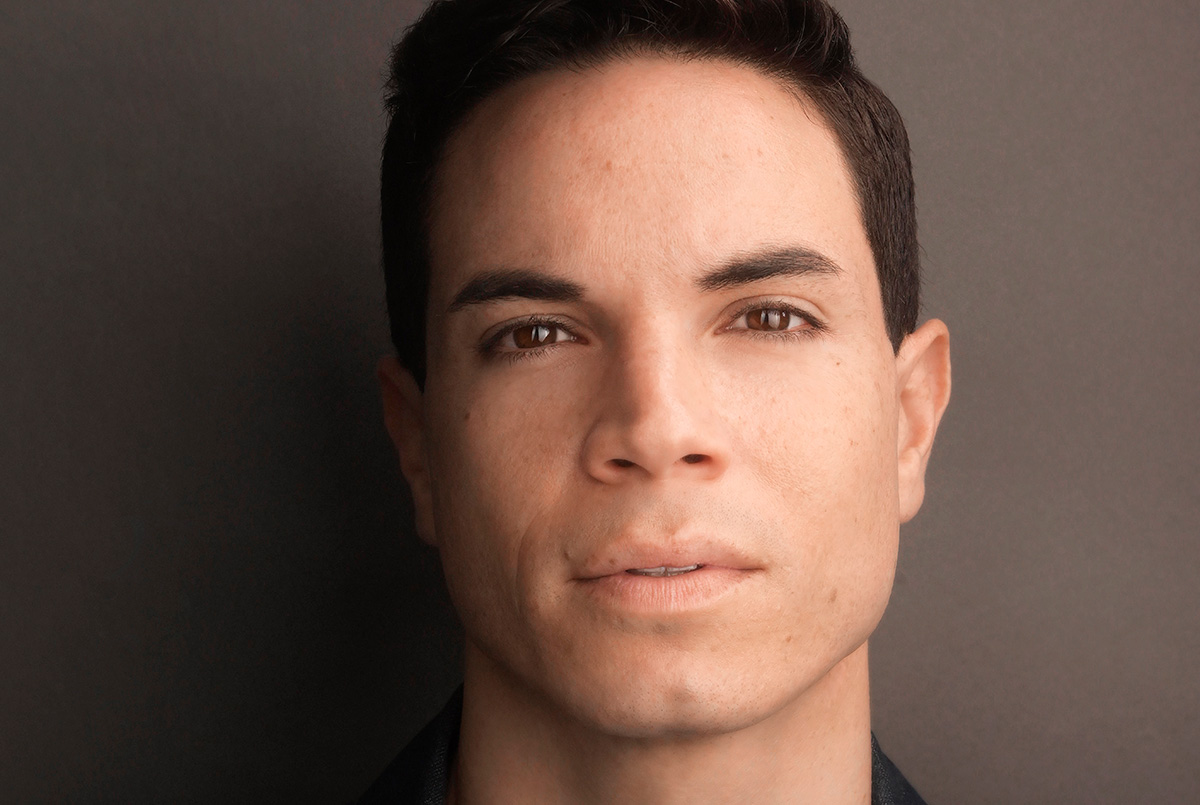
“Personally, I think he gets a bad rap,” says Jason Gotay, the gay actor who’s currently playing womanizing Frank at Signature Theatre in Arlington. “At his core he wants to be loved. He’s concerned with making those around him happy and he’s a people pleaser. That’s my window into Frank.”
Whatever your thoughts, by show’s end, we know Frank started out as a nice guy. “Merrily” famously moves in a reverse chronological order. We meet Frank and friends, lyricist Charley Kringas (Jake Loewenthal) and writer Mary Flynn (Melanie Field), disillusioned in a New York penthouse in 1976. Ensuing scenes filled with disappointments and broken relationships move toward more hopeful times, eventually leaving the trio on a rooftop in 1957, young and full of promise searching the night sky for a happy future.
“Moving backward makes it difficult to build on the prior scene,” explains Gotay. 37. “You live heightened moments followed by 30-second costume changes, and you’re meant to forget everything you just did. To be honest, it’s a bit of a mind fuck.”
A marvelous but humble tenor, he begrudgingly acknowledges his artistic versatility. At New York City Center he sang Che in “Evita” (contemporary almost operatic), and he was solemn Henrik in Lincoln Center’s “A Little Night Music,” (classical Sondheim). On Broadway, he played Homer, the loyal brother in “Floyd Collins” (folksy bluegrass), and he’s sung the sweeping songs of a few Disney princes.
“I’m asked to do a lot of things because vocally I sing in many styles; it’s something I can do and I love doing it.”
Growing up in residential Dyker Heights, Brooklyn, Gotay was immersed in school plays and community theater. For high school, he attended the Professional Performing Arts School in midtown Manhattan with a focus on musical theater.
He continued on the same track for a year at Emerson College in Boston followed by Marymount Manhattan before graduating in 201l. A year later, he made his Broadway debut as Randall in Lin-Manuel Miranda’s hip-hop inspired “Bring It On: The Musical.”
Along the way, Gotay became a huge Sondheim fan. As a musical theater kid, he was introduced to the composer’s enduring classics all written before Gotay was born: “Into the Woods,” “Sweeney Todd,” and the actor’s forever favorite “Sunday in the Park with George.”
To many theatergoers’ surprise, “Merrily” flopped badly when it premiered on Broadway in 1981. But over many years of tweaks, reimaginings and revivals, the show became a major Broadway hit in 2023, with Jonathan Groff winning a Tony Award for playing Frank.
While he was aware of “Merrily,” Gotay didn’t make a deep dive into its wild provenance until he was asked to audition for the Broadway revival. (Briefly it looked like Groff, long attached to the show, might come up against some film conflicts.) It was during this short time that Gotay fell in love with Frank.
The experience left him further determined to sink his teeth into the complex character along with Sondheim’s lush melodic score with songs like “Not a Day Goes By,” “Old Friends,” and “Our Time.” So, when Gotay learned that Signature was slated to do “Merrily” this season, he reached out to Matthew Gardiner, the company’s artistic director as well as the production’s director/choreographer, asking how the role of Frank might be his. Long story short, he sought it, got it, and is ecstatically happy that it has worked out.
Several years ago, when Audible (Audible.com) came calling with an invitation to record a cabaret entirely of his own creation, he was thrilled.
“It’s probably the most personal thing I’ve ever done. My own story is a love letter to the women – my mother, friends, mentors, Broadway icons – who helped to shape my life; it’s about self-acceptance and what it is to grow up queer.”
He titled the solo show “Where You’ll Find Me,” a nod to his first love Dorothy Gale from “The Wizard of Oz.”
Often described as “a television heartthrob” (something the once chubby 12-year-old sometimes finds hard to process), Gotay is not unfamiliar with screens large and small. He’s remembered for various screen roles including his turn as Rafa Caparros, a prep school classics teacher who becomes entangled with a male student in HBO Max’s reboot of “Gossip Girl.”
Gotay recommends Signature’s “Merrily” for Sondheim superfans, the uninitiated, and anyone in between. He says, “It’s a great opportunity to learn about this once niche now increasingly mainstream musical. And if you have seen it before, this is a chance to experience it in an intimate setting with beautiful design and an incredible cast that truly brings the show to life.”
Theater
What’s frightening is also funny in ‘Venus’
Don’t miss spectacular Woolly Mammoth production from out director
‘Venus’
Through Oct. 4
Woolly Mammoth Theatre Company
641 D St., NW
$20– $105
Woollymommoth.net
Meet Beth. She’s an art-house film projectionist. Cocky yet awkward, and a bit of a player, she’s exceedingly fond of international cinema and women. Her current interest is Nicole, a pretty librarian with an obsession for order and safety. Romance seems unlikely.
Written by Los Angeles-based playwright Steve Yockey, “Venus” pits odd against odder, and similar to some of his past works, what’s frightening is also funny.
When Beth (Kimberly Gilbert) crashes a “not fun” book club (currently reading Faulkner’s “As I Lay Dying”), she succeeds in bagging a date with the group’s poised, and –according to Beth – “imminently fuckable” member Nicole (Regina Aquino).
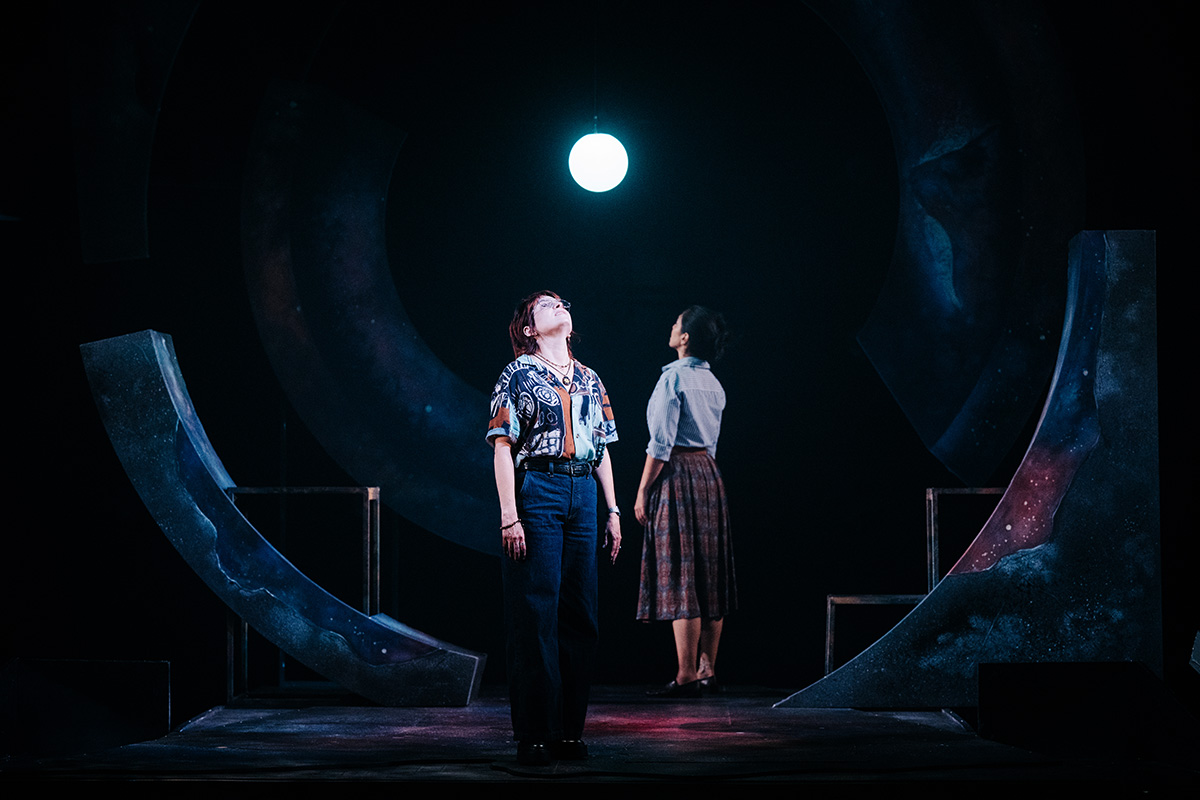
The pair climbs into Beth’s beloved vintage gold Mercedes (or “sort of rust colored,” says Nicole) and head into the night. They reach an isolated hilltop to star gaze and share a Thermos of spiced rum. Charmed by the surprise outing, Nicole warms up to her new friend, but that soon changes when Beth corrects Nicole on some planetary specifics, and lets it slip that she’s taken other women on this same exact date.
Away from age (40 or so), the pair couldn’t be more ill matched. Whether it’s personal style, temperament, approach to dating, they’re chalk and cheese. Beth’s romantic M.O. is spontaneous, whereas Nicole’s dating app profile is “always clean, organized, and up to date with recent pictures and current information.” And she never makes the first move.
“Venus” is perceptively staged by out director Reggie D. White who specifically selected Yockey’s newest play for his directorial debut as Woolly’s new artistic director, and it’s a spectacular launch. The out playwright and director, and the terrific two-person cast, successfully lean into the work’s dark comedy without denying past heartbreaks.
The actors play off each other compellingly, capturing precisely what’s both disturbing and funny about Yockey’s creations. Nicole (Aquino) isn’t particularly concerned about the horrors she visits upon her date, and while Gilbert’s Beth might fall into the most dreadful situations, she handles them with detached wit. It’s hilarious.
The dialogue is spoken to each other, to us, to themselves. Words might switch from conversational to rapidly delivered monologues about varied things like well-meant instructions that Nicole once received from her father on how to box and bury things that upset her.
Costume designer Danielle Preston captures the women’s carefully chosen attire. Nicole is dressed boho prep with a conservative silhouette, flat shoes, and interesting artisanal jewelry. Beth is a bit hit or miss: wide-legged pants, black thick-soled, black boots, and on trend frames– all the sort of things that might look cool.
After the date, Beth drops Nicole at her immaculate, meticulously mid-century curated house. Beth tells us that she’s not averse to a clean home, but other than Susanna, a goldfish in the kitchen, this house with its collection of precisely placed handstitched pillows, looks entirely unlived in; other than the alarming contents of a mysterious drawer, it might be a show home.
And while Beth has made a few moves that her date didn’t entirely dodge, the evening has come to an end. Nicole has a Scholastic book fair in the morning, so she gives Beth the old heave-ho. Nicole likes a clean exit.
What ensues is a one-sided obsession with grand floral gestures, incessant texts, and some stalking. Just when you think one couldn’t grow any madder and that the other is the voice of reason, the script flips. They take turns at being the most neurotic or easily triggered.
Also, each in turn encounters an unseen woman wearing a red raincoat, a sort of physical manifestation of fear. How said interactions work differently for each of the daters, explains a lot.
But to say more would be a spoiler. With its myriad twists and turns, there are so many possible spoilers, scores of them, that might ruin the experience of an absolutely glorious 90-minute uninterrupted traipse through the madly unexpected.
So ably written and acted, you’ll leave believing that you’ve seen the vintage car, been inside a pristine house, and visited a hilltop. But you didn’t.
Giselda Estrada’s scenic design includes a raised black platform backed by a dark circle broken into segments, above hang lanterns, globes, pendant lights, and lamps raised and lowered to great effect by lighting designer Nic Vincent. One of the more significant orbs is singled out as a green-hued celestial body. The ground is a blanket of clunky gray gravel.
Even with its two, or maybe three, particularly (and personally) dreaded scenarios, it’s unstoppably pleasing. There’s nothing not to like about “Venus.”
Theater
D.C.’s fall theater season is already well underway
‘Ma Rainey,’ ‘Mama Mia,’ ‘Rocky Horror,’ and much more on tap
Leaves have scarcely turned, but throughout the DMV, the fall theater season is well underway.
In Arlington, Signature Theatre got a jump on the season with Stephen Sondheim’s musical “Merrily We Roll Along” (through Nov. 1). Told entirely in reverse chronological order, this story of three longtime friends spans the years 1957 to 1976 moving from the trio’s cynical middle-aged present back to their happy and hopeful salad days.
Filled with great promise when it opened in 1981, the original production closed after just 16 official performances despite a terrific score glutted with great tunes like “Our Time,” “Good Thing Going,” and “Not a Day Goes By.” Over the years, the show was tweaked and reimagined, ultimately redeeming itself as a massive Broadway hit revival in 2023.
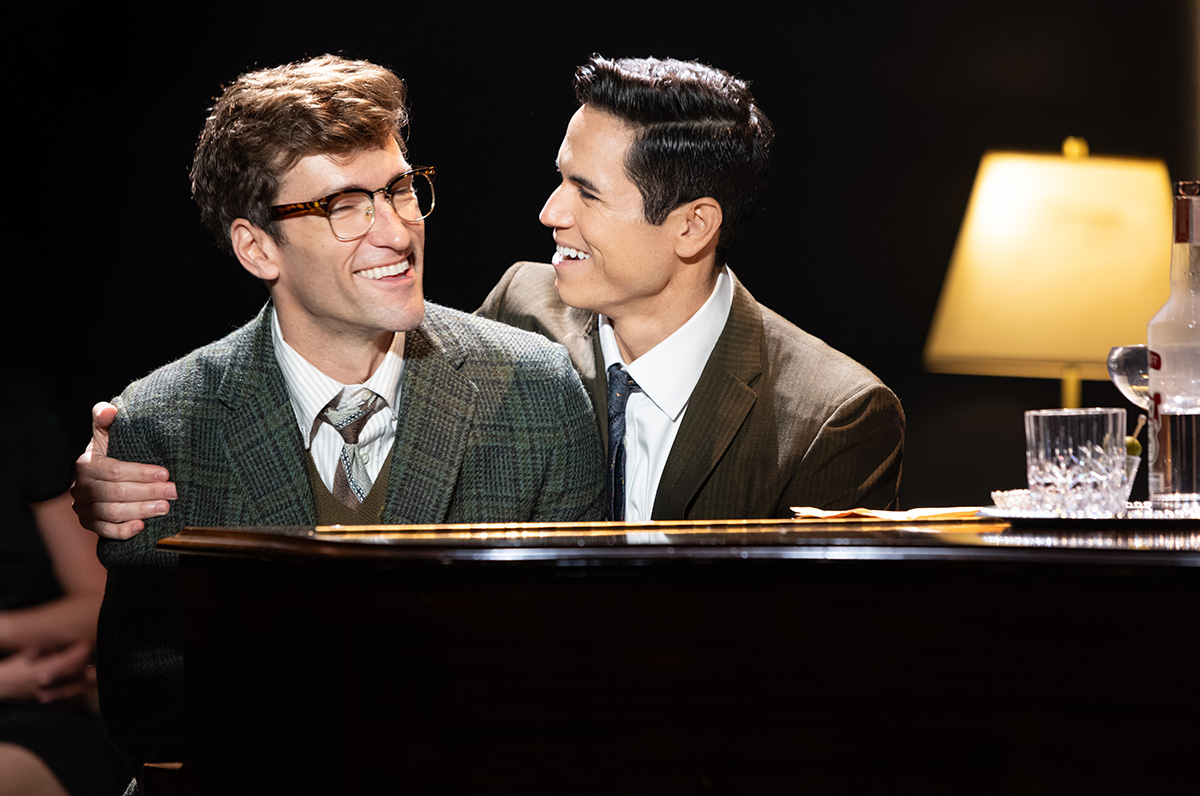
Signature’s production, directed and choreographed by Matthew Gardiner, features out actors Jason Gotay (Rafa from the “Gossip Girl” reboot) and Signature vet Jake Loewenthal playing, respectively, sellout composer Franklin Shepard and loyal lyricist Charley Kringas. Melanie Field plays witty and increasingly alcoholic Mary Flynn, the third prong of the complex little friend group. Sigtheatre.org
Woolly Mammoth Company has opened with playwright Steve Yockey’s “Venus” (through Oct. 4), a tragicomedy about two women whose first date goes terribly wrong. The lesbian daters are played by Kimberly Gilbert and queer-identified actor Regina Aquino. Woolly’s new artistic director Reggie D. White directs. Woollymammoth.net
At Round House Theatre in Bethesda, August Wilson’s “Ma Rainey’s Black Bottom” continues its compelling exploration of racism, exploitation, and artistic integrity. Helmed by director Lili-Anne Brown, the production runs through Oct. 18. The 10-actor cast includes Yao Dogbe as Levee, a young firebrand trumpeter, and out actor Nicole Michelle Haskins as the queer titular blues legend. Roundhousetheatre.org
Broadway at the National (National Theatre) is ushering in a spate of hit Broadway shows this fall. The musicals include “Dirty Dancing” (Sept. 29–Oct. 4), “Maybe Happy Ending” (Oct. 6–11), and ABBA’s “Mama Mia!” (Oct. 27–Nov. 15) featuring charming out actor Victor Wallace as successful architect and divorced father of two Sam Carmichael. Broadwayatthenational.com
First introduced to theatergoers by MetroStage at the Kennedy Center’s Page to Stage Festival in 2019, Sherman Yellen’s “Cousin Bella–The Whore of Minsk” is the riveting story of Bella, who as a young Jewish woman living in Czarist Russia was sold into prostitution by her stepmother. Later rescued, she immigrated to America, where she lived out the rest of her life in New York.
Now with a shortened title, “Cousin Bella” is going to MetroStage at The Lyceum (Alexandria’s History Museum) as a staged reading for one night only on Sept. 22. Again, Adrienne Nelson plays Bella, but this time, she’s joined by out DMV favorite Michael Russotto as Sherman. MetroStage.org
Hard to believe, but this year marks four decades since the film release of “Little Shop of Horrors.”
To celebrate the anniversary, Ellen Greene (the actor who created Audrey, the show’s sweet and sexy florist, both on stage and screen) is doing a nationwide tour that includes a night at D.C.’s historic Lincoln Theatre (Friday, Sept. 25).
Greene’s appearance offers fans the opportunity to experience the 1986 cult horror/comedy/musical classic alongside its iconic star. Before the screening, Greene will take part in a live Q&A and perform Audrey’s signature song – what else — “Somewhere That’s Green.” Thelincolndc.com
At Olney Theatre Center, the season opens with the regional premiere staging of “Some Like It Hot” (Sept. 18–Nov. 8) directed by Jason Loewith with choreography by Karla Puno Garcia.
Adapted from the classic 1959 Billy Wilder film starring Marilyn Monroe, Tony Curtis, and Jack Lemmon, the Tony Award-winning musical by Marc Shaiman and Scott Wittman (the guys who gave us “Hairspray”) brings the jokes, music, more dance and adds gender identity, self-discovery, and racial representation.
Like the film, the action kicks off in Prohibition-era Chicago when Joe (Jacob Tischler) and Jerry (Tavis Corderll), two straight musicians, witness a mob hit. Averse to being bumped off, they leave town as the newly hired members of an “all-girl band” fronted by the irresistible Sugar Kane (Mot Walker). Laughs and drag ensue. Olneytheatre.org
Spooky Action Theater in association Solas Nua present “Hakawatis: Women of the Arabian Nights” (Sept. 24 – Oct. 18). In this re-imagining, Irish Palestinian playwright Hannah Khalil reclaims the classic “Arabian Nights” through a new feminist lens replete with compelling storytelling by its all women cast of five. Spookyaction.org
The Shakespeare Theatre Company presents “Frida…A Self Portrait” (Oct. 8 – Nov. 8), a stage portrait of Mexican painter and queer icon Frida Kahlo. Written and performed by Brazilian actor Vanessa Severo, the play is set on the eve of Kahlo’s death, exploring her pain, passion, and extraordinary life through a powerful, intimate lens. Shakespearetheatre.org
At 1st Stage in Tysons, the season opens with British playwright Harold Pinter’s “Betrayal” (Oct. 8-25), a play sophisticated in subject and structure. Pinter uses a non-linear timeline spanning the years 1968 to 1977, moving mostly backward from the end of a seven-year affair to its beginning. The adulterous love triangle involves Emma (Katrina Clark), Robert (Shawn Sebastian Naar), and Jerry (played by excellent out actor Jaysen Wright). Alex Levy directs. 1ststage.org
In time for Halloween, Creative Caudron Stage in Falls Church presents “Monsters of the Villa Diodati” (Oct. 8 – Nov. 1), a Gothic-style musical created by local married collaborators Matt Conner (composer) and Stephen Gregory Smith (playwright/lyricist).
The applauded work dramatizes the stormy Geneva summer of 1816 when poet Lord Byron challenged his guests to come up with their best scary tales. Mary Shelley’s “Frankenstein” and John Polidori’s “The Vampyre” were among the better results. Creativecauldron.org
In Rehoboth Beach, Del., Clear Space Theatre Company’s anticipated annual production of “The Rocky Horror Show” (directed by Wes Drummond and choreographed by Shondelle Graulich) is returning to the stage for the Halloween season. (Oct. 9–31). Clear Space invites theatergoers to “revel in a deliciously decadent rock ‘n’ roll party where nothing is sacred, everything is extra, and liberation is the main event.” (Late night audience participation performances every Saturday night.) Clearspacetheatre.org
The first of Arena Stage’s autumn offerings is the Step Afrika! premiere of “The Fruits of Our Labor” (though Nov. 1), a powerful, celebratory production focused on resilience and the unfinished American experience expertly performed by the company’s tremendous step dancers.
Later at Arena, it’s playwright Eric Bentley’s extremely time “Are You Now or Have You Ever Been” (Oct. 17– Dec. 6), directed by Tony Award-winner Anna D. Shapiro. “This docudrama drops you into the tense world of the 1940s House Committee on Un-American Activities hearings, where fame offered no protection and political pressure could end a career.” Arenastage.org
For a bit of Strathmore family fun, AMP presents Disney Pixar’s “Coco Live-to-Film Concert” (matinees on Oct. 31, Nov. 1), a special event for Día de los Muertos where the full animated film Coco is screened on the big screen while its culturally rich score by Michael Giacchino is performed live by the 20-member Orquesta Folclórica Nacional de México. Strathmore.org
In an amusing essay about microaggressions, David Sedaris shares that whenever he and his partner Hugh browse antique stores in England, the shop owners invariably look them over and ask, “Are you dealers?” His usual retort: “No, just homosexuals.”
Playwright JB Miller treads similar terrain with “The Last Victorian,” his new play that kicks off the fall season at Washington Stage Guild with a world premiere production (Nov. 19- Dec. 13) directed by Laura Giannarelli.
In this dark comedy, two failed British antique dealers, same-sex partners in both business and in life, unbelievably inherit the world’s oldest person. When issues of price and provenance come to the fore, the pair turn on each other, and soon it seems the old lady might take charge. Stageguild.org
And to help make the much of the above markedly more affordable, there’s Theater Week. Organized by Theatre Washington, the more than seven days of deals and entertainment is a multi-week regional celebration launching the local fall theater season that runs from Sept. 24 to Oct. 11, featuring discounted tickets priced at $25, $45, and $65 for more than 25 productions alongside a lineup of free community events. For details and participating companies go to Theatrewashington.org.

Lula, Flávio Bolsonaro to face off in second round of Brazilian presidential election

The financial realities facing LGBTQ+ first-time buyers

‘Merrily’ is for Sondheim super fans, the uninitiated, and anyone in between

Engrossing ‘Tip Toe’ delivers tension and an ominous warning

Eliot Glazer’s new book an engaging collection of essays

Meet the LGBTQ candidates running for U.S. House, Senate

Ana Brnabić becomes world’s first openly lesbian head of state

Vote now! Best Of LGBTQ DC readers’ choice awards

Gay Va. couple hopeful voters will enshrine marriage equality in state constitution

Victory Fund board investigates former staffers’ allegations against CEO Evan Low
-

 2026 Midterm Elections5 days ago
Meet the LGBTQ candidates running for U.S. House, Senate
-
Serbia5 days ago
Ana Brnabić becomes world’s first openly lesbian head of state
-
Arts & Entertainment5 days ago
Vote now! Best Of LGBTQ DC readers’ choice awards
-
Virginia4 days ago
Gay Va. couple hopeful voters will enshrine marriage equality in state constitution