District of Columbia
D.C. man sentenced to 7 months for attack against gay Asian man
Sentencing follows accepted plea offer
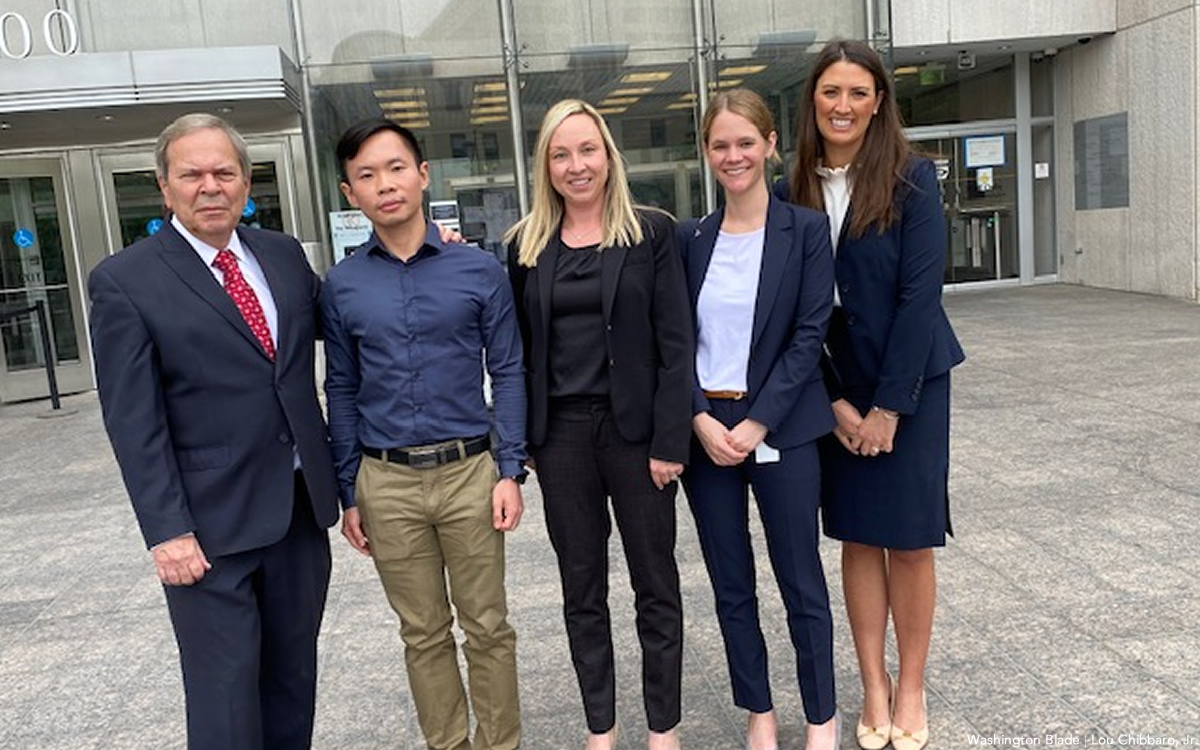
A D.C. Superior Court judge on Thursday sentenced District resident Patrick Trebat, 39, to seven months in jail following a dramatic court hearing in which a gay Asian man, Sean Lai, described how Trebat assaulted him and his parents while shouting homophobic and anti-Asian slurs in an unprovoked attack last August on a D.C. street.
The sentencing came after Trebat pleaded guilty during the same hearing to three counts of misdemeanor simple assault, with one of the counts designated as a hate crime based on the victim’s ethnicity. The guilty plea was part of a plea bargain offer by prosecutors with the Office of the U.S. Attorney for D.C.
In exchange for Trebat accepting the plea deal, prosecutors agreed to drop two earlier felony charges of bias-related assault with significant bodily injury brought against Trebat in connection with the attack on Lai and his parents.
Judge Michael O’Keefe officially sentenced Trebat to 21 months of incarceration for the three charges, but suspended all but seven months of the sentence. O’Keefe also sentenced Trebat to three years of supervised probation upon his release, with the stipulation that he will be required to serve the full 21 months if he violates the terms of his probation.
Trebat, who had been released on a partial home detention order shortly after his arrest just under 10 months ago, was placed in immediate custody and escorted out of the courtroom by U.S. marshals after the conclusion of the sentencing part of the hearing to begin serving his sentence.
In delivering a victim’s impact statement in the courtroom, Lai told O’Keefe that in addition to inflicting physical injuries on him and his parents that required emergency treatment at a hospital, Trebat’s attack on his family caused deep emotional scars that continues to haunt all three of them.
He said he objects to the plea bargain deal on grounds, among other things, that it does not designate Trebat’s violent attack as a hate crime based on Lai’s sexual orientation, only on his and his parents’ ethnicity.
Court records show that Trebat attacked Lai and his elderly parents, who are of Chinese ancestry, as they were walking on a street in the city’s Observatory Circle neighborhood near where they were living and within sight of the Washington National Cathedral.
Police charging documents filed in court state that Trebat called the three victims “faggots” and shouted, “You are not Americans” as he approached them while they were walking along the 3700 block of Fulton Street, N.W. at about 9:30 p.m. on Aug. 7, 2021. One of the documents says Trebat punched and shoved the three victims, knocking each of them to the ground, after initially punching Lai’s father in the head from behind while shouting, “Get out of my country.”
“As painful as it is to relive this moment when this atrocious attack took place, I choose to be here today because I wanted you to hear my own voice and perspective, as well as the perspective from my parents,” Lai told the judge. “The defendant attacked me and my elderly parents without provocation, motivated simply by his hatred toward our race and my sexual orientation,” Lai continued.
“But what breaks my heart the most is what was done to my parents,” he said. “I had to take them each to several orthopedics appointments over the following months. I secretly cried in my bed each night after seeing the pain that was inflicted on them and the psychological trauma that they experienced.”
Gay D.C. Advisory Neighborhood Commissioner Mike Silverstein followed Lai by delivering an LGBTQ community impact statement before the court on behalf of the city’s ANC LGBTQ Rainbow Caucus, the D.C. Center for the LGBT Community, and what Silverstein said was Lai’s request that he speak on behalf of the Asian and Pacific Islander community.
“Thank you, Your Honor, for the opportunity to give this victim’s impact statement,” Silverstein said. “And please forgive me for the next 13 words, which were not mine,” he said.
“’Fuck you bitch!’ ‘Faggot!’ ‘You are not Americans! Get out of this country!’”
“Those were the 13 words Patrick Trebat shouted at Sean Lai and his elderly mother and father just before Mr. Trebat physically attacked them without provocation,” said Silverstein as courtroom spectators listened intently.
“As members of the LGBT+ community, we feel this was an attack on every one of us,” Silverstein continued. “It was a direct attack on our right to exist and to live openly in the District of Columbia. We respectfully ask the court to issue the maximum jail sentence so that our community can feel that we are protected, and that we need not live in fear that those who would do us harm will get off easy,” he said.
After asking Trebat to confirm that he fully understands and agrees to the terms of the plea offer, O’Keefe invited Trebat to give his own statement just prior to the sentencing.
Trebat, who was dressed in a suit and tie, offered his “deepest apologies” to Lai and Lai’s parents, who were not present in the courtroom. Trebat said he was intoxicated on alcohol and drugs at the time of the incident and had no recollection of what happened.
“I was legitimately out of my mind that night,” the told the judge. He said alcohol and prescription drugs caused him to engage in “stupid” acts. “I am sorry for the shame I brought to my parents, to American University, and to the victims,” he added.
He was referring to his status as a graduate student at American University at the time of his arrest. The university later expelled him from his enrollment there after American University students protested that he had initially been allowed to continue his studies following a hate crime arrest.
“This event was not personal. I ’m not a racist,” he said. “I take full accountability for what happened. I’m a changed person.”
Trebat’s attorney, Brandi Harden, asked O’Keefe to sentence Trebat to only a suspended jail term and a stringent term of probation rather than incarceration, saying that he suffers from and has long been treated for mental health issues, which would be worsened if he were to be sent to jail.
Assistant U.S. Attorney Robert Platt, the lead prosecutor in the case, expressed opposition to Harden’s request, telling the judge that Trebat was already receiving a “significant benefit” from the plea offer.
“We don’t dispute that the defendant was intoxicated,” Platt said. But he added that the plea deal includes a provision for mental health and substance abuse treatment and that Trebat needs to be held responsible for his actions.
“This was part of hate crimes against Asians across the country,” Platt told O’Keefe before providing statistics of the violent hate crime attacks against Asian Americans nationwide. “This type of attack will not be tolerated,” he said.
Although Platt acknowledged that Trebat also hurled homophobic slurs at Lai and his parents during the attack, he did not explain why prosecutors chose not to include a hate crime designation pertaining to sexual orientation in the plea bargain offer.
“I believe he is remorseful,” O’Keefe said in handing down his sentence. “But there has to be some punishment,” he said. “You have been shamed, and that is part of the penalty,” O’Keefe added. “It was your own actions that brought this on … I think this sentence strikes a good balance.”
In response to a request by the Washington Blade for comment on why prosecutors decided to reduce the severity of the charges against Trebat through the plea agreement and did not include sexual orientation in the hate crime designation, U.S. Attorney spokesperson William Miller sent a brief statement to the Blade.
“The U.S. Attorney’s Office thoroughly investigated and analyzed the facts and circumstances of this case and provided what we determined to be an appropriate plea offer,” the statement says. “We extend a plea offer in almost every case charged in Superior Court,” it says.
“The plea offer extended in this case included a bias enhancement,” the statement continues. “Our office is committed to fully prosecuting bias-related crimes and held this defendant accountable for his appalling conduct.”
The texts of the victim’s impact statement delivered in court by Lai and the community impact statement given by Silverstein can be viewed below:
U.S. v. Trebat
Victim Impact Statement
By: Sean Xiangwen Lai
Your Honor,
Thank you for the opportunity to give my victim impact statement. I have gathered the courage to stand before you today at this hearing, to tell the court and my community about the defendant’s assault on me and my elderly parents, and the suffering we have endured as a result of his horrific actions. As painful as it is to relive the moment when this atrocious attack took place, I choose to be here today because I wanted you to hear my own voice and perspective, as well as the perspective from my parents.
The defendant attacked me and my elderly parents without provocation, motivated simply by his hatred toward our race and my sexual orientation. We were walking on the streets of our neighborhood, enjoying our time outdoors during this unprecedented time when being outside of our home was a small joy of which we could take advantage. We were defenseless, feeling what we thought was secure so close to our home, when he assaulted us, beating up my parents and me. I am here today to tell the court in person that a man who would do this to an innocent family deserves the maximum prison sentence and does not deserve the leniency he has already received from the plea bargain offered by the prosecutors, which my family and I have expressed is very disappointing.
Last August, my parents and I were taking a walk in our neighborhood, very near our home. It was a beautiful Saturday night, but little did we know that our lives would be changed forever that night. “Fuck you bitch! Faggot! You are not Americans! Get out of this country!” were the words the defendant yelled at us before he punched my dad in his head with a closed fist from behind causing him to fall to the ground. When my mom and I hurried over to help my dad, the defendant attacked us as well. As a result of the fall my dad took when the defendant attacked him, my dad suffered a fracture to the bone of his left wrist and both of his knees were injured; my right pinky finger was fractured; and my mom’s right shoulder muscle was torn. All of us had bruises and cuts on all over our bodies. He appeared to get scared as I started yelling loudly for help on our quiet neighborhood street. He stopped attacking us and attempted to leave. As he was trying to flee the scene, I yelled at him: “This is a hate crime. You are not getting away with this.” He stopped, turned around and smirked at me saying “Oh, I will!”
This frightening image of his maliciousness and remorselessness has played repeatedly in my worst nightmares ever since. And he remained unrepentant, even after he was arrested. With blood dripping from my mouth, I tried to explain what happened to the responding police officer at the scene. Handcuffed and detained, this man was still yelling at me saying “Shut the fuck up. Drama queen!” right in front of the police officer.
Not a day goes by that what my parents and I suffered does not interfere with our lives. I had to take several weeks away from work and lost countless nights of sleep. I spoke to a therapist for several months and I am still working through the trauma inflicted on me. Even now I can feel the pain in my right pinky finger, which serves an enduring reminder I cannot ignore. I continue to live in fear for being who I am: An openly gay Asian man.
But, what breaks my heart the most is what was done to my parents. I had to take them each to several orthopedics appointments over the following months. I secretly cried in my bed each night after seeing the pain that was inflicted on them and the psychological trauma that they experienced. For a long time, my mom was afraid to even walk on the street in the middle of the day, still afraid an attack could happen at any time. My dad still has pain in his wrist and both his knees.
I strongly believe that the attacker thought that he could easily get away with what he did, avoiding any severe punishment, based on his unrepentant words and behaviors following the attack and his arrest. And the plea deal proves that it was just a slap on the wrist for the hate crime he committed against me and my elderly parents. We have repeatedly expressed the frustration on the plea deal to the prosecutors. Three counts of simple assault with only one hate crime enhancement on national origin are simply unacceptable.
Therefore, I respectfully request that the court serve justice and issue the maximum jail sentence, which I believe is the right thing to do and will show the community that unprovoked violence against defenseless members of the community will not be tolerated, and that no one in the District of Columbia should live in fear of being targeted simply because of who they are.
Thank you.
U.S. v. Trebat
Community Impact Statement
By: Mike Silverstein, ANC Commissioner
I am offering this on behalf of 16 other openly LGBT+ elected D.C. Advisory Neighborhood Commissioners, and on behalf of the DC Center for LGBT. Sean Lai has asked me to speak for our community, and the AAPI community. As someone who was Bar Mitzvah at Tree of Life Synagogue in Pittsburgh, this takes on a special urgency to me.
Thank you, Your Honor, for the opportunity to give this victim impact statement. And please forgive me for the next 13 words, for they were not mine….
“Fuck you bitch!”
“Faggot!”
“You are not Americans! Get out of this country!”
Those were the 13 words Patrick Trebat shouted at Sean Lai and his elderly mother and father just before Mr. Trebat physically attacked them without provocation.
As they were out for a walk, the Lai family was beaten for no reason other than their race and Sean’s sexual orientation.
As members of the LGBT+ community, we feel this was an attack on every one of us. It was a direct attack on our right to exist and to live openly in the District of Columbia.
We respectfully ask the court to issue the maximum jail sentence so that our community can feel that we are protected, and that we need not live in fear that those who would do us harm will get off easy. The maximum sentence will deter others from committing this brutal crime on our community and it will show the community that it is never open season on Asian Americans or LGBT+ people or anyone.
What happened to Sean and his parents reminds our community that violence against us — for being ourselves — can happen anywhere at any time: San Francisco City Hall, the Pulse nightclub in Orlando, the Atlanta shooting targeting Asians, an arson fire at a queer nightclub in New York City a month ago and all those unprovoked attacks on streets and subways against Asian Americans in the past two years.
Violent hate crimes are a plague upon our nation. What’s next? The defendants’ assault on Sean and his family is part of this ongoing horror.
Despite the progress we have made as a community, the LGBT+ community is still at risk, especially minorities. Murders of trans people have reached epic proportions. And here, this unspeakable attack on an Asian American and his family began with homophobic slurs.
Sean Lai is openly and proudly gay. He is proud of his Asian heritage.
He was attacked because of who he is — and that is who we are: Members of a minority, supposedly protected by law against discrimination and violence.
This brutal attack has deeply impacted and harmed us in many ways:
What happened to Sean brought back bad memories to nearly all of us, and fear and nightmares to some of us. So many of us spent years hiding who we are for fear of rejection and out of fear for our safety. Those of us who were in the closet kept silent as members of our community were bullied or attacked.
Those who have been bullied or attacked will always remember what happened to us. It becomes a part of us. Some in our community — especially our trans siblings — often do not walk alone in parts of D.C. or at certain times of the day because they don’t feel safe unless they are with someone else. Each of us must deal with the emotional harm individually — and attacks like this one — out of the blue, on a pleasant summer evening — in the shadow of the National Cathedral — triggers us in so many ways.
We are sickened and angered by the incidents of physical violence against our community and we are tired of being overlooked or silenced. We are especially angered by the process of the criminal justice system.
To begin, this was an irrational, unprovoked attack on Sean and his family – and the community is extremely disappointed that the defendant was not detained pending the outcome of this case.
Sean and the LGBT+ community have waited months for closure in this criminal case, only to be here today to listen to a plea deal on misdemeanor charges. A victim of another hate crime in DC several years ago may have put it best, when she said, “when you bargain away the hate crime enhancement, you bargain away part of my soul.”
I also want to address the fact that, with respect to the crimes against Sean, the defendant was never charged with a hate crime enhancement with respect to sexual orientation; and, the crime that the defendant pled guilty to did not include any hate crime enhancement at all – just simple assault. Sean has repeatedly expressed to the prosecutors how important it is that the hate crime enhancements be included for both national origin and sexual orientation. Our community is disappointed that the defendant was not charged with a hate crime based on sexual orientation because a gay person was called “bitch” and “faggot,” physically assaulted, injured. If that’s not a hate crime based on sexual orientation, what is?
A sentence without significant jail time will leave members of the LGBT+ and Asian American community even more victimized, vulnerable and distrustful of the criminal justice system.
We are here today to implore the court to impose a sentence that will send a clear message that violence against people for who they are will not be tolerated.
We must stop Asian hate. We must stop violence against the LGBT+ community. We must stop violence against all people who are attacked because of race, religion, national origin, sexual orientation or whatever. This epidemic of hatred and madness and violence is tearing our nation and our community apart. We must not live in fear, one of another.
We request a long jail sentence that shows that this court affirms the right of every person in the District of Columbia to live honestly, openly, and without fear.
We ask that the court provide justice for Sean and his family, the Asian-Pacific community, and the LGBT+ community. Thank you.





District of Columbia
Bet Mishpachah participates in D.C. Oct. 7 commemoration ceremony
Wednesday marked three years since Hamas attacked Israel
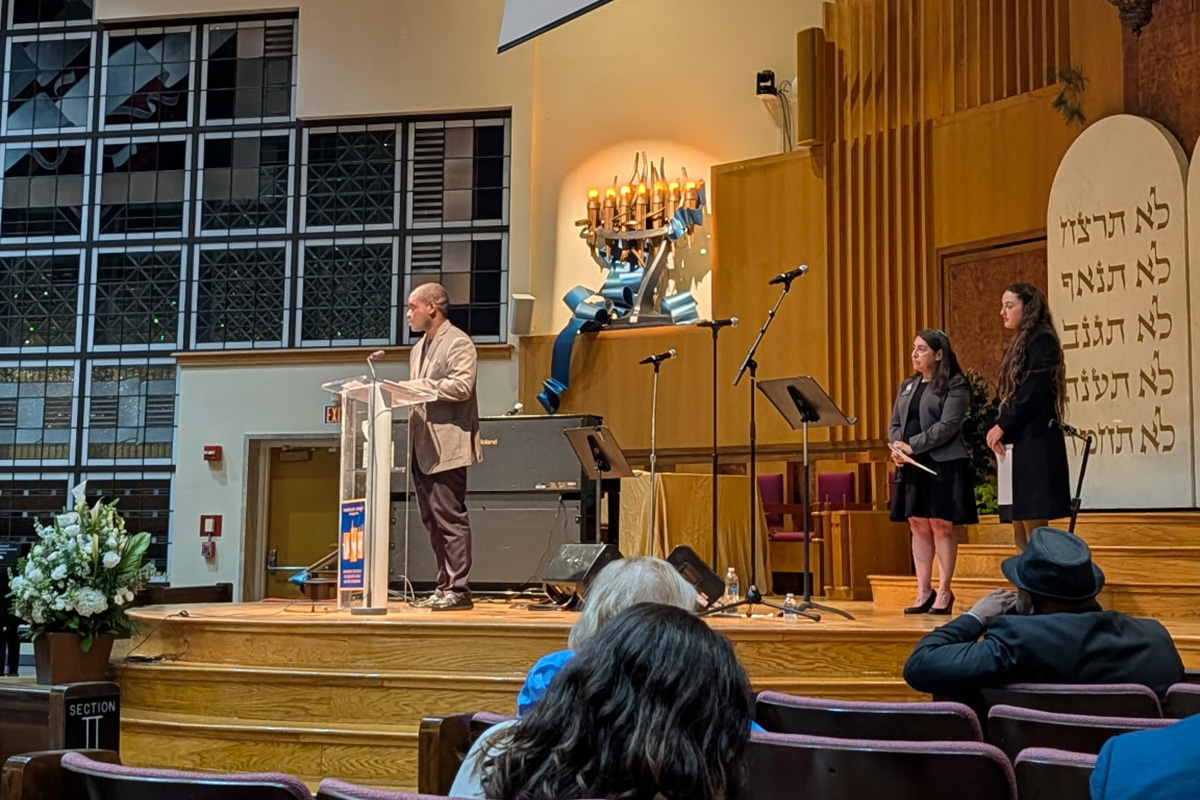
Bet Mishpachah Executive Director Joshua Maxey on Wednesday was among those who spoke at a ceremony in D.C. that marked the third anniversary of the Oct. 7 attack in Israel.
The Jewish Federation of Greater Washington hosted the ceremony that took place at the Washington Hebrew Congregation in Northwest D.C. Bet Mishpachah is the city’s LGBTQ synagogue.
“It was a deeply moving evening, especially hearing the stories of people who knew those who were murdered and those who survived and experiencing music that gave a voice to grief and hope,” Maxey told the Washington Blade.
Hamas militants on Oct. 7, 2023, killed roughly 1,200 people, including upwards of 360 partygoers at the Nova Music Festival near Re’im, a kibbutz that is a couple miles from the Gaza Strip, when it launched its surprise attack on Israel. The militants also kidnapped more than 200 people.
The Hamas-controlled Gaza Health Ministry says Israeli forces have killed more than 74,000 people in the enclave since Oct. 7.
The International Criminal Court in 2024 issued arrest warrants for Israeli Prime Minister Benjamin Netanyahu; former Israeli Defense Minister Yoav Gallant; former Hamas leader Yahya Sinwar; Mohamed Diab Ibrahim al-Masri, the head of Hamas’s military wing known as the Qassam Brigades; and Ismail Haniyeh, chair of the Hamas Political Bureau, after it accused them of committing war crimes and crimes against humanity in Gaza and Israel.
The Israeli government has strongly denied it has committed genocide in Gaza.
An Israeli airstrike on a compound in Khan Younis, a city in southern Gaza, on July 13, 2024, killed killed Deif, one of the alleged Oct. 7 masterminds. Israel less than three weeks later assassinated Haniyah in Tehran, the Iranian capital. Israel Defense Forces soldiers on Oct. 16, 2024, killed Sinwar in Rafah, a city in southern Gaza.
Hamas last October released the remaining hostages in Gaza as part of a ceasefire agreement that President Donald Trump helped broker. Israel has continued to conduct airstrikes and other military operations in Gaza since the official suspension of hostilities took effect.
“For Bet Mishpachah, it was especially meaningful to lift up the names of LGBTQ+ people, those whose identities we know and those whose stories may never be fully known, who were murdered, and to honor the LGBTQ+ survivors whose resilience continues to inspire us,” said Maxey, referring to his participation in Wednesday’s ceremony. “Emily Damari’s story is particularly poignant: while held hostage, she had to hide the fact that she was gay because she feared that revealing her identity to her captors could put her life at even more risk. Yet, she survived.”
“Her story, like so many others, reminds us of the extraordinary courage it takes simply to remain human in the face of hatred,” he added. “May we continue to remember and to mourn, to honor, and to work toward a future rooted in peace and hope.”
District of Columbia
D.C.’s LGBTQ homeless facilities face possible hit from Trump funding cuts
38 percent of homeless youth identify as LGBTQ, up from 2025
(Editor’s note: This article is part of our 2026 contribution to the D.C. Homeless Crisis Reporting Project in collaboration with other local newsrooms. The collective works will be published throughout the week at bit.ly/DCHCRP.)
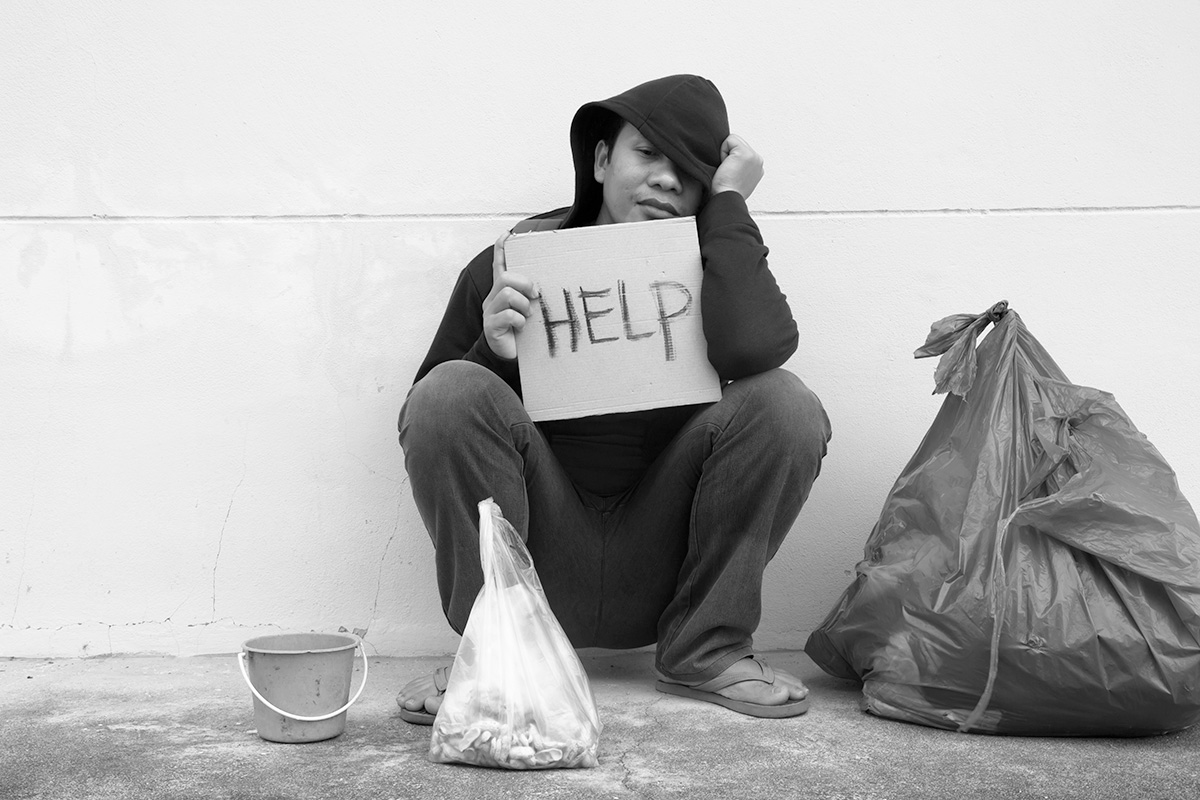
A decision by President Trump’s administration to eliminate most federal funding for community-based programs to place homeless people in permanent subsidized housing could have a severe adverse impact on LGBTQ people facing homelessness in D.C., according to local advocates.
Officials with organizations that provide services for homeless people in the D.C. area and nationally have pointed to an executive order issued by Trump last year that calls for ending federal support for so-called “Housing First” programs that arrange for permanent subsidized housing for homeless people. The officials note that Trump’s proposed fiscal year 2027 budget calls for eliminating funding for the Housing First programs.
Advocates for programs providing support for homeless people note that ending federal funding for permanent housing for homeless people will — and in some cases already has — resulted in occupants of homeless shelters and short-term transitional housing facilities remaining in those facilities far longer than in the past, preventing openings for others who need housing.
A lawsuit filed by several states and homeless advocacy organizations, including the D.C.-based National Alliance To End Homelessness, to block the Trump efforts to cut off those funds has temporarily delayed some of the funding cuts. A decision in August by a federal judge in Rhode Island declared the Trump action a violation of a federal law for failing to open the proposal for the funding cuts to public comment before putting it in place.
Court records show the U.S. Department of Housing and Urban Development (HUD), which provides the federal funding for homeless related programs, appealed the lower court ruling and an appeals court reversed the ruling pending further appeal by the parties that filed the lawsuit.
At least two of the five D.C. organizations that provide housing for homeless LGBTQ youth have said their funding so far has not been cut due to the Trump actions.
Cesar Toledo, executive director of the Wanda Alston Foundation, which currently provides transitional housing for 20 LGBTQ homeless youth, said his organization receives local D.C. government funding but no federal funding so his group has so far not been impacted by the Trump action.
Debby Shore, executive director of the Sasha Bruce Youthwork organization that provides housing for young people ages 18-24, including some LGBTQ youth, said her organization also had not yet been impacted but it could be impacted soon.
“We have not had that funding cut,” she told the Washington Blade. “What we understand is if HUD is allowed to go through with those changes, then we will,” she said. “Because we have one of our programs that’s funded directly by HUD,” which she said could be considered the type of “long term” housing that HUD wants to cut.
A spokesperson for the local LGBTQ youth advocacy organization SMYAL, which currently provides housing for 55 homeless LGBTQ youth according to its website, didn’t immediately respond to a Blade inquiry into whether they have been impacted by the Trump actions. Toledo of the Alston Foundation said he understood that SMYAL has received federal funding for its homeless program.
At least two other D.C. organizations that provide housing for homeless youth, including some LGBTQ youth – Covenant House and the Latin American Youth Center – also couldn’t immediately be reached for comment on whether they have been impacted by the Trump funding cuts.
The city’s only shelter for homeless LGBTQ adults, which is operated by the D.C. Department of Human Services and is D.C. funded, has not been immediately impacted by the Trump funding cuts, according to a DHS statement sent to the Washington Blade in response to a Blade inquiry. Called Living Life Alternative, the low-barrier shelter accommodates 40 individuals, the statement says.
It says DHS receives federal funding for its homeless services programs, and it was awaiting HUD approval for its annual federal funding grant for the city’s Permanent Supportive Housing program for homeless residents. It says the current funding for that program expires Jan. 31, 2027.
According to the statement, a separate federal grant DHS receives from HUD for homeless assistance services was approved for next year but included “a slight reduction in funding of $22,808.”
The annual 2026 Point-In-Time (PIT) count of homeless people in D.C., conducted in January, recorded a total of 5,363 people who were homeless, a 4 percent increase over the previous year.
The PIT count report shows 424 adults, or 12 percent of the adults counted, identified as members of the LGBTQ community, a slight increase over the 11.7 percent of homeless LGBTQ people counted in 2025. It shows that 38 percent of “Transition Age Youth” ages 18-24 identified as LGBTQ, an increase of one percent over the 37 percent of LGBTQ youth counted in 2025.
The Trump administration through HUD has said it supports housing for homeless people that lasts no more than two years and participants should be required to get treatment for the mental illness and substance use disorders such as drug addiction and alcoholism that many homeless people suffer from.
The Washington Post has cited studies showing that up to two-thirds of homeless people have a mental illness and two in five have a substance use disorder.
“Housing First has failed our most vulnerable and enabled addiction,” the Post quoted HUD saying in an email message. “HUD’s proposed reforms seek to address the root cause of homelessness and advance recovery, self-sufficiency, and competition that drives accountability,” the Post quoted the HUD statement as saying.
Shore, director of Sasha Bruce Youthwork, disputes that assessment, saying treatment for disorders should not be a replacement for longer term housing programs, which she said improves the outcome of treatments for disorders.
“I think the idea of putting more services in place – I don’t have any problem with that,” she said. “But suggesting that you do that in exchange for longer term supports for people does not seem to be the right way to go.”
District of Columbia
Bowser, Office of LGBTQ Affairs announce LGBTQ+ History Month events
High Heel Race to take place Oct. 27
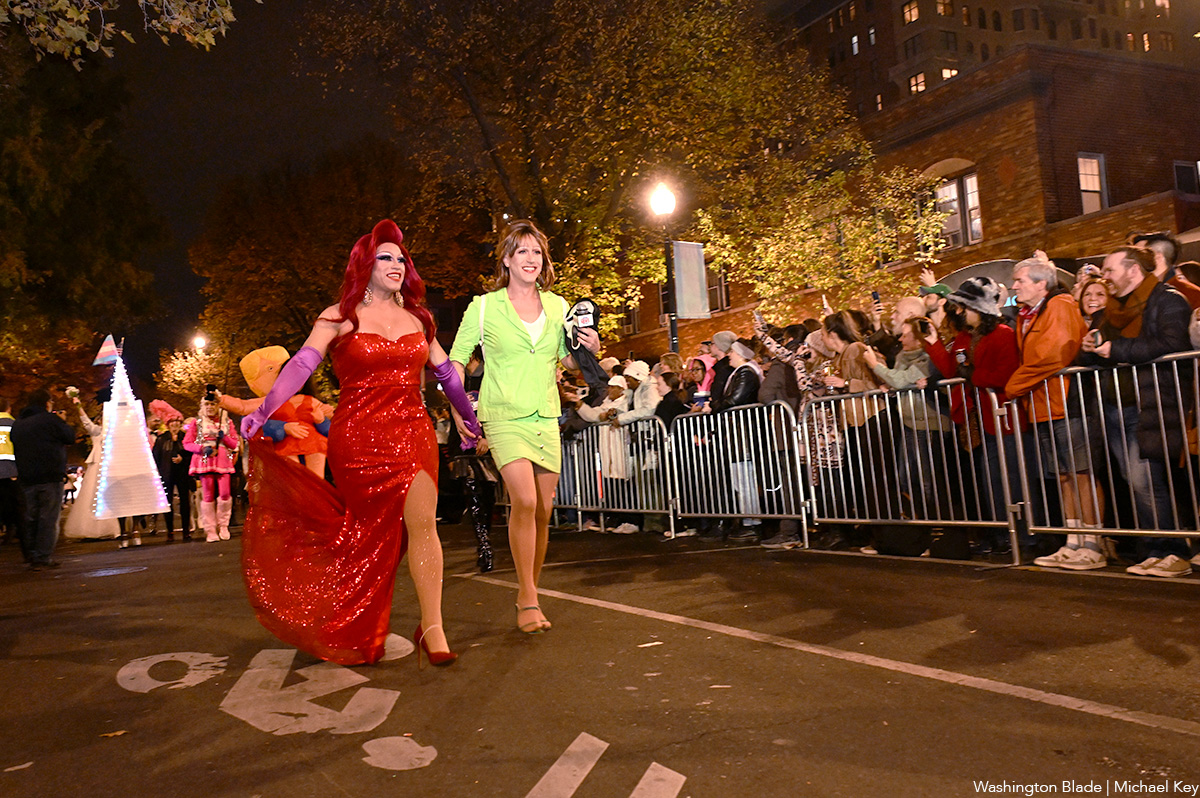
D.C. Mayor Muriel Bowser and the D.C. Mayor’s Office of LGBTQ Affairs have announced they will join the local LGBTQ community in celebrating LGBTQ+ History Month throughout October.
An Oct. 2 joint statement from Bowser and the Office of LGBTQ Affairs says the celebration will include several events in partnership with D.C. LGBTQ organizations and LGBTQ businesses. It says among the events will be a “Birthday Bash” celebrating the 20th anniversary of the Office of LGBTQ Affairs.
“Throughout October, Washingtonians are invited to honor the people, places, movements, and milestones that have shaped the District’s LGBTQIA+ community and the community’s ongoing contributions to Washington, D.C.,” the statement says.
“LGBTQIA+ History Month is a reminder that our history is not simply something we look back on — it is something we continue to make,” Japer Bowles, director of the Office of LGBTQ Affairs said in the statement.
Bowles added that in celebrating the 20th anniversary of the Office of LGBTQ Affairs “we honor the generations of advocates, artists, organizers, businesses, and residents who built our community and continue to shape its future. This milestone is an opportunity to celebrate how far we have come while continuing to build a more welcoming, inclusive and connected Washington, D.C.”
Equality Forum, the Philadelphia-based group that initiated the nationwide annual LGBTQ+ History Month in October, has said it recognizes the history, achievements, and contributions of LGBTQ people and the organizations they have led to advance the rights of LGBTQ people.
The statement released by Bowser and the D.C. Mayor’s Office of LGBTQ Affairs says these are among the upcoming events planned for October:
The Relationship Lab: A Healthy Relationships Series
Join us for an engaging series exploring what makes relationships healthy and how to recognize the signs when they’re not. Facilitated by DC SAFE in partnership with MOLGBTQA (The Mayor’s Office of LGBTQ Affairs.)
- When: Tuesday, Oct. 6, 13, and 20, 6-7:30 p.m.
- Where: 899 North Capitol St. N.E.
- RSVP: The Relationship Lab
MOLGBTQA Birthday Bash
Join us for the 20th Anniversary Celebration! We will be hosting an upbeat gathering, highlighting community leaders, advocates, artists, and institutions who have advanced LGBTQIA+ progress in Washington, D.C. over the last two decades. This event will highlight key milestones and the contributions of LGBTQIA local community partners with live entertainment and free refreshments.
- When: Thursday, Oct. 15, 6-9 p.m.
- Where: Penn Social (801 E St. N.W.)
- RSVP: s.dc.gov/MOLGBTQABday
Mayor’s LGBTQ+ Advisory Committee
Come get to know the newest members of the Mayor’s LGBTQ+ Advisory Committee. This diverse group of leaders, business owners, and advocates advise the mayor and Director Bowles on issues relating to DC’s LGBTQIA+ community and the Office of LGBTQ Affairs.
- When: Monday, Oct. 19, 6-7 p.m.
- Where: DC LGBTQ+ Community Center (1827 Wiltberger St., N.W.)
- RSVP: s.dc.gov/LGBTQMACoct
39th Annual 17th Street High Heel Race
Join us for the High Heel Race, cheering the queens, kings, and our community members as they sprint down 17th Street in heels, creativity, and pure D.C. spirit. From lively drag performances to thousands of neighbors filling the street, don’t miss this D.C. night!
- When: Tuesday, Oct. 27, 6-10 p.m.
- Where: 17th Street between R and P Streets, N.W.
- RSVP: s.dc.gov/2026HHR
What appeared to be the first LGBTQ+ History Month-related event to take place in D.C., called PRIDEtoberfest, was held Saturday, Oct. 3 from noon to 11:30 p.m. at the city’s Wunder Garten outdoor beer garden and event facility at 1101 First St., N.E. A flyer announcing the event says the Capital Pride Alliance and the Mayor’s Office of LGBTQ Affairs were among the event’s participants.
“We proudly attended, tabled, and I gave remarks at the Pridetoberfest this weekend,” Japer Bowles, director of the LGBTQ Affairs Office told the Blade.”

Bet Mishpachah participates in D.C. Oct. 7 commemoration ceremony

Man charged in Mall of America shooting plot inspired by Pulse massacre: report

Bar Betsie, inviting and intimate, marks one-year anniversary

Trump, Netanyahu, and Putin are all war criminals

Center Arts Gallery celebrates 10 years with reception, auction

Eliot Glazer’s new book an engaging collection of essays

Equality Chamber hosts Pride in Business Expo and Profits & Pours

Learn more about Virginia’s queer history

The financial realities facing LGBTQ+ first-time buyers

Lula, Flávio Bolsonaro to face off in second round of Brazilian presidential election
-

 Books5 days ago
Eliot Glazer’s new book an engaging collection of essays
-
Out & About5 days ago
Equality Chamber hosts Pride in Business Expo and Profits & Pours
-
Out & About5 days ago
Learn more about Virginia’s queer history
-
Real Estate5 days ago
The financial realities facing LGBTQ+ first-time buyers