Maryland
FreeState Justice executive director resigns, says board has ‘white supremacist culture’
Former staffers sharply critical of Jeremy LaMaster
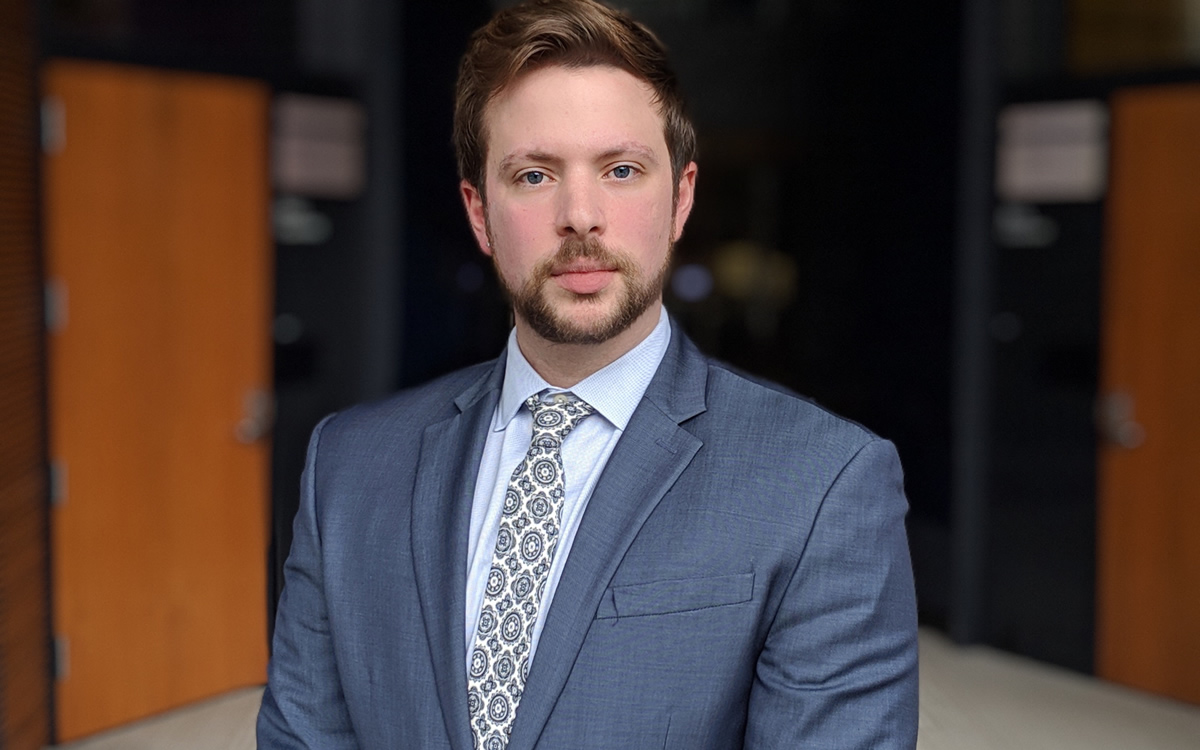
FreeState Justice Executive Director Jeremy LaMaster on Monday announced their resignation after they said the organization’s board of directors declined their request to step down.
“This morning, I requested the FreeState Justice board of directors to submit their immediate resignations due to persistent violations of our board handbook, consistent failures in their fiduciary responsibilities, and using positions of power to engage in partisan lobbying within FreeState Justice and their repeated refusal to add new members and leadership to the board,” said LaMaster in an email they sent from his FreeState Justice email account. “They declined, and it is with a heavy heart that I announce my resignation as executive director and make a public call for their resignation instead: For the resignation of Lindsey Young, board president; Riley Roshong, board vice president; Brianna January, board secretary; Lee Carpenter, Brenda Dorsch, Andrew Adelman and Jess Landers Hopkins.”
LaMaster in June 2020 succeeded Mark Procopio as executive director.
LaMaster in his email noted they “exhausted every avenue over the past two years to get our board fully staffed and running, and I made good faith efforts to work with the board to ensure that our clients and low-income LGBTQ Marylanders remained at our center.”
“Instead, the board has refused to accept any new board members since 2021 and refused to staff and run core board activities as per our handbook,” wrote LaMaster. “Instead, they have worked to consolidate power and amend the board handbook in secret to lower the minimum number of board members required and ensure that our policy positions prioritize relationships with legislators, not the best interests of our clients and community. I have provided clear warnings and consistent concerns over these issues that were repeatedly ignored.”
“These are the hallmarks of white supremacist culture: the concentration of power, power hoarding, defensiveness, right to comfort, fear of open conflict, hyper-individualism, and a false sense of urgency,” added LaMaster.
A link to LaMaster’s letter can be found here.
The Washington Blade has reached out to Carpenter for comment on LaMaster’s allegations.
Former FreeState Justice Education and Outreach Director Ezra Halstead in an email they sent to the Blade on Monday sharply rebuked LaMaster.
“The claims that are being made are 100 percent false, and the reality is that Jeremy has single-handedly destroyed the organization on their own,” wrote Halstead.
Halstead attached a letter that former FreeState Justice Legal Director CP Hoffman wrote to the organization’s board on March 31, 2022, the day their resignation took effect.
Hoffman in their letter noted “historically poor provision of legal services” that “centered almost entirely on name and gender change cases for transgender individuals” and a “poor reputation statewide, especially among the transgender community and communities of color.” Hoffman also noted “employee retention has been a longstanding issue for FreeState Justice” along with “hiring decisions” and “board disengagement.”
Hoffman also made specific allegations against LaMaster.
“Mr. LaMaster’s mismanagement extends well beyond myself and the leadership team at the time he assumed office,” wrote Hoffman in their letter. “Numerous employees hired over the past two years have come to me to express concerns regarding his management, citing concerns from discriminatory pay structures and broken promises about advancement, inappropriate delegation of personal tasks, providing little or no instruction or oversight of delegated tasks, and even inappropriately using the legitimacy of a minority-led organization as a front for grant applications where the majority of funding would go directly to FreeState Justice.”
A copy of Hoffman’s letter can be found here.
The Blade has reached out to LaMaster for comment on the allegations that Hoffman and Halstead have made against him.
Hoffman told the Blade they are unable to comment because of the “non-disparagement agreement” they were asked to sign “as a condition of my severance.”
“As such, I am contractually unable to offer public comment at this time about FreeState’s former executive director, Jeremy LaMaster,” said Hoffman. “I will, however, confirm that I did draft the March 31 memo, that it was sent to the FreeState Justice board of directors, and that I stand by the recommendations made in that memo.”
FreeState Justice on Tuesday announced Phillip Westry will succeed LaMaster. Tina Jones will be the organization’s new deputy executive director.
The announcement said FreeState Justice on Sept. 16 fired LaMaster “after prolonged and thoughtful deliberation.”
“Every effort was made to make this transition as efficient and amicable as possible,” said FreeState Justice. “In the wake of LaMaster’s termination, he issued a statement that does not reflect the views or ideals of FreeState Justice’s board and staff. The board of directors has earnestly fulfilled its fiduciary duties to the organization and takes these responsibilities very seriously. In working to fulfill FreeState’s mission, the board also remains committed to promoting diversity and inclusion within the organization and in the larger LGBTQIA+ community.”


Cameroon
Gay Cameroonian immigrant will be freed from ICE detention — for now
Ludovic Mbock’s homeland criminalizes homosexuality
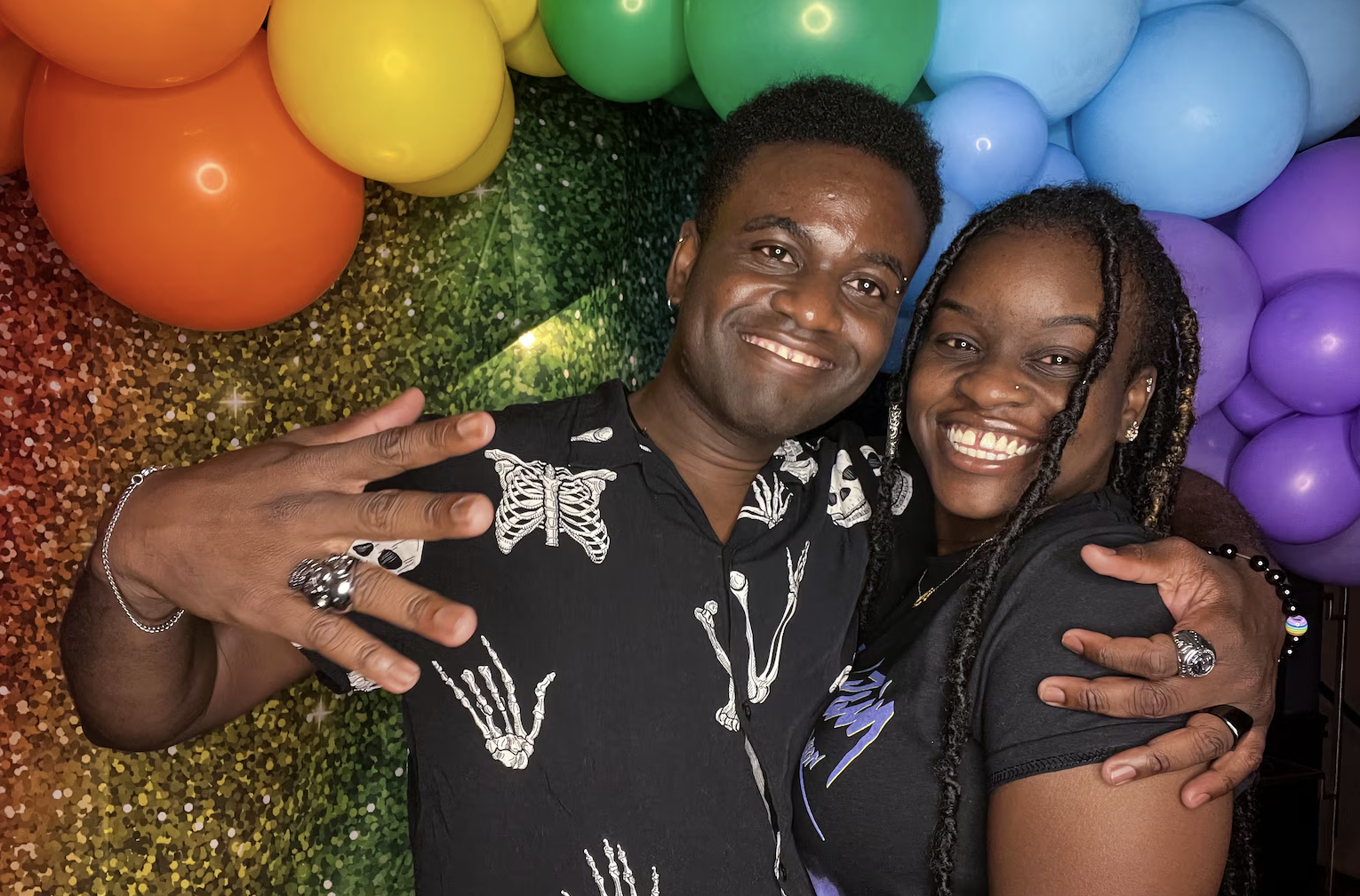
By ANTONIO PLANAS | An immigration judge on Friday issued a $4,000 bond for a Cameroonian immigrant and regional gaming champion held in federal immigration detention for the past three weeks.
The ruling will allow Ludovic Mbock, of Oxon Hill, to return to Maryland from a Georgia facility this weekend, his family and attorney said.
“Realistically, by tomorrow. Hopefully, by today,” said Mbock’s attorney, Edward Neufville. “We are one step closer to getting Ludovic justice.”
The rest of this article can be found on the Baltimore Banner’s website.
Maryland
Md. Legislative LGBTQ+ Caucus outlines 2026 priorities
Expanded PrEP access among objectives
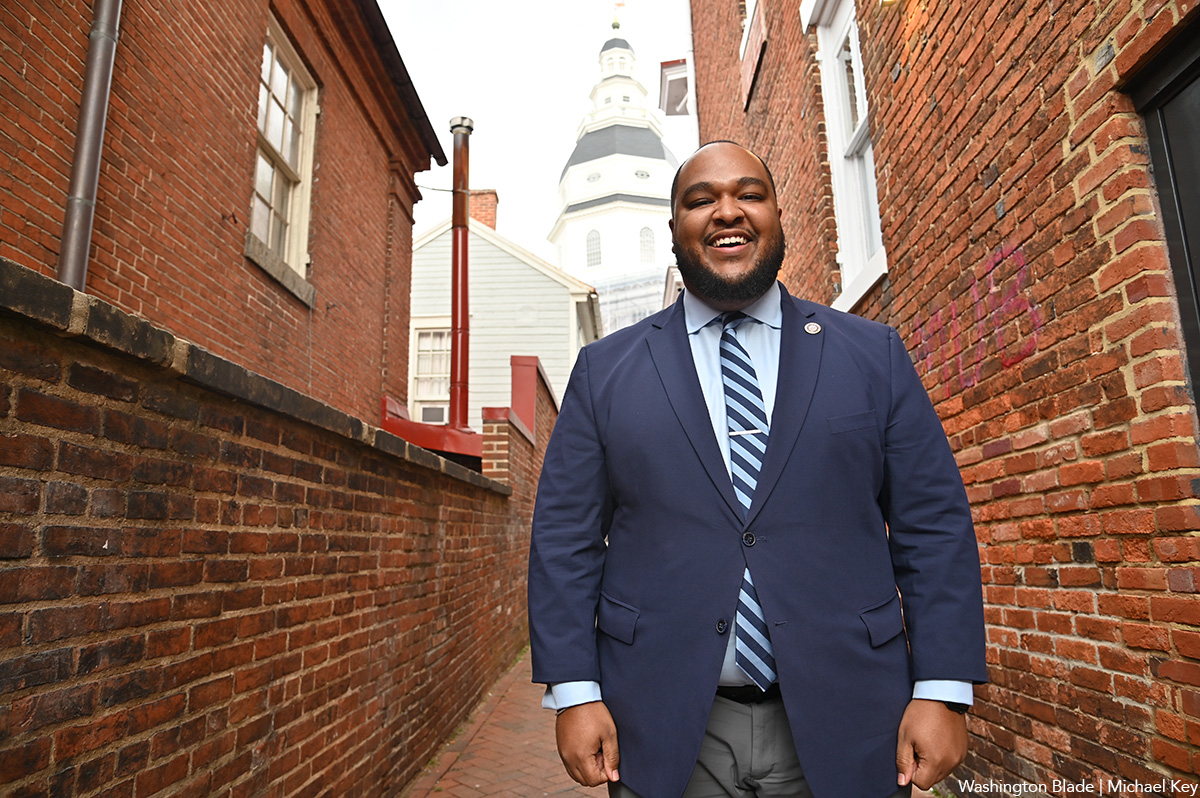
Maryland’s Legislative LGBTQ+ Caucus outlined legislative priorities for the remainder of the General Assembly’s 2026 term during a press conference on March 5.
State Del. Kris Fair (D-Fredrick County) led the press conference. State Del. Ashanti Martinez (D-Prince George’s County) and other caucus members also spoke.
Caucus members are sponsoring 12 bills and supporting four others.
Martinez is sponsoring House Bill 1114, which would expand PrEP access in Maryland.
“PrEP is 99 percent effective in preventing HIV transmission,” he explained, noting PrEP’s cost often turns away potential users.
The bill aims to extend insurance coverage and expand pharmacists’ ability to prescribe PrEP along with other HIV treatments and testing. Martinez is working with state Sen. Clarence Lam (D-Anne Arundel and Howard Counties) and FreeState Justice on the bill.
The House Health Committee had a hearing last week that included HB1114.
“Ending the HIV epidemic is about expanding access and providing these life-saving tools to all persons in Maryland,” Martinez said.
Several other pieces of legislation were highlighted during the press conferences. They included measures focused on youth and education, birth certificate markers, so-called conversion therapy, and hormone medications.
State Sen. Cheryl Kagan (D-Montgomery County) is cosponsoring Senate Bill 950, which would update and strengthen conversion therapy laws. State Del. Bonnie Cullison (D-Montgomery County) has introduced an identical bill that would extend the statute of limitations on individuals who facilitate conversion therapy.
Kagan explained the bill would allow conversion therapy victims to come to terms with their experience undergoing the widely discredited practice that “creates shame and it silences survivors.”
When questioned, Fair explained the press conference happened late into the legislative session because “we [the caucus] are constantly having to respond in real time to what’s happening in Washington” while drafting and considering pieces of legislation.
The Frederick County Democrat described this session’s bills as the “most ambitious list of priorities to date.” Fair also described the caucus’s goals.
“It’s decency, it’s dignity, and its humanity,” he said.
Maryland
Md. Commission on LGBTQIA+ Affairs released updated student recommendations
LGBTQ students report higher rates of bullying, suicide
The Maryland Commission on LGBTQIA+ Affairs has released updated recommendations on how the state’s schools can support LGBTQ students.
The updated 16-page document outlines eight “actionable recommendations” for Maryland schools, supplemented with data and links to additional resources. The recommendations are:
- Developing and passing a uniform statewide and comprehensive policy aimed at protecting “transgender, nonbinary, and gender expansive students” against discrimination. The recommendation lists minimum requirements for the policy to address: name, pronoun usage, and restroom access.
- Requiring all educators to receive training about the specific needs of LGBTQ students, by trained facilitators. The training’s “core competencies” include instruction on terminology, data, and support for students.
- Implementing LGBTQ-inclusive curricula and preventing book bans. The report highlights a “comprehensive sexual education curriculum” as specifically important in the overall education curriculum. It also states the curriculum will “provide all students with life-saving information about how to protect themselves and others in sexual and romantic situations.”
- Establishing Gender Sexuality Alliances “at all schools and in all grade levels.” This recommendation includes measures on how to adequately establish effective GSAs, such as campaign advertising, and official state resources that outline how to establish and maintain a GSA.
- Providing resources to students’ family members and supporters. This recommendation proposes partnering with local education agencies to provide “culturally responsive, LGBTQIA+ affirming family engagement initiatives.”
- Collecting statewide data on LGBTQ youth. The data on Maryland’s LGBTQ youth population is sparse and non-exhaustive, and this recommendation seeks to collect information to inform policy and programming across the state for LGBTQ youth.
- Hiring a full-time team at the Maryland Department of Education that focuses on LGBTQ student achievement. These employees would have specific duties that include “advising on local and state, and federal policy” as well as developing the LGBTQ curriculum, and organizing the data and family resources.
- Promoting and ensuring awareness of the 2024 guidelines to support LGBTQ students.
The commission has 21 members, with elections every year, and open volunteer positions. It was created in 2021 and amended in 2023 to add more members.
The Governor’s Office of Communication says the commission’s goal is “to serve LGBTQIA+ Marylanders by galvanizing community voices, researching and addressing challenges, and advocating for policies to advance equity and inclusion.”
The commission is tasked with coming up with yearly recommendations. This year’s aim “to ensure that every child can learn in a safe, inclusive, and supportive environment.”
The Human Rights Campaign’s most recent report on LGBTQ youth revealed that 46.1 percent of LGBTQ youth felt unsafe in some school settings. Those numbers are higher for transgender students, with 54.9 percent of them saying they feel unsafe in school.
Maryland’s High School Youth Risk Behavior Survey reveals a disparity in mental health issues and concerns among students who identify as LGBTQ, compared to those who are heterosexual. LGBTQ students report higher rates of bullying, feelings of hopelessness, and suicidal thoughts. Nearly 36 percent of LGBTQ students report they have a suicide plan, and 26.7 percent of respondents say they have attempted to die by suicide.
The commission’s recommendations seek to combat the mental health crisis among the state’s LGBTQ students. They are also a call for local and state governments to work towards implementing them.

Trump tells Fox News he won the ‘gay vote’ — but polls tell a different story

Anti-trans visa ruling echoes Nazi regime destroying trans documents

Japanese Supreme Court to consider marriage equality

The outrage economy is not the LGBTQ community

Calendar: March 27-April 2

Markwayne Mullin confirmed as next DHS secretary

D.C. goes gaga for Gaga

HRC to host National Rainbow Seder

Menaka Guruswamy celebrated as India’s first openly LGBTQ MP