Maryland
FreeState Justice executive director resigns, says board has ‘white supremacist culture’
Former staffers sharply critical of Jeremy LaMaster
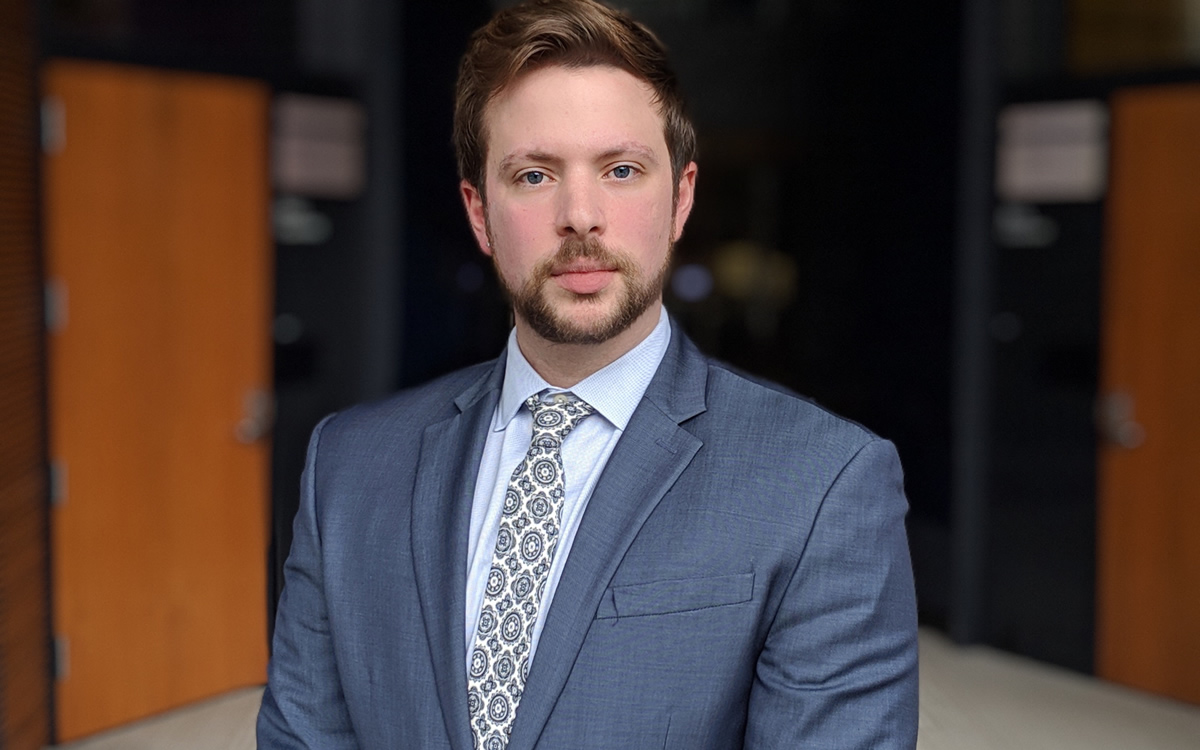
FreeState Justice Executive Director Jeremy LaMaster on Monday announced their resignation after they said the organization’s board of directors declined their request to step down.
“This morning, I requested the FreeState Justice board of directors to submit their immediate resignations due to persistent violations of our board handbook, consistent failures in their fiduciary responsibilities, and using positions of power to engage in partisan lobbying within FreeState Justice and their repeated refusal to add new members and leadership to the board,” said LaMaster in an email they sent from his FreeState Justice email account. “They declined, and it is with a heavy heart that I announce my resignation as executive director and make a public call for their resignation instead: For the resignation of Lindsey Young, board president; Riley Roshong, board vice president; Brianna January, board secretary; Lee Carpenter, Brenda Dorsch, Andrew Adelman and Jess Landers Hopkins.”
LaMaster in June 2020 succeeded Mark Procopio as executive director.
LaMaster in his email noted they “exhausted every avenue over the past two years to get our board fully staffed and running, and I made good faith efforts to work with the board to ensure that our clients and low-income LGBTQ Marylanders remained at our center.”
“Instead, the board has refused to accept any new board members since 2021 and refused to staff and run core board activities as per our handbook,” wrote LaMaster. “Instead, they have worked to consolidate power and amend the board handbook in secret to lower the minimum number of board members required and ensure that our policy positions prioritize relationships with legislators, not the best interests of our clients and community. I have provided clear warnings and consistent concerns over these issues that were repeatedly ignored.”
“These are the hallmarks of white supremacist culture: the concentration of power, power hoarding, defensiveness, right to comfort, fear of open conflict, hyper-individualism, and a false sense of urgency,” added LaMaster.
A link to LaMaster’s letter can be found here.
The Washington Blade has reached out to Carpenter for comment on LaMaster’s allegations.
Former FreeState Justice Education and Outreach Director Ezra Halstead in an email they sent to the Blade on Monday sharply rebuked LaMaster.
“The claims that are being made are 100 percent false, and the reality is that Jeremy has single-handedly destroyed the organization on their own,” wrote Halstead.
Halstead attached a letter that former FreeState Justice Legal Director CP Hoffman wrote to the organization’s board on March 31, 2022, the day their resignation took effect.
Hoffman in their letter noted “historically poor provision of legal services” that “centered almost entirely on name and gender change cases for transgender individuals” and a “poor reputation statewide, especially among the transgender community and communities of color.” Hoffman also noted “employee retention has been a longstanding issue for FreeState Justice” along with “hiring decisions” and “board disengagement.”
Hoffman also made specific allegations against LaMaster.
“Mr. LaMaster’s mismanagement extends well beyond myself and the leadership team at the time he assumed office,” wrote Hoffman in their letter. “Numerous employees hired over the past two years have come to me to express concerns regarding his management, citing concerns from discriminatory pay structures and broken promises about advancement, inappropriate delegation of personal tasks, providing little or no instruction or oversight of delegated tasks, and even inappropriately using the legitimacy of a minority-led organization as a front for grant applications where the majority of funding would go directly to FreeState Justice.”
A copy of Hoffman’s letter can be found here.
The Blade has reached out to LaMaster for comment on the allegations that Hoffman and Halstead have made against him.
Hoffman told the Blade they are unable to comment because of the “non-disparagement agreement” they were asked to sign “as a condition of my severance.”
“As such, I am contractually unable to offer public comment at this time about FreeState’s former executive director, Jeremy LaMaster,” said Hoffman. “I will, however, confirm that I did draft the March 31 memo, that it was sent to the FreeState Justice board of directors, and that I stand by the recommendations made in that memo.”
FreeState Justice on Tuesday announced Phillip Westry will succeed LaMaster. Tina Jones will be the organization’s new deputy executive director.
The announcement said FreeState Justice on Sept. 16 fired LaMaster “after prolonged and thoughtful deliberation.”
“Every effort was made to make this transition as efficient and amicable as possible,” said FreeState Justice. “In the wake of LaMaster’s termination, he issued a statement that does not reflect the views or ideals of FreeState Justice’s board and staff. The board of directors has earnestly fulfilled its fiduciary duties to the organization and takes these responsibilities very seriously. In working to fulfill FreeState’s mission, the board also remains committed to promoting diversity and inclusion within the organization and in the larger LGBTQIA+ community.”





Maryland
Md. groups receive state grants to fight hate crimes
Pride Center of Maryland among recipients

Maryland Gov. Wes Moore and the Governor’s Office of Crime Prevention and Policy are awarding a total of $10 million in grants in the 2027 fiscal year to nonprofit organizations that work to prevent hate crimes in the state.
The funds will be used to support those who feel targeted or discriminated against because of their race, religion, sexual orientation, gender identity, or disability status.
The Pride Center of Maryland is among the recipients. Churches, synagogues, mosques, and LGBTQ organizations are all eligible to receive grants
“The safety and security of all Marylanders is my top priority, so we are drawing a hard line because we have no tolerance for hate,” said Moore, according to media reports. “We are committed to protecting and ensuring safe and sacred spaces stay that way by investing in non-profit organizations, houses of worship, and community centers to protect and honor every community that makes our state so diverse and special.”
“Protection Against Hate Crime funding has strengthened the Pride Center of Maryland’s ability to protect, educate, and support the communities we serve … at a time of heightened concern associated with the Trump administration’s anti-LGBTQ/SGL (same-gender-loving) policies and pressures,” Pride Center of Maryland CEO Cleo Manago said. “PAHC funding helps us do more than improve physical security — it strengthens our community’s knowledge, preparedness, connection to resources, and ability to respond to hate with greater awareness and support.”
Maryland’s hate crimes law includes both sexual orientation and gender identity. The state’s nondiscrimination statute is also LGBTQ-inclusive.
Maryland
Anne Arundel schools now need parent permission to call trans students by preferred names
Conservative groups challenged system’s policy
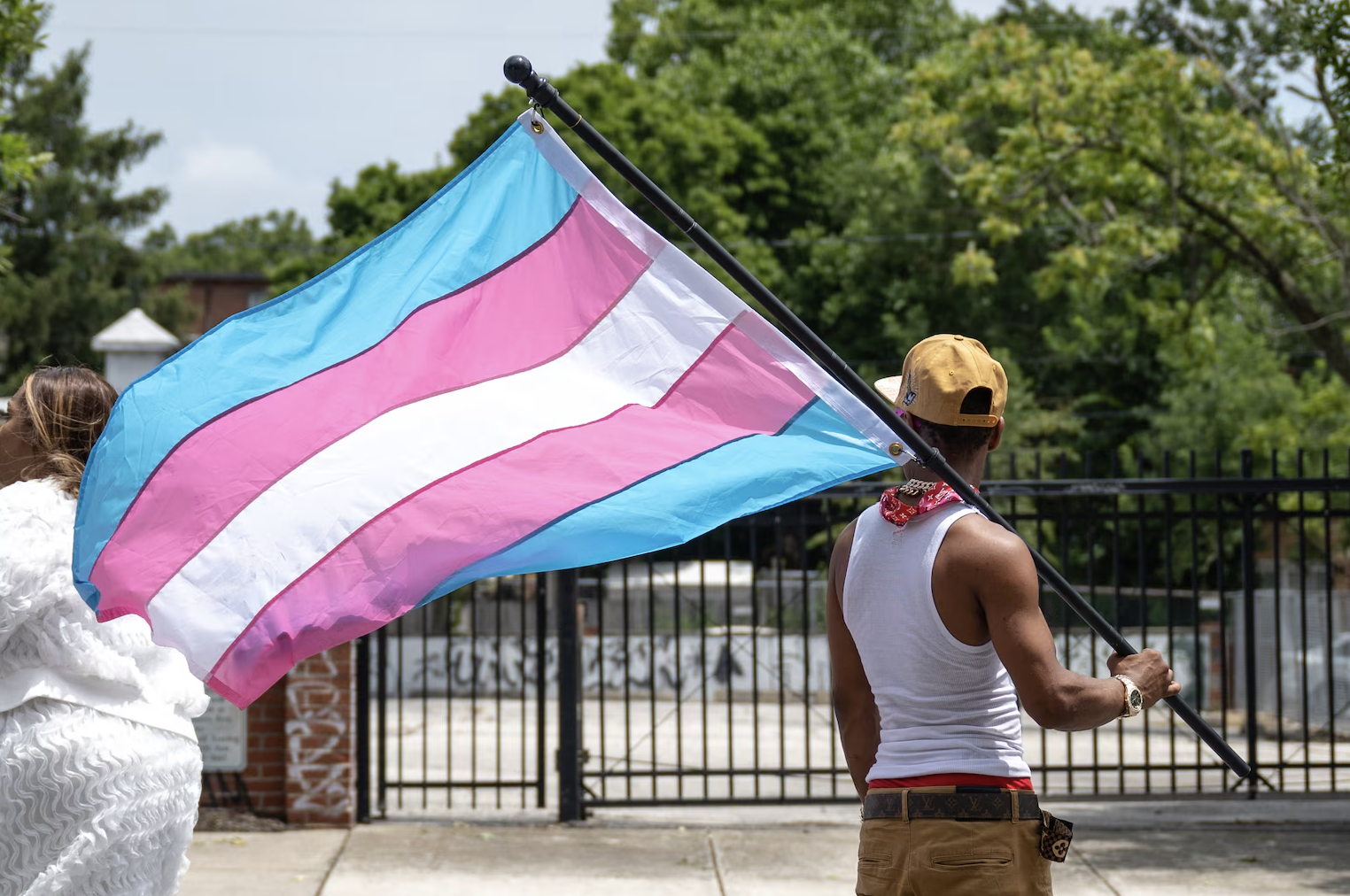
By JESSICA CALEFATI | Anne Arundel County Public Schools staff cannot use transgender students’ preferred names if their parents oppose it, according to an internal document reviewed by the Banner, a change that comes after conservative groups challenged the school system’s approach to gender identity.
Teachers union president Kristina Korona told members in an Aug. 20 email that the new guidance undermines district policy on acceptance and inclusivity and “will begin harming affected students immediately.”
Previously, the district didn’t require parental permission to use a high school student’s chosen name and pronouns corresponding to their gender identity, the internal document says. Now it does. The change comes as parents challenge the suburban school system’s gender identity policy and regulation in court and the Trump-Vance administration threatens the district’s funding.
The rest of this article can be found on the Baltimore Banner’s website.
Maryland
Girlfriends charged with Silver Spring murder to go on trial in 2027
Prosecutors charged both women with killing mother of one of them

Two women identified as a couple who are charged with the May 22, 2026, murder of the mother one of them in her Silver Spring home and who were arrested three weeks later in Ohio are scheduled to go on trial for murder April 19, 2027.
According to online records filed with Montgomery County Circuit Court in Rockville, Vanessa Tjongarero-Henderson, 29, of Clarksburg, Md., and Samantha Raebel, 36, of Phoenix are being held without bond in the Montgomery County Correctional Facility until the time of their trial.
Statements from Montgomery County police show the two women were arrested June 10 in Genoa, Ohio, after fleeing from the scene of the murder in Silver Spring. Police statements and court records show they were extradited back to Maryland in July, where prosecutors with the Montgomery County State’s Attorney’s Office obtained indictments against them for murder.
Earlier statements from Montgomery County police say their investigation into the murder led to their decision to initially charge the two women with first-degree murder for the death of Hilde Henderson, 67, who was Tjongarero-Henderson’s mother.
“Through the course of the investigation, detectives identified Henderson’s daughter, Vanessa Tjongarero-Henderson, and Vanessa’s girlfriend, Raebel, as the suspects,” one of the police statements says. It says police obtained arrest warrants for both women and launched a nationwide search seeking help from the public in in locating them.
One of the police statements says an autopsy determined the cause of Hilde Henderson’s death was blunt-force trauma injuries brought about by a murder. Police and the State’s Attorney’s Office, which is prosecuting the case, have yet to disclose whether they have determined a motive for the murder.
Court records show that prior to the start of the April 19, 2027, trial a “motion” hearing was scheduled for Oct. 30, 2026, a pre-trail conference was scheduled for Feb. 12, 2027, and another motion hearing and a status hearing were scheduled for March 12, 2027.
Court records also show that Tjongarero-Henderson is being represented by attorneys with the Montgomery County court system’s public defender service. The records show that Raebel initially had been represented by a public defender service attorney, but updated records show Aug. 14 is listed as the “removal date” for that attorney.
The docket shows that on Aug. 20, two new attorneys with the prominent D.C. law firm of Covington & Burling made their official appearance as her attorneys in the murder case. One of them, Daniel Solomon, told the Washington Blade in response to an inquiry that the defense has no comment at this time on the case.
He confirmed that Covington & Burling is representing Raebel on a no-cost, pro bono bass.
The office of the Montgomery County public defender service didn’t immediately respond to a phone message from the Blade asking for a comment on the Tjongarero-Henderson case.

Annie Andrews denounces trans athletes after Trump targets her

On Republican Long Island, gay Democrat Chris Gallant bets on public service over politics

Report: LGBTQ exclusion costs Japanese economy billions a year

Center for Black Equity honors leaders, activists at BE. Gala

In ‘The Lost Brontë,’ a complicated lie can lead to danger

Trump uses anti-trans slur against Democratic Senate candidate

U.S. int’l trade negotiator, consultant James Bedore dies at 82

Campaign urges Virginia High School League to reverse stance on trans athletes

Calif. GOP gubernatorial candidate ad ‘disgusting attempt to exploit lesbian intimacy’

Center Arts Gallery celebrates 10 years with reception, auction
-

 2026 Midterm Elections5 days ago
Trump uses anti-trans slur against Democratic Senate candidate
-
Obituary4 days ago
U.S. int’l trade negotiator, consultant James Bedore dies at 82
-
Virginia4 days ago
Campaign urges Virginia High School League to reverse stance on trans athletes
-
California4 days ago
Calif. GOP gubernatorial candidate ad ‘disgusting attempt to exploit lesbian intimacy’