Maryland
Lesbian candidate trails by just 17 votes in Hyattsville Council race
Election board mum on whether all ballots are counted
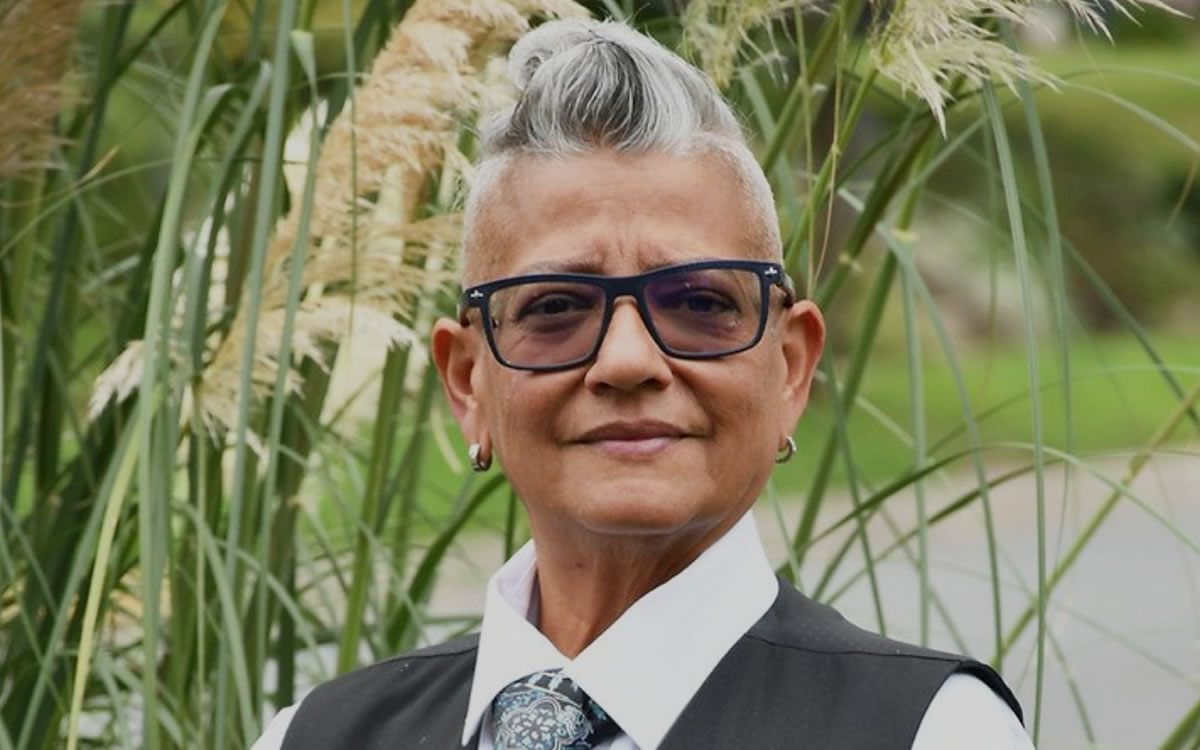
Lesbian activist and diversity consultant Lisbeth Melendez Rivera was behind her closet rival by just 17 votes on Tuesday night in a three-candidate special election to fill a vacant seat on the Hyattsville, Md., City Council.
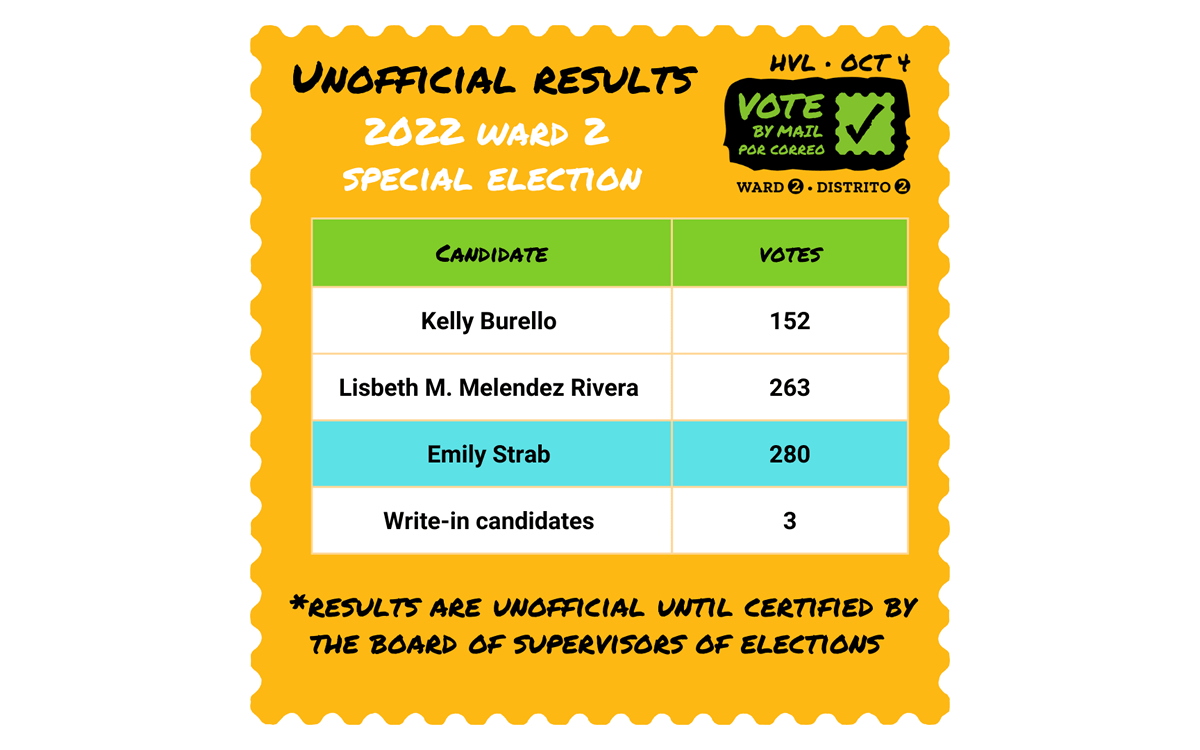
In what it said were the unofficial results of the special election, the Hyattsville Board of Supervisors of Elections posted on its website that candidate Emily Strab had 280 votes, Melendez Rivera had 263 votes, and candidate Kelly Burello had 152 votes. Three votes were cast for write-in candidates, the election night posting said.
“Results are unofficial until certified by the Board of Supervisors of Election,” the posting said. The certification was scheduled to take place at 1 p.m. Thursday, Oct. 6.
The online posting of the results did not say whether there were any outstanding votes from absentee or mail-in ballots. A spokesperson for the election board couldn’t immediately be reached Tuesday night or Wednesday morning.
The Ward 2 seat on the 10-member Hyattsville Council in the Prince George’s County suburban city became vacant when the incumbent Council member, Robert Croslin, won election as mayor.
Melendez Rivera currently operates BQN Consulting, a firm she created to provide support services related to organizing, training and capacity building, according to the firm’s website. The website says that from 2014 to 2017 she served as Director of Latinx & Catholic Initiatives for the Human Rights Campaign, the D.C.-based national LGBTQ advocacy organization.
“I congratulated Emily,” Melendez Rivera told the Washington Blade Wednesday morning.
“Have I said this is the end? No, because I want to wait until tomorrow at 1 to see the outcome,” she said.
“What I know is everything that was available to them was counted as of 9:30 last night,” she said, referring to the election board. “There is a process today. They will do a last check of the mail to see if anything was postmarked before 8 p.m. last night,” Melendez Rivera said in referring to possible additional mail-in ballots.
Melendez Rivera said she portrayed herself as the most progressive of the three candidates running for the nonpartisan City Council seat in a city that many consider to be one of the most progressive jurisdictions in the Washington metro area. Residents starting at age 16 and non-citizen immigrants are allowed to vote in local elections.
Like Melendez Rivera, Strab, a former teacher and school administrator, and Burello, who has worked as a workplace diversity trainer, each expressed support for Hyattsville’s diverse population, including racial minorities and immigrants.
The 698 total votes cast in the special election as of Tuesday night is considered a low turnout in the Ward 2 election district, which has a little over 2,000 registered voters.
This story will be updated when new information becomes available.



Maryland
Supreme Court ruling against conversion therapy bans could affect Md. law
Then-Gov. Larry Hogan signed statute in 2018
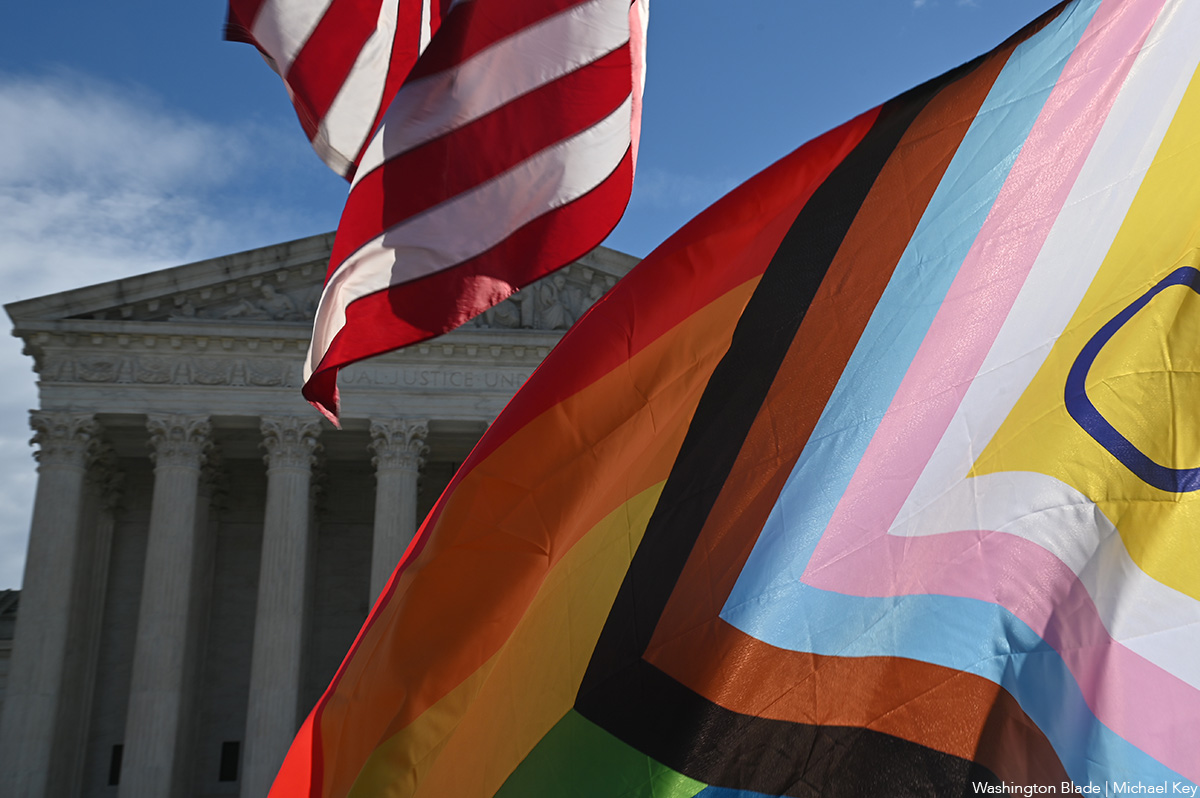
By PAMELA WOOD, JOHN-JOHN WILLIAMS IV, and MADELEINE O’NEILL | The U.S. Supreme Court on Tuesday ruled against a law banning “conversion therapy” for LGBTQ kids in Colorado, a ruling that also could apply to Maryland’s ban on the discredited practice.
An 8-1 high court majority sided with a Christian counselor who argues the law banning talk therapy violates the First Amendment. The justices agreed that the law raises free speech concerns and sent it back to a lower court to decide whether it meets a legal standard that few laws pass.
Justice Neil Gorsuch, writing for the court’s majority, said the law “censors speech based on viewpoint.” The First Amendment, he wrote, “stands as a shield against any effort to enforce orthodoxy in thought or speech in this country.”
The rest of this article can be read on the Baltimore Banner’s website.
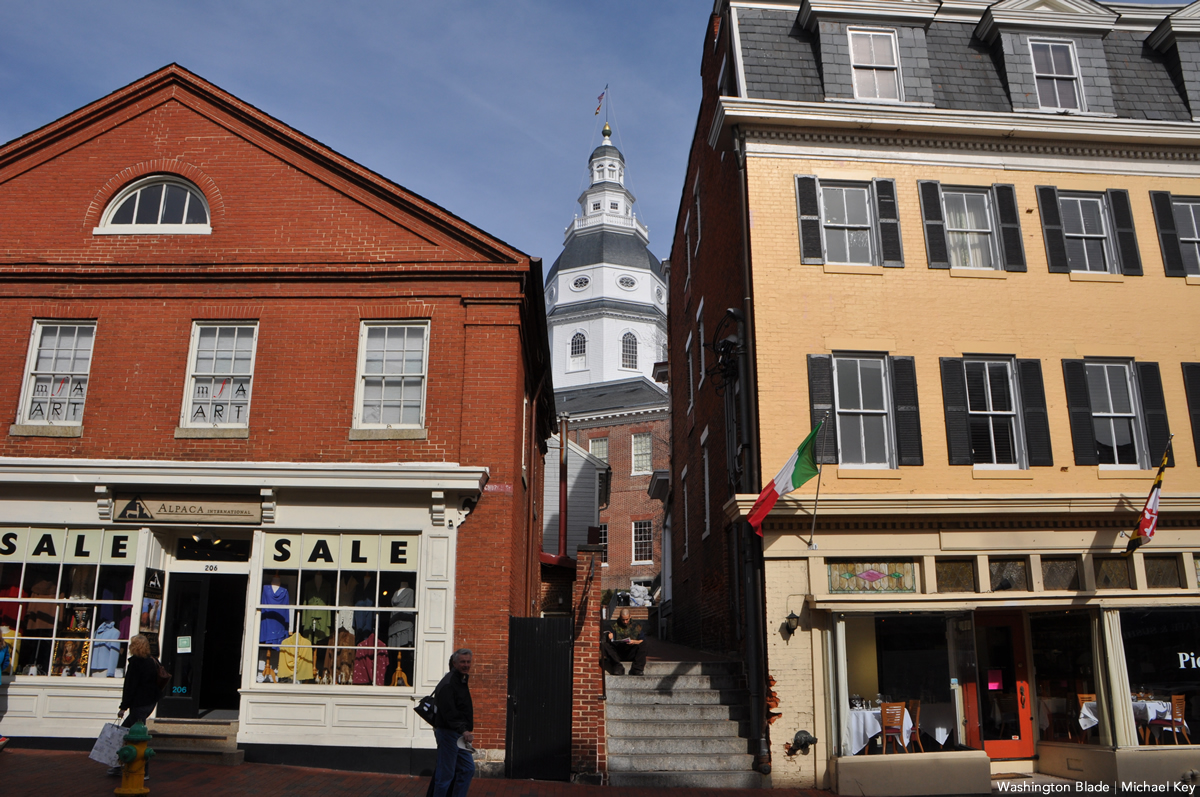
Maryland’s legislative caucuses outlined their legislative priorities heading into the final weeks of the 2026 General Assembly during a joint press conference on March 24.
The press conference was titled “We are Maryland,” where a representative for each of the legislative caucuses outlined priorities.
State Del. Kris Fair (D-Frederick County) of the LGBTQ+ Caucus opened the press conference with a statement on the unity of Maryland’s caucus.
“Together we can show our state and our community a different world, one where we mutually support one another and through that support uplift every Marylander,” he said.
In a press conference on March 5, the LGBTQ+ Caucus outlined its top legislative priorities. Fair highlighted two of those bills again during the “We are Maryland” press conference.
The first of the two highlighted pieces of legislation was Senate Bill 626 and House Bill 1589.
The bills would simplify the process of updating an individual’s birth certificate and align the Department of Health and DMV systems to reflect those changes. The bill is being led by state Sen. Clarence Lam (D-Anne Arundel and Howard Counties) and state Del. Ashanti Martinez (D-Prince George’s County).
The second piece of legislation is Senate Bill 950 and House Bill 1209, which would update and modernize laws and regulations around so-called conversion therapy. The bills have failed to pass either chamber thus far. They are being led by state Sen. Cheryl Kagan (D-Montgomery County) and state Del. Bonnie Cullison (D-Montgomery County).
(The U.S. Supreme Court on Tuesday ruled against a Colorado law that bans so-called conversion therapy for minors. Maryland is among the U.S. jurisdictions that prohibit the widely discredited practice for anyone under 18.)
Martinez and Lam have introduced bills in their respective chambers that would expand PrEP access in Maryland. Martinez did not attend the press conference, and Fair did not mention it when he spoke.
State Del. N. Scott Phillips (D-Baltimore County) represented the Black Caucus during the press conference. State Del. Dana Jones (D-Anne Arundel County) spoke on behalf of the Women’s Caucus, State Del. Teresa Woorman (D-Montgomery County) represented the Latino Caucus, and State Del. Lily Qi (D-Montgomery County) represented the Asian-American and Pacific Islander Caucus. State Del. Jared Solomon (D-Montgomery County) represented the Jewish Caucus, and state Del. Sean Stinnett (D-Baltimore County) represented the Muslim Caucus during the press conference.
Solomon ended the press conference by explaining the importance of all the caucuses coming out together.
“We are stronger when we’re together, and many of these issues that we have talked about, again, impact all of us,” said Solomon.
Cameroon
Gay Cameroonian immigrant will be freed from ICE detention — for now
Ludovic Mbock’s homeland criminalizes homosexuality
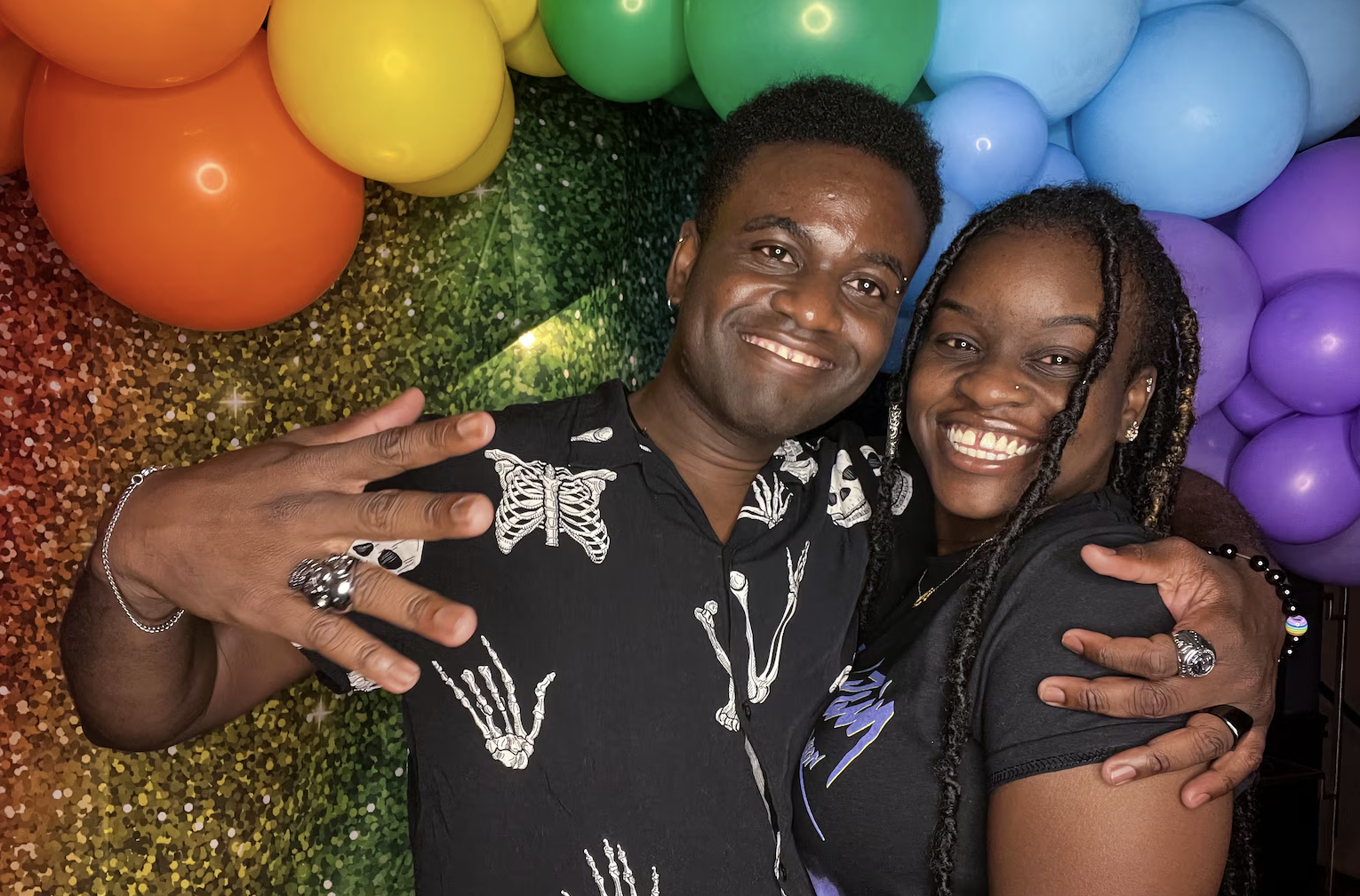
By ANTONIO PLANAS | An immigration judge on Friday issued a $4,000 bond for a Cameroonian immigrant and regional gaming champion held in federal immigration detention for the past three weeks.
The ruling will allow Ludovic Mbock, of Oxon Hill, to return to Maryland from a Georgia facility this weekend, his family and attorney said.
“Realistically, by tomorrow. Hopefully, by today,” said Mbock’s attorney, Edward Neufville. “We are one step closer to getting Ludovic justice.”
The rest of this article can be found on the Baltimore Banner’s website.

PHOTOS: The Bonnet Ball

Risking it all for love during World War II

Surviving spring cleaning

Iconic Eddie Izzard takes on 23 characters in ‘Hamlet’

How Pepper the courthouse dog helps victims of abuse

Kristi Noem ‘devastated’ as husband’s alleged fetish spending surfaces

D.C.’s affirming congregations to mark Holy Week, Easter

Glisten report details hostile climate for LGBTQ students

Supreme Court ruling against conversion therapy bans could affect Md. law

VIDEO: Gay journalist detained for booing Trumps at ‘Chicago’ opening night
-

 The White House4 days ago
Kristi Noem ‘devastated’ as husband’s alleged fetish spending surfaces
-
Local5 days ago
D.C.’s affirming congregations to mark Holy Week, Easter
-
Research/Study5 days ago
Glisten report details hostile climate for LGBTQ students
-
Maryland5 days ago
Supreme Court ruling against conversion therapy bans could affect Md. law