News
Tucker Carlson repeats anti-LGBTQ lies, denying link between Club Q shooting and hateful rhetoric
Fox host again links queer people to child sexual exploitation
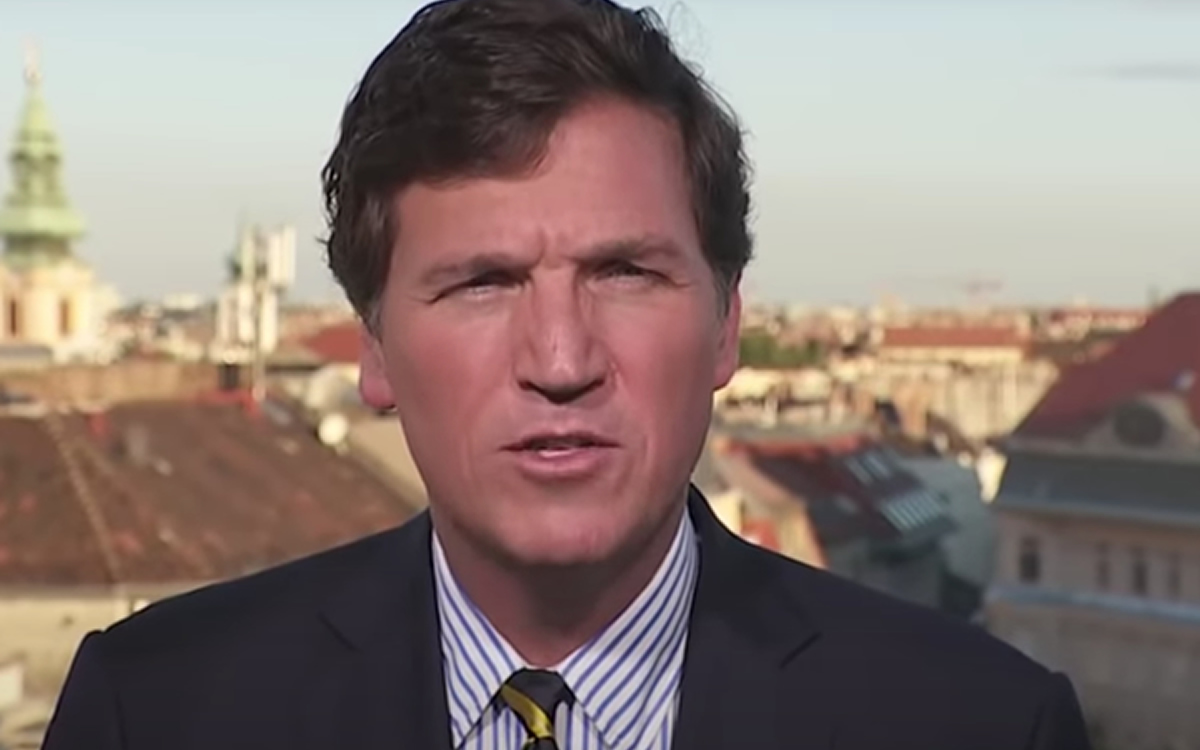
Shortly after five people were murdered and dozens injured over the weekend when a gunman opened fire in a Colorado Springs LGBTQ nightclub, Fox News host Tucker Carlson defended his and his allies’ escalating use of incendiary anti-LGBTQ rhetoric.
During his show on Monday night, Carlson inveighed against individuals and groups that responded to the tragedy by pointing out the link between acts of violence motivated by hate and the spread of inflammatory lies about LGBTQ people, often by public figures on the right.
“These horrifying murders in Colorado over the weekend quickly became a pretext for yet more censorship of your speech,” Carlson said. “You are responsible for this, they told you, because you said the wrong thing.”
Carlson then accused the groups and individuals that he said were calling for “censorship” — in this case, the LGBTQ community and its allies — of engaging in, perpetuating, or suborning the “genital mutilation” and sexual abuse and exploitation of children.
“This is exactly the kind of false and inflammatory rhetoric that willfully misinforms the public and encourages violence,” responded GLAAD, a nonprofit that fights the spread of defamatory anti-LGBTQ rhetoric in media and entertainment.
Carlson’s statements during the segment were irresponsible, absurd, and cruel, containing lies that are pathetic, dangerous, and a threat to public safety, GLAAD said, in a statement shared with the Washington Blade. “This program, hosts and pandering guests are part of the problem and they just don’t care,” the group added. “Viewers and Fox News should.”
The expectation should be that in the aftermath of a tragedy like the shooting at Colorado Springs’ Club Q, media figures would focus on the actual victims and the local communities that were impacted rather than doubling down on dangerous misinformation and hate as Carlson did, Media Matters LGBTQ Program Director Ari Drennen told the Blade by phone on Tuesday.
Media Matters, which tracks and monitors extremism and hate spread by right-wing news outlets and on social media, has documented Carlson’s extensive history of propagating malicious lies about LGBTQ people while simultaneously casting himself, his viewers, and his supporters as the truly aggrieved or the “real” victims.
After his show aired on Monday night, other critics were quick to point out Carlson’s history of attacking the LGBTQ community and its allies on his program, which is also chronicled in GLAAD’s Accountability Project.
Just stop it, @TuckerCarlson. You know exactly why, and you’ve more than contributed to the problem. Stop spewing the nightly hateful and dishonest rhetoric (that you yourself argued legally can’t be taken as truth), and then pretending you have no idea why these things happen. https://t.co/0MFeZqEzNr
— Spencer Davidson (@SDavidsonWKTV) November 22, 2022
Drennen said another manipulative tactic on display during Monday’s segment was Carlson’s seamless transitioning between and among different unrelated topics. The host began by denouncing the violence encountered by patrons on Saturday at the LGBTQ nightclub before switching to the medical interventions administered to trans youth and then addressing matters concerning child sexual exploitation and abuse.
The intended effect of this sleight of hand was to make these topics seem related, when of course they are not, Drennen said. Thus, Carlson has laid the groundwork to defend his and his ideological allies’ attacks on LGBTQ people, having framed them as active participants in or complicit observers of crimes against children.
While Carlson did take the opportunity to go after President Joe Biden during the 15-minute segment about Saturday’s shooting, he spent significantly less time on his argument that the president had opportunistically exploited the tragedy to call for a renewal of the federal assault weapons ban.
Instead, Carlson sought to deny the link between anti-LGBTQ language and anti-LGBTQ violence before doubling down on some of his most virulent attacks against the community.
On Sunday, GLAAD President Sarah Kate Ellis responded to the Colorado Springs shooting with a statement on the well established relationship between acts of violence and inflammatory rhetoric. On his program the following day, Carlson said that Ellis had “declared that because of Saturday’s shooting, you need to shut up while activist doctors mutilate children.”
Also in Carlson’s crosshairs was Boston Children’s Hospital, which the host accused of “performing double mastectomies on children for no medical reason at all,” adding, “There is no scientific justification for sexually mutilating kids. They are not doing it for a scientifically defensible reason.”
As GLAAD noted in its statement Tuesday to the Blade, in reality, health interventions for trans minors as performed in U.S. hospitals follow the guidance of every mainstream American and overseas biomedical organization with relevant clinical knowledge and experience, including the Endocrine Society, the American Medical Association, the American Psychological Association, and the American Academy of Pediatrics.
Recommendations governing care for trans youth that are provided by these groups are backed by rigorous research. For example, the Endocrine Society’s Clinical Practice Guidelines for Gender Dysphoria/Gender Incongruence contain more than 260 scientific studies.
None of the healthcare practitioners engaged in this evidence based care share “the grotesque fixation on children’s body parts this [Carlson’s] program continues to obsess over,” GLAAD told the Blade.
“But it’s not just the sexual mutilation of children in hospitals,” Carlson said during the segment. “This is part of a larger trend and the trend is this: adults crossing the line, and it has always been a bright line into deep involvement with the sexuality of children.”
The lone example Carlson cited as evidence was a controversial ad from Balenciaga that ran on Instagram and was subsequently removed. Drennen told the Blade that the media personality’s aim was to perpetuate the idea that “the sexualization of children” is “part of a broader cultural force” despite the absence of any connection between LGBTQ people and the sexual abuse and exploitation of children.
“It can be true that the ad is in poor taste,” Drennen said, but the onus isn’t on queer people to police the luxury French fashion house’s “weird ad buy.” Nevertheless, she added, Carlson “wanted the take-away from viewers to be that something sinister is going on,” ergo his inclusion of the topic in a segment about a facially unrelated matter: the massacre of LGBTQ people in a nightclub.
GLAAD’s email to the Blade also noted that “experts in child abuse say smearing people with ‘groomer’ rhetoric undermines the understanding of how predators abuse children.” When the lie that LGBTQ people are likelier to abuse minors is circulated online, apart from the impact of that rhetoric on the LGBTQ community, it makes helping survivors more difficult, advocates say.
“It feels like child sex abuse prevention is being hijacked by people to fit an agenda that has absolutely nothing to do with preventing child sexual abuse,” Jenny Coleman, director of Stop It Now!, a nonprofit working to stop the sexual abuse of children, told USA Today.
Evidence of link between hateful rhetoric and acts of violence
Following the tragedy over the weekend, the Human Rights Campaign pointed out that “Nearly 1 in 5 of any type of hate crime is now motivated by anti-LGBTQ+ bias and reports of violence and intimidation against LGBTQ+ people have been making news across the country.”
HRC cited, as examples, incidents in which, “White nationalists targeted a Pride event in Idaho; Proud Boys crashed Drag Queen story hour at a local library in California to shout homophobic and transphobic slurs; and Boston Children’s Hospital’s patients and providers have found themselves the targets of multiple violent threats following a campaign of disinformation on Twitter.”
According to the FBI, there have been dozens of bomb threats against Boston Children’s, which has been targeted with “a sustained harassment campaign based on dissemination of information online” about health treatments for trans minors, Rachael Rollins, the U.S. attorney for Massachusetts, said.
All-ages LGBTQ events like family-friendly drag shows and drag queen story hours have also increasingly suffered campaigns of violent intimidation and harassment by far-right extremists, who are driven by online misinformation and disinformation accusing those involved in such events of sexualizing and “grooming” children.
Far-right YouTuber and former video journalist for Vice and Fusion TV, Tim Pool, implied the massacre at Club Q was justified or at least that it can be explained because the nightclub had an all-ages drag show planned for the following day.
“We shouldn’t tolerate pedophiles grooming kids,” he wrote on Twitter, where he is followed by more than a million users. “Club Q had a grooming event. How do [sic] prevent the violence and stop the grooming?”
The evidence is not just anecdotal. According to the Brookings Institution, a social science research think tank, “A range of research suggests the incendiary rhetoric of political leaders can make political violence more likely, gives violence direction, complicates the law enforcement response, and increases fear in vulnerable communities.”
In the same statement addressing the Club Q attack, HRC explained the rise of hate and hate-motivated violence against LGBTQ people. “The highest known single-year total of fatal deaths of transgender and gender non-conforming people was in 2021, when at least 57 trans & gender non-conforming people were violently killed,” the group wrote.
Clip from Nov. 21 episode of Tucker Carlson Tonight




The Comings & Goings column is about sharing the professional successes of our community. We want to recognize those landing new jobs, new clients for their business, joining boards of organizations and other achievements. Please share your successes with us at [email protected].
The Comings & Goings column also invites LGBTQ college students to share their successes with us. If you have been elected to a student government position, gotten an exciting internship, or are graduating and beginning your career with a great job, let us know so we can share your success.
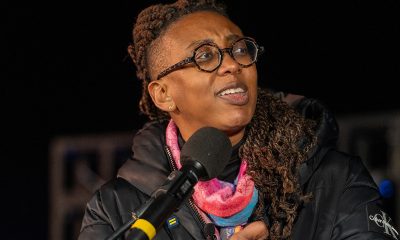
Congratulations to Yadiel Meléndez, on their new role as Community Associate, with the Wanda Alston Foundation. Meléndez is piloting a new role as a Community Associate at the Wanda Alston Foundation, where they support queer and trans young people in finding their footing, building independence, and experiencing a housing community where they are seen, valued, and affirmed. They are coming into this role with more than a decade of experience as a community organizer and operations specialist, supporting diverse communities through service, advocacy, and program coordination.
Previously they worked for Right Proper Brewing Shaw as a server and bartender and at Sephora, Washington, DC, and at FreshFarm, DC, in bilingual food access. They also worked freelance to build foundational structures for local queer BIPOC performance art coalitions, producing variety shows to curate space for marginalized performance artists in the community. They were a production manager for Haus of Hart Productions, a BIPOC centric performance art production. They also worked as field staff with the American Foundation for Suicide Prevention in Stafford, Va.
Meléndez is bilingual, Spanish and English. Their work is guided by a commitment to dignity, safety, and trauma-informed engagement, particularly within LGBTQ and BIPOC communities.
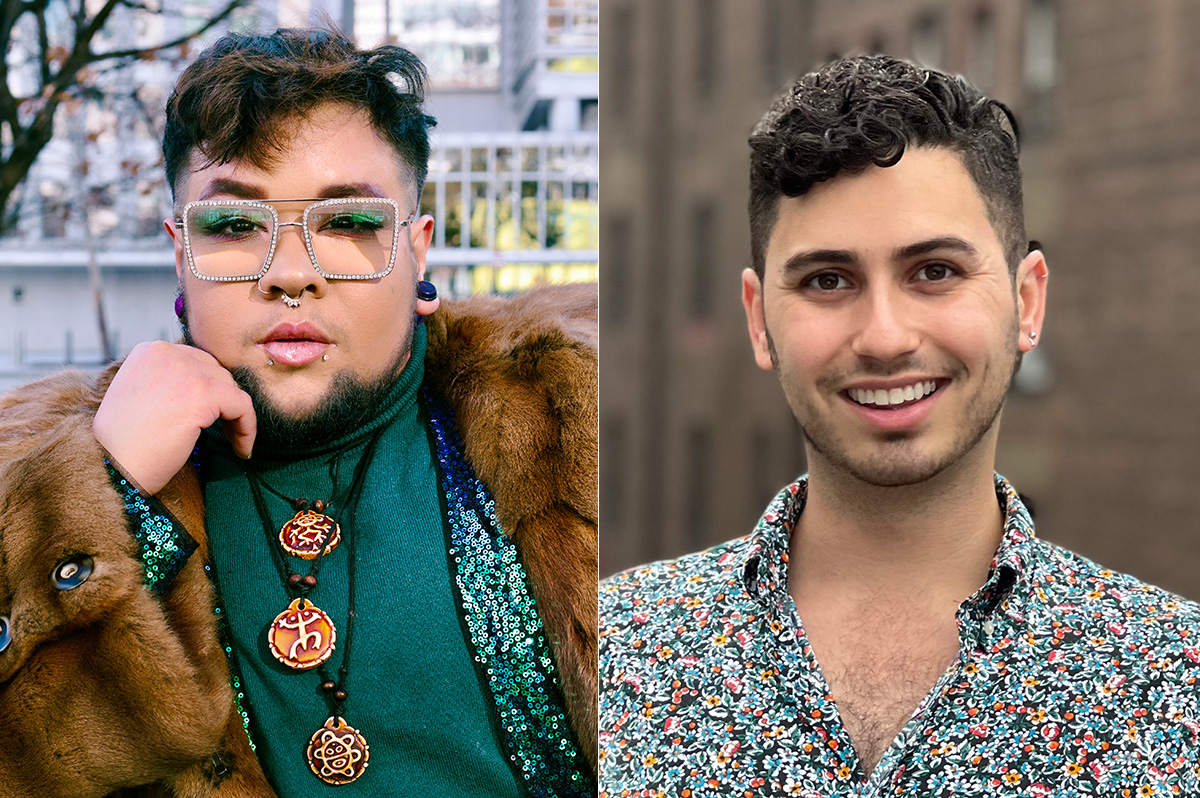
Congratulations also to Ben Rosen LICSW, on his new role as program director, with the Wanda Alston Foundation. Rosen previously worked with Fountain House’s OnRamps program, helping to build a new, innovative outreach program for individuals considered chronically homeless, and living with serious mental illness, in the Times Square area of New York. Rosen is a Psychotherapist, having worked with SG Psychotherapy, and as the psychotherapist with the Nest Community Health Center (URAM).
Rosen has a B.F.A. in Theatre Arts: Musical Theatre, Minor in Psychology (Cum Laude) from Malloy University Conservatory; and his M.S.W. in Clinical Practice with Individuals, Families, and Groups, from The Silberman School of Social Work, Hunter College, N.Y. He is independently licensed in New York and Washington, D.C.
News
An effort to increase the number of psychiatrists of color
After 35 years in law and advocacy, Rawle Andrews Jr. returns to his roots
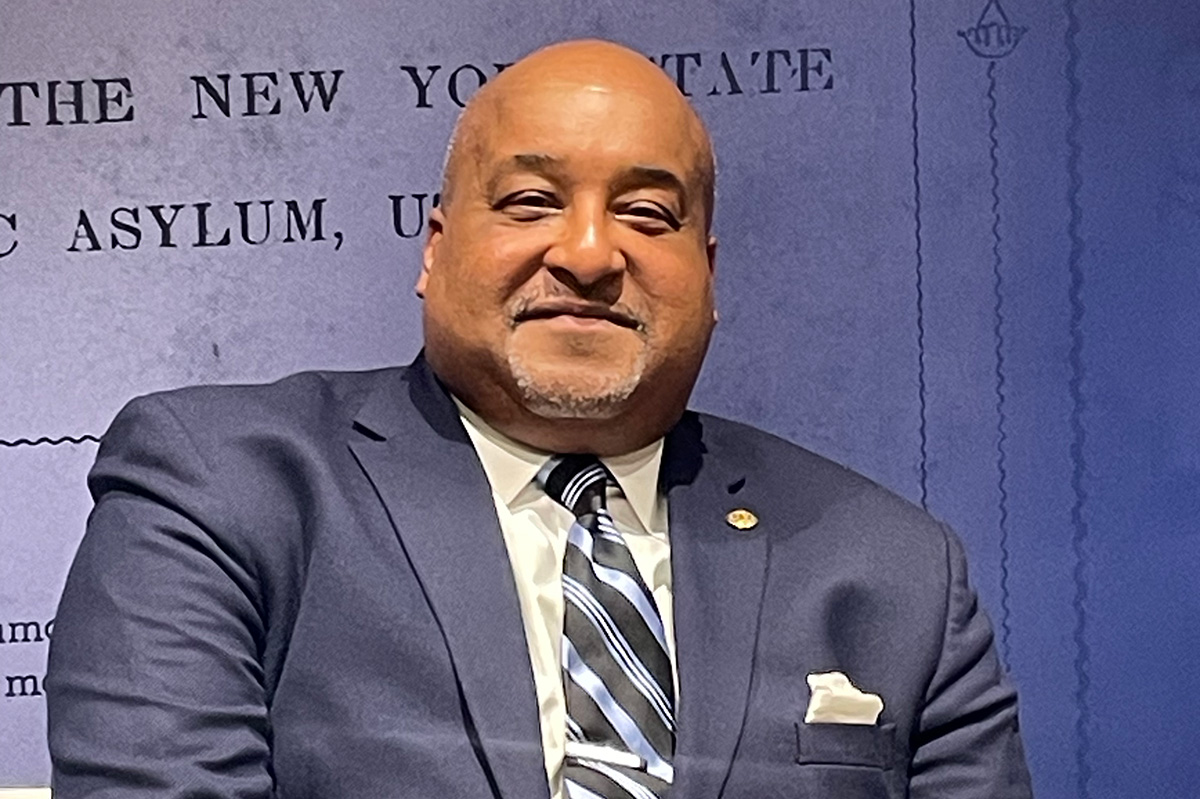
Rawle Andrews Jr. took an indirect path to become executive director of the American Psychiatric Association Foundation (APAF).
From a psychology major in college to becoming a lawyer, the passion for equity and inclusion that fueled him during his years at AARP and as a professor at Howard and Georgetown universities serves as the foundation for his career in mental health.
Andrews has made it his mission at APAF to prioritize youth mental health — including in schools in D.C. and across the country — and to reduce stigma around mental illness and increase the number of psychiatrists of color practicing in the U.S.
Andrews, who began his educational career studying psychology, said he felt out of place in college when his classmates were pursuing medical careers and he was more interested in law.
“I was the only person in my cohort who was going to law school,” he said. “Everybody else wanted to be a doctor and go to medical school.”
Everything changed for Andrews during the COVID-19 pandemic and after George Floyd was killed by police in Missouri: Those pivotal moments reshaped national conversations about health, race, and inequality, and pushed Andrews to rethink his career.
“I saw people deathly afraid of some disease, but also mortified by the fact that they witnessed somebody die on TV,” he said.
After nearly 16 years working as a lawyer in private practice and 15 years at AARP, Andrews found himself pulled back to mental and “whole body” health.
“My goal in law school was to be a courtroom lawyer all the time. If you had told me in 1990 that I would be a practicing lawyer going to court every day, I would have laughed you out of this room. If you had told me in 2010 that I wouldn’t be an in-house lawyer every day … I would have laughed you out of this room,” he said. “Everybody thinks you’re going to go straight from A to B. Life doesn’t work A to B.”
Now, Andrews says, he has the “ability to serve the whole house.” He can help “the eight-year-old who’s struggling in middle school … the parent who’s trying to get that child through, but also caring for an older loved one … who might have some cognitive decline or mobility challenges.”
Building a pipeline of Black mental health professionals
In his role at APAF, Andrews has his sights set on increasing the number of psychiatrists nationwide by reducing barriers to study and success, particularly for practitioners of color, who are vastly underrepresented.
Only about 5% of physicians are Black, and the number for Black psychiatrists is even lower at just 2%, according to the American Psychiatric Association. Widespread stigma around mental illness in communities of color, combined with “systemic barriers that keep persons of color from getting into medical school and matching for residency with teaching hospitals after graduating,” have contributed to the low numbers, Andrews says.
Financial pressures, limited residency slots, and a lack of exposure to psychiatry as a viable career all play important roles in limiting Black representation in the field. At the same time, stigma surrounding mental health — especially in Black communities — can discourage both patients and future physicians, according to Andrews.
He explains that this stigma is rooted in underlying fear, shame, and historic discrimination, and the only way to deal with those issues is directly. If you break those down, Andrews said, you can actually address them.
There are signs of change, though. “In the digital world, more and more people are seeing and talking about mental health all the time,” Andrews said. “And I believe more and more young doctors of all colors are deciding, ‘we need more psychiatrists, and I want to be a part of that solution.’”
Not having enough psychiatrists of color has far-reaching consequences. If you are a “non-diverse” physician or a physician practicing without humility or cultural competency, you may over-diagnose or misdiagnose a patient, said Andrews. You might assume a patient has symptoms due to your own cognitive biases.
A 2024 study in the Journal of General Internal Medicine revealed that mistrust and suspicion were high among dozens of Black patients with serious mental illness, who said they felt doctors did not take their concerns seriously or took a condescending tone with them during appointments.
This type of treatment does not promote trust or disclosure, Andrews said. “What is my advantage to be vulnerable with people who don’t think much of me, because you already thought I was broken?”
To combat medical racism and bias, APAF runs one of the largest psychiatry pipeline programs in the world. It provides more than 1,000 medical students from underrepresented and marginalized communities with training and professional development. Programs like the Diversity Leadership Fellowship emphasize cultural competency and evidence-based practices to better serve diverse groups and at-risk populations.
These programs have had tangible success in producing leadership in the field of psychiatry: APA’s CEO Dr. Marketa Wills, the first CEO of color and first female CEO in the APA organization’s 180-year history, was a trainee with the APAF nearly three decades ago.
Despite efforts to make healthcare more equitable for patients of color and members of the LGBTQ+ community, many experts believe that racism and biases are more deeply ingrained in the system than many realize. For example, a 2019 study found that Black patients suffering from depression are often misdiagnosed with schizophrenia, and a 2016 study revealed that many doctors wrongly believe that Black patients have higher thresholds for pain tolerance.
“If you don’t have cultural humility or cultural competency, you could over-diagnose somebody because you’re looking for them to be ADHD, you’re looking for them to be bipolar, you’re looking for them to be schizophrenic,” said Andrews. “And then, because of the fears, the stigmas, the shame, people don’t want to go and get tested either.”
Youth mental health focus
Andrews says many fear that telling someone else about their struggles will cause that person to look down on them. That unwillingness to share about mental health challenges can start at a young age.
That’s why the APAF has partnered with local organizations in the Washington, D.C., area to help young people address mental health concerns. One of the programs, Our Minds Matter, operates in D.C.-area schools and other states to educate students on signs of emotional distress and how to address it. APAF also runs the Notice.Talk.Act. at School program, which helps train school staff to recognize and address student mental health issues and connect them to resources. The program was recently adopted at Jefferson Middle School Academy.
The program is “the ‘stop, drop and roll’ of mental health,” Andrews said. “How do I notice signs and symptoms of distress in a student? How do I create an open space to talk and be a better active listener with a student who wants to share their mental health concerns and then act?”
APAF’s program, funded by the Substance Abuse and Mental Health Services Administration (SAMHSA) and free to schools, trained about 890 school staff members across the country in 2024, and boasts a 70% reduction in truancy and 89% reduction in disciplinary referrals, according to the foundation.
Notice.Talk.Act. is not just in schools — there are versions for home, for college, for the workplace.
Andrews hopes that this work with the APAF will reduce the stigma surrounding mental health struggles and improve access to culturally competent care. But he acknowledges there’s still a long way to go.
“We are planting and sowing seeds now and fertilizing the soil and tilling the soil,” he said. “We know that the next generation of doctors is going to look closer to the way the population looks. But ultimately, we still haven’t done enough.”
(This work is part of a partnership between the Washington Blade Foundation and Youthcast Media Group, funded through the FY26 Community Development Grant from the Office of D.C. Mayor Muriel Bowser. Jebeh Pajibo is a senior at Bard High School Early College DC, one of Youthcast Media Group’s journalism class partners. Sarah Gandluri, a UNC-Chapel Hill sophomore, is an intern and former high school participant with YMG. YMG founder, former USA Today health policy reporter Jayne O’Donnell, contributed to this report.)
Rehoboth Beach
BLUF leather social set for April 10 in Rehoboth
Attendees encouraged to wear appropriate gear

Diego’s in Rehoboth Beach hosts a monthly leather happy hour. April’s edition is scheduled for Friday, April 10, 5-7 p.m. Attendees are encouraged to wear appropriate gear. The event is billed as an official event of BLUF, the free community group for men interested in leather. After happy hour, the attendees are encouraged to reconvene at Local Bootlegging Company for dinner, which allows cigar smoking. There’s no cover charge for either event.

Minimal version of ‘Streetcar Named Desire’ heading to Dupont Underground

Comings & Goings

An effort to increase the number of psychiatrists of color

Calendar: April 10-16

BLUF leather social set for April 10 in Rehoboth
Tenn. lawmakers pass transgender “watch list” bill

Vance speaks at Orbán rally in Hungary

White House ends protections for trans students in multiple school districts

LGBTQ groups condemn Trump’s threat to destroy Iranian civilization

Report: Grenell wants Russian ambassadorship
-

 Tennessee4 days ago
Tenn. lawmakers pass transgender “watch list” bill
-

 Hungary5 days ago
Vance speaks at Orbán rally in Hungary
-
The White House5 days ago
White House ends protections for trans students in multiple school districts
-
Iran4 days ago
LGBTQ groups condemn Trump’s threat to destroy Iranian civilization