State Department
U.S. diplomat says negotiations to release Brittney Griner have stalled
WNBA star remains in Russian penal colony
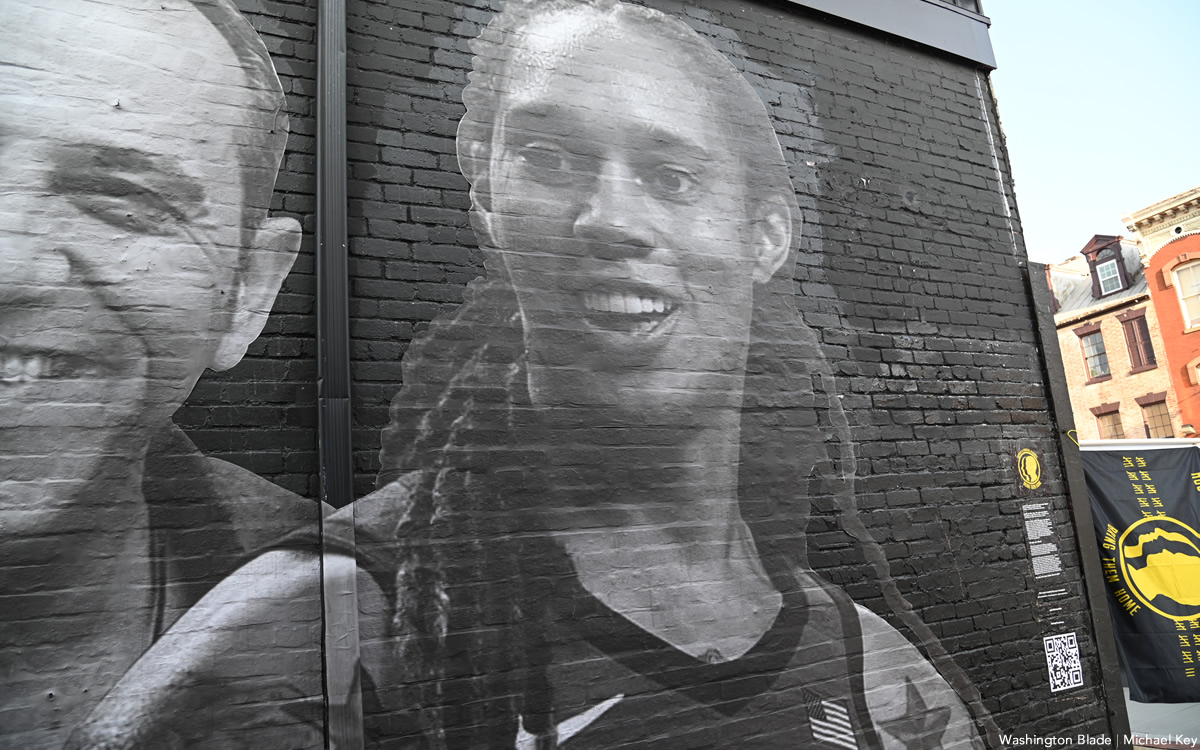
In remarks published Monday, Elizabeth Rood, the U.S. chargée d’affaires in Moscow, told Russia’s state-owned RIA news agency that talks to free jailed Americans Brittney Griner and Paul Whelan were continuing through the “designated channel.”
During the long ranging interview covering a variety of subjects, Rood was asked if she intended to visit the imprisoned WNBA star who is serving time in a Mordovian prison.
“Of course, we are going to do this as soon as the Russian authorities give us permission to visit Brittney Griner in the new colony where she was recently transferred,” the American diplomat responded and in answer to a follow-up question regarding Griner’s status. “As far as we understood from talking to her, she is healthy and doing as well as can be expected in her difficult circumstances.”
RIA then focused on the negotiations asking for some of the details including the possibility of convicted arms dealer Viktor Bout being included in the “exchange list” in the potential prisoner swap deal between the Russian and American authorities.
“I can say that the United States continues to discuss with the Russian authorities through special channels the issue of the release of Brittney Griner and Paul Whelan. As we have already said, the United States has submitted a serious proposal for consideration. We finalized this proposal and offered alternatives. Unfortunately, the Russian Federation has so far received no serious response to these proposals, ” the U.S. chargée d’affaires answered.
“However, I would like to emphasize that the main concern and the first priority of the U.S. Embassy is to ensure the well-being of the American citizens who are here. And the situation is not limited to the names of those who are mentioned in the media headlines — a number of American citizens are kept in Russian prisons. We are extremely concerned about the condition of each of them, and we continue to follow their affairs very closely and support them in every possible way,” she added.
RIA then asked: “What did you mean by ‘serious response’ from Russia? Moscow has repeatedly stressed that the negotiations are being conducted through professional channels … What does the American side mean by “serious response”?
Rood answered telling RIA; “I mean, we have made a serious proposal that reflects our intention to take action to free American prisoners. We did not see a serious response from the Russian side to our proposal.”
“By ‘serious answer’ do you mean consent?” RIA asked in a follow-up question.
“I mean an answer that would help us come to an agreement,” she answered.





State Department
Democracy Forward files FOIA request for State Department bathroom policy records
April 20 memo outlined anti-transgender rule
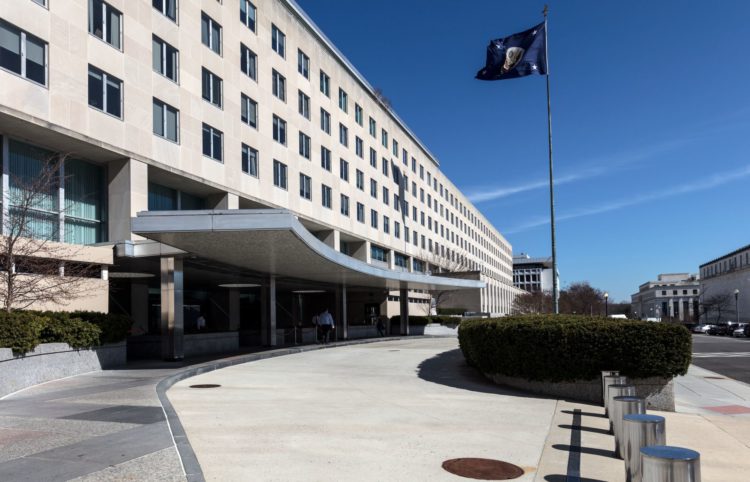
Democracy Forward on Tuesday filed a Freedom of Information Act request for records on the State Department’s new bathroom policy.
A memo titled “Updates Regarding Biological Sex and Intimate Spaces, Including Restrooms” that the State Department issued on April 20 notes employees can no longer use bathrooms that correspond with their gender identity.
“The administration affirms that there are two sexes — male and female — and that federal facilities should operate on this objective and longstanding basis to ensure consistency, privacy, and safety in shared spaces,” State Department spokesperson Tommy Piggot told the Daily Signal, a conservative news website that first reported on the memo. “In line with President Trump’s executive order this provides clear, uniform guidance to the department by grounding policy in biological sex as determined at birth.”
President Donald Trump shortly after he took office in January 2025 issued an executive order that directed the federal government to only recognize two genders: male and female. The sweeping directive also ordered federal government agencies to “effectuate this policy by taking appropriate action to ensure that intimate spaces designated for women, girls, or females (or for men, boys, or males) are designated by sex and not identity.”
Democracy Forward’s FOIA request that the Washington Blade exclusively obtained on Tuesday is specifically seeking a copy of the memo that details the State Department’s new bathroom policy. Democracy Forward has also requested “all” memo-specific communications between the State Department’s Bureau of Global Public Affairs and the Daily Signal from April 1-21.
State Department
State Department implements anti-trans bathroom policy
Memo notes directive corresponds with White House executive order
The State Department on April 20 announced employees cannot use bathrooms that correspond with their gender identity.
The Daily Signal, a conservative news website, reported the State Department announced the new policy in a memo titled “Updates Regarding Biological Sex and Intimate Spaces, Including Restrooms.”
The State Department has not responded to the Washington Blade’s request for comment on the directive.
“The administration affirms that there are two sexes — male and female — and that federal facilities should operate on this objective and longstanding basis to ensure consistency, privacy, and safety in shared spaces,” State Department spokesperson Tommy Piggot told the Daily Signal. “In line with President Trump’s executive order this provides clear, uniform guidance to the department by grounding policy in biological sex as determined at birth.”
President Donald Trump shortly after he took office in January 2025 issued an executive order that directed the federal government to only recognize two genders: male and female. The sweeping directive also ordered federal government agencies to “effectuate this policy by taking appropriate action to ensure that intimate spaces designated for women, girls, or females (or for men, boys, or males) are designated by sex and not identity.”
The Daily Signal notes the new State Department policy “does not prohibit single-occupancy restrooms.”
State Department
Report: US to withhold HIV aid to Zambia unless mineral access expanded
New York Times obtained Secretary of State Marco Rubio memo
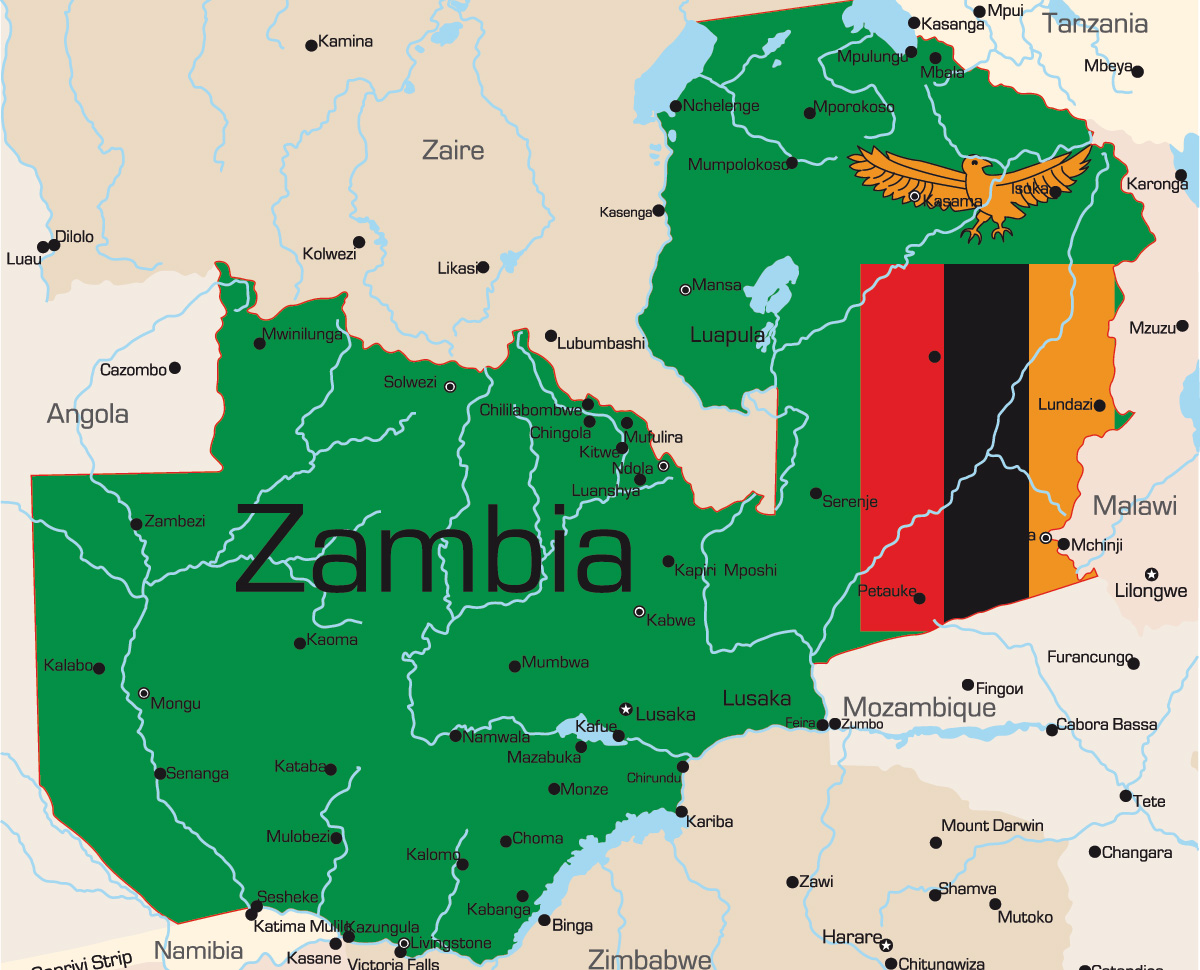
The State Department is reportedly considering withholding assistance for Zambians with HIV unless the country’s government allows the U.S. to access more of its minerals.
The New York Times on Monday reported Secretary of State Marco Rubio in a memo to State Department’s Bureau of African Affairs staffers wrote the U.S. “will only secure our priorities by demonstrating willingness to publicly take support away from Zambia on a massive scale.” The newspaper said it obtained a copy of the letter.
Zambia is a country in southern Africa that borders Tanzania, Malawi, Mozambique, Zimbabwe, Botswana, Namibia, Angola, and the Democratic Republic of Congo.
The Times notes upwards of 1.3 million Zambians receive daily HIV medications through PEPFAR. The newspaper reported Rubio in his memo said the Trump-Vance administration could “significantly cut assistance” as soon as May.
“Reports of (the) State Department withholding lifesaving HIV treatment in return for mining concessions in Zambia does not make us safer, stronger, or more prosperous,” said U.S. Sen. Jeanne Shaheen (D-N.H.), the ranking member of the Senate Foreign Relations Committee, on Tuesday. “Monetizing innocent people’s lives further undermines U.S. global leadership and is just plain wrong.”
The Washington Blade has reached out to the State Department for comment.
Zambia received breakthrough HIV prevention drug through PEPFAR
Rubio on Jan. 28, 2025, issued a waiver that allowed PEPFAR and other “life-saving humanitarian assistance” programs to continue to operate during a freeze on nearly all U.S. foreign aid spending. HIV/AIDS service providers around the world with whom the Blade has spoken say PEPFAR cuts and the loss of funding from the U.S. Agency for International Development, which officially closed on July 1, 2025, has severely impacted their work.
The State Department last September announced PEPFAR will distribute lenacapavir in countries with high prevalence rates. Zambia two months later received the first doses of the breakthrough HIV prevention drug.
Kenya and Uganda are among the African countries have signed health agreements with the U.S. since the Trump-Vance administration took office.
The Times notes the countries that signed these agreements pledged to increase health spending. The Blade last month reported LGBTQ rights groups have questioned whether these agreements will lead to further exclusion and government-sanctioned discrimination based on sexual orientation and gender identity.

988 restores crisis services for LGBTQ youth

To school to homeschool to school again

Ryan Murphy’s ‘Monster’ vilifies the lesbian

The right to be an ordinary transgender man

LGBTQ community must vote in big numbers

PHOTOS: HRC National Dinner

What’s frightening is also funny in ‘Venus’

I’m 66, he’s 27. Is it love or am I being played?

The LGBTQ real estate map is being redrawn