European Union
Dutch constitution to ban anti-gay discrimination
Advocacy group describes vote as ‘historic victory’
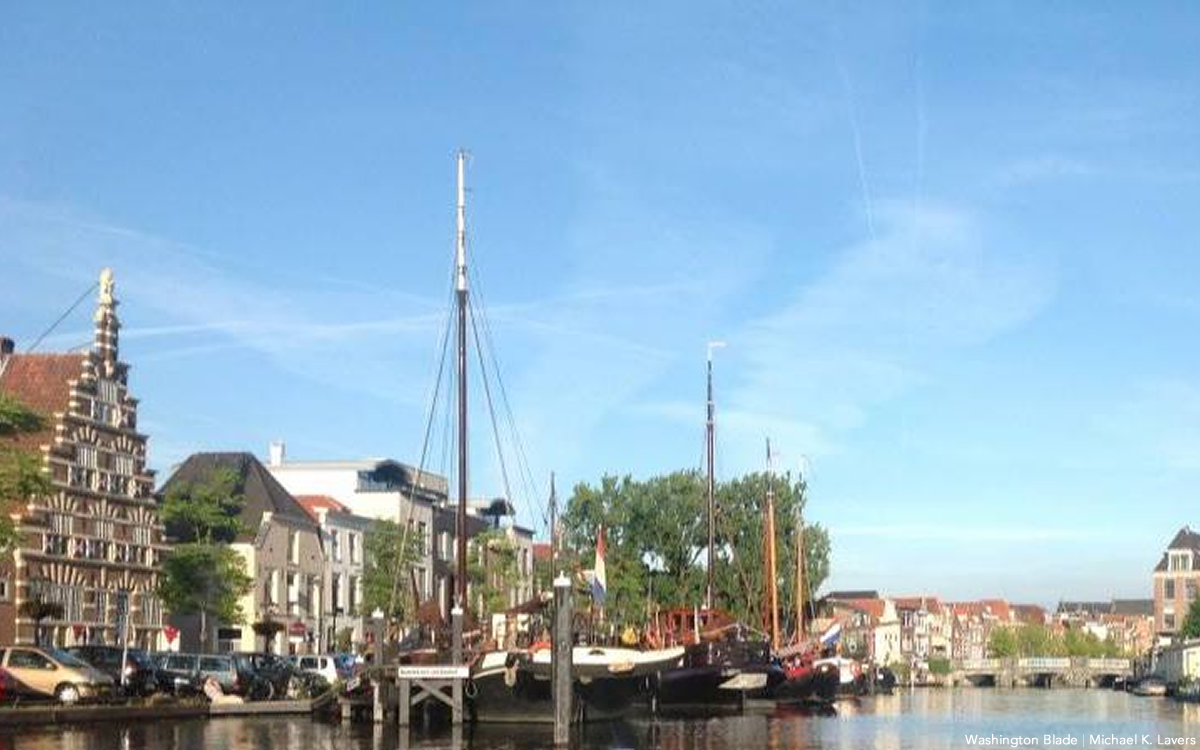
The Upper House of the States General of the Netherlands, the supreme bicameral legislature of the kingdom, on Wednesday voted to amend Article 1 of the Dutch Constitution, expanding it to prohibit discrimination against someone because of a disability or sexual orientation.
In a 56–15 vote in the Dutch Senate, the proposal for amendment passed and is now headed to King Willem-Alexander for his royal assent and the Dutch government. Once approved it will be published in the Staatscourant, the official government publication that formally announces new laws in the kingdom.
LGBTQ advocacy groups and activists celebrated the vote.
Enshrining the rights of LGBTI people in the constitution is a “historic victory for the rainbow community,” said advocacy group COC Nederland. The Dutch LGBTQ rights group was founded in 1946 and is considered the oldest existing LGBTQ organization in the world.
Dutch media outlet NL Times noted that Article 1 states that everyone in the Netherlands “shall be treated equally in equal circumstances.” The following sentence goes on to explicitly mention several examples, including “religion, belief, political opinion, race or sex.” That list will now be expanded.
The procedure for such an adjustment takes years because it has to be voted on several times. With the Senate’s vote, that process has now been completed.
The change was the result of an initiative from coalition party D66 and left-wing opposition parties PvdA and GroenLinks that has developed over the course of 12 years. “You can rightly call this day historic!” said D66 MP Alexander Hammelburg, who helped defend the law in the Senate.
“A disability, or who you fall in love with, should never be a reason to be excluded,” said PvdA MP Habtamu de Hoop.
NL Times also reported that since 2004, COC Nederlands has advocated anchoring the rights of gay men, bisexual, transgender and intersex people in the Constitution. This has already happened in countries such as Sweden, Portugal, Malta, Mexico and South Africa.
An association representing people with physical and mental disabilities, or chronic illnesses, also called it a “historic” day.
“Adding the disability basis to Article 1 is historic news,” said Ieder(in) Director Illya Soffer.
“The government is given an additional task to permanently improve and strengthen the position of people with a disability. Not only in legislation, but also in practice,” Soffer continued.





European Union
Poland’s top court rejects recognition of same-sex marriages from other EU countries
Ruling sets up potential clash with bloc

Poland’s top court this week rejected the recognition of same-sex marriages legally performed in other EU countries.
The EU Court of Justice in Luxembourg last November ruled in favor of a same-sex couple who challenged Poland’s refusal to recognize their German marriage. Poland’s Supreme Administrative Court in March reaffirmed the decision.
The couple, who lives in Poland, brought their case to Polish courts in 2019. The Supreme Administrative Court referred it to the EU Court of Justice.
The Polish government in May announced it will recognize same-sex marriages legally performed in other EU countries. Polish President Karol Nawrocki on July 17 vetoed bills that would have extended rights to same-sex couples.
The Constitutional Tribunal ruling, which it issued on July 28, was unanimous and final. It also sets up a potential clash between it and the EU Court of Justice.
European Union
European Commission says all EU countries should ban conversion therapy
Recommendation ‘an important step forward for LGBTI rights across Europe’

The European Commission on Wednesday said all European Union countries should ban so-called conversion therapy.
The recommendation comes weeks after the European Parliament voted in favor of prohibiting the widely discredited practice across the EU. More than 1.2 million people signed a campaign in support of the ban that ACT (Against Conversion Therapy) LGBT launched in 2024 through the EU’s European Citizens Initiative framework.
“We warmly welcome today’s commitment from the European Commission to a recommendation on ending conversion practices, an important step forward for LGBTI rights across Europe,” said ILGA Europe in a statement.
Seven EU countries — Belgium, Cyprus, France, Malta, Norway, Portugal, and Spain — have banned conversion therapy outright.
Greece in 2022 banned the practice for minors. German lawmakers in 2020 passed a law that prohibits conversion therapy for minors and for adults who have not consented to undergoing the widely discredited practice.
ILGA Europe said the European Commission’s recommendation “highlights how much work remains to be done.”
“Ending conversion practices cannot stop at symbolic commitments or fragmented national approaches,” stressed the advocacy group. “We need coordinated EU action, proper training for professionals, and survivor-centered support systems that recognize the serious harm these practices cause.”
“More than one million people supported the European Citizens’ Initiative calling for change,” added ILGA Europe. “The message is clear: conversion practices are not therapy or belief, they are a form of violence that Europe can and should end.”
European Union
European Parliament backs EU-wide conversion therapy ban
More than 1.2 million people backed campaign
The European Parliament on Wednesday voted in favor of banning so-called conversion therapy across the European Union.
ACT (Against Conversion Therapy) LGBT in 2024 launched a campaign in support of the ban through the EU’s European Citizens Initiative framework. More than 1.2 million people ultimately signed it.
The proposed ban had the support of 405 MEPs. The European Commission is expected to formally respond to it by May 18.
Seven EU countries — Belgium, Cyprus, France, Malta, Norway, Portugal, and Spain — have banned conversion therapy outright.
Greece in 2022 banned the practice for minors. German lawmakers in 2020 passed a law that prohibits conversion therapy for minors and for adults who have not consented to undergoing the widely discredited practice.

Over 2,000 turn out for Hands Around the Kennedy Center protest

Furries take over the Metro

A roundup of fall events not to be missed

Activists protest outside Turkish Embassy in D.C.

Republican challenger misgenders McBride during forum, forced to leave

New Hungarian government to scrap anti-LGBTQ adoption law

Acclaimed Chef Patrick O’Connell’s memoir reveals the arc of a life well lived

Hands Off the Arts to form ‘human chain’ around Kennedy Center

LGBTQ issues, attacks on Democrats dominate unusual RNC midterm convention

78th annual Emmy Awards recapped
-

 Hungary5 days ago
New Hungarian government to scrap anti-LGBTQ adoption law
-
a&e features4 days ago
Acclaimed Chef Patrick O’Connell’s memoir reveals the arc of a life well lived
-
District of Columbia4 days ago
Hands Off the Arts to form ‘human chain’ around Kennedy Center
-
2026 Midterm Elections4 days ago
LGBTQ issues, attacks on Democrats dominate unusual RNC midterm convention