Middle East
Minority, LGBTQ voices must be centered amid Iran protests, activists say
Mahsa Amini died in police custody last September
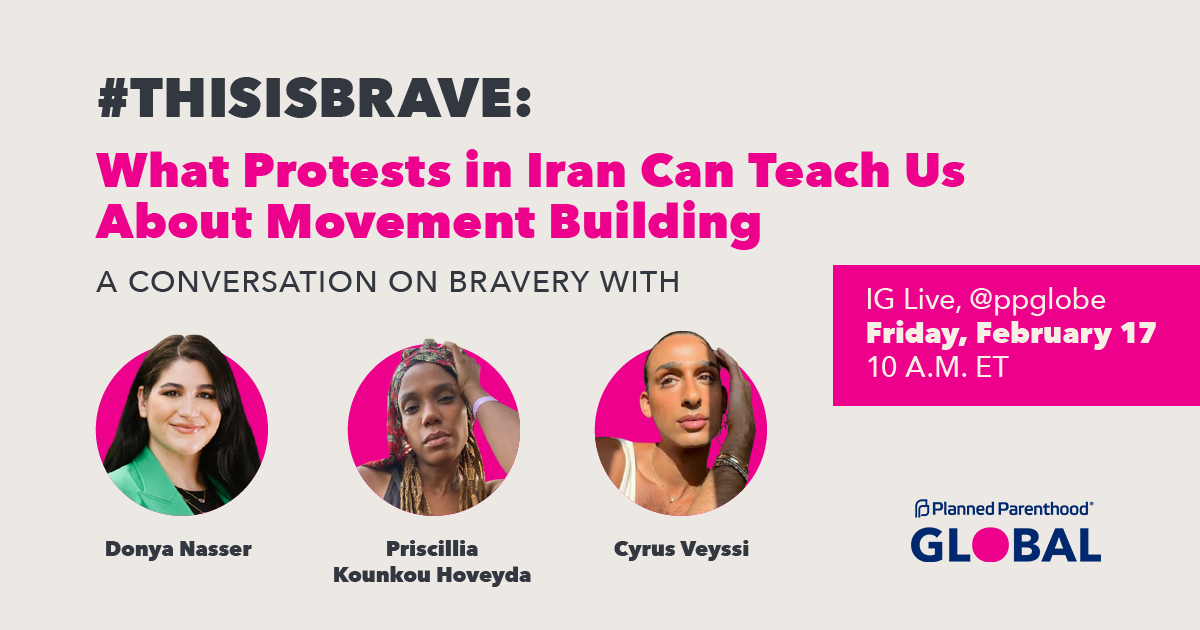
Amid the ongoing protests in Iran, LGBTQ and other minority voices must be centered in the fight for equal rights, activists said during an Instagram Live discussion hosted by Planned Parenthood Global on Friday.
The group organized the event as part of its “This Is Brave” campaign, an initiative that endeavors to “show the connection across social justice movements,” Planned Parenthood Global Senior Director of Global Communications Crister Delacruz told the Washington Blade by phone on Friday.
“For example,” she said, “sexual and reproductive rights are connected to the fight for LGBTQ equality: Just like anyone else, members of the LGBTQ community around the world who need access to sexual and reproductive healthcare.”
Protests, many led by women and other marginalized groups, erupted in Iran over the death of Mahsa Amini in police custody last September. Amini was detained by authorities for allegedly violating rules governing how women can dress.
The demonstrations continued over the subsequent months despite violent crackdowns from the Iranian government, earning the attention of the international community and prompting the U.S. Senate to introduce a resolution condemning the country’s “systemic persecution of women and peaceful protestors.”
Joining Friday’s discussion were Priscillia Kounkou Hoveyda, a human rights lawyer and founder of the Collective for Black Iranians, and Cyrus Veyssi, a digital creator and online strategist with a substantial following on social media platforms. Donya Nasser, a former member of the Planned Parenthood Global Advisory Board and current board member of Planned Parenthood’s Mar Monte (Calif.) affiliate, moderated the conversation.
Veyssi, a queer and nonbinary “child of the diaspora” who grew up in the U.S., said they have “countless friends who live in secrecy in Iran,” people who in some cases “have to spend every weekend in a jail” or were forced to flee the country, often with help from groups like the International Railroad for Queer Refugees (formerly known as the Iranian Railroad for Queer Refugees.)
Social media, Veyssi said, “has allowed people in the West to see what is happening in Iran.” And given their sizable platform and privileged position living safely in America with economic security, Veyssi said they feel it is their responsibility to “share as much as I can.”
Especially so since so many other LGBTQ activists who share content about or are otherwise engaged on social media with issues concerning the turmoil in Iran have experienced shadow-banning, Veyssi said, referring to the phenomenon by which a user’s posts are artificially depressed so they reach fewer followers than they otherwise would.
On Wednesday, Veyssi provided a written statement to The Washington Blade in response to a question concerning the nature of any misconceptions they have observed among Americans when it comes to the struggle for equal rights in Iran.
Noting that they are not positioned to speak on behalf of Iranians who still live in the country, Veyssi said they have observed that one “main misconception is not understanding the nuance between the violent and oppressive government in Iran and that of our culture.”
This extends to the treatment of LGBTQ people and identities, they said. “There is a lot embedded within our history that suggests how open minded – specifically among gender and sexuality expressions – our people have been.”
“From subversive poetry that illustrates queer love to even beauty trends that contrast with western ideals of masculinity and femininity, queerness has always been a facet of social experiences in Iran” Veyssi said.
“I wish more people understood that LGBTQIA+ rights is part of the larger movement towards freedom in Iran right now,” they added, “and that resistance in Iran can simply look like waking up and choosing to go about your day as your true self, something that many people have died for and are fighting for.”
Kounkou Hoveyda, who is Congolese, Iranian and French, recounted the story of a 24-year-old man who was “arrested and tortured in detention” for fighting for “the right to be who he is.” Even LGBTQ Iranians who choose not to engage in demonstrations or speak out against the government “are in a constant state of alert,” said Kounkou Hoveyda, who identifies as queer.
Among outside observers in the West, many never think to ask themselves whether Iranians engaged in the protests and movements for social and political equality may be transgender or nonbinary, Kounkou Hoveyda said — adding that Iranians are “just as layered as any other group of people” even when living under a regime that works to censor out their marginalized identities.
It is also incumbent on the allies of marginalized minority communities to speak out on their behalf, Veyssi said. “I want the 40-year-old white woman living in Nebraska posting about Iran” because she will have access to and influence with an audience whom less privileged groups may never be able to reach, they said.
Likewise, even in cases where matters like the treatment of women do not impact them directly, Veyssi said, “I will show up for whoever needs it, and it’s not just about what’s happening right now” in Iran. For example, they said, one must show up for women in the U.S. who are battling for bodily autonomy.
Veyssi credited Planned Parenthood Global for providing the opportunity for him and the other speakers to address these issues, which they said corporations and other powerful institutions have often shied away from.
“So many brands and companies want to avoid it,” they said, but what’s happening in Iran is not a political or partisan matter. Rather, Veyssi said, this is about freedom and one must confront the question of whether to stand up for that or stand in the way by remaining silent.
As the international arm of Planned Parenthood Federation of America, Planned Parenthood Global has worked overseas for 50 years to break down barriers to health care and champion the brave people putting their safety on the line each and every day for reproductive freedom.






Iran and Egypt on Friday faced off during the World Cup’s “Pride Match” in Seattle.
Iran is among the handful of countries in which consensual same-sex sexual relations remain punishable by death. Discrimination and persecution based on sexual orientation and gender identity is commonplace in Egypt.
Friday’s match coincided with Pride weekend in Seattle. The Egyptian Football Association and the Football Federation Islamic Republic of Iran both objected to playing in the “Pride Match.”
Egypt and Iran tied 1-1.
FIFA, for its part, allowed Pride flags inside the stadium during the match.
“The FIFA World Cup 2026 is an inclusive event that welcomes people from all backgrounds,” a FIFA spokesperson told the Washington Blade in a statement. “Fans of all sexual orientations and gender identities are welcome at matches and events. General statements of human rights, including rainbow flags and other flags representing sexual orientation and gender identity, are permitted under the FIFA World Cup 2026™ Stadium Code of Conduct and may be displayed inside stadiums provided they are used in a manner consistent with the code.”
Human Rights Watch welcomed FIFA’s decision to allow Pride flags inside the stadium. Outright International, a global LGBTQ and intersex rights group, distributed Pride flags in Seattle on Friday, which was Pride Match Day.
“Visibility matters,” said Outright International Executive Director Maria Sjödin. “Pride is now being celebrated in more than 100 countries, including this weekend in Seattle. For many LGBTIQ people, seeing a Pride flag in public is a reminder that they are not alone, and that their rights and dignity are recognized.”
FIFA President Gianni Infantino earlier this year told Die Weltwoche, a Swiss magazine, that “there will be no ‘Pride Match’ at the (FIFA) World Cup.”
“There will be a FIFA World Cup match in Seattle, and on the same day, events organized by external organizations will be taking place in the city,” said Infantino. “But that has nothing to do with the match itself.”
Peter Tatchell, a long-time LGBTQ activist from the U.K. who is director of the Peter Tatchell Foundation, was among those who traveled to Seattle for Friday’s match. Tatchell accused FIFA of not vetting World Cup teams — specifically Iran, Egypt, Saudi Arabia, Ghana, Senegal, Qatar, Tunisia, Morocco, Iraq, Uzbekistan, and Algeria — over whether they would allow gay players.
“FIFA is protecting LGBT+ visibility in the stands while failing to protect LGBT+ players on the pitch,” said Tatchell.
Lebanon
Lebanese LGBTQ group responds to latest war
Helem’s Beirut community center ‘a vital crisis hub’
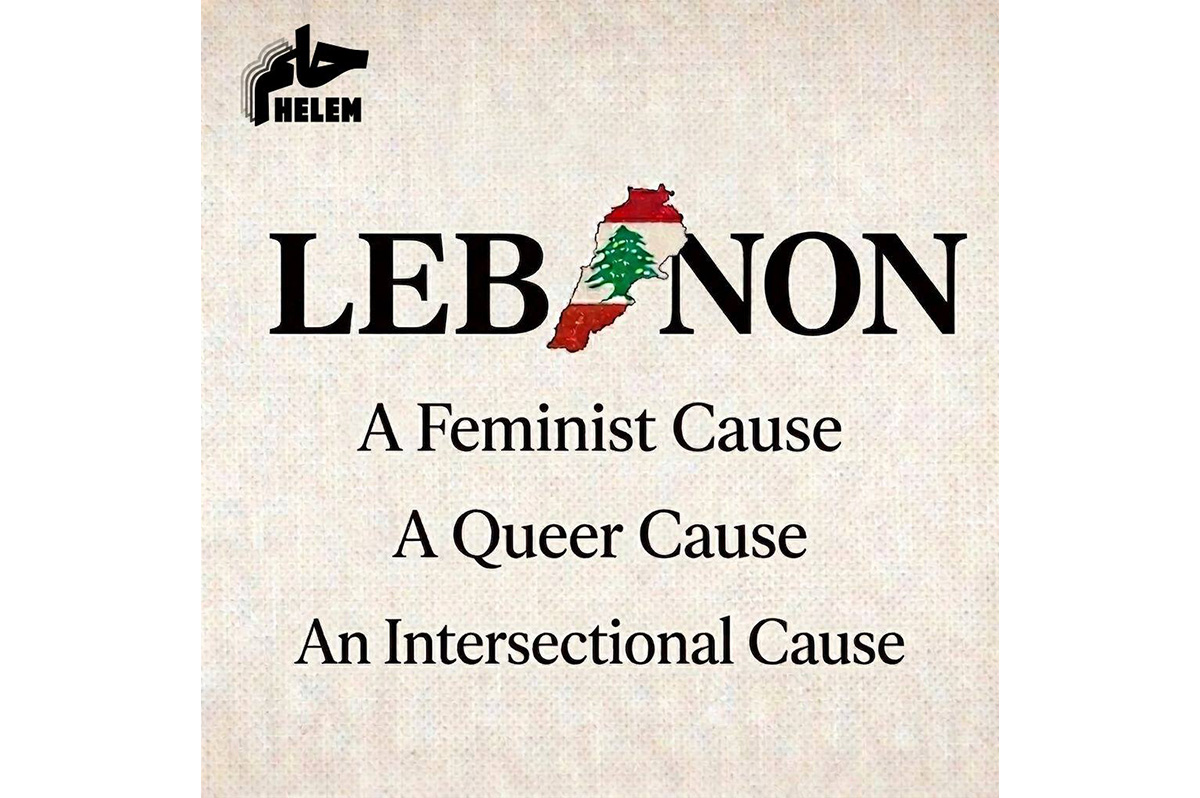
A Lebanese advocacy group is providing support to LGBTQ people who have been displaced during the latest war between Israel and Hezbollah.
Helem Executive Director Sandy Mteirik on Monday told the Washington Blade her group, in partnership with another NGO, has “shifted our programs to focus entirely on emergency response.”
Helem has opened what Mteirik described as a “lifesaving, inclusive shelter specifically for transgender individuals who find collective shelters unsafe or inaccessible.”
Mteirik noted Helem’s community center in Beirut, the Lebanese capital, “now serves as a vital crisis hub where” LGBTQ people “can find physical safety, psychological support, and relief assistance.” she told the Blade that Helem is also offering “confidential emotional support, assessing immediate needs, and connecting individuals with emergency housing and protection services.”
“We also continue to monitor and document protection risks to prevent further exclusion and harm,” said Mteirik.
‘Displacement crisis has intensified’
The U.S. and Israel on Feb. 28 launched airstrikes against Iran. One of them killed Supreme Leader Ayatollah Ali Khamenei.
Hezbollah, an Iran-backed Shia militant group the U.S. has designated a terrorist organization, in response launched rockets into Israel. The Jewish State on March 2 began to carry out airstrikes against Hezbollah in Lebanon.
The Lebanese Health Ministry on Tuesday said Israeli airstrikes have killed 2,124 people and wounded 6,921 others. Lebanese officials have also indicated the war has displaced more than 1 million people in the country.
Israeli airstrikes in Beirut and elsewhere in the country on April 8 killed more than 300 people and injured upwards of 1,100.
President Donald Trump the day before said “a whole civilization will die tonight” if Iran did not agree to end the war and end its blockade of the Strait of Hormuz, a strategic waterway that connects the Persian Gulf and the Gulf of Oman through which roughly 20 percent of the world’s crude oil passes.
Trump less than two hours before the deadline announced a two-week ceasefire with Iran that Pakistan helped broker. Trump said the deal did not include Lebanon, even though Pakistan insisted it did.
Hamas militants on Oct. 7, 2023, killed upwards of 1,200 people when they launched a surprise attack against Israel from the Gaza Strip. Hezbollah the following day began to launch rockets into Israel.
An Israeli airstrike in Beirut on Sept. 27, 2024, killed Hassan Nasrallah, Hezbollah’s long-time leader. Iran four days later launched upwards of 200 ballistic missiles at Israel.
The U.S. helped broker a ceasefire between Israel and Lebanon that took effect on Nov. 27, 2024. Israel nevertheless continued to carry out airstrikes in Lebanon.
Lebanese Ambassador to the U.S. Nada Hamadeh Moawad met with Israeli Ambassador to the U.S. Yechiel Leiter on Tuesday at the State Department. The meeting is the first time the two countries have held direct diplomatic talks since 1993.
Mteirik told the Blade that Helem’s community center “has not been damaged yet” in the latest war. She said, however, the impact of the April 8 airstrikes “mirrors the ongoing war Lebanon has endured since 2024.”
“The intensity of these recent strikes and the resulting massacres in ‘relatively’ safe areas of Beirut have been devastating,” said Mteirik.
“With over 300 victims, the displacement crisis has intensified,” she added. “When state responses are not inclusive, LGBTQIA+ individuals face amplified risks, including exclusion from collective shelters, homelessness, exposure to violence, loss of income, and barriers to essential healthcare.”
Helem: Lebanese government war response must be LGBTQ-inclusive
Article 534 of Lebanon’s Penal Code states “any sexual intercourse contrary to the order of nature is punishable” by up to a year in prison. Several judges in recent years have opted not to use the statute to prosecute LGBTQ people who have been charged under it.
Helem on March 4 called upon the Lebanese government and international NGOs to develop a response to the Israeli airstrikes that is “comprehensive, fair, and inclusive of all groups, without exception or discrimination.” Helem’s specific requests include:
• Integrating a rights-based, non-discriminatory approach into all stages of emergency planning.
• Training response staff on protection principles regarding gender-based violence and discrimination.
• Reassessing the “traditional family” shelter model that systematically excludes non-traditional families and individuals.
• Involving specialized civil society organizations in the design and monitoring of response plans.
• Establishing clear accountability standards to prevent discriminatory practices.
“Past experiences show that state response plans often fail to include displaced LGBTQ+ individuals,” said Mteirik.
Mteirik conceded the “conclusion of this conflict remains uncertain.” She stressed Helem “remains committed to standing with our community.”
“In these difficult times, we reaffirm our call for humanitarian solidarity that transcends identities,” said Mteirik. “Our work is an extension of our rejection of violence, occupation, and the exploitation of individuals and their lives.”
Iran
LGBTQ groups condemn Trump’s threat to destroy Iranian civilization
Ceasefire announced less than two hours before Tuesday deadline

The Council for Global Equality is among the groups that condemned President Donald Trump on Tuesday over his latest threats against Iran.
Trump in a Truth Social post said “a whole civilization will die tonight” if Tehran did not reach an agreement with the U.S. by 8 p.m. ET on Tuesday.
Iran is among the handful of countries in which consensual same-sex sexual relations remain punishable by death.
Israel and the U.S. on Feb. 28 launched airstrikes against Iran.
One of them killed Supreme Leader Ayatollah Ali Khamenei. Iran in response launched missiles and drones against Israel and other countries that include Kuwait, Bahrain, Qatar, the United Arab Emirates, Jordan, Saudi Arabia, Azerbaijan, and Cyprus.
Gas prices in the U.S. and around the world continue to increase because the war has essentially closed the Strait of Hormuz, a strategic waterway that connects the Persian Gulf and the Gulf of Oman through which roughly 20 percent of the world’s crude oil passes.
Trump less than 90 minutes before his deadline announced a two-week ceasefire with Iran that Pakistan helped broker.
“We the undersigned human rights, humanitarian, civil liberties, faith-based and environmental organizations, think tanks and experts are deeply alarmed by President Trump’s threat regarding Iran that ‘a whole civilization will die tonight’ if his demands are not met. Such language describes a grave atrocity if carried out,” reads the statement that the Council for Global Equality more than 200 other organizations and human rights experts signed. “A threat to wipe out ‘a whole civilization’ may amount to a threat of genocide. Genocide is a crime defined by the Genocide Convention and by the Rome Statute of the International Criminal Court as committing one or more of several acts ‘with intent to destroy in whole or in part a national, racial or religious groups as such.'”
The statement states “the law is clear that civilians must not be targeted, and they must also be protected from indiscriminate or disproportionate attacks.”
“Strikes on civilian infrastructure — such as the recent attack on a bridge and the attacks President Trump is repeatedly threatening to carry out to destroy power plants — have devastating consequences for the civilian population and environment,” it reads.
“We urge all parties to respect international law,” adds the statement. “Those responsible for atrocities, including crimes against humanity and war crimes, can and must be held accountable.”
The Alliance for Diplomacy and Justice, Amnesty International USA, Human Rights Watch, the American Civil Liberties Union, the NAACP, MADRE, and the Robert and Ethel Kennedy Human Rights Center are among the other groups that signed the letter.

Factors to consider when hiring an interior designer

PHOTOS: HRC National Dinner

The LGBTQ real estate map is being redrawn

I’m 66, he’s 27. Is it love or am I being played?

What’s frightening is also funny in ‘Venus’

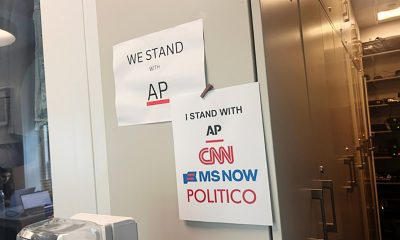
Washington Blade responds to concerns over White House pool duties

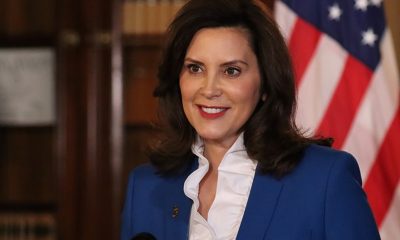
Gov. Whitmer to serve as keynote speaker for Saturday’s HRC National Dinner

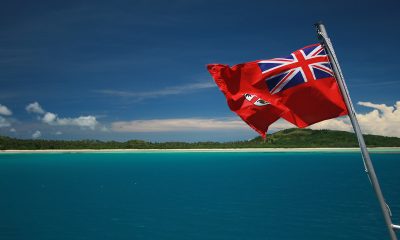
Spike in HIV cases prompts Fiji to declare national emergency

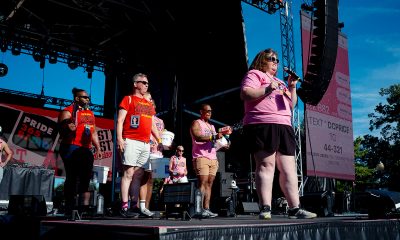
Capital Pride chair resigns from board after just 10 months

Clavicular charged in alleged rape of teenage influencer
-

 Commentary4 days ago
Washington Blade responds to concerns over White House pool duties
-
LGBTQ Non-Profit Organizations4 days ago
Gov. Whitmer to serve as keynote speaker for Saturday’s HRC National Dinner
-
Fiji4 days ago
Spike in HIV cases prompts Fiji to declare national emergency
-
District of Columbia4 days ago
Capital Pride chair resigns from board after just 10 months