Maryland
Joe Vogel makes his mark in Md. General Assembly
Montgomery County Democrat is one of state’s youngest lawmakers
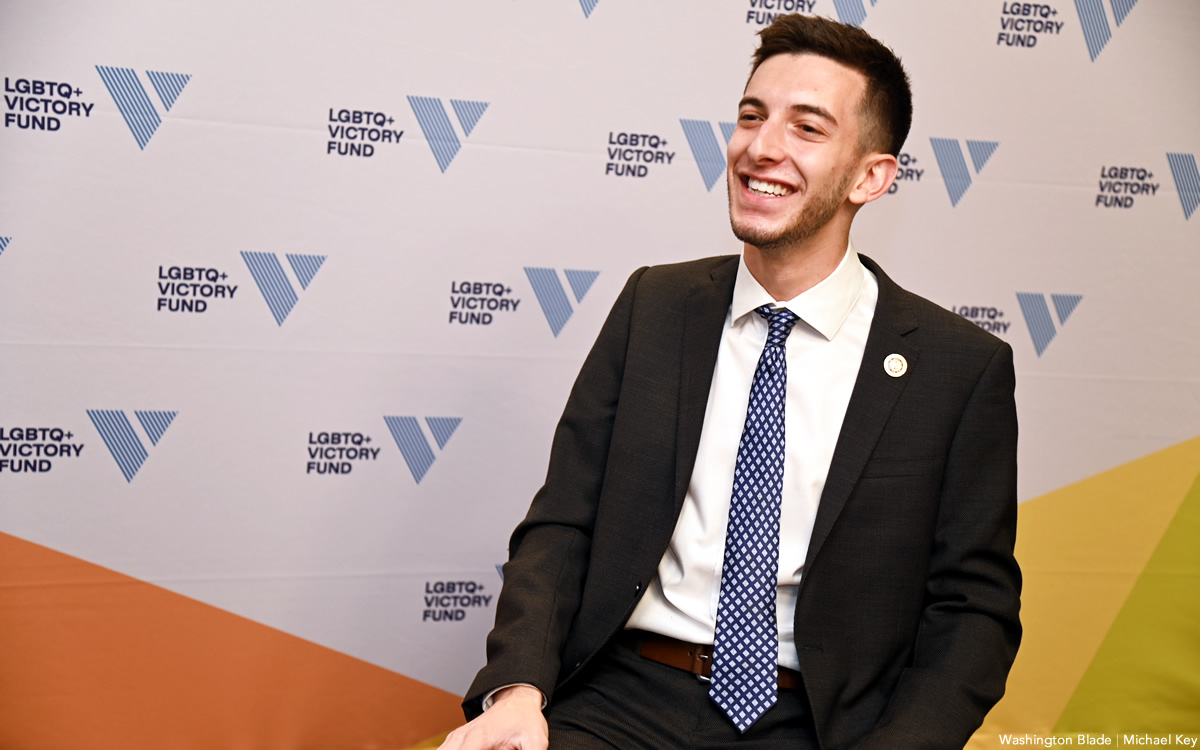
Maryland state Del. Joe Vogel (D-Montgomery County) on Sunday during an interview with the Washington Blade praised the many legislative milestones that marked this year’s legislative session.
Most of the lawmaker’s bills addressed the opioid crisis, mental health, gun violence and LGBTQ issues. Vogel noted he opted to work to safeguard people’s fundamental rights.
“We have been leading the way on this [LGBTQ issues.] This legislative session, we passed a bill to expand access to gender-affirming care for Medicaid recipients, making it so that if you are poor and on Medicaid, you have access to the same gender affirming care as if you are wealthy, and on private insurance,” he told the Blade before he attended the LGBTQ+ Victory Fund’s National Champagne Brunch that took place at the JW Marriott Hotel in D.C.
Maryland has also been at the forefront of abortion rights by driving the efforts to enshrine the right into the state’s constitution. The General Assembly also passed a measure to end the state’s statute of limitations for when a civil suit can be filed against public or private institutions when related to child sexual abuse.
Vogel described Democratic Gov. Wes Moore as “a phenomenal champion for the LGBTQ+ community.”
“He has been a partner on a lot of these pieces of legislation that I mentioned earlier,” said Vogel. “He had us over at his house recently just to express to our LGBTQ+ caucus — just to express his commitment to our community.”
Vogel differentiated Moore from other governors, including Republican Florida Gov. Ron DeSantis and Republican Texas Gov. Greg Abbott.
“He (Moore) is someone who is such a contrast to governors like Ron DeSantis, or Greg Abbott,” said Vogel. “They wake up every morning thinking about what they can do to hurt our community, whereas the governor of Maryland right, Wes Moore, he wakes up every morning, and I’m convinced he thinks about what you can do for the well-being of every Marylander. And that includes the LGBTQ community.”
‘There is a hunger for a new generation of leadership’
Vogel, who represents District 17, is 26 and one of the House of Delegates’ youngest members.
“There is a hunger for a new generation of leadership,” Vogel told the Blade, referring to young politicians who are beginning to take center stage around the country. “And I think, without a doubt, you have a Republican Party that is intent on eroding our democracy — on attacking our fundamental rights.”
Vogel, who was born in Uruguay, noted the similarity he saw between the dictatorship that his homeland suffered in the 20th century and the current situation in the U.S.
“It’s something very interesting about the fall of your democracy — is that what you had going on, there was a far right, that was chipping away at those democratic institutions. And the left was growing hopeless, and losing faith in democratic governance,” he said. “They were saying, ‘Well, the system’s broken anyways, it’s not benefiting us, whatever. We don’t care about anything.’ And if you look at this country right now, though, that is a pattern that we are seeing here, we are seeing a far right attempting to chip away in whatever way they can at our fundamental rights and democratic institutions.”
Uruguay’s civic-military dictatorship lasted 12 years, from 1973-1985. It carried out many human rights violations that included the use of extreme torture methods and forced disappearances.
The term “civic-military” refers to the military regime’s relatively slow annexing of power from civilian presidents who continued to serve as head of state — contrary to other Latin American countries in which militaries immediately took control through coups.
Vogel, for his part, did not rule out the possibility of running for higher office, calling it a possibility to continue to “fight” for the issues that are happening today.
“That’s what we’ll do,” he said.





Maryland
Md. groups receive state grants to fight hate crimes
Pride Center of Maryland among recipients

Maryland Gov. Wes Moore and the Governor’s Office of Crime Prevention and Policy are awarding a total of $10 million in grants in the 2027 fiscal year to nonprofit organizations that work to prevent hate crimes in the state.
The funds will be used to support those who feel targeted or discriminated against because of their race, religion, sexual orientation, gender identity, or disability status.
The Pride Center of Maryland is among the recipients. Churches, synagogues, mosques, and LGBTQ organizations are all eligible to receive grants
“The safety and security of all Marylanders is my top priority, so we are drawing a hard line because we have no tolerance for hate,” said Moore, according to media reports. “We are committed to protecting and ensuring safe and sacred spaces stay that way by investing in non-profit organizations, houses of worship, and community centers to protect and honor every community that makes our state so diverse and special.”
“Protection Against Hate Crime funding has strengthened the Pride Center of Maryland’s ability to protect, educate, and support the communities we serve … at a time of heightened concern associated with the Trump administration’s anti-LGBTQ/SGL (same-gender-loving) policies and pressures,” Pride Center of Maryland CEO Cleo Manago said. “PAHC funding helps us do more than improve physical security — it strengthens our community’s knowledge, preparedness, connection to resources, and ability to respond to hate with greater awareness and support.”
Maryland’s hate crimes law includes both sexual orientation and gender identity. The state’s nondiscrimination statute is also LGBTQ-inclusive.
Maryland
Anne Arundel schools now need parent permission to call trans students by preferred names
Conservative groups challenged system’s policy
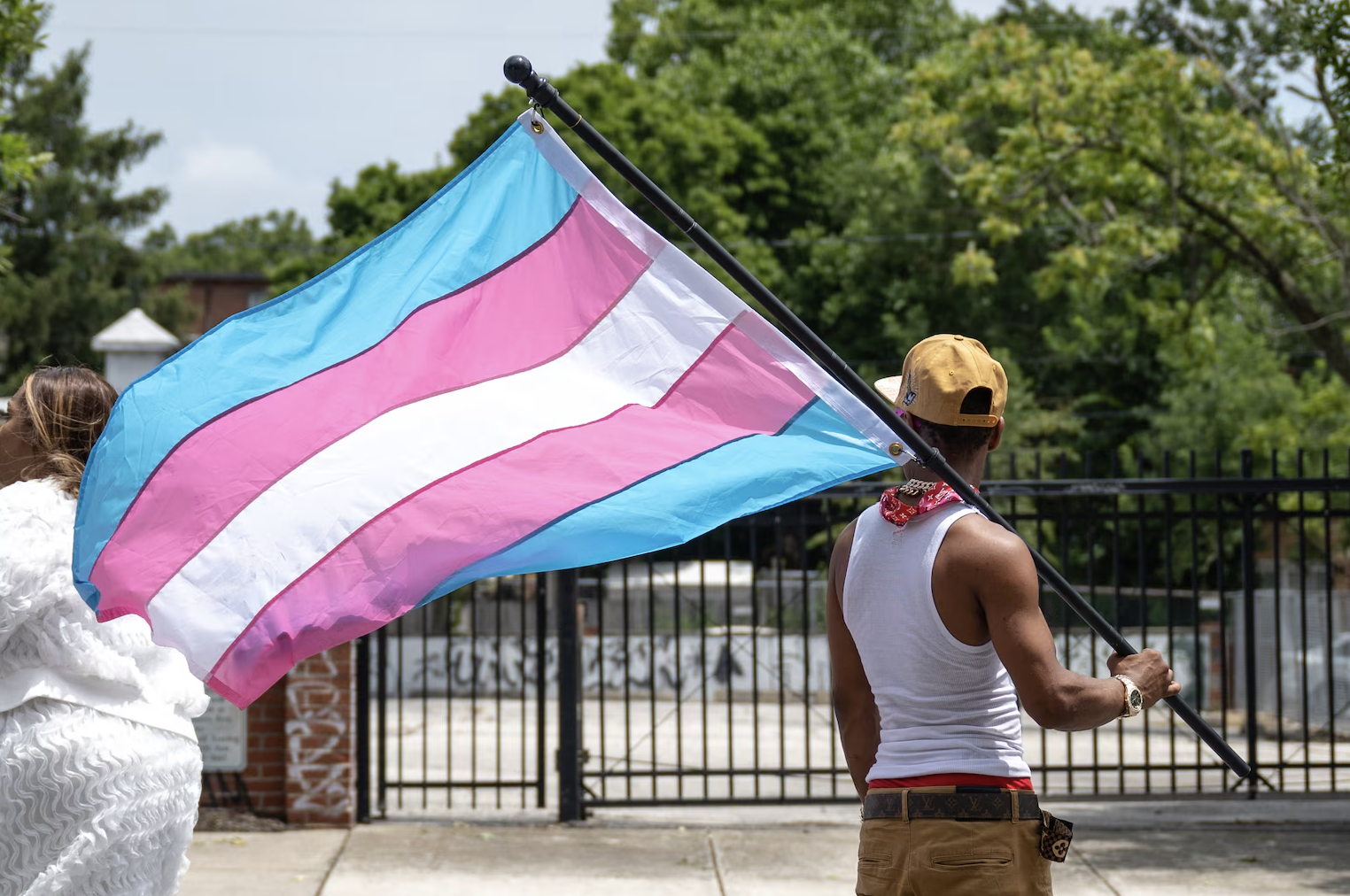
By JESSICA CALEFATI | Anne Arundel County Public Schools staff cannot use transgender students’ preferred names if their parents oppose it, according to an internal document reviewed by the Banner, a change that comes after conservative groups challenged the school system’s approach to gender identity.
Teachers union president Kristina Korona told members in an Aug. 20 email that the new guidance undermines district policy on acceptance and inclusivity and “will begin harming affected students immediately.”
Previously, the district didn’t require parental permission to use a high school student’s chosen name and pronouns corresponding to their gender identity, the internal document says. Now it does. The change comes as parents challenge the suburban school system’s gender identity policy and regulation in court and the Trump-Vance administration threatens the district’s funding.
The rest of this article can be found on the Baltimore Banner’s website.
Maryland
Girlfriends charged with Silver Spring murder to go on trial in 2027
Prosecutors charged both women with killing mother of one of them

Two women identified as a couple who are charged with the May 22, 2026, murder of the mother one of them in her Silver Spring home and who were arrested three weeks later in Ohio are scheduled to go on trial for murder April 19, 2027.
According to online records filed with Montgomery County Circuit Court in Rockville, Vanessa Tjongarero-Henderson, 29, of Clarksburg, Md., and Samantha Raebel, 36, of Phoenix are being held without bond in the Montgomery County Correctional Facility until the time of their trial.
Statements from Montgomery County police show the two women were arrested June 10 in Genoa, Ohio, after fleeing from the scene of the murder in Silver Spring. Police statements and court records show they were extradited back to Maryland in July, where prosecutors with the Montgomery County State’s Attorney’s Office obtained indictments against them for murder.
Earlier statements from Montgomery County police say their investigation into the murder led to their decision to initially charge the two women with first-degree murder for the death of Hilde Henderson, 67, who was Tjongarero-Henderson’s mother.
“Through the course of the investigation, detectives identified Henderson’s daughter, Vanessa Tjongarero-Henderson, and Vanessa’s girlfriend, Raebel, as the suspects,” one of the police statements says. It says police obtained arrest warrants for both women and launched a nationwide search seeking help from the public in in locating them.
One of the police statements says an autopsy determined the cause of Hilde Henderson’s death was blunt-force trauma injuries brought about by a murder. Police and the State’s Attorney’s Office, which is prosecuting the case, have yet to disclose whether they have determined a motive for the murder.
Court records show that prior to the start of the April 19, 2027, trial a “motion” hearing was scheduled for Oct. 30, 2026, a pre-trail conference was scheduled for Feb. 12, 2027, and another motion hearing and a status hearing were scheduled for March 12, 2027.
Court records also show that Tjongarero-Henderson is being represented by attorneys with the Montgomery County court system’s public defender service. The records show that Raebel initially had been represented by a public defender service attorney, but updated records show Aug. 14 is listed as the “removal date” for that attorney.
The docket shows that on Aug. 20, two new attorneys with the prominent D.C. law firm of Covington & Burling made their official appearance as her attorneys in the murder case. One of them, Daniel Solomon, told the Washington Blade in response to an inquiry that the defense has no comment at this time on the case.
He confirmed that Covington & Burling is representing Raebel on a no-cost, pro bono bass.
The office of the Montgomery County public defender service didn’t immediately respond to a phone message from the Blade asking for a comment on the Tjongarero-Henderson case.

Center for Black Equity honors leaders, activists at BE. Gala

In ‘The Lost Brontë,’ a complicated lie can lead to danger

CAMP Rehoboth Block Party returns Oct. 18

Essential queer horror classics for Halloween

Solidarity beyond the parade: the actual cost of Pride

Trump uses anti-trans slur against Democratic Senate candidate

U.S. int’l trade negotiator, consultant James Bedore dies at 82

Calif. GOP gubernatorial candidate ad ‘disgusting attempt to exploit lesbian intimacy’

Campaign urges Virginia High School League to reverse stance on trans athletes

Center Arts Gallery celebrates 10 years with reception, auction
-

 2026 Midterm Elections5 days ago
Trump uses anti-trans slur against Democratic Senate candidate
-
Obituary4 days ago
U.S. int’l trade negotiator, consultant James Bedore dies at 82
-
California4 days ago
Calif. GOP gubernatorial candidate ad ‘disgusting attempt to exploit lesbian intimacy’
-
Virginia4 days ago
Campaign urges Virginia High School League to reverse stance on trans athletes