a&e features
Anatomy of a post-cancellation comedy tour: Ashley Gavin in D.C.
After doxxing and death threats, a focus on jokes that transcend identity
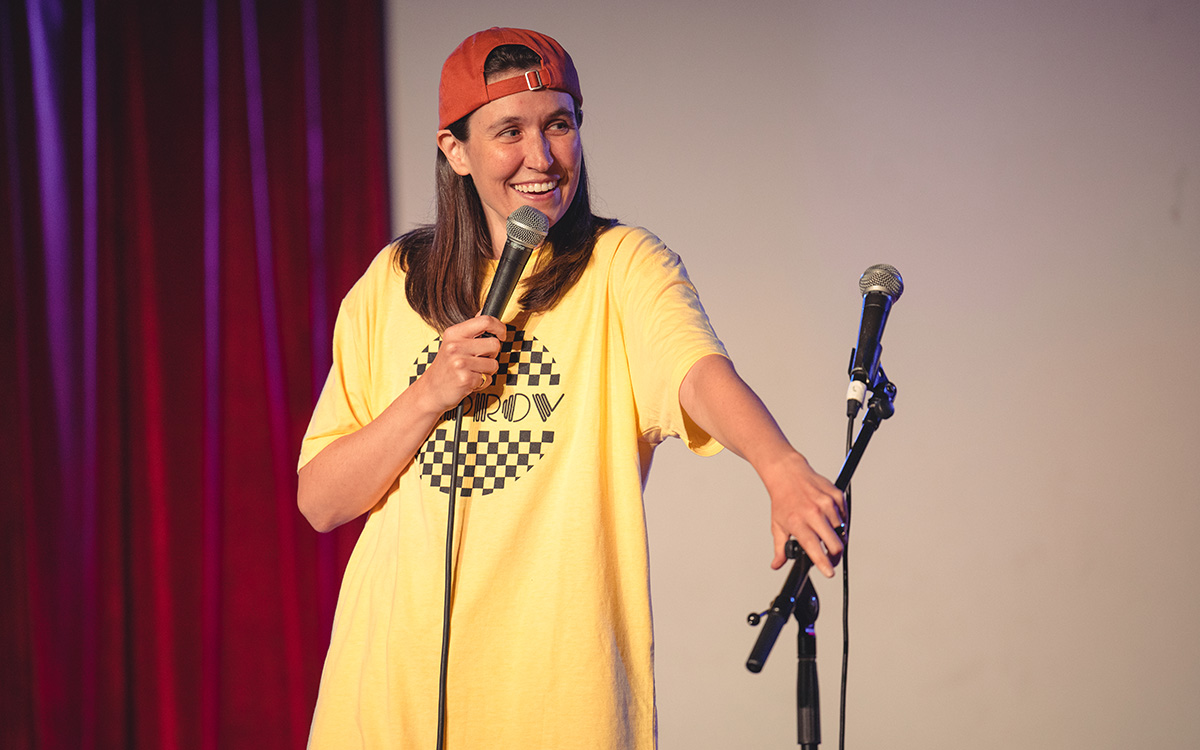
I was dressing up to go to Ashley Gavin’s stand-up comedy show at the Lincoln Theatre when I got a text from Sydnie, Ashley’s assistant. I didn’t remember giving Sydnie my number — although I must have, surely? We had been in contact the past few days about setting up an interview with Ashley about her show here in D.C., and just today we had managed to schedule a time for tomorrow afternoon.
But suddenly the interview wasn’t looking so sure. Sydnie was texting to ask for a list of my questions for the interview, and if I didn’t provide them, I wouldn’t be getting tickets to tonight’s show. I had two hours to get back to her. “So sorry about that!” Sydnie texted.
The ultimatum caught me off guard — but perhaps it shouldn’t have. Ashley Gavin was the subject of controversy this summer for some of her crowd work during a show in Indianapolis. After a fan cheered a little too loudly at a joke, Ashley informed her she was the “the most annoying fan who has ever been to one of her shows,” and that she should “kill herself.” When the fan responded, “I’ve already tried,” Ashley responded that she didn’t try hard enough, and implored her again and again to kill herself. The fan broke down in tears, and left the show.
The familiar cycle of celebrity cancellation played out. Calls were made on Reddit to boycott Ashley’s shows. Ashley released an apology video. YouTubers scrutinized the apology clip-by-clip on their channels. Ashley reported getting doxxed in death threats. (The irony!) The fan Ashley accosted, Olivia Neely, raised money for suicide awareness online. And now Ashley Gavin is back on tour, for the first time since the incident. No wonder Ashley had her assistant screening my questions.
When Ashley took the stage at the Lincoln Theatre, it quickly became clear that her audience is kindling for controversy fire. All the way up front, in the first few rows, are Ashley’s die-hard fans. Some of these fans have paid hundreds of dollars for meet-and-greet tickets after the show. They’re on the younger side, and are largely lesbian or queer. They turned 21 during the pandemic, and they haven’t necessarily been to a comedy show before. They’re fans from online — of Ashley’s TikTok, or her podcast. But all the way in the back are more casual viewers, people who aren’t fans of Ashley specifically, but of comedy more generally. They might have bought their tickets last minute. They’re a little older than the die-hard fans, a little less queer, and they’re more familiar with the offline comedy club scene.
It’s great that these two different groups can come together to enjoy a comedy show. But there’s one big problem. The online die-hards and the offline comedy regulars have very different expectations for the show. And Ashley isn’t looking to satisfy all of them.
On the one hand, the comedy regulars aren’t necessarily used to the content of her show, which especially on this tour, is largely comprised of material about being lesbian. Ashley wants the straight people in the room to know these jokes are for them too. One of the few bits Ashley carried over from her first special to this new tour involves picking out a random straight man in the audience. She’ll learn his name, and then check in on him after this or that joke later in the set as the ‘representative straight man’ in the crowd. “I’m speaking to the people who might not feel comfortable in the room,” Ashley explained to me during our interview. “I’m saying like, hey, I know you’re there, and this is for you. And I’m really glad that you’re here, you know.”
But if Ashley wants the comedy regulars to adjust to the content of her show, she also wants her online, die-hard fans to adjust to the form of her show, which is offline, at a comedy club or theater. Her die-hard fans are new to the comedy scene, and she wants to make a proper introduction. This isn’t simply out of magnanimity. Ashley intends to put on the kind of show the comedy regulars are there to see. And if her fans from TikTok or her podcast are going to enjoy it, that means adjusting their expectations.
“I’ve read it in my comments [online] before,” Ashley lamented. “I’ve read like, ‘This was not a safe space.’ Maybe because of gross things, or some of the darkness of the jokes. I’m frequently like, what made you think it was going to be a safe space? Art is not a safe space.”
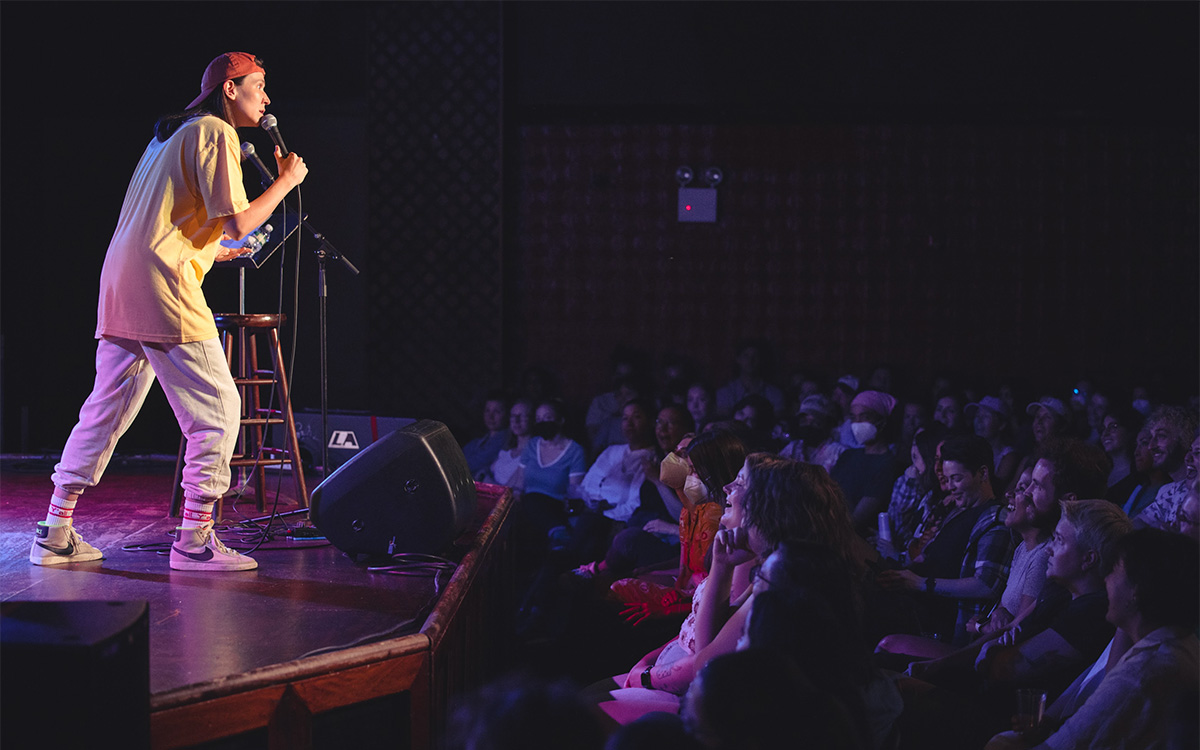
As Ashley sees things, part of going to a comedy show is letting go and not worrying about whether the jokes are offensive. It’s giving the comedian the benefit of the doubt, especially if you know them from online. And she thinks letting go of your worries isn’t giving up on your political convictions — it’s empowering. “[My fans] are very into social justice, and very into doing the right thing, [and] I want to give them the opportunity to let go a little bit, and release some of their tension, and their pain, and their struggle.”
So one of the more unique things Ashley will do as a comedian is address her online, die-hard fans directly at the beginning of her show. She’ll tell them that she’s on the right side of things, that she won’t pull the rug out from under them, politically speaking. She’ll tell them that they should feel free to laugh, to let it out, not cover their mouths. “I know who my audience is, and they want some safety. And they want some trust. And the fastest way that I can earn that trust is to be up front, and just say I’m not going to trick you tonight. The person you came to see, the person you think I am, I am that person.” But it’s a difficult balancing act. How do you promise your audience safety, while maintaining that a comedy show is not a “safe space”? It’s no wonder the kindling might catch fire, despite Ashley’s best efforts. You’d be forgiven for wondering whether there wasn’t an easier way. Why ask fans who want safety to ride out a non-safe space?
I think it helps to understand what Ashley wants out of being a comedian. A major theme of Ashley’s first comedy special was her frustration with being called a “lesbian comedian.” She talks about wanting to be called a great comedian, not a lesbian one — someone who is in the running with other great comedians, whose jokes transcend any particular identity. And if you want to be a great comedian, and not “the lesbian comedian,” it makes sense that you might want your mostly queer online audience to acclimate to the comedy club scene. She doesn’t want to put on a lesbian show. She wants to put on a great comedy show.
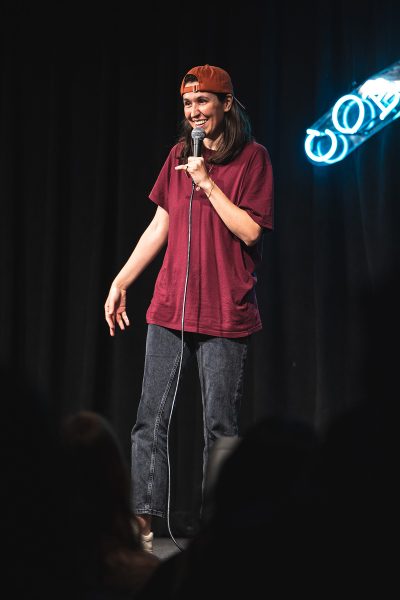
So what of Ashley’s hopes for being a great comedian, post-cancellation? On her Chosen Family podcast, taped just one day before her show in D.C., Ashley gave a picture of where she thought things stood. “My audience has changed. I’m experiencing this new audience now that might be a better fit. Because it’s the folks that saw what happened and kind of understand, OK, these were meant to be jokes,” Ashley told her co-hosts. “The folks who don’t see it that way aren’t really at the show anymore, and the show is far more enjoyable for everybody there.”
When I surveyed the audience after Ashley’s show, her prediction seemed to bear out. Everyone I talked to either didn’t know about the summer’s controversy, or didn’t care. “I know nothing of drama. That takes a lot of energy to follow,” said Sunshine, a fan of Ashley’s from over the pandemic. People wanted to chat about Ashley’s crowd work, particularly the drunk girl from Missouri who just wouldn’t give up. They had nothing to say about Indianapolis. Perhaps for Ashley Gavin, the post-cancellation cycle doesn’t end with her remaining fans forgiving and forgetting. Just the forgetting, and moving on.
CJ Higgins is a postdoctoral fellow with the Alexander Grass Humanities Institute at Johns Hopkins University.



a&e features
Queery: Meet artist, performer John Levengood
Modern creative talks nightlife, coming out, and his personal queer heroes
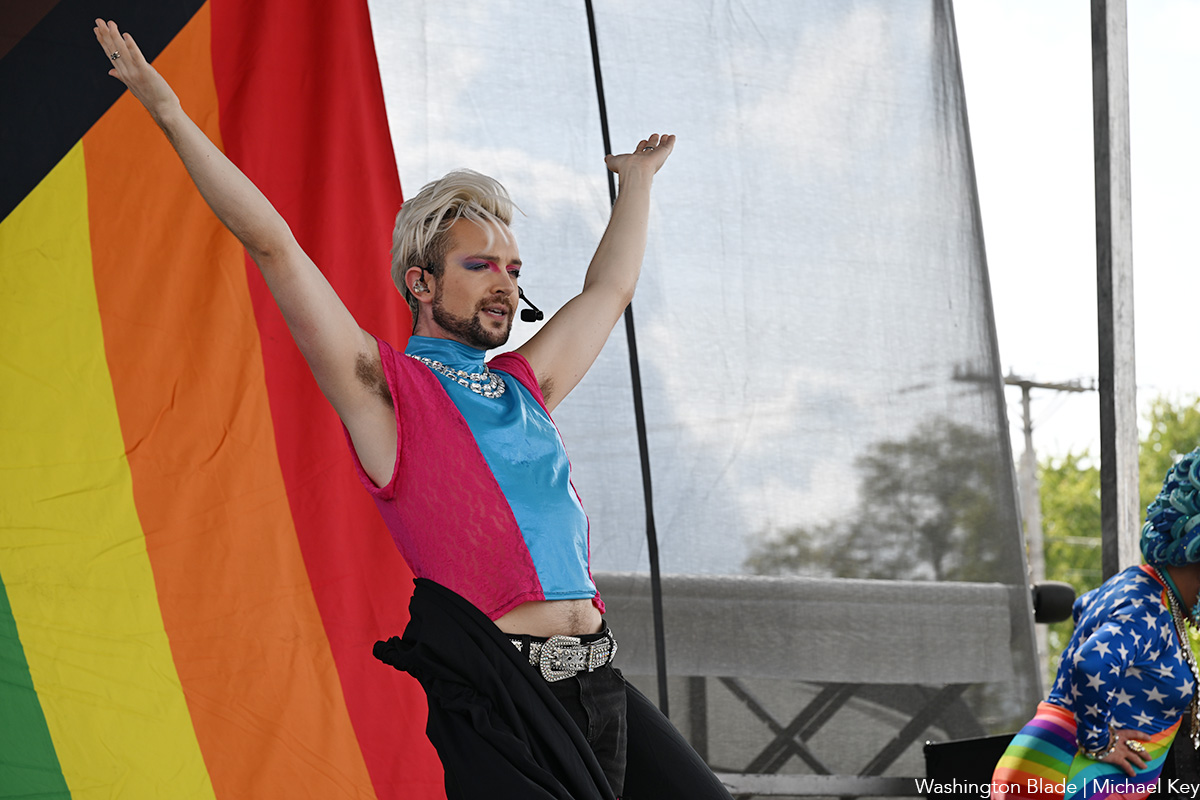
John Levengood (he/him) describes himself as a modern creative with a wide‑ranging toolkit. He blends music, technology, civic duty, and a sharp sense of wit into a cohesive artistic identity. Known primarily as a recording artist and performer, he’s also a self‑taught music producer and software engineer who embodies a generation of creators who build their own lanes rather than wait for one to appear.
Levengood, 32, who is single and identifies as gay and queer, is best known as a recording artist who has performed at Pride festivals across the country, including the main stages of World Pride DC, Central Arkansas Pride, and Charlotte Pride.
“Locally in the DMV, I’m known for turning heads at nightlife venues with my eye-catching sense of style. When I go out, I don’t try to blend in. I hope I inspire people to be themselves and have the courage to stand out,” he says.
He’s also known for hosting karaoke at Freddie’s Beach Bar in Arlington, Va., on Thursday nights. “I like to create a space where people feel comfortable expressing themselves, building community, and showcasing their talents.”
He also creates social media content from my performances and do interviews at LGBTQ+ bars and theatres in the DMV. Follow the Arlington resident @johnlevengood.
How long have you been out and who was the hardest person to tell?
I have been fully out of the closet since 2019. My parents were the hardest people to tell because my family has always been my rock and at the time I couldn’t imagine a world without them. Their reactions were extremely positive and supportive so I had nothing to fear all along.
I remember sitting on the couch with my mom, dad, and sister in our hotel room in New Orleans during our winter vacation and being so nervous to tell them. After I finally mustered up the nerve and made the proclamation, I realized my dad had already fallen asleep on the couch. My mom promised to tell him when he woke up.
Who’s your LGBTQ hero?
My LGBTQ heroes are Harvey Milk for paving the way for gays in politics and Elton John for being a pioneer for the fabulous and authentic. My local heroes in the DMV are Howard Hicks, manager of Green Lantern, and Tony Rivenbark, manager of Freddie’s Beach Bar. Both of them are essential to creating spaces where I’ve felt welcome and safe since moving to the DMV.
What’s Washington’s best nightspot, past or present?
Trade tops the list for me because of the dance floor and outdoor space. It’s so nice to get a break from the music every once and a while to be able to have a conversation.
We live in challenging times. How do you cope?
I’m still figuring this out. What is working right now is writing music and spending time with family and friends. I’ve also been spending less time on social media going to the gym at least three times a week.
What streaming show are you binging?
After “Traitors” Season 4 ended, I was in a bit of a show hole, but “Stumble” has me in a laughing loop right now. The writing is so witty.
What do you wish you’d known at 18?
At 18, I wish I would have known how liberating it is to come out of the closet. It would have been nice to know some winning lottery numbers as well.
What are your friends messaging about in your most recent group chat?
We are planning our next trip to New York City. If you can believe it, I visited NYC for the first time in 2025 for Pride and I’ve been back every quarter since. Growing up in the country, I was subconsciously primed to be scared of the city. But my mind has been blown. I can’t wait to go back.
Why Washington?
It’s the closest metropolitan area to my family, but not too close. I love the museums, the diversity, the history, and the proximity to the beach and mountains. It’s also nice to live in a city with public transportation.
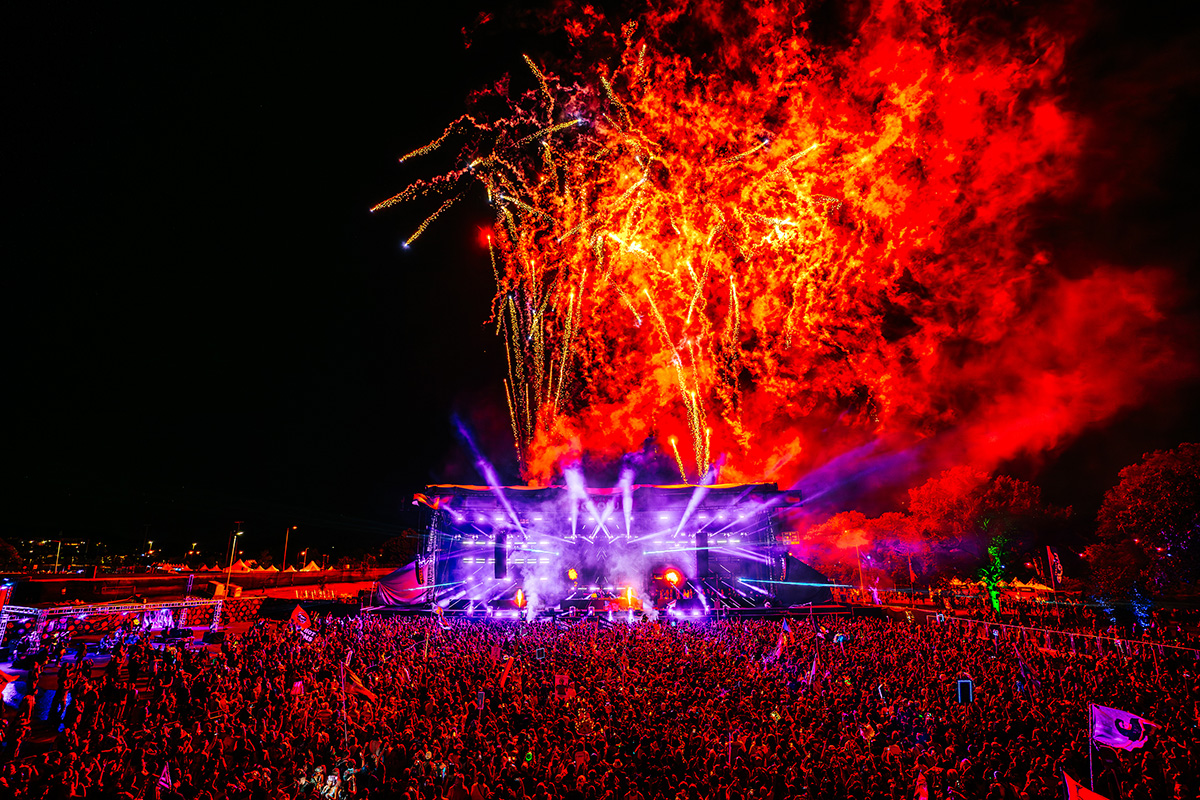
Aging RFK Stadium has come down, but the RFK grounds are still getting lit up. Welcome back to the stage Project GLOW, D.C.’s homegrown electronic festival, on May 30-31. Back for its fifth year on these musically inclined acres, Project GLOW returns with an even more diverse lineup, and one that continues to celebrate LGBTQ antecedents, attendees, and acts.
Project GLOW 2026 headliners include house and techno star Mau P, progressive house legend Eric Prydz, hard-techno favorite Sara Landry, and bass acts Excision b2b Sullivan King, among the lineup of trance, bass, house, techno, dubstep, and others for the fifth anniversary year.
President & CEO Pete Kalamoutsos — born and raised in D.C. — founded Club GLOW in 1999. In 2020, GLOW entered into a partnership with global entertainment company Insomniac Events to produce live events like Project GLOW, which kicked off in 2022.
As in past years, Project GLOW not only makes space, but is intentionally inclusive of the LGBTQ community, one of its most dedicated fan bases. The festival’s LGBTQ-focused Secret Garden stage blooms again — a more intimate dance area that stands on the strength of DJs and musicians who draw from the LGBTQ community. D.C.’s LGBTQ nightlife mastermind Ed Bailey is the creative mind behind Secret Garden again. He joined Project GLOW in 2023.
“Kalamoustos says that “he’s proud of his partnership with Ed Bailey, along with Capital Pride and [nightlife producer] Jake Resnikow. It’s amazing to collaborate with Bailey at the Secret Garden stage, especially after the curated lineup we worked on at Pride last year.”
The Secret Garden will be a bit different from other stages: Eternal (“At the Eternal stage, time stands still. Lose yourself in the dance of past, present, and future, surrendering to the eternal rhythm of the universe”) and Pulse (“Feel the rhythm of the beat pulse through your veins as the heartbeat of the crowd synchronizes into one. Here, every moment vibrates with life as it guides you through a new dimension of euphoria”). The Secret Garden stage is in the round, surrounded by 16 shipping containers. The containers play canvas to muralists from around the world, who are coming in to paint them in a vibrant garden-style vibe. “We gave this stage some extra love with this layout,” K says, “ we finally cracked the code.”
K says that this will be the biggest lineup yet for the Secret Garden, featuring Nicole Moudaber b2b Chasewest, Riordan b2b Bullet Tooth, Ranger Trucco, Cassian, Eli & Fur, Cosmic Gate and Hayla. The stage is also the largest yet, featuring an expanded dance floor and 360-degree viewing.
Across all stages, K says that his goal for the fifth anniversary is “More art and fan interactive experience, more like a festival, strive to be like a Tomorrowland, as budget grows to add more experience.” Last year’s Project GLOW alone drew 40,000 attendees over two days.
K, however, was not satisfied with one festival this spring. GLOW recently announced a “pop-up” one-day event. Teaming up with Black Book Records, GLOW is set to throw a first-of-its-kind dance-music takeover of Pennsylvania Avenue, N.W., headlined by electronic music star Chris Lake. Set for April 18, this euphoric block party will feature bass and vibes blocks from the White House. Organizers expect as many as 10,000 fans to attend. Beyond music, there will be food, activations, and plenty of other activities taking place around 6th St and Pennsylvania Ave NW – a location familiar to many in the LGBTQ community, as this sits squarely inside the blocks of the Capital Pride party that takes place in DC every June.
Over the past two decades, Club GLOW has produced thousands of events, from club nights to large-scale festivals including Project GLOW, Moonrise Festival, and more. Club GLOW also operates Echostage.
a&e features
New book celebrates 1970s dance music icons
‘A Night at the Disco’ features interviews with Donna Summer, Debbie Harry, more
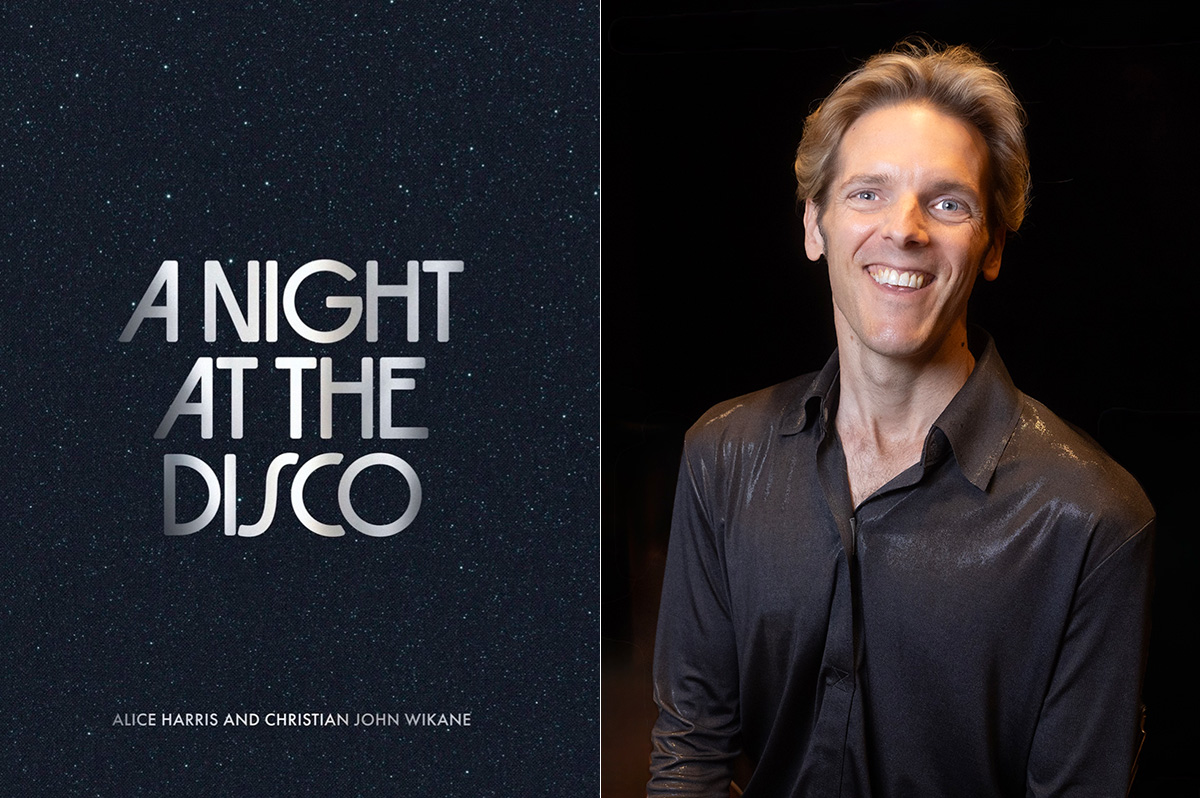
If you’re a fan of 1970s-era dance music, don’t miss the irresistible new book by Christian John Wikane and Alice Harris, “A Night at the Disco,” which revisits more than 90 interviews conducted with some of the biggest names in pop culture.
“A Night at the Disco” (ACC Art Books) was published on March 24, and distributed by Simon & Schuster. It celebrates more than 100 artists who sparked a phenomenon in dance music from 1970-1979 and features excerpts from interviews with everyone from Donna Summer to Debbie Harry.

Lost City Books (2467 18th St., N.W.) will welcome author Christian John Wikane for a book signing and conversation about “A Night at the Disco” on Thursday, April 16 at 6 p.m. Details at lostcitybookstore.com. Bird in Hand Coffee & Books in Baltimore (11 E. 33rd St.) )will also host a Q&A with the author on Wednesday, April 15 at 6 p.m. Details at theivybookshop.com.
Below is an excerpt from “A Night at the Disco.”
“I’ll let in anyone who looks like they’ll make things fun.” Steve Rubell is guiding a New York Times reporter through Studio 54 as resident DJ Richie Kaczor dazzles the crowd with records by CHIC, Odyssey, and T-Connection. “Disco, that’s where the happy people go,” The Trammps sing as dancers spin and twirl underneath tubes of flashing lights. Seven months since Rubell and co-owner Ian Schrager opened Studio 54 in April 1977, it’s welcomed untold numbers of “happy people” … at least those lucky enough to pass through the doors.
“We were part of the chosen few,” says André De Shields, who immortalized the title role in The Wiz on Broadway at the time. “We could show up at Studio 54 and the doorman at the velvet stanchion would look over everyone and point to us from The Wiz to come in, that kind of thing.” As the lead vocalist in the GRAMMY-nominated Dr. Buzzard’s Original Savannah Band, whose debut modernized big band sophistication for the discothèques, Cory Daye had carte blanche in the club. “The energy was like a New Year’s Eve party every night,” she says. “I would go up to the mezzanine and watch the mechanical light pillars go up and down, metallic confetti falling from the ceiling, the spoon and the moon. I was so fascinated and enamored by it.
“When a certain song came on, the people would just rush to the dance floor. There was no contact dancing — the hustle was pretty much on its way out — but it was just an amazing experience to see all the cultures together. It was a fusion of cultures, which described my life and my band, so I was right at home there.”
“Studio 54 was the place,” adds Linda Clifford. “Crazy parties. If you could think it, you would see it. It was like a circus. Just an amazing place to be. I worked 54 so many times. It was like a second home to me. The people there treated me so well. The crowd always seemed to enjoy my show. I always had a good time with them. That was the most important thing: making sure that they had fun.”
Well before Studio 54 opened, disco had become a business juggernaut. “A four billion dollar market and still growing,” Billboard announced in February 1977, with dance music offering more variety than ever. “There is no longer a single, readily identifiable disco beat, but a kaleidoscope of sounds that are melodic and danceable,” Tom Moulton told the magazine. In the clubs, records by veteran artists like Stevie Wonder and the Bee Gees were mixed in with a range of new acts like Grace Jones, Boney M., and The Ritchie Family, while everyone from ABBA to Marvin Gaye scored number one pop hits with songs that had club-centric storylines.
Beyond the charts, disco itself remained as idiosyncratic as ever, especially on several productions by Laurin Rinder and W. Michael Lewis, whose studio creations, El Coco (“Let’s Get It Together,” “Cocomotion”) and Le Pamplemousse (“Le Spank”), joined their own “Lust” from Seven Deadly Sins (1977) among the most tantalizing releases on AVI Records. Rinder & Lewis also produced acts for the newly hatched Butterfly Records in Los Angeles, where Saint Tropez (“On a Rien à Perdre”) and Tuxedo Junction (“Moonlight Serenade”) reflected the duo’s high gloss sound, spanning everything from European sophistication to a more literal translation of the ’40s sensibilities popularized by Dr. Buzzard’s Original Savannah Band.
12-inch singles had also grown as the preferred format to approximate the club music experience at home. Nearly a year after Atlantic Records introduced its series of promotional 12-inch singles for DJs, New York-based Salsoul Records released the industry’s first commercially available 12-inch single, “Ten Percent” by Double Exposure, in May 1976. A year later, T.K. Records was the first label to certify a gold record for a 12-inch single when Peter Brown’s “Do You Wanna Get Funky With Me” tallied one million sales.— Christian John Wikane
(From “A Night at the Disco” by Alice Harris & Christian John Wikane. Published by ACC Art Books.)
The Blade may receive commissions from qualifying purchases made via this post.

Judge rescinds stay-away order in Capital Pride anti-stalking case

The latest Supreme Court case erasing LGBTQ identity

Calendar: April 17-23

Team DC’s annual gala set for this weekend

LGBTQ Catholic groups slam Trump over pope criticism

Trump budget targets ‘gender extremism’

Sri Lankan government withdraws support for LGBTQ tourism initiative

Court orders Pride flag to return to Stonewall

In an act of artistic defiance, Baltimore Center Stage stays focused on DEI

La X vuelve al tribunal
-

 Federal Government5 days ago
Trump budget targets ‘gender extremism’
-
Sri Lanka5 days ago
Sri Lankan government withdraws support for LGBTQ tourism initiative
-
New York5 days ago
Court orders Pride flag to return to Stonewall
-
Arts & Entertainment5 days ago
In an act of artistic defiance, Baltimore Center Stage stays focused on DEI