European Union
The 2024 European elections: A turning point for LGBTQ rights in the EU?
Right-wing parties made electoral gains
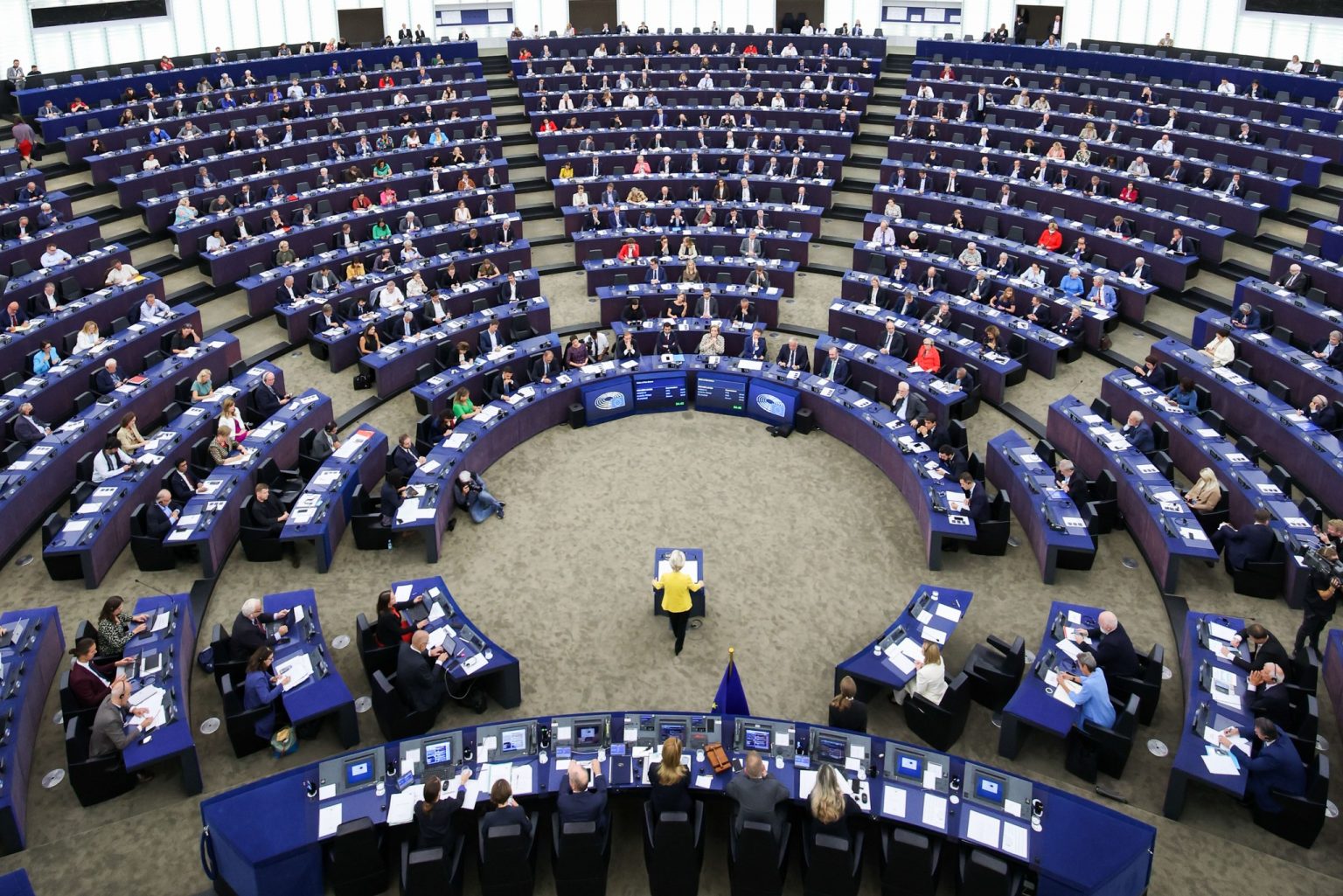
As the dust settles after the 2024 European Parliament elections, right-wing parties are gaining substantial ground and concerns about the potential impact on LGBTQ rights are growing. The projected surge in support for far-right parties, however, was not as pronounced as some had expected.
Monday morning’s estimates indicate the far-right’s presence has, however, undeniably increased.
The European Conservatives and Reformists (ECR) gained four seats, bringing their total to 73. The Identity and Democracy group saw a significant rise, gaining nine seats to reach 58. Together, these nationalist, anti-immigrant parties now hold around 130 seats, reflecting their growing influence. Marine Le Pen’s National Rally in France, which clinched over 32 percent of the vote, and the Alternative for Germany securing approximately 16 percent of the vote and becoming the country’s second-largest party, ahead of Chancellor Olaf Scholz’s Social Democrats, in particular could affect the broader political dynamics in Europe.
Despite the gains for the far-right, the mainstream conservative European People’s Party (EPP) emerged as the largest group, securing 189 seats, an increase of 13 seats. The two other centrist parties, the Progressive Alliance of Socialists and Democrats and Renew Europe, however, experienced losses that eroded the political center. S&D finished with 135 seats, losing four, while Renew Europe saw a significant reduction, finishing with 83 seats.
European Commission President Ursula von der Leyen celebrated her party’s victory and called for cooperation among centrists to ensure a “strong and effective Europe.” She emphasized the responsibility that comes with the election results, noting the need for stability amid growing support for extremist parties.
The election’s biggest losers were the Greens, who saw their support decrease by 25 percent, ending with 53 seats. The Greens, despite this setback, could still play a crucial role in supporting centrist majorities as an alternative to further-right parties.
All eyes are now on the election winners, the EPP.
Von der Leyen has indicated her readiness to work with certain parties sitting with the hard-right ECR. Initial signals from the EPP camp, however, suggest it will stay true to its traditional allies at the center. Von der Leyen has offered to work with socialists and liberals to build a “majority in the center for a strong Europe,” underscoring the importance of maintaining a united front against extremism.
The narrow margins in the new parliament could lead to issue-by-issue coalitions, especially for sensitive issues such as those related to the European Green Deal. This limited room for maneuver could see the EPP relying on partners to its right on an ad hoc basis, including for critical decisions that include ushering in a new commission president. Von der Leyen’s future hangs in the balance as she seeks re-election. National delegations within her EPP grouping and support from lawmakers of Giorgia Meloni’s Brothers of Italy party, which clinched 24 seats, will play a crucial role in her bid to secure an absolute majority of 361 MEPs.
The implications for LGBTQ rights in Europe are significant.
Far-right parties, known for their conservative social values, might push for policies that restrict LGBTQ rights, opposing marriage and adoption by same-sex couples, and challenging the legal recognition of gender identity and access to healthcare for transgender people. Such potential policy reversals represent a significant setback for the LGBTQ community.
The rising popularity of far-right ideologies also poses a risk of heightened discrimination and hate speech against LGBTQ people.
Hate-motivated violence and exclusion are likely to become more prevalent, along with more frequent and aggressive hate speech targeting the LGBTQ community. Additionally, far-right parties often promote traditional gender roles and family structures, potentially undermining the visibility and acceptance of LGBTQ identities. Nonbinary, transgender, and intersex people could face increased stigmatization.
The 16th annual Rainbow Map that ILGA-Europe publishes underscores the importance of legal protections for LGBTQ people.
Authoritarian leaders across Europe continue to use the scapegoating of LGBTQ people to divide and mobilize their electorates. Several countries, however, have demonstrated robust political will to advance and protect LGBTQ rights. Some countries — Germany, Iceland, Estonia, and Greece — have made significant strides in protecting LGBTQ rights through improvements in legislation and anti-discrimination measures. Belgium, Cyprus, Norway, and Portugal have introduced bans on conversion therapy practices.
Countries such as Italy, on the other hand, show the consequences of stalling legislative protection for LGBTQ people. Moreover, EU accession countries, including Turkey and Georgia, are actively eroding human rights and fundamental freedoms.
The Rainbow Map illustrates the stark differences in how European countries handle LGBTQ rights.
While some nations are making significant progress, others are regressing, influenced by the far-right’s growing power. Germany, Iceland, Estonia, and Greece, for example, have made noteworthy improvements in their legal frameworks to protect LGBTQ people. Germany prohibited hate crimes based on sexual orientation, gender identity, and sex characteristics, while Estonia and Greece amended their laws to allow same-sex couples to marry and adopt children.
In contrast, Italy, which has dropped in the rankings due to stalling legislative protections, exemplifies the risk of complacency that many activists in Europe fear. The far-right’s influence can quickly lead to the erosion of rights if proactive measures are not taken. The situation is even more dire in EU accession countries such as Turkey and Georgia, where LGBTQ rights are actively being rolled back.
The stakes are high as Europe moves forward from these elections.
The EU must address the rise in political hate speech and new tools of oppression that include Russia’s criminalization of the LGBTQ movement. Without strong laws and policies to protect LGBTQ people, the foundation of safety, rule of law, and democracy in Europe is at risk.
The balance of power remains delicate as the European Parliament prepares for its new term.
The first major test will be the approval of the new European Commission president, which is set for July. Von der Leyen, who narrowly won her position five years ago, will need to secure broad support among centrists while navigating the complex dynamics of the new parliament. The secret ballot process adds an additional layer of uncertainty, making her re-election far from guaranteed.
The 2024 European elections have set the stage for potentially significant changes in the legislative and social landscape of the EU. As right-wing parties gain power, the fight for LGBTQ rights becomes more crucial than ever. The next few years will be pivotal in determining whether Europe can uphold its commitment to human rights and equality or if it will see a regression influenced by nationalist, conservative ideologies.





Bulgaria
Top EU court issues landmark transgender rights ruling
Member states must allow name, gender changes on ID documents
The European Union’s highest court on Thursday ruled member states must allow transgender people to legally change their name and gender on ID documents.
The EU Court of Justice in Luxembourg issued the ruling in the case of “Shipova,” a trans woman from Bulgaria who moved to Italy.
“Shipova” had tried to change her gender and name on her Bulgarian ID documents, but courts denied her requests for nearly a decade.
A ruling the Bulgarian Supreme Court of Cassation issued in 2023 essentially banned trans people from legally changing their name and gender on ID documents. Two Bulgarian LGBTQ and intersex rights groups — the Bilitis Foundation and Deystvie — and ILGA-Europe and TGEU – Trans Europe and Central Asia supported the plaintiff and her lawyers.
“Because her life in Italy also depended on her Bulgarian documents, the lack of documents reflecting her lived gender creates an obstacle to her right to move and reside within EU member states,” said the groups in a press release. “This mismatch between her gender identity and expression and her gender marker in her official documents leads to discrimination in all areas of life where official documents are required. This includes everyday activities such as going to the doctor and paying for groceries by card, finding employment, enrolling in education, or obtaining housing.”
Denitsa Lyubenova, a lawyer with Desytvie, in the press release said the case “concerns the dignity, equality, and legal certainty of trans people in Bulgaria.” TGEU Senior Policy Officer Richard Köhler also praised the ruling.
“Today, the EU Court of Justice has taken an important step towards a right to legal gender recognition in the EU,” said Köhler. “Member states must allow their nationals living in another member state to change their gender data in public registries and identity cards to ensure they can fully enjoy their freedom of movement. National laws or courts cannot stand in their way.”
“Thousands of trans people in the EU are breathing a sigh of relief today,” added Köhler.
European Union
European Parliament resolution backs ‘full recognition of trans women as women’
Non-binding document outlines UN Commission on the Status of Women priorities
The European Parliament on Feb. 11 adopted a transgender-inclusive resolution ahead of next month’s U.N. Commission on the Status of Women meeting.
The resolution, which details the European Union’s priorities ahead of the meeting, specifically calls for “the full recognition of trans women as women.”
“Their inclusion is essential for the effectiveness of any gender-equality and anti-violence policies; call for recognition of and equal access for trans women to protection and support services,” reads the resolution that Erin in the Morning details.
The resolution, which is non-binding, passed by a 340-141 vote margin. Sixty-eight MPs abstained.
The commission will meet in New York from March 10-21.
A sweeping executive order that President Donald Trump signed shortly after he took office for a second time on Jan. 20, 2025, said the federal government’s “official policy” is “there are only two genders, male and female.” The Trump-Vance administration has withdrawn the U.S. from the U.N. LGBTI Core Group, a group of U.N. member states that have pledged to support LGBTQ and intersex rights, and dozens of other U.N. entities.
European Union
Top EU court: Poland must recognize same-sex marriage from other European countries
Activists celebrate landmark decision
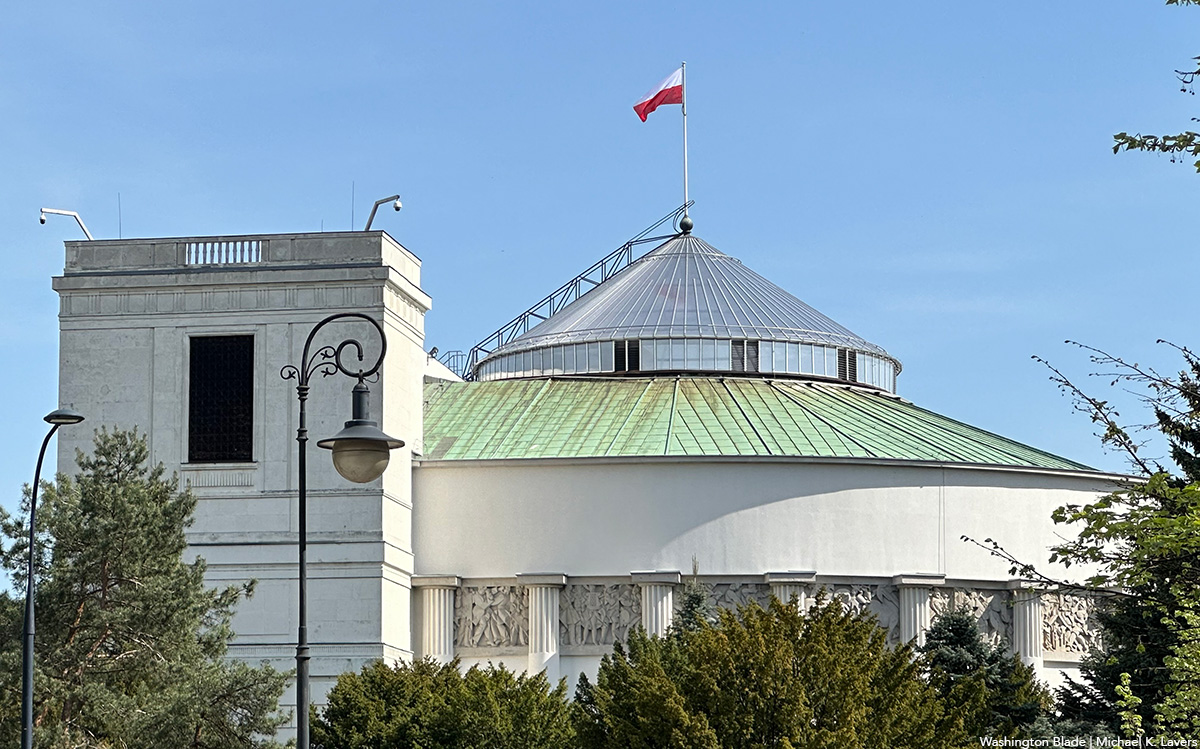
The European Union’s top court on Tuesday ruled member states must recognize same-sex marriages legally performed in other member states.
The EU Court of Justice in Luxembourg ruled in favor of a couple who challenged Poland’s refusal to recognize their German marriage.
ILGA-Europe notes Polish authorities refused “to transcribe into the civil register a certificate of same-sex marriage concluded” in Germany “between a Polish citizen and a Polish-German citizen … on the grounds that Polish law does not allow same-sex marriage.”
The couple who lives in Poland brought their case to Polish courts. The Polish Supreme Administrative Court referred it to the EU Court of Justice.
“Today’s ruling of the Court of Justice of the EU is of key importance not only for the couple involved in the case, but also for the entire LGBT+ community in Poland,” said the Campaign Against Homophobia, a Polish LGBTQ and intersex rights group, in response to the decision. “It clearly states that refusing to transcribe a marriage concluded abroad is incompatible with EU law. Therefore, regardless of the absence of registered partnerships and marriage equality, Poland must ensure the possibility of effective transcription.”
“With this judgment, the CJEU clearly states that the recognition of marriage status is key to enjoying EU citizens’ fundamental right to freedom of movement across the EU,” added ILGA-Europe Advocacy Director Katrin Hugendubel. “The EC now needs to ensure that this judgment is implemented quickly by the Polish state and across the EU.”
Sixteen EU countries — Ireland, Portugal, Spain, France, Luxembourg, Belgium, the Netherlands, Germany, Denmark, Austria, Slovenia, Malta, Greece, Sweden, Finland, and Estonia — have extended full marriage rights to same-sex couples. Poland, Romania, Bulgaria, and Slovakia are the EU countries with no legal recognition of same-sex couples.

An effort to increase the number of psychiatrists of color

Calendar: April 10-16

BLUF leather social set for April 10 in Rehoboth

Celebrations of life planned for Sean Bartel

The ‘X’ returns to court

Police mental health struggles gain growing attention

Trump budget would codify expanded global gag rule

Man faces first S.C. ‘hate intimidation’ charge

Cuba under pressure and without answers