Maryland
Support for book bans varies in Md. school board races
New state law fails to protect majority of targeted titles
Colt Black is many things: a mortician, an emergency medical technician, a firefighter, a father, a husband and a candidate for the Frederick County Public School Board. He’s also a self-professed First Amendment absolutist.
So, when Black was asked about what material should be available to Frederick County students in their school libraries, his response followed suit.
“I don’t support book bans,” he said.
Yet like many Maryland school board candidates, Black’s detailed views on the book issue are nuanced. In his vision for Frederick County Public Schools, any book, whether it be instructional or recreational, would be reviewed in committee and public hearings before making its way onto school shelves.
“Books which contain extreme violence or are sexually explicit, which glorify these things with no academic value, should be removed,” Black said in response to a University of Maryland Local News Network questionnaire sent to all 109 school board candidates in the state. “All books, both instructional and library resources, should be reviewed by a committee and public comment accepted before allowing them or disallowing them in the educational setting.”
Black’s support for such a process isn’t unique in his county, or Maryland at large. Asked in a Local News Network survey if they favored book bans, 38 of the 74 candidates who responded to the LNN questionnaire said they favor a policy in which professionals are involved in making sure books are age-appropriate. Another 19 strongly opposed book bans without citing policies for reviewing books.
“I will vote against book bans and the editing of curriculum based on personal beliefs,” said Sarah J. McDermott, who is running for the school board in Anne Arundel County’s District 4. “No topic should be banned from curriculum or libraries, provided that they are age appropriate, and I really trust our librarians and educators to determine that for their students.”
However, 17 candidates were open to banning books that parents find objectionable.
“I am running for the Board of Education because I would like to review our curriculum and establish age-appropriate educational materials for K-12 and eliminate any materials that sexualize children and are not appropriate for minors,” said Elena Brewer, a school board candidate from St. Mary’s County. Brewer is one of 19 candidates in the state that won an endorsement from the 1776 Project PAC, a conservative group whose founder, Ryan James Girdusky, says on the group website that he created the PAC after objecting to books on race issues that a teacher read to his godson’s class.
A patchwork of policies
Amid parents, activists and school boards challenging books across the state, Gov. Wes Moore signed the Freedom to Read Act into law earlier this year in an attempt to put an end to book bans in Maryland public schools.
The law prohibits public schools from excluding or removing materials from their school libraries because of the origin, background or views of the author. It also states that material cannot be removed because of partisan, ideological or religious disapproval. School systems must adopt book review policies where challenged books remain on the shelves until the review process concludes.
However, the legislation fails to affect the majority of books banned throughout the state. According to Steve Wernick, the director of curriculum and instruction for Carroll County Public Schools, the bill only mandates that counties have adequate processes in place for the removal of library content – and because Carroll County already had a committee in place that had banned books, its decisions stand.
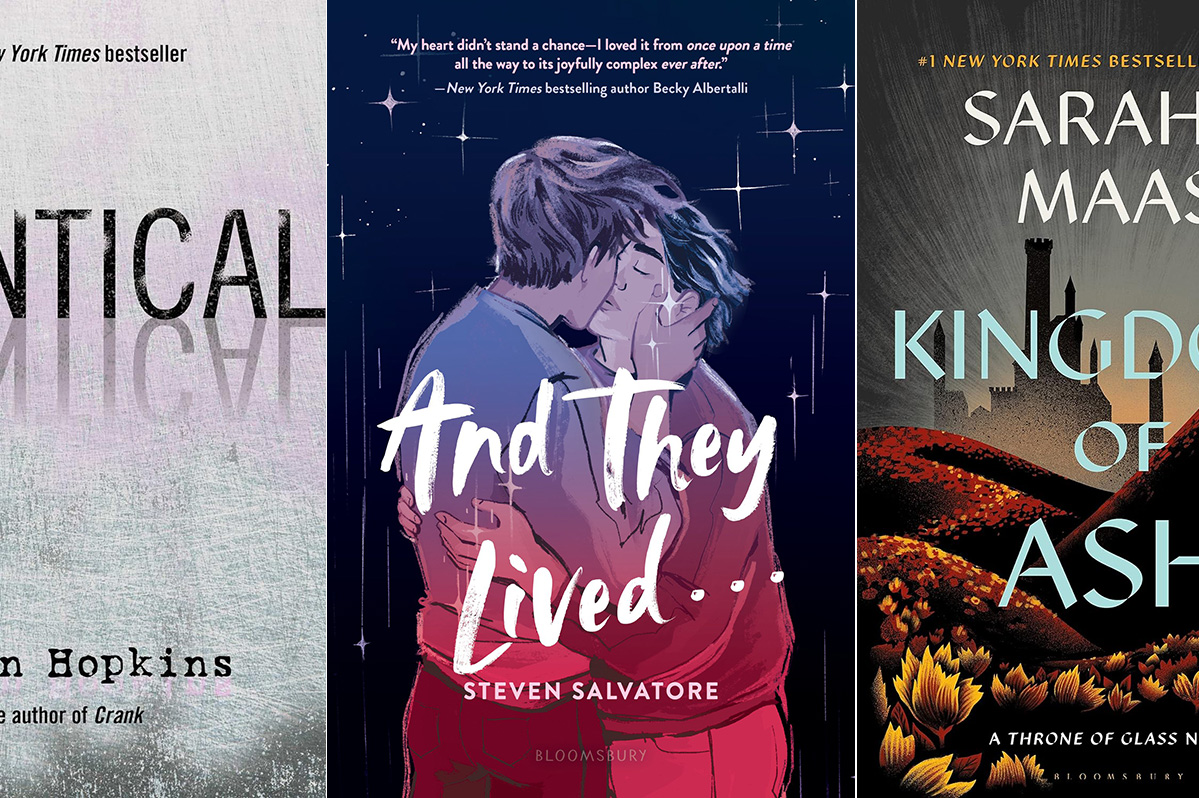
A unanimous school board vote removed more than 60 books in Carroll County – 21 permanently. The banned titles include:
• “And They Lived,” a gay-themed young adult novel by Steven Salvatore.
• “Identical” by Ellen Hopkins, a novel about a young woman sexually abused by her father.
• “Kingdom of Ash,” “House of Earth and Blood,” and “A Court of Frost and Starlight” – popular fantasy novels by Sarah J. Maas.
Meanwhile, Wicomico County banned “All Boys Are Blue,” George M. Johnson’s coming-of-age novel about a young queer boy. Frederick County banned Hopkins’ “Triangles,” which publisher Simon & Schuster described as a “surprisingly erotic” novel that includes adultery about three women’s intersecting friendships
And Queen Anne’s County banned “Harbor Me,” Jacqueline Woodson’s novel about multicultural kids navigating their way through a multitude of problems, which was a New York Times Book Review’s “Kids Notables” selection for 2018.
With November’s school board elections approaching, the issue of book bans will once again appear on the ballot in the form of races between conservative candidates and their opponents. Candidates endorsed by the conservative 1776 Project PAC are running in nine Maryland counties.
The Carroll County precedent
In Maryland’s largely liberal central corridor, Carroll County has always been an outlier. Jutting southward from the Mason-Dixon line, it’s surrounded by liberal enclaves and Frederick County, a former Republican stronghold that flipped blue in the 2020 presidential election for the first time since 1964.
As demographics shift and the Democratic party strengthens its regional claim, Carroll County remains stubbornly independent. While it isn’t uncommon to have a couple of books challenged over the course of a year, Carroll County’s 21 permanent removals drew headlines earlier this year.
One of the county’s board of education candidates, Amanda Jozkowski, said she opposes such actions.
“While there may be rare instances where a book is deemed unsuitable for the school library, these decisions should be based on clear, consistent criteria focused on educational value, not on censorship or ideological preferences,” she said in responding to the candidate questionnaire.
Jozkowski said Carroll County is a proving ground for conservative policies – especially within schools. She noted that the county has a large and active Moms for Liberty chapter that is helping chapters in other counties. Moms for Liberty, a conservative group that stresses parents’ rights, burst onto the scene in 2021 and has led the fight for book bans in many school districts.
To offer a different future for Carroll County educators and students, Jozkowski is collaborating with fellow board candidate Muri Lynn Dueppen on the Slate for Student Success, a joint candidacy that highlights the pair’s shared values and encourages voters to mark their names at the top of November’s ballot. On its website, opposition to book banning is listed as one of the pair’s core values.
Jozkowski hopes that voters see her as an alternative to the conservative candidates she opposes. She said she believes that many Carroll County residents are tired of the “politically motivated orientation” of the current school board.
But, in a county that hasn’t voted for a Democratic presidential candidate in 60 years, her success is far from guaranteed. Among her challengers is Kristen Zihmer, a 38-year-old small business owner who called herself a “conservative lifelong resident” of Carroll County and who, according to the Baltimore Sun, has been endorsed by Moms for Liberty.
Zihmer listed Ronald Reagan as the political figure she admired most and said: “My goal is to uphold the family and community values that make our county exceptional.” Asked about book bans, she said: “When materials are open to question, I default to parental consent…I would state unequivocally that I do not condone materials that are sexually gratuitous in nature or feature extreme sexual content.”
A debate in Howard County
In March, the Howard County chapter of Moms For Liberty laid out plans for its latest initiative: the elimination of 46 books from Howard County Public Schools’ shelves, following in Carroll County’s footsteps.
While the chapter’s measures have failed thus far, one of its founders is now running for a spot on the county’s board of education. Trent Kittleman, a former state delegate who lost re-election in 2022, requested to be taken off the Moms for Liberty rolls when she began her school board campaign, Baltimore Fishbowl reported in March.
But her views on the issue remain staunchly conservative. She decried a 2021 ban on six Dr. Seuss books with harmful stereotypes, but she remains concerned about other kinds of books.
“The misnomer ‘book banning’ being criticized these days is an effort by many parents to have certain books removed from school libraries due to what they consider explicitly sexual content,” Kittleman said in response to a Local News Network questionnaire. “It is not unreasonable to have explicitly sexual content ‘that serves no redeeming social purpose,’ removed from the schools.”
Kittleman offers the Democratic stronghold a new vision for its public schools, one in line with the Republican values she touted during her eight years in the Maryland House of Delegates. One of her opponents, incumbent Jen Mallo, offers the opposite.
“A diverse and inclusive set of library books are critical to have in our schools,” said Mallo, who chairs the Howard County Board of Education. “We need to actively work to include these materials despite extremist fear mongering and demands for removal.”
The issue goes to court
Montgomery County’s battle between conservative parents and school board members looks a little different than those in the rest of the state. In September, a group of parents filed a petition asking that the Supreme Court review the school board’s refusal to allow parents to opt their elementary children out of classes using LGBTQ+ books, citing a violation of their First Amendment rights.
The books are part of the district’s effort to be more inclusive by adding titles with LGBTQ characters in their kindergarten through 12th-grade curriculum.
Brenda M. Diaz, one of the county’s school board candidates, is siding with those parents.
Diaz, a social studies teacher at Fusion Global Academy with more than 20 years of education experience, said that since Maryland state law allows parents to request exemptions for their children from certain portions of the sex education curriculum, she would extend these same rights to parents for books their children can access.
“Each school should be able to determine with their body of parents which books should be removed,” she said in her response to the LNN candidate questionnaire.
Yet Lynne Harris, a board member running for re-election in Montgomery County, believes public opinion shouldn’t be a factor when determining which books students can access
Harris, currently the vice president of the Montgomery County Board of Education, strongly supports the county’s LGBTQ+ curriculum.
“If families want to restrict the books their students read, they have many avenues to do that,” Harris told the Local News Network in August, “but imposing these choices and personal judgments on thousands of others is not appropriate.”
(Courtesy the Capital News Service)




Maryland
Md. groups receive state grants to fight hate crimes
Pride Center of Maryland among recipients
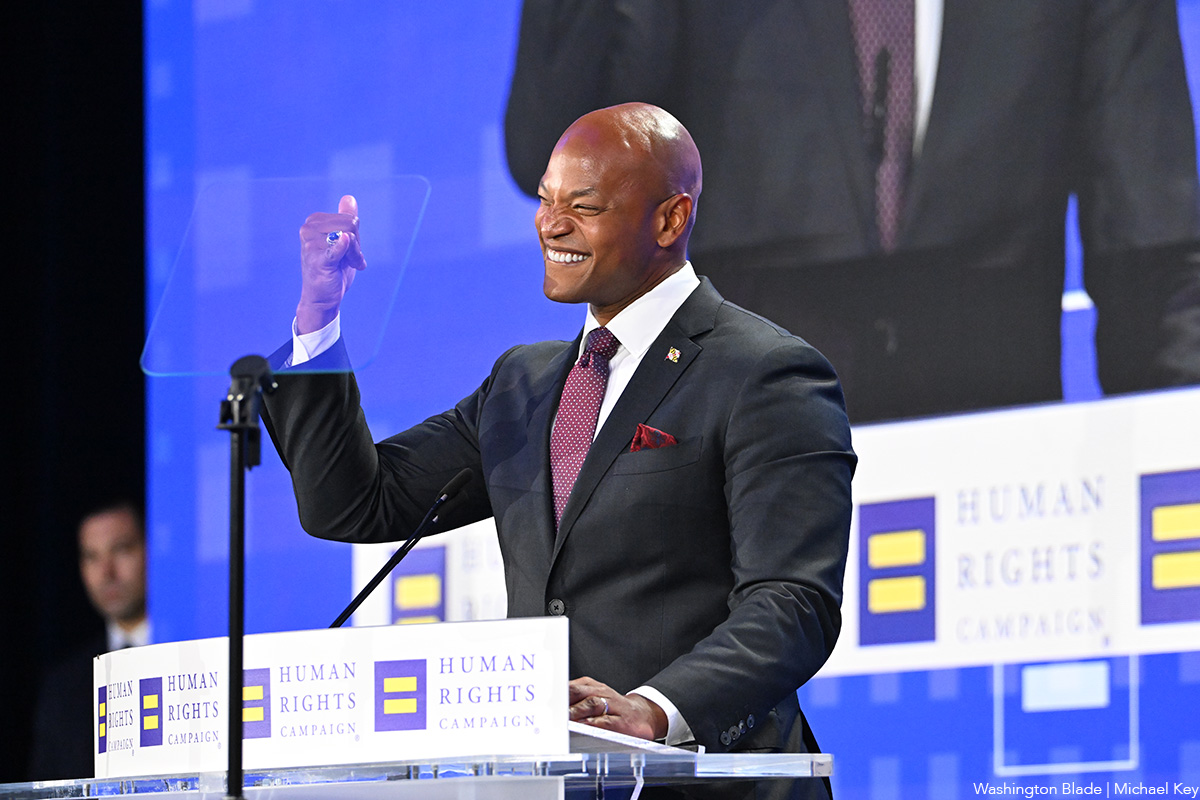
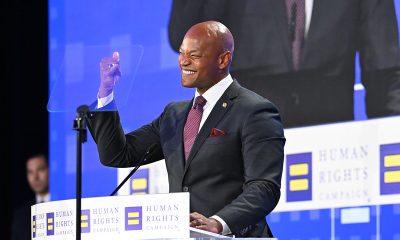
Maryland Gov. Wes Moore and the Governor’s Office of Crime Prevention and Policy are awarding a total of $10 million in grants in the 2027 fiscal year to nonprofit organizations that work to prevent hate crimes in the state.
The funds will be used to support those who feel targeted or discriminated against because of their race, religion, sexual orientation, gender identity, or disability status.
The Pride Center of Maryland is among the recipients. Churches, synagogues, mosques, and LGBTQ organizations are all eligible to receive grants
“The safety and security of all Marylanders is my top priority, so we are drawing a hard line because we have no tolerance for hate,” said Moore, according to media reports. “We are committed to protecting and ensuring safe and sacred spaces stay that way by investing in non-profit organizations, houses of worship, and community centers to protect and honor every community that makes our state so diverse and special.”
“Protection Against Hate Crime funding has strengthened the Pride Center of Maryland’s ability to protect, educate, and support the communities we serve … at a time of heightened concern associated with the Trump administration’s anti-LGBTQ/SGL (same-gender-loving) policies and pressures,” Pride Center of Maryland CEO Cleo Manago said. “PAHC funding helps us do more than improve physical security — it strengthens our community’s knowledge, preparedness, connection to resources, and ability to respond to hate with greater awareness and support.”
Maryland’s hate crimes law includes both sexual orientation and gender identity. The state’s nondiscrimination statute is also LGBTQ-inclusive.
Maryland
Anne Arundel schools now need parent permission to call trans students by preferred names
Conservative groups challenged system’s policy
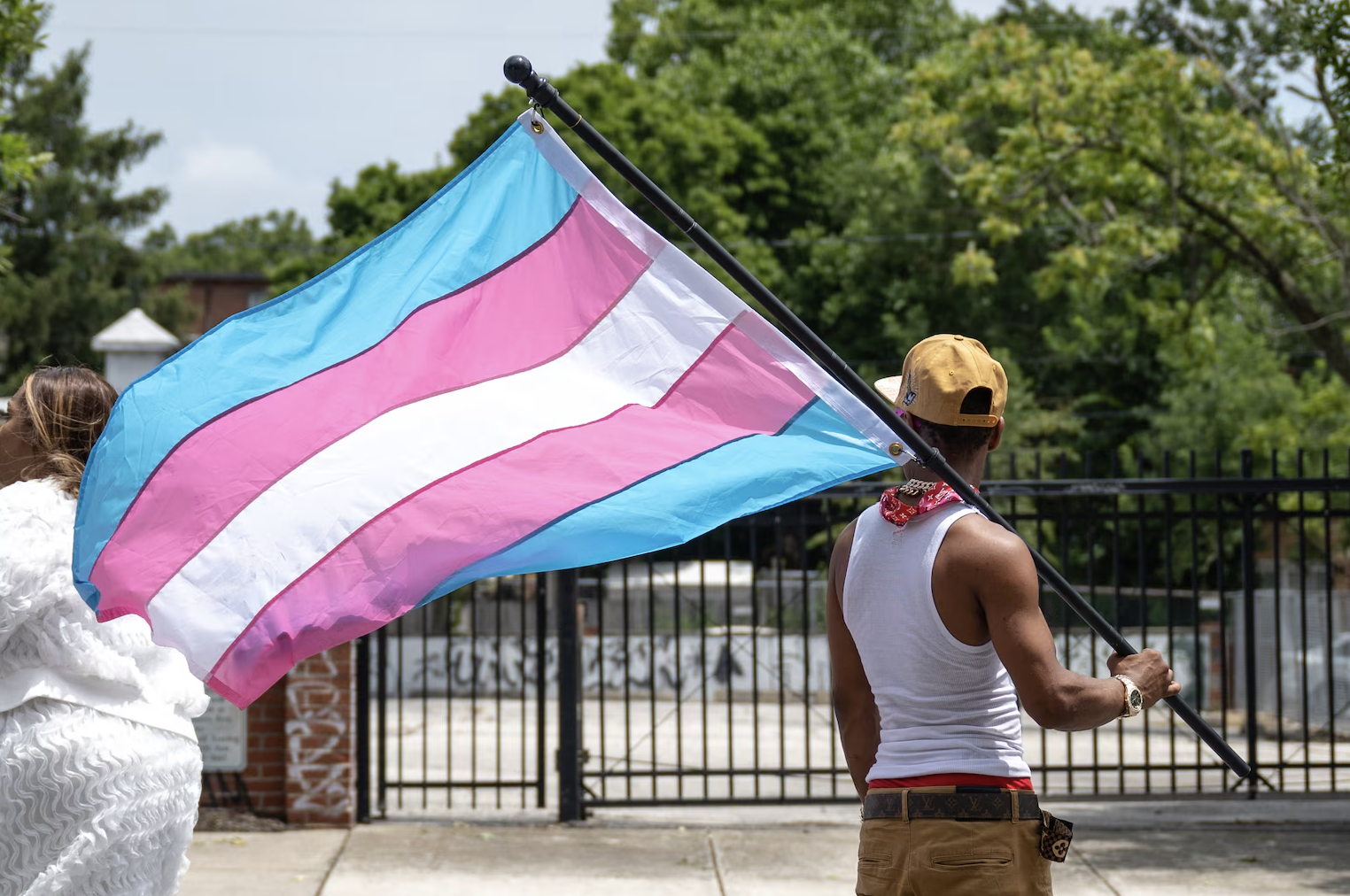
By JESSICA CALEFATI | Anne Arundel County Public Schools staff cannot use transgender students’ preferred names if their parents oppose it, according to an internal document reviewed by the Banner, a change that comes after conservative groups challenged the school system’s approach to gender identity.
Teachers union president Kristina Korona told members in an Aug. 20 email that the new guidance undermines district policy on acceptance and inclusivity and “will begin harming affected students immediately.”
Previously, the district didn’t require parental permission to use a high school student’s chosen name and pronouns corresponding to their gender identity, the internal document says. Now it does. The change comes as parents challenge the suburban school system’s gender identity policy and regulation in court and the Trump-Vance administration threatens the district’s funding.
The rest of this article can be found on the Baltimore Banner’s website.
Maryland
Girlfriends charged with Silver Spring murder to go on trial in 2027
Prosecutors charged both women with killing mother of one of them

Two women identified as a couple who are charged with the May 22, 2026, murder of the mother one of them in her Silver Spring home and who were arrested three weeks later in Ohio are scheduled to go on trial for murder April 19, 2027.
According to online records filed with Montgomery County Circuit Court in Rockville, Vanessa Tjongarero-Henderson, 29, of Clarksburg, Md., and Samantha Raebel, 36, of Phoenix are being held without bond in the Montgomery County Correctional Facility until the time of their trial.
Statements from Montgomery County police show the two women were arrested June 10 in Genoa, Ohio, after fleeing from the scene of the murder in Silver Spring. Police statements and court records show they were extradited back to Maryland in July, where prosecutors with the Montgomery County State’s Attorney’s Office obtained indictments against them for murder.
Earlier statements from Montgomery County police say their investigation into the murder led to their decision to initially charge the two women with first-degree murder for the death of Hilde Henderson, 67, who was Tjongarero-Henderson’s mother.
“Through the course of the investigation, detectives identified Henderson’s daughter, Vanessa Tjongarero-Henderson, and Vanessa’s girlfriend, Raebel, as the suspects,” one of the police statements says. It says police obtained arrest warrants for both women and launched a nationwide search seeking help from the public in in locating them.
One of the police statements says an autopsy determined the cause of Hilde Henderson’s death was blunt-force trauma injuries brought about by a murder. Police and the State’s Attorney’s Office, which is prosecuting the case, have yet to disclose whether they have determined a motive for the murder.
Court records show that prior to the start of the April 19, 2027, trial a “motion” hearing was scheduled for Oct. 30, 2026, a pre-trail conference was scheduled for Feb. 12, 2027, and another motion hearing and a status hearing were scheduled for March 12, 2027.
Court records also show that Tjongarero-Henderson is being represented by attorneys with the Montgomery County court system’s public defender service. The records show that Raebel initially had been represented by a public defender service attorney, but updated records show Aug. 14 is listed as the “removal date” for that attorney.
The docket shows that on Aug. 20, two new attorneys with the prominent D.C. law firm of Covington & Burling made their official appearance as her attorneys in the murder case. One of them, Daniel Solomon, told the Washington Blade in response to an inquiry that the defense has no comment at this time on the case.
He confirmed that Covington & Burling is representing Raebel on a no-cost, pro bono bass.
The office of the Montgomery County public defender service didn’t immediately respond to a phone message from the Blade asking for a comment on the Tjongarero-Henderson case.

Physician: addiction doesn’t always look the way you think it does

Calendar: October 9-15

ICC unseals arrest warrants for Taliban officials accused of persecuting LGBTQ people, women

Bet Mishpachah participates in D.C. Oct. 7 commemoration ceremony

Man charged in Mall of America shooting plot inspired by Pulse massacre: report

PHOTOS: Winchester Pride

Evan Low is not the leader the Victory Fund needs at this moment

Transgender woman elected to Brazilian Chamber of Deputies

Bowser, Office of LGBTQ Affairs announce LGBTQ+ History Month events

Alianza para la Inclusión fortalece la defensa de derechos LGBTQ en Centroamérica
-

 Photos5 days ago
PHOTOS: Winchester Pride
-
Opinions5 days ago
Evan Low is not the leader the Victory Fund needs at this moment
-
Brazil5 days ago
Transgender woman elected to Brazilian Chamber of Deputies
-
District of Columbia5 days ago
Bowser, Office of LGBTQ Affairs announce LGBTQ+ History Month events