South Africa
First openly gay imam shot dead in South Africa
Motive unknown but some fear murder was a hate crime
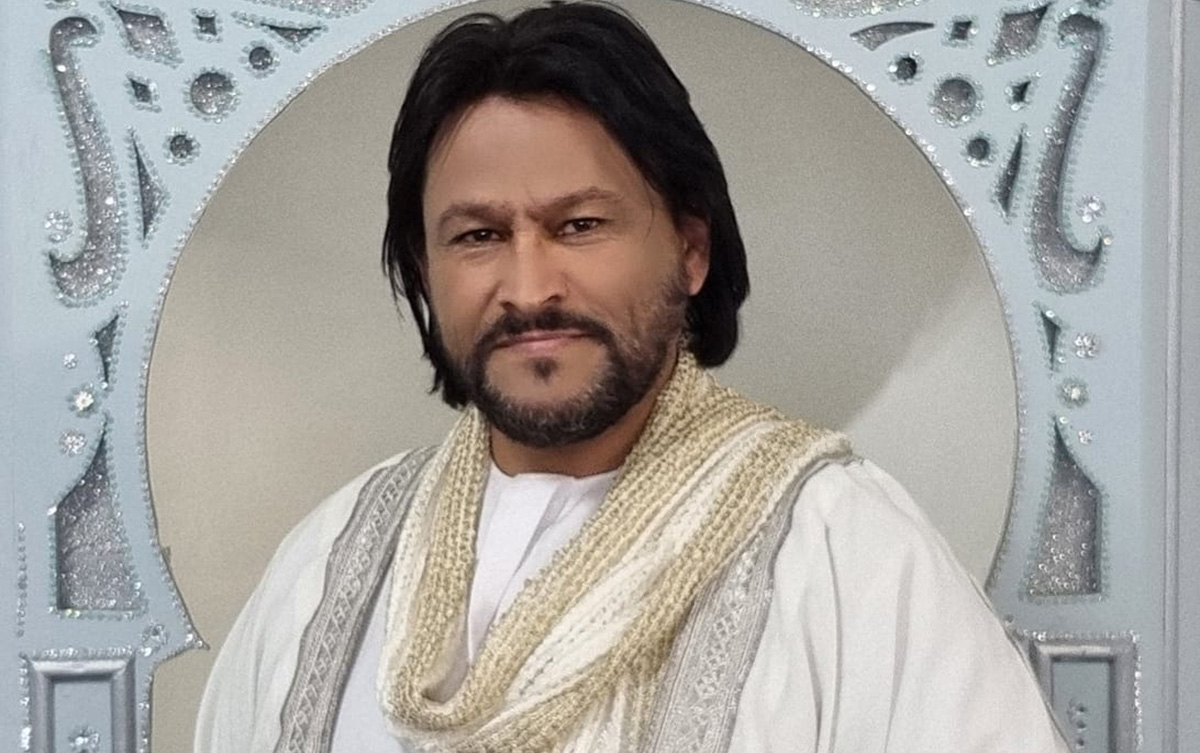
Mohsin Hendricks, the world’s first openly gay imam was shot dead in Gqeberha, South Africa, last weekend while attending a wedding.
According to the Department of Women, Youth and Persons with Disabilities, the motive behind Hendricks’s murder remains unknown, however, there are suspicions that the crime might be a religiously motivated hate crime.
“This brutal murder is not just about Imam Hendricks, it is a direct assault on all movements, organizations and persons advocating for LGBTQIA+ rights in South Africa. We call on the South African Police Services and all law enforcement agencies to strengthen their investigation, and track the persons responsible, for justice to prevail,” said Mmapaseka Steve Letsike, the Deputy Minister for Women, Youth and Persons with Disabilities.
In 1996, Hendricks became the first imam in the world to come out as gay, however, he was removed from his position after coming out. He was the founder of the Inner Circle, a global Muslim community advocating for a society free from discrimination based on religion, sexual orientation and gender identity. He also established the LGBTQ-inclusive Masjidul Ghurbaah mosque and led the Al-Ghurbaah Foundation, which provides psycho-spiritual and social support to Muslims marginalized due to sexual orientation, gender identity, and belief.
“May Allah grant Imam Hendriks jannah. You have been a great teacher, human and religious mentor. A great father and a guardian of many, continue resting with angels,” said the Al-Ghurbaah Foundation.
In addition, Inclusive and Affirming Ministries (IAM), said Hendricks played a pivotal role in uniting Muslims regardless of their sexual orientation and was a gallant fighter in the fight against LGBTQ discrimination.
“IAM first had the pleasure of working with Muhsin during his tenure as founder and executive director of the Inner Circle, South Africa’s first queer mosque. Later, through the Al-Ghurbaah Foundation, the Queer Interfaith Collective and other civil society driven platforms,” said IAM. “Muhsin’s journey with IAM became a longstanding and fruitful one, and so we join multitudes in deeply mourning the passing of a faith leader who has fiercely yet gently championed and guarded LGBTIQ+ rights in South Africa, but also for Muslims across the world.”
Furthermore, IAM said their quest was to ensure Hendricks’s vision outlives him and continues to be an inspiration and shining beacon, “Even in his death, we celebrate Imam Muhsin for his tireless contribution to building inclusive and affirming communities of faith, which he was committed to doing until his last breath. May his vision to see an Islam that is inclusive and compassion-centred outlive him, and continue to liberate people from all walks of life.”
Moreso, the Global Interfaith Network (GIN) said the tragic death of Hendricks was an immeasurable loss to the global Muslim community, interfaith allies, and human rights defenders.
“Imam Muhsin was more than just a religious leader, he was a pioneer, a visionary, and a beacon of hope for countless marginalized Muslims worldwide. As the first openly gay Imam, he fearlessly championed an all-inclusive, compassion-centered Islam, dedicating his life to creating safe spaces for queer Muslims, advocating for justice, and redefining faith as a source of healing rather than harm,” said GIN.
In addition GIN said despite experiencing massive resistance from the Muslim community, he remained resolute towards the fight for a just society not only in South Africa but throughout the continent and the world at large.
“He played a pivotal role in shaping interfaith advocacy that upholds the dignity of LGBTQ+ people of faith, ensuring their voices are heard and respected on global platforms. His passing is an immeasurable loss to the global Muslim community, interfaith allies, and human rights defenders everywhere. His legacy will not be erased, it will live on in the hearts and actions of those who continue his mission,” added GIN.
According to Pan Africa Ilga (PAI), the murder of Hendricks is a stark reminder of the horrifying and harrowing everyday experiences of the LGBTQ community in Africa.
“His murder underscores the violent reality that many LGBTIQ+ individuals, particularly those in faith communities, continue to face. Across Africa, religious fundamentalism is increasingly being weaponized to justify discrimination and harm against LGBTIQ+ people. The loss of Imam Hendricks is not just a loss for the Muslim LGBTIQ+ community, but for all those who believe in justice, dignity, and the right to exist freely,” said Arlana Shikongo, PAI’s communications officer.
Furthermore, Julia Ehrt, executive director for ILGA World, said they have lost a peacemaker, a bridge builder and someone who set an example showcasing that reconciliation is possible as evidenced by his endurance and perseverance.
“He supported and mentored so many people in South Africa and around the world in their journey to reconcile with their faith, and his life has been a testament to the healing that solidarity across communities can bring in everyone’s lives. We call on authorities to thoroughly investigate what we fear may be a hate crime,” said Ehrt.
South Africa is the most liberal country in Africa when it comes to the protection and recognition of LGBTQ rights. However, due to religious and cultural norms, the LGBTQ community is often ostracized with little to no repercussions for the perpetrators.



South Africa
White House to end PEPFAR funding for South Africa
State Department says country failed to respond to 2025 executive order demands
The Trump-Vance administration will end PEPFAR funding for South Africa.
A State Department spokesperson on Wednesday told the Washington Blade the State Department “will begin a phased drawdown of PEPFAR programming in South Africa, with most programs ending by Sept. 30, 2026, and critical personnel support continuing through March 31, 2027.”
Semafor last week reported South Africa has received more than $8 billion in PEPFAR funding since President George W. Bush created the program to combat the global HIV/AIDS pandemic in 2003.
President Donald Trump on Feb. 7, 2025, issued an executive order that addressed what it described as “egregious actions of the Republic of South Africa.” The State Department spokesperson with whom the Blade spoke noted the directive included five specific requests:
• South African government provides exemptions or alternatives for U.S. companies to Broad-Based Black Economic Empowerment laws and other race-based mandates.
• Senior government officials (e.g., president, deputy president, or minister of justice) unequivocally condemn all race-based incitement to violence, including the “Kill the Boer” song, more frequently.
• The South African government prevents the implementation of measures that would allow expropriation without fair compensation and due process under the Expropriation Act of 2024.
• South African Police Service designates rural crime a “priority crime” and increases resources dedicated to high-crime rural areas.
• South Africa refrains from actions that would significantly interfere with the implementation of the refugee program, within the confines of South African law.
“The United States communicated to the government of the Republic of South Africa multiple times at many levels that PEPFAR funding was likely to be terminated in the absence of progress on the five asks,” said the State Department spokesperson.
The State Department spokesperson further noted South Africa is “one of the largest economies in sub-Saharan Africa” and “has funded the vast majority of its own HIV response, estimated at 76 percent of the total, including procurement of all treatment commodities.”
“South Africa will continue to be supported by the Global Fund, including for the introduction and scale up of lenacapavir through Global Fund Resources,” the spokesperson told the Blade.
Lenacapavir is groundbreaking HIV prevention drug that users inject twice a year. Eswatini, which borders South Africa, is among the African countries that have received doses of the drug through PEPFAR.
HIV/AIDS service organizations in the U.S. and around the world have sharply criticized the Trump-Vance administration over plans to not fully fund PEPFAR and to cut domestic HIV/AIDS funding.
Secretary of State Marco Rubio shortly after the current White House took office issued a waiver that allowed PEPFAR and other “life-saving humanitarian assistance” programs to continue to operate during a freeze on nearly all U.S. foreign aid spending. HIV/AIDS service providers around the world with whom the Blade has spoken say PEPFAR cuts and the loss of funding from the U.S. Agency for International Development, which officially closed on July 1, 2025, has severely impacted their work.
South Africa
Transgender inmate sues South Africa prison officials
Nthabiseng Mokoena alleges mistreatment at Johannesburg Correctional Center
South Africa’s transgender community is eagerly anticipating a court ruling that could change their lives.
The Equality Court at the Gauteng High Court in Johannesburg on Sept. 12 reserved judgment for a case brought by Nthabiseng Mokoena, a trans woman who is an inmate at the Johannesburg Correctional Center (Sun City Prison) against the Department of Correctional Services and other officials.
According to Mokoena, who is being represented by Lawyers for Human Rights and others, the DCS commits systemic discrimination against trans inmates by refusing to recognize their gender identity and denying them basic gender-affirming rights.
Mokoena also argued the DCS has violated her rights by refusing her chosen name and pronouns, not allowing her to wear clothing and use cosmetics and toiletries that correspond with her gender expression, bullying her, and denying her gender-affirming healthcare.
“The transphobia within DCS’s senior management is undeniable,” said Mokoena. “There’s a clear difference in how heterosexual inmates are treated compared to members of the LGBTQI+ community. The LGBTQI+ community is often treated as less than human.”
Mokoena also said there is no recourse for her and other trans people when they are victimized; they are rather punished when they try to stand up for themselves.
“When we are hurt or attacked, no one speaks up or does anything to help,” said Mokoena. “Those who harm the LGBTQI community are never held responsible. What is worse, when we try to defend ourselves or speak out about the unfair treatment, we are the ones who get punished.”
Mokoena as a result wants the court to order the defendants to provide her with gender-affirming healthcare, assistance in legally changing her name and gender marker, and to be housed in a single cell or with other inmates who share her gender identity.
Letlhogonolo Mokgoroane, a nonbinary lawyer who represents Mokoena, said gender-affirming healthcare is recognized by medical professionals worldwide as essential healthcare.
“Gender-affirming care is not elective or optional, it is life-saving,” said Mokgoroane. “Denial of such care amounts to cruel and inhumane treatment, which is incompatible with the values enshrined in our constitution and international human rights standard. Trans rights are human rights.”
Access Chapter 2, a local LGBTQ organization which filed an amicus brief in support of Mokoena in the Equality Court, said it stands with her and all trans people who face systematic discrimination.
“Our submissions emphasized that gender-affirming healthcare is an essential component of primary healthcare, not an elective treatment. Denying access to gender-affirming healthcare violates the constitutional rights of transgender people to equality, dignity, and healthcare, especially those in detention facilities,” said Access Chapter 2.
Thabsie Mabezane, acting media and programs director at Lebo Basadi Foundation, an LGBTQ rights organization, said trans issues are complex and multifaceted and require a comprehensive approach that addresses legal discrimination, societal stigma, economic oppression, and healthcare access.
“Socially transitioning individuals who choose to live as their preferred gender without medical intervention, face unique challenges,” noted Mabezane. “They often lack access to essential services, including healthcare and social support, and may be excluded from projects aimed at uplifting LGBTQ+ individuals, hence the need to promote inclusivity, supporting advocacy efforts, and addressing the specific needs of transgender individuals.”
Even though South Africa has made strides in recognizing and advancing the rights of trans people, systematic and deeply-rooted transphobia in the country make it difficult for them to live openly and access gender-affirming health care.
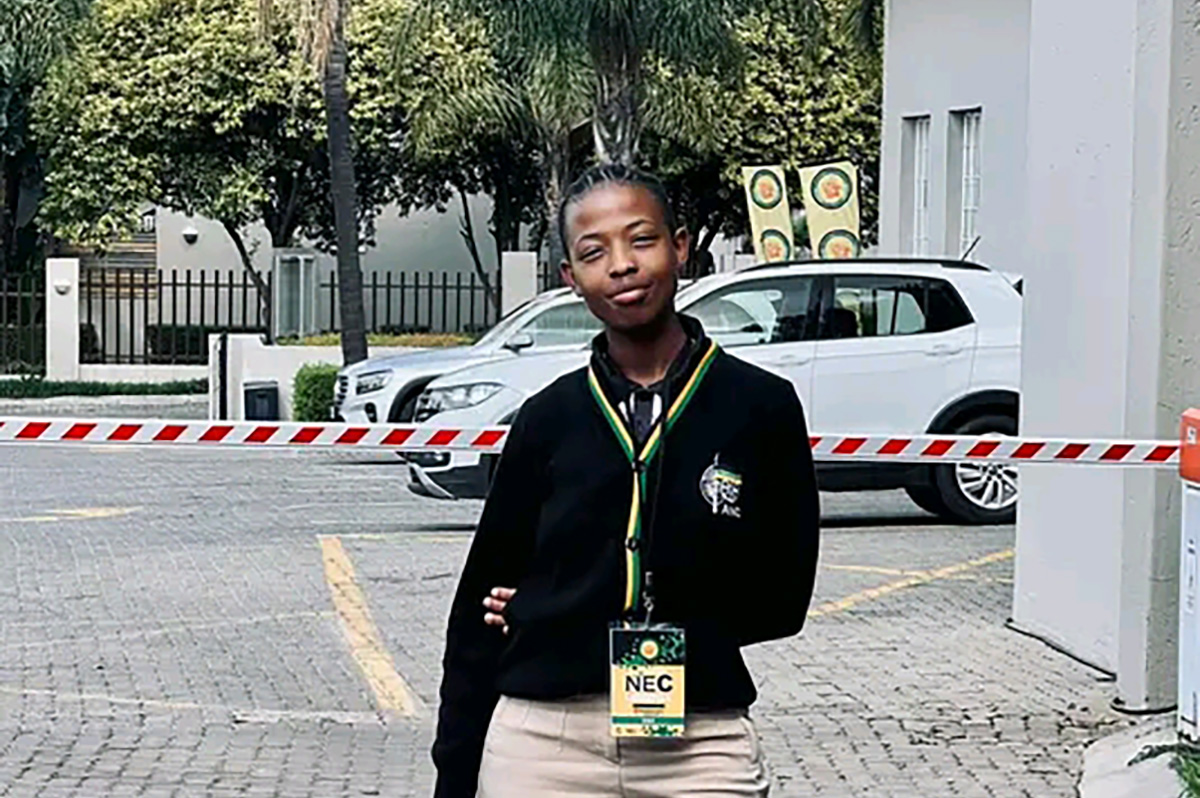
South Africa National Assembly Speaker Thoko Didiza on June 17 swore in lesbian feminist Palomino Jama as a new MP.
Jama joins other LGBTQ legislators — including Public Works and Infrastructure Minister Dean Macpherson; Forestry, Fisheries and the Environment Minister Dion George; and Deputy Women, Youth, and Persons with Disabilities Minister, Steve Letsike.
Jama said she will work hard and excel as MP.
“What a great moment to be alive. Thank you youth of 1976, thank you Simon Nkoli, Phumi Mthetwa, Paddy Nhlaphos, Vanessa Ludwig, and others for what you did for the LGBTI people in the 80s and 90s. Lastly, for the fierce fist of the Jamas to always hit where it matters for the people of this country,” said Letsike.
Embrace Diversity Movement, a local LGBTQ organization, said Jama’s inauguration came at an appropriate time, during Pride month.
“Her swearing-in took place during a month of profound significance in June, which marks both international Pride Month and Youth Month in South Africa,” said the group. “Palomino is a seasoned queer activist and dedicated community builder with a distinguished record of leadership and service.”
“The EDM proudly supports Palomino in her deployment to parliament, her presence meaningfully advances youth and queer representation in public office,” added the Embrace Diversity Movement. “We are confident that she will serve the people of South Africa with integrity, courage, and distinction.”
South Africa is the only African country that constitutionally upholds LGBTQ rights. There are, however, still myriad challenges the LGBTQ community faces on a daily basis that range from physical attacks to online abuse.
Letsike in May faced a barrage of online attacks after she released a scathing statement against popular podcaster Macgyver “MacG” Mukwevho, who during a podcast episode in April insinuated that the reason behind popular socialite Minnie Dlamini’s “unsuccessful” relationships were probably due to the bad odor from her genitals.
Letsike, who viewed MacG’s comments as offensive, called for the podcaster to be summoned before parliament’s Portfolio Committee on Women, Youth, and Persons with Disabilities and criticized the local television station that aired the podcast.
X users and other social media subscribers bombarded Letsike with anti-lesbian comments. She, however, was unphased.
Letsike continues to face anti-lesbian comments, even though MacG apologized and the television station on which his podcast had aired cancelled its contract with him.

988 restores crisis services for LGBTQ youth

To school to homeschool to school again

Ryan Murphy’s ‘Monster’ vilifies the lesbian

The right to be an ordinary transgender man

LGBTQ community must vote in big numbers

PHOTOS: HRC National Dinner

What’s frightening is also funny in ‘Venus’

I’m 66, he’s 27. Is it love or am I being played?

The LGBTQ real estate map is being redrawn