District of Columbia
WorldPride hotel bookings hint at disappointing turnout
Welcome events set for this weekend but predictions of 3 million visitors not panning out

Beneath the optimistic press releases from WorldPride D.C. organizers lies a disappointing reality: Predictions of up to three million visitors traveling to the region for the events are not materializing.
Indeed, a quick look at hotel occupancy rates reveals wide open availability across D.C. for the June 6-9 weekend with many hotels offering discounted rates.
LGBTQ activists from Europe, Mexico, Canada, and other parts of the U.S. have announced they decided not to come to Washington, D.C. for WorldPride because of the hostile, anti-LGBTQ policies of President Donald Trump and his administration. The activists indicating they would not come to WorldPride D.C. have said they were especially concerned over the Trump administration’s anti-transgender policies.
Kyle Deckelbaum, an official with Destination D.C., an organization that promotes tourism and large-scale events, and that has been supporting WorldPride D.C. for at least two years, said his group has received differing reports about the attendance at WorldPride.
He said that as of May 21, the most recent data show that hotel bookings for the WorldPride opening ceremony weekend of May 30-June 1, and for the closing ceremony weekend of June 6-8, are down by 3 percent compared to the same two weekends in 2024. D.C.’s regularly scheduled annual Capital Pride Festival and Parade took place the second weekend of June 2024.
But Deckelbaum points out that the 3 percent lower bookings are for D.C. hotels only, not those in the surrounding Virginia and Maryland counties, where many WorldPride participants are expected to stay. He also notes that bookings do not reflect the full “occupancy” of a hotel room, saying it is common that two or more visitors can share a hotel room.
“The way to look at hotel booking pace is it is a kind of indicator of travel, but it does not necessarily indicate occupancy, nor would it indicate attendance,” he said, referring to the overall attendance at WorldPride.
Deckelbaum said another factor is that there are more hotels that have opened in D.C. since last year, increasing the supply of rooms, which could account for a slightly lower booking rate.
“And there are a lot of factors at play outside of WorldPride, where occupancy has been tracking just below last year every weekend this year because there is a decrease in international visitation,” he said. “That’s overall to the U.S., that’s not D.C. specific.”
On the optimistic side, Deckelbaum notes that a “surge in positive op-ed articles from around the world” have appeared recently in support of WorldPride D.C. in newspapers in countries such as United Kingdom and Canada.
“We are seeing an uptick in op-ed submissions from international markets that explain people’s reasons for coming,” he said.
Last month, Elliott Ferguson, president and CEO of Destination D.C., told the Blade he could not predict whether as many as 2 million or more visitors would come as WorldPride organizers had predicted earlier this year.
“So, as we talk to hotels, we would have liked to see the city fully sold out at this point,” he said.
The Capital Pride Alliance, the D.C.-based group serving as lead organizer of WorldPride D.C., has pointed out that the local D.C. government has a longtime strong record of support for the LGBTQ community. They have also argued that LGBTQ activists should come to WorldPride as a form of protest against the Trump administration, among other things, by joining the planned LGBTQ and allied March on Washington for Freedom, set to take place June 8 and travel from the Lincoln Memorial to the U.S. Capitol.
Ryan Bos, executive director of Capital Pride Alliance, said the group doesn’t believe media reports of lower hotel bookings are predictive of the actual number of people that will turn out for WorldPride D.C. Although he did not offer a prediction of the size of the turnout, he said the enthusiasm and large number of people who turned out for the first week of WorldPride events was impressive.
“The energy and respect among each other were energizing and continued as other events popped up through Latinx Pride and API [Asian Pacific Islander] Pride and this past weekend with D.C. Black Pride, which was a huge success,” he said.
“People understand this is an historic moment, how important it is that our community supports each other, that every LGBTQ business, organization, social group that we rally together to ensure that our community shows up,” Bos told the Blade in a May 27 phone interview.
“Celebration is a form of protest,” he said. “So, protest is defiance, resilience and joy. And it’s not just about WorldPride,” Bos continued. “This is about us ensuring that we can persevere and be resilient across our country and around the world. And to ensure that all of our Prides continue to take place and that we do not go back in the closet.”
He added, “We have nearly 300 events between the ones Capital Pride Alliance is organizing to all the amazing partners in the community to have something for everybody, and we are excited to welcome so many who deserve to be seen so they can experience the D.C. that isn’t the federal government, that is part of this fabric of freedom, this community, these neighborhoods that make D.C. such a great place to live.”
A statement released on May 27 by WorldPride D.C. 2025 organizers says the events that began May 17 and dozens more set to take place through June 8 represent a “celebration of LGBTQ+ culture, identity, and unity.”
The statement adds that the events make up a “packed calendar of festivals, sports, concerts, and cultural experiences marking 50 years of Pride in D.C.”
It points out that this week’s highlights included the start of the WorldPride Film Festival, scheduled for May 27-29, the annual Pride Flag Raising ceremony organized by D.C. Mayor Muriel Bowser’s Office of LGBTQ Affairs, which was set for May 29, and the kickoff of the Capital Cup Sports Festival set for May 30-June 4.
As if that were not enough, the organizers’ statement notes that the WorldPride Welcome Ceremony and Concert set for Saturday, May 31, at the Washington Nationals baseball stadium with headliner Shakira performing and welcoming remarks by key dignitaries would set the pace for the remainder of the WorldPride events.
But while indicating all is going according to plans, the statement does not respond to multiple media reports that earlier predictions that WorldPride D.C. would attract between two and three million visitors does not appear to be happening.
WorldPride organizers announced last week that actress and trans activist Laverne Cox, powerhouse performer Reneé Rapp, and LGBTQ trailblazer Deacon Maccubbin will serve as grand marshals for this year’s WorldPride parade set for June 7.
“I am so honored to serve as one of the grand marshals for WorldPride this year. This has been one of the most difficult times in recent history for queer and trans people globally,” Cox said. “But in the face of all the rhetorical, legislative and physical attacks, we continue to have the courage to embrace who we truly are, to celebrate our beauty, resilience and bravery as a community. We refuse to allow fear to keep us from ourselves and each other. We remain out loud and proud.”
“Pride is everything. It is protection, it is visibility, it is intersectional. But most importantly, it is a celebration of existence and protest,” Rapp said.
District of Columbia
Gay candidate running for D.C. congressional delegate seat
Robert Matthews among 19 hoping to replace Eleanor Holmes Norton
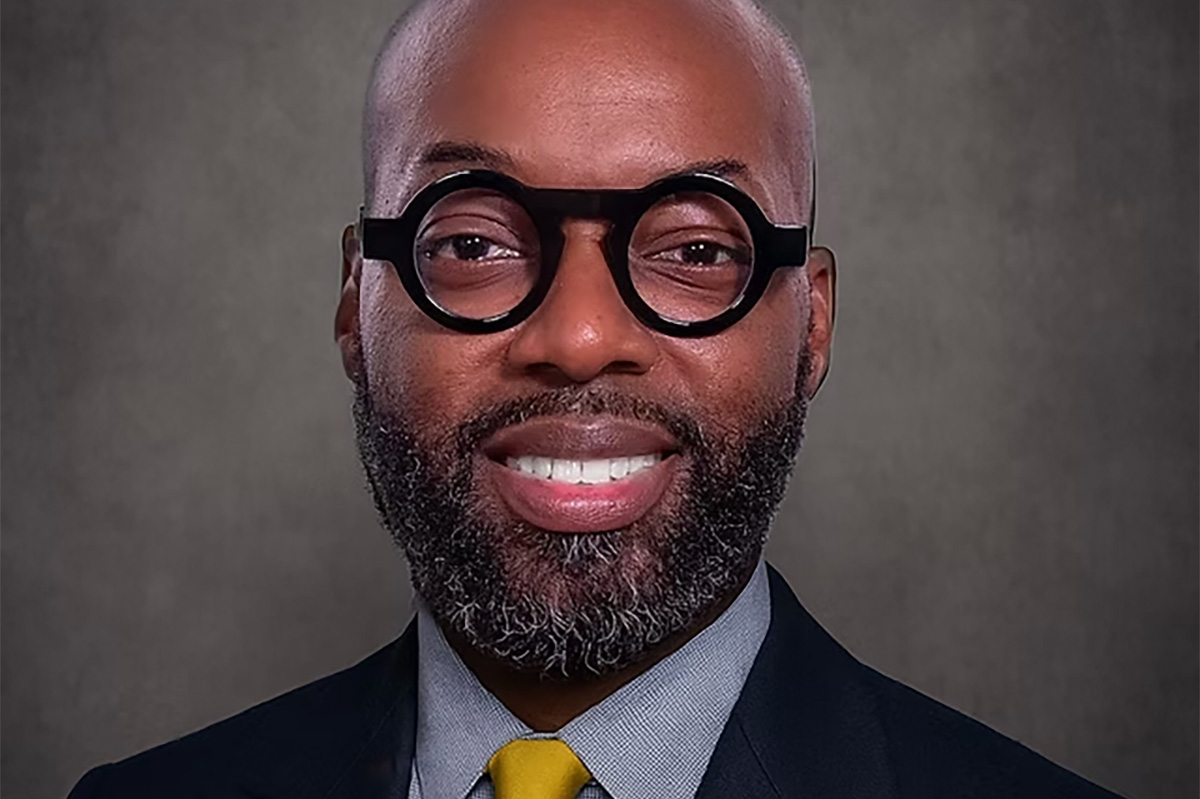
Robert Matthews, a former director of the D.C. Child and Family Services Agency, is running in the city’s June 16 Democratic primary for the D.C. Congressional Delegate seat as an openly gay candidate, according to a statement released by his campaign to the Washington Blade.
Matthews is one of at least 19 candidates running to replace longtime D.C. Congressional Del. Eleanor Holmes Norton (D), who announced earlier this year that she is not running for re-election.
Information about the candidates’ campaign financing compiled by the Federal Elections Commission, which oversees elections for federal candidates, shows that Matthews is one of only six of the candidates who have raised any money for their campaigns as of March 17.
Among those six, who political observers say have a shot at winning compared to the remaining 13, are D.C. Council members Brooke Pinto (D-Ward 2) and Robert White (D-At-Large). Both have longstanding records of support for LGBTQ rights and the community.
The FEC campaign finance records show Matthews was in fourth place regarding the money raised for his campaign, which was $49,078 as of March 17. The FEC records show Pinto’s campaign in first place with $843,496 raised, and White in third place with $230,399 raised.
The Matthews campaign statement released to the Blade says Matthews’s “commitment to the LGBTQ community is not a campaign position. It is the foundation of his life and his life’s work.”
The statement adds, “As the former director of D.C.’s Child and Family Services Agency, Robert led the District’s child welfare system with an explicit commitment to LGBTQ-affirming care.” It goes on to say, “He ensured that LGBTQ, trans, and nonbinary youth in foster care — among the most vulnerable young people in our city — were served with dignity, cultural humility, and genuine support.”
Among his priorities if elected as Congressional delegate, the statement says, would be “fighting to end homelessness among queer and trans seniors and youth,” opposing “federal roadblocks” to LGBTQ related health services, and defending D.C.’s budget and civil rights laws “from federal interference that directly threatens LGBTQ residents.”
The other three candidates who the FEC records show have raised campaign funds and observers say have a shot at winning are:
• Kinney Zalesne, former deputy national finance chair at the Democratic National Committee and an official at the U.S. Justice Department during the Clinton administration, whose campaign is in second place in fundraising with $593,885 raised.
• Gordon Chaffin, a former congressional staffer whose campaign has raised $17,950.
• Kelly Mikel Williams, a podcast host and candidate for the Congressional Delegate seat in 2022 and 2024, whose 2026 campaign has raised $3,094 as of March 17.
The Blade reached out to the Zalesne, Chaffin, and Williams campaigns to determine their position on LGBTQ issues. As of late Wednesday, the Zalesne campaign was the only one that responded.
“Kinney believes LGBTQ rights are fundamental civil rights and central to what makes Washington, D.C. a strong and vibrant community,” a statement sent by her campaign says. “At a time when LGBTQ people (especially transgender and nonbinary neighbors) are facing escalating political attacks across the country, she believes the District must continue to lead in protecting dignity, safety, and freedom for all,” it says.
The statement adds, “Throughout her career in government, business, and nonprofit leadership, Kinney has worked alongside LGBTQ and queer advocates and leaders. She is committed to maintaining an active partnership with the community to make sure LGBTQ voices remain central to the District’s future.”
District of Columbia
Man charged with carjacking, kidnapping after having sex in D.C. park pleads guilty
Arrest followed year-long investigation into incident at Fort Dupont Park

A D.C. man initially charged with armed carjacking, armed kidnapping, and armed robbery of a male victim he met and with whom he engaged in sex at D.C.’s Fort Dupont Park in September 2024 pleaded guilty on March 12 to two lesser charges as part of a plea bargain deal offered by prosecutors.
Records filed in D.C. Superior Court show that Da’Andre Pardlow, 31, who has been held in jail since the time of his arrest in December 2025, pleaded guilty to unarmed carjacking and possession of a firearm during a crime of violence. Court records show the agreement includes a recommendation by prosecutors that Pardlow be sentenced to seven years in prison.
The agreement allows him to withdraw the guilty plea if the judge rejects the sentencing recommendation and calls for a harsher sentence. He is scheduled to be sentenced by Superior Court Judge Robert Salermo on May 29.
Details of the incident that led to Pardlow’s arrest and guilty plea are included in a 12-page arrest affidavit prepared by U.S. Park Police detective Christopher Edmund, the lead investigator in the case.
According to the affidavit, which is part of the public court records, Park Police received a call at approximately 6:30 a.m. on Sept. 13, 2024, regarding an armed robbery that occurred around 3 a.m. that day at D.C.’s Fort Dupont Park. The affidavit says Park Police officers drove the person who called, who is identified only as Victim 1 or V-1, from his residence to the Park Police Anacostia Operations facility where he was interviewed.
“V-1 reported that they were at their residence at approximately 2:30 a.m. on September 13, 2024, and decided to drive to Fort Dupont Park in hopes of meeting a man for a sexual encounter,” the affidavit states. “V-1 arrived at Fort Dupont Park at approximately 3:00 a.m. and parked their vehicle on the south side of Alabama Avenue, SE, in Washington, D.C. adjacent to the park entrance,” the affidavit continues.
It says the victim stated the park was empty and he decided to leave, but while walking back to his car he encountered a black male appearing in his 20s or 30s and gave a full description of the man’s appearance and clothing, saying he was wearing a ski mask.
“V-1 and the male conversed and agreed to engage in consensual sexual acts on a bench under the pavilion near the restroom,” the affidavit says. It says V-1 then told detectives that the man, who is initially identified only as Suspect 1 or S-1, “had ejaculated onto V-1’s face. V-1 then used a napkin that he found on the ground nearby to wipe S-1’s semen from V-1’s face. V-1 then discarded the napkin on the ground.”
The affidavit states that investigators later recovered the napkin and through DNA testing linked the semen to Pardlow. But prior to that, it says during their sexual encounter in the park V-1 agreed to suspect 1’s request that he take off all his clothes.
“When V-1 disrobed, S-1 got behind V-1 and held a hard, metal item that V-1 believed to be a handgun, to the back of V-1’s head,” according to the affidavit. It says V-1 added that S-1 “threatened to shoot him ‘over and over again’” if he did not comply with S-1’s demands to surrender his phone and wallet, provide the code to access the phone, and then to take possession of and drive V-1’s car to a nearby bank, with V-1 sitting in the passenger’s seat, to withdraw money from V-1’s bank account. The affidavit says he withdrew $500 from V-1’s account at a Bank of America ATM at 3821 Minnesotta Ave., NE.
“S-1 then drove V-1 back to the park and told them to get their clothes, which were still in the pavilion area,” the affidavit says. “When V-1 exited the vehicle, S-1 drove out of the park in V-1’s vehicle at a high rate of speed toward Massachusetts Avenue,” it says. “V-1 walked back to their residence and contacted the police.”
The affidavit says that over the course of the next several months investigators used tracking devices linked to V-1’s car, cell phone, and Apple Watch that Pardlow had taken to locate the car and a residence where Pardlow was possibly living.
The Park Police investigators also pulled up FBI DNA records to identify a suspect that matched the DNA sample taken from the napkin V1 used at the park to a man arrested in Prince George’s County, Md., on an unrelated charge of Use of a Firearm In A Violent Felony. That person turned out to be Da’Andre Pardlow, the affidavit states.
It says investigators obtained additional evidence linking Pardlow to the park incident involving V-1, including video images of his face from a Bank of America security camera at the time he withdraws money from V-1’s ATM account. A tracking of Pardlow’s own mobile phone also placed him at the site of the park at the time of his alleged interaction with V-1.
When Park Police detectives first interviewed Pardlow at the Eastern Correctional Institute prison in Westover, Md., where he was being held in connection with the unrelated firearm arrest, “he denied having ever been to Fort Dupont Park since he was in high school and said that he had no involvement in this incident,” the affidavit says.
Court records show a warrant was obtained for his arrest on Nov. 25, 2025, for the Fort Dupont incident and he was officially charged on Dec. 17, 2025, with Armed Carjacking, Robbery While Armed, and Kidnapping While Armed.
Pardlow’s attorney, Patrick Nowak, couldn’t immediately be reached for comment on Pardlow’s decision to plead guilty to the lesser charges of Unarmed Carjacking and Possession of a Firearm During A Crime of Violence, with the other charges being dropped by prosecutors with the Office of the U.S. Attorney for D.C.
District of Columbia
D.C. journalist, video producer Sean Bartel dies at 48
Beloved member of Gay Flag Football League found deceased on hiking trail in Argentina
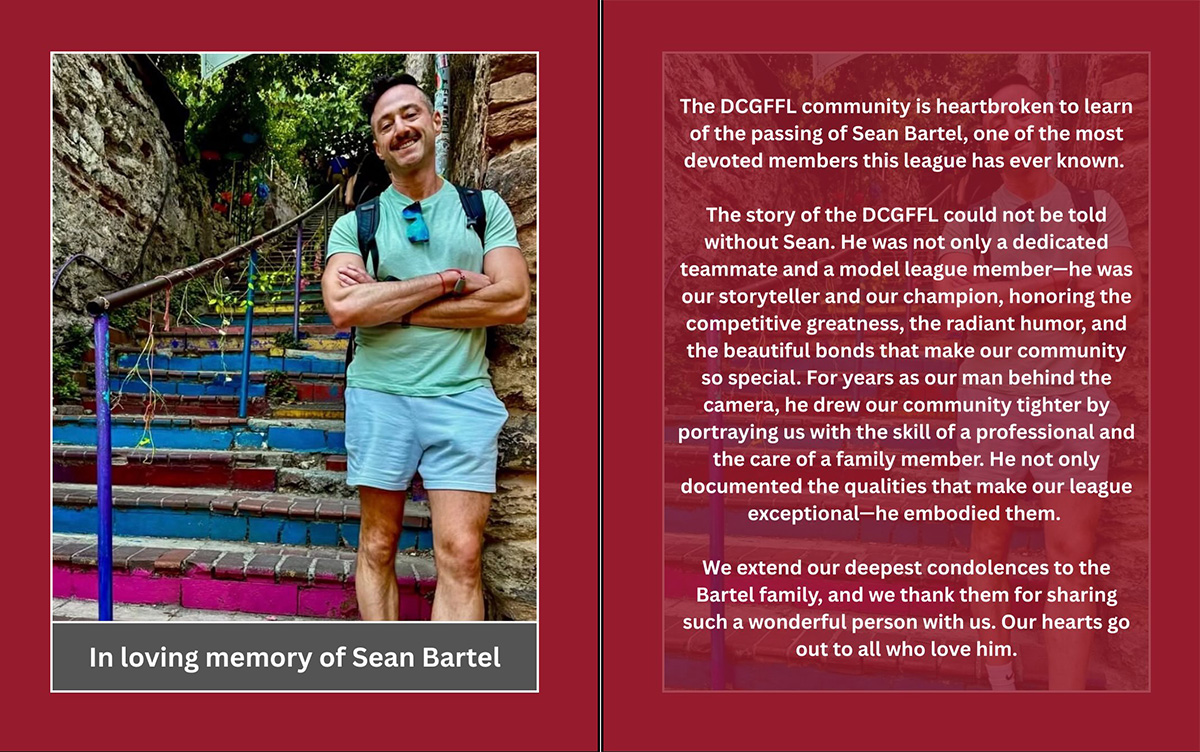
Sean Christopher Bartel, 48, who began his career as a television news reporter and news anchor at stations in Louisville, Ky., and Evansville, Ind., before serving as Senior Video Producer for the D.C.-based International Brotherhood of Electrical Workers union from 2013 to 2024, was found deceased on a hiking trail near a glacier in Argentina on or around March 15, according to a report by an Argentine newspaper.
The newspaper Clarín reports no foul play was suspected regarding his death, and other local media reports indicate authorities believe he suffered some sort of accident while on the hiking trail.
The Clarín report says Bartel arrived in Argentina on March 3 and visited Buenos Aires and the city of El Chaltén, which is near Argentina’s Los Glaciares National Park and a glacial lagoon popular with hikers. It says his body was found on the trail leading to the glacier.
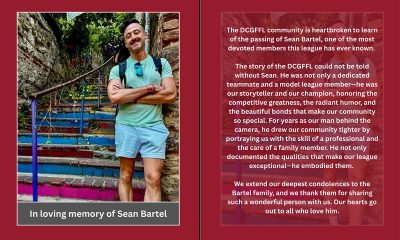
“The D.C. Gay Flag Football League is heartbroken to learn of the passing of Sean Bartel, one of the most devoted members this league has ever known,” the organization said in a statement. “The story of DCGFFL could not be told without Sean.”
“He was not only a dedicated teammate and a model league member – he was our storyteller and our champion, honoring the competitive greatness, the radiant humor, and the beautiful bonds that make our community so special,” the statement says.
It adds that for years, Bartel served as “our man behind the camera, he drew our community tighter by portraying us with the skill of a professional and the care of a family member.”
Bartel’s LinkedIn page shows he most recently worked for 12 years as Senior Video Producer for the International Brotherhood of Electrical Workers, which is described as North America’s largest labor union.
Matt Spense, a spokesperson for the union, told the Washington Blade that Bartel resigned from his job there in 2024 to pursue other career endeavors, but he didn’t know what he did career wise after that time.
Bartel’s LinkedIn page shows he served as a video producer and account supervisor at the Edelman global communications firm based in D.C. from 2010-2013. Prior to that, he worked as a reporter for Sirius XM Radio, Inc. from 2007 to 2012. It shows that from a little over a year — from 2009 to 2010 — he worked as video producer and account executive for the firm North Ridge Communications, but it doesn’t give the company’s location.
He began his career in journalism, his LinkedIn page shows, as a reporter and news and sports anchor at the WHAS TV station in Louisville, Ky., from January 2005 through January 2008.
It says he received a bachelor’s degree in Sports Marketeing and Management in 1999 from Indiana University in Bloomington and a master’s degree from the School of Media and Public Affairs from D.C.’s George Washington University in 2010.
The Blade couldn’t immediately obtain information about surviving family members or funeral arrangements.

‘How We Survived’ panel set for March 25

Calendar: March 21-26

Queer American in Israel discusses Iran war’s impact

Housewives take Capitol Hill by storm

Protesters say SAVE Act targets voters, transgender youth

Man charged with carjacking, kidnapping after having sex in D.C. park pleads guilty

D.C. journalist, video producer Sean Bartel dies at 48

‘They took him!’ Gay married couple torn apart by ICE

The rule of law, not the rule of religion

Meet the Scandals, D.C.’s LGBT rugby team
-

 District of Columbia4 days ago
Man charged with carjacking, kidnapping after having sex in D.C. park pleads guilty
-
District of Columbia5 days ago
D.C. journalist, video producer Sean Bartel dies at 48
-
National4 days ago
‘They took him!’ Gay married couple torn apart by ICE
-
Botswana4 days ago
The rule of law, not the rule of religion