Commentary
Cunningham documented beauty of New York City
Famed NYT photographer remembered for love of fashion
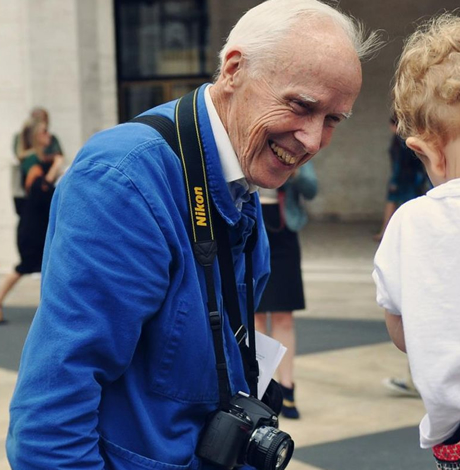
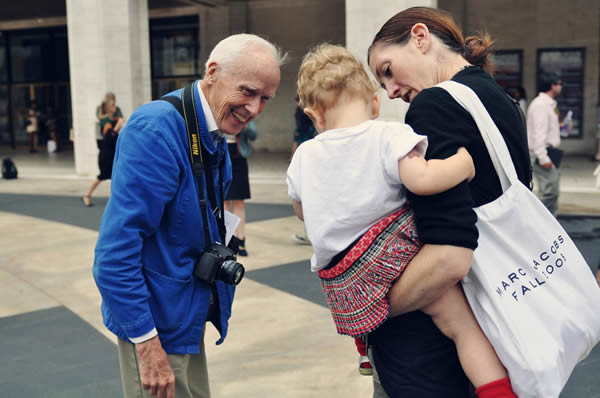
Bill Cunningham (Photo by Jiyang Chen)
I’m no fashion maven. But, recently, when I bought a hat with a green flower and ribbon around its brim to add color to my summer, I couldn’t help but think of the iconic fashion photographer Bill Cunningham. For decades, like so many of his fans, I’ve devoured Cunningham’s “On the Street” and “Evening Hours” columns in the New York Times Style section. Now, his aficionados are in mourning. Cunningham died on June 25 at age 87 after suffering a stroke.
There are renowned fashion photographers, designers and writers. But there hasn’t been anyone like Cunningham, who was such a unique part of New York City that in 2009 the New York Conservancy designated him a living landmark.
Throughout his life, Cunningham loved clothes. As a boy, “I could never concentrate on Sunday church services,” he wrote in the Times, “because I’d be concentrating on women’s hats.”
Yet, Cunningham “was like a monk – totally devoted to his work,” graphic designer Ted Dawson told me over the phone, “as an artist, he wanted to be a clean slate.”
Cunningham, who grew up in an Irish Catholic family in Boston, sped around New York – from downtown to mid-Manhattan to Harlem on a bicycle. For decades (before he and the other renters were evicted), Cunningham lived in a one-room apartment above Carnegie Hall. He habitually wore a blue French workingman’s jacket.
For more than 40 years, Cunningham used his camera to document not only the fashion but the life of New York. “I let the street speak to me,” Cunningham said in the documentary “Bill Cunningham: New York,” directed by Richard Press, “…you’ve got to stay out there and see what it is.”
Though fashion is sometimes seen as frivolous in the face of enormous social problems, Cunningham said, this wasn’t true for him. “Fashion…it’s the armor to survive the reality of everyday life,” he added, “I don’t think you could do away with it. It would be like doing away with civilization.”
Cunningham showed that photojournalism could be quietly used to help LGBT and other marginalized people. Decades before the New York Times began using the word “gay” in 1987, Cunningham was an “incognito activist,” wrote Dan Shaw, who worked with him more than 20 years ago at the Times, in New York Magazine.
“Without being partisan or political, he raised awareness of the vital role of gays in New York culture,” Shaw added.
At a time when the Times provided scant coverage of AIDS, its queer reporters had to be closeted and homophobia was widespread in the country, Cunningham used his columns to photograph gay Pride parades, men wearing skirts and AIDS fundraisers.
Cunningham seems to have been a private man. He never had a romantic relationship he said in the documentary. “Do you want to know if I’m gay? Isn’t that a riot? There was no time. I was working night and day.”
He was religious, without making a big deal about it. “Maybe it’s part of your upbringing. You do whatever you do,” Cunningham, who went to Mass every Sunday, told Press.
Cunningham took some photographs for his “Evening Hours” column at several fundraisers for Bailey House, a group that helps homeless people in New York City. Cunningham’s coverage was immensely helpful to the organization, Dawson, a member of the group’s board of directors told me.
Later, Dawson said, he went to a celebration of the Cunningham documentary at the Bergdorf-Goodman department store in Manhattan. “After I thanked him on behalf of the people helped by Bailey House, Bill started to cry,” he added, “he was so moved that people from such a place would want to thank him!”
In 2008, when he accepted the Legion of Honor from the French government, Cunningham said, “He who seeks beauty shall find it.”
Thank you, Bill, for the beauty you sought and found for us. R.I.P.
Kathi Wolfe, a writer and a poet, is a regular contributor to the Blade.




Commentary
What LGBTQ veterans are building after ‘Don’t Ask, Don’t Tell’
DADT repeal took effect on Sept. 20, 2011. Trans servicemember ban reinstated
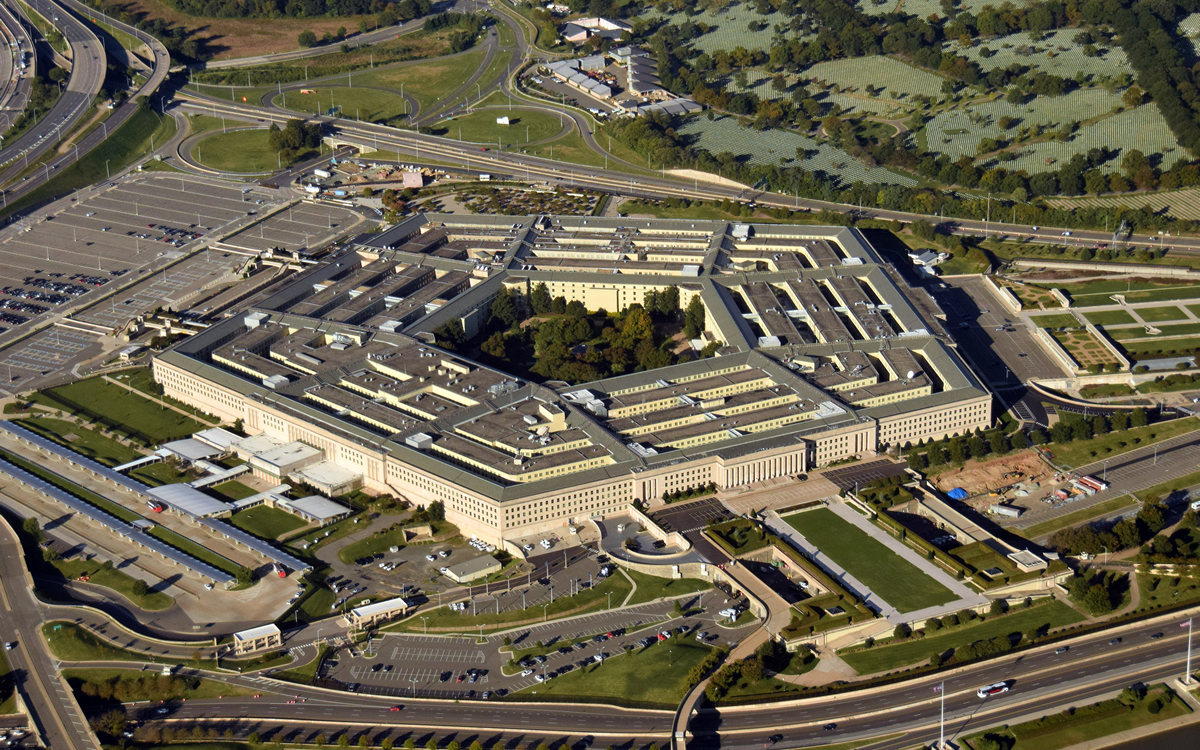
Fifteen years ago this month, the repeal of “Don’t Ask, Don’t Tell” took effect. At the time, the importance of the change was obvious: gay, lesbian, and bisexual Americans would no longer have to hide who they were to wear the uniform. What was harder to see was what would follow: a generation of LGBTQ veterans able to carry their service openly into American civic life.
Earlier this month, Alaska state Rep. Andrew Gray, an Army veteran, stood before the Anchorage Assembly and asked the city to recognize Sept. 20 as LGBTQ Veterans Day.
His former commander, Mike Grunst, followed him to the microphone. A 35-year veteran who had served in combat, Grunst called troops who had served while hiding who they were “the bravest I have ever served with.”
Then Denise Sudbeck stepped forward. A Vietnam-era Navy veteran who later served with both men in the Alaska National Guard, she thanked the country for the privilege of serving and asked that the next generation have the same chance.
The Assembly approved the recognition.
Nothing about the scene required a new vocabulary. A veteran made a request of his community. A commander vouched for those who served beside him. Another veteran asked that younger Americans inherit the opportunity she valued. They entered the civic record simply as veterans.
That identity can do more than win recognition.
When federal policy abruptly ended the careers of transgender servicemembers this year, veterans and servicemembers in California began asking a practical question: What happens when those Americans come home?
Republican Assemblyman Jeff Gonzalez, a Marine combat veteran, began one hearing with questions about transgender military service. He listened as veterans explained how the military handles medical care and deployment case by case.
Then the discussion turned to separation.
“I don’t wanna see any veteran homeless,” Gonzalez said. Before the hearing ended, he was asking: “How can I help? How can I understand? How can I be a good advocate?”
The legislation that followed would provide housing, employment and transition assistance to discharged servicemembers. Republican state Sen. Shannon Grove spoke for it. The Senate passed it 32 to 0.
Americans have plainly not settled their disagreements over transgender people. Nor should military service be a prerequisite for rights that belong to every citizen.
But military service creates relationships that are difficult to reduce to the abstractions of the culture war. Before a legislature, “the transgender issue” can become a veteran who deployed, an officer who led troops, or the person who once stood beside you.
The political question changes because the human relationship has already changed.
The pattern is beginning to appear across the country. Kansas is among the states recognizing LGBTQ Veterans Day for the first time this year. New York and Virginia are pursuing broader state-level programs for LGBTQ veterans.
Sept. 20 is deliberate. On that day in 2011, “Don’t Ask, Don’t Tell” ended.
We usually remember repeal for what LGBTQ Americans gained: the ability to serve openly. Fifteen years later, we can also see what the country gained.
A gay veteran can stand before his local government beside the commander who once led him. A transgender servicemember can sit before a legislator who begins with doubts and ends by asking how he can help. A veteran from an older generation can ask her neighbors to give those who follow her the same chance to serve.
This is citizenship in practice.
The enduring legacy of “Don’t Ask, Don’t Tell” repeal is not only that Americans were finally allowed to serve openly. It is also what they can now build after coming home.
Commentary
Anti-science, anti-LGBTQ movements go hand in hand
HHS under RFK Jr. has blocked gender-affirming care for youth

A newborn baby died after contracting measles in Pennsylvania last month, and, as if it wasn’t enough grief for his parents, anti-vax activists are trying to track down and harass his family. Apparently, Gov. Josh Shapiro tangled with Robert F. Kennedy Jr. over his “inaccurate and misleading claims.”
On Aug. 26, RFK Jr., the secretary of the U.S. Department of Health and Human Services, declared that the deaths could be fabricated. We live in peculiar times, when it is government officials, not freaks on the internet, who are spreading conspiracy theories. The new spread of measles in the United States since Donald Trump came to power is one of the most shameful parts of the story of modern American politics, and the tragedy of parents who lost their baby because more and more people refused to vaccinate may seem absolutely unrelated to LGBTQ rights, but actually, there is a pretty solid connection.
Because RFK Jr., the same man who was fighting vaccination, promoted the false idea that vaccines caused autism, and even curated the anti-vaccine organization Children’s Health Defense before going into politics, is also a known opponent of transgender rights. Under his “leadership,” gender-affirming care for trans minors was banned, and there were also created new healthcare guidelines recognizing only two genders.
All around the globe, there is a weird correlation between anti-LGBTQ — particularly anti-trans — ideas and anti-science movements. And it should be clearer to the general public. People who are speaking against LGBTQ rights are not just threatening minorities. They are a danger to everyone.
The Trump-Vance administration is an iconic example of such tendencies.
Trump himself is a known critic of modern scientific studies — for example, believing in the same anti-vax conspiracies that Kennedy promoted, and showing obvious skepticism that global warming exists, despite all the evidence that has been shown by climatologists. And he is also a man who used trans people as boogeymen. Under his command, trans people were kicked out of the military. And even worse, recently he made an extremely chilling statement about the 2026 midterm elections, urging voters to “pretend I’m on the ballot” and vote for Republicans, and while discussing what he says is at stake, he said that if Republicans win, “transgenderism” will “end.” This is an offensive statement at best and genocidal at worst.
And, of course, I think everyone remembers the Department of Government Efficiency (DOGE), which was led by infamous billionaire Elon Musk, who announced to the world that he would destroy the “woke mind virus” that killed his child just because his trans daughter, Vivian Wilson, well, is happy to be a trans person.
DOGE is known not just for cancelling academic research around LGBTQ studies and gender studies. No, this agency abruptly canceled and froze thousands of federal science, research, and health grants, attacking such vital health programs as cancer research, vaccination research, and diabetes research, among others. As you can see, they are not just attacking people who are “affected” by the “mind” virus — they are dangerous to everyone, even if most of the public standing of Musk was around his anti-trans politics and he tried to present himself as a pro-science, pro-progress man by supporting the space industry.
An even more vivid example is the so-called Dark Enlightenment movement.
This extremely reactionary political movement was born in the late 2000s, and originally grew from very democratical classical liberal ideas. Until it became anti-democratic itself. And also often It was created by American software engineer Curtis Yarvin (writing under the pseudonym Mencius Moldbug) and expanded by British philosopher Nick Land. The movement is popular among some Silicon Valley businessmen, and got support from PayPal founder Peter Thiel, and one of their main ideas is that modernity is bad. They are basically obscurantists, who see modern universities as part of “the Cathedral” — a system that, in their opinion, promotes equality and modern science that society doesn’t need. Of course, the movement’s followers are mostly anti-LGBTQ rights, and, as you can see, anti-queerness once again go hand in hand with obscurantism. Unfortunately, the movement got the support of extremely prominent politicians, including U.S. Vice President JD Vance.
In his speech from 2021, Vance proved to be an obscurantist when he claimed that universities are the enemy. He is also a known homophobe and transphobe.
So, why are anti-vaxxers, people who oppose modern scientific studies, and people who hate universities more likely to be queerphobic? Why do the same people who are defending their transphobia by showing that they support common sense actually often show zero such sense when it comes to protecting themselves and their children from measles or decreasing the chances of getting cancer?
We don’t have any statistics or studies that show that all obscurantists are queerphobic, but around the globe, the same dynamic is visible.
In Russian anti-LGBTQ censorship, books about animal biology and zoology have been censored because the censors saw “LGBT propaganda” in them. The famous pro-Putin philosopher Alexander Dugin, who is extremely anti-queer, also speaks up against modernity itself.
In Taliban’s Afghanistan, modern science and LGBTQ rights are attacked at the same time.
Even in the UK, Reform UK is known as the most anti-trans and anti-queer party, and they are facing widespread criticism from scientists and medical experts for promoting climate change denial and anti-vaccine ideas. It doesn’t mean that LGBTQ supporters never believe in conspiracy theories or that progressive politicians always support science.
No, it just means that explicit anti-science and anti-LGBTQ statements often go hand in hand.
I think there are two reasons for this correlation.
First, LGBTQ people are real. You cannot deny that sex is not binary, gender and sex are different, and transition improves the quality of life of actual trans people. Or that same-sex relationships are natural, because even animals have same-sex sexual contacts. To deny it, you need an ideology or a conspiracy theory.
The second reason is that anti-scientific populism and anti-LGBTQ conspiracy theories are popular among the same category of people. It’s a “bundle” of ideas — a trend that conservative voters often adopt together. Studies also show that people who are likely to believe in one conspiracy theory are more likely to believe in another.
But the question is more broad. We don’t speak enough about the harm anti-scientific conspiracy theories and obscurantist politicians around the globe create for mankind in general. Not all people would suffer from a prohibition of hormone therapy, or attacks on same-sex marriage. But anti-global warming ideas, anti-vax advocates, and restrictions on modern research, especially medical research, are potentially dangerous to any human being.
And one of the best things LGBTQ activists could do is just show society that they are being used — that the same people who are stealing LGBTQ rights are also destroying medicine and the environment, and it’s a threat to their own traditional families and future of all kids no less than to queer people.
Commentary
Please join me in supporting the Washington Blade Foundation
An important event impacting the LGBTQ community will be held on Sept. 12 in Rehoboth Beach, Del.
The event is a fundraiser for the Washington Blade Foundation. Whether you can join us in person, or just be with us from a distance, I ask you to seriously consider becoming a sponsor of this event. You may ask why should you care, why is this important, and how the Blade Foundation supports the LGBTQ community.
The event will feature an open bar, food catered by the Blue Moon, entertainment, and speeches from Blade staff along with remarks from Rehoboth’s Mayor-elect Susan Stewart and another surprise guest or two. You can buy tickets on Eventbrite; if you’re interested in sponsoring the event, contact Publisher Brian Pitts at [email protected].
The Blade Foundation was begun to ensure the history of our community, written in the pages of the Washington Blade, was archived, and never lost. That effort was a success thanks to the support of the DC Public Library. Now the Blade Foundation works to help ensure there will be future LGBTQ journalists working throughout the media, not just for the Blade. By funding interns and fellowships for LGBTQ journalism students, we help make that possible. By helping to fund the international news section of the Blade, the Foundation helps to keep the LGBTQ community around the world connected. In many countries where our community is either still not accepted, or worse, tortured, members of our community living in those places may only get news of their communities by reading the Blade online.
I know many of you reading this already know, the Washington Blade newspaper has been in existence, and reporting on the LGBTQ community, for more than 56 years. The paper’s reporting is done by those who are part of the community, and that makes a real difference. The paper is proud of its journalists, and the numerous awards they have won. One is Lou Chibbaro Jr., who recently was the subject of a documentary aired on PBS. He, and others like him, report the news honestly, without bias, but with fervor, because they actually live the stories.
In those 50-plus years since Stonewall, the Blade has been reporting on the progress our community has made. The steps forward, the stumbles, those allies who have worked with us, and those people who have tried to stop us from living our lives as who we were born to be. Again, the news is being reported by members of our own community. It is not others writing about us, but us, writing about ourselves. The Blade is followed by many mainstream media outlets, and stories that first only the Blade covered, ignored by mainstream media, were then picked up and reported garnering the widespread coverage they deserve. The Blade is the best place to find out about what the members of our own community are doing, and what others are doing to, and for, us.
It is sad that today the Blade has to report we are at a place in history where we are fighting just to keep the strides for equality we have made over the past 50 years. Because of that, it is even more important than ever, that the Washington Blade keeps publishing. Today, the Blade is the only LGBTQ news outlet with a dedicated seat in the White House briefing room. That is important for the Blade, and for all the members of our own community. It is important the Blade be where the action is.
The Blade’s international coverage helps us in the United States to understand where we can help those in our community who may be suffering and less fortunate, but also to celebrate with those who are even more free in many ways. The recent stories about World Pride in Amsterdam inspire us to fight even harder for our rights here, so we never again have a president who will work to keep our community from being all it can be. That we will never again have a President who threatens the lives of our trans sisters and brothers, threatens their healthcare, and throws our community’s heroes out of our military. Those news stories are important to write, and they often only get written about fully, in the Blade.
So again, I ask you to consider being a sponsor, and joining us in Rehoboth on Sept. 12. Or if you can’t be in Rehoboth, that you support our work from a distance, and support this important event. The Washington Blade Foundation is a 501c(3) non-profit. So, whether you are a business supporting the community, an individual ally, or a member of the community, please dig deep, and help to support the future of LGBTQ journalism, and future LGBTQ journalists. By doing so, you are supporting the future of the LGBTQ community. You can donate online at bladefoundation.org/donate.
Peter Rosenstein is a longtime LGBTQ rights and Democratic Party activist.

What LGBTQ veterans are building after ‘Don’t Ask, Don’t Tell’

Over 2,000 turn out for Hands Around the Kennedy Center protest

Furries take over the Metro

A roundup of fall events not to be missed

Activists protest outside Turkish Embassy in D.C.

78th annual Emmy Awards recapped

Advocate, Out parent company adds Trump supporter to board, prompting outrage

Trump’s Cabinet: Dumb, dumber, dumbest, and evil

More than 150 people detained outside Istanbul courthouse