National
Demonstrators to protest Manning’s ‘torture’

The 25-year-old gay soldier accused of leaking classified U.S. government files to Wikileaks is being “tortured” in solitary confinement at the Quantico Virginia Marine Corps Brig, said Kevin Zeese, an organizer of the Bradley Manning Support Network, at a benefit concert on Sunday held at Busboys and Poets to raise funds for Manning’s legal defense.
Next comes a rally Sunday at 2 p.m. to stand in support of Manning’s release — in an action, led by famed Pentagon Papers whistleblower Daniel Ellsberg, in front of the main gates at Quantico, which organizers hint may lead to direct action there, in civil disobedience leading to possible mass arrests.
“It is torture,” declared Zeese of U.S. Army PFC Manning’s current condition. Zeese is based in Baltimore and one of the leaders of the Manning legal defense effort. “They are torturing him,” he told the crowd of nearly 100. “We should call it nothing else.”
“Long-term solitary confinement is torture,” said Zeese, quoting Charles Dickens (who spent months at a time living with populations of U.S. prisons and mental hospitals in the 19th century).
Zeese also pointed to research showing that previously healthy prisoners forced into long-term solitary confinement often (as Zeese quoted from the research) “develop clinical symptoms usually associated with psychosis or severe affective disorders” including “all types of psychiatric morbidity” and that many have in fact committed suicide.
Manning, who was arrested on duty in Iraq in May 2010 and charged with passing classified information to the whistleblower website Wikileaks, including an unspecified but nevertheless capital offense of “aiding the enemy,” has now been in solitary confinement in Quantico, awaiting a pre-trial hearing, for more than seven months and for 10 months there in total.
“His cell is 6 feet wide and 12 feet in length,” said Zeese.” He is awakened every morning at 5 a.m. and is not allowed to sleep again until 8 p.m. “If he attempts to sleep at any time from 5 a.m. to 8 p.m.,” said Zeese, “he will be made to sit up or stand by the guards.”
He is not allowed to exercise in his cell, forbidden even from doing pushups. If he tries, the guards stop him, Zeese said.
Recently, for more than a week, he was placed on a so-called “prevention of injury watch” and required to give up his prison jumpsuit and boxer shorts at night, sleeping naked, ostensibly to prevent him from committing suicide, he added.
The brig psychiatrist however has labeled Manning as a low suicide risk. Even so, he was ordered to sleep in the nude, to prevent him from using any garments to assist in a suicide attempt. Each morning, then, he was forced to get out of bed, “shivering from being naked all night in a cold cell,” said Zeese, and forced to walk to the front of his cell, “with his hands in front covering his genitals.”
“A guard orders: Stand at parade rest,” said Zeese, ands Manning is told to remain there, his hands behind his back with legs spread shoulder width apart, “waiting and waiting,” until the Brig Supervisor arrives, and everyone is then called to attention. The supervisor and other guards then walk past his cell inspecting him from all sides. “They stop,” said Zeese, “they look as he stands naked, they stare at him, then they stare at him some more.” Finally, Manning is told to go back inside his cell and wait there, still naked, until, perhaps 10 minutes later, his clothes arrive and he can dress. But Zeese said, “the shiver from the cold night stays with him.”
On Friday, however, the enforced nudity — which his attorney has described as ritual humiliation designed to break him and force him to give evidence in the case, and which U.S. Rep. Dennis Kucinich (D-Ohio) has compared to treatment of Iraqi prisoners held under U.S. detention at the Abu Ghraib prison — was halted.
On Sunday, P.J. Crowley, the official spokesperson for the U.S. State Department, resigned (or was forced to resign), after he was quoted having termed Manning’s treatment to be “ridiculous and counterproductive and stupid” in off-the-cuff but on-the-record remarks made by Crowley recently when speaking to a group of students at the Massachusetts Institute of Technology.
President Obama rejected that criticism on Friday, saying that he had asked the Pentagon about Manning’s treatment and had been assured that his terms of confinement were “appropriate and are meeting our basic standards.”
Calling the U.S. government “our Big Brother security state,” Zeese told the crowd at Busboys and Poets on Sunday that “the military says they do it for Manning’s own protection” but that this is “a lie that does not pass the straight face test.”
“The president re-enforces the lie, telling America that he has talked to the Pentagon and they have said it is for his own protection. The president says this with a straight face,” a grim Zeese said, asking, “Does anyone believe the president any more?”
Sunday’s rally at 2 p.m. will take place about 50 yards from the base’s main gate, at what Zeese called the Quantico Triangle near the intersection of Joplin Road and Route 1. Two buses are already organized, boarding at 12:30 p.m. and departing from Union Station in D.C. at 1 p.m., and a possible third bus may be arranged. The cost is $10.
Before the rally, the one person able to visit Manning other than family members, David House — a friend who is a computer scientist and MIT researcher — will visit him in the morning with words of support and then come out to report on his condition.
After the rally, Zeese said that the march to the main gate will begin, “and we’re not sure what will happen next, but for sure we’re taking our message to free Bradley Manning to the front gate,” and that Ellsberg and retired Army Colonel Ann Wright, an activist with CodePink, will ask for a meeting with the Brig Commander, CWO2 Denise Barnes to discuss Manning’s treatment.
For more information about the rally on Sunday and about the Bradley Manning Support Network, contact Kevin Zeese, director of Come Home America and steering committee member for the BMSN, at 301-996-6582 or by e-mail at [email protected] or visit bradleymanning.org. Another local BMSN organizer to contact is Peter Perry at 202-631-0974.





2026 Midterm Elections
Chris Pappas wins NH Democratic Senate primary
Gay congressman running to succeed retiring U.S. Sen. Jeanne Shaheen

New Hampshire Congressman Chris Pappas on Tuesday won the Democratic primary in the race to succeed retiring U.S. Sen. Jeanne Shaheen (D-N.H.) in the U.S. Senate.
Pappas defeated Karishma Manzur, who was his primary challenger, by a 61.8-36.1 percent margin.
The gay congressman will face off against former U.S. Sen. John E. Sununu, who defeated former U.S. Sen. Scott Brown in the Republican primary.
“Tonight’s victory sends a clear message that voters are looking for leaders who will fight for their rights, their freedoms, and to be treated with dignity and respect,” said Human Rights Campaign President Kelley Robinson in a statement.
She campaigned for Pappas in Manchester, New Hampshire’s largest city, on Aug. 30.
“Chris Pappas has delivered results, stood up for equality, and showed up for the people he serves,” said Robinson in her statement. “HRC was proud to mobilize Equality Voters across New Hampshire to help power this win. We don’t have a second to waste between now and November. We look forward to continuing our work with Rep. Pappas as he drives toward victory in November so he can help return a pro-equality majority to the United States Senate.”
A poll the University of New Hampshire Survey Center released on Aug. 26 showed Sununu ahead of Pappas by a 45-43 percent margin if they were to face off in the general election. The margin of error is +/-2.1 percent.
Pappas would become the first openly gay man elected to the U.S. Senate if he were to win in November.
Georgia
Everton Blair makes history as first openly gay congressman from Ga.
Former Gwinnett County Board of Education member to serve remainder of David Scott’s term
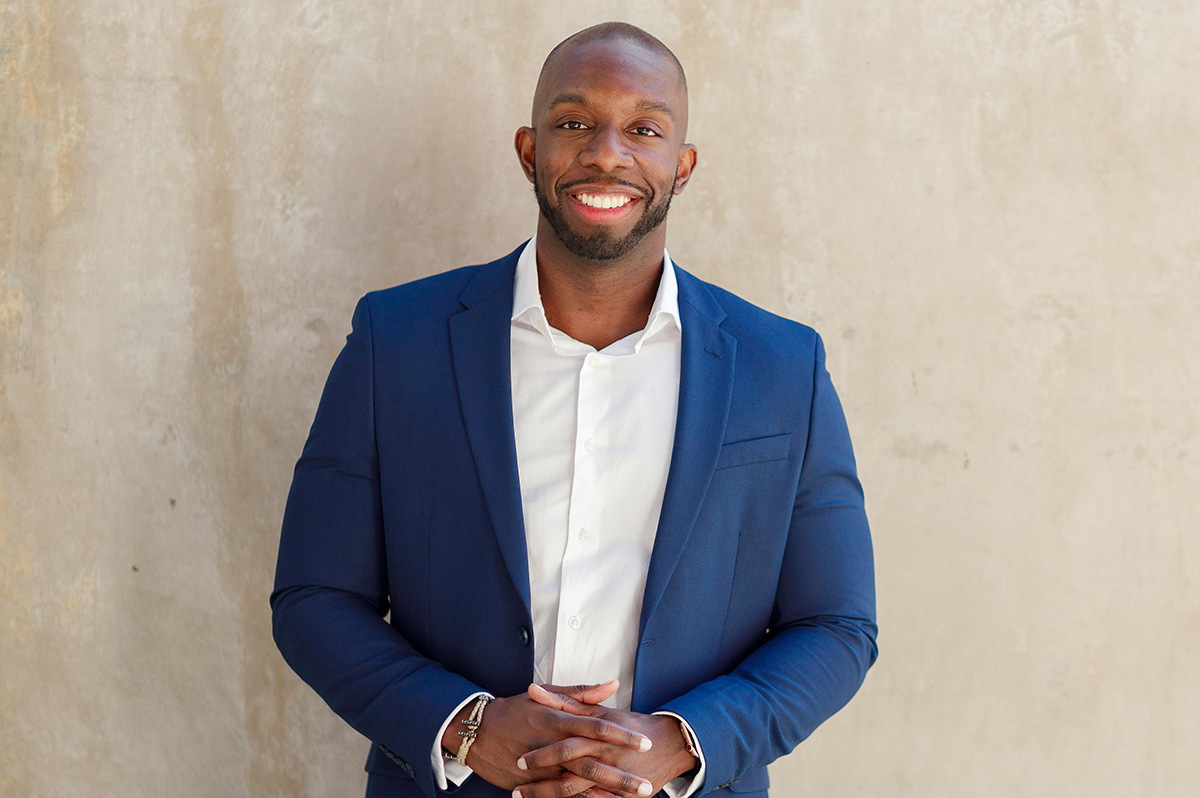
Georgia made history last week when Everton Blair, Jr., was sworn into the U.S. House of Representatives, becoming the state’s first openly LGBTQ member of Congress and the latest LGBTQ addition to the chamber.
Blair, who represents Georgia’s 13th Congressional District, was sworn in on Sept. 1 after winning a special election to fill the vacancy left by the late-Congressman David Scott. Blair defeated Marcye Scott, the late congressman’s daughter, in the Aug. 25 runoff, winning 53.2 percent of the vote to Scott’s 46.8 percent.
He will serve the remainder of Scott’s term through Jan. 3, 2027. Blair is not running in the November general election for a full term.
Blair brings a progressive platform to Congress.
The 34 year-old supports Medicare for All, a Green New Deal, raising the minimum wage, and universal gun background checks. His campaign platform also included positions on LGBTQ rights, reproductive freedom, workers’ rights, climate, and gun violence.
Since joining the House, Blair has joined the Congressional Black Caucus and Congressional Progressive Caucus. He is also a co-chair of the Congressional Equality Caucus.
Before joining the House, Blair served on the Gwinnett County Board of Education, where he became the first Black member and youngest-ever member elected to the board, as well as its first openly gay member. He was later unanimously selected as chair.
Blair also served as a fellow in President Barack Obama’s White House Initiative on Educational Excellence that focused on improving academic outcomes and expanding opportunities for minority students.
The son of Jamaican immigrants, Blair was born and raised in Georgia’s 13th Congressional District. He earned a bachelor’s degree in applied mathematics from Harvard University, a master’s degree in policy, organization, and leadership from Stanford University, and a Doctor of Education Leadership degree from Harvard.
Blair’s campaign received endorsements from a number of organizations, including the LGBTQ+ Victory Fund and progressive Democratic groups such as Future Democrats.
The Equality PAC, a political action committee dedicated to electing openly LGBTQ candidates to office, celebrated Blair’s victory and provided a statement to the Washington Blade about the historic nature of his election.
“This is a historic election for Georgia, the South, and our entire country,” Equality PAC said in an email. “Everton Blair brings a strong record of public service and a deep commitment to making government work for working families.”
The group said Blair would “fight to lower costs, expand access to quality health care, create economic opportunity, and ensure every community has a voice in Washington.”
“At the same time, Everton understands the importance of standing up for equality and defending the rights and freedoms of LGBTQ Americans and every community facing discrimination,” Equality PAC said. “His historic election as Georgia’s first openly LGBTQ Member of Congress and the first openly LGBTQ man elected from the South is a powerful reminder of how far our country has come — and how much work remains.”
Equality PAC said it was “proud to welcome Everton to the House” and looked forward to working with him.
U.S. Military/Pentagon
Pentagon expands testosterone screening as trans troops face hormone therapy restrictions
Defense Department says updated guidelines to be issued shortly

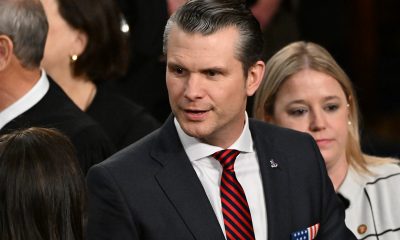
The Pentagon has announced that new clinical guidance will be released establishing mandatory testosterone deficiency screening for active-duty and reserve cisgender male service members ages 30 and older, advancing a policy that expands hormone-related care for cisgender troops.
The Defense Department said the existing clinical guidelines, which are not currently available on the Defense Health Agency’s website, are being updated and that the final guidance will be issued shortly.
The announcement comes amid a wave of anti-transgender policies from both the DoD and the Trump-Vance administration, which continue to prohibit trans men from receiving the same treatment.
Under the forthcoming guidance, men ages 30 and older will be forced to undergo testosterone blood tests as part of their medical care. Younger male service members will be tested if they request screening or if clinicians identify warning signs of low testosterone.
The new guidelines formalize a screening program Defense Secretary Pete Hegseth announced in July, when he said the Pentagon would begin testing service members to ensure that “you have the right testosterone levels to operate at your absolute best.”
“Taking care of your long-term health means ensuring you remain strong, resilient, and capable — not just for your next deployment, but for the rest of your life, so you can thrive long after you take off the uniform,” Hegseth said at the time.
The Defense Health Agency’s clinical guidance says the program is intended to address “hormonal and energy-availability issues.” Hegseth said in July that testosterone replacement therapy would remain voluntary for service members if treatment is recommended.
The Food and Drug Administration is also scheduled to hold a meeting later this month with experts to discuss the medical use of testosterone.
The Pentagon’s push to routinely test testosterone levels runs counter to current medical guidance, which generally recommends considering testosterone therapy only for men who have symptoms consistent with low testosterone and have documented low hormone levels on two separate blood tests.
Testosterone is a sex hormone naturally produced by people of all sexes. It plays a role in regulating muscle mass, bone density, and sex drive. Testosterone levels in men naturally decline with age and have been associated with symptoms including erectile dysfunction, low libido, mood changes and weight gain, although experts continue to debate when testosterone therapy is medically appropriate.
The policy has drawn scrutiny from LGBTQ advocates because the Pentagon and Hegseth have simultaneously cited hormone therapy as part of the rationale for removing trans service members from the military.
Under President Donald Trump’s 2025 executive order, “Prioritizing Military Excellence and Readiness,” the military has moved to bar trans people diagnosed with gender dysphoria from serving and has begun formal administrative separation proceedings against trans personnel.
The Pentagon continues to pursue implementation of the trans military ban as litigation over the policy proceeds. As a result, some trans service members have had their gender-affirming hormone therapy halted even as the Pentagon expands testosterone screening and potential treatment for cisgender service members.
SPARTA Pride, a nonpartisan nonprofit organization made up of trans service members, veterans and their allies, criticized the disparity to the Washington Blade when Hegseth first announced the screening program.
“If hormone therapy helps warfighters perform at their best, then it cannot simultaneously be used as evidence that transgender service members are unfit to serve,” said Kara Corcoran, executive director of SPARTA Pride. “The same class of evidence-based medical treatment cannot be characterized as readiness-enhancing for one group and readiness-destroying for another.”
On June 1, the U.S. Court of Appeals for the D.C. Circuit ruled that trans service members already serving in the military could continue to do so while allowing the armed services to continue refusing to enlist new trans recruits.
The Blade reached out to the Pentagon when the testosterone screening program was first announced in July, asking why cisgender service members could receive testosterone therapy while transgender service members could not. The Pentagon did not respond.

Chris Pappas wins NH Democratic Senate primary

Anti-science, anti-LGBTQ movements go hand in hand

Everton Blair makes history as first openly gay congressman from Ga.

Mujer trans salvadoreña es encontrada sin vida

Iceland implements gender-neutral blood donor rules

Pentagon expands testosterone screening as trans troops face hormone therapy restrictions

Swiss government backs nationwide conversion therapy ban

Calendar: September 4-10

‘Here the Whole Time’ delivers queer coming-of-age comedy

Blade Foundation to host fundraiser in Rehoboth on Sept. 12
-

 U.S. Military/Pentagon4 days ago
Pentagon expands testosterone screening as trans troops face hormone therapy restrictions
-
Switzerland5 days ago
Swiss government backs nationwide conversion therapy ban
-
Calendar4 days ago
Calendar: September 4-10
-
Movies2 days ago
‘Here the Whole Time’ delivers queer coming-of-age comedy