Arts & Entertainment
Best of LGBT Chicago
‘Windy City’ anthology of stories, poems a mixed bag
‘Windy City Queer’
By Kathie Bergquist
University of Wisconsin Press
$24.95/246 pages
The beach is sounding pretty good right now.
You’ve survived the holidays, the crush of shopping, the insanity of parties and family get-togethers and a year’s worth of weird weather. You’ve lived through downsizing at work, upsizing at lunch and the changing of the middle class.
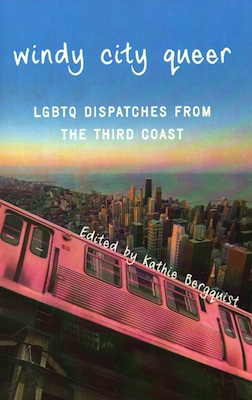
This new Chicago-based gay anthology makes an interesting beach read. (Image courtesy University of Wisconsin Press)
Now the New Year is calling, and the beach is beckoning.
Since no sand-sit is satisfying without a book, what to take is the next big question. The answer may be “Windy City Queer,” edited by Kathie Bergquist.
“What distinguishes LGBTQ writing from Chicago from its well-documented counterparts in New York or San Francisco?” asks Columbia College Chicago teacher and editor Kathie Bergquist.
In seven basic sections, Bergquist answers that question by pulling together more than 30 contributors of “national renown and distinction,” winners of awards, and writers for whom Chicago is a “vestige of a past life.”
And that past life might’ve been filled with mistakes. In “Marriage and Commitment” by Owen Keehnen, an off-hand volunteer gig brings a young man face-to-face with painful memories and a horrifying possibility.
Strength arrives in the back of a taxi in “Cold Cab” by Byron Flitsch. When a cabbie spots two men making out in the back of his vehicle, he overreacts and tries to kick them out. The date is quickly over, but the war has just begun.
As the saying goes, if Mama ain’t happy, ain’t nobody happy. But what if Mama is listed as Daddy? In “I Am My Daughter’s Dad” by Coya Paz, the distinction is both hilarious and irritating.
In “The Mudroom” by Nadine C. Warner, the presence of a toddler enriches his mothers’ lives but causes “lesbian bed death.” Can feng shui, a sense of humor, and paint restore their dance together?
And sometimes, you really have to relax and learn to remain unfazed. That’s especially true when you’re the passenger in a car driven by someone who was born male but is transitioning and dressed to kill, and you’ve just been stopped by a serious-looking state trooper. In “Darla Speeding” by Deb R. Lewis, you’ll see why life is much more interesting when you roll with the flow.
Like so many anthologies, “Windy City Queer” is a mixed bag.
There will be stories in here that you won’t like. There are poems you might not understand. A few of the contributions will seem too long, while others will make you growl in frustration because of their brevity. Some will make you laugh, some will make you hate and some will break your heart.
The good news is that you don’t have to read everything. Editor Kathie Bergquist has pulled together a nice variety of works to fit a variety of readers and moods, which makes this an easy book to browse for five minutes or for five hours.
And there’s the beauty of a book like this: when you’re busy, restless, or you’re packing for vacation, you want a pick-up-and-put-down kind of read. A perfect fit, “Windy City Queer” probably sounds pretty good right now.
Books
Bros + romance + fantasy = ‘Bromantasy.’
New book a romp full of humor, dragons, kings, and adventure
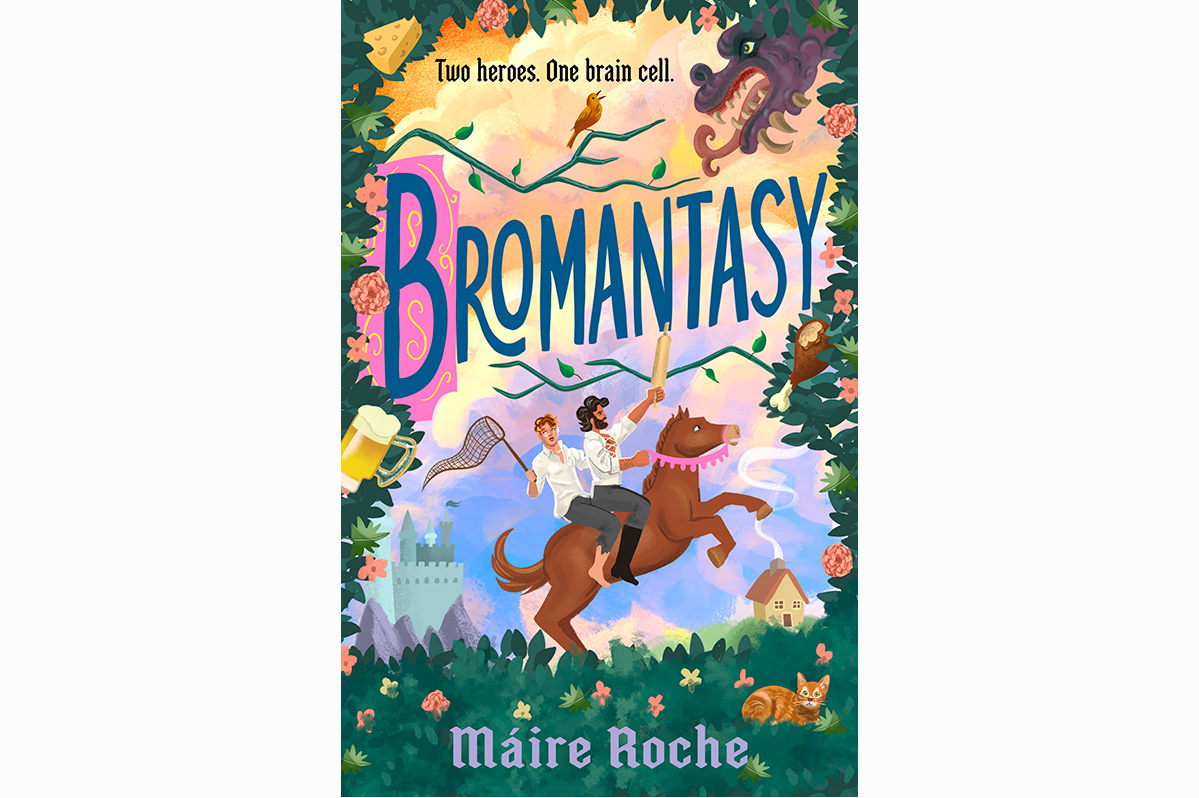
‘Bromantasy’
By Maire Roche
c.2026, G.P. Putnam’s Sons
$20/339 pages
“Danger” just happens to be your middle name.
Any fray, any tussle, anytime anybody needs help, they count on you to step in and save the day. You’re brave, smart and strategic, kind to old people, children, and small animals and, as in the new book “Bromantasy” by Maire Roche, dragons.

Of all the things there were to do – preserving food, keeping house for himself and his best friend Morningthall “Mo” Elmthorn, advanced skincare, and drinking at the local tavern down the road – the one thing Juniper O’Reilly couldn’t resist was a good brawl. It happened so often that Juniper honestly looked forward to it, though Mo wasn’t a fan.
Mo was more grown-up, calm, thoughtful, able, and Juniper loved him for it. He loved Mo, in fact, since they were little boys. He loved Mo in ways that they didn’t talk about, so they kept a wall between their bedrooms in their cottage.
Except for that one time.
They didn’t talk about that, either.
Instead, as they did often, on a warm fall night, Juniper and Mo went to the tavern, where mead was served and they could learn about the king’s weekly quests. There, Juniper could also find a good brawl, which is how he and Mo accidentally got into trouble: Juniper trounced one of the king’s men and was forced into a quest.
He didn’t want to fight dragons and he felt bad that Mo had been dragged along. He felt even worse leaving their farm, sleeping on the ground, wearing the same clothes every day, and not having enough skincare product along. A campfire added to the problem. A roving, lying prince, also in search of dragons, didn’t help. And though a quest was no place for a child, Juniper and Mo found a frightened little girl they had no choice but to protect.
A child with strange eyes, sharp teeth, and fire on her breath.
“And just like that, Juniper and Mo had a dragon.”
Bros + romance + fantasy = “Bromantasy.” It also could equal one of two other things: a romp full of humor, dragons, kings, princes, and adventure.
Or it could equal a whole lot of eye-rolling.
It’s a fact that this book is funny, in the way that a 1980s high school comedy movie is funny – meaning that it’s dippy, giddy, and very caricaturish but you’ll laugh quite often. The story contains everything you want in a fantasy romance (a “romantasy”), including human-like alternate species, a life-changing journey, and plenty of nudge-nudge-wink skirting around the attraction the two main characters have for one another. It’s a decent story, convoluted in just the right way. Purely, it’s an escape.
So why wouldn’t you want to read it? See above, and depending on your favorite reading genre. High-brow literature, this ain’t.
For the right reader, “Bromantasy” is a decent-enough vacation read, something not too taxing or hard on the brain. It’s for novel lovers, dragon hunters, king’s questers, princes, and romantics. For everyone else, this tale is just middling.
The Blade may receive commissions from qualifying purchases made via this post.
Theater
National tour of ‘The Notebook’ retains its tearjerking power
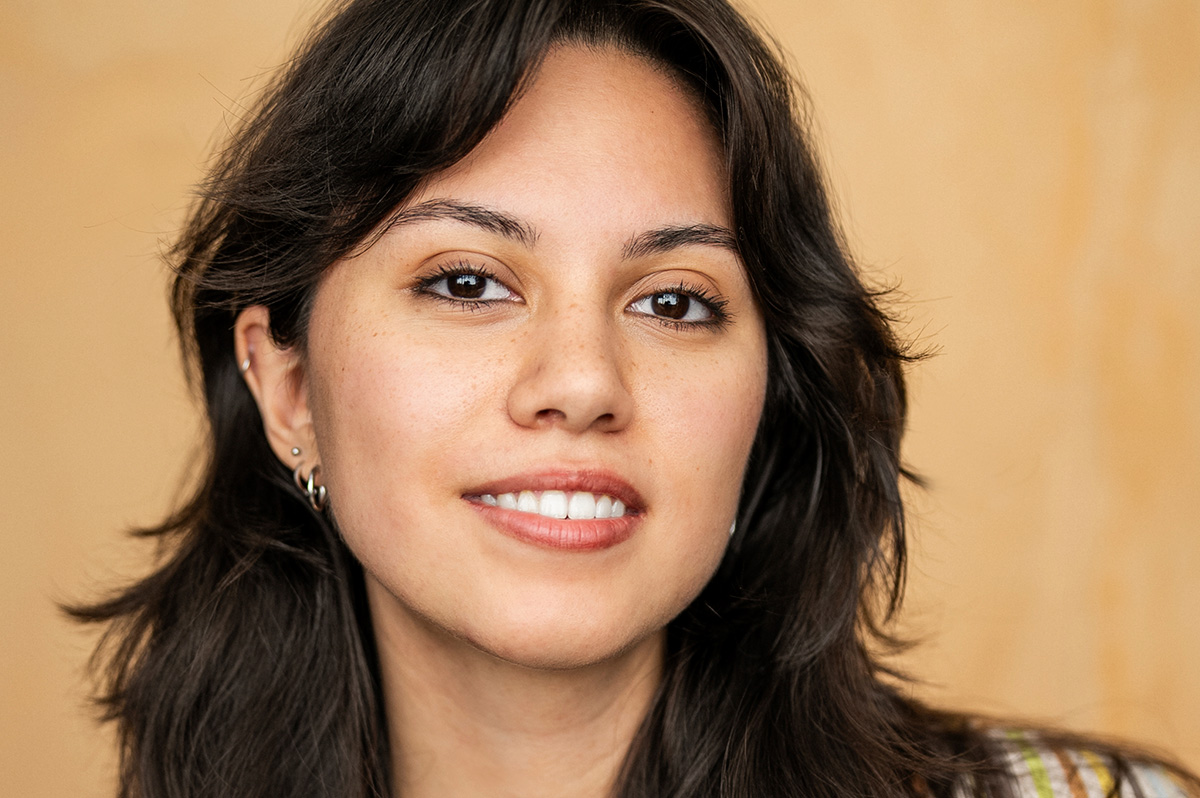
Talented queer actor Grace Rundberg joins cast fresh out of college
‘The Notebook’
Aug. 18-30
National Theatre
1321 Pennsylvania Ave., N.W.
$89-$197
Broadwayatthenational.com
When Grace Ohwensadeyo Rundberg first imagined a career in musical theater, she wasn’t sure exactly how she’d fit in. As a gay actor would she play queer characters? Outside of “Rent” and a few other shows, would there be lesbian parts coming her way?
Rundberg, 23, remembers an acting class in college. “I was doing a romantic scene opposite a male actor when the professor interrupted to say it was ‘unconvincing.’ Well, I’d never had the experience of what it’s like to be with a man, so I’m not surprised it looked a little awkward.”
But for Rundberg, being in the national tour of “The Notebook” has quelled those misgivings. Of course, booking the show straight out of college bolstered her confidence, and playing a woman whose love interests are men has put Rundberg in a place where she’s fine playing straight or gay.
Opening this week in D.C.’s National Theatre (Aug. 18-30), “The Notebook” is a genuine tearjerker (the book, the film, and the musical). It’s the decades long love story of Noah and Allie who despite vast differences, fall in love as teenagers. Over the years, their romance faces separation, societal pressures, the challenges of Alzheimer’s disease, yet somehow prevails.
Shortly after graduating from Pace University’s musical theater program in 2025, the upfront and buoyant Rundberg was signed to play ensemble member Georgie and understudy for Middle Allie (a young woman caught between youthful passion and reflective memory).
A mezze soprano mixed belter experienced with folk, pop, contemporary styles, she proves an ideal performer to sing Ingrid Michaelson score and act Bekah Brunstetter’s romantic libretto.
And when she understudies the role of Middle Allie, whether by scheduled design or insanely short notice, she sings the familiar tune “My Days,” a standout track from the musical that serves as the show-stopping “11 o’clock number.” Here, she captures the emotional climax when Middle Allie chooses the life and loves she desires.
During a musical childhood spent in Pittsford, N.Y, just seven miles outside of Rochester, Rundberg began music classes at four; she learned piano and belonged to choirs. And though, she says, the family was not really into theater, her mom was a Cher impersonator for a while.
Significantly, Rundberg (whose middle name Ohwensadeyo translates from Cayuga as “Beautiful Earth”) is a citizen of the Cayuga Nation, an Indigenous nation native to New York state.
Recently, she began learning the Cayuga language, a very important part of the culture, particularly since it’s almost exclusively a spoken language. Rundberg’s cousin, a professor at Cornell University where he teaches Cayuga language and culture, has been a great help. She feels fortunate: “Not everyone has access to their ancestry I’m blessed in this way.”
The Brooklyn-based actor’s ambitions are bold and varied. While landing a national tour was high on her bucket list, she longs to work on Broadway and auditions for TV and film. Being the first to create a character in a new work, especially a lesbian character, is a big goal. “That would tie a lot of things together,” she says. “That’s the ultimate dream.”
In the meantime, Rundberg is working professionally and seeing the country. But touring isn’t without its drawbacks. “I miss New York a lot,” she says. “My girlfriend is there; long distance is a challenge for sure. I’m always in a different place often with different time zones. Still, she has come to see me in San Francisco, Miami, Cleveland, and a few other stops. And I fly to New York when I can. We make it work.”
As a kid, Rundberg watched and rewatched the movie version of ‘The Notebook.’ She says, “It’s one of my favorites. It’s kind of a cliché, I know, but I’m a hopeless romantic.”
The show touches a lot of people; it’s evident at every performance. From the stage, the cast sees audience members crying. In fact, “The Notebook” sells branded souvenir tissue boxes at its merchandise stands for five dollars a pop.
“Beyond elements of sadness there’s also joy,” she adds. “There’s the never-ending devotion and getting through hard times together too. We do our best to send the audience home with hope and love.”

Anja Dick will host “Song Birds – Live Music Drag Cabaret” on Saturday, Aug. 15 at 9 p.m. at Shaw’s Tavern.
This is an all live singing drag hit sensation. The event will debut performances from Breast Midler and Harri Balls.
Tickets start at $17.85 and are available on Eventbrite.

Bros + romance + fantasy = ‘Bromantasy.’

National tour of ‘The Notebook’ retains its tearjerking power

Live music drag cabaret set for Shaw’s Tavern

Calendar: August 14-20

Comings & Goings

Todd Blanche’s record on LGBTQ issues comes under scrutiny as he takes over DOJ

2 former NBA players launch cheap anti-trans stunt to exploit WNBA rules

HISTORIC: Susan Stewart elected Rehoboth’s first out mayor

Same-sex couples challenges India income tax law

New LGBTQ visitor center slated for Wilmington, Del.
-

 Federal Government5 days ago
Todd Blanche’s record on LGBTQ issues comes under scrutiny as he takes over DOJ
-
Sports4 days ago
2 former NBA players launch cheap anti-trans stunt to exploit WNBA rules
-
Rehoboth Beach4 days ago
HISTORIC: Susan Stewart elected Rehoboth’s first out mayor
-
India4 days ago
Same-sex couples challenges India income tax law