Arts & Entertainment
Emerging epidemic
Belgian researcher recounts AIDS discoveries
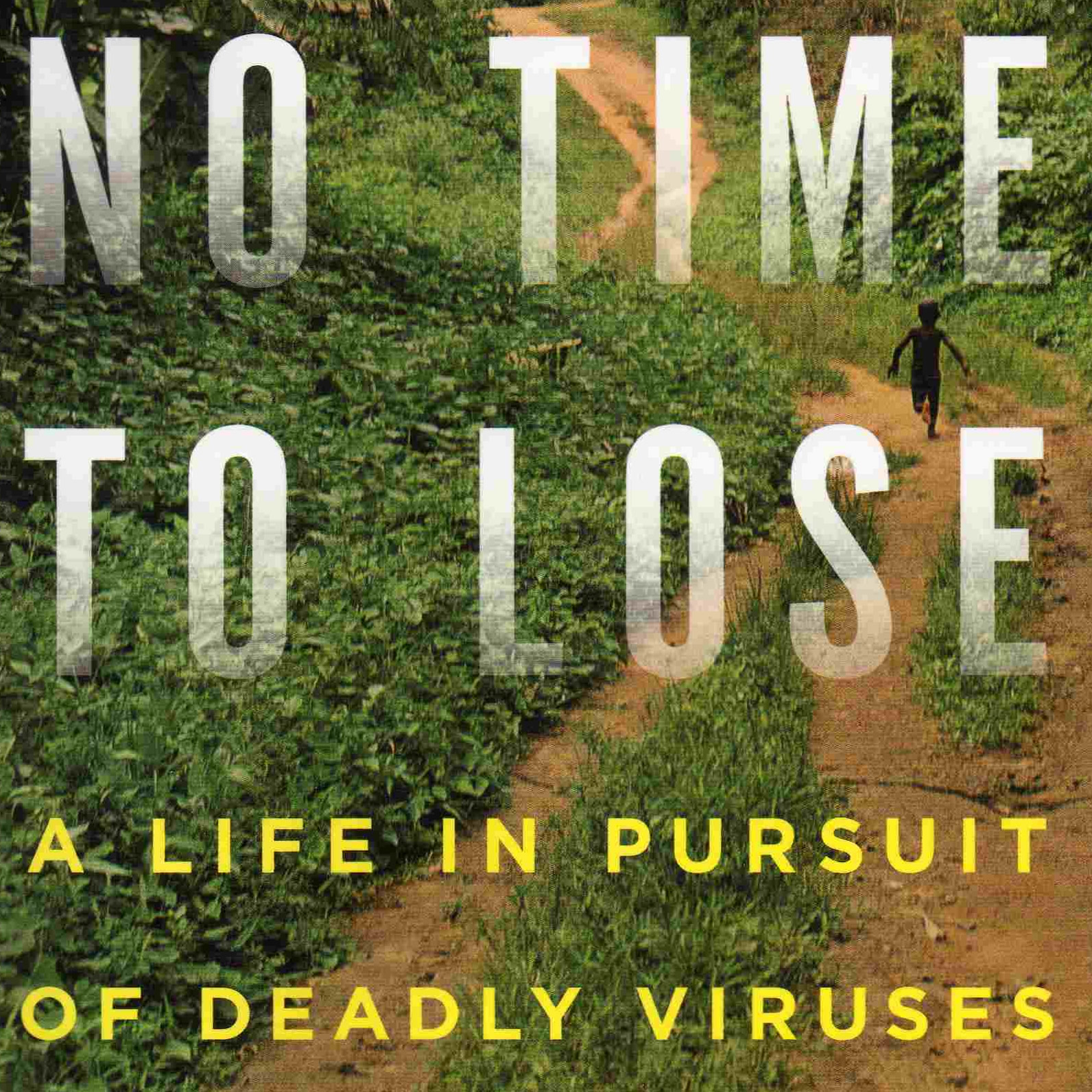
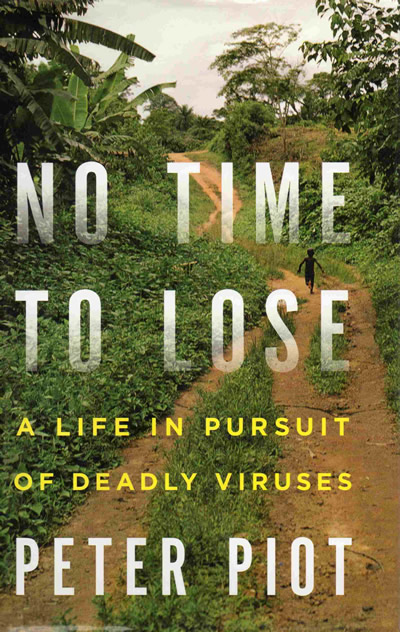
(Image courtesy W.W. Norton)
Author and epidemiologist Peter Piot knows what it’s like to be on the ground floor of something important. He was there when two previously unknown viruses were identified and in “No Time to Lose,” he explains what that was like.
The package arrived in a blue plastic thermos. It wasn’t wrapped well; in fact, one of the vials inside had broken, mixing glass with blood that had been taken from a Belgian nun who bled to death in Zaire for reasons no one could explain.
Peter Piot was an infectious disease researcher in Antwerp, Belgium, and this kind of mystery made his “heart beat faster.” When his boss sent him to Kinshasa, along the river Congo, to learn more about the crisis, Piot was even more excited. He became part of a team that teased out the root of the sickness and how it traveled from patient to victim.
The virus, highly contagious and almost always deadly, was later named after a river in Africa. Piot is still aghast at the careless, cavalier attitude given to that initial, highly dangerous flask of Ebola he encountered.
After his work in Africa ended, Piot went to Swaziland to work with a colleague assigned to eliminate sexually transmitted disease there. The endeavor was, of course, ill-fated, but this led him to work with STD patients in Antwerp. There, an alarming situation was just starting to appear in the city’s gay population. It “seemed to be a new syndrome” and it seemed to be on the rise.
It was a virus that didn’t care “whether the sex is good, or about the color or gender of the person.” Researchers called it GRID at first, then renamed it AIDS.
Almost from the opening pages, “No Time to Lose” immerses readers in excitement. Author Peter Piot does such a fine job in describing his African surroundings and the people there that you can almost hear the surrounding jungle.
But Piot’s story is not meant for entertainment. There’s a heightened sense of urgency and force here; in fact, Piot repeatedly admits regret that he didn’t do enough, soon enough. Looking through a backward lens, though, readers will wonder why he questions himself. He writes of fighting bureaucracy and politics, establishing organizations to study and prevent of infection and the now-outrageous beliefs he battled.
That makes this a triumphant book with a coda of sadness for a job that seemed, to the author, unfinished.
This book is serious stuff and it’s filled with scientific terms, acronyms and world politics — but don’t let that scare you away. If you’ve got the time to give it the attention it deserves, you’ll enjoy “No Time to Lose” from the start.






Movies
‘Here the Whole Time’ delivers queer coming-of-age comedy
A feel-good journey toward self-discovery
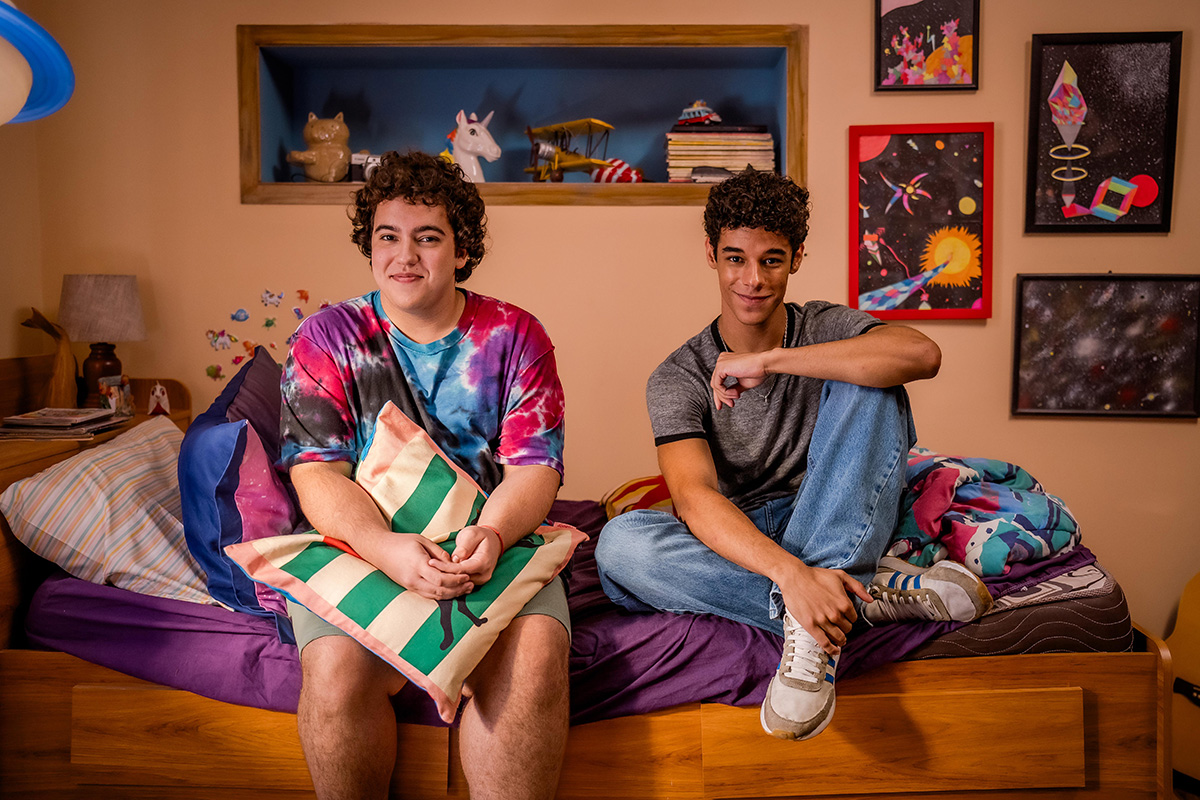
There are a lot of queer coming-of-age movies about how hard coming of age can be when you’re queer – and that’s because, for far too many queer young people, coming of age is a very difficult experience.
Yet as difficult as it may be, imagine how much more so it is for queer kids who are also struggling with other factors that make them a potential target for bullying and social stigma. When your awakening sexuality is complicated by fears and self-esteem issues that can cause you to feel ostracized even by the other queer kids, it’s pretty hard to find a place where you fit in. Unfortunately, there are far fewer movies that address that kind of “double whammy” scenario, and even fewer whose leading characters don’t look like model-perfect “influencers,” complete with chiseled abs, perfect hair, and flawless skin – which makes it all the more welcome when a movie like that actually does come along.
That’s why the arrival on Netflix of “Here the Whole Time” – a Brazilian teen romcom from director Daniel Lieff – feels a bit like a surprise gift.
Its central character – Felipe (Miguel Lallo), a teenager who lives with his single mom Rita (Débora Falabella) – is already out as gay, but that’s not the only reason that his life at school is torturous; as he informs us through his own narration, he’s always been the butt of cruel jokes and public bullying because he’s always been (in his own words) “fat.” He’s teased in the classroom, humiliated in the hallways, and victimized at dodgeball in his gym class; so when his eagerly awaited summer break arrives, he’s looking forward to weeks of freedom in which he never has to interact with anyone except his mother.
His blissful dreams of isolating himself in his room are shattered, however, by a rude awakening in the form of Caio (Diego Lira), a neighbor boy and former childhood friend, whose mother and father have left him to stay with Rita while they are away on a trip. Athletic, handsome, and popular, he’s everything Felipe is not, and despite any previous bond of companionship they may have had, Felipe has no intention of playing the gracious host.
Yet as the days go by, the two boys begin to resuscitate their friendship; rather than being the bully Felipe expects, Caio is mostly respectful and exceedingly polite in trying to negotiate their temporary co-habitation. Forced to spend time together, the two gradually warm to each other, opening the door to a renewed friendship; they begin to “hang out” together, expanding the usually isolated Felipe’s social circle to include Caio’s BFF Beca (Mika Soiero) and her girlfriend Melissa (Bel Moreira) — leading to a revelation that turns his newfound friendly feelings for Caio into something more of a crush.
Is the feeling mutual? Can Felipe set aside his insecurities enough to even find out? We did describe the movie as a “romcom, so you can draw your own conclusions from that, but it’s a wild ride of a story, and half the fun is watching it unfold through each new development, so we won’t give any of those surprises away.
It won’t be a spoiler, however, to discuss the way “Here the Whole Time” undercuts the sentiment of its predictably “sweet” formula with its presentation of Felipe as something of an anti-hero, a strident “rebel with a cause” who disdains and distrusts everyone around him except for his mother and sees his therapy (or at least pretends to) as just an extension of school — complete with the unwanted inconvenience of homework.
He’s also, ironically, something of a bully himself, initially responding to the presence of Caio — who is no happier about their temporary living arrangement than he is — with willful and deliberate contempt, and levying his position as host (or as son of the hostess, at least) to assert his circumstantial power and dominance over an unwanted guest. Of course, we can see all along where it comes from, the habitual offense-as-defense tactic that has helped him survive and gain what little self-confidence he has, but that doesn’t make it any less rude.
Still, we don’t dislike him for it; a lifetime of body-shaming can do that to a person. Besides, it makes the transformation that comes in him — after learning to stand up for others like he stands up for himself, and other valuable life lessons he undergoes along the way — feel much more like an uplift. And if his insecurities win out once in a while (as they do, to dramatic effect, in the film’s penultimate chapters), who can blame him?
Caio, too, is portrayed against expectation. His self-assured swagger, like Felipe’s misanthropic hostility, comes from a young lifetime of self-protective compensation, but it’s just as easy for us to see through, and as the tenderness inside is revealed, he’s a far cry from “popular jock” stereotype that Felipe — and the audience — assume him to be,
It’s the dynamic between these two eminently likable characters that makes the film work, granting each of them their own dovetailing journeys toward self-discovery and allowing the feel-good sentiment of the story to emerge as something authentic, rather than just another trope-driven fantasy.
Much of this is thanks to the two young leads, who fully commit to their roles and strike a winning chemistry that makes us want them both to find their way through the amusing — but no less traumatic — growing pains they experience, both together and apart. They succeed in building an onscreen world in which we can believe, with them, in the possibility of rising above the obstacles thrown in their path, and it leaves us feeling not just uplifted, but maybe even a little joyful.
Kudos also go out to Falabella, whose performance as the quintessential “cool mom” makes her stand out as the film’s adult MVP; likewise, director Leiff handles the material with a superb sense of balance between over-the-top absurdity and quietly joyful moments of truth. In the end, though, it’s screenwriters Ray Tavares and Victor Brandt — adapting from a book by Vitor Martins — that’s truly responsible for crafting a charming coming-of-age story that allows itself to reach for the unlikely happy ending instead of sticking with the tried-and-true bittersweetness that usually arrives to provide an extra dash of unrequited yearning.
Of course, more jaded viewers — especially if they’re adults — might find the overall effect of “Here the Whole Time” less of than convincing. But for most of us — and hopefully it’s target audience, especially — it’s a charming reminder that “coming of age” isn’t just about sex or compromising with disillusionment. More than anything else, it’s about learning to let go of our disappointed assumptions to blossom into the life we truly deserve.
As a refreshingly upbeat entry into a genre that somehow holds a key position in our compromised adult lives, it’s definitely a ride worth taking,

Friday, September 4
Go Gay DC will host “LGBTQ+ Community Happy Hour” at 7 p.m. at Freddie’s Beach Bar and Restaurant.This is a chance to relax, make new friends, and enjoy happy hour specials at this classic retro venue. Attendance is free and more details are available on Eventbrite.
Saturday, September 5
Go Gay DC will host “LGBTQ+ Community Brunch” at 11 a.m. at Freddie’s Beach Bar & Restaurant. This fun weekly event brings the DMV area LGBTQ+ community, including allies, together for delicious food and conversation. Attendance is free and more details are available on Eventbrite.
Sunday, September 6
“Nellie’s DC Drag Brunch” will be at 12 p.m. at Nellie’s Sports Bar. Come get served like a queen by a queen. Join Sapphire Blue, Deja Diamond and their team of amazing drag performers for the most fun you’ll have all weekend. Tickets cost $58.51 and are available on Eventbrite.
Monday, September 7
Go Gay DC will host “Out in Rosslyn LGBTQ+ Community Social” at 6 p.m. at Hyatt Centric Arlington. We have been invited to visit Hyatt Centric Arlington, where we will gather in a reserved section of their lounge. Attendees will be greeted by members of the Go Gay DC Leadership Team & receive a name tag upon arrival. This event is ideal for meeting new folks, making new friends, community-building, or just to unwind and enjoy the atmosphere. Casual attire is perfectly fine. More details are available on Eventbrite.
Tuesday, September 8
Coming Out Discussion Group will be at 7 p.m. on Zoom. This is a safe space to share experiences about coming out and discuss topics as it relates to doing so — by sharing struggles and victories the group allows those newly coming out and who have been out for a while to learn from others. For more details, visit the group’s Facebook.
Trans Discussion Group will be at 7 p.m. on Zoom. This event is intended to provide an emotionally and physically safe space for trans people and those who may be questioning their gender identity/expression to join together in community and learn from one another. For more details, email [email protected].
Wednesday, September 9
Job Club will be at 6 p.m. on Zoom upon request. This is a weekly job support program to help job entrants and seekers, including the long-term unemployed, improve self-confidence, motivation, resilience and productivity for effective job searches and networking — allowing participants to move away from being merely “applicants” toward being “candidates.” For more information, email [email protected] or visit thedccenter.org/careers.
Thursday, September 10
The DC LGBTQ+ Community Center’s Fresh Produce Program will be held all day at the DC LGBTQ+ Community Center. People will be informed on Wednesday at 5 p.m. if they are picked to receive a produce box. No proof of residency or income is required. For more information, email [email protected] or call 202-682-2245.
Virtual Yoga Class will be at 7 p.m. on Zoom. This free weekly class is a combination of yoga, breathwork and meditation that allows LGBTQ+ community members to continue their healing journey with somatic and mindfulness practices. For more details, visit the DC LGBTQ+ Community Center’s website.
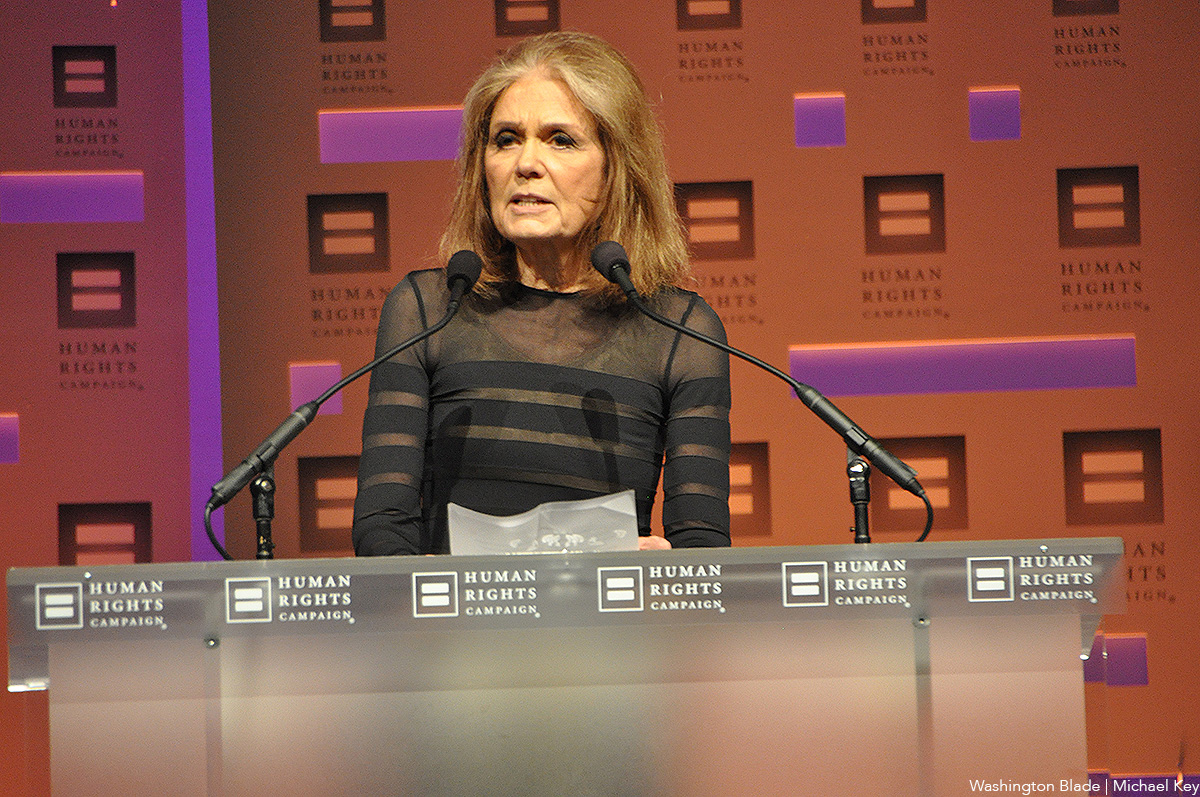
Gloria Steinem, writer, activist, and a leading voice of the feminist movement in the 1970s, died on Wednesday in Manhattan. Her death was announced on Instagram by her official foundation, Gloria’s Foundation, which shared that Steinem “passed away peacefully at her home, surrounded by some of the many who loved her.” She was 92.
A leading figure and spokesperson for the second-wave feminist movement, running from the 1960s through the ’80s — the earlier women’s rights suffrage movement being considered the first — Gloria Steinem campaigned for workplace equality, equality in the home and reproductive freedom, seeing those struggles as inseparable from the wider causes of social and racial equality.
She also championed LGBTQ rights, supporting lesbian visibility within the larger women’s liberation movement, and standing in opposition to the idea that lesbians posed a “lavender menace” to the cause of feminism.
In her vision of the future, marriage equality was a given: “Lesbians or homosexuals will no longer be denied legally binding marriages, complete with mutual-support agreements and inheritance rights.”
GLAAD President Sarah Kate Ellis said in a statement following Steinem’s death: “Gloria Steinem was a trailblazing titan of civil rights whose vision for liberation bridged the movements for gender equality, bodily autonomy, and LGBTQ rights. She recognized that feminist progress is incomplete without full inclusion and stood as an ally to transgender people’s fight for equality. Gloria rejected rigid binaries, choosing instead to build bridges of empathy and coalition across all marginalized identities. Gloria’s life was a masterclass in coalition-building, courage, and unconditional empathy.”
Among her many trailblazing milestones, Steinem was widely known for co-founding the National Women’s Political Caucus in 1971 alongside foundational feminist figures Bella Abzug, Shirley Chisholm, Betty Friedan, Fannie Lou Hamer, LaDonna Harris, Mildred Jeffrey, and Jill Ruckelshaus.
The mandate: get women into political office and positions of power — “women who are committed to the causes of other women — not women who are going to just imitate the male politics as it has been practiced all these years complete with elitism, racism and prejudice against women,” she said, “but women who really care about their sisters and will work for social reform.”
“This is no simple reform. It really is a revolution.”
Liz Abzug, daughter of Bella Abzug, remembers Steinem as “a lifelong activist and a humanist with lots of love to give,” as well as “a very, very close and dear friend of my mother’s,” as the two “worked side by side to change the American landscape for women.”
“It’s hard for me and all of her other supporters and admirers to imagine a world without Gloria leading the charge and fighting for women’s rights and full gender equality,” Abzug shared.
Indeed, there was much about that American landscape in need of change. Steinem came up during a time when discrimination against women was the legal and societal norm.
A married woman, for instance, often required her husband’s signature to obtain a credit card, a form of gender discrimination remedied in 1974 with the Equal Credit Opportunity Act. Women were often unable to get jobs. Life turned Steinem down, saying “We don’t want a pretty girl, we want a writer. Get out of here.” If women did land a job, in 1973, they would have likely made 56.6 cents to every dollar that men earned.
The law’s failure to support women’s autonomy was especially visible on the matter of reproductive rights.
For many women in America, legal abortion remained unavailable until 1973, when Roe v. Wade established a constitutional right to abortion nationwide. Steinem spent years speaking out for women’s safety, and promoted the idea that “decision-making power over our own physical selves” was intertwined with equal regard for women as citizens.
“The vast majority of women support safe and legal abortion. My response is if those legislators were half women, this wouldn’t happen,” she said in a 2022 interview with Katie Couric. “If we actually had a democracy, if those legislators looked like the country from a gender, racial, and class perspective, this probably would not be happening…”
Gloria Marie Steinem was born on March 25, 1934, in Toledo, Ohio, the daughter of Leo and Ruth (Nuneviller) Steinem. Her father was an antiques salesman; her mother had worked for a newspaper before she got married, but suffered what was called at the time a “nervous breakdown” and spent time in an institution. Following a divorce, her mother was left largely in the care of 11-year-old Gloria Steinem in a house that has been described as infested by vermin.
“I didn’t go to school a full year until I was 11 or 12, so I lived in books. I really was an observer of life,” Steinem said in a 2011 interview.
After moving to D.C. to live with her older sister, Susanne, Steinem graduated from Western High School in 1952. She followed Susanne to Smith College where she studied government and wrote for the student newspaper, graduating in 1956.
Upon moving to New York in 1960, she worked for Help! magazine and wrote freelance for publications that included Life, Esquire, and Glamour. According to Smith College Libraries, she co-founded New York magazine in 1968 and served as political columnist until 1972. In the 1960s and ’70s, Steinem was active in causes that included United Farmworkers, Vietnam War Tax Protest, and Committee for the Legal Defense of Angela Davis. She also participated in the political campaigns of Adlai Stevenson, Robert Kennedy, Shirley Chisholm, and others.
Steinem is said to have found her way to the Women’s Movement in 1969, following an abortion “speak-out” meeting of the Redstockings. She was inspired to begin speaking to audiences across the country, alongside activist Dorothy Pitman Hughes, and later Florynce Kennedy and Margaret Sloan.
Among Steinem’s most enduring legacies, and still in publication today, is Ms. magazine, which she co-founded. Widely considered the first national American feminist magazine (and owned, operated, and written by women!), it first appeared as a preview insert in New York Magazine in December 1971 with a tagline, “The New Magazine for Women.” Ms. earned status as a full-on publication in July 1972 with a cover image depicting a modern pregnant Hindu goddess Kali holding a clock, skillet, typewriter, rake, mirror, telephone, steering wheel, and an iron.
Ms. is credited with raising cultural awareness on policy issues, like the Equal Rights Amendment, taking on taboo topics and putting women’s issues front and center.
Steinem’s long list of published work includes the 1983 bestselling book Outrageous Acts and Everyday Rebellions, a collection of her Ms. articles and other pieces. The book includes the feminist’s essay on her undercover exposé of the Playboy Club, for which she donned bunny ears, collar, and bow to covertly report on working conditions for women.
In 1986, she published “Marilyn: Norma Jeane,” which explored the life of Marilyn Monroe and the idea of women as vulnerable and at the disposal of society — men in particular.
Steinem also wrote “Revolution from Within” (1992); “Moving Beyond Words” (1994); and “Doing Sixty & Seventy” (2006). She was awarded the Presidential Medal of Freedom in 2013 by President Barack Obama.
Steinem’s relationships over the years included Ted Sorensen, counselor to President John F. Kennedy; Stanley Pottinger, a Justice Department official; and publisher and real-estate businessman Mort Zuckerman. In 2000, she married South African businessman David Bale, who died in 2003.
Steinem was predeceased by her mother and her sister, Susanne Steinem Patch, who died in 2007. On multiple occasions, she spoke of a community that extended beyond birth family — people whom she chose, and who chose her.
“[Feminism is] about friends and sisters and community,” Steinem said in an interview with bell hooks. “The good part and the great part is that it’s about chosen family. We have each other’s backs and that is so precious.
In announcing Steinem’s passing, her foundation offered this reflection: “Gloria’s greatest gift was her ability to listen to others, to make others feel seen and heard. Her words, actions, and example gave people permission to be their truest selves. Gloria lived true to her independent spirit, always with curiosity and a great sense of humor.
“She spent her recent years doing the two things she loved most: being in community with others and writing … Gloria loved the tradition of lighting signal fires on hills to light the way to the other side of the mountain.”

‘Here the Whole Time’ delivers queer coming-of-age comedy

Pentagon expands testosterone screening as trans troops face hormone therapy restrictions

Calendar: September 4-10

Swiss government backs nationwide conversion therapy ban

Gloria Steinem dies at 92

Top Bulgarian court rules government must legally recognize trans people

Markey’s primary win deemed success for LGBTQ activists

Lou Chibbaro Jr. documentary wins award from NLGJA

The mastery of love