Arts & Entertainment
Bawdy bordello
Highly entertaining ‘Whorehouse’ production opens Signature season
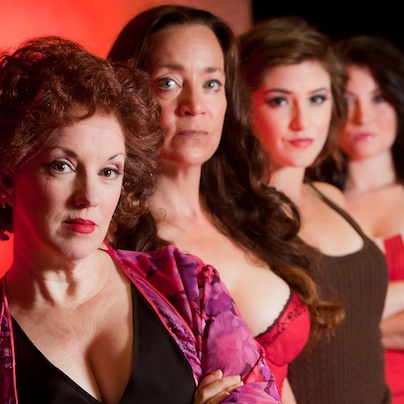
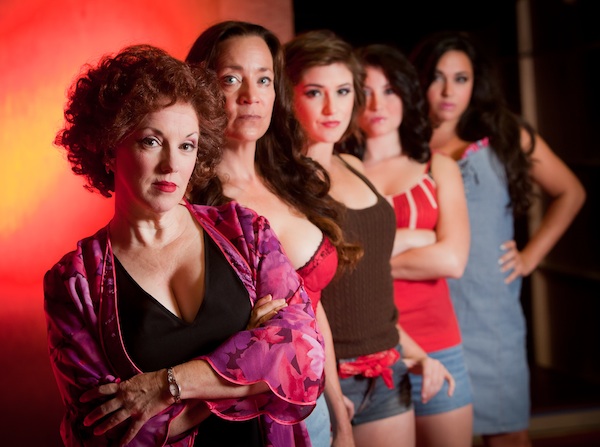
Sherri L. Edelen, left, as Miss Mona with cast members Amy McWilliams, Nora Palka, Jamie Eacker and Nadia Harika. (Photo by Christopher Mueller; courtesy Signature)
‘The Best Little Whorehouse in Texas’
Signature Theatre
4200 Campbell Avenue
Arlington, Va.
Through Oct. 7
$40-$80; $30; rush tickets available
It takes a combination of exceptionally good source material and competent theatrical savvy to infuse a work from the late ‘70s with a fresh and timely feel, but that’s just what Signature Theatre has done with its current production, a mostly solid and highly entertaining adaptation of “The Best Little Whorehouse in Texas” with which it’s opening its 23rd season.
With its focus on sexual hypocrisy, political treachery and media sensationalism, the plot could have been ripped from today’s headlines. Instead, it’s based on a real piece of Texas history — the closing of the infamous Chicken Ranch in La Grange, Texas in 1973. The musical moves the action to the fictional town of Gilbert in 1978. The Chicken Ranch is run by the wily and earthy Miss Mona (Sherri L. Edelen). Working closely with the tough-talking Sheriff Earl Dodd and maintaining a strict set of rules, Miss Mona creates a refuge for her “ladies” and a pleasant atmosphere for her guests.
Unfortunately, the house is discovered by Melvin P. Thorpe, a seedy, self-styled, self-serving media watchdog who decides that the house must be closed down. State and local politicians try to ignore the furor, but Thorpe stages a raid just as the fabled Aggies football team arrives to celebrate their big victory. The oily Governor forces the Sheriff to shut down the Chicken Ranch and Miss Mona and her girls are forced to leave what has become their home and safe haven.
The musical features a tight book by Larry L. King (the D.C.-based author, not the CNN newsman) and Peter Masterson that is folksy without ever being cloying, and music and lyrics by Carol Hall. Hall’s score is an effective blend of rousing production numbers and intimate country ballads and her clever lyrics are playful and witty without ever being too explicit. After all, as Miss Mona says with a wicked twinkle in her eye, “There’s nothing dirty going on.” In fact, the show, which was rather controversial when it opened (newspapers refused to run ads for the production and CBS heavily censored “The Aggie Song” during the Tony broadcast), seems almost tame today.
The vibrant Edelen effortlessly leads a strong cast through a complex combination of broad satire, astute social commentary and the moving details of lives torn apart by cruelty, cowardice and political opportunism. She’s got a powerful voice, a wry smile and delicious comic timing along with a sure hand with the heart-felt book scenes and when the time finally comes, solid two-step abilities. Nova Y. Payton rocks the house as Mona’s assistant, Jewel. Their duet “No Lies” is bound to be a highlight of the theater season. Other strong performances are turned in by Thomas Adrian Simpson as the Sheriff, Dan Manning as the slick-tongued and nimble-footed Governor and Christopher Bloch as Melvin P. Thorpe, an amusingly sleazy blend of Geraldo Rivera and Jerry Falwell.
There are, unfortunately, a few missteps in the production. The offstage band is small but way too loud and bass heavy. The opening number is flat with static staging and boring distracting projections. Overall, the design work is uneven. For example, the red and black lingerie pieces for the girls don’t fit the ambience at the Chicken Ranch and the boys don’t even bother to dress up for their big night at the whorehouse.
The most serious flaw in the production, however, is the staging of many of the lovely ballads. Just when the show needs some breathing room and just when the characters have something important to share, the numbers are loud, rushed and poorly lit.
Overall though, the production — helmed by Eric Schaeffer (Signature’s artistic director) — is redeemed with its outstanding ensemble. The talented team creates sharply individualized characters, especially Madeline Botteri as Shy (her finely wrought performance highlights how the show thoughtfully addresses the realities of prostitution). They flawlessly execute Karma Camp’s delightful choreography. Her high-stepping dance routines are exhilarating, especially the ladies’ thrilling kick line that caps off “A Lil’ Ole Bitty Pissant Country Place,” the toe-tapping shenanigans of “Texas Has a Whorehouse In It” and “The Sidestep.” There’s also incredible athletic artistry in “The Aggie Song,” where the boys change out of their football uniforms and lustily prepare for their night with the ladies.



Photos
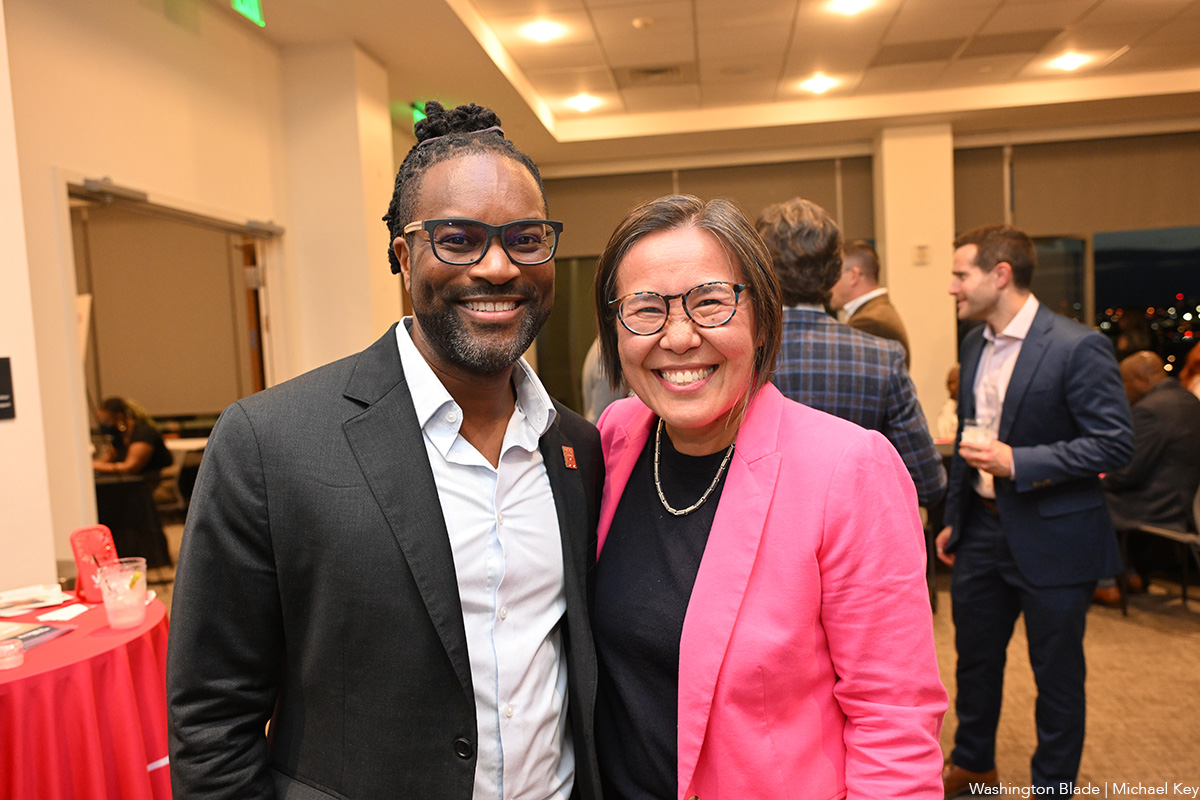
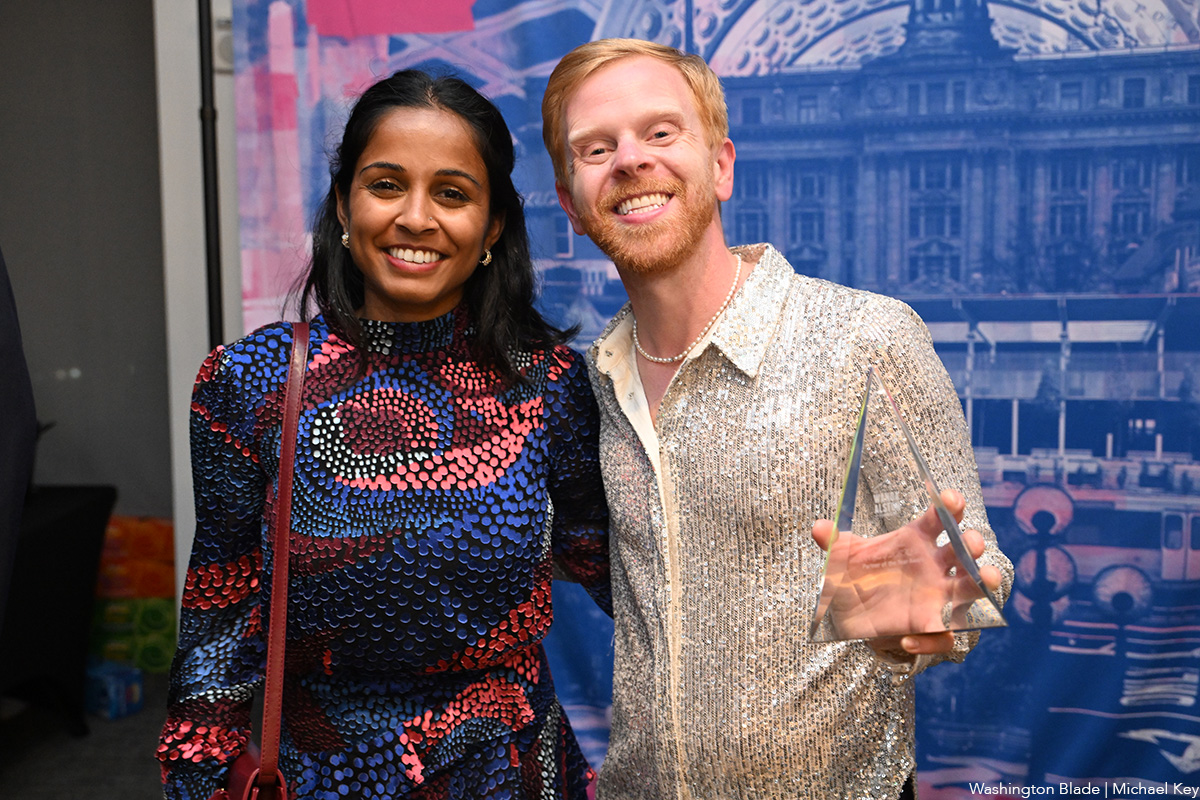
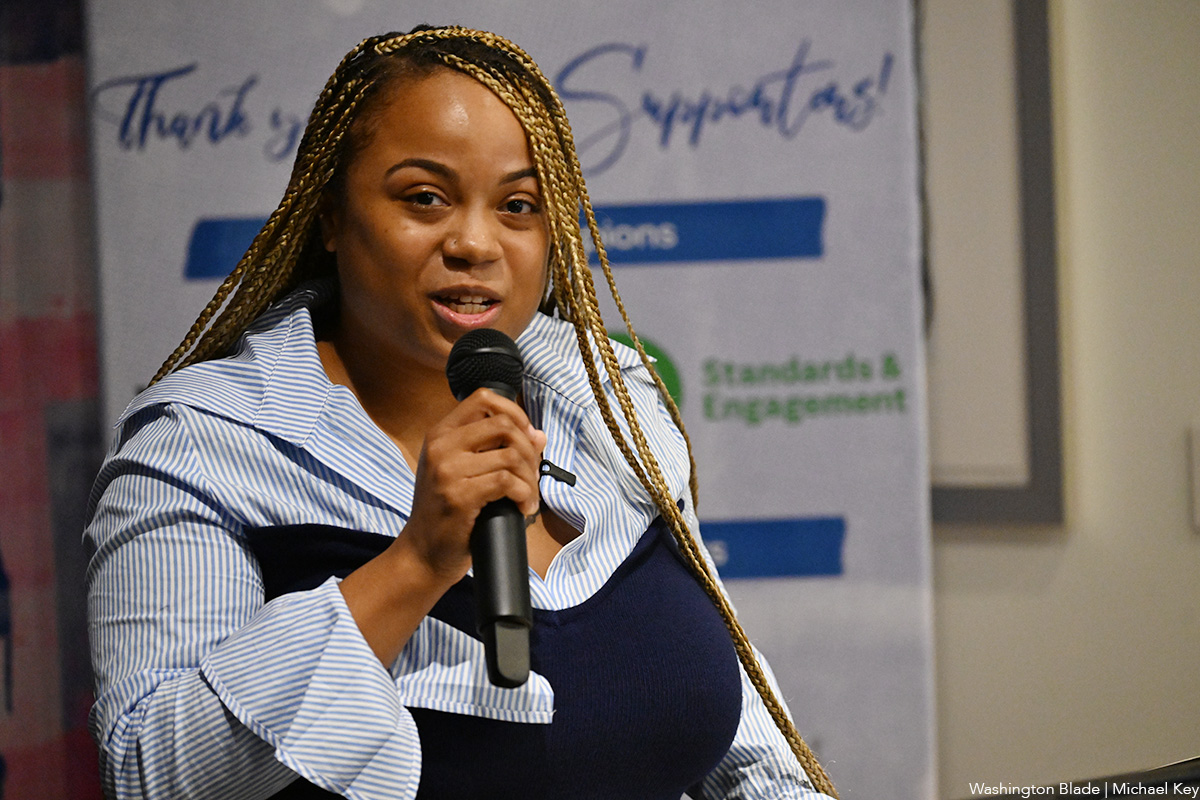
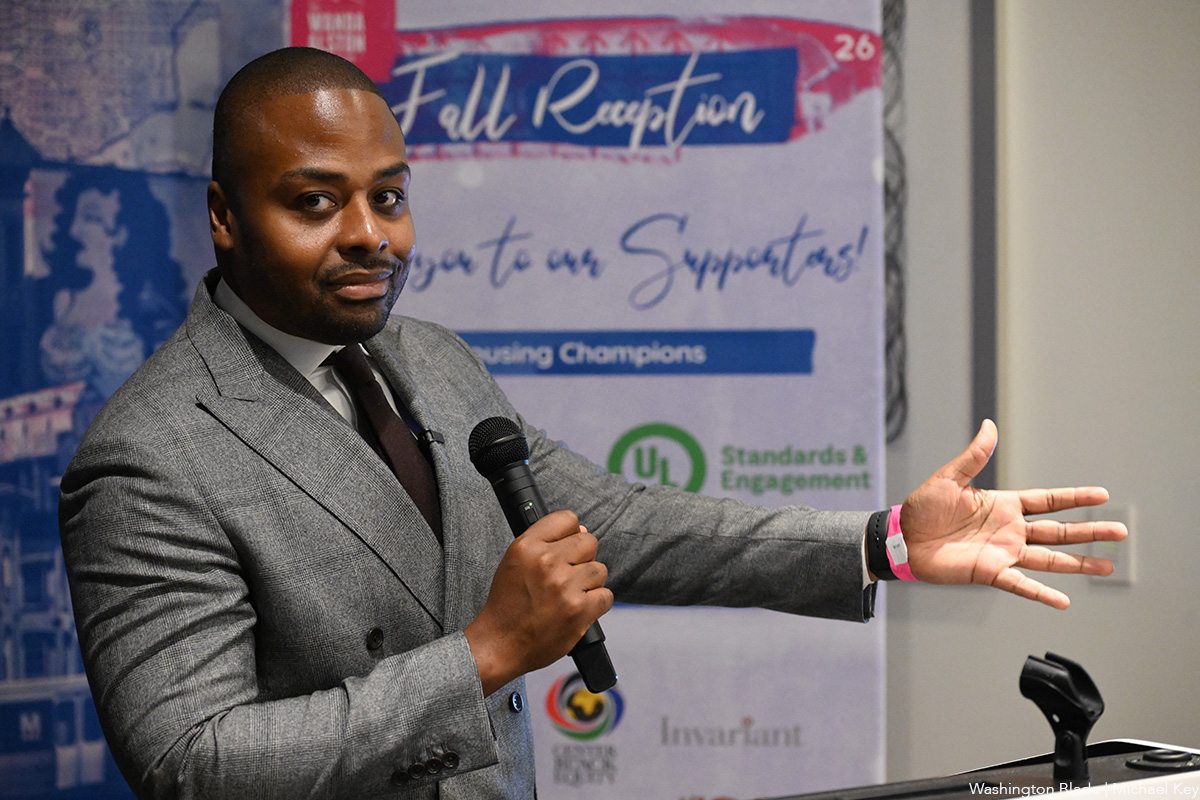
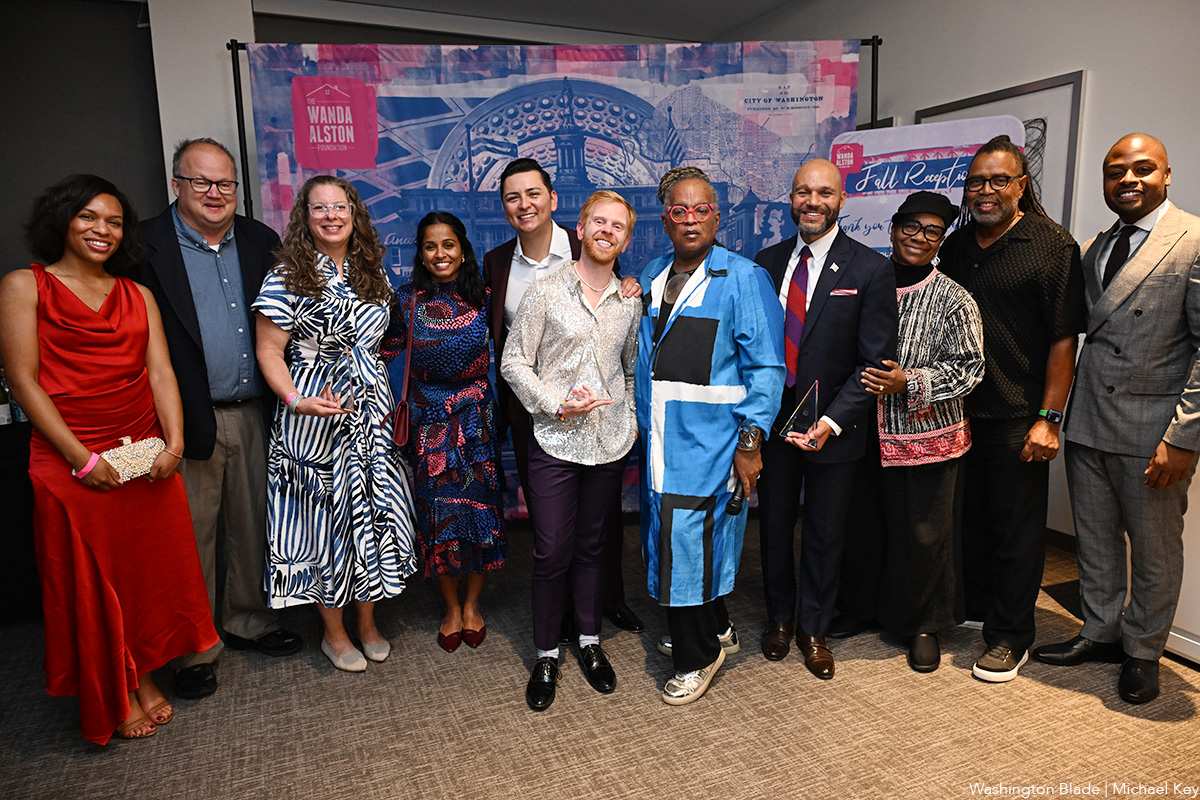
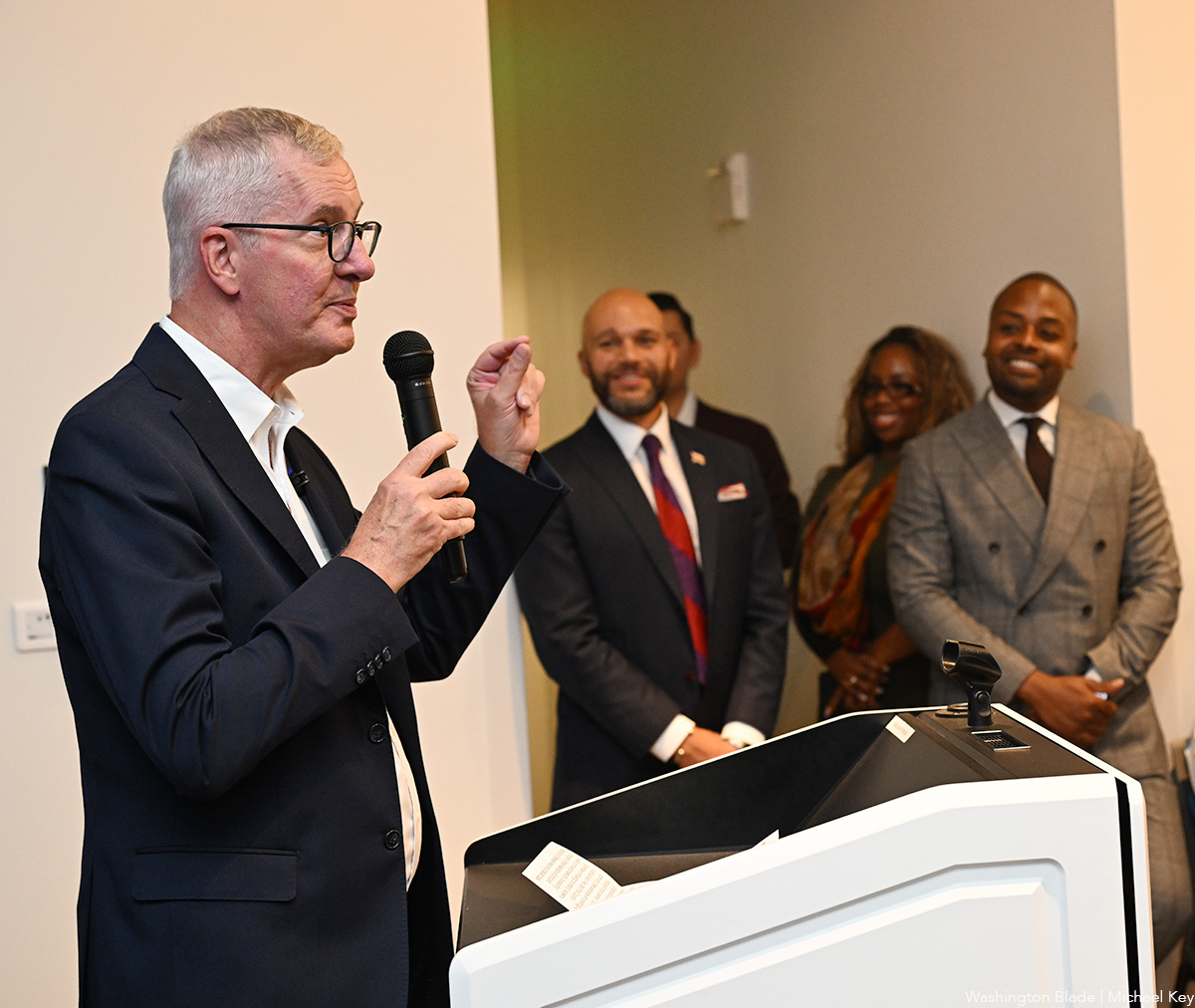
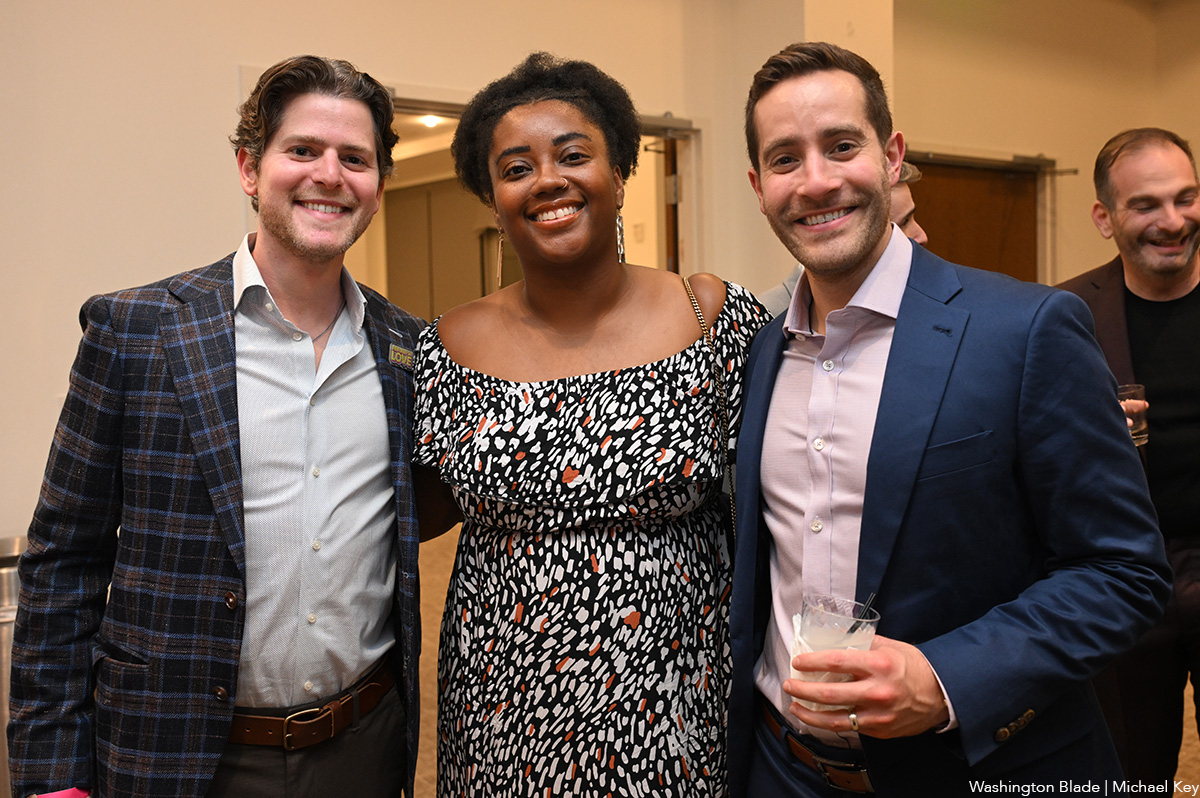
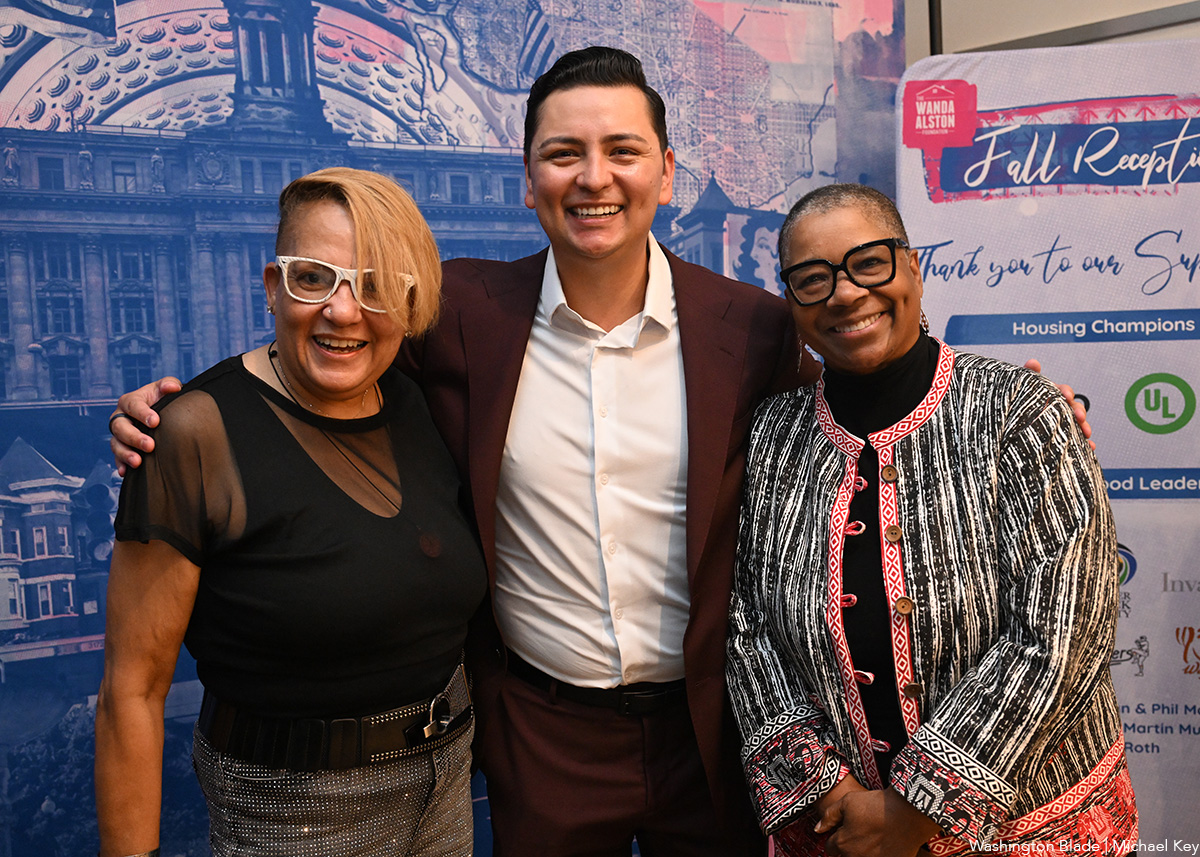
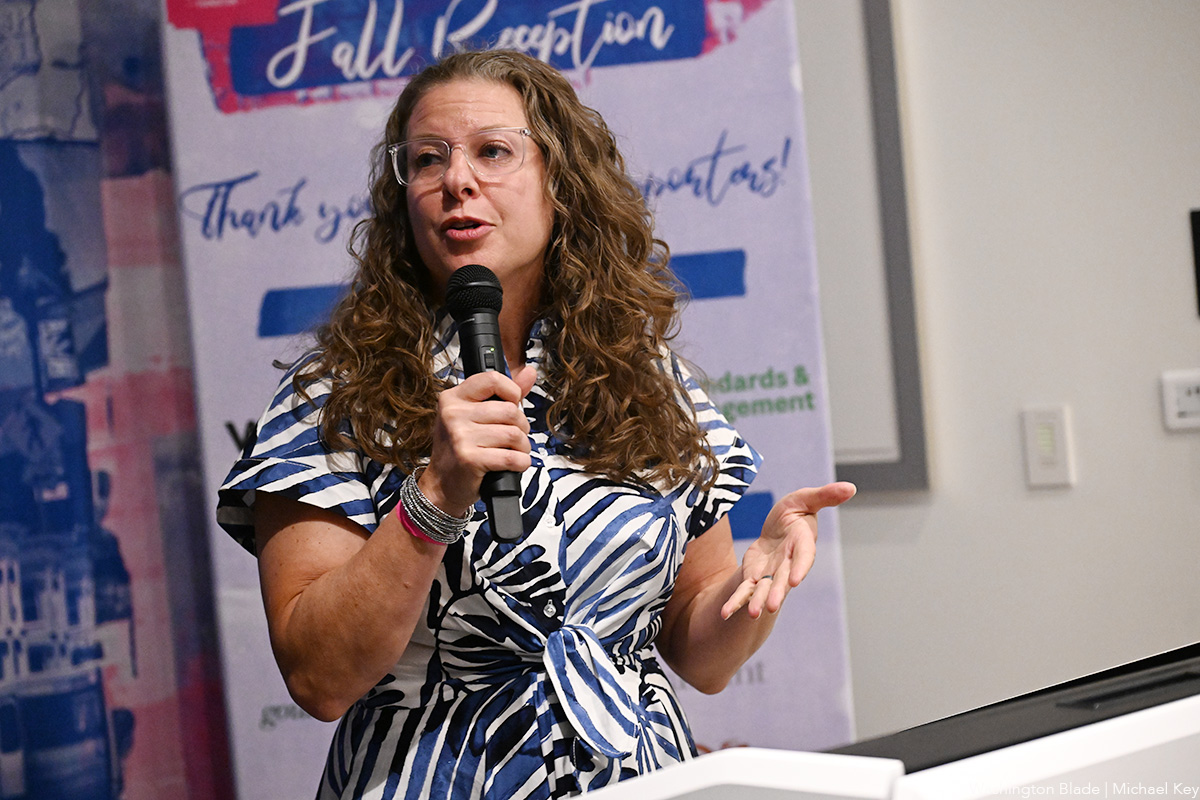
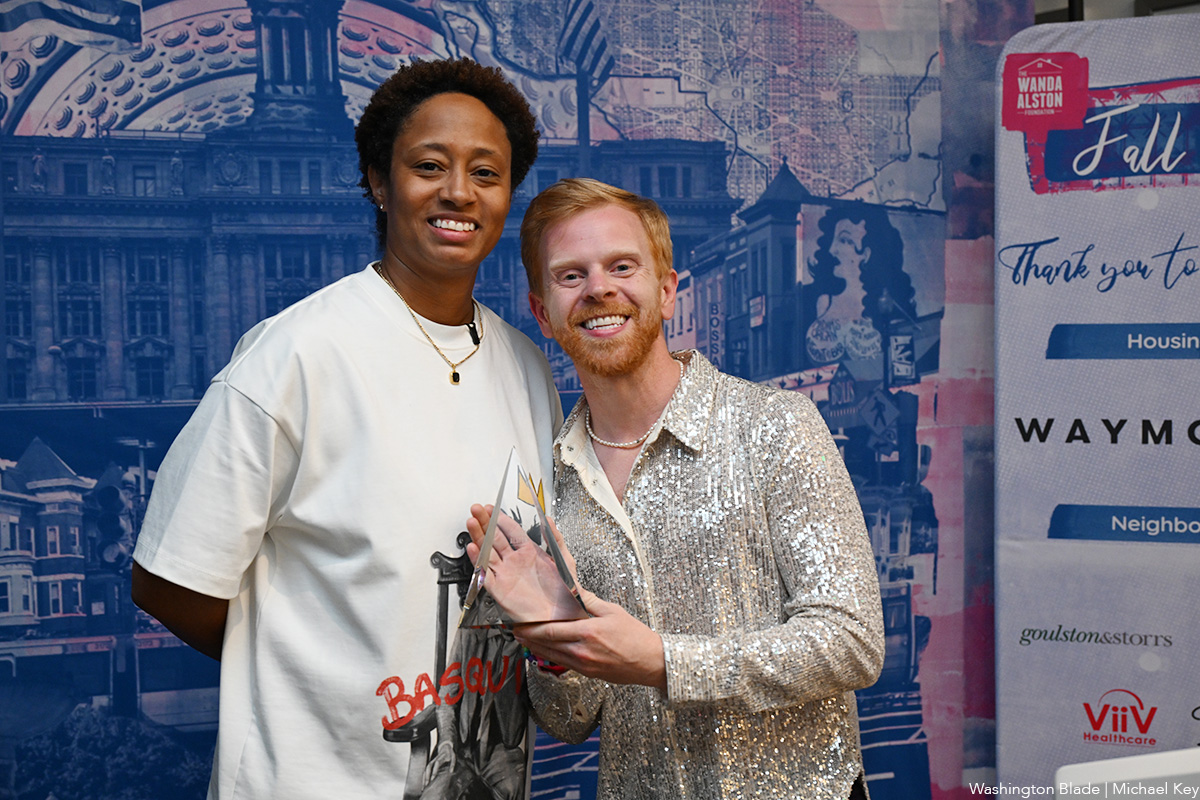
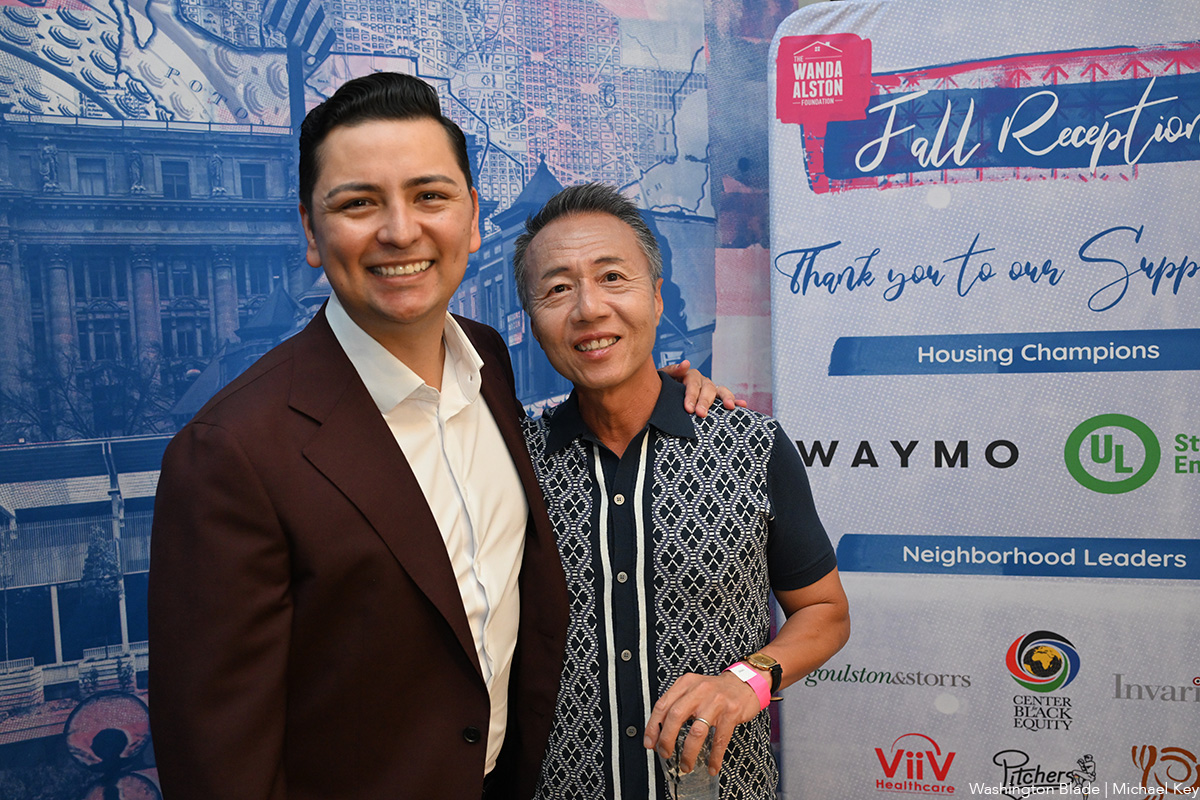
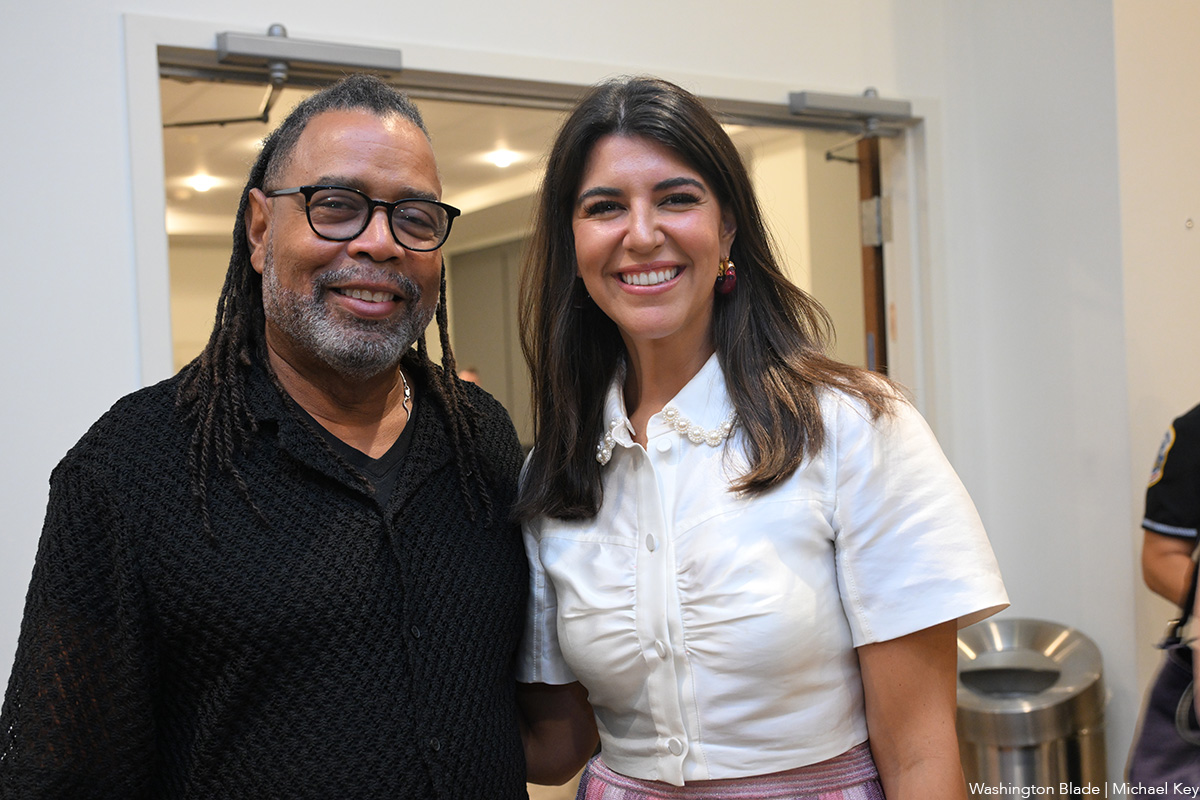
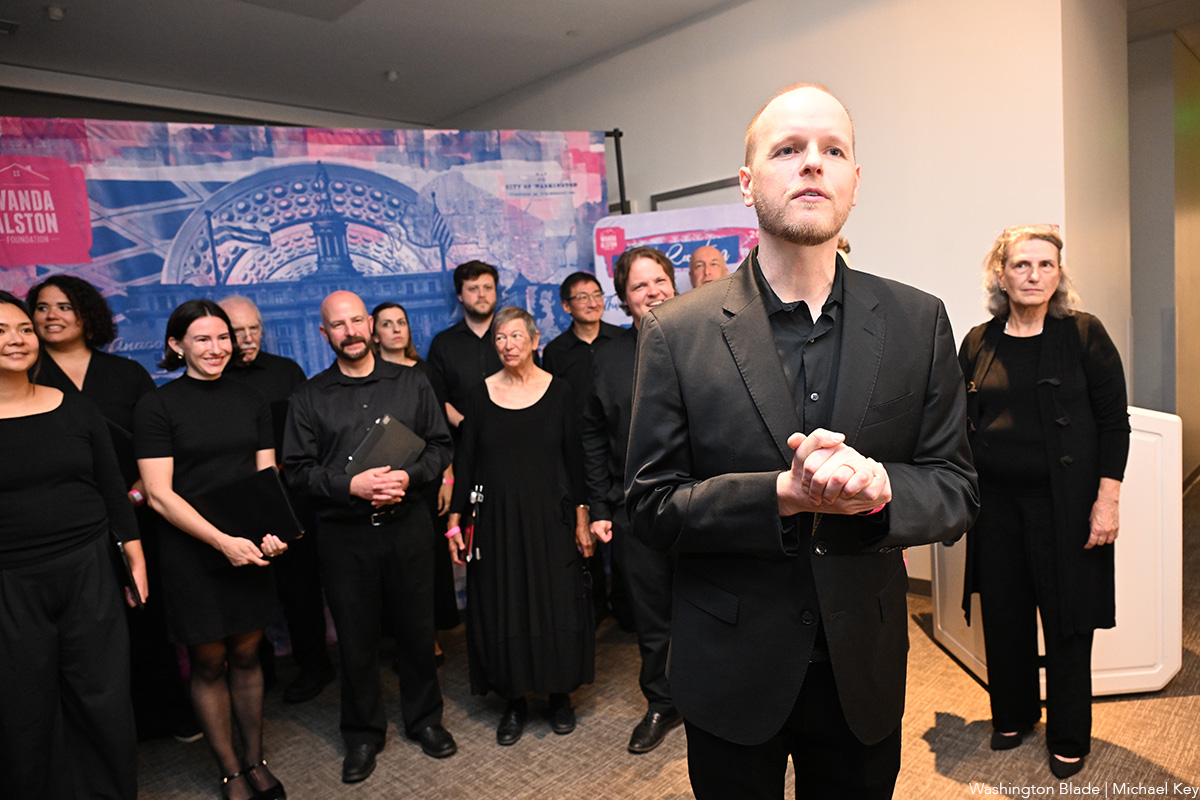
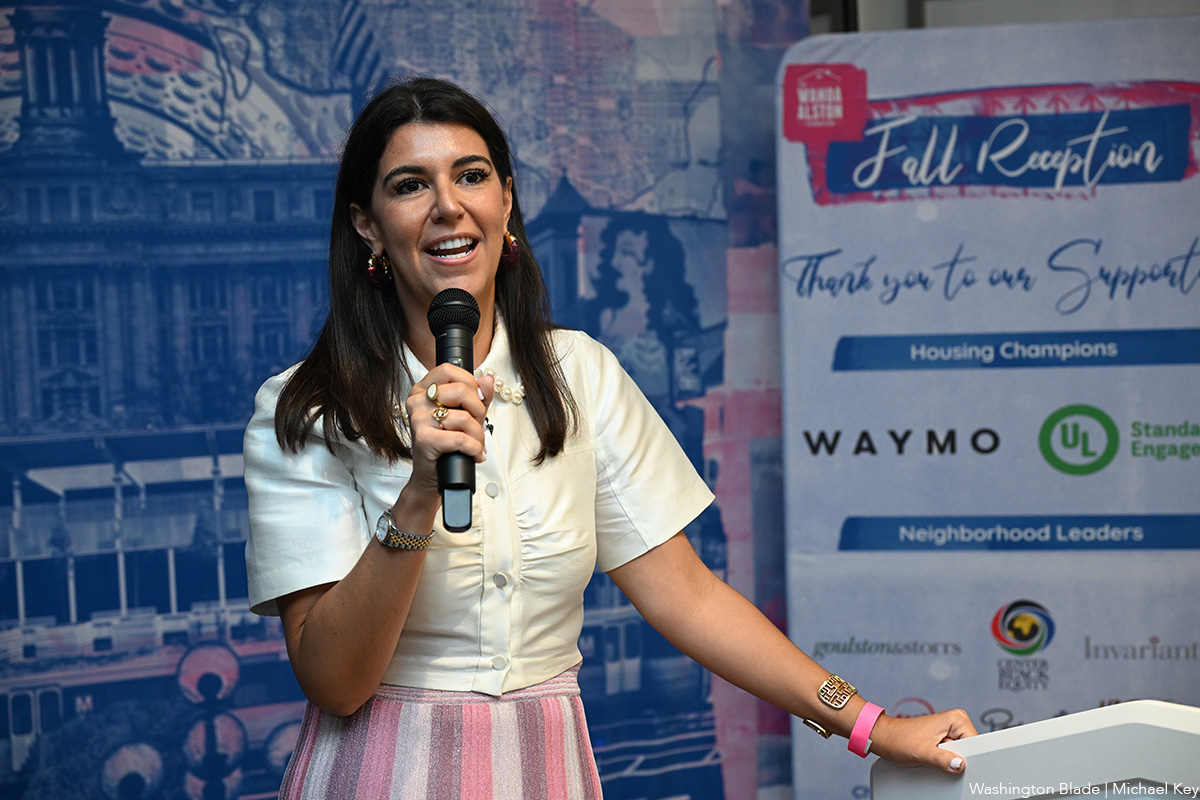
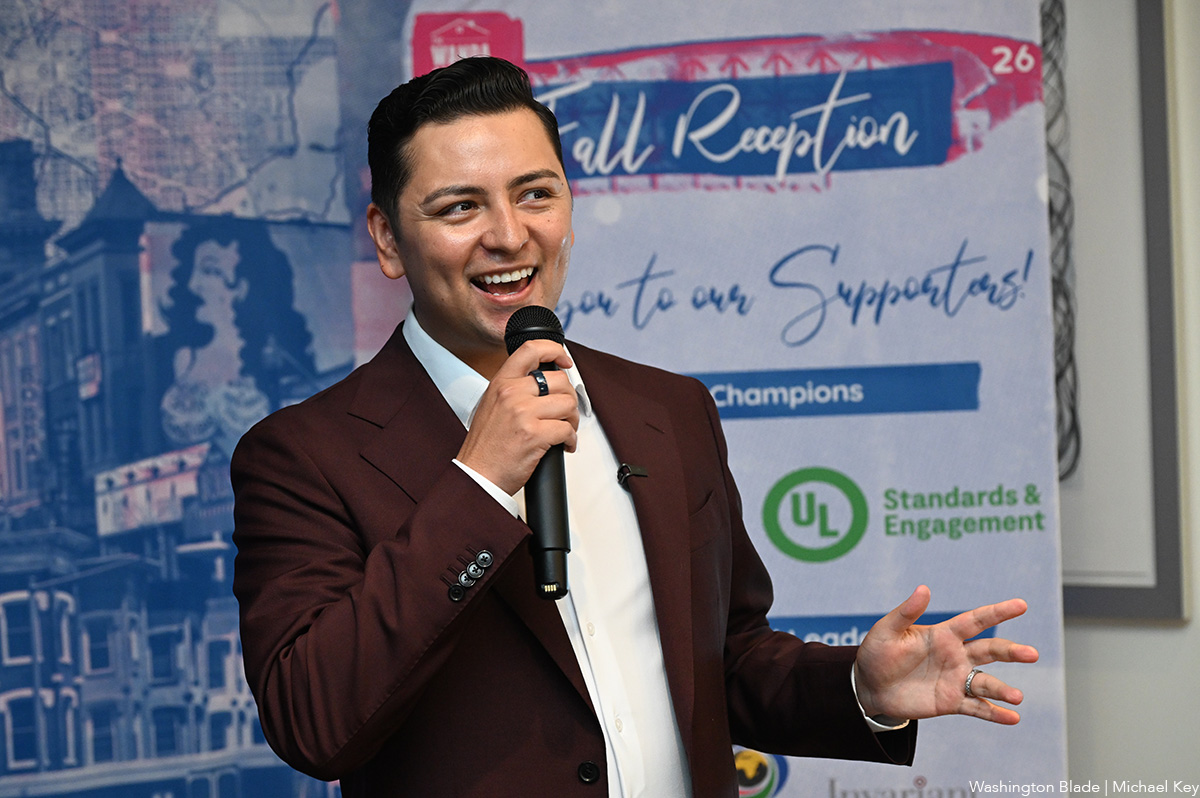
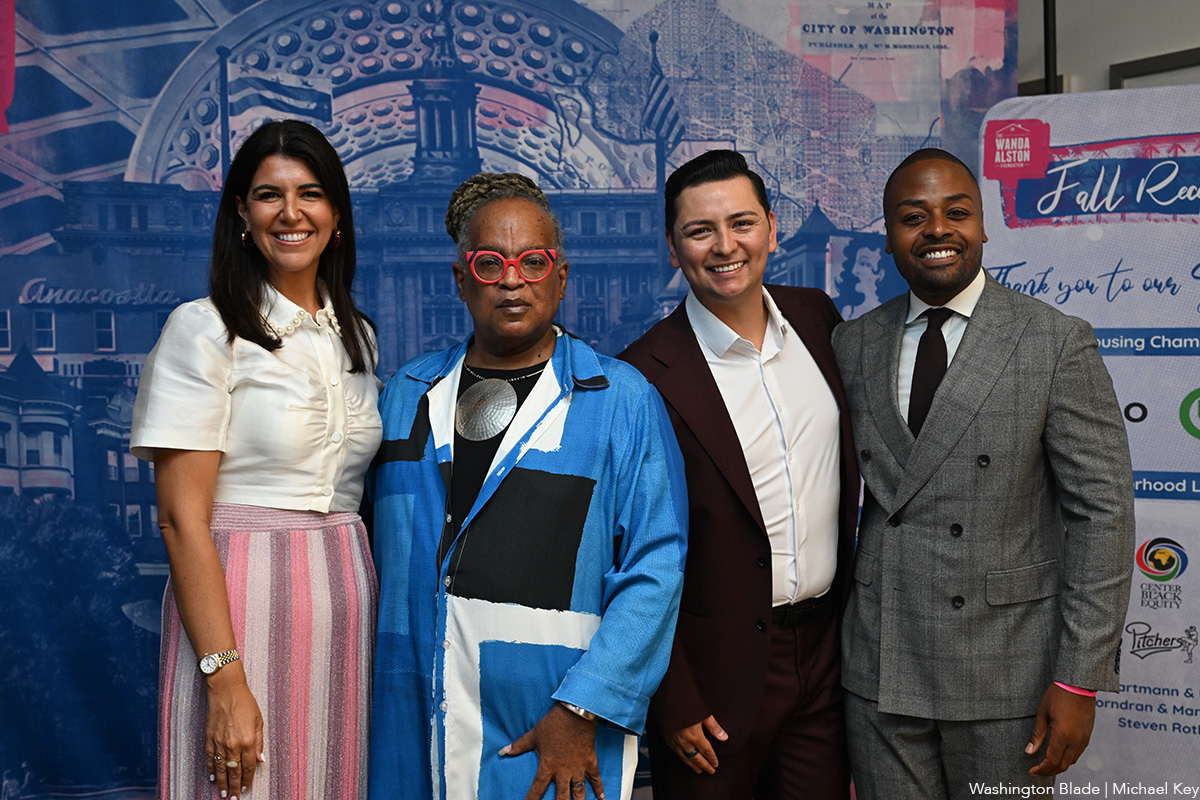
PHOTOS: Wanda Alston Foundation Fall Reception
LGBTQ youth services organization honors Robert White, Japer Bowles, Washington Capitals
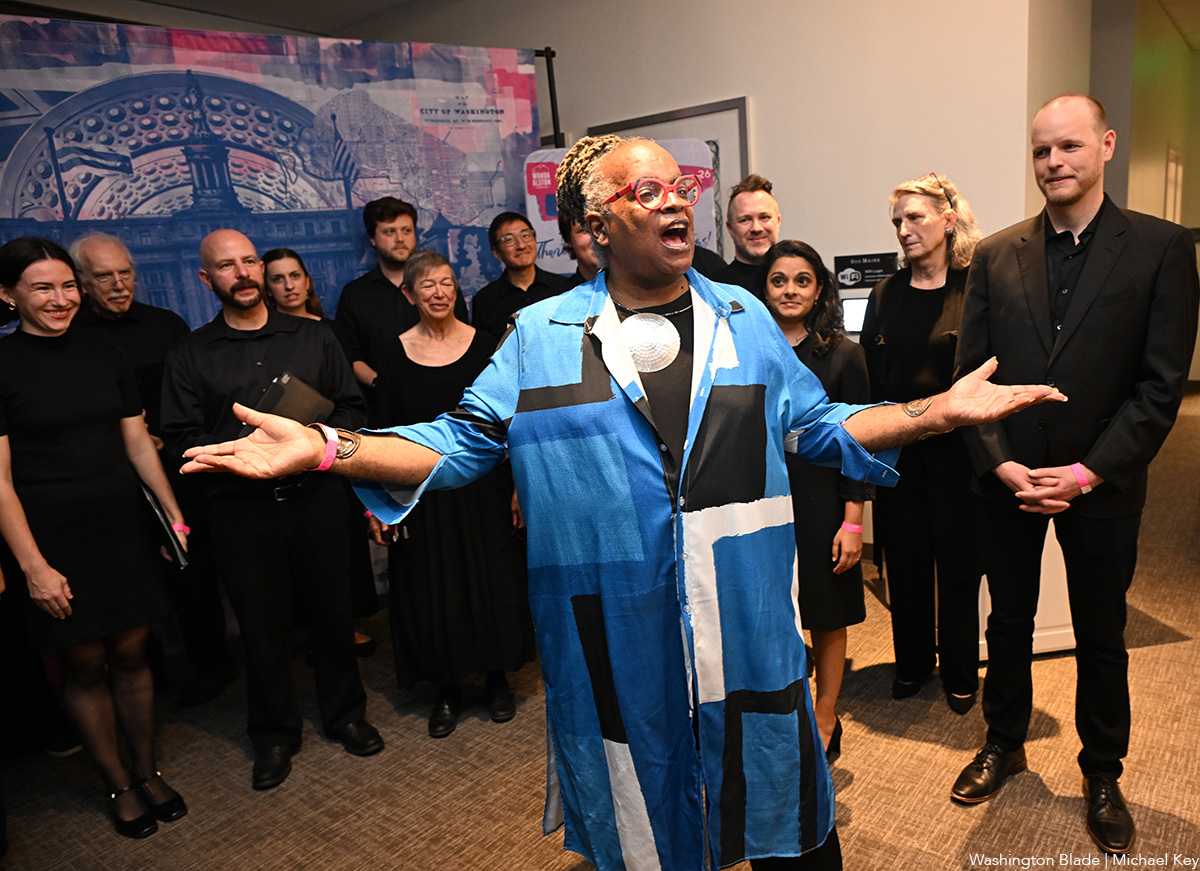
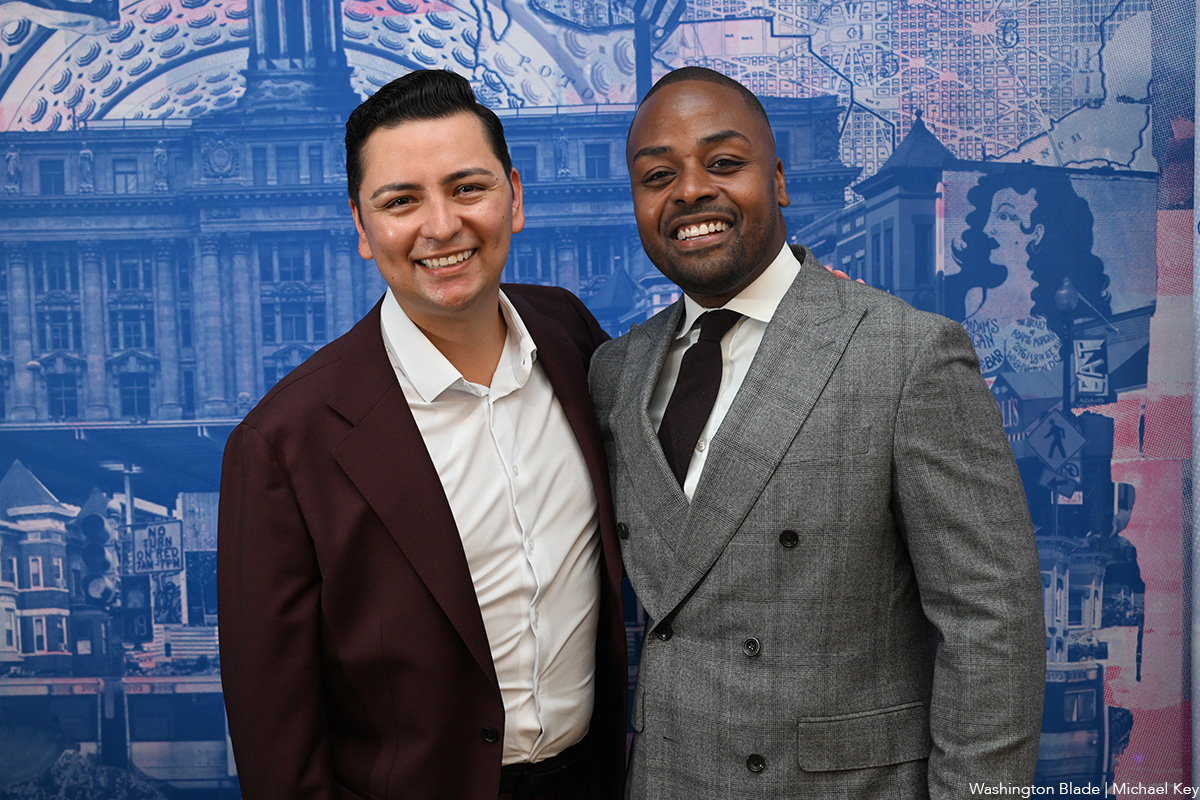
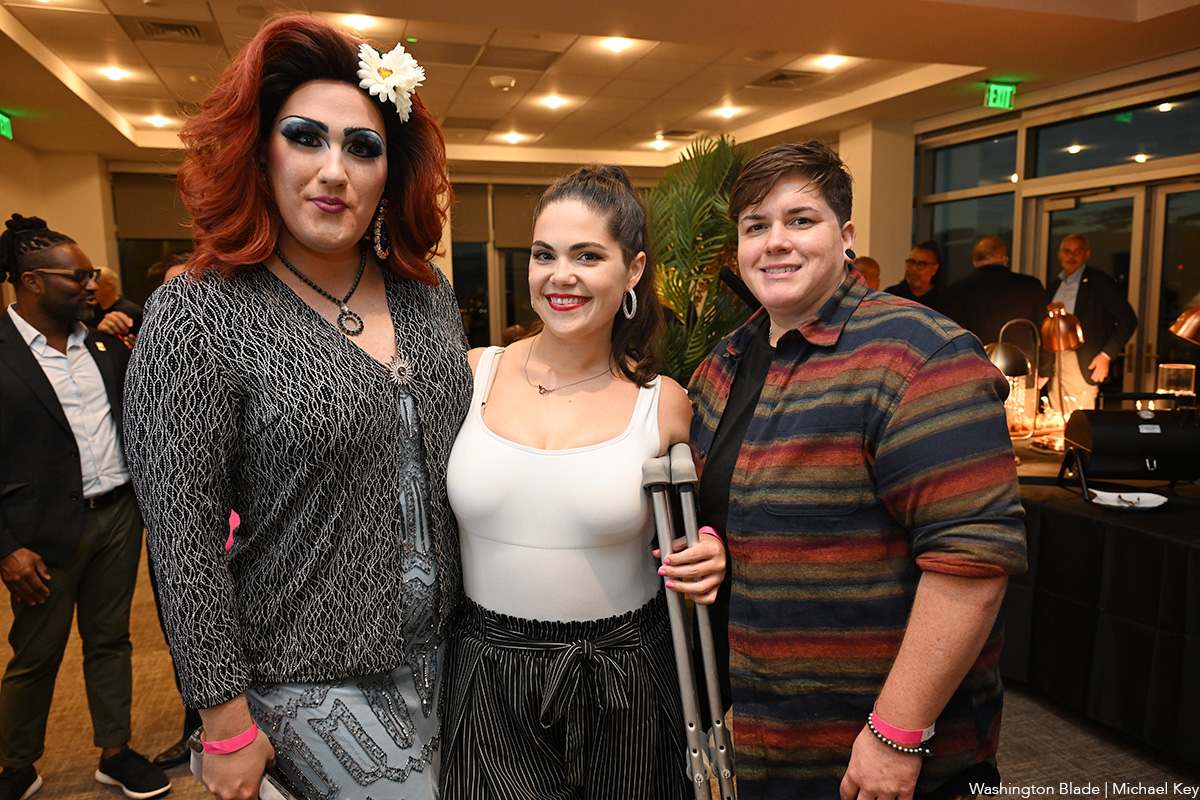
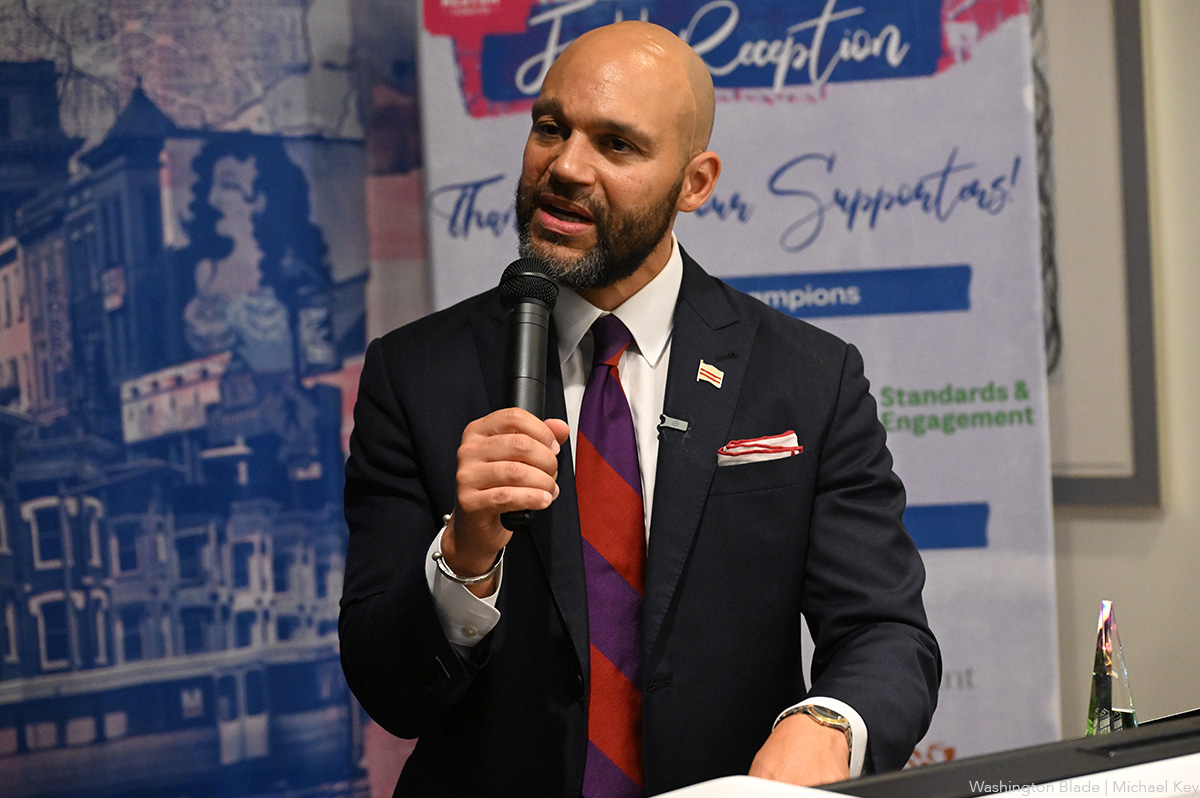
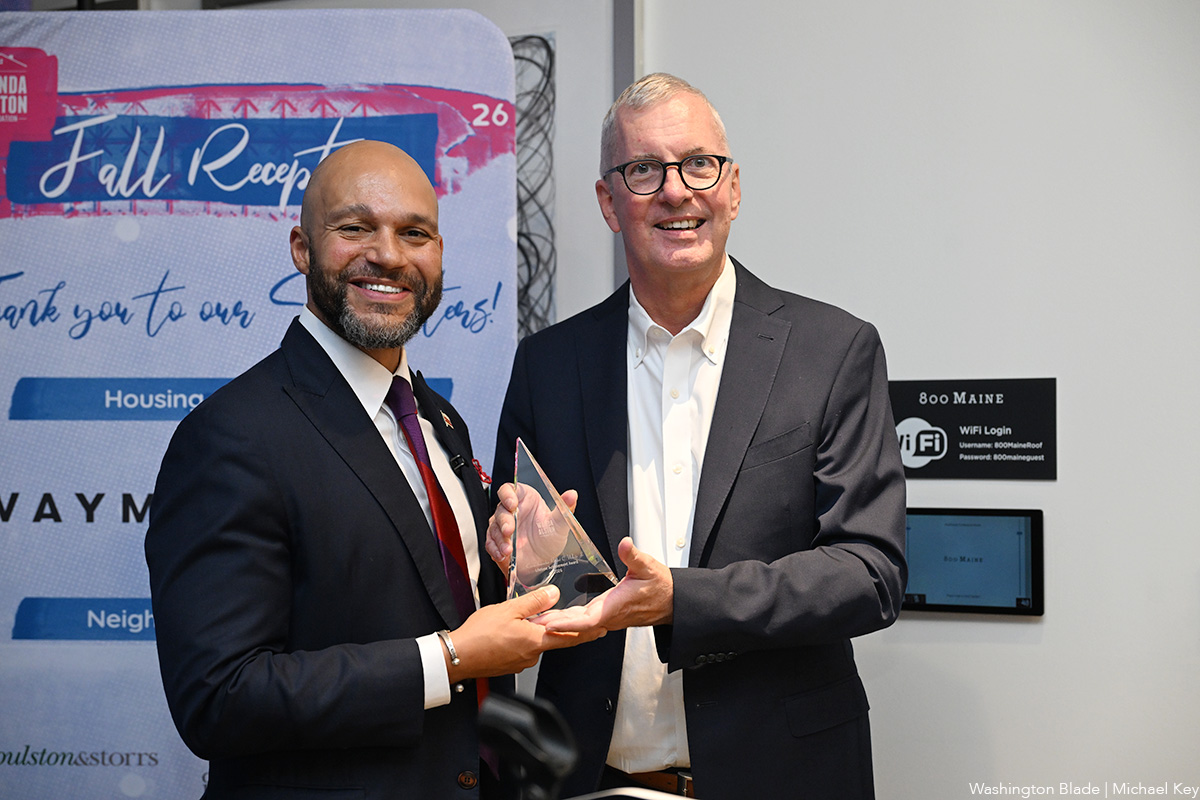
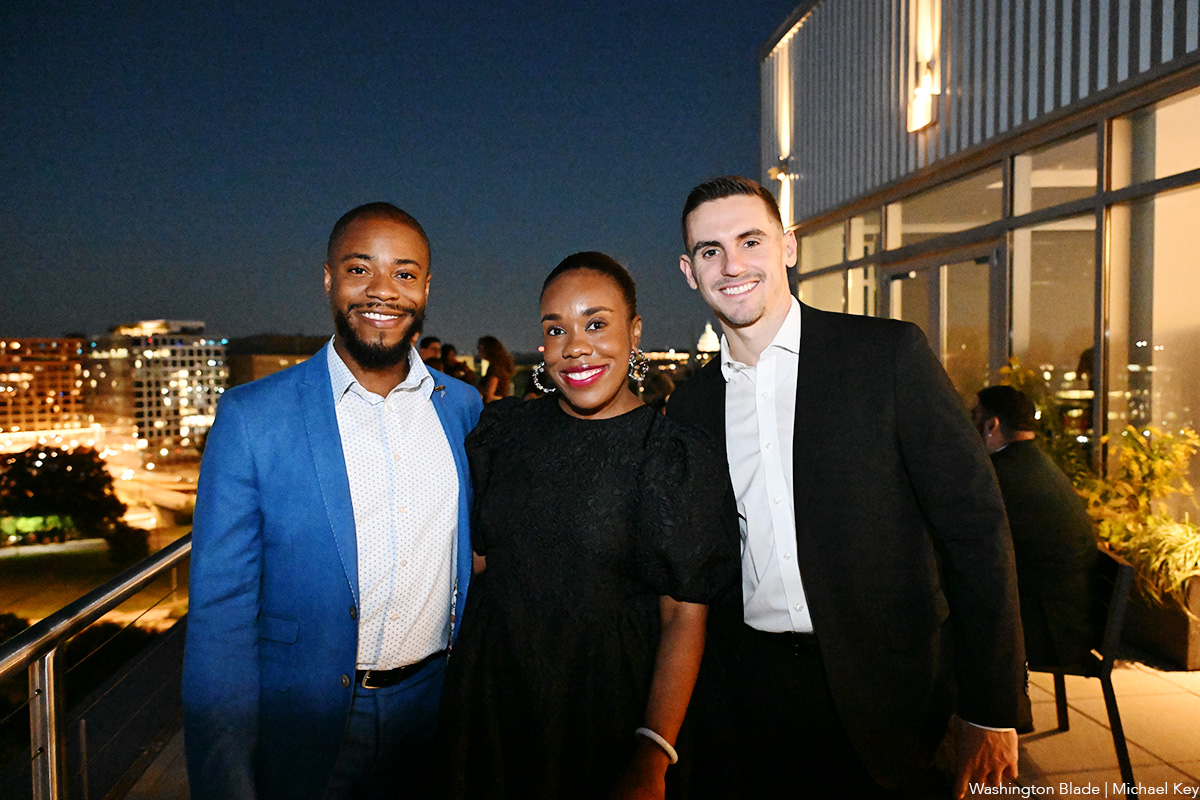
The Wanda Alston Foundation held its Fall Reception at the Penthouse Rooftop at The Wharf on Friday, Sept. 18. Honorees included D.C. Councilmember Robert White, Director of the Mayor’s Office of LGBTQ+ Affairs Japer Bowles, and the Washington Capitals. Rayceen Pendarvis served as the emcee and entertainment was provided by the Thomas Circle Singers.
(Washington Blade photos by Michael Key)
Books
Curl up with a good book this fall
New releases include mysteries, biographies, religion, and more
The fall books season offers lots of options so curl up and get ready to read.
FICTION
For the mystery fan who likes a sprinkle of thriller, look for “The Longest Death” by Kevin Jagernauth (Soho Crime, December). Richard Cobson hates his small town, he’s bored and desperate to get away. Stealing from his employer is the only thing that makes life bearable. That all changes when Marlon Montgomery comes to town and the two fall in love because if one guy can steal so easily, what can two do?
If you like graphic novels, try the “Tripping Over You” trilogy by Suzana Harcum and Owena White. Milo and Liam are finally able to be open about their relationship, no more hiding their love. They’re living together now, but can it last? “Tripping Over You Book 3” (First Second Books) is in stores in early November.
Also try “Diana: The Punk Singer Who Ripped Through Time” by Nate Powell (Abrams ComicArts, October). It’s about a young woman who’s trying desperately to escape her past, until a mysterious murder sidetracks her plans.
So you say you’re a romantic at heart? Then look for “Unspeakable Things: A Novel” by Elizabeth Hand (Little, Brown & Company, October). It’s a story set in the 1920s, when two young women arrive in the English Countryside to a dark and ancient manor. But, of course, nothing in a Gothic novel is easy, right? And you’ll love this tale.
NONFICTION
So this upcoming year is going to be one of exploration, right? Then look for “Free Love: Adventures in Marriage and Polyamory” by Michelle Tea (HarperOne, November). It’s a well-researched, personal, and interesting look at the lives of polyamorous couples and what it’s like to live what used to be called an “alternative” lifestyle.
If “fall” says “biography” to you, then look for “Showbiz! My Life as a Middle-Aged Man” by Murray Hill (Gallery Books, October). For decades, Hill has been making audiences laugh with his signature humor, but getting laughs hides his past all too well. He grew up in an abusive family and learning to hone his talents took some ingenuity. If you’re not a Hill fan yet, you will be, once you read this book.
For the reader who’s searching for a spiritual place, “Reading the Bible Through Queer Eyes: Good News for LGBTQ+ People from Genesis to Revelation” by podcasters Brian G. Murphy and Shannon T.L. Kearns (HarperOne, December) might help. Here, the authors look deeply at Scripture to find the queerness that’s there, proving to readers that the Word is not always what it seems.
Young readers may want to check out “Bitter Pill: Randy Shilts and the Dawn of the HIV/AIDS Epidemic” by Clement Xavier, illustrated by Heloise Cochois, foreword by Michael Lee (Abrams ComicArts, November). It’s a highly researched true story of activist Shilts, but also of Harvey Milk, and the earliest days of the AIDS crisis, when gay men needed a loud voice to advocate for them.
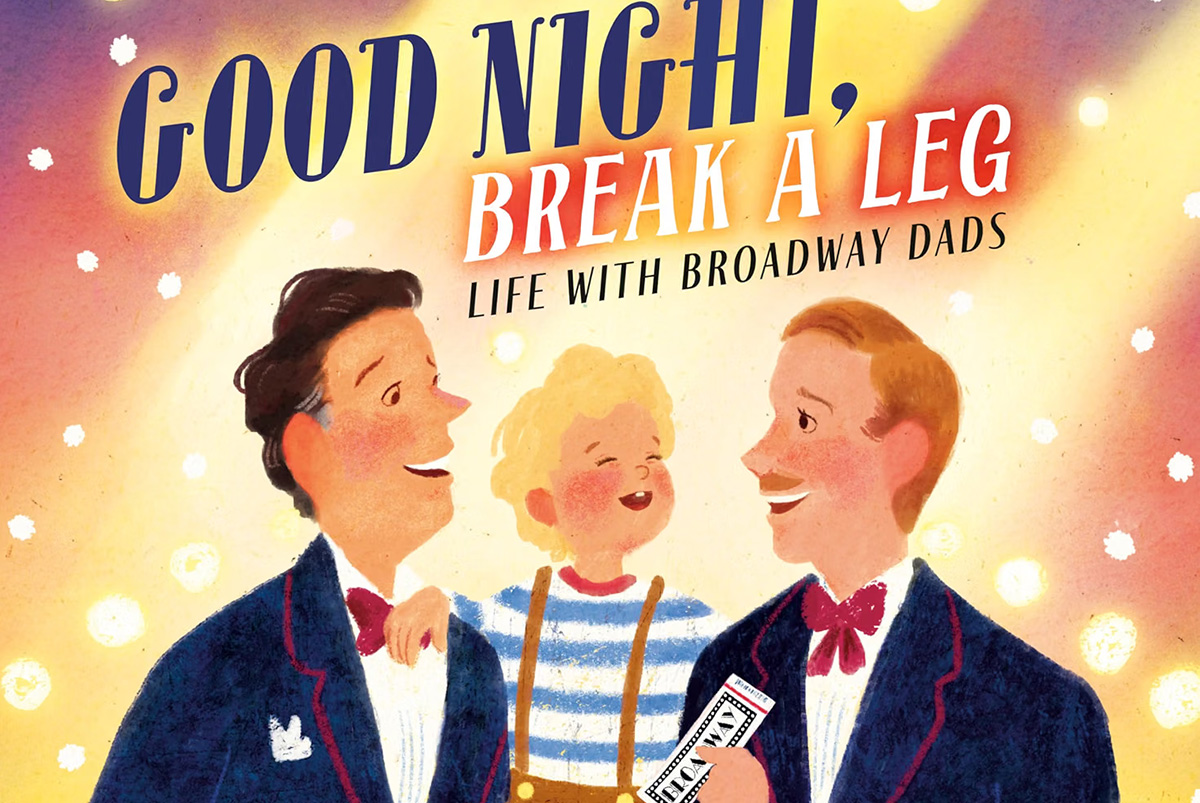
And finally, if you want a fun book for your kids or a child you love, look for “Good Night, Break a Leg: Life with Broadway Dads” by Bret Shuford, illustrated by Elena Hager (Penguin Workshop). What do parents do when they go to work? A little boy learns that his dads have very special jobs by day – and by night! It’s a cute book for kids, but a special tale for lovers of Broadway.
Be aware that publication dates change, titles change, books can be canceled, and your librarian or favorite bookseller can help you find what you need. Season’s readings!
Out & About
A roundup of fall events not to be missed
Laverne Cox, Oktoberfest, arts celebrations, and more
Colder temperatures don’t mean you have to stay indoors — here’s a roundup of what to do this fall.
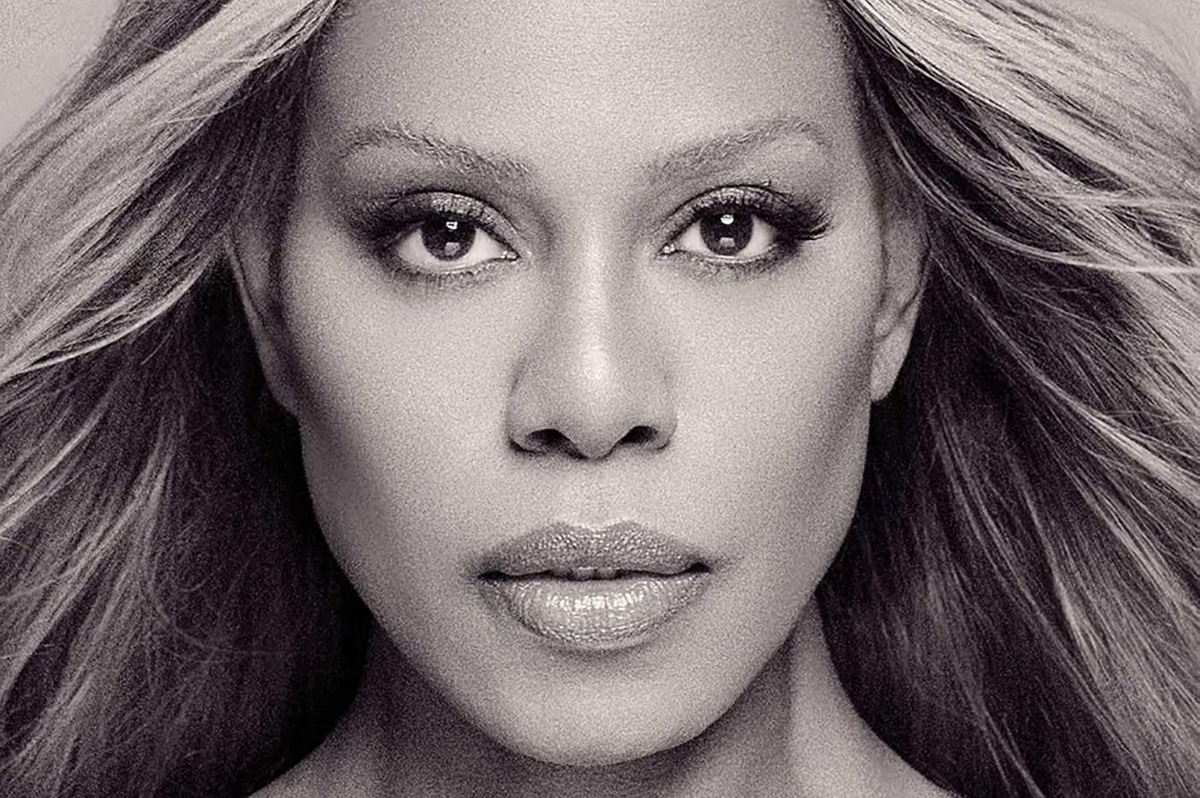
Laverne Cox will discuss her memoir, “Transcendent,” with Dr. Melanie Bryant on Saturday, Sept. 19 at 7 p.m. at Baltimore Book Fest. Cox will share her journey as a transgender woman in Hollywood, confronting childhood trauma, shame, gender identity, her transition, body image issues, her search for romantic love, deep-seated feelings of unworthiness, and ultimately, healing.
Dacha Beer Garden will launch its longest and loudest Oktoberfest yet on Friday, Sept. 18. This will be 17 consecutive days of Bavarian festivities across both locations — the original Shaw beer garden and the 800-person Navy Yard garden — running through Sunday, Oct. 4. On opening night, DC Brau will tap the ceremonial first keg and then Manuela Horn, the six-foot-two Austrian yodel queen, will trade sets with Johnny Koenig and his four-piece band in a live back-and-forth of yodeling, polka, and crowd games that can only be described as Oktoberfest ping pong.
Fay Jacobs will host “Aging Gracefully: 2nd Annual Farewell Tour” on Friday, Oct. 9 and Saturday, Oct. 10 at CAMP Rehoboth Community Center. This show will feature a new script with lots of new stories, and only a couple of “signature” tales.
Capital One Center will host its “Celebration of the Arts” starting on Saturday, Sept. 19 at its location in Tysons, Va. There will be art, music, food trucks, local vendors, and family-friendly outdoor entertainment. This curated experience invites you to engage with hands-on workshops, immersive art activations, and live performances. More details are available on Eventbrite.
Spark Social will host “open Mic Night” on Thursday, Oct. 8 at 8 p.m. Get ready to share your talent or just kick back and enjoy some great performances at Spark Social. Sign Ups are first-come-first-serve,, but you can also message the venue on Instagram to reserve a performance spot. Whether you’re a singer, poet, or comedian, this is your chance to get on stage and share your art. Tickets are $13.26 and are available on Eventbrite.
Howard University’s School of Social Work will host “Intergenerational Trauma in the BIPOC Community and the Use of Art” on Thursday, Sept. 17 at 3 p.m. This in-person, interactive workshop explores the role of art as a creative and supportive tool for understanding and addressing intergenerational trauma. Participants will examine the meaning and impact of intergenerational trauma, with particular attention to its historical roots and ongoing effects within Black and other BIPOC communities. More details are available on Eventbrite.
9:30 Club will host “BERTHA: Grateful Drag” on Thursday, Oct. 8 at 7 p.m. The group has partnered with PLUS1 so that $1 from every ticket sold goes to SMYAL and their work supporting and empowering LGBTQ+ youth. Tickets are available on 9:30 Club’s website.
Steve Lacy’s “Oh Yeah?” tour is coming to The Anthem on Sunday, Oct. 18 at 6 p.m. Tickets are available on The Anthem’s website.
Rapper Cupcakke will perform at Howard Theatre on Sunday, Oct. 25 at 7 p.m. More details are available on the theater’s website.
Team DC will host “Open Play: A Celebration of LGBTQ+ Athletes and Sports Fans” on Saturday, Oct. 10 at 6 p.m. at Trade. Join Athlete Ally, Team DC and District Wrestling for a casual, in-person mixer as they celebrate LGBTQ+ sports fans and athletes at all levels of the game. Whether you’re part of an LGBTQ+ recreational league or just love watching sports, this is the place to connect, celebrate, and share the love of the game with other queer athletes, fans, business leaders, policymakers and more. Reserve a spot on Eventbrite.
The DC LGBTQ+ Community Center will host “2026 LGBT Intergenerational Extravaganza” on Sunday, Sept. 20 at 12 p.m.This is an event to connect, build relationships, and have fun with LGBTQ folks from other generations, and it will include lunch, an intergenerational dialogue and breakout sessions. More details are available on Eventbrite.

PHOTOS: Wanda Alston Foundation Fall Reception

Moving presents a chance to ‘clean house’

EV ecstacy: BMW iX3, Rivian R2

Curl up with a good book this fall

What LGBTQ veterans are building after ‘Don’t Ask, Don’t Tell’

Trump’s Cabinet: Dumb, dumber, dumbest, and evil

More than 150 people detained outside Istanbul courthouse

Virginia Anti-Violence Project struggles to fill federal funding gaps

Gay man sues Delaware AG for not prosecuting partner in domestic violence case

D.C.’s fall theater season is already well underway
-

 Opinions4 days ago
Trump’s Cabinet: Dumb, dumber, dumbest, and evil
-
Turkey4 days ago
More than 150 people detained outside Istanbul courthouse
-
Virginia4 days ago
Virginia Anti-Violence Project struggles to fill federal funding gaps
-
Delaware4 days ago
Gay man sues Delaware AG for not prosecuting partner in domestic violence case