National
Chick-fil-A ends anti-gay donations
Strikes deal with pro-gay Chicago alderman, will cease donations to ‘organizations with political agendas;’ clarifies non-discrimination policies
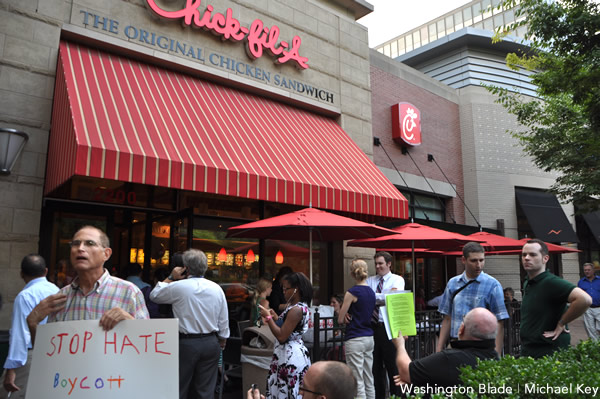
A Chicago alderman and LGBT activists are claiming victory after a representative from Chick-fil-A agreed to demands the company cease supporting anti-gay causes. (Washington Blade file photo by Michael Key)
Outspoken gay ally, Chicago Alderman Proco “Joe” Moreno announced late Tuesday that he’d reached a tentative deal with Chick-fil-A over his pledge to block the chain from opening locations in his ward over anti-gay donations, according to LGBT website Chicago Phoenix.
According to the alderman, the chain and its charitable arm will cease all donations to anti-gay political organizations, as well as clarify its LGBT non-discrimination policies regarding employment and customer service. Chick-fil-A did not immediately confirm with the Washington Blade that the statements made in the press release are true.
UPDATE: Chick-fil-A responded to the Blade with the following:
“At this point, we are not offering any response to the press release distributed by the Civil Rights Agenda other than the statement we originally released in July,” (see statement bellow).
“We are very pleased with this outcome and thank Alderman Moreno for his work on this issue,” said Anthony Martinez, executive director of Chicago-based LGBT organization, The Civil Rights Agenda, who worked with Moreno in an advisory capacity. “I think the most substantive part of this outcome is that Chick-fil-A has ceased donating to organizations that promote discrimination, specifically against LGBT civil rights.”
Members of the LGBT community and their allies had for the past several years expressed concern over support the fast food chain granted anti-gay groups — including some that the Southern Poverty Law Center has certified has hate groups — through its charitable arm, the WinShape Foundation.
Organizations of the likes of Exodus International, Focus on the Family, and The Family Research Council have for many years received donations from the WinShape Foundation, which is primarily funded by Chick-Fil-A. Also troubling to many advocates, WinShape backed a website aiming to promote marriage so “more kids can receive the documented benefits from being raised by both their mother and father in a healthy-marriage home,” originally called ‘LoveIsHere.com’ but now called ‘LoveGivesFirst.com,’ which — according to gay website, GoodAsYou.org — held contests with prizes funded by the Ruth Institute, the educational arm of anti-gay organization National Organization for Marriage. In addition, the WinShape foundation’s marriage retreat grounds in Mt. Berry, Ga., have long excluded same-sex couples, an issue the new developments still do not address.
The connections to anti-gay organizations had long dogged the company, which saw efforts to evict the restaurant on dozens of American colleges where the chain was present on campus. The issue reached a head earlier this year, however, when Dan Cathy, the COO and son of the company’s founder, told the Baptist Press that Chick-fil-A is “guilty as charged” when accused of being hostile toward same-sex couples, and then later claimed that allowing same-sex couples to marry was “inviting God’s judgement on our nation…” on a conservative talk show.
In July, Chick-fil-A released the following statement:
Chick-fil-A is a family-owned and family-led company serving the communities in which it operates. From the day Truett Cathy started the company, he began applying biblically-based principles to managing his business. For example, we believe that closing on Sundays, operating debt-free and devoting a percentage of our profits back to our communities are what make us a stronger company and Chick-fil-A family.
The Chick-fil-A culture and service tradition in our restaurants is to treat every person with honor, dignity and respect –regardless of their belief, race, creed, sexual orientation or gender. We will continue this tradition in the over 1,600 Restaurants run by independent Owner/Operators. Going forward, our intent is to leave the policy debate over same-sex marriage to the government and political arena.
“The WinShape Foundations is now taking a much closer look at the organizations it considers helping, and in that process will remain true to its stated philosophy of not supporting organizations with political agendas,” read a letter addressed to Moreno signed by John E. Featherston, Jr., Chick-fil-A’s senior director of real estate. Moreno had threatened to block the restaurant from opening in Chicago’s First Ward over their outstanding anti-gay grievances, and had been working quietly behind the scenes with the company to reach the deal over today’s new assurances for at least ten months. We were not able to independently confirm whether or not Dan Cathy has also signed off on the new policies, nor whether WinShape’s Board of Directors or staff has agreed to the new terms. WinShape’s website does not list any members of its board or staff.
Additionally, according to The Civil Rights Agenda, Chick-fil-A claims to have sent an internal memo to franchisees and stakeholders that states that as a company, they will “treat every person with honor, dignity and respect-regardless of their beliefs, race, creed, sexual orientation and gender” and that their “intent is not to engage in political or social debates.”



Pennsylvania
Philadelphia murder suspect remains at large
Two killed, one injured in attacks motivated by victims’ sexual orientation
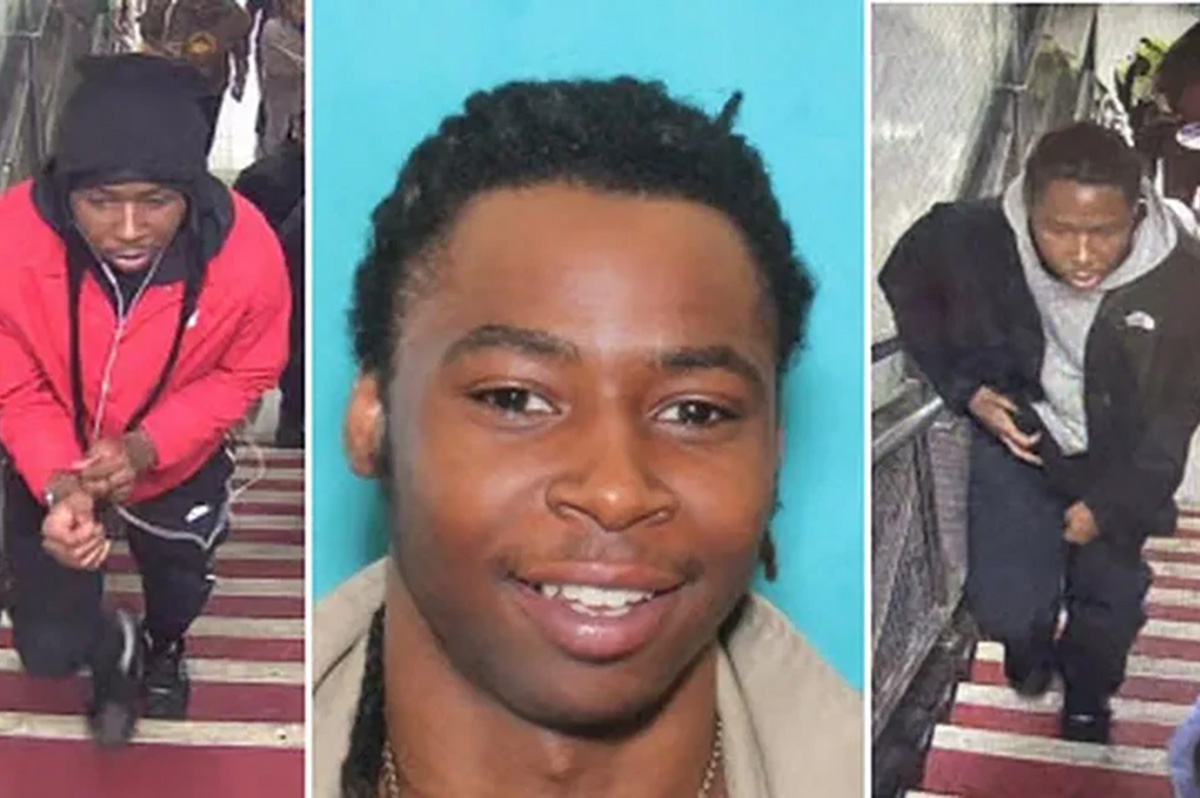
Police seek the public’s support in finding a suspect wanted in connection with three Philadelphia shootings, including two murders, who may have targeted his victims because they were gay. All three shootings took place near Hunting Park Recreation Center between May 29 and June 26.
The suspect is 21-year-old Jahylin Melchur, who has not been located by police and is not in police custody as of July 7. Police seek the public’s support in tracking down the suspect, whose image was captured on surveillance cameras. Previous reporting underlined that Melchur should be considered armed and dangerous.
Each of the victims was found partially clothed between 10 and 11 p.m.
On May 29, a 55-year-old in Juniata Park was found two miles from the rec center. The victim, who survived the encounter with critical injuries, said a man approached him and announced his intention to rob him, before shooting him in the elbow and torso.
Martin Higgins, 45, was pronounced dead on the bleachers of the rec center’s baseball field on June 20, suffering from a gunshot wound to the abdomen. Sharef Holman, 29, was found near the basketball courts on June 26, suffering from multiple gunshot wounds. He was transported to Temple University Hospital but died shortly thereafter.
Deputy Police Commissioner Frank Vanore declined to answer the Philadelphia Inquirer’s question regarding whether the victims may have met Melchur on a dating app, citing the ongoing investigation. Sources told the Philadelphia Inquirer that investigators are exploring this possibility
Although robbery may be at least part of the motive in the first shooting, other movies are unclear.
NBC10 reported that law enforcement sources told the station all three victims were targeted because they were gay, but the Philadelphia Police Department did not confirm this.
The Philadelphia Police Department replied to PGN’s questions with an email stating, “This remains a very active investigation, and investigators are looking at all aspects of the case, including underlying motivations for committing these crimes.
“At this point, we can confirm that Melchur is wanted for two homicides by shooting and one non-fatal shooting, all of which occurred in the Hunting Park area.
“The investigation has not established that the victims were specifically targeted because of their sexual orientation.”
The Philadelphia Police Department is urging anyone with information to contact the Homicide Unit at 215-686-3334 or submit an anonymous tip by calling the PPD Tip Line at 215-686-TIPS (8477).
(This story is republished with permission of the Philadelphia Gay News.)
National
Madonna roundup: Reviews, sales, and love for ‘Danceteria’
Pop legend’s new album ‘Confessions II’ earning raves
Madonna isn’t just back, she’s ubiquitous.
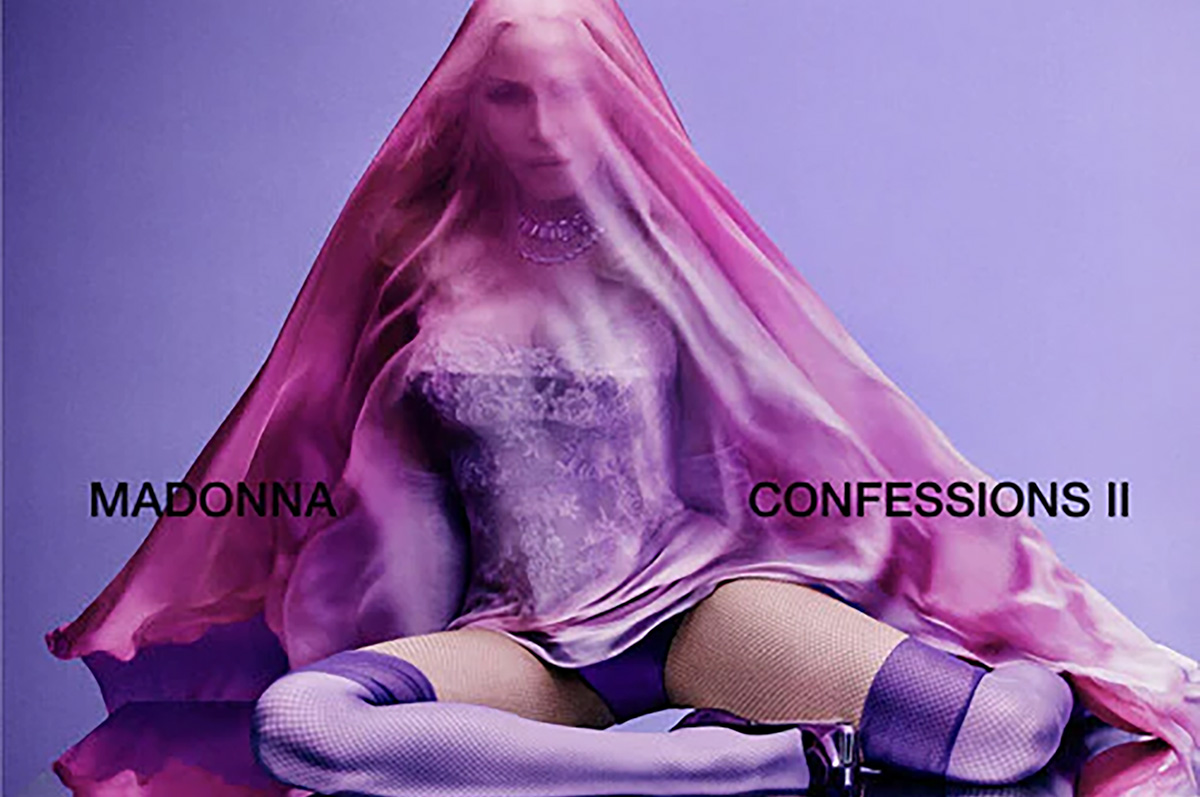
From a Times Square takeover to Graham Norton’s couch, the pop legend is busy promoting her new album, “Confessions II,” a sequel to 2005’s “Confessions on a Dance Floor,” that is earning rave reviews.
“Madonna’s back in peak form with a fresh and honest dance record that’s not only her best in 20 years, but a genuinely vital addition to her canon,” says Pitchfork.
“Facing grief and loss has made Madonna’s music deeper than it’s been in 20 years, but also more alive,” the Guardian proclaims.
“If everyone in the club is a work of art, as ‘Danceteria’ says, then to live loudly is to make an indelible mark,” according to Vulture.
The album features upbeat dance productions along with some melancholic views on death and loss. On the song “Betrayal,” she reflects on the recent death of her stepmother Joan, singing, “You’ll never take my mother’s place … you betrayed me, you enslaved me.”
On “L.E.S. Girl,” she revisits her early days living on the Lower East Side and struggling to pay the rent. “Bizarre” seems to reference her failed 1980s marriage to actor Sean Penn. “Test” is a duet with daughter Lola Leon, in which she sings, “I wish I knew / The pain I’ve caused / My butterfly / Was always being watched.”
But the emotional high point of the album comes on “Fragile,” which she wrote about the death of her brother Christopher. The two were close early in Madonna’s career and he designed sets for early tours, including “Blonde Ambition.” But they had a falling out after her marriage to Guy Ritchie and he wrote a scathing tell-all book about his sister that led to years of estrangement. The two reconciled after Christopher’s cancer diagnosis and shortly before he died in 2024 at age 63. She sings, “Late last night I was fast asleep/You came to me in a dream/You said, ‘Don’t forget about me/Don’t forget to be happy.’”
Death emerges again but in a much more upbeat context in “Danceteria,” an ode to the iconic New York nightclub that has emerged as a gay favorite single and seems destined to be the song of the summer in queer nightlife. She recounts her pre-fame days trying to convince a DJ to play her first single “Everybody” at the club and name checks Jean-Michel Basquiat, Keith Haring, best friend Debi Mazar, and DJ Mark Kamins on the track.
Streaming numbers and sales are strong for the new album with projected first week sales of 100,000 ensuring a No.1 debut in the U.S.
U.S. Federal Courts
Three overlooked court rulings limited White House anti-trans policies
Supreme Court narrowed trans rights, advocates saw victories in other decisions

While the U.S. Supreme Court’s decision in West Virginia v. B.P.J. continues to dominate headlines about transgender rights, three recent federal court cases produced significant rulings that limited or temporarily blocked Trump-Vance administration policies attacking trans Americans.
Talbott v. USA
Trump issued Executive Order 14183, “Prioritizing Military Excellence and Readiness,” on Jan. 27, 2025, banning trans people from serving in the military. The following day, GLAD Law and the National Center for LGBTQ Rights filed a federal lawsuit in the U.S. District Court for the District of Columbia challenging the ban on behalf of six active-duty service members and two individuals seeking to enlist. The organizations argue the policy violates the Fifth Amendment’s guarantee of equal protection under the law.
The plaintiffs sought a nationwide preliminary injunction — a temporary block on enforcement of the executive order while the litigation continued. The district court granted that injunction and later rejected the Trump-Vance administration’s request to dissolve it, temporarily protecting trans service members from being discharged solely because of their gender identity.
That protection, however, was short-lived. In Shilling v. Trump, the Supreme Court stayed the lower court’s injunction, allowing the military to begin enforcing the trans service ban while litigation continued. The U.S. Air Force subsequently required trans service members facing involuntary separation proceedings to appear in uniforms and grooming standards corresponding to their sex assigned at birth and, in some cases, used their deadnames during those proceedings.
Despite that setback, the plaintiffs secured two significant legal victories during Pride month.
On June 1, a federal appeals court blocked the discharge of the trans service members involved in Talbott. Then, on June 30, a federal district court certified the case as a class action on behalf of all currently serving trans service members. That means future rulings in the case will apply not only to the original six plaintiffs but to all active-duty trans military personnel covered by the class.
The case remains ongoing, but class certification significantly strengthens the ability to protect trans service members as the litigation continues. Currently, there are 28 plaintiffs in total, including the two still attempting to enlist.
Z.A. v. Blanche
In Z.A. v. Blanche (formerly Z.A. v. Lucile Salter Packard Children’s Hospital at Stanford), the U.S. District Court for the Northern District of California issued an emergency order one day before a federal grand jury subpoena was set to be enforced on July 2. The order blocked the Department of Justice from obtaining confidential medical records belonging to California families whose children receive gender-affirming care.
The ruling relied in part on protections established under the Health Insurance Portability and Accountability Act (HIPAA), the 1996 federal law governing the privacy and security of medical records.
The decision represented a significant check on the administration’s efforts to obtain sensitive patient information, protecting the privacy of trans patients and their families while the legal challenge proceeds.
Doe v. Blanche
Doe v. Blanche, which remains ongoing, challenges Trump’s executive order, Defending Women From Gender Ideology Extremism and Restoring Biological Truth to the Federal Government. Under policies implementing that order, many trans women in federal custody would be housed in men’s prisons.
A federal district court in D.C. granted a preliminary injunction blocking enforcement of a Bureau of Prisons policy that would require incarcerated trans women to be housed in men’s facilities regardless of individualized safety assessments or the risk of sexual assault.
The Bureau of Prisons policy also conflicts with the goals of the Prison Rape Elimination Act (PREA), enacted by Congress in 2003 to address sexual abuse in correctional facilities through standards, research, funding, and prevention measures. Federal data has consistently shown that trans people in custody experience sexual assault at dramatically higher rates than the general prison population.

Philadelphia murder suspect remains at large

Mary’s House founder, CEO retires

Va., Md., advocates brace for next fight after Supreme Court sports ruling

Eastern Shore school board wants an 18-and-over rule for young adult books

Gay teacher, LGBTQ-supportive parent win $1 million in Fairfax County defamation lawsuits

‘Transcendent’ a tough but important read

‘My Favorite Sociopath’ debuts at Shepherdstown’s CATF

Under-the-radar Delaware beach towns smart buyers are targeting

In Trump’s divided America, Michael Weinstein’s AHF responds