Opinions
Opinion | Blame Mayor Bowser for violence epidemic?
In a word, ‘no,’ as the problem is nationwide

The simple answer to the question “Does the Mayor get the blame for the violence epidemic?” is NO! This is not something that can be laid at any one person’s feet. The epidemic of gun violence is gripping the entire nation.
The frustration and outrage I and everyone else feels are palpable. It’s frightening when you hear gunshots in your neighborhood. It makes bigger headlines when the shots fired are in neighborhoods not used to that like the recent shooting on 14th and Riggs, N.W. When the shots rang out patrons of upscale restaurants like Le Diplomate ran or ducked under their tables for cover. When shots were fired outside Nationals stadium the national media lit up to report it. The truth is we must have the same outrage every time shots are fired and people hurt or killed in any neighborhood of our city.
Trying to lay the blame for this at the feet of the mayor, as some people on social media and in opinion and news columns in the Washington Post are doing is wrong. Some would have you believe the mayor is just sitting by and allowing the violence to happen. There are pleas “Mayor Bowser do something!” as if she could wave a magic wand and the shootings will stop.
In a recent Washington Post column, “Bowser pressed to act after shootings,” a number of Council members are quoted including Chairman Phil Mendelson, Ward 2 member Brooke Pinto, Ward 4 member Janeese Lewis George, At-large member Anita Bonds and Ward 5 member Kenyan McDuffie. They all call for something to be done but not one of them says what they would do. It’s clear they are as frustrated and outraged as the rest of us but have no easy answers. What is clear is casting blame on the mayor and police commissioner won’t help to stop the violence and shootings.
Again, this epidemic of violence isn’t just an issue for D.C. but a national epidemic. Recently our mayor sat beside the president at a White House meeting called to discuss what can be done about this with mayors and law enforcement officials from around the nation. No one from the president down had an answer that can make it stop right away. Many in D.C. would be surprised at the ranking of the 50 cities with the most violent crime per 100,000 residents showing D.C. with 977 violent crimes per 100,000 residents at number 27 behind cities like Rockford, Ill., Anchorage, Ala., and Milwaukee, Wisc. Crime in nearly all those cities and murder rates have gone up, in many cases dramatically, since the pandemic.
The solution to ending gun violence is to get the guns out of the hands of those who are using them for crime but that is easy to say and much harder to do. We know ending poverty will make a difference. Giving every child a chance at a better education and ensuring real opportunities for every young person will make a difference. We must also hold people responsible for the serious crimes they commit and often courts are a system of revolving door justice where we find the same people arrested for a serious crime back on the street committing another one and the same gun used for multiple crimes.
There are anti-crime programs that might work but they need buy-in from the entire community including activists and the clergy who must work in concert with our political leadership. D.C. is funding a host of programs including ‘violence disrupters,’ job training, and mental health and substance abuse programs. They all need more money and more support.
In D.C., we have only 16 elected officials with real power; the Council, the mayor, the attorney general and our congressional representative. We have community leaders elected to local ANCs. When members of the council attack the mayor, some simply to make political hay for their own future election, it won’t solve any problems.
This must be viewed as a crisis and our 16 elected leaders should sit down, agree to a series of anti-crime programs and efforts they will adequately fund, and stop attacking each other. Once they agree on the programs to fund they should bring together ANC members from across the city to a meeting at the convention center and work out a plan for what each can do to move us forward to safer neighborhoods.
We must work together as one if we are to succeed in making life safer and better for all.
Peter Rosenstein is a longtime LGBTQ rights and Democratic Party activist. He writes regularly for the Blade.



Commentary
Washington Blade responds to concerns over White House pool duties
Inaccurate media reports create confusion but we stand with our colleagues
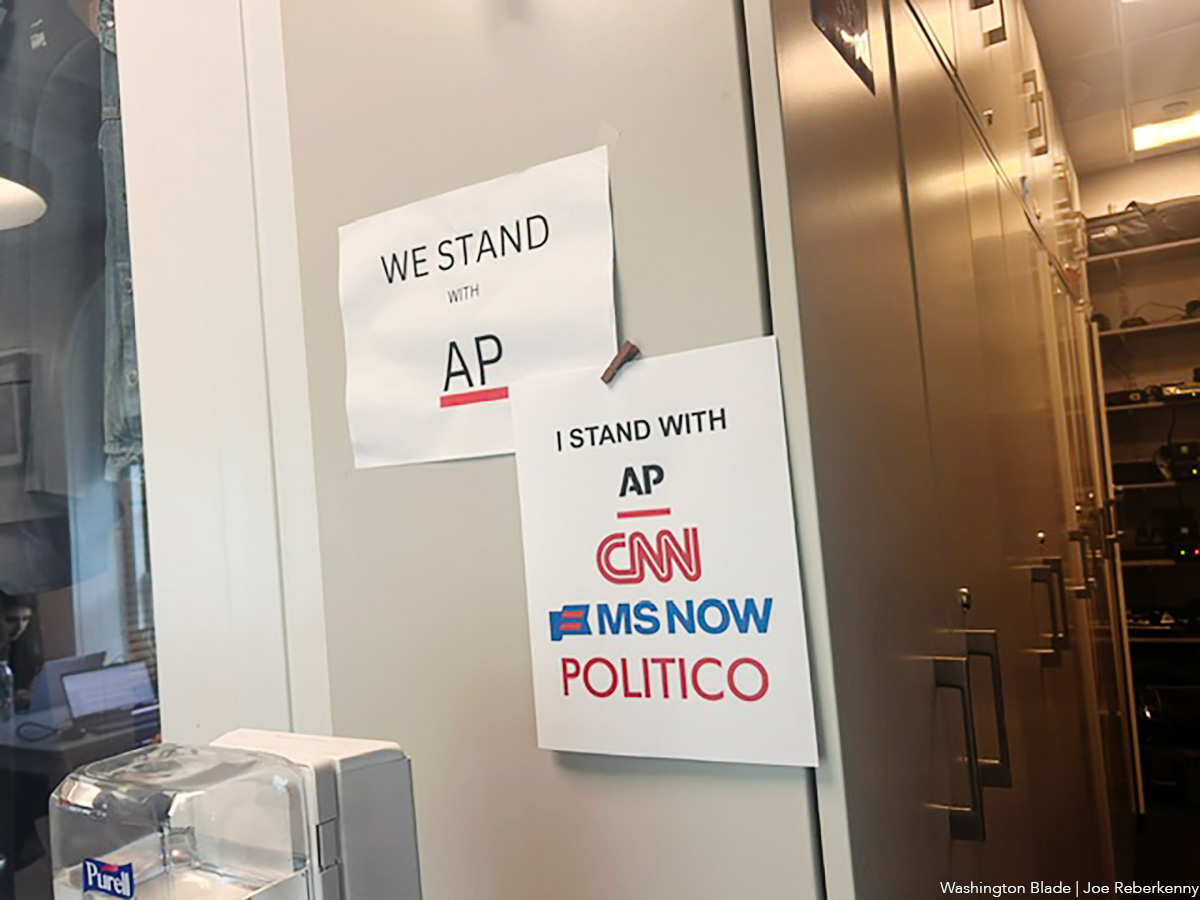
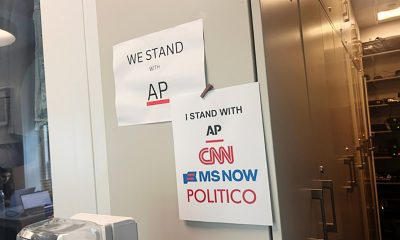
Last week, President Trump announced his unconstitutional ban of CNN, MSNow, and Politico from the White House. Coincidentally, on Monday, it was the Washington Blade’s turn to serve as the print pool reporter on duty covering the president’s actions that day. This important responsibility is shared and rotated among the print members with each serving roughly once per month. The Blade is the only LGBTQ outlet with a seat in the briefing room, a slot in the pool rotation, and membership in the White House Correspondents’ Association, something we fought for decades to secure after enduring years of discrimination, ridicule, and resistance to openly queer journalists working inside the White House. We take our responsibilities there seriously.
There are two pools that cover the president: broadcast and print. The other four members of the broadcast pool — ABC, CBS, NBC, and Fox News — agreed to boycott their pool duties. There has been no boycott among the print pool, which is a separate entity. I called the president of the White House Correspondents’ Association on Monday to confirm that no outlets in the print pool were boycotting.
A boycott by the Blade would set us back and lead to our expulsion from the pool and briefing room and our replacement by a right-wing outlet sympathetic to President Trump’s approach to attacking the media. The LGBTQ community is far better served with the Blade in the room than a far-right blogger taking our seat.
Let’s be clear: the Blade stands for diversity, equity, and inclusion and we stand for the First Amendment and freedom of the press. In solidarity with the broadcast pool, we made two important decisions on Monday — the first day anyone had to think about any of this. First, we refused to take or share any videos or still photos of the president, which would have undermined the broadcast boycott. Second, when Politico’s turn comes up for pool duty in mid-October, the Blade will not fill in and cover for them while they are banned. Politico must be readmitted and allowed to do their job.
After a rough day navigating and reporting on all of this, the Advocate published a reckless and inaccurate story suggesting that the Blade had crossed a picket line. Not true, as there is no print pool boycott. They claimed that I wouldn’t talk to their reporter. Also not true. I called their reporter within 90 minutes of receiving his message and he didn’t take the call or call me back. Their story named me and our White House reporter, immediately exposing us to public criticism and worse. The environment in D.C. is so toxic and even violent these days that subjecting our staff to unfair and false accusations like this invites harassment, doxxing, and worse. To do that without even talking to us is next level irresponsible and the antithesis of journalism.
On Tuesday, I talked to two reporters and an editor at the Advocate but they refused to retract anything in their inaccurate story. If the reporter had returned my call, I could have explained all of this but they are more concerned with clickbait and sensational headlines, a dangerous practice in these troubled times.
Back to the pool. The Blade was in the briefing room in the Reagan era, when Press Secretary Larry Speakes made jokes about AIDS and the reporters in the room laughed out loud. We endured all of that abuse and worse for decades, always standing in the back of the room and never being called on. The Blade’s journalists persevered. When President George W. Bush was re-elected in 2004, the Blade’s White House credentials were revoked amid an earlier press crackdown. Notably, no one boycotted or stood up for us. When Barack Obama won election in 2008, I received an email from his communications director informing me that effective midnight on Jan. 20, 2009, the Blade’s credentials would be restored.
So we have had quite a ride navigating administrations and their changing requirements for gaining access but always playing the long game. As Barney Frank used to say, “If you’re not at the table, then you’re probably on the menu.” The Blade is at the table and we do our best to ensure the LGBTQ community’s issues are addressed by both parties.
Thanks for reading and supporting the Blade’s work. If you have questions about our approach, you can reach me at [email protected].
Kevin Naff is editor of the Washington Blade. Reach him at [email protected].
Opinions
Young people should know history of the fight for human rights
Trump is working to erase contributions of marginalized people
When talking with otherwise really smart young people, I am amazed how little knowledge many of them have about the fight for human rights in the United States. Our country was founded by white men, who didn’t think about giving full rights to Black Americans, women, the LGBTQ community (what they knew of it, or called it). They wrote in the Declaration of Independence, “We hold these truths to be self-evident, that all men are created equal, that they are endowed by their Creator with certain unalienable Rights, that among these are Life, Liberty and the pursuit of Happiness.” But that referred to all white men, and intentionally didn’t mention women. For 250 years, the country has been trying to make up for that, and making progress in fits and starts. We have yet to fully succeed. Today the felon, and his fascist aides, in the White House, are working daily to take us backwards.
For that reason alone, it is important for younger generations to understand the fight for human rights, know who was fighting for those rights, and understand it is an ongoing fight. Often, when listening to some millennials speak, one would think the world began with them. They either forgot, or never learned, about all those who fought for the rights they now have. I realize this was true for previous generations as well. In 2016 I co-hosted a fundraiser for Pete Buttigieg during his run for president. He is an undeniably brilliant guy. Yet when he spoke of marriage equality, he just thanked Justice Kennedy for it. I reminded him after he spoke, while it’s nice to thank Kennedy for his vote, it shouldn’t be done without acknowledging the many activists who worked for decades, to get to the point that allowed Kennedy to cast that vote. In the same way it was clear to me during the Hillary Clinton campaign for president, many young women didn’t understand the work many of their own mothers had done, to fight for their right to control their own healthcare, and women’s rights in general. They took for granted the rights they had. Now, after losing some of them, many will realize the fight for their rights is never-ending.
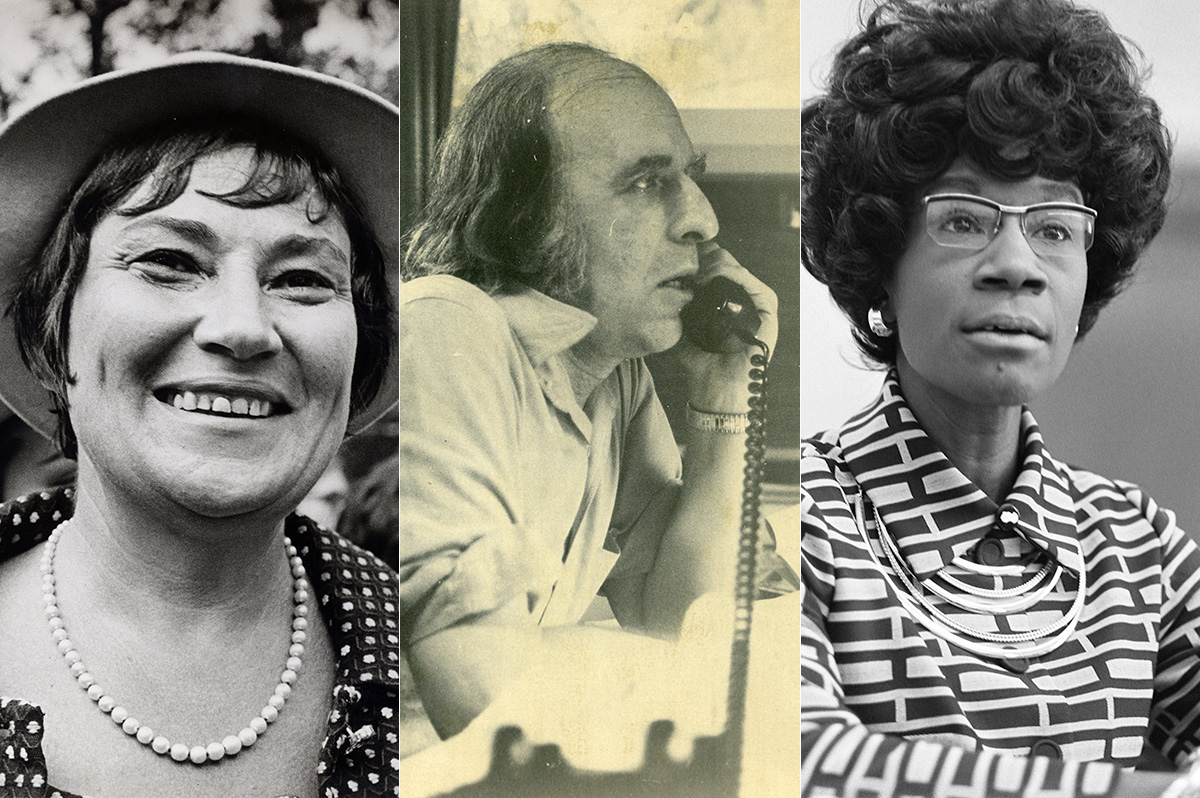
When I speak to younger members of the LGBTQ community, I am amazed how many don’t know the history of the AIDS epidemic, many thinking it was always a disease you could deal with by taking medication. They don’t understand the work so many activists did to bring attention to this devastating disease, and get the healthcare so many needed. Those like Cleve Jones, Larry Kramer, Dr. Anthony Fauci, and so many others. Recently, I realized how many young women don’t know the names of Gloria Steinem, Betty Friedan, Shirley Chisholm, Bella Abzug — women who fought for their rights. And this is just recent history, no less knowing about the Suffragettes, the strong women who fought for their right to vote. I’ve met young women who don’t know what the ERA is, and others who think it passed. Many don’t know the nation couldn’t get 38 states to approve an amendment to include them in the Constitution. The same for young members of the LGBTQ community who don’t know what the Equality Act is. Others think it passed, and are shocked when told it didn’t and in 27 states, they can be married on Sunday, and kicked out of their home, and fired from their job, on Monday. They don’t know names like Frank Kameny, Harvey Milk, Barney Frank, or the history of the Mattachine Society, or the Stonewall Riots.
Our current president is trying to wipe out all this history, and reverse any progress that has been made. Knowing this, it makes it even more important for school systems across the nation to fight to educate our children. We should ensure no child can graduate high school, without taking a course called “The 250-year fight for human rights in the United States.” They need to understand the history, and learn about the people who fought for their rights. They need to know how far we have come in 250 years, and understand, as we begin the next 250, how far we still have to go, to ensure real, full equality, for all.
Peter Rosenstein is a longtime LGBTQ rights and Democratic Party activist.
Commentary
What LGBTQ veterans are building after ‘Don’t Ask, Don’t Tell’
DADT repeal took effect on Sept. 20, 2011. Trans servicemember ban reinstated

Fifteen years ago this month, the repeal of “Don’t Ask, Don’t Tell” took effect. At the time, the importance of the change was obvious: gay, lesbian, and bisexual Americans would no longer have to hide who they were to wear the uniform. What was harder to see was what would follow: a generation of LGBTQ veterans able to carry their service openly into American civic life.
Earlier this month, Alaska state Rep. Andrew Gray, an Army veteran, stood before the Anchorage Assembly and asked the city to recognize Sept. 20 as LGBTQ Veterans Day.
His former command sergeant major, Mike Grunst, followed him to the microphone. A 35-year veteran who had served in combat, Grunst called troops who had served while hiding who they were “the bravest I have ever served with.”
Then Denise Sudbeck stepped forward. A Vietnam-era Navy veteran, she thanked the country for the privilege of serving and asked that the next generation have the same chance.
The Assembly approved the recognition.
Nothing about the scene required a new vocabulary. A veteran made a request of his community. A commander vouched for those who served beside him. Another veteran asked that younger Americans inherit the opportunity she valued. They entered the civic record simply as veterans.
That identity can do more than win recognition.
When federal policy abruptly ended the careers of transgender servicemembers this year, veterans and servicemembers in California began asking a practical question: What happens when those Americans come home?
Republican Assemblyman Jeff Gonzalez, a Marine combat veteran, began one hearing with questions about transgender military service. He listened as veterans explained how the military handles medical care and deployment case by case.
Then the discussion turned to separation.
“I don’t wanna see any veteran homeless,” Gonzalez said. Before the hearing ended, he was asking: “How can I help? How can I understand? How can I be a good advocate?”
The legislation that followed would provide housing, employment and transition assistance to discharged servicemembers. Republican state Sen. Shannon Grove spoke for it. The Senate passed it 32 to 0.
Americans have plainly not settled their disagreements over transgender people. Nor should military service be a prerequisite for rights that belong to every citizen.
But military service creates relationships that are difficult to reduce to the abstractions of the culture war. Before a legislature, “the transgender issue” can become a veteran who deployed, an officer who led troops, or the person who once stood beside you.
The political question changes because the human relationship has already changed.
The pattern is beginning to appear across the country. Kansas is among the states recognizing LGBTQ Veterans Day for the first time this year. New York and Virginia are pursuing broader state-level programs for LGBTQ veterans.
Sept. 20 is deliberate. On that day in 2011, “Don’t Ask, Don’t Tell” ended.
We usually remember repeal for what LGBTQ Americans gained: the ability to serve openly. Fifteen years later, we can also see what the country gained.
A gay veteran can stand before his local government beside the commander who once led him. A transgender servicemember can sit before a legislator who begins with doubts and ends by asking how he can help. A veteran from an older generation can ask her neighbors to give those who follow her the same chance to serve.
This is citizenship in practice.
The enduring legacy of “Don’t Ask, Don’t Tell” repeal is not only that Americans were finally allowed to serve openly. It is also what they can now build after coming home.

Caso Karlina: Una sentencia histórica contra las terapias de «conversión»

Washington Blade responds to concerns over White House pool duties

Young people should know history of the fight for human rights

Dutch prime minister visits Stonewall Inn

Clavicular charged in alleged rape of teenage influencer

Over 2,000 turn out for Hands Around the Kennedy Center protest

PHOTOS: Wanda Alston Foundation Fall Reception

PHOTOS: Walk and 5K to End HIV

What LGBTQ veterans are building after ‘Don’t Ask, Don’t Tell’