Arts & Entertainment
Neil Patrick Harris is ‘Uncoupled’ in new Netflix sitcom
Show lampoons queer NYC social scene’s mores and manners
Summer of 2022 might just go down in history as “The Summer of the Queer Romcom.” With movies and shows like “Heartstopper,” “Fire Island,” and “Anything’s Possible” already gracing our screens, and upcoming projects like Billy Eichner’s much-anticipated “Bros” still on the horizon, it seems like Hollywood is trying to make up for all those years of content in which LGBTQ people were only allowed to be shown as tragic victims or comic relief – when we weren’t being erased altogether, that is – by giving us a glut of the kinds of happily-ever-after stories we never got to see about ourselves. It’s about time, and nobody is complaining.
Still, with all these feel-good romances heading our way, it was inevitable that we would eventually get something that looks at the flip side of that coin – a story about breaking up. What we might not have expected, however, is that it would be a comedy.
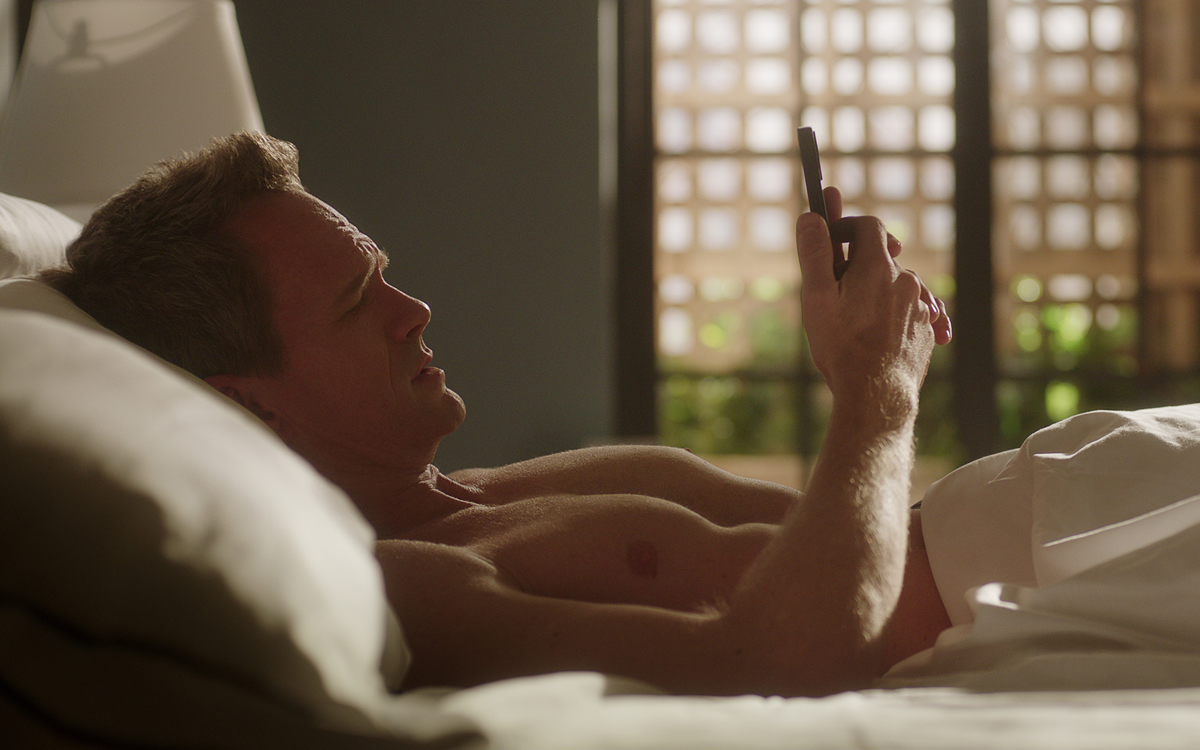
“Uncoupled,” the new Netflix series from Darren Star and Jeffrey Richman, is exactly that. It stars Neil Patrick Harris as Michael, who – as a successful Manhattan real estate broker with a close-knit group of friends and a 17-year loving relationship with the handsome Colin (Tuc Watkins) – seems to be living every gay man’s dream. He gets a rude awakening, however, when Colin, on the eve of his 50th birthday, blindsides him by abruptly packing up his things and moving out of their apartment, leaving him to face two nightmares he never saw coming – the loss of a person he believed was his soulmate, and the reality of being a 40-something single gay man in New York City.
Fortunately, he doesn’t have to do it alone. His business partner and confidante Suzanne (Tisha Campbell) is at his side to walk him through the painful stages of dealing with a breakup, as are his two closest friends, TV weatherman Billy (Emerson Brooks) and high-end art dealer Stanley (Brooks Ashmanskas). While it’s true that none of them are exactly qualified when it comes to giving relationship advice, he needs all the help he can get – especially when he begins to awkwardly fumble his way back into a dating scene that looks a lot different than he remembers.
As written by Star and Richman, with director Andrew Fleming at the helm, the show’s deep dive into the funny side of breakups doesn’t have much time for tears and regret. Playing out in the upscale, glamorous world of New York’s high gay society, it keeps the tone light and lifted, moving beyond the heartbreak as quickly as possible and setting its sights on the rich comedic territory to be found in the frolics and foibles of the privileged set. It’s a milieu that should come as no surprise considering that co-creator Star is the man responsible for “Sex and the City,” not to mention “Beverly Hills 90210” and “Melrose Place,” all of which banked on similar currency. Indeed, it’s easy to see Michael and his trio of compadres as natural successors to the iconic gal pals of “Sex and the City” – more diverse and openly queer, perhaps, but recognizably kindred in spirit.
Star’s co-creator brings his own pedigree into the mix, too. As an executive producer and writer on “Modern Family” (and similar duties on shows like “Frasier” and “Wings” before that), he doubtless has much to do with the whip-smart sitcom sensibility that both undercuts the show’s “guilty pleasure” appeal and enriches it. Indeed, much of the fun of “Uncoupled” comes from its lampooning of the queer social scene’s mores and manners – the shallow obsessions with youth and hotness, money and status, and all the other interpersonal dynamics that enable us to judge each other – and letting us laugh at the attitudes and pretensions we love to hate about ourselves. It allows us to let its characters off the hook, and ourselves, too, by reminding us that we are all only human, and that humans are sometimes ridiculous.
In service of that, “Uncoupled” has a stellar cast that not only has the comedic chops to sell its farcical goings-on but the nuance to go a little deeper. At the forefront, of course, is Harris, who deploys the confidence of a seasoned sitcom star to give us a fully realized leading character, and whose eternally boyish looks and persona have aged just enough to make him an ideal centerpiece for a story that is, in many ways, about growing up. Campbell more than holds her own next to him – their BFF chemistry makes them one of the more interesting platonic pairings in recent television memory – and Brooks and Ashmanskas turn their roles into much more than mere side characters. It’s a likable cast, across the board; yet the show’s most impressive acting turns might just come from two of its recurring supporting players – Oscar-winner Marcia Gay Hardin as a high-profile (and high maintenance) real estate client, and Broadway legend André De Shields as Michael’s elderly-but-regal neighbor – who bring some much-needed weight to the proceedings and make their scenes among the most memorable of the season.
Still, all the superficiality on display does sometimes wear thin, and some viewers might begin to wonder if Michael and his friends really are as vapid as their priorities often make them seem; and while all the characters get some hard lessons as the season progresses, it’s by no means certain they will learn from them, and these moments can feel like lip service in a show that sometimes seems to celebrate self-absorbed vanity even as it satirizes it.
Still, Star and Richman know their audience, and they’re not interested in wagging fingers at them. “Uncoupled” is not meant to be social criticism; it’s about learning how to live again when your heart gets broken. To that end, instead of turning Colin into just another stereotypical hated “ex” to be treated as an enemy and subjected to bitter scorn, or simply letting him leave and forgetting about him, they keep him in the picture. They never let us forget that their series, ultimately, is about a relationship; it may have changed, but it still exists, and there are overlapping threads between two lives that can never quite be untangled. That’s a decidedly un-shallow level of understanding, handled with a refreshing lack of maudlin sentiment or rancor, and it’s more than enough proof that the show has much more going for it than just shallow characters, sexy situations, and soapy plot twists.
More than that, it makes us interested in seeing where things might go in season two.
Books
Feminist fiction fans will love ‘Bog Queen’
A wonderful tale of druids, warriors, scheming kings, and a scientist
‘Bog Queen’
By Anna North
c.2025, Bloomsbury
$28.99/288 pages
Consider: lost and found.
The first one is miserable – whatever you need or want is gone, maybe for good. The second one can be joyful, a celebration of great relief and a reminder to look in the same spot next time you need that which you first lost. Loss hurts. But as in the new novel, “Bog Queen” by Anna North, discovery isn’t always without pain.

He’d always stuck to the story.
In 1961, or so he claimed, Isabel Navarro argued with her husband, as they had many times. At one point, she stalked out. Done. Gone, but there was always doubt – and now it seemed he’d been lying for decades: when peat cutters discovered the body of a young woman near his home in northwest England, Navarro finally admitted that he’d killed Isabel and dumped her corpse into a bog.
Officials prepared to charge him.
But again, that doubt. The body, as forensic anthropologist Agnes Lundstrom discovered rather quickly, was not that of Isabel. This bog woman had nearly healed wounds and her head showed old skull fractures. Her skin glowed yellow from decaying moss that her body had steeped in. No, the corpse in the bog was not from a half-century ago.
She was roughly 2,000 years old.
But who was the woman from the bog? Knowing more about her would’ve been a nice distraction for Agnes; she’d left America to move to England, left her father and a man she might have loved once, with the hope that her life could be different. She disliked solitude but she felt awkward around people, including the environmental activists, politicians, and others surrounding the discovery of the Iron Age corpse.
Was the woman beloved? Agnes could tell that she’d obviously been well cared-for, and relatively healthy despite the injuries she’d sustained. If there were any artifacts left in the bog, Agnes would have the answers she wanted. If only Isabel’s family, the activists, and authorities could come together and grant her more time.
Fortunately, that’s what you get inside “Bog Queen”: time, spanning from the Iron Age and the story of a young, inexperienced druid who’s hoping to forge ties with a southern kingdom; to 2018, the year in which the modern portion of this book is set.
Yes, you get both.
Yes, you’ll devour them.
Taking parts of a true story, author Anna North spins a wonderful tale of druids, vengeful warriors, scheming kings, and a scientist who’s as much of a genius as she is a nerd. The tale of the two women swings back and forth between chapters and eras, mixed with female strength and twenty-first century concerns. Even better, these perfectly mixed parts are occasionally joined by a third entity that adds a delicious note of darkness, as if whatever happens can be erased in a moment.
Nah, don’t even think about resisting.
If you’re a fan of feminist fiction, science, or novels featuring kings, druids, and Celtic history, don’t wait. “Bog Queen” is your book. Look. You’ll be glad you found it.
Movies
A Shakespearean tragedy comes to life in exquisite ‘Hamnet’
Chloe Zhao’s devastating movie a touchstone for the ages
For every person who adores Shakespeare, there are probably a dozen more who wonder why.
We get it; his plays and poems, composed in a past when the predominant worldview was built around beliefs and ideologies that now feel as antiquated as the blend of poetry and prose in which he wrote them, can easily feel tied to social mores that are in direct opposition to our own, often reflecting the classist, sexist, and racist patriarchal dogma that continues to plague our world today. Why, then, should we still be so enthralled with him?
The answer to that question might be more eloquently expressed by Chloe Zhao’s “Hamnet” – now in wide release and already a winner in this year’s barely begun awards season – than through any explanation we could offer.
Adapted from the novel by Maggie O’Farrell (who co-wrote the screenplay with Zhao), it focuses its narrative on the relationship between Will Shakespeare (Paul Mescal) and his wife Agnes Hathaway (Jessie Buckley), who meet when the future playwright – working to pay off a debt for his abusive father – is still just a tutor helping the children of well-to-do families learn Latin. Enamored from afar at first sight, he woos his way into her life, and, convincing both of their families to approve the match (after she becomes pregnant with their first child), becomes her husband. More children follow – including Hamnet (Jacobi Jupe), a “surprise” twin boy to their second daughter – but, recognizing Will’s passion for writing and his frustration at being unable to follow it, Agnes encourages him to travel to London in order to immerse himself in his ambitions.
As the years go by, Agnes – aided by her mother-in-law (Emily Watson) and guided by the nature-centric pagan wisdom of her own deceased mother – raises the children while her husband, miles away, builds a successful career as the city’s most popular playwright. But when an outbreak of bubonic plague results in the death of 11-year-old Hamnet in Will’s absence, an emotional wedge is driven between them – especially when Agnes receives word that her husband’s latest play, titled “Hamlet,” an interchangeable equivalent to the name of their dead son, is about to debut on the London stage.
There is nothing, save the bare details of circumstance around the Shakespeare family, that can be called factual about the narrative told in “Hamnet.” Records of Shakespeare’s private life are sparse and short on context, largely limited to civic notations of fact – birth, marriage, and death announcements, legal documents, and other general records – that leave plenty of space in which to speculate about the personal nuance such mundane details might imply. What is known is that the Shakespeares lost their son, probably to plague, and that “Hamlet” – a play dominated by expressions of grief and existential musings about life and death – was written over the course of the next five years. Shakespearean scholars have filled in the blanks, and it’s hard to argue with their assumptions about the influence young Hamnet’s tragic death likely had over the creation of his father’s masterwork. What human being would not be haunted by such an event, and how could any artist could avoid channeling its impact into their work, not just for a time but for forever after?
In their screenplay, O’Farrell and Zhao imagine an Agnes Shakespeare (most records refer to her as “Anne” but her father’s will uses the name “Agnes”) who stands apart from the conventions of her town, born of a “wild woman” in the woods and raised in ancient traditions of mysticism and nature magic before being adopted into her well-off family, who presents a worthy match and an intellectual equal for the brilliantly passionate creator responsible for some of Western Civilization’s most enduring tales. They imagine a courtship that would have defied the customs of the time and a relationship that feels almost modern, grounded in a love and mutual respect that’s a far cry from most popular notions of what a 16th-century marriage might look like. More than that, they imagine that the devastating loss of a child – even in a time when the mortality rate for children was high – might create a rift between two parents who can only process their grief alone. And despite the fact that almost none of what O’Farrell and Zhao present to us can be seen, at best, as anything other than informed speculation, it all feels devastatingly true.
That’s the quality that “Hamnet” shares with the ever-popular Will Shakespeare; though it takes us into a past that feels as alien to us as if it took place upon a different planet, it evokes a connection to the simple experience of being human, which cuts through the differences in context. Just as the kings, heroes, and fools of Shakespeare’s plays express and embody the same emotional experiences that shape our own mundane modern lives, the film’s portrayal of these two real-life people torn apart by personal tragedy speaks directly to our own shared sense of loss – and it does so with an eloquence that, like Shakespeare’s, emerges from the story to make it feel as palpable as if their grief was our own.
Yes, the writing and direction – each bringing a powerfully feminine “voice” to the story – are key to the emotional impact of “Hamnet,” but it’s the performances of its stars that carry it to us. Mescal, once more proving himself a master at embodying the kind of vulnerable masculine tenderness that’s capable of melting our hearts, gives us an accessible Shakespeare, driven perhaps by a spark of genius yet deeply grounded in the tangible humanity that underscores the “everyman” sensibility that informs the man’s plays. But it’s Buckley’s movie, by a wide margin, and her bold, fierce, and deeply affecting performance gives voice to a powerful grief, a cry against the injustice and cruelty of what we fumblingly call “fate” that resonates deep within us and carries our own grief, over losses we’ve had and losses we know are yet to come, along with her on the journey to catharsis.
That’s the word – “catharsis” – that defines why Shakespeare (and by extension, “Hamnet”) still holds such power over the imagination of our human race all these centuries later. The circumstantial details of his stories, wrapped up in ancient ideologies that still haunt our cultural imagination, fall away in the face of the raw expression of humanity to which his characters give voice. When Hamlet asks “to be or not to be?,” he is not an old-world Danish Prince contemplating revenge against a traitor who murdered his father; he is Shakespeare himself, pondering the essential mystery of life and death, and he is us, too.
Likewise, the Agnes Shakespeare of “Hamnet” (masterfully enacted by Buckley) embodies all our own sorrows – past and future, real and imagined – and connects them to the well of human emotion from which we all must drink; it’s more powerful than we expect, and more cleansing than we imagine, and it makes Zhao’s exquisitely devastating movie into a touchstone for the ages.
We can’t presume to speak for Shakespeare, but we are pretty sure he would be pleased.
Friday, January 9
Women in Their Twenties and Thirties will be at 8 p.m. on Zoom. This is a social discussion group for queer women in the Washington, D.C. area. For more details, visit Facebook.
“Backbone Comedy” will be at 8 p.m. at As You Are. Backbone Comedy is a queer-run fundraiser comedy show at As You Are Bar DC, where comics stand up for a cause. Each show, a percentage of proceeds go to a local organization – Free Minds DC, a reentry organization for individuals impacted by incarceration. Tickets cost $19.98 and are available on Eventbrite.
Saturday, January 10
Go Gay DC will host “LGBTQ+ Community Brunch” at 11 a.m. at Freddie’s Beach Bar & Restaurant. This fun weekly event brings the DMV area LGBTQ+ community, including allies, together for delicious food and conversation. Attendance is free and more details are available on Eventbrite.
Monday, January 12
“Center Aging: Monday Coffee Klatch” will be at 10 a.m. on Zoom. This is a social hour for older LGBTQ+ adults. Guests are encouraged to bring a beverage of choice. For more information, contact Adam ([email protected]).
Genderqueer DC will be at 7 p.m. on Zoom. This is a support group for people who identify outside of the gender binary, whether you’re bigender, agender, genderfluid, or just know that you’re not 100% cis. For more details, visit genderqueerdc.org or Facebook.
Tuesday, January 13
Coming Out Discussion Group will be at 7 p.m. on Zoom. This is a safe space to share experiences about coming out and discuss topics as it relates to doing so — by sharing struggles and victories the group allows those newly coming out and who have been out for a while to learn from others. For more details, visit the group’s Facebook.
Trans Discussion Group will be at 7 p.m. on Zoom. This group is intended to provide an emotionally and physically safe space for trans people and those who may be questioning their gender identity/expression to join together in community and learn from one another. For more details, email [email protected].
Wednesday, January 14
Job Club will be at 6 p.m. on Zoom upon request. This is a weekly job support program to help job entrants and seekers, including the long-term unemployed, improve self-confidence, motivation, resilience and productivity for effective job searches and networking — allowing participants to move away from being merely “applicants” toward being “candidates.” For more information, email [email protected] or visit thedccenter.org/careers.
The DC Center for the LGBT Community will partner with House of Ruth to host “Art & Conversation” at 3 p.m. at 1827 Wiltberger St., N.W. This free workshop will involve two hours of art making, conversation, and community. Guests will explore elements of healthy relationships with a community-centered art activity. This workshop involves paint, so please dress accordingly. All materials will be provided. For more details, email [email protected].
Thursday, January 15
The DC Center’s Fresh Produce Program will be held all day at the DC Center for the LGBT Community. People will be informed on Wednesday at 5 p.m. if they are picked to receive a produce box. No proof of residency or income is required. For more information, email [email protected] or call 202-682-2245.
Virtual Yoga Class will be at 7 p.m. on Zoom. This free weekly class is a combination of yoga, breathwork and meditation that allows LGBTQ+ community members to continue their healing journey with somatic and mindfulness practices. For more details, visit the DC Center’s website.