Pennsylvania
Pride Franklin County welcomes rural LGBTQ community
Pennsylvania organization planning October celebration
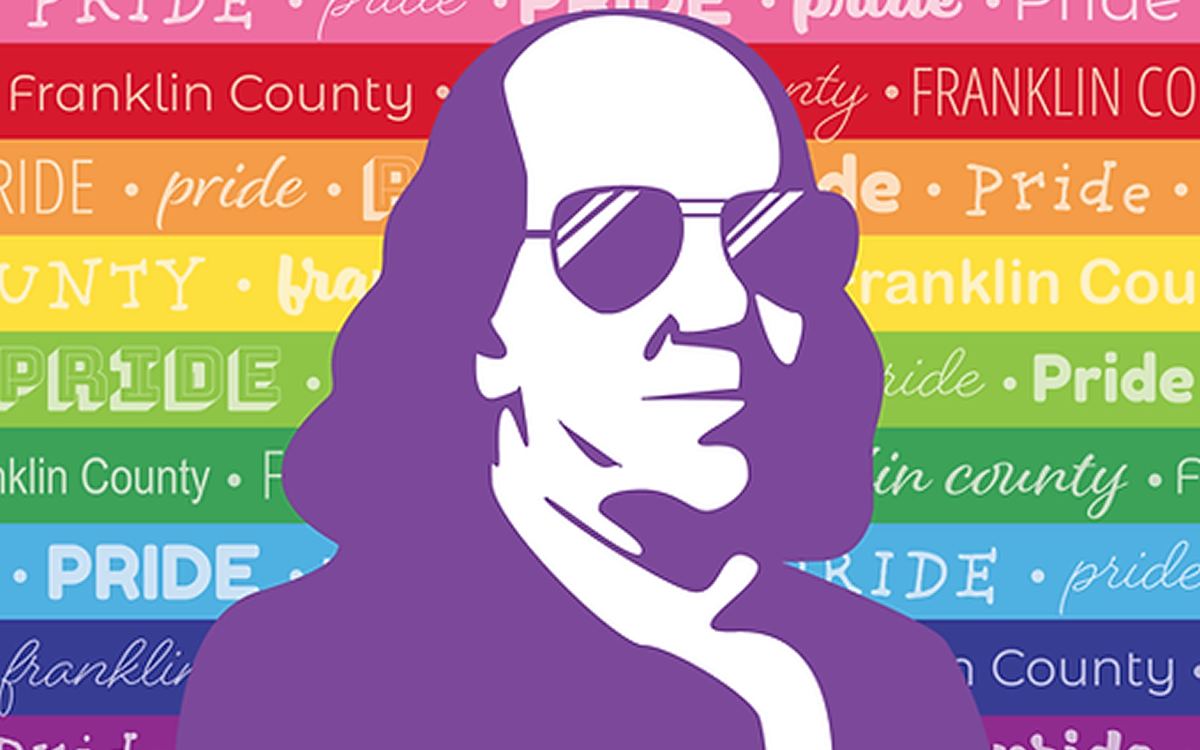
When Pride Franklin County held its first Pride celebration in 2018, it sought to address a lack of LGBTQ programming in rural southern Pennsylvania. Greeted by more than 1,000 attendees at its inaugural event, Pride Franklin County’s leadership was reassured the event was something the area not only wanted, but needed. Since the onset of the COVID-19 pandemic, the local organization has once again sought to address community needs — in new and broadened ways.
Pride Franklin County operates under the Franklin County Coalition for Progress, a local social justice nonprofit that formed in the wake of the 2016 presidential election. “We live in a very rural, conservative area, but that election was a turning point all across the country,” explained Noel Purdy, a founder of Pride Franklin County and founder and president of FCCP.
“People came out of the woodwork who were worried about the LGBTQ community … and other populations that had experienced different forms of oppression in our community,” Purdy explained. This interest in supporting the local LGBTQ community led to a group of LGBTQ community members and allies leading the 2018 Pride celebration.
“We just really wanted to create a space where people know that they’re accepted, no matter who they are,” said Nathan Strayer, vice president of FCCP and a founder of Pride Franklin County. “We want people to know that you fit in. There are a lot of people here that are going to love you.”
But in 2020, at the peak of the event’s popularity — Strayer noted that upwards of 3,000 people attended Pride the year prior — Pride Franklin County had to cancel its programming in light of public health concerns.
With the “momentum” it has going, Strayer explained that the organization did not want the pandemic to limit its ability to serve the Franklin County community: “ That’s when we really decided to make the entire initiative something bigger,” he said. “We’re not just here to throw a party.”
In 2021, the organization began advocating for a local non-discrimination ordinance codifying inclusivity for all community members, regardless of their identity. The Borough of Chambersburg Council, which represents the largest borough in the county, adopted the ordinance that fall — a major win for LGBTQ activists and allies in a rural Pennsylvania county that leans conservative socially and politically.
Yet, just months after the organization celebrated its achievement, new council members were elected in the borough in January 2022, and soon thereafter a majority of the council decided to repeal the non-discrimination ordinance.
While the ordinance’s revocation greatly disappointed Pride Franklin County, it also reminded its leaders and activists how much work was left to be done.
“From the growth of Pride to the pushback we’ve gotten from some of our elected officials here locally, it’s definitely lit a fire in us to continue pushing ahead so that we can truly make Franklin County an inclusive place for everyone,” Strayer emphasized.
This year, the organization launched its Franklin County Welcoming Project, which spearheads public displays of support to the LGBTQ community. In June, the organization received a media grant to create billboard and radio advertisements throughout the county advocating for inclusivity within the Franklin County community.
The organization also reached out to local businesses, providing them with custom decals to put in their windows after signing a pledge stating that they are a “diverse, inclusive, accepting, welcoming, safe space for all,” Strayer said, adding that, despite some initial hesitation, more than 100 local businesses signed the pledge and displayed the logo in their storefronts.
Pride Franklin County has also looked to meet the local demand for LGBTQ programming throughout the year while maintaining public health precautions. More recent projects have included mental health LGBTQ programming, community picnics, drag shows and a Taste of Pride food event. Strayer added that there has been significant demand from the community for more programming centering LGBTQ youth.
Purdy added that voting rights advocacy has become a center point of current efforts from the organization, as it hopes to educate the local community on the importance of their political involvement. “Hopefully, we’re inspiring more people to learn to pay attention more to what’s going on, and trying to understand the connection between policy and voting,” Purdy explained
While the process of founding a grassroots organization has come with obstacles, Purdy and Strayer both noted that the community response has been rewarding.
“One thing that I’ve been surprised about is how you have this cultural context of being in a conservative area, thinking that that’s going to be a barrier to doing an event that supports the LGBTQ community, and that it’s going to be super controversial,” but ultimately receiving a positive reception from many community members and resources needed to keep the organization running, Purdy explained.
Getting Pride Franklin County up and running has “definitely been very emotional,” Strayer noted. When Strayer decided to come out in 1999, he turned to leaders in his school — a guidance counselor and principal — for advice, but he recalled them “both sitting down and looking at (him) like, ‘We don’t really know what to do,’” making him feel alone in a particularly important part of his life. But with Pride Franklin County, Strayer is “seeing how things are growing and changing.”
“There’s help out there for youth that are struggling with the same things I was struggling with,” Strayer said. “When I look back at when I was coming out, I thought, ‘This is never going to happen here.’ Seeing now that it is happening here, it’s just such an amazing feeling and it just gives me so much pride in my community.”
Pride Franklin County will host its Pride Festival 2022 on Oct. 9 from 11 a.m. to 5 p.m. More information can be found on the organization’s website at pridefranklincounty.org.



Pennsylvania
Philadelphia gayborhood preservation battle raises questions about displacement
Opponents of historic designations worry about new burdens on property owners
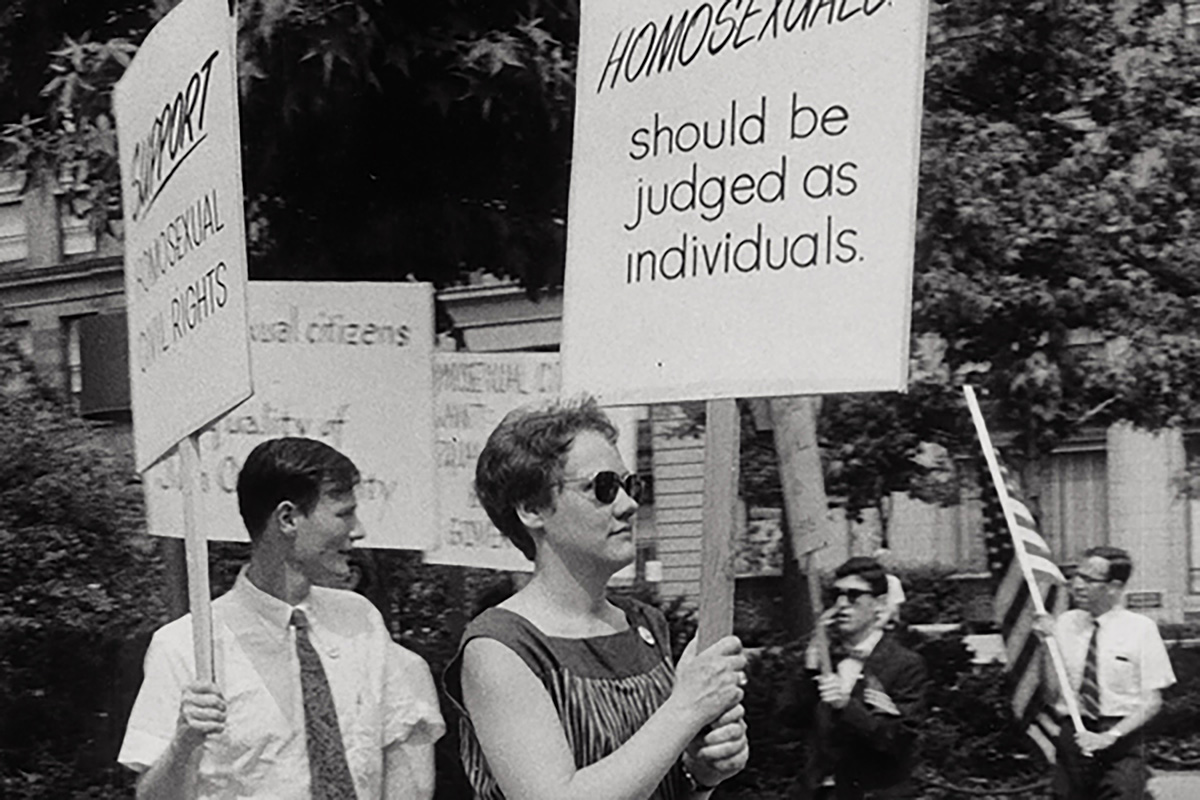
Philadelphia’s Washington Square West neighborhood — which is home to the city’s Gayborhood — was awarded a historic designation in 2024. While many LGBTQ+ Philadelphians were excited by news of preserving approximately 1,500 residences, religious spaces and business properties spanning the 26 included blocks, the designation was not celebrated by all.
Advocates, including the Washington Square West Civic Association and various LGBTQ+ residents, partly framed the designation as long-overdue recognition for the area’s LGBTQ+ culture and Black history — but opponents argued it would impose costly restrictions on property owners and limit new development. A group of property owners — which also includes LGBTQ+ people — took the city to court over the designation and successfully overturned the decision.
The judge cited a lack of substantial evidence as a leading cause for his decision despite the Philadelphia Historic Commission’s nearly 1,500-page nomination packet. Attorney Dan Auerbach, representing the residents who opposed the designation, told WHYY that the documents submitted didn’t explain why many of the properties hold historic significance. Just 173 properties were described as historically significant, he argued. However, 773 of 1,509 properties included in the boundary — more than half of the neighborhood’s properties — are already listed in the National Register of Historic Places.
In March, the judge’s ruling was vacated after an appeal — effectively forcing the process to start over. The historic designation stands in the meantime. The Preservation Alliance for Greater Philadelphia is now drafting its own brief — due May 18 — to support the city’s position, which the organization’s executive director Paul Steinke believes will elaborate on the merit of the designation as a supplement to the city’s arguments.
Scholars have found that Philadelphia’s local historic designation offers a more protective effect on buildings facing possible demolition than the national register. Because zoning and construction is overseen by local laws and leaders, local designations play a stronger role in preservation. But that doesn’t mean buildings with the designation are guaranteed to be preserved.
The outcome of this lawsuit could affect a major re-development project that would benefit the LGBTQ+ community but has been met with mixed feelings. William Way LGBT Community Center (WWCC), which is currently housed in a pre-Civil War era building that would be harder to demolish under the designation, is set to be leveled (along with a famous LGBTQ+ mural on its facade) to build a more accessible space for gatherings and queer-centered low-income housing units.
Steinke underlined that it’s possible for the project to move forward as-is. Historic designations do not prevent every demolition. There are standards in place that allow for demolition, which WWCC would need to meet for the project to be approved.
WWCC leaders would need to appear before the historical commission to seek a demolition permit before applying to the city, but that obstacle would be removed if the historic designation is overturned.
Historic designation is mostly used to preserve the character of buildings through recommendations about how owners can restore or maintain exterior facades. Steinke hopes WWCC will adjust its plans to maintain all or some of the most important historic elements of its current home (the facade, historic marble and wooden staircases, entryways and ballroom) rather than demolishing it all outright. He hasn’t lost hope, but he admits he hasn’t convinced anyone at WWCC to change the current plans.
It’s a project that seems to place competing interests in tension. There’s a need for housing — especially income-specific, LGBTQ+ centered projects — in that neighborhood. This, as Steinke hopes, could be pursued without demolishing much-loved cultural landmarks — but WWCC has emphasized that the price tag for pursuing its goals this way makes preservation out of reach.
The Washington Square West litigation is one of three active lawsuits pending against historic districts in Philadelphia. Six newer proposals are also currently in various stages of the nomination process — but if approved, they too could be contested and overturned.
A 2002 attempt to designate Spruce Hill was unsuccessful due to resident opposition that may have been fueled by politics. It was the third attempt to nominate the neighborhood. A case study published in 2023 by a University of Pennsylvania student about the matter found that the opponents feared increased maintenance costs, the loss of personal freedom and gentrification.
“Ironically, in the two decades since that campaign, Spruce Hill has become one of the most gentrified — and threatened — neighborhoods in the city of Philadelphia,” the study notes.
Residents also feared displacement. The case study underlines that residents who are displaced by gentrification tend to move to neighborhoods with lower property values, less access to resources, and fewer opportunities for upward economic mobility.
Following historic designation, the number of college-educated households in a community tends to increase while the poverty rate drops in contrast to its adjacent neighborhoods, which do not receive the designation. These and other factors contributing to economic mobility are visible on maps created by the Opportunity Atlas, a project of Harvard University which presents information collected by the census in an effort to tangibly discuss economic mobility in localities across the United States. It shows the same patterns in many of Philadelphia’s historic districts.
But the Washington Square West neighborhood outperformed the surrounding blocks even before the historic designation took effect — highlighting that the designations themselves may not always be the cause of disparities.
“It’s true that in most cases, historic districts aren’t the most affordable neighborhoods in any city — no matter where you go,” Steinke said. “That’s not the fault of the historic district.”
Historic districts tend to protect properties and neighborhoods that are historically, architecturally, or culturally significant — properties that already tend to be expensive.
For example, Steinke underlined that Rittenhouse Square was expensive before it was officially designated as historic — and some neighborhoods, like Graduate Hospital, have become pricey without the designation.
Historic preservation may actually promote some protective factors that act as a buffer against gentrification and rising rents, contradicting the most common fears. For instance, the designation makes it harder for developers to tear down smaller, older, more affordable homes or significant community hubs that sit on desirable land in order to build newer, larger, high-cost housing units in their place.
Many LGBTQ+ locals opposed the redevelopment of the Gayborhood’s former 12th Street Gym — which held cultural significance and a meaningful mural of queer activist Gloria Casarez. It was removed alongside a neighboring building of note for its connection to Black history. A luxury high-rise apartment complex now takes its place.
Residents of a working-class neighborhood in Durham, N.C. hoped they would stave off developers and prevent or slow gentrification by pursuing historic designation in 2016.
Steinke explained that this has happened in Philadelphia too.
The Parkside neighborhood, which is situated near the Please Touch Museum, has been a historic district for 15 years, Steinke explained. It was a low to moderate income, majority minority neighborhood when it was designated in 2009 and it still is today, he said. The same is true for West Diamond Street in North Philly, which was designated historic in the 1980s. It was a low to moderate income neighborhood then and has remained one today.
“Real estate prices are a factor of so many other things — proximity to work, public safety, access to schools, access to shopping and other amenities, transportation,” Steinke said. “That’s really what determines property values and neighborhood value.”
Those are also factors that have strong correlations with upward economic mobility.
Despite a poverty rate that is lower than it has been in decades, Opportunity Insights ranks Philadelphia as last among large metro areas for upward economic mobility — with some children experiencing even worse economic outcomes than their parents. It’s a problem Mayor Cherelle Parker has addressed with new initiatives she hopes will support young people who hope to break free from cycles of poverty.
The supplemental programs that offer economic support to historic homeowners in Durham might have helped its anti-gentrification efforts succeed.
Steinke said it’s true that some preservation-oriented maintenance costs may be higher upfront, but many of those options also last longer and could even cost less than cheaper fixes that must be repeated over time.
“One real weakness in Philadelphia is that there is no publicly available funding to help homeowners maintain their historic homes, and that’s something that we have talked about with city officials, with city council, with the mayor’s office,” he added. “There really needs to be a fund that homeowners can apply to if their property is designated historic — especially for low to moderate income homeowners.”
Although there isn’t a city fund or initiative to help offset maintenance costs for historic homeowners in Philadelphia, a few state and federal tax incentives could be helpful to some historically-designated property owners — including landlords and developers who might not otherwise pursue preservation.
“Not many property owners or homeowners have a lot of expertise about what’s best for a historic building to maintain its value and its appearance,” Steinke said. “So when historic districts are in place, you actually have access to experts who know the best practices and can share them with you and help you find solutions to the problems you’re trying to solve.”
The Preservation Alliance for Greater Philadelphia collaborated with the Washington Square West Civic Association to publish a manual that will be released in late spring or early summer. It will provide information about historic practices for windows, doorways, carpentry, masonry and roofs pertaining to the area’s buildings.
There’s been an increase in low-income households in Philadelphia’s historic districts and top earners are moving in at a slower rate than in neighborhoods in the rest of the city.
Racial diversity is shifting in there, too. Although these districts tend to have whiter populations, a report published by the Preservation Alliance shows that non-white homeownership in Philly’s historic districts has increased significantly since 2010. The number of non-white homeowners and Black and Hispanic residents is on the rise in these districts, even as diversity has slowed in other neighborhoods.
“We think [this report] shows that historic designation is not an obstacle to housing production or population growth,” Steinke said.
Steinke argues that the buildings in Washington Square West have economic value not only to those who own or utilize the buildings but to the city as a whole. They’re an economic engine — creating jobs and drawing tourists. Almost 6% of Philadelphia’s jobs are in historic districts, including nearly 10% of small business jobs, 13% of new jobs, and almost 17% of creative jobs.
The 250th anniversary of the United States will bring visitors hoping to immerse themselves in Philadelphia’s history. Visit Philly estimates the events could contribute up to $2.5 billion to the city’s economy.
Some funding is making its way to historic districts in preparation for the events by way of grants for programming and beautification projects. But that doesn’t make them an accessible place to do business.
Historic districts aren’t necessarily start-up friendly. Commercial rent tends to be higher there too — a frequent complaint among LGBTQ+ business owners who want to open brick-and-mortar locations in the Gayborhood but are priced out.
(This article was originally published by the Philadelphia Gay News and is part of a national initiative exploring how geography, policy, and local conditions influence access to opportunity. Find more stories at economicopportunitylab.com.)
Pennsylvania
Philadelphia murder suspect remains at large
Two killed, one injured in attacks motivated by victims’ sexual orientation
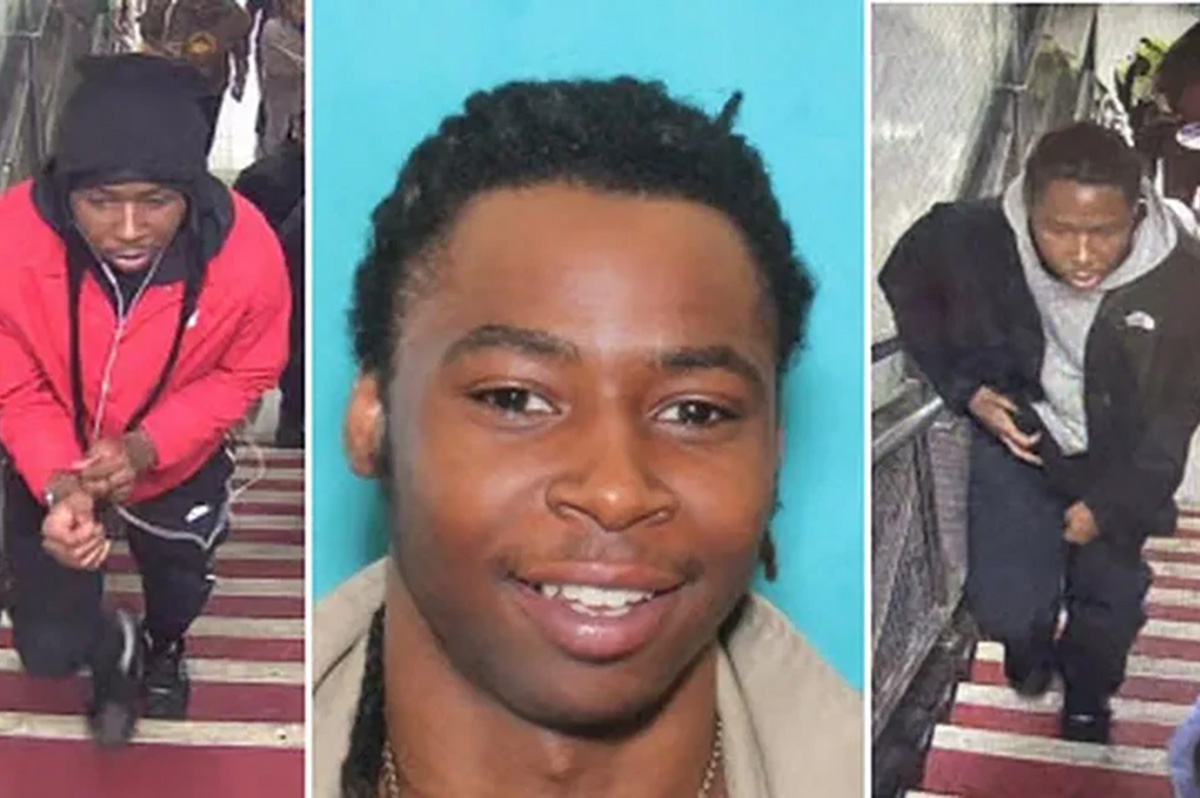
Police seek the public’s support in finding a suspect wanted in connection with three Philadelphia shootings, including two murders, who may have targeted his victims because they were gay. All three shootings took place near Hunting Park Recreation Center between May 29 and June 26.
The suspect is 21-year-old Jahylin Melchur, who has not been located by police and is not in police custody as of July 7. Police seek the public’s support in tracking down the suspect, whose image was captured on surveillance cameras. Previous reporting underlined that Melchur should be considered armed and dangerous.
Each of the victims was found partially clothed between 10 and 11 p.m.
On May 29, a 55-year-old in Juniata Park was found two miles from the rec center. The victim, who survived the encounter with critical injuries, said a man approached him and announced his intention to rob him, before shooting him in the elbow and torso.
Martin Higgins, 45, was pronounced dead on the bleachers of the rec center’s baseball field on June 20, suffering from a gunshot wound to the abdomen. Sharef Holman, 29, was found near the basketball courts on June 26, suffering from multiple gunshot wounds. He was transported to Temple University Hospital but died shortly thereafter.
Deputy Police Commissioner Frank Vanore declined to answer the Philadelphia Inquirer’s question regarding whether the victims may have met Melchur on a dating app, citing the ongoing investigation. Sources told the Philadelphia Inquirer that investigators are exploring this possibility
Although robbery may be at least part of the motive in the first shooting, other movies are unclear.
NBC10 reported that law enforcement sources told the station all three victims were targeted because they were gay, but the Philadelphia Police Department did not confirm this.
The Philadelphia Police Department replied to PGN’s questions with an email stating, “This remains a very active investigation, and investigators are looking at all aspects of the case, including underlying motivations for committing these crimes.
“At this point, we can confirm that Melchur is wanted for two homicides by shooting and one non-fatal shooting, all of which occurred in the Hunting Park area.
“The investigation has not established that the victims were specifically targeted because of their sexual orientation.”
The Philadelphia Police Department is urging anyone with information to contact the Homicide Unit at 215-686-3334 or submit an anonymous tip by calling the PPD Tip Line at 215-686-TIPS (8477).
(This story is republished with permission of the Philadelphia Gay News.)
Ghana
Ghanaian president welcomed to Philadelphia amid backlash over anti-LGBTQ bill
Lincoln University cancelled event with John Mahama

Ghanaian President John Dramani Mahama, known for making anti-LGBTQ legislative promises, was scheduled to appear at two local colleges this week — but plans have changed. Although Mahama will still attend a community dialogue at Temple University, he will no longer be honored at Lincoln University — a Chester County HBCU. He will, however, be presented with an award by the World Affairs Council of Philadelphia. The cancellation of the Lincoln event came shortly after LGBTQ activists spoke out about his appearances.
“Due to unforeseen circumstances, the university is cancelling the visit from President John Dramani Mahama,” Athena Griffith-Howard, associate vice president of marketing and communications at Lincoln University, told PGN.
According to a press release about the scheduled event, Mahama was set to receive an honorary doctorate from Lincoln University on Thursday, March 26, “in recognition of his outstanding contributions to public service, democratic governance, peaceful international and inter-African relationships, and global advocacy for justice, equality, and education.”
Although Griffith-Howard did not respond to additional questions about the matter, Joy News — an independent news organization that markets itself as the “most credible” journalism in Ghana — reports that the university has rescinded his honorary degree and cancelled the visit due to Mahama’s anti-LGBTQ stance.
“It is both surprising and regrettable that, just hours ago, the Embassy received a communication from the university indicating that concerns had been raised by a group regarding President Mahama’s perceived position on Ghana’s Human Sexual Rights and Family Values Bill,” a statement released by the Ghana Embassy on March 24 reads.
Mahama has repeatedly vowed to sign the Human Sexual Rights and Family Values Bill into law if it passes out of parliament. He has also made statements against queer and transgender people.
“The position of my government [is that] marriage is between a man and a woman. A person’s gender is determined at birth. And then also, that the family is the foundation of our nation. That is our position,” Mahama said in a speech on Nov. 18, 2025.
Intimacy laws — which criminalize LGBTQ sex and the use of sex toys — already hold a three-year prison sentence under Ghana law, stemming from legal frameworks that previously governed the country when it was controlled by the British government. Ghana became the first African country to gain independence from European colonization in 1957 — but rather than repeal the antiquated law, leaders chose to incorporate it into their own penal code in 1960. The country’s supreme court upheld the law in 2024.
The Human Sexual Rights and Family Values Bill — often simply referred to as “the anti-LGBTQ+ bill” — would further criminalize LGBTQ people and expression and add new risks for allyship. If passed, the punishment for intimacy violations would increase to a possible five-year prison sentence. LGBTQ people could also be punished for simply identifying as LGBTQ with a new three-year prison sentence.
The proposal would also ban LGBTQ serving organizations, even those that only partly serve LGBTQ people. Violations would include up to five years in prison. Allies could face 10 years in prison for supporting LGBTQ people or promoting LGBTQ rights online, in newspapers, or through other verbal or written communications. Journalists who report on LGBTQ topics are also at risk.
The bill would force families and community members to report those found in violation of the statute to local law enforcement.
“If the parliament of the people of Ghana endorse the bill and vote on it and pass it and it comes to me as president, I will sign it,” Mahama said during his November speech.
Since the Human Sexual Rights and Family Values Bill was introduced in 2021, LGBTQ Ghanaians and allies have experienced widespread discrimination and physical violence — including harassment and arrests, raids on LGBTQ centers (which have led to at least one closure), as well as a hostile media landscape. When the bill was first passed by parliament in 2024, anti-LGBTQ incidents more than doubled.
The proposal was not signed into law by the former President Nana Akufo-Addo, who characterized the proposal as a backsliding of human rights. At the time, Ghana’s finance ministry also warned that signing the bill would place several billions of dollars in funding in jeopardy as a similar anti-LGBTQ bill in Uganda led the World Bank to suspend new funding to that country.
This threat would be especially difficult for Ghana to bear given recent funding cuts made by the Trump administration, which have been especially problematic for some African countries.
Ghana previously relied on USAID funding for social programs and health services, but Trump’s funding cuts led to a $156 million loss — including approximately $78 million that previously funded malaria prevention, maternal and child health, family planning, reproductive health, nutrition, and the fight against HIV/AIDS.
Despite the funding cuts, anti-LGBTQ leaders — including those in Ghana — have been emboldened and empowered by the Trump administration’s own anti-LGBTQ efforts, citing that they no longer fear economic sanctions if their own anti-LGBTQ bill passes.
According to activists, Mahama urged parliament to reintroduce the bill after he took office in January 2025 — around the same time Trump began issuing executive orders, which have negatively impacted LGBTQ Americans.
Mahama is currently in the U.S. to lead a delegation at the United Nations to advocate for reparatory justice for the Transatlantic Slave Trade. He will present a landmark resolution to the United Nations General Assembly in New York City on March 25 — seeking a formal declaration of the Transatlantic Slave Trade as a crime against humanity. The visit also includes a wreath-laying ceremony to honor the lives of enslaved Africans who perished in the U.S.
LGBTQ rights advocates keenly understand the importance of holding the U.S. accountable as direct drivers of the Transatlantic Slave Trade and for the atrocities that occurred to African people on American soil as the country built its economic and social power off of their oppression.
In a press release about Mahama’s visit to Philadelphia, a growing coalition of Philadelphia’s LGBTQ and allied leaders — including Philly Pride 365, GALAEI and ACT UP Philadelphia — called the invitation to speak at Temple University “even more concerning” given the human rights focus of the delegation.
“You cannot come to a global stage calling for justice, repair and recognition of historical harm while simultaneously supporting or advancing policies that criminalize and endanger another marginalized group,” said Tyrell Brown of Philly Pride 365 in the joint statement. “That contradiction is not just political. It reflects a fundamental failure to understand intersectionality and the interconnected nature of oppression.”
“Justice is not selective. Human rights are not conditional,” Brown continued. “If we are serious about repair, it must extend to all people — especially those currently being targeted by state-sanctioned harm.”
There is a colonialist link between the continued oppression of LGBTQ Africans with harmful rhetoric and money coming from the U.S. At least 20 US-based conservative Christian groups, which have spent over $54 million since 2007 on anti-LGBTQ efforts in Africa, are linked to anti-LGBTQ bills and laws across the continent.
“We support the reparations resolution. The argument it rests on is morally sound,” reads a press release issued by JustRight Ghana — a Ghana-based human rights organization. “The transatlantic slave trade classified human beings as property based on what they were born as. It said that certain categories of people, by virtue of their birth, had no rights, no dignity, and no protection from the power of the state.”
“That is the same logic that runs through every clause of the Human Sexual Rights and Family Values Bill 2025. Section 3 says that being born with a particular sexual orientation makes you a criminal,” the press release goes on to state. “The moral architecture is identical. The only thing that has changed is who the target is.”
The World Affairs Council of Philadelphia still intends to present Mahama with its International Statesperson Award on March 27.
A blurb about the award on the institution’s website reads, “The International Statesperson Award of the World Affairs Council of Philadelphia is the highest honor the Council bestows — a tribute for global leadership. It is presented periodically and awarded to distinguished international figures and world leaders whose work has advanced the twin goals of peace and freedom and resulted in a significant positive impact on world affairs.”
Mahama is also still invited to participate in a community dialogue event that will be held at Temple University on the evening of March 26. The event is advertised as celebrating Ghanaian music and artistic culture, comedy, and heritage — featuring celebratory performances as well as a dialogue with Mahama and other national leaders.
“Attendees will have the opportunity to hear firsthand from the president on Ghana’s vision and emerging opportunities, engage in conversations that help shape diaspora partnerships, and explore business, investment, and cultural collaboration opportunities,” reads an Instagram post about the event. “The evening also marks a historic moment as part of the president’s first official visit to Philadelphia.”
The event was planned before Lincoln University canceled its conferment and according to a press release, Mahama intends to convene with people of the Ghanaian diaspora during the Temple University visit.
“This conversation reflects something bigger than a single event,” reads an Instagram post published by Temple University Black Alumni Alliance about the event. “It represents connection across the diaspora, leadership across borders, and the importance of creating spaces where global perspectives and lived experiences can meet.”
In response to PGN’s request for comments and answers to questions, Steve Orbanek, Temple University’s executive director of communications and media relations, emailed the following statement:
“Temple University unequivocally opposes the exclusion of or discrimination against members of the LGBTQIA+ community. Temple takes pride in providing an inclusive and welcoming environment for all students, faculty, staff, alumni, neighbors and friends regardless of their race, nationality, religion, gender, sexual orientation or identity.
“President Mahama will be in the United States to attend the United Nations General Assembly during the International Day of Remembrance of the Victims of Slavery and the Transatlantic Slave Trade. The US-Ghana Chamber of Commerce invited him to participate in a community event and approached Temple about using a venue on campus.
“As a public university, Temple regularly provides space for speakers as part of our ongoing commitment to academic inquiry, open dialogue and public service. We have made venues available for third-party organizations, including political parties or campaigns, regardless of their political viewpoint or stance. The presence of any speaker on campus is not an endorsement by Temple University of the speaker or their views.
The Human Sexual Rights and Family Values Bill that has been recently reintroduced in Ghana’s Parliament is deeply troubling and runs counter to the mission and values of Temple University. Temple’s strength is its people, and every member of our community adds to the cultural richness of our institution. We are committed to cultivating an educational environment founded on respect, open-mindedness, and the appreciation of others.”
The Philadelphia coalition of LGBTQ leaders rejects the idea that hosting a speaker does not reflect the views of the host institution and underlined that platforming political leaders with ties to problematic policies still produces harm.
“Providing a platform to a leader advancing policies that endanger LGBTQ lives and undermine HIV prevention is deeply irresponsible. Institutions of higher education should not normalize or legitimize harm under the guise of dialogue,” said Sam Sitrin of ACT UP Philadelphia in the joint statement.
“Universities should be spaces that uphold human rights and evidence-based public health,” added Jose Demarco of ACT UP Philadelphia. “Hosting leaders associated with policies that criminalize LGBTQ people and undermine HIV prevention sends the wrong message at a time when lives are at stake.”
Temple’s Center for Anti-Racism — an initiative of Temple’s Office of Institutional Diversity, Equity, Advocacy, and Leadership (IDEAL) — which is promoted on flyers and social media as hosting the event, has not responded to PGN’s questions or requests for comments. The event, which was previously included on the university’s events listings, is no longer visible but has not been canceled as of Wednesday, March 25. It is unclear if the university is taking any steps to protect or uplift LGBTQ students during the event.
The Philadelphia coalition of LGBTQ leaders called the decision to host the event in light of the local community’s response “harmful and careless.” They also raised concerns about Temple University’s process to repair wounds and are pressuring Temple to cancel the event and formally apologize to Philadelphia’s LGBTQ community.
“According to organizers, the university had knowledge of the concerns surrounding President Mahama’s [anti-LGBTQ] record as early as Thursday [March 19] but did not conduct meaningful outreach to community partners, nonprofits, or local leaders most impacted by the issue,” the coalition’s press release reads.
“When institutions fail to proactively engage communities on issues of this magnitude, it reveals a disconnect between stated values and actual practice.”
Coalition members joined additional Philadelphia-based leaders in sending a letter to Temple University’s IDEAL initiative and Center for Anti-Racism — noting their concern for the event but also openness to dialoguing directly with the event’s organizers to seek intentionality and transparency.
“This is not an abstract policy discussion. It is about the safety, dignity, and survival of LGBTQ people globally. For many in our communities, including African and Caribbean diaspora members here in Philadelphia, these policies have direct emotional, familial, and cultural impact,” the letter reads. “Hosting this dialogue without intentional accountability risks legitimizing rhetoric and policies that endanger lives.”
Those who signed the letter described themselves as leaders who are Black and Brown, LGBTQ, representatives of HIV/AIDS organizations, and individuals working in government, civil society and DEI spheres in Philadelphia. They include activists of ACT UP Philadelphia, representatives from SMUG International and Bebashi, Ronda Goldfein of the AIDS Law Project of Pennsylvania, Jacen Bowman of Philadelphia Black Pride, Andre Ford of The COLOURS Organization, Sappho Fulton of Womxn Beyond Borders, Hazel Edwards of GALAEI, Simon Trowell of Mazzoni Center, José Benitez of Philadelphia FIGHT, Tyrell Brown of Philly Pride 365, Darius McLean of William Way LGBT Community Center, state Rep. Andre Carroll, state Rep. Malcolm Kenyatta, Philadelphia Councilmember Kendra Brooks, and Philadelphia Councilmember Rue Landau.
They underline that proceeding without addressing concerns would risk harm to the very students and communities IDEAL purports to support.
“As Black and Brown and African LGBTQ leaders, with the support of our allies, we are requesting that the organizers of this event include questions about this truly dangerous legislation and highlight the real world impact on Ghanaian LGBTQ people, their families and their communities,” the letter insists. “Though we believe in autonomy for all nations, and that Americans should not dictate the policy of other nations, we also believe that these deadly policies should not go unquestioned or unchallenged, especially since this event is sponsored by IDEAL, which has a strong commitment to the BIPOC, LGBTQ, and Ghanaian students at Temple.”
They underlined that questions about the matter should come directly from the event’s organizers rather than become the responsibility of the community during a Q&A. The signed leaders hope to receive a response by Wednesday evening — and PGN will follow up with continued reporting when more information about the university and community’s plans are known.
“Silence, in this moment, is not neutrality: it is complicity,” the letter emphasizes.

Dolly Parton dies at 80

Monument to LGBTQ Canadians officially unveiled

The fight to save one of Baltimore’s last gay bars

When home becomes a journey: migration, memory, and the African diaspora

Gay-owned pizzeria in Dupont Circle burglarized

Trump-Vance administration’s LGBTQ brain drain: what you need to know

Not all trans people are the same

UPDATE: Impulse Group’s ‘PrEP Pool Party’ cancelled

Calendar: August 21-27