District of Columbia
Trans Day of Remembrance vigil held at Freedom Plaza
Activists and community members gathered to memorialize trans lives lost to violence
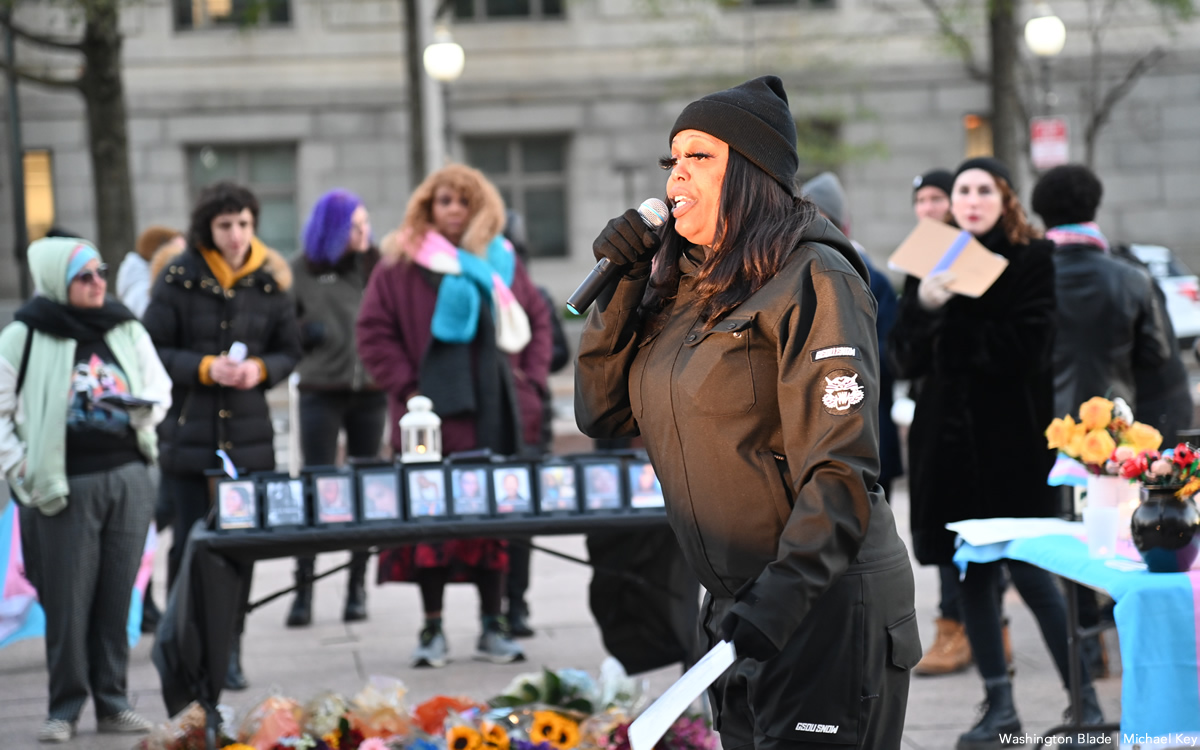
Activists and community members gathered at Freedom Plaza on Sunday for an observance of Trans Day of Remembrance. Despite temperatures in the 30s, about 100 people stood together at the vigil to reflect on those lost to violence, suicide, and transphobic hatred.
The vigil was organized by DC Area Trans Picnics, HIPS and Cake Society Co. with the support of other community activists and groups.
Shareese Mone of the harm reduction and advocacy organization HIPS addressed the crowd, “I am here! I will not be erased! I will embrace that word ‘trans’ just because I need to save someone. I not only need to save myself, but I need to save someone else.”
Mone continued, “I see a lot of these trans murders. A lot of these beautiful victims lost by gun violence. When are we going to stop? When is enough going to be enough?”
A table was set up with photos of trans people lost to violence since November of 2021. Community members placed flowers and other tributes below.
An activist with DC Area Trans Picnics said, “If you are like me, you get tired of being called brave just for trying to survive in a world that is often so unwelcoming to us, but it is a kind of bravery to show up for each other in moments like this.”
“This is a very hard time to be trans,” the activist continued.
“I wept this morning at the news of what happened in Colorado last night,” the activist said, referring to the mass shooting at Club Q in Colorado Springs, Colo. on Saturday. “You might hear some people refer to this as senseless violence, but it was not senseless: it was a calculated attempt to drive us underground and to make us too afraid to show our faces in public. But I have another message: We are not going anywhere! We are at war and we are not going down without a fight. I believe that we will win.”
Following speeches, attendees read aloud the names of slain trans community members. Some also added names of those who had not been previously identified. Those memorialized included Ace Scott of Kansas City, Mo.; Acey D. Morrison of Rapid City, S.D.; Amariey Lej (Myara) of Pittsburgh; Angel Naira of Aliquippa, Pa.; Aryanna Mitchell of Hampton, Va.; Brazil Johnson of Milwaukee; Brent Wood of Seattle; Chanelika Y’Ella Dior Hemingway (“Sid”) of Albany, N.Y.; Cherry Bush of Los Angeles; Cypress Ramos of Lubbock, Texas; Danyale Johnson of Memphis, Tenn.; Dede Ricks of Detroit; DeeDee Hall of Dallas; Duval Princess of Jacksonville, Fla.; Fern Feather of Morristown, Vt.; Hayden Nevah Davis of Detroit; Jasper Aaron Lynch of McLean, Va.; Jenny DeLeon of Sulphur Springs, Fla.; Kandii “Dee Dee” Redd (Kamila Marie Swann) of Kansas City, Mo.; Kathryn “Katie” Newhouse of Canton, Ga.; Kesha Webster of Jackson, Miss.; Keshia Chanel Geter of Augusta, Ga.; Ke’Yahonna Stone of Indianapolis; Kitty Monroe of Cordova, Tenn.; Maddie Hofmann of Malvern, Pa.; Marisela Castro of Houston; Marquiisha Lawrence of Greenville, S.C.; Martasia Richmond of Chicago; Martina Caldera of Channelview, Texas; Matthew Angelo Spampinato of New Castle, Del.; Miia Love Parker of Chester, Pa.; Naomie Skinner of Highland Park, Mich.; Nedra Sequence Morris of Opa-Locka, Fla.; Nikai David of Oakland, Calif.; Nikki Turietta of Albuquerque, N.M.; Paloma Vazquez of Houston; Paris Rich of San Diego; Princess of Houston; Ray Muscat of Independence Township, Mich.; Regina Mya Allen of Milwaukee; Sasha Mason of Zebullon, N.C.; Semaj Billingslea of Jacksonville, Fla.; Shawmaynè Giselle Marie McClam of Gulfport, Miss.; Tatiana “Tee Tee” Labelle of Chicago; Tiffany Banks of Miami; Toi Davis of Milwaukee; and Za’niyah Williams of Houston.


District of Columbia
Over 2,000 turn out for Hands Around the Kennedy Center protest
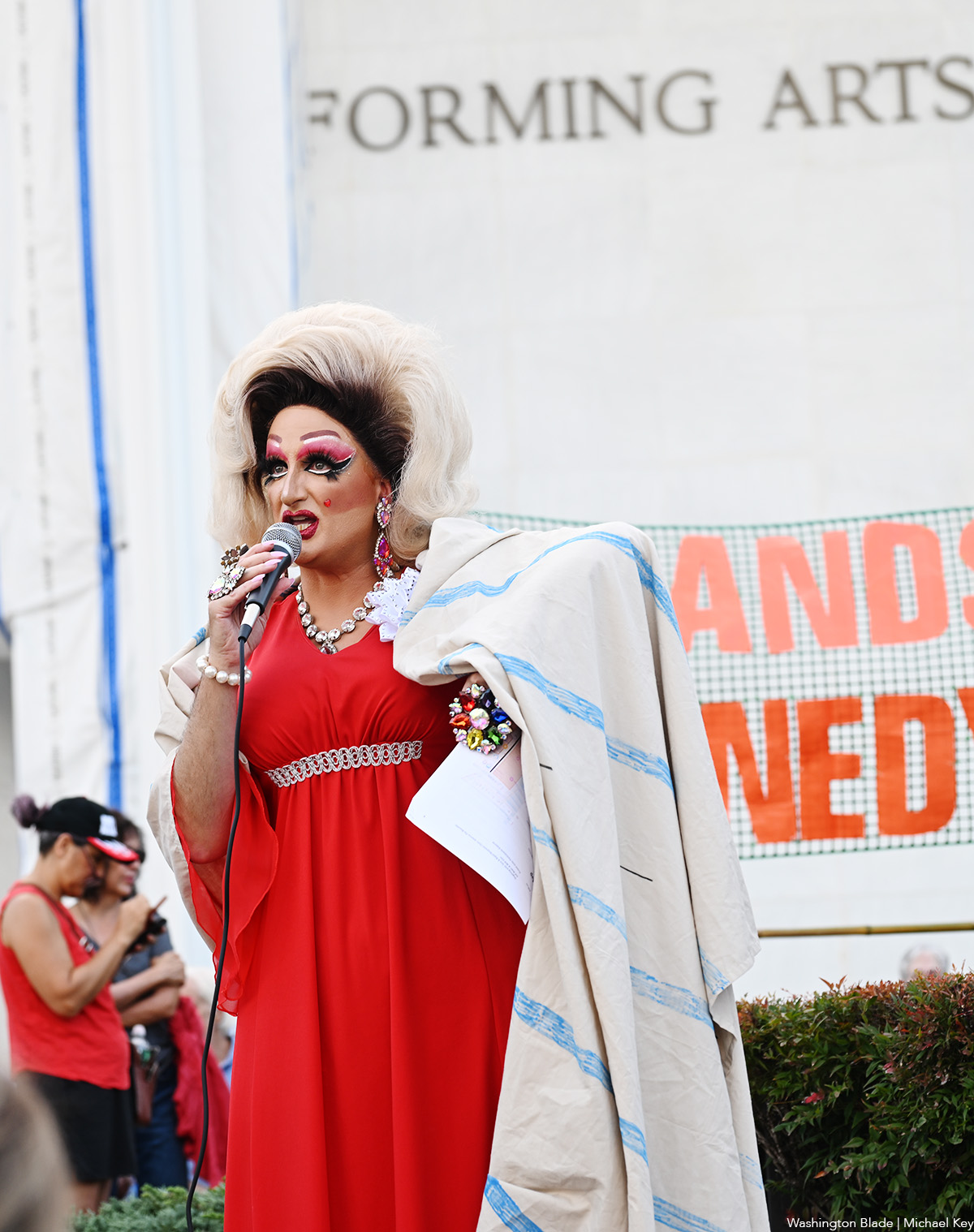
Drag performer Tara Hoot serves as MC, Gay Men’s Chorus of DC performs, attendees shout for Trump to keep ‘hands off’ Kennedy Center
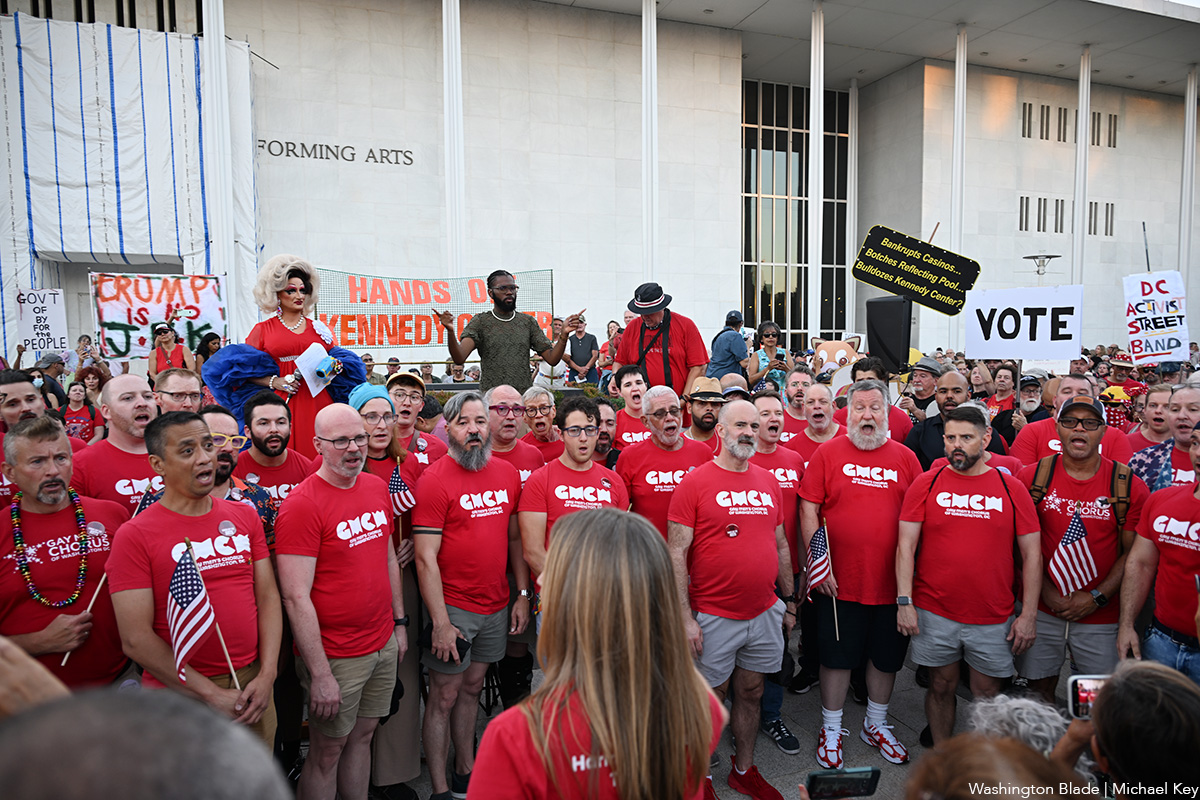
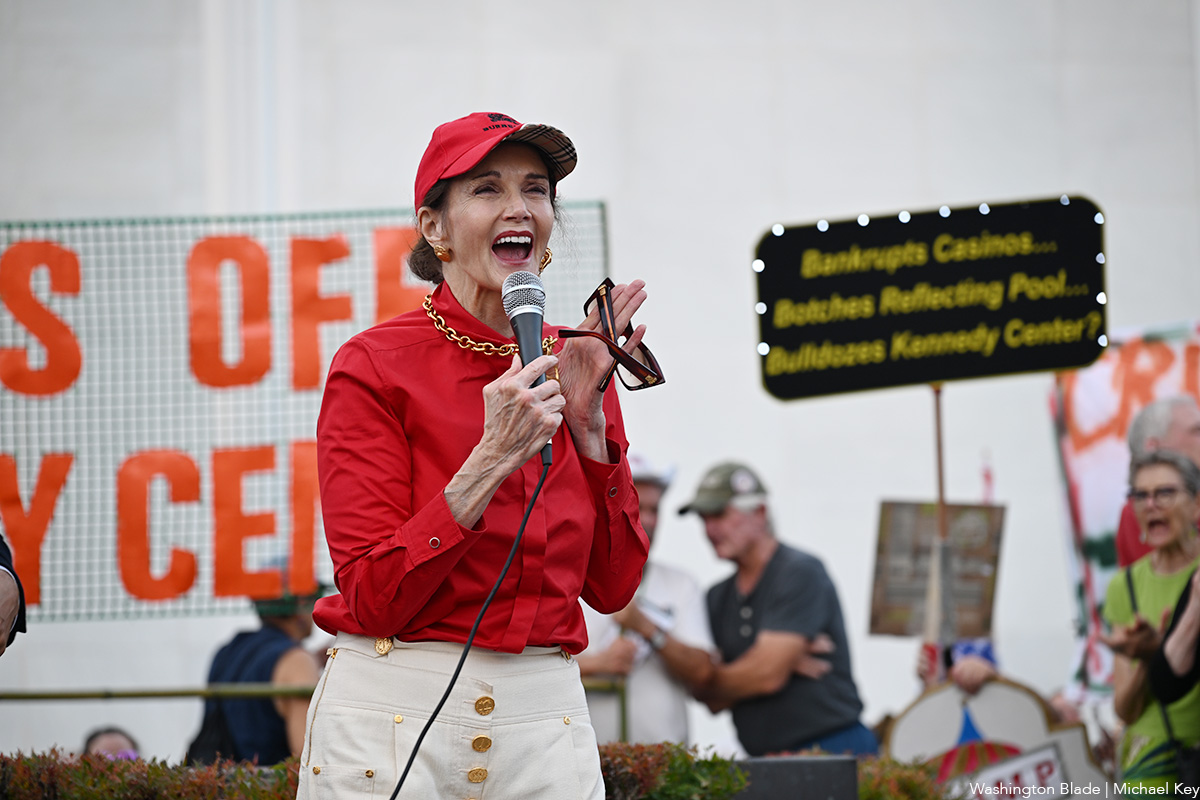
More than 2,000 supporters of the John F. Kennedy Center for the Performing Arts turned out on Sept. 18, for a rally in support of the performing arts center and a vocal protest against President Donald Trump’s threats to permanently close the center and possibly demolish it.
The event was organized by a group called Hands Off the Arts, which initially called for participants to form a “human chain” around the Kennedy Center’s main building following a rally on the plaza in front of the building.
However, due to a decision by the Trump-controlled Kennedy Center’s board of trustees to close the center earlier in the week and install fencing around part of the building, participants could only form the chain around part of the building, according to organizers.
Drag performer Tara Hoot, who co-organized the event and served as master of ceremonies for the rally preceding the “human chain,” said the large turnout could have fully surrounded the building at least twice had the fencing not prevented a full encirclement.
Among the musicians and singing groups that performed at the rally was the Gay Men’s Chorus of Washington, which, like other rally performers, had performed at the Kennedy Center in past years. They drew loud applause after singing one of their favorite songs from the Broadway musical show Ragtime, which includes the lyrics, “Will justice be demanded by 10 million men? Make them hear you. When they hear you, I’ll be near you again.”
View on Threads
Prior to their performance, Gay Men’s Chorus of Washington’s artistic director, Thea Kano, spoke at the rally, reminding participants that shortly after the Trump takeover of the center last year, Kennedy Center officials cancelled a concert the chorus was scheduled to perform there for World Pride 2025.
A Kennedy Center spokesperson said the cancellation was due to a scheduling conflict, but chorus members and LGBTQ activists believe it resulted from policies put in place by Trump and his leadership team at the Kennedy Center following Trump’s statements that he would end controversial “woke” performances that he claimed the majority of Americans disapprove of.
“Now this building sits empty in silence,” Kano told the crowd at the rally. “Let us raise our voices together and bring back the Kennedy Center as it was intended, a place where American culture could be celebrated and elevated, embracing the vibrancy with the spectrum of identify without censure and without politics,” she said.
Among the others who spoke at the rally were U.S. Rep. Don Beyer (D-Va.), U.S. Rep. Jonathan Jackson (D-Ill.), and D.C. Councilmember Robert White (D-At-Large).
Most speakers, along with LGBTQ participants in the hands-around-the-building event expressed strong opposition to Trump’s demand that the Kennedy Center name be changed from the John F. Kennedy Center for the Performing Arts to the Donald J. Trump and the John F. Kennedy Center for the Performing Arts.
At Trump’s request, his appointed board initially made that name change and placed Trump’s name on the front wall of the building along with the Kennedy name. But following legal action taken by opponents who pointed out that Congress must approve such a name change, a judge ordered the removal of Trump’s name from the building. Trump has said he will take steps to reverse that order and has said he will stop plans to renovate the Kennedy Center building and possibly demolish it if his name is not restored in the Kennedy’s Center’s official name.
Throughout the Sept. 18 rally, LGBTQ participants repeatedly responded to the Trump threats by shouting, “Hands Off!”
Chris Raleigh, one of the founders of Hands Off the Arts and a lead organizer of the Sept. 18 event at the Kennedy Center who spoke at the event told the Washington Blade that more similar events are being planned and he welcomes the support the event has received from the LGBTQ community.
“The LGBTQ community was here first, and we’re following them,” he said. “They’ve been the spearhead; they’ve been the vanguard. And I’m so thankful for heroes like Tara Hoot,” he said, adding, “It’s because they know what it means and how this is a safe place – the theater – for many LGBTQ people.”
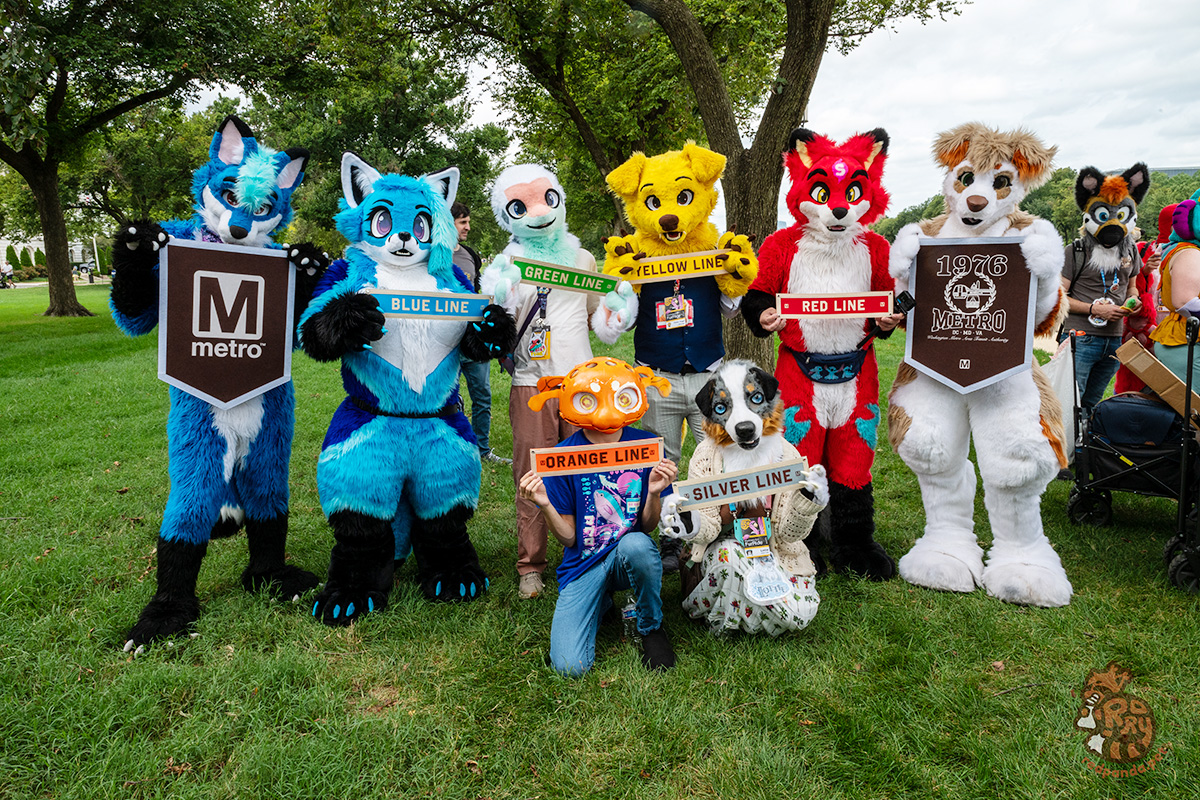
The DMV’s own furry group was on full display on the Metro on Sept. 12.
Shutterpaws is a volunteer-led 501(c)(3) non-profit organization located in Maryland.
The furry group has been doing the FurRide event since 2024 and has blown up in popularity for furries around DMV. They showcased themselves on the Silver and Blue Lines near the Smithsonian on Sept. 12.
“A lot of careful planning goes into running these events, with the goal being a seamless and enjoyable experience for everyone who attends,” says Zayre, a Shutterpaws staff member. “There’s a lot that you learn just by trial and error, and as Shutterpaws hosts more and more events, our team of event organizers continues to learn and refine our approach to keep things running smoothly and finding new ways to engage with our community.”
With a larger growth of participation in the community comes many challenges with the group, especially when it comes to the Metro rides and organizing.
“The biggest challenge that we face as organizers is keeping things fresh and finding new and engaging venues to host events,” says Zayre. “Recently we saw a lot of success hosting a meet at On Target Battlezone, an indoor NERF gun battle arena where our crew was welcome to show up and play both with and without a fur suit.”
Nevertheless, Shutterpaws receive overwhelming support from the community and partners.
“Across the DMV there are so many amazing places to host a Shutterpaws event so we can pursue our mission of helping connect fur suiters and photographers, and we’re blown away with the amount of support we’ve received from our community partners,” says Zayre.
Shutterpaws plans to do more events for anyone in the DMV who is interested.
Their next event in collaboration with DC Fur Meet will take place at Pitchers (2317 18th St., N.W.) on Saturday. Visit Shutterpaws’ website for more information.
District of Columbia
Hands Off the Arts to form ‘human chain’ around Kennedy Center
Drag performer Tara Hoot among event organizers
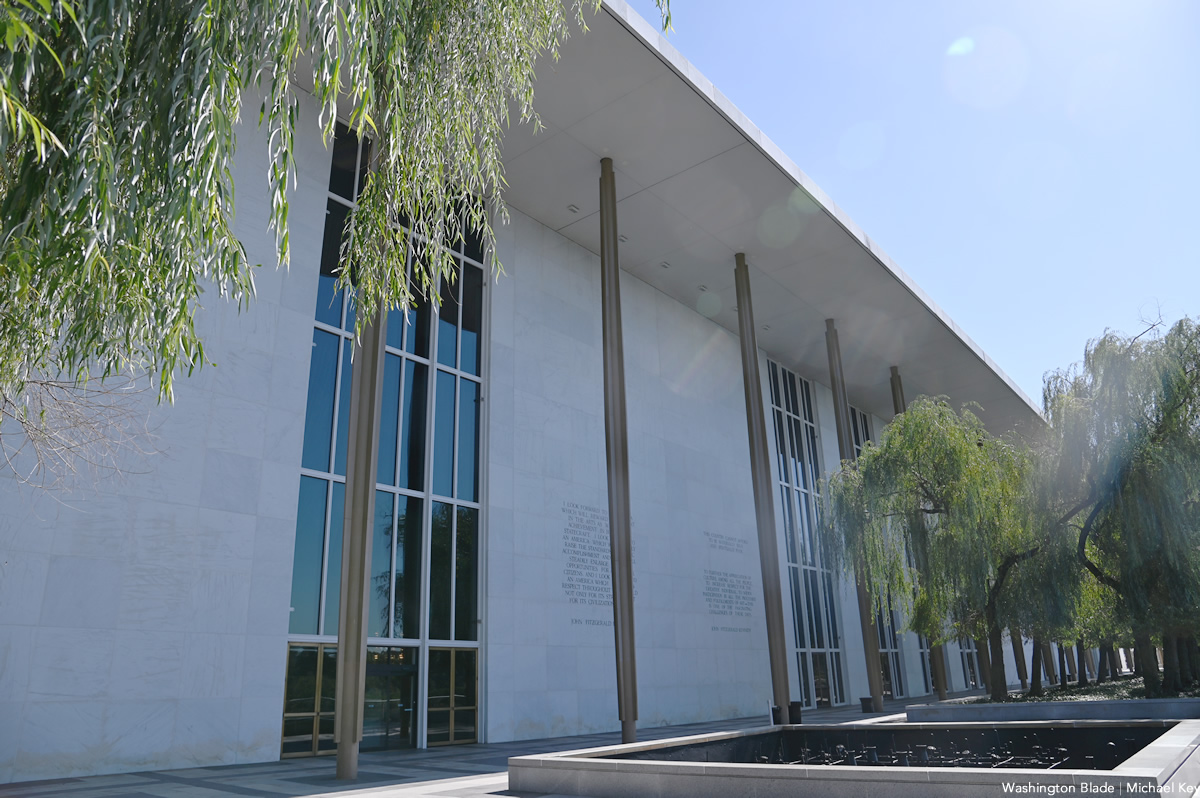
An organization called Hands Off the Arts has announced it is holding a protest on Friday, Sept. 18, in which between 400 and 800 participants are expected to create a “human chain” around the Kennedy Center to voice their strong objection to President Donald Trump’s call for possibly demolishing the Kennedy Center.
“Hands Off the Arts is organizing a rally Sept. 18 against the president’s defacing of JFK’s memorial, his removal and censorship of art, and the threat to demolish the center if he can’t remake the site in his image,” a statement released by the group says.
The statement says the event will start with a rally at 6:30 p.m. on the Kennedy Center steps and culminate with a “human chain” around the building. “There will be musical performances, testimonials from current and former employees, along with other special guest speakers,” it says
A separate announcement by the group says longtime D.C. drag performer Tara Hoot, who has performed at the Kennedy Center in past years, was among the organizers of the Sept. 18 protest.
The planned protest follows Trump’s decision last year to use his authority to replace the existing members of the Kennedy Center’s board of directors with new members loyal to him. Over the objection of longtime Kennedy Center supporters, the Trump-appointed board changed the name of the center, at Trump’s request, from the John F. Kennedy Memorial Center for the Performing Arts to the Donald J. Trump and the John F. Kennedy Center for the Performing Arts.
But following the threat of legal action by opponents who pointed out that the name change could not be legally made unless approved by Congress, the name change was cancelled, with Trump saying he would take steps to restore it later.
The Washington Post, meanwhile, reports in a Sept. 13 news story that because of negative publicity related to Trump’s actions, the Kennedy Center was facing “fiscal collapse” and possible bankruptcy and could be forced to shut down as early as this week.
According to the Post report, a 57-page document presented to the Kennedy Center’s board of trustees says the center was facing a financial and structural building crisis, with the recent collapse of part of the building’s inside ceiling, indicating the building was unsafe for employees and the public. Among other things, the document says the Kennedy Center may not be able to make payroll or pay for routine maintenance “within a matter of weeks,” the Post reports.
Some LGBTQ advocates were among those who joined others in boycotting the Kennedy Center to express their objections to Trump’s actions, including a statement by Trump that he objected to the Kennedy Center’s practice of hosting drag performances.
The Gay Men’s Chorus of Washington has been among the LGBTQ performing arts groups and artists that have performed at the Kennedy Center.
“With the future still very much uncertain, now more than ever, the Center needs you to stand up for freedom of expression and against authoritarian overreach into arts and culture institutions,” the Hands Off the Arts group says in its announcement of the Hands Around the Kennedy Center protest.
“You have the opportunity to make a difference — show up with Hands Off the Arts and show your power as part of Hands Around the Kennedy Center,” it says.
A spokesperson for the Kennedy Center couldn’t immediately be reached for comment.

UN human rights chief sounds alarm over ‘comprehensive onslaught’ against LGBTQ rights

White House press pool pushes back after Trump bars three outlets

PHOTOS: Shenandoah Valley Pride

Long-time DignityUSA executive director announces retirement

PHOTOS: Walk and 5K to End HIV

Gun reform is an LGBTQ rights issue

All the queer things to watch this fall

Parties, dinners, concerts and more on tap for fall nightlife

Jeremy Moss looks to bring LGBTQ advocacy from Lansing to Capitol Hill