COUNSELING FOR LGBTQ
District of Columbia
Over 2,000 turn out for Hands Around the Kennedy Center protest
Drag performer Tara Hoot serves as MC, Gay Men’s Chorus of DC performs, attendees shout for Trump to keep ‘hands off’ Kennedy Center
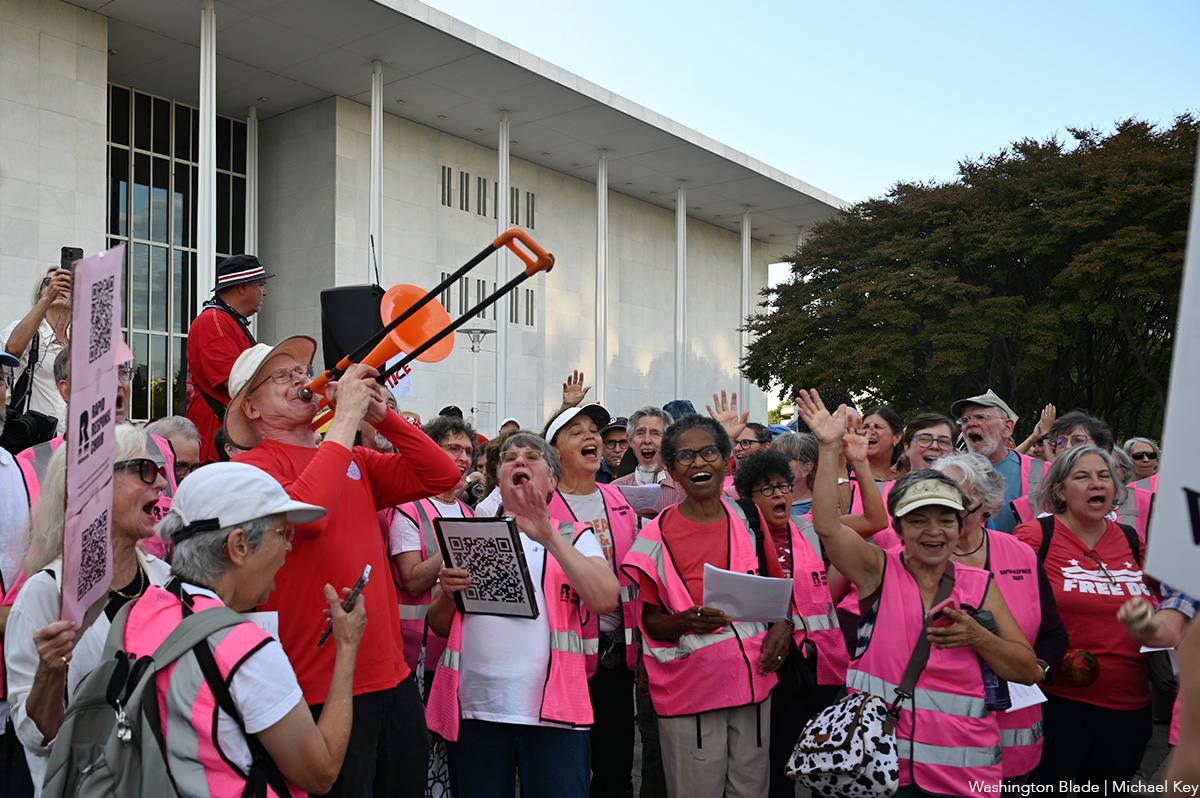
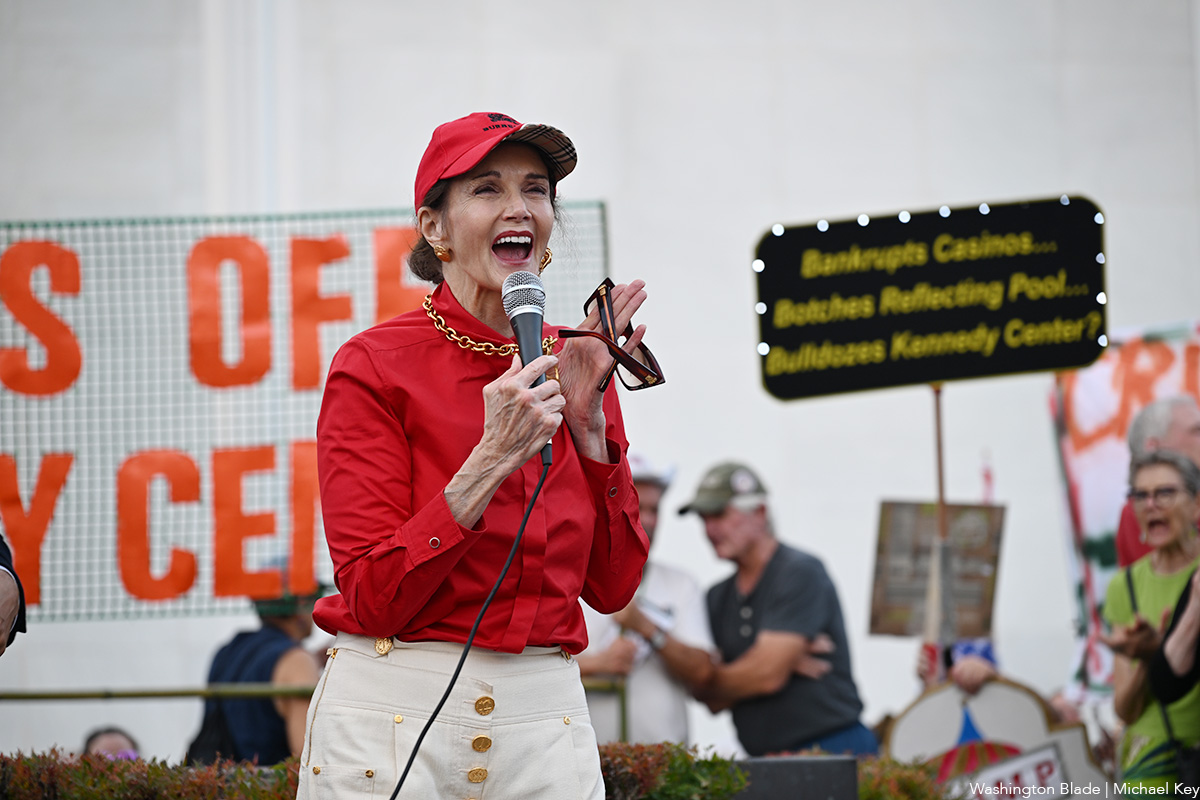
More than 2,000 supporters of the John F. Kennedy Center for the Performing Arts turned out on Sept. 18, for a rally in support of the performing arts center and a vocal protest against President Donald Trump’s threats to permanently close the center and possibly demolish it.
The event was organized by a group called Hands Off the Arts, which initially called for participants to form a “human chain” around the Kennedy Center’s main building following a rally on the plaza in front of the building.
However, due to a decision by the Trump-controlled Kennedy Center’s board of trustees to close the center earlier in the week and install fencing around part of the building, participants could only form the chain around part of the building, according to organizers.
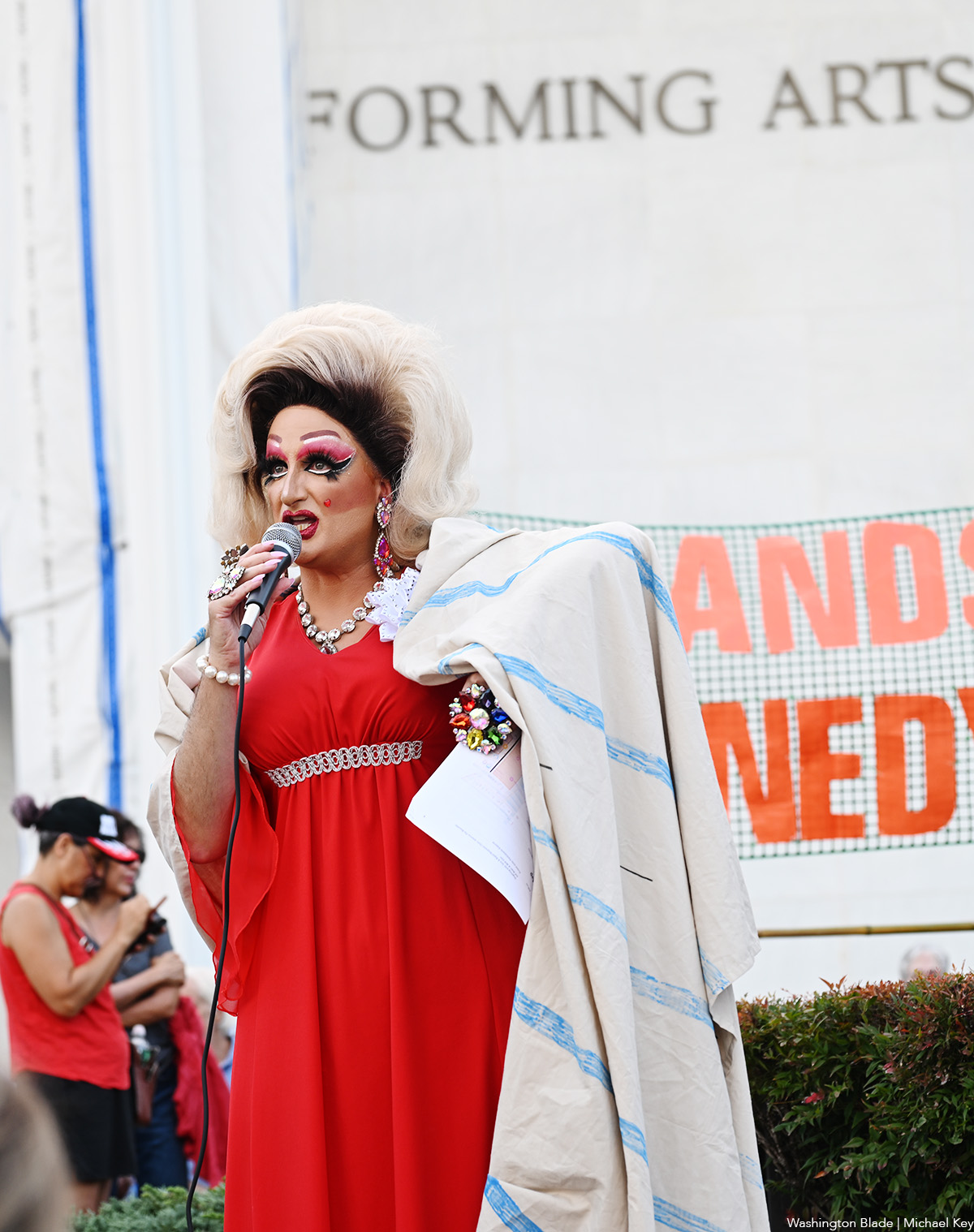
Drag performer Tara Hoot, who co-organized the event and served as master of ceremonies for the rally preceding the “human chain,” said the large turnout could have fully surrounded the building at least twice had the fencing not prevented a full encirclement.
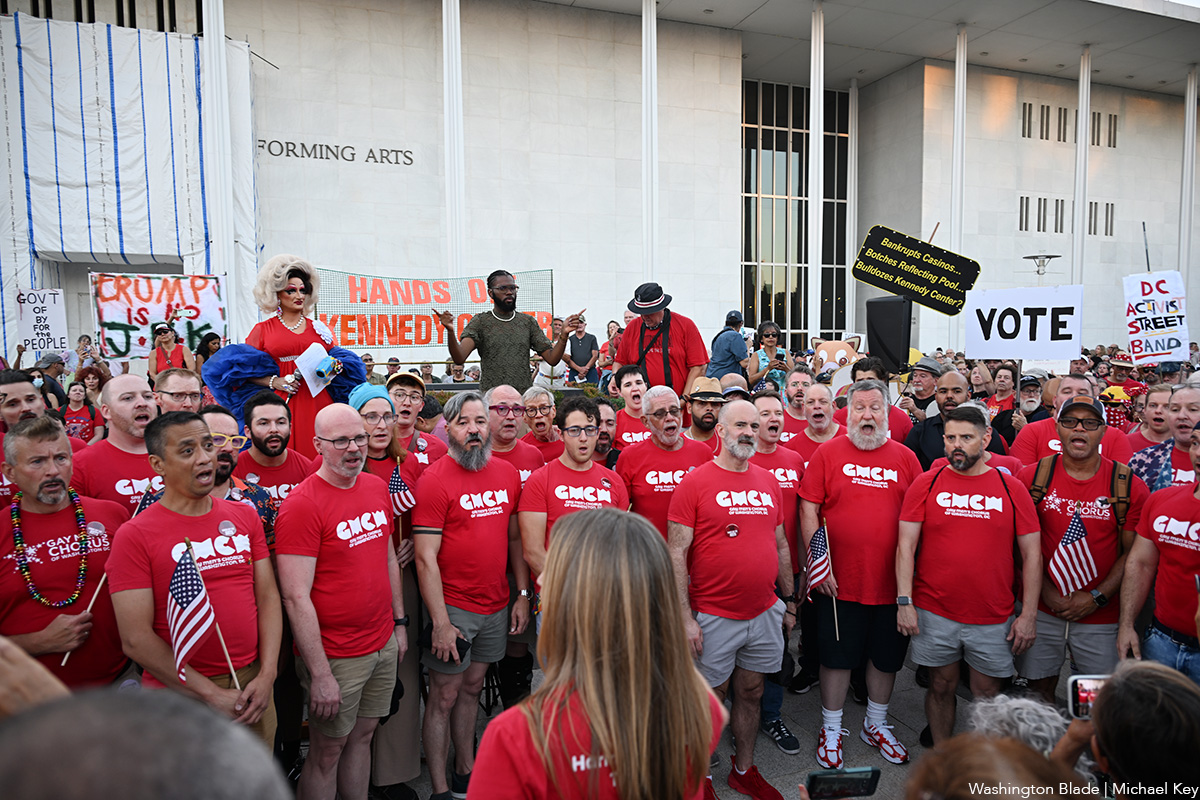
Among the musicians and singing groups that performed at the rally was the Gay Men’s Chorus of Washington, which, like other rally performers, had performed at the Kennedy Center in past years. They drew loud applause after singing one of their favorite songs from the Broadway musical show Ragtime, which includes the lyrics, “Will justice be demanded by 10 million men? Make them hear you. When they hear you, I’ll be near you again.”
View on Threads
Prior to their performance, Gay Men’s Chorus of Washington’s artistic director, Thea Kano, spoke at the rally, reminding participants that shortly after the Trump takeover of the center last year, Kennedy Center officials cancelled a concert the chorus was scheduled to perform there for World Pride 2025.
A Kennedy Center spokesperson said the cancellation was due to a scheduling conflict, but chorus members and LGBTQ activists believe it resulted from policies put in place by Trump and his leadership team at the Kennedy Center following Trump’s statements that he would end controversial “woke” performances that he claimed the majority of Americans disapprove of.
“Now this building sits empty in silence,” Kano told the crowd at the rally. “Let us raise our voices together and bring back the Kennedy Center as it was intended, a place where American culture could be celebrated and elevated, embracing the vibrancy with the spectrum of identify without censure and without politics,” she said.
Among the others who spoke at the rally were U.S. Rep. Don Beyer (D-Va.), U.S. Rep. Jonathan Jackson (D-Ill.), and D.C. Councilmember Robert White (D-At-Large).
Most speakers, along with LGBTQ participants in the hands-around-the-building event expressed strong opposition to Trump’s demand that the Kennedy Center name be changed from the John F. Kennedy Center for the Performing Arts to the Donald J. Trump and the John F. Kennedy Center for the Performing Arts.
At Trump’s request, his appointed board initially made that name change and placed Trump’s name on the front wall of the building along with the Kennedy name. But following legal action taken by opponents who pointed out that Congress must approve such a name change, a judge ordered the removal of Trump’s name from the building. Trump has said he will take steps to reverse that order and has said he will stop plans to renovate the Kennedy Center building and possibly demolish it if his name is not restored in the Kennedy’s Center’s official name.
Throughout the Sept. 18 rally, LGBTQ participants repeatedly responded to the Trump threats by shouting, “Hands Off!”
Chris Raleigh, one of the founders of Hands Off the Arts and a lead organizer of the Sept. 18 event at the Kennedy Center who spoke at the event told the Washington Blade that more similar events are being planned and he welcomes the support the event has received from the LGBTQ community.
“The LGBTQ community was here first, and we’re following them,” he said. “They’ve been the spearhead; they’ve been the vanguard. And I’m so thankful for heroes like Tara Hoot,” he said, adding, “It’s because they know what it means and how this is a safe place – the theater – for many LGBTQ people.”
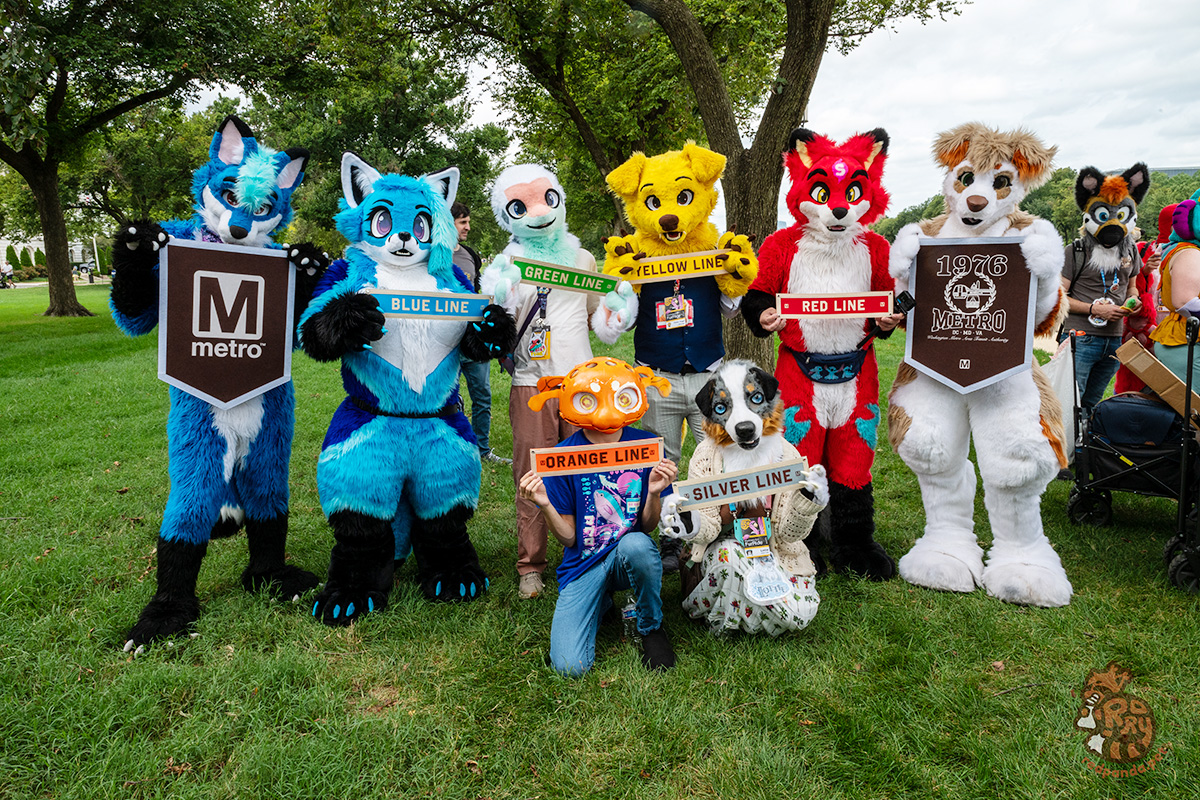
The DMV’s own furry group was on full display on the Metro on Sept. 12.
Shutterpaws is a volunteer-led 501(c)(3) non-profit organization located in Maryland.
The furry group has been doing the FurRide event since 2024 and has blown up in popularity for furries around DMV. They showcased themselves on the Silver and Blue Lines near the Smithsonian on Sept. 12.
“A lot of careful planning goes into running these events, with the goal being a seamless and enjoyable experience for everyone who attends,” says Zayre, a Shutterpaws staff member. “There’s a lot that you learn just by trial and error, and as Shutterpaws hosts more and more events, our team of event organizers continues to learn and refine our approach to keep things running smoothly and finding new ways to engage with our community.”
With a larger growth of participation in the community comes many challenges with the group, especially when it comes to the Metro rides and organizing.
“The biggest challenge that we face as organizers is keeping things fresh and finding new and engaging venues to host events,” says Zayre. “Recently we saw a lot of success hosting a meet at On Target Battlezone, an indoor NERF gun battle arena where our crew was welcome to show up and play both with and without a fur suit.”
Nevertheless, Shutterpaws receive overwhelming support from the community and partners.
“Across the DMV there are so many amazing places to host a Shutterpaws event so we can pursue our mission of helping connect fur suiters and photographers, and we’re blown away with the amount of support we’ve received from our community partners,” says Zayre.
Shutterpaws plans to do more events for anyone in the DMV who is interested.
Their next event in collaboration with DC Fur Meet will take place at Pitchers (2317 18th St., N.W.) on Saturday. Visit Shutterpaws’ website for more information.
Out & About
A roundup of fall events not to be missed
Laverne Cox, Oktoberfest, arts celebrations, and more
Colder temperatures don’t mean you have to stay indoors — here’s a roundup of what to do this fall.
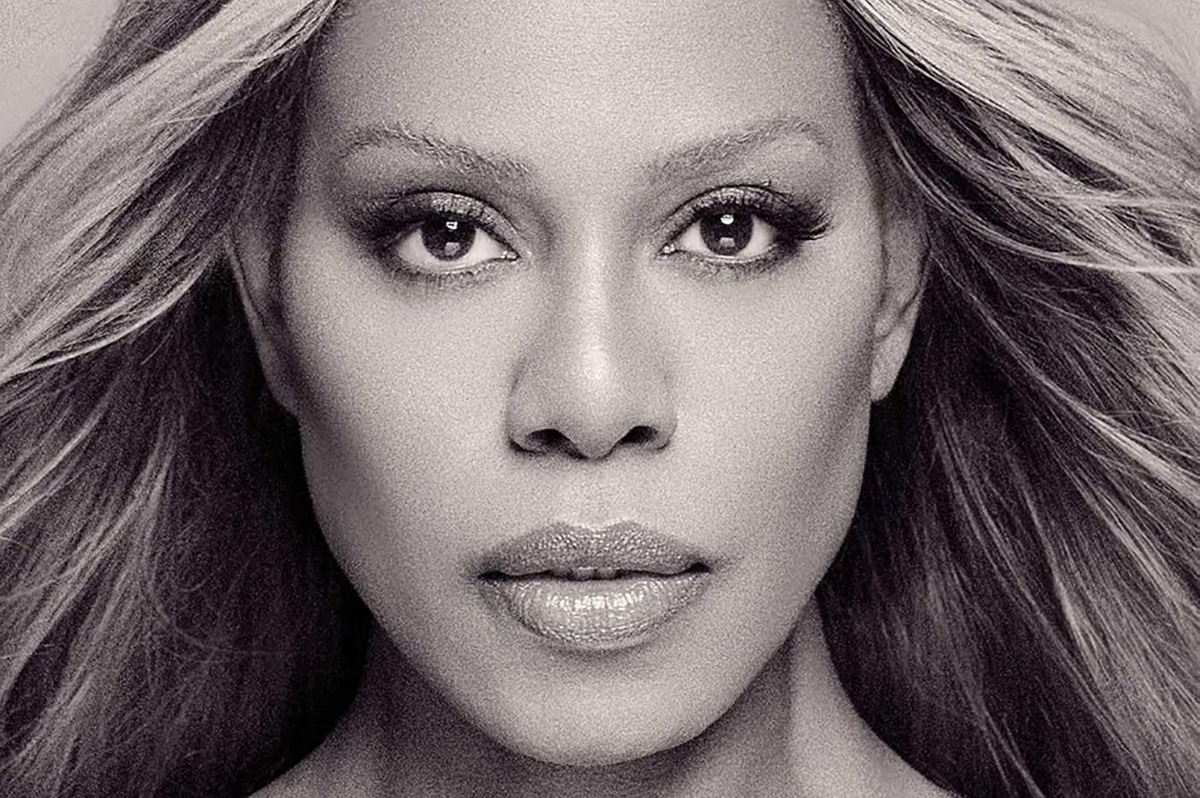
Laverne Cox will discuss her memoir, “Transcendent,” with Dr. Melanie Bryant on Saturday, Sept. 19 at 7 p.m. at Baltimore Book Fest. Cox will share her journey as a transgender woman in Hollywood, confronting childhood trauma, shame, gender identity, her transition, body image issues, her search for romantic love, deep-seated feelings of unworthiness, and ultimately, healing.
Dacha Beer Garden will launch its longest and loudest Oktoberfest yet on Friday, Sept. 18. This will be 17 consecutive days of Bavarian festivities across both locations — the original Shaw beer garden and the 800-person Navy Yard garden — running through Sunday, Oct. 4. On opening night, DC Brau will tap the ceremonial first keg and then Manuela Horn, the six-foot-two Austrian yodel queen, will trade sets with Johnny Koenig and his four-piece band in a live back-and-forth of yodeling, polka, and crowd games that can only be described as Oktoberfest ping pong.
Fay Jacobs will host “Aging Gracefully: 2nd Annual Farewell Tour” on Friday, Oct. 9 and Saturday, Oct. 10 at CAMP Rehoboth Community Center. This show will feature a new script with lots of new stories, and only a couple of “signature” tales.
Capital One Center will host its “Celebration of the Arts” starting on Saturday, Sept. 19 at its location in Tysons, Va. There will be art, music, food trucks, local vendors, and family-friendly outdoor entertainment. This curated experience invites you to engage with hands-on workshops, immersive art activations, and live performances. More details are available on Eventbrite.
Spark Social will host “open Mic Night” on Thursday, Oct. 8 at 8 p.m. Get ready to share your talent or just kick back and enjoy some great performances at Spark Social. Sign Ups are first-come-first-serve,, but you can also message the venue on Instagram to reserve a performance spot. Whether you’re a singer, poet, or comedian, this is your chance to get on stage and share your art. Tickets are $13.26 and are available on Eventbrite.
Howard University’s School of Social Work will host “Intergenerational Trauma in the BIPOC Community and the Use of Art” on Thursday, Sept. 17 at 3 p.m. This in-person, interactive workshop explores the role of art as a creative and supportive tool for understanding and addressing intergenerational trauma. Participants will examine the meaning and impact of intergenerational trauma, with particular attention to its historical roots and ongoing effects within Black and other BIPOC communities. More details are available on Eventbrite.
9:30 Club will host “BERTHA: Grateful Drag” on Thursday, Oct. 8 at 7 p.m. The group has partnered with PLUS1 so that $1 from every ticket sold goes to SMYAL and their work supporting and empowering LGBTQ+ youth. Tickets are available on 9:30 Club’s website.
Steve Lacy’s “Oh Yeah?” tour is coming to The Anthem on Sunday, Oct. 18 at 6 p.m. Tickets are available on The Anthem’s website.
Rapper Cupcakke will perform at Howard Theatre on Sunday, Oct. 25 at 7 p.m. More details are available on the theater’s website.
Team DC will host “Open Play: A Celebration of LGBTQ+ Athletes and Sports Fans” on Saturday, Oct. 10 at 6 p.m. at Trade. Join Athlete Ally, Team DC and District Wrestling for a casual, in-person mixer as they celebrate LGBTQ+ sports fans and athletes at all levels of the game. Whether you’re part of an LGBTQ+ recreational league or just love watching sports, this is the place to connect, celebrate, and share the love of the game with other queer athletes, fans, business leaders, policymakers and more. Reserve a spot on Eventbrite.
The DC LGBTQ+ Community Center will host “2026 LGBT Intergenerational Extravaganza” on Sunday, Sept. 20 at 12 p.m.This is an event to connect, build relationships, and have fun with LGBTQ folks from other generations, and it will include lunch, an intergenerational dialogue and breakout sessions. More details are available on Eventbrite.

Over 2,000 turn out for Hands Around the Kennedy Center protest

Furries take over the Metro

A roundup of fall events not to be missed

Activists protest outside Turkish Embassy in D.C.

Republican challenger misgenders McBride during forum, forced to leave

Fashion icon Bob Mackie dead at 87

Transgender woman killed in Barclay community mourned by friends, advocates

New Hungarian government to scrap anti-LGBTQ adoption law

Acclaimed Chef Patrick O’Connell’s memoir reveals the arc of a life well lived

Hands Off the Arts to form ‘human chain’ around Kennedy Center
-

 Celebrity News5 days ago
Fashion icon Bob Mackie dead at 87
-
Baltimore5 days ago
Transgender woman killed in Barclay community mourned by friends, advocates
-
Hungary5 days ago
New Hungarian government to scrap anti-LGBTQ adoption law
-
a&e features4 days ago
Acclaimed Chef Patrick O’Connell’s memoir reveals the arc of a life well lived