Michigan
Mich. becomes 22nd state to ban conversion therapy
Democratic Gov. Gretchen Whitmer signed bill on Wednesday
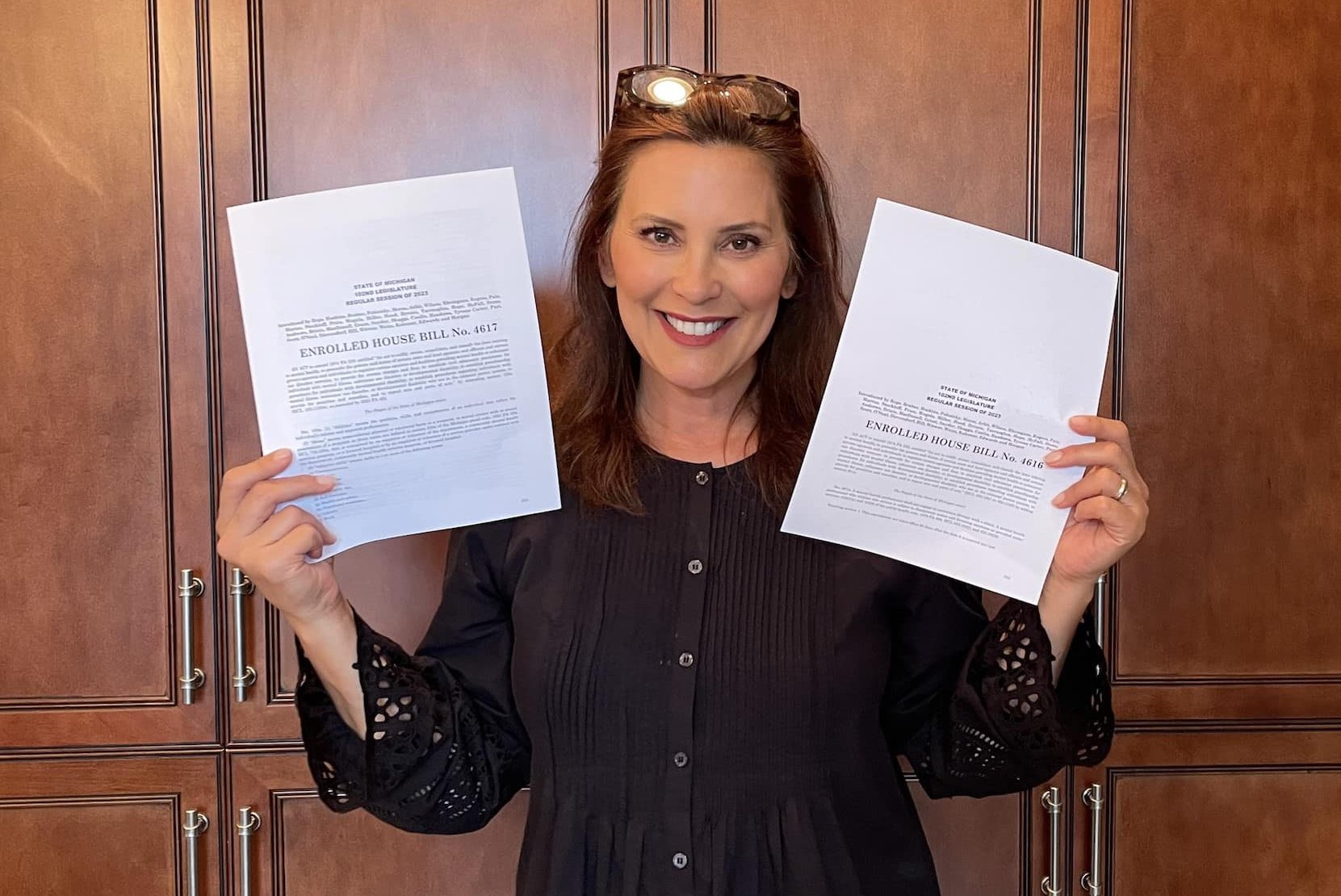
By Anna Liz Nichols | LANSING, Mich. – A ban on conversion therapy for minors was signed into law in Michigan Wednesday in the latest development of the new Democratic-led state Legislature’s push for LGBTQ rights in Michigan.
Governor Gretchen Whitmer said in a news release Wednesday that as the mother of a gay daughter, she is grateful to have the opportunity to make the state a more welcoming place to live for everyone’s children.
“Today, we are banning the horrific practice of conversion therapy in Michigan and ensuring this is a state where you can be who you are,” Whitmer said. “Let’s continue working together to ensure anyone can ‘make it’ in Michigan, expand fundamental freedoms, and fight back against any and all forms of discrimination.”
The legislation, House Bill 4616 and House Bill 4617, effectively bars mental health professionals from seeking to alter a minor’s sexual orientation or gender identity, or risk facing disciplinary action that could result in the loss of their professional licenses.
The legislation does not prohibit the practice of gender-affirming care or support during exploration of gender or sexuality or counseling to prevent unsafe relationship practices.
There is no evidence that conversion therapy works, but there is evidence that shows it is dangerous to children, bill sponsor Rep. Felicia Brabec (D-Pittsfield Township), who is also a clinical psychologist, said in the news release from the governor’s office and in her testimony on the House floor in June.
“I am acutely aware that kids need to be free to express themselves without the fear or threat of damaging pseudo-psychology like conversion therapy. With the support of several mental health organizations throughout our state and nation, I can confidently say that this law will help to ensure that therapists like myself continue to do no harm in our practices, while protecting the LGBTQ youth in our state,” Brabec said.
Proponents of banning conversion therapy say legislation like what’s being implemented in Michigan prevents suicide.
When Whitmer signed an executive order in 2021 banning the use of state and federal funds being used for conversion therapy on minors, the Trevor Project, a non-profit group working to create a safer environment for LGBTQ kids, applauded the action. The Trevor Project added at the time that a 2020 report by the Williams Institute at UCLA School of Law found that lesbian, gay and bisexual youth who experienced conversion therapy were more than twice as likely to report multiple suicide attempts in the last year than their peers who hadn’t been in conversion therapy.
Erin Knott, executive director of Equality Michigan, which works to reach out and advocate for LGBTQ Michiganders, said, “today is a good day” because the ban is a win for Michigan against the “torture” of conversion therapy.
‘The practice is inherently discriminatory, they are cruel, inhumane and degrading treatments that, depending on the severity, physical or mental pain, the suffering inflicted on a victim oftentimes amounts to torture,” Knott said. “This is just one step in terms of mitigating torture and trauma to our kids as well as letting them know or giving them a signal that they are loved and supported and valued as they are, there’s no need to attempt to change them for who they are or how they identify.”
The ban is part of several LGBTQ rights measures considered this term after Democrats have the majority in both chambers in the state legislature for the first time in nearly 40 years. The state’s 1976 civil rights laws got an update in March when Whitmer signed into law legislation to extend protections against discrimination on the basis of gender identity and sexual orientation.
Currently, expansions to the state’s hate crime laws, which would add protections for abuses suffered by individuals because of their sexual orientation or gender identity are making their way through the Legislature.
The legislation signed Wednesday creates penalties for licensed mental health professionals, but doesn’t address unlicensed professionals who perform conversion therapy, including religious leaders providing conversion therapy with no mental health care licensure.




Michigan
Progressives score victory as El-Sayed wins Mich. Senate primary
Democratic newcomer will face Rogers in November
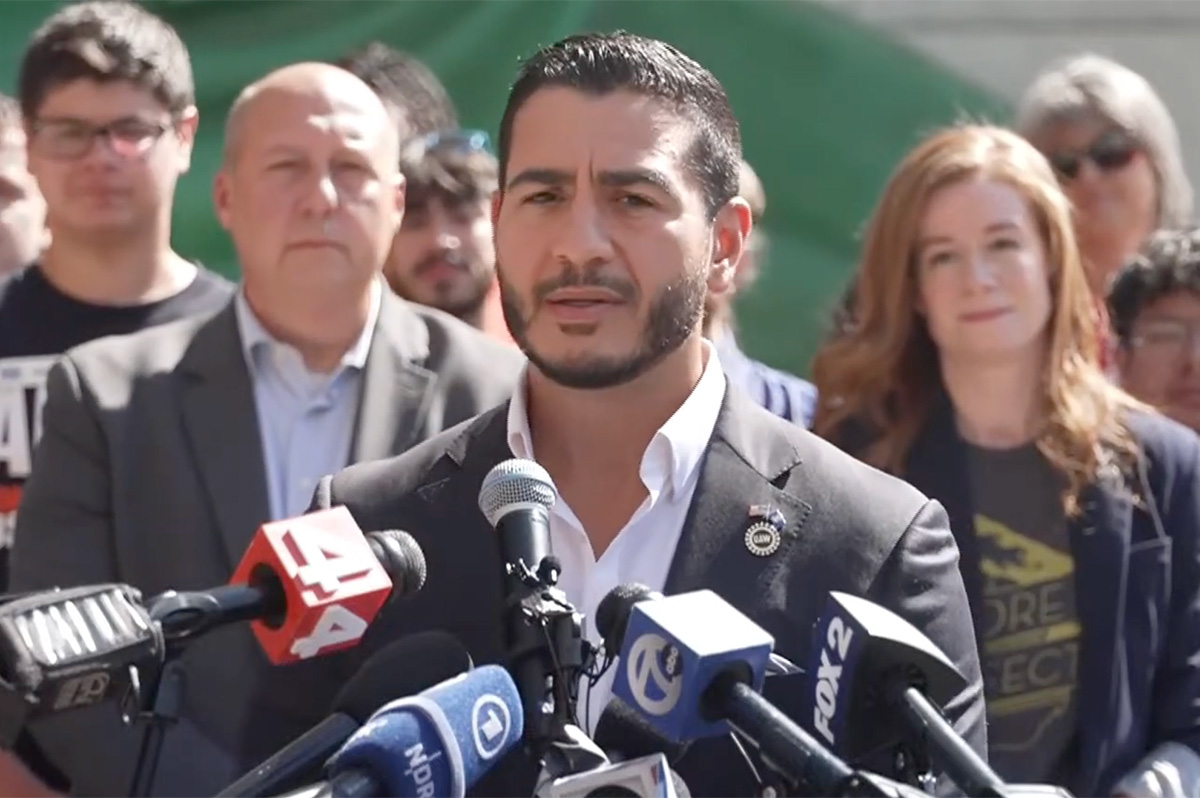
Michigan held its primary on Tuesday, allowing the two major political parties to select their nominees to go head-to-head for the state’s U.S. Senate seat.
NBC News called the Democratic race early, giving the victory to physician Abdul El-Sayed over incumbent U.S. Rep. Haley Stevens (D-Mich.) in an extremely close primary. El-Sayed won 48.5 percent of the primary vote, with Stevens trailing by just one percentage point at 47.5 percent.
Both candidates have campagined on supporting the LGBTQ community through different avenues— for El-Sayed he focused on his past promoting HIV and PrEP funding and research. Stevens focused on her legislative history working to support transgender rights in the state.
This is a major win for progressive Democrats, who have been bearing the brunt of political attacks from President Donald Trump, the Republican Party, and centrist Democrats.
El-Sayed, a former health director in Detroit, ran his campaign largely on making life in the Great Lakes State more affordable amid rising costs. His policies include promoting “Medicare for All,” pushing health policy that targets the regressive efforts of the Trump-Vance administration that rolls back funding for both Women and LGBTQ people, minimizing the growing amount of money in politics, and he was very vocal in his criticism of Stevens for supporting aid to Israel. He was endorsed by two major progressives — U.S. Sen. Bernie Sanders (I-Vt.) and U.S. Rep. Alexandria Ocasio Cortez (D-N.Y.).
Stevens, the four-term congresswoman, is much closer to establishment Democrats on policy than El-Sayed.
During her time in the federal government, she has consistently supported the Equality Act, which would add sexual orientation and gender identity as protected classes under the Civil Rights Act of 1964. She has also emphasized supporting local manufacturing and lowering housing costs in the state.
She was named to Advocates for Trans Equality’s 118th Congressional Champions list for her pro-trans policies and was endorsed by establishment heavy hitters Michigan Gov. Gretchen Whitmer and Senate Minority Leader Chuck Schumer (D-N.Y.).
The contentious race boiled down not only to Michigan affairs but also extended to international conflicts — namely Palestine. (South Africa has filed a case in the International Court of Justice in The Hague that accuses Israel of committing genocide in the Gaza Strip after Oct. 7.) This primary also acted as one of the first major races that pushed back against AIPAC, a lobbying group that works to promote pro-Israel candidates in U.S. elections. The group has been involved in domestic politics since 1954.
AIPAC devoted a massive amount of money to this race.
The Associated Press reported that the pro-Israel lobbying group spent more than $30 million on ads against El-Sayed because of his vocal denunciation of Israel and his continued criticism of its policies towards Palestine.
Michigan has a large Muslim and Arab American population, which could, in part, explain how El-Sayed was able to win.
The Republican side was far less competitive. Former U.S. Rep. Mike Rogers (R-Mich.) ran unopposed and clinched the GOP nomination. He has consistently held anti-LGBTQ positions, going as far as voting multiple times for a federal constitutional amendment to ban same-sex marriage, voting against repealing the military’s “Don’t Ask, Don’t Tell” policy, and supporting efforts to directly target the attempted expansion of Title IX protections to include trans people.
El-Sayed will face off against Rogers in November for Michigan’s Senate seat — one that could have lasting impacts not only on the state’s politics but also on the Republicans’ narrow Senate majority and Trump’s political agenda.
Michigan
FBI thwarts Halloween terror plot targeting Mich. LGBTQ bars
Two suspects arrested with arsenal of weapons and tactical gear
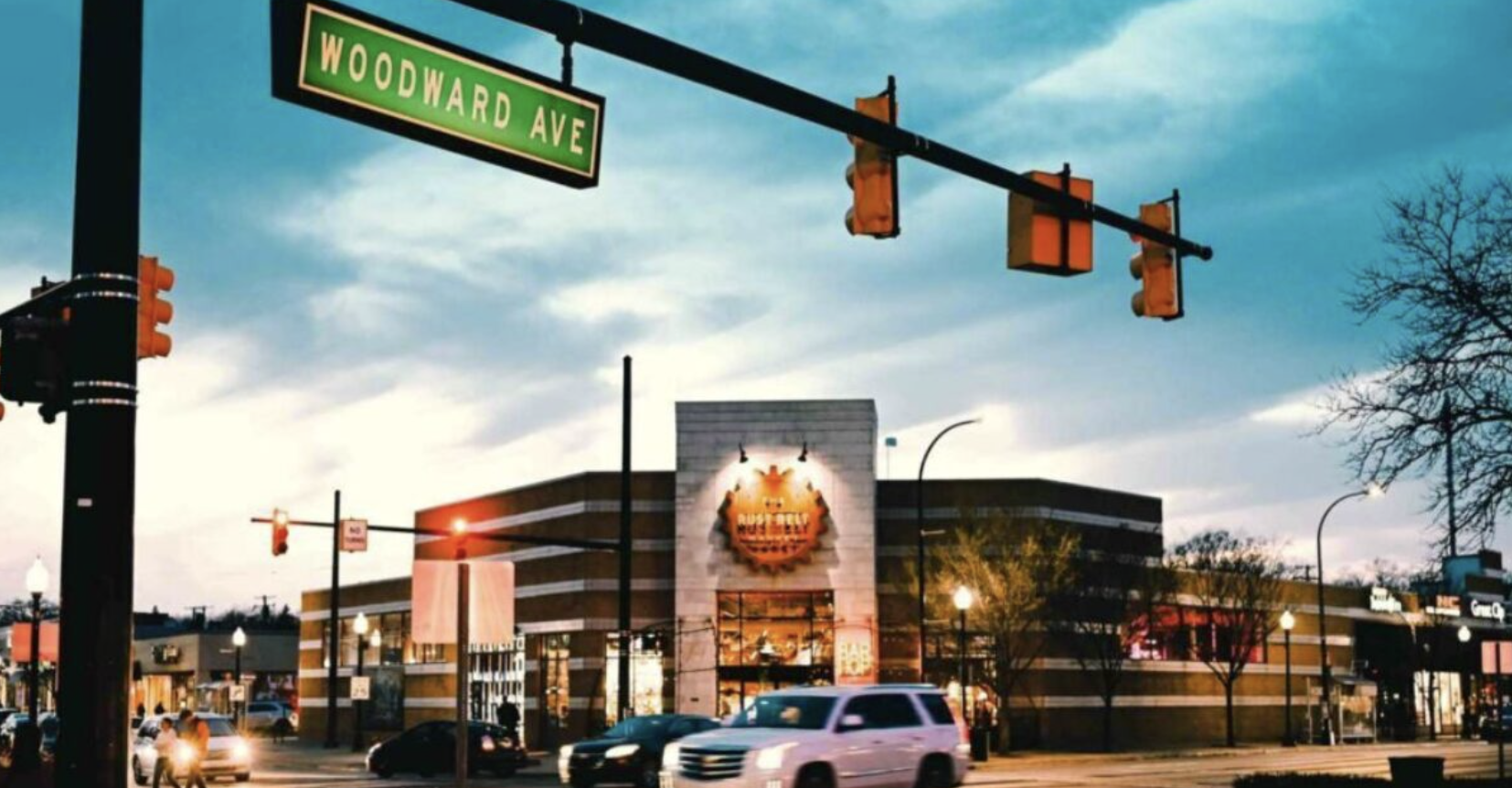
By SARAH BRICKER HUNT | Two men are facing federal terrorism charges after allegedly planning a Halloween attack on LGBTQ+ bars in Ferndale, according to criminal complaints unsealed in federal court Nov. 3.
Momed Ali and Majed Mahmoud were arrested Oct. 31 by the FBI Joint Terrorism Task Force, which seized tactical gear, AR-15-style rifles, ammunition and other evidence from a Dearborn home and an Inkster storage unit. The 72-page complaint says the men, along with other co-conspirators including a minor, were inspired by Islamic State extremism and had scouted LGBTQ+ venues in Ferndale.
According to the New York Post, the suspects discussed copying the November 2015 coordinated ISIS attacks in Paris that killed 130 people. Surveillance footage from gun ranges shows Ali and Mahmoud practicing shooting with firearms, the Post reports.
The Paris attacks involved gunmen and suicide bombers who launched coordinated assaults on multiple locations throughout the French capital, including the Bataclan concert hall, the Stade de France stadium and several restaurants and cafes. The Bataclan attack was the deadliest, with attackers opening fire on concertgoers and taking hostages.
Multiple media outlets are reporting that the suspects discussed doing “the same thing as France” in reference to the Paris attacks, and mentioned potential attacks at clubs or discos similar to the 2016 Pulse nightclub shooting in Orlando that killed 49 people. Investigators discovered the suspects repeatedly referred to “pumpkins” in their conversations, which authorities identified as code for a Halloween-themed attack.
Ali purchased a shotgun, an AR-15-style rifle and a forced reset trigger that increases the rate of fire in semiautomatic weapons, according to federal documents. Mahmoud purchased an AR-15-style rifle and more than 1,600 rounds of ammunition.
In September, Ali, Mahmoud and the minor made multiple trips to Ferndale, traveling to an area on Woodward Avenue near East Nine Mile that includes numerous clubs and bars that attract members of the LGBTQ+ community, according to the FBI.
“Our American heroes prevented a terror attack,” U.S. Attorney General Pam Bondi said on X following the arrests.
Both men have been charged with receiving and transferring guns and ammunition for terrorism and appeared in court Nov. 3. One defense attorney declined to comment, while another dismissed the allegations over the weekend as “hysteria” and “fearmongering.”
Popular Ferndale LGBTQ+ bar Soho posted to Facebook following news of the arrests.
“Soho is aware of recent reports concerning a potential threat directed toward businesses in our area. While it appears we were not targeted directly, we commend and deeply appreciate the swift and thorough response of local and federal law enforcement agencies in addressing the matter and ensuring the safety of our community,” the statement read.
The bar emphasized its confidence in local law enforcement. “We have always felt safe in the Ferndale community thanks to our close relationship with local law enforcement and their ongoing diligence and support.”
Soho’s statement also condemned targeting the LGBTQ+ community: “It is abhorrent that the LGBTQ+ community would ever be targeted — a community that stands for tolerance, unity, and peace.”
The bar confirmed its operations continue as normal and expressed gratitude for community support.
Meanwhile, Oakland County Executive Dave Coulter posted to Facebook, “Learning that Ferndale and the LGBTQ+ community were among the potential targets of a terrorist attack is disturbing. The pain of the Pulse Nightclub tragedy in Orlando nine years ago while I was serving as mayor of Ferndale is still deeply felt in the community. I’m grateful for the FBI, Oakland County Sheriff’s Office and other law enforcement for their diligence in seeking out and preventing what could have been another mass tragedy.”
Michigan
Mich. lawmaker introduces resolution asking SCOTUS to overturn Obergefell
Far-right lawmaker stripped from committee assignments for extreme rhetoric
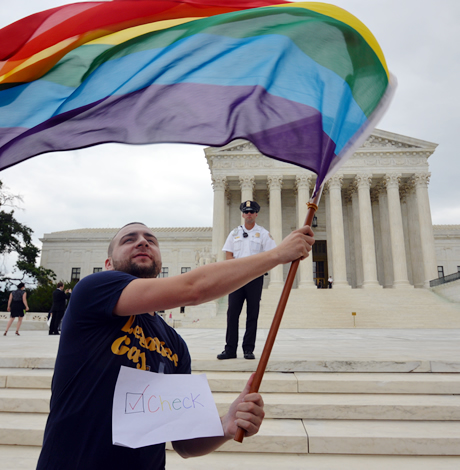
Republican Michigan state Rep. Josh Schriver introduced a resolution Tuesday asking the U.S. Supreme Court to overturn the 2015 Obergefell v. Hodges ruling, which established the nationwide right to same-sex marriage.
The lawmaker announced the move in a post on X, having previously shared a press release announcing plans to file the resolution, which argues that same-sex marriage is “at odds with the sanctity of marriage, the Michigan constitution, and principles upon which the country was established.”
The Resolution to Restore Marriage
— Rep. Josh Schriver (@JoshuaSchriver) February 25, 2025
✅ Introduced pic.twitter.com/UrX1zSdmUf
Schriver’s resolution has 12 co-sponsors, and similar measures have been introduced in other states including Idaho, Iowa, Montana, North Dakota, and South Dakota.
Responding to one of his posts advocating for the overturning of Obergefell in December, Michigan Gov. Gretchen Whitmer, a Democrat, said “any attempt to strip away gay marriage is wrong.”
Last month, the far-right politician was heard telling colleagues in leaked audio that gender affirming healthcare should be banned for minors as well as adults: “If we are going to stop this for anyone under 18, why not apply it for anyone over 18? It’s harmful across the board and that’s something we need to take into consideration in terms of the endgame.”
Earlier this month, he proposed banning birth control and reposted a message promoting the white nationalist Great Replacement conspiracy theory, the latter leading to Michigan House Minority Leader Matt Hall’s (R) decision to remove Schriver from his committee assignments.

‘Thelma and Louise’ remains landmark of unspoken queer rebellion

Comings & Goings

LGBTQ Military Happy Hour set for Sept. 15

Calendar: September 11-17

Multi-billion-dollar 9/11 Victim Compensation Fund to continue until 2090

Iceland implements gender-neutral blood donor rules

Anti-science, anti-LGBTQ movements go hand in hand

Everton Blair makes history as first openly gay congressman from Ga.

Chris Pappas wins NH Democratic Senate primary

Mujer trans salvadoreña es encontrada sin vida
-

 Iceland4 days ago
Iceland implements gender-neutral blood donor rules
-
Commentary4 days ago
Anti-science, anti-LGBTQ movements go hand in hand
-
Georgia4 days ago
Everton Blair makes history as first openly gay congressman from Ga.
-
2026 Midterm Elections4 days ago
Chris Pappas wins NH Democratic Senate primary