LGBTQ Non-Profit Organizations
Trevor Project in crisis amid financial woes, staff dissension, ‘union busting’: sources
Long wait times, calls going unanswered plaguing critical LGBTQ youth resource

(Editor’s note: This article contains references to suicide and self-harm. If you are having thoughts of suicide or are in crisis, call 988 to talk to a counselor or 911 for medical attention.)
He was cutting himself and his mother was worried.
Whom should she call? Who could help her son John, who is gay, and doesn’t have an accepting community in Asheville, N.C.? She asked around. Trevor Project, one person said. Trevor Project, another said. Trevor Project. Trevor Project. Reach out to the Trevor Project, the world’s largest nonprofit assisting LGBTQ+ youth.
Phone service, his mother Darlene Coleman said, is unreliable in the town so she selected “chat” on the organization’s homepage, hoping to talk to a counselor.
She waited. And waited. For five minutes, then 10, 15, 40, and 47 minutes. No one answered. The website warned her that hold times were longer than usual. But this long? It had taken her forever to convince John, who asked for his name to be changed for fear of backlash, to even talk to someone. This wasn’t helping.
She checked back later that day. And waited on hold. And waited some more. She gave up, then tried the hotline the next day. Again she waited and waited until eventually giving up.
What, she wondered, was going on at the Trevor Project? How could the organization dedicated to preventing LGBTQ+ youth suicide not help her son? Coleman reached out to several other organizations before getting help from the Rainbow Youth Project, but the question still haunts her: What if someone wasn’t as determined as she was? What if someone in crisis didn’t want to wait around for hours to talk to someone?
Her son looked at her and said, “They really don’t give a damn if I’m here or not.”
“I’ll never forget that as long as I live,” Coleman said, tearing up.
Her experience isn’t an anomaly. Josh Weaver, who was Trevor’s vice president of marketing until November 2022, said the average wait times to talk to a Trevor counselor are about three minutes. But during nights and weekends, they said, wait times often exceed 30 minutes. Another employee confirmed that wait times could stretch anywhere from 30 minutes to a couple of hours during peak periods.
“That could be life or death,” Weaver said.
The Human Rights Campaign has issued a state of emergency for LGBTQ+ people in the United States. Legislators around the country introduced and passed a record 75 anti-LGBTQ+ bills just eight months into 2023.
The stakes could not be higher. A Trevor Project study found that close to half of LGBTQ youth considered suicide in 2022. But when those LGBTQ youth were surrounded by communities supportive of their identity, the study found, the rate of attempted suicide dropped dramatically.
In 2022, Trevor’s phone and chat lines supported a record number of people, more than 263,000, through calls, texts, and online chats, according to the organization’s 2022 annual report. And the organization has been rapidly expanding, seeking to help more and more youth.
But in interviews, 11 current and former Trevor employees, many speaking to the Blade anonymously for fear of retaliation, said that growth was much too fast and came at the cost of service.
Former CEO Amit Paley spearheaded the organization’s expansion from a handful of people to a massive organization with more than 700 employees. (Trevor initially declined to speak to the Blade but later said the number was 458 employees.) In the process, the employees said, it became more like a corporation than a nonprofit.
“A lot of us were joking that it was the most corporatized nonprofit that anyone has ever worked for,” said a former mid-level employee who spoke on condition of anonymity. “It was very money driven, very growth, growth, growth.”
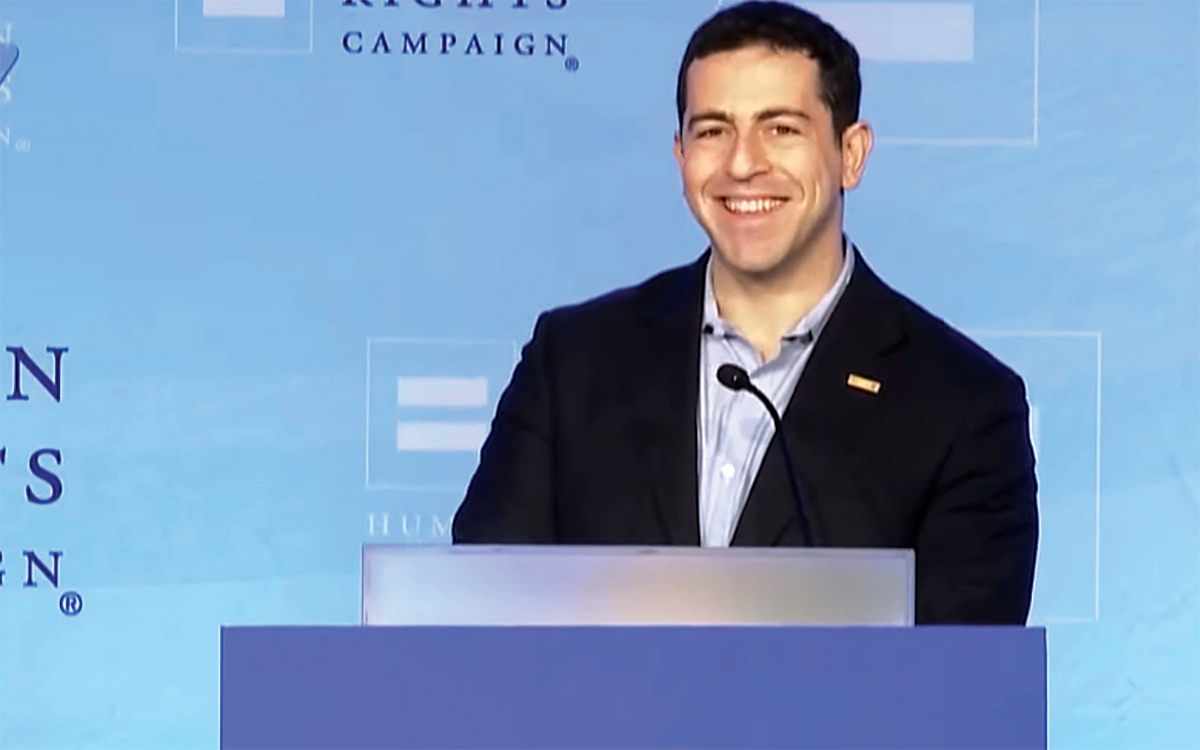
During Paley’s tenure, the organization’s LGBTQ youth crisis lines went from serving about 50,000 people to more than 600,000 and the TrevorSpace social networking site went from a few hundred users to more than 500,000 around the world, a source told the Blade.
Trevor’s coffers had $9.7 million in them in 2018 and rose to more than five times that in 2022, close to $55 million. The marketing, content, and communications team was even called the “growth vertical.”
Informed about the size of Trevor’s assets, though, Coleman was outraged.
“Fifty-four million dollars,” she repeated. “And they can’t answer a damn phone?”
That growth put massive pressure on Trevor’s staff, especially the people running crisis services.
“Those wait times are there because it’s demand, demand, demand, demand, let’s get everything out there,” Weaver said. “Let’s get as many people as possible and not think about the quality of it.”
Suddenly, crisis workers couldn’t take time off between calls to regroup without taking paid time off or sick leave. The crisis workers criticized that policy, saying that they needed to be doing well to support callers, but management didn’t budge. The managers cited Trevor’s “tools to support wellness” in an email seen by the Blade.
“We are building structure and accountability so that we have counselors available when youth call. That means putting structure around when and how crisis workers are spending time not interacting with youth,” an email sent on Sept. 2, 2022, from the lifeline management team – Richard Ham, Vivian Suniga, and Heather Gillespie – read.
A month later, on Oct. 20, 2022, the team followed up with an even more blunt email message.
“Given our current call per hour metrics (1.2 calls per hour per crisis worker), September’s call outs and partial shifts would equate to 470 LGBTQ youth in crisis we were unable to support.”
A Trevor employee familiar with Trevor’s crisis services speaking on condition of anonymity said Gillespie resisted calls for crisis counselors to get more time off – despite the difficult job counselors have.
“The work is very heavy, it’s very challenging,” the employee who used to be a crisis counselor said.
Counselors are often working with youth contemplating suicide or even in the process of taking their own lives and many of the counselors are coping with their own stress because they are also members of marginalized groups, they said. Not to mention the prank calls and callers using the line for sexual gratification.
The three managers who had authored that blunt assessment in the email as well as three other Trevor Lifeline leaders were later fired after being placed on administrative leave, but the policy didn’t change, the anonymous source said. Counselors were reportedly told to take as many calls as possible.
Some transgender staff, staff of color, and disabled staff felt erased and unable to be themselves, which reached a breaking point at a routine meeting in October 2022. In it, top staffers presented the results of that year’s staff climate survey.
The results of the survey were harrowing. About two-thirds of staff said they weren’t satisfied with how decisions are made at Trevor, according to its results reviewed by the Blade.
A majority – 55% – of Trevor employees said they hadn’t seen positive changes based on the last climate survey. Most employees said they weren’t satisfied with the leadership or had no opinion. Only slightly more than half of the staff said they wake up feeling fresh and rested for work – though, the data emphasized, that was up 12% from the previous year. Far fewer employees – though still a vast majority, three quarters – said they would recommend Trevor as a great place to work.
In previous years the results presented to staff did break down the satisfaction by race or gender. When Black staffers pointed that out, they were “completely dismissed,” said Preston Mitchum, who was a director of advocacy and government affairs at Trevor before he quit in February.
“With the numbers that have been presented, we have an obligation to maintain a level of confidentiality and anonymity within this process,” Meg Fox, who was the director of people, culture, and experience until July, said in a recording reviewed by the Blade. “Again, for 20 years I’ve been doing surveys, that has been the path paramount principle by which we live by, so nobody is trying to silence anybody’s voice here.”
When the results were finally released after several weeks of pressure, Latinx staffers showed the lowest level of satisfaction, numerous former staffers said.
That process angered staff who were tired of being ignored, Mitchum said. Resentments deepened following reporting in HuffPost about Paley’s role, when working as a management consultant for McKinsey & Co., working to reduce Purdue Pharma’s legal liability over opioid litigation brought by 47 state attorneys general.
“It became a ticking time bomb,” Mitchum said.
Enter the Trevolution — or the Trevorpocalypse, depending on whom you ask. The fire burned and burned, and Trevor’s board of directors eventually forced Paley out of the organization. The board quickly replaced him with Trevor’s co-founder, Peggy Rajski, in November 2022.
Trevor’s board, a former manager said, wanted to portray stability with her hire. But it ended up only exacerbating the controversies within the organization. Richard Vargas, who was Trevor’s senior operations associate and used to run the organization’s New York office, was one of many who raised red flags about her performance.
Critics pointed to her ousting from Loyola Marymount University, where she was the dean of its School of Film and Television for less than three years.
“She was known to rant and rave at people,” a former Loyola Marymount University professor said, according to The Wrap, which was first to report Rajski’s ousting.
Rajski spent her first weeks organizing listening tours – with a select few people chosen from each department and affinity group. Sources familiar with those conversations said she was sympathetic to staff concerns, saying that she couldn’t believe what Paley put the organization through.
The honeymoon was short lived as she started describing staff who spoke out as rude, arrogant, and worse, sources told the Blade. Current and former staff said she criticized workers for speaking out, blaming problems on everyone but herself, misgendering staff – and being offended when corrected – and making everything about herself.
“I saw that in all hands meetings, she would get very snippy, very combative,” said Vargas.
During a meeting in which she announced layoffs at Trevor – 12% of its workforce – she chided staff for using emoji reactions in the chat, he said.
The 44 mid- and upper-level staff were laid off after, seemingly, a huge budget hole emerged. It’s unclear how big exactly that hole is – a Trevor Project statement revealed a “sharp drop” in revenue but did not provide an exact figure, and no current and former employees who spoke to the Blade were able to provide an exact figure.
One former employee said they were told there was a $25.2 million deficit in late April of this year, but a former Trevor finance official told the source the deficit was reduced to about $6 million. Another former employee familiar with the organization’s finances confirmed that the deficit was between $4 million and $7 million around then.
That didn’t worry the Trevor Project’s executives, according to a former employee, because the organization had more than enough money in its reserves – about $55 million at the end of July 2022, according to public financial documents – to cover that loss.
But sometime between late April and June of this year, the Trevor ship sprang a huge leak.
Members of the recruitment team, payroll team, the training team for Trevor’s hotline, much of the financial team, as well as other staff were laid off, sparking anger. (A Trevor spokesperson clarified after this story was initially published that the payroll, recruiting, and training operations teams were reduced by 67%, 96%, and 31%, respectively.)
What, they wondered, happened after Paley left to the $55 million the organization had reported in assets?
Indeed, Trevor’s assets grew rapidly during Paley’s tenure, according to independently audited financial statements on Trevor’s website:
• In FY 2016 (the year before Paley became CEO): Assets were $1.6 million
• In FY 2017 (the first year that Paley served as CEO): Assets increased to $4.4 million (due to a $2.8 million surplus)
• In FY 2018: Assets increased to $9.7 million (due to a $5.4 million surplus)
• In FY 2019: Assets increased to $18.5 million (due to a $7.6 million surplus)
• In FY 2020: Assets increased to $31.0 million (due to a $10.6 million surplus)
• In FY 2021: Assets increased to $48.1 million (due to a $20.1 million surplus)
• And in FY 2022: Assets increased to $54.9 million (due to a $6.8 million surplus)
No one is sure what happened after that and a Trevor spokesperson declined to make executives available for an interview. But the staff have some ideas. They cite Trevor’s rapid expansion as a main cause and some described wasteful spending, even though The Trevor Project has a 100% Charity Navigator Accountability & Transparency score, an A- grade on CharityWatch, and a Platinum GuideStar Rating.
Trevor’s leadership would tell employees to spend surplus funds at the end of year, instead of putting them into Trevor’s reserves – even when the deficit was discovered, according to a former employee.
“There were no policies around spending either,” the source said, which a Trevor spokesperson disputes.
A Trevor Project statement said that the organization made budget cuts, reduced outside consulting expenses, instituted a hiring freeze, limited non-urgent work travel, and used its reserve to close the deficit. Two current employees confirmed that travel restrictions seem to have taken place.
The organization created a new role that oversees both Trevor’s digital operation and its phone lines – instead of hiring one person for each. It did not hire more lifeline associates, a source told the Blade. Both employees pointed out, though, that there are several open roles on Trevor’s website. One employee said the organization considered the positions “mission critical,” which is why they were posted.
It’s unclear how much revenue Trevor lost – representatives for the federal government, Trevor, and for Vibrant Emotional Health all declined to reveal the figure. The Blade has submitted a Freedom of Information Act request to obtain the numbers.
The layoffs upset those close to the Trevor Project, but they didn’t receive widespread recognition. Layoffs among the 988 anti-suicide line staff representing the Trevor Project did, though, thanks to TikTok.
“Basically, we are being told, you are without a job – we can try and get you a job but you might have a job, good luck out there,” Eli, a former crisis counselor working for Trevor, said in a viral TikTok video that racked up 62,000 views. He did not respond to a request for comment.
988 Suicide Hotline & the Trevor Project
The National Suicide Hotline Designation Act of 2020 created 988’s LGBTQ+ subnetwork as a pilot project. During that pilot, the Trevor Project was the only organization running the section of 988 dedicated to LGBTQ+ youth. Mitchum said he pushed back on that, saying Trevor did not have the resources to run the lifeline by itself and even if it did, more than one organization should provide support. Then-CEO Paley, though, reportedly disagreed.
“I think Trevor became so bogged down in the minutiae of money, of notoriety, of power, that it lost all ideas of responsibility to LGBTQ people,” Mitchum said.
Nevertheless, 988 lifeline administrator Vibrant Emotional Health sent out a request for proposals for the pilot project, several former employees confirmed to the Blade, but it is unclear if any organizations other than Trevor applied.
The Trevor Project was the only organization running the LGBTQ+ line. The Substance Abuse and Mental Health Services Administration, charged with federal oversight of the 988 program, pumped $7.2 million into the pilot. The federal government vastly underestimated the numbers of callers and texters to the line, leaving Trevor short-staffed and unprepared for the surge of people seeking support, a source told the Blade. Long wait times were the norm, so much so that Vibrant rebuked Trevor over the issue, two former staffers told the Blade.
Trevor kept the news about the dedicated LGBTQ+ line quiet until December, when it announced the service in a press release – despite its soft launch in September of 2022.
“The Trevor Project is incredibly thankful to the federal government for the major investment in these life-saving specialized services,” Mitchum said in the press release. “It’s vital that all young people have access to culturally competent care in moments of crisis.”
The 988 program was successful enough for Vibrant to make the hotline a permanent fixture less than a year later in July. This time, the federal government allocated $29.7 million to the LGBTQ+ subnetwork – more than three times the amount that the entire 988 lifeline received in 2021.
As part of the expansion, Vibrant decided to increase the number of call centers running the LGBTQ+ crisis line from just one, the Trevor Project, to seven, with Trevor still on board. The change meant a smaller piece of the pie for Trevor – the $29.7 million would now be distributed among seven different organizations.
That decision came as a shock to Trevor, Mitchum reflected.
“After a while, Trevor leadership genuinely thought we would never have additional providers outside of Trevor,” Mitchum told the Blade.
A Trevor Project spokesperson said in a June statement that the organization had “recently learned” about the expansion of the LGBTQ subnetwork. The Trevor statement noted that the expansion would lead to “an exponential increase in support for the number of LGBTQ callers and texters to the 988 Lifeline.”
Having to split the funding, though, was enough to cause Trevor lay off more than 200 crisis workers, Trevor Project crisis counselor Finn Depriest said. Trevor disputes this and says fewer than 85 contract counselors from a third-party company called Insight Global were let go.
The counselors received the news on May 14. They had been invited by an email entitled “988 updates” with a meeting link. The crisis counselors’ recruiters, managers said, would contact them by the end of the day to let them know if they were fired or not.
Depriest got their call and was in luck. But fellow crisis counselor Rae Kaplan wasn’t so lucky. A person in Trevor’s IT department – not even her recruiter – told her she was being let go.
“I was definitely starting to have a panic attack,” Kaplan said.
A whirlwind of communication followed. Staff were first told they would be laid off on July 2, two weeks after the meeting, but were later told that Trevor had secured more funding to keep the counselors on its payroll until Aug. 31. Now, a Trevor spokesperson confirmed, the organization has received additional funding to keep the counselors on through the end of September.
Kaplan took advantage of the offer to stay on until August when they received it but was fired in July for reacting with emojis during an all-staff meeting, they said.
Toby Everhart was scheduled to begin work at Trevor the same day the layoffs were announced. But at their orientation, they were suddenly told they were no longer needed. They posted their now-viral TikTok with 91,500 views.
Everhart moves down in the frame of their TikTok video to reveal the Trevor Project’s website, warning that “wait times to reach a counselor are higher than usual.”
“Which is so weird,” Everhart continued in the video posted June 9, “because this is what their website said right after I got laid off.”
In reality, the higher wait times were unrelated to the position they were hired for, working on the 988 line. Counselors for Trevor’s crisis services, who run the services on the organization’s website and phone line, are employed by the Trevor Project directly. Counselors working on the 988 hotline representing Trevor, what Everhart was hired for, are contractors employed through recruiting company Insight Global.
No counselors working directly for Trevor’s Lifeline or TrevorChat products have been laid off, several current employees confirmed, and a surge in wait times for Trevor’s own services has no bearing on wait times for 988 counselors. A Trevor spokesperson did not respond to a message seeking comment.
A statement from Vibrant showed that the average time on hold had risen slightly, from 34 seconds to 36 seconds, despite the addition of six more centers taking calls. The Blade’s query on Trevor’s community platform, TrevorSpace, asking whether people had experienced longer hold times on the 988 hotline was deleted by administrators. The administrators cited “inappropriate promotion” as a reason and issued a warning.
An automated message checks in on those waiting on hold, but kids “in a truly acute mental health crisis” won’t wait and won’t respond to automated prompts, a source told the Blade.
The six new organizations running the LGBTQ+ youth hotline, CommUnity, EMPACT-Suicide Prevention Center, Solari, Inc., Centerstone of Tennessee, Inc., PRS CrisisLink, and Volunteers of America Western Washington, aren’t well known in the tight-knit LGBTQ+ advocacy world. From what Depriest has been able to tell, it hasn’t been going well.
“Their resources are not helpful, and they’re not very personable,” Depriest said. “They don’t have the trauma-informed training that we have had to take. And you could tell a big difference.”
Lance Preston, who runs the small LGBTQ+ crisis organization Rainbow Youth, pointed specifically to the Volunteers of America Western Washington organization. He said his organization has attempted to place homeless youth at their facilities across the nation but has had many issues. Preston declined to elaborate.
In a statement, a Vibrant spokesperson said that each call center must submit their LGBTQ+ competency training program for approval. Each backup center, according to Vibrant, has “similar training requirements” and access to the same training support. Vibrant also announced a two-year program to improve staff training.
But Mitchum, Trevor’s former director of advocacy and government affairs, who was intimately involved in the rollout of 988’s LGBTQ+ hotline, told the Blade that more providers for the line is a good thing.
“The people you talk to may say that it’s negligent to have these orgs who have no services, a lack of training, allegedly,” he said. “But why can’t they build them out? If Trevor actually cares about LGBTQ youth, not just their organization, why can’t they support these organizations, and build out these trainings that they say are best in class?”
Concerns about diversity
Issues concerning the organization’s diversity have cropped up, including during Trevor’s expansion to Mexico. Instead of hiring a translator, it asked Latinx staff to translate material into Spanish, Vargas said. Another Latinx former staff member said the group was treated as a monolith. The entire group were congratulated on Mexican Independence Day – even though not all the Latinx staff were Mexican-American.
Trevor disputes this and submitted the following in response: “Trevor invested in a top-rated translation services vendor, TransPerfect. Trevor also hired an entire staff in Mexico for the launch of its crisis services in the country; that staff also created Spanish-language materials in preparation for launch. Two Latinx leaders (who themselves are not Mexican) sent a slack message that said ‘Happy Mexican Independence Day to our Mexican colleagues’ because they wanted to recognize an important holiday for their colleagues in the new Trevor Project Mexico office. It is inaccurate that the sender and the message assumed that all Latinx staff are Mexican-American.”
Mitchum told the Blade decision makers at Trevor never took the diversity concerns seriously. Weaver, former vice president of marketing, said the Trevor Project was more focused on checking boxes and performative diversity.
CEO Rajski said that the organization is committed to diversity in a statement Trevor sent to the Blade.
“Over the years, I’ve seen the organization I started, flourish and adjust to the changing needs of LGBTQ young people and shifting our outreach efforts to highlight the needs of the most marginalized LGBTQ young people — including young people of color and transgender and nonbinary young people.”

Union issues
These and other concerns led to the Friends of Trevor United union to begin organizing in early 2022. That process was far from easy. Trevor did not immediately recognize the union, instead asking for a card count, where employees sign union authorization cards. A Trevor Project spokesperson said the organization recognized the union voluntarily in 2023 – which is true, but insisted that a “wide margin” of cards support Friends of Trevor.
Gloria Middleton, president of the Communications Workers of America Local 1180, under which Friends of Trevor is organized, said Trevor opposed the union. While union organizers were in talks with Trevor, the organization began laying off workers. The union condemned that, calling it “union busting,” and said that Trevor intentionally gave the union very little time to respond.
Trevor provided Friends of Trevor with a formal layoff plan on June 29, according to a union Instagram post. The union did not post anything about the layoffs publicly until July 6 – layoff day. A Trevor Project statement said it notified the union on May 31, but Middleton said it was only informed on June 16 and the information did not include information about the timing, scope, and impact of the layoffs.
Some asked if the layoffs were retribution for the formation of the union. The Trevor Project strongly denies this, pointing out that it laid off both workers in the union and non- union employees. The union, though, questions why Trevor announced layoffs during the negotiations and not before.
“With an employer, there’s nothing in the law to my knowledge that says they can’t lay off at any time, to my knowledge,” Middleton said. “It’s just about the way it looks.”
Current and former staff told the Blade that Trevor targets dissidents, the employees that speak out against leadership. Vargas, who wrote a letter of solidarity to staff that spoke up about their mistreatment? Laid off. Josh Weaver, who is Black and spoke about having staff satisfaction data stratified by race and gender and amplified staff concerns? Laid off, though before the July layoffs. And many more, employees say.
“If I were white, I would have had a second chance. I’m certain of it,” Weaver said. “If I were a white person, I would have gotten a reprimand. I would not have been in the same situation.”
The staff who spoke on condition of anonymity with the Blade were worried about retribution as well – even those who no longer work at Trevor. A message the Blade received through a secure dropbox sums it up well:
“Thank you for doing this. I wish I could talk to you without losing my job,” the text document submitted reads. “Give them hell.”
Even Trevor Project co-founder Celeste Lecesne slammed the organization in a statement last month released by the Communications Workers of America.
“When I co-founded The Trevor Project, I did so to create a resource for LGBTQ+ youth who are struggling to express their identity and feel accepted in a world where being gay or trans can feel terrifying. The Trevor Project is about supporting each other, and to see the way these workers have been treated by management – for engaging in their right to organize – is appalling and completely unacceptable,” said Lecesne, who no longer works for the organization. “The workers being targeted have saved lives and helped countless members of the LGBTQ+ community feel heard. It’s time that management hears these workers and joins them in their fight to create a more equitable workplace.”
In a statement to the Blade, the Trevor Project said it takes its obligation not to retaliate against employees seriously.
“We have a strict anti-retaliation policy, which The Trevor Project upholds, and retaliation in violation of any law or policy is not permitted.”
Middleton said that while Trevor’s behavior is terrible, it’s not unusual. Major nonprofits with good missions become corporatized and start treating their workers poorly.
“They run the companies like most American companies run,” she said. “The bosses get the money, the workers get the minimal amount of income, just do the job.”
Indeed, former CEO Amit Paley made $473,969 between August 2021 and July 2022, according to Trevor financial documents. Meanwhile, fewer than half of employees said they received a fair salary in the survey, according to a copy the Blade has seen.
Not only do staff say they are not paid a fair wage, they say they must work under an executive that does not seem to care about the mission.
“Peggy created this organization in 1998 on the heels of a movie that was about a white, cisgender gay boy,” said Weaver, the former vice president of marketing. “And I think the aspect of queerness and its multifariousness today is something that Peggy does not want to really jibe with.”
Rajski had to be “pulled up” to include messaging about transgender and nonbinary people, a source said. Within the organization, Mitchum said Black staff weren’t promoted like others, nor were they paid as well. This is “actively the issue” inside Trevor, he added.
In a statement provided by a Trevor spokesperson, Rajski acknowledged she doesn’t always “get it right.”
“The gift of being part of Team Trevor is being able to serve, learn from, and grow with some of the most talented mission-focused leaders and staff,” she said in the statement. “I have recognized deeply how critical the need is in the LGBTQ community to have supportive and affirming allies — and how to be that kind of ally in new and better ways.”
She presents herself as an ally in the statement and in other public appearances. She called herself the “straight, white, godmother of a gay suicidal hotline,” in an interview with NPR affiliate KCUR in Kansas City, prompting ridicule among staff. But it pointed at a larger issue, employees told the Blade: Trevor’s C-suite is almost entirely white and cisgender.
“I think there needs to be a permanent CEO who is LGBTQ+,” Mitchum said. “And in my opinion, one who is a person of color, or at least someone who actively understands intersectional framework and how to have these culturally important clinical conversations of competence and responsibility to specific communities.”
In the meantime, though, Trevor is led by a straight, white, cisgender woman. Current and former Trevor employees are scratching their heads over how to treat Trevor. Mitchum said that Trevor “has enough of your money” in a tweet and suggested donating to other organizations instead. Others aren’t quite sure.
“It is kind of a fine line with me right now, do I say support the Trevor Project because all these young people are calling in?” a former mid-level employee asked in an interview. “Or do we support other organizations? But this happens all the time. It isn’t specific to Trevor.”
“It’s heartbreaking. It’s heartbreaking to see,” Weaver said. “But what can you do? The one lesson that I learned was that at the end of the day, you’re the purpose, it’s not the organization. The mission sticks with the people. And so if the Trevor Project is not going to do it, somebody will.”
Rajski said in a statement that she is committed to supporting the most marginalized LGBTQ+ youth, including transgender and nonbinary youth as well as youth of color.
“I have heard firsthand through the voices of our people that we can do more to help them thrive and do their best work,” she said. “We have listened and are making important investments in our people, our culture, and organizational infrastructure to help Trevor be a sustainable force for good.”
(Editor’s note: This story has been updated to reflect the correct title for Richard Vargas. Also, in 2022, Trevor’s phone and chat lines supported a record number of people, more than 263,000 served, not 236,000 as originally reported.)


LGBTQ Non-Profit Organizations
Anti-LGBTQ commentator Tyler O’Neil to testify in Southern Poverty Law Center probe
House Judiciary Committee will hold hearing on group on Wednesday

The man behind some of the strongest push against the Southern Poverty Law Center, who has an extensive anti-LGBTQ history, is being asked to speak before the House Judiciary Committee as part of its ongoing investigations into the nonprofit legal organization.
Last month, the Justice Department indicted the SPLC on 11 counts of wire fraud, false statements made to a federally insured bank, and conspiracy to commit money laundering related to payments to informants.
The DOJ alleges the civil rights group defrauded donors by using their money to fund the extremist groups it claims to be fighting. It also alleges the SPLC used more than $3 million paid to informants through a now-defunct program designed to infiltrate white supremacist and other extremist organizations.
Since then, the House Judiciary Committee, which says its main goals are to “protect constitutional freedoms and civil liberties, provide oversight of the U.S. Departments of Justice and Homeland Security, and manage legal and regulatory matters” has launched its own investigation into the ongoing litigation against the civil rights organization and tapped far-right journalist Tyler O’Neil to speak on the matter on Wednesday.
O’Neil has worked for several outlets that advance far-right perspectives, including the Washington Free Beacon and Fox News, and is currently the senior editor at the Daily Signal.
The Daily Signal began as a newsletter for the conservative Heritage Foundation, which authored Project 2025, a policy blueprint for a second Trump administration that outlines expanded executive power, increased conservative control of federal agencies, reduced civil and human rights protections, and a vision of the U.S. as a Christian nationalist nation.
O’Neil has written extensively about progressive organizations — most notably the SPLC. He authored the book “Making Hate Pay: The Corruption of the Southern Poverty Law Center,” in which he argues that the organization’s “hate map,” which identifies extremist groups — including neo-Nazis, Ku Klux Klan groups, and openly antisemitic organizations — is “an organ of disinformation” for also including mainstream conservative groups. He also did an interview with the Heritage foundation in 2022 about his work on the civil rights group, where it was called a “left-wing smear factory.”
In addition to his work on the SPLC, O’Neil has a long history of anti-LGBTQ — and specifically anti-transgender — commentary. At one point, he spotlighted the Reintegrative Therapy Association, a practice likened to conversion therapy by the Global Project Against Hate and Extremism. The American Medical Association has condemned the practice, stating: “Professional consensus rejects pathologizing homosexuality and gender nonconformity and evidence does not support the efficacy of changing sexual orientation.”
He has also attacked Christian groups that actively support LGBTQ people, particularly the Episcopal Church. He called the church “one of the most flaccid and spineless of the dying mainline Protestant denominations” and criticized its theology as a “watered-down bastardization of Christianity.”
O’Neil has also defended the anti-LGBTQ “pro-family” policies of former Hungarian Prime Minister Viktor Orbán, who had been in office from 2010 until earlier this month. Orbán and his government faced widespread criticism for policies including banning Pride celebrations and restricting legal gender recognition for trans and intersex people.
The European Commission in 2022 sued Hungary, a member of the EU, over the country’s 2021 anti-LGBTQ propaganda law.
Vice President JD Vance spoke at an April rally for Orbán, supporting the hardline anti-transgender approach the former prime minister has taken in Hungary.
Overall, O’Neil’s work reflects a clear pattern of endorsing anti-LGBTQ rhetoric, defending groups organizations have labeled as hate groups, and consistently writing through a Christian conservative nationalist lens.
Kyle Herrig of the Congressional Integrity Project, an organization “committed to exposing the reality behind Republicans’ politically motivated oversight and investigations,” gave a statement about the Judiciary Committee’s decision to have O’Neil testify, saying it further endangers those most vulnerable.
“House Republicans can’t find credible witnesses for their anti-civil rights crusade next week because they have no credible case. They’re giving a microphone to one of the far-right’s most discredited, anti-LGBTQ+ extremists and dressing it up as congressional oversight. It’s all in service of the Trump administration’s backwards prosecution of the Southern Poverty Law Center, the premiere organization tracking the very extremism people like Tyler O’Neill support. Attacking the SPLC doesn’t do anything to make Americans safer. It just makes it easier for racist, anti-LGBTQ+ organizations to operate in the dark.”
A Judiciary Democrats spokesperson provided a statement to the Washington Blade on O’Neil’s relationship and anti-LGBTQ rhetoric:
“Mr. O’Neil is no stranger to the committee — he has already testified twice in this Congress and has become something of a default witness for people who want to support and platform far-right extremist rhetoric. Judiciary Republicans’ decision to rely on him again here suggests a shortage of both new evidence and credible claims against the Southern Poverty Law Center.
Committee Democrats remain focused on protecting civil rights and resisting political efforts to discredit organizations that track and combat extremism, hate, and discrimination. As in prior hearings, Democrats are prepared to carefully scrutinize Mr. O’Neil’s hateful and out-of-touch ideas and debunk his false allegations about organizations dedicated to defending all of our civil rights.”
A Judiciary spokesperson [Republican] also provided the Blade with a comment, ultimately agreeing with O’Neil that the characterisation of some conservative groups by the Southern Poverty Law Center is unfair.
“We always knew the Southern Poverty Law Center was wrongfully targeting conservative groups as hate groups. Now we know the SPLC funneled money to extremists, raising questions whether the SPLC has been artificially elevating the domestic extremist threat and misleading its donors.”
The Blade reached out to O’Neil and the Daily Signal about O’Neil’s slated testimony for the committee.
LGBTQ Non-Profit Organizations
Lambda Legal names new deputy policy director
Group continues to fight against anti-LGBTQ federal actions.
Lambda Legal announced Wednesday that it has a new Deputy Legal Director of Policy.
Cathryn “Kate” Oakley, a former staff member at the Human Rights Campaign, is now Deputy Legal Director of Policy at Lambda Legal.
Oakley has covered extensive ground in the fight for LGBTQ rights in the courtroom and beyond. Since joining HRC in 2012, she has held several advocacy roles, including Senior Director of Legal Policy, Senior Counsel, and State Legislative Director. Throughout her career, Oakley has worked to advance LGBTQ equality in federal and state legislative offices across the country.
Working on landmark legislation like the Respect for Marriage Act and the Virginia Values Act, while fighting discriminatory efforts such as North Carolina House Bill 2, Oakley also served as a founding author of HRC’s Municipal Equality Index and co-author of the State Equality Index, two of the organization’s most widely accessed resources. She has also provided on-the-spot legal analysis of landmark U.S. Supreme Court decisions, including U.S. v. Skrmetti, Obergefell v. Hodges, and U.S. v. Windsor.
Now, Oakley is looking toward changing federal policy to “stand up for the LGBTQ+ community and everyone living with HIV.”
“Freedom and equality are hanging in the balance in America, and LGBTQ+ people are on the frontlines,” Oakley said. “Lambda Legal has been at the forefront of fighting for LGBTQ+ civil rights for decades, and the nation needs that leadership now more than ever. I am honored to join this powerful team and look forward to fiercely and passionately defending the communities we serve together.”
In addition to her extensive work creating protections LGBTQ people across the country have used to stay safe against anti-LGBTQ politicians and policies, Oakley is also a member of the Virginia Bar. Prior to joining the Human Rights Campaign, Oakley practiced domestic relations law at the Law Offices of Jay B. Myerson in Fairfax County.
In addition to practicing law, Oakley has also worked to educate the next generation of lawyers while serving as an adjunct professor at George Washington University since 2014. There, she has co-taught the Sexual Orientation, Gender Identity, and the Law course in the Women’s, Gender, and Sexuality Studies Program.
“Kate Oakley is exactly the kind of leader Lambda Legal needs at this moment,” said Kevin Jennings, chief executive officer at Lambda Legal. “Her command of nondiscrimination law and her years on the front lines fighting anti-transgender legislation make her an outstanding addition to our team. We are thrilled to welcome her.”
Douglas Curtis, chief legal officer at Lambda Legal highlighted Oakley’s experience within the LGBTQ rights arena as a major draw for the nonprofit”s newest policy head.
“Kate’s experience is a tremendous asset to Lambda Legal,” Curtis said. “She has spent her career turning legal expertise into real wins for LGBTQ+ people at every level of government, and I could not be more excited to have her alongside us in this fight.”
Lambda Legal currently has multiple ongoing cases against the Trump-Vance administration challenging a range of anti-LGBTQ policies pushed by the White House. The organization is involved in seven open cases against the administration, centered on trans rights and related federal policy shifts, with five preliminary injunctions granted in current cases.
LGBTQ Non-Profit Organizations
Victory Fund brunch draws top LGBTQ officials, 2028 hopeful Andy Beshear
Ky. governor honored with Allyship Award

Despite the dreary, chilly weather on Sunday, the energy inside the Salamander Hotel in downtown Washington was warm and welcoming. With the U.S. Capitol, National Mall, and the Washington Monument as a fitting backdrop, political leaders in the LGBTQ movement gathered to celebrate the strides made over the past year and to reframe their path forward at the LGBTQ+ Victory Fund National Champagne Brunch. Just over a mile and a half away, an increasingly hostile Trump administration loomed, sharpening the urgency of their fight.
Given the current political climate—one that has many LGBTQ advocates wary about the future of LGBTQ rights, especially for transgender members of the community—LGBTQ people showed up in full force (and full ‘fits) to support the next wave of LGBTQ elected officials. Colorful print shirts and bright jackets filled the ballroom, while cherry blossom centerpieces echoed the hotel’s location, just feet from the Tidal Basin. Even as guests moved through long lines for seafood paella and waffles after speeches from LGBTQ elected officials and allies, the general feeling remained upbeat.
This year’s brunch — the 25th annual — was complete with drinks, discussions of what’s on the agenda, and, of course, a slew of high-ranking LGBTQ elected officials and allies, from local offices all the way to Capitol Hill, representing states both red and blue.
Of the guests at this year’s LGBTQ Victory Brunch, none was more anticipated than 2028 presidential hopeful and Kentucky Gov. Andy Beshear. The 63rd governor of Kentucky and the state’s 50th attorney general, Beshear was honored with the Allyship Award and delivered the keynote address to more than 150 attendees at the national brunch.
The governor, who has made multiple allusions to his 2028 bid for the Democratic seat in the presidential election over the past year, covered a wide range of topics when speaking with journalists before the brunch, as well as during his highly anticipated keynote address. He came out strongly condemning the use of discrimination as a political tool — something he said the Republican Party has increasingly embraced, particularly against the transgender community. The ACLU’s anti-LGBTQ tracker currently shows 17 statewide bills across the country that have passed into law.
“It’s sad that some people are passing legislation that discriminates solely for political reasons. They are willing to tear away somebody’s rights just to fire up a base and get more votes,” Beshear said. “ And it’s sad that we’ve got a federal administration right now engaging in discrimination in just about every form, every day. That harms people who love this country and want to contribute to it. As a country, we are slipping backwards.”
He continued, arguing that while the Democratic Party often touts itself as a party of inclusion, it must still reckon with the gap between rhetoric and policy.
“Discrimination is never okay. It’s not a bargaining chip so that you can win elections. I’m against discrimination because it’s wrong, and it’s always going to be wrong. We shouldn’t be allowing a little bit of discrimination in order to do better in the polls or on Election Day. We should stand up for who we are and be the true party of inclusion.”
He also highlighted his record on protecting the most vulnerable in his home state of Kentucky, where his father also served as governor from 2007-2015. Beshear has remained a vocal advocate for LGBTQ rights, frequently opposing legislation in the Bluegrass State — including Senate Bill 150, which would have required parental notification when students come out at school, restricted pronoun use to biological sex, and limited instruction on human sexuality in school curricula.
“I vetoed every anti-LGBTQ bill that came to my desk, and I still won reelection by five points in a state Donald Trump would win by 30 the next year. So don’t tell me we should throw anybody under the bus. We can stand for all of our convictions and still win. We can govern in a way that tells people they are welcome and accepted. It makes a difference when your governor is willing to say that he sees you and that he’s with you.”
He also turned to the U.S. Supreme Court, which he said has played an increasingly harmful role in LGBTQ rights.
“That Supreme Court decision allowing conversion therapy is wrong. It’s horrifying, and torture is torture. It should never be done in the name of religion or free speech,” he said while giving his keynote. “I vehemently disagree with the idea that this barbaric practice can continue. Torture is not a First Amendment right.”
Prior to the keynote, while speaking with journalists, Beshear was asked how Democrats should approach LGBTQ rights when the issue has become so divisive nationally. He responded with a clear message centered on principle over politics.
“Never throw anyone under the bus. Stand up for your convictions, and don’t let polling decide what you believe. If you’re not willing to stand up for your convictions because of polling, they’re not real convictions. We should be the party where people feel they can come and be exactly who they are. That’s how we win and who we’re supposed to be.”
One unique element of Beshear’s approach to LGBTQ rights is his consistent use of faith alongside inclusion. He often frames scripture as a call to love rather than exclusion, arguing against those who, as he put it in his speech, try to “love, vote, or look like you” differently. This framing is part of why he maintains a 64 percent approval rating in a solidly red state that voted for Trump by 30 points.
“Faith is meant to lift people up and never kick anyone while they’re down. When we’re told to love our neighbor as ourselves, there’s no asterisk and no exception. There’s no ‘unless’ people look different, pray different, or love different than you. We are simply called to accept and love one another. When people try to add that comma, they’re changing the message.”
He also briefly addressed the possibility of a presidential run in 2028, again emphasizing inclusion over ambition.
“This doesn’t have anything to do with 2028 — it has to do with right and wrong. Nobody should be thrown under the bus for political gain. We shouldn’t allow discrimination just to do better in the polls. That’s what people expect from us.”
Eugene Daniels, former Politico reporter and current MSNBC journalist, attended the event and spoke to the Washington Blade about Beshear’s ability to bridge divides on issues that often polarize voters.
“What’s striking about Andy Beshear is his ability to take what many Democrats call cultural issues and make them kitchen-table issues,” Daniels said. “He talks about protecting trans kids not just as policy, but as a parent and as a person of faith. That’s a connection a lot of Democrats struggle to make. He frames it in a way that resonates beyond politics. And that’s why he stands out.”
Victory Fund President Evan Low also spoke at the event, emphasizing that the organization’s mission is not solely focused on higher office, but on electing LGBTQ leaders at the local and state level where many key decisions are made.
“We are laser focused on state and local races because that’s where so many of these decisions are made,” Low said. “Even if Washington is taking chances away from people, we can still protect them at the state level. We want LGBTQ people not just at the table, but setting the agenda. This is about governing power, not just representation. And we are not taking our foot off the gas.”
Tristan Schukraft, founder and CEO of MISTR, a telemedicine platform specializing in HIV prevention, and owner of one of the most famous LGBTQ clubs in the world, the Abbey in West Hollywood, Calif., was also in attendance and was awarded the National Impact Award for his efforts to curb HIV through his telemedicine service, MISTR.
“Ending HIV is within reach — we have the tools right now,” Schukraft told the crowd, commending past administrations on their work to stopping the virus from continuing to ravage the LGBTQ community. “As ADAP, the AIDS drug assistance program is now under threat in 20 states, we’re stepping up offering insurance and premium assistance. It doesn’t matter what office you hold, HIV is an issue that can be resolved, and if we don’t end HIV, it’s not because we did not have the tools, but it’s because we did not act.”
He continued, touching on how his highly publicized “Housewives of the Hill” program, which the Blade covered from the scene, showed how HIV prevention is something everyone — including the notoriously catty Housewives — could all get behind.
“We got voices from all parties together, and it was really a remarkable event. And I’d like to get my six Latino boyfriends to agree on something, and seven Real Housewives, I got high hopes for Congress.”
Greta Neubauer, member of the Wisconsin State Assembly, also spoke to the Blade after addressing the crowd on what is being done in her state to push a pro-democracy and pro-human rights agenda forward.
“We have, as Democrats, been in the minority in Wisconsin for quite a while due to gerrymandered legislative maps and Republican consolidation of power. So we’re hoping to win a trifecta this year so that we can take Wisconsin in a new direction. We know that our rights are under attack at the federal level. In Wisconsin, people lost access to abortion, and thankfully, that was restored by a court case, but we still have that law on the books. And then, of course, we know that access to health care and just our fundamental rights is essential, so we want to make sure that we have a legislature that is going to protect folks from discrimination and support all of us to feel safe and welcome in the state.”
Brooke Pinto, a current member of the D.C. Council who is running for Washington’s congressional seat, also spoke to the Blade.
She emphasized the need for leaders who understand and fight for LGBTQ rights at all levels of office amid the Trump administration’s takeover of the city.
“We’ve seen an administration that continues trying to undermine people’s rights and dignity, and that makes it even more important to stand together,” Pinto told the Blade. “In D.C., we are proud to be a place that not only protects LGBTQ residents but celebrates them. We are pushing back to make sure we secure real rights and autonomy for our communities. This is about safety, dignity, and equality. And that work is ongoing.”
Amanda Gonzalez, the Victory Fund–endorsed candidate for Colorado Secretary of State, also gave a rousing speech.
“They want us divided, and they want us exhausted. But here’s what they don’t know—democracy is how we protect what we love: our families, our freedom, and our future,” Gonzalez said. “Love is stronger than corruption. It is stronger than bullies, and it is stronger than hate. We have done this before, and we are going to do it again.”

Blade Foundation to host fundraiser in Rehoboth on Sept. 12

New book examines fashionista Audrey Smaltz’s fabulous life

Actress takes on bisexual ‘Ma’ Rainey in new Round House production

‘Here the Whole Time’ delivers queer coming-of-age comedy

Pentagon expands testosterone screening as trans troops face hormone therapy restrictions

The mastery of love

Enlarging the Supreme Court keeps making more sense

Gloria Steinem dies at 92

Trans people need a politics of ordinary life