LGBTQ Non-Profit Organizations
HRC warns LGBTQ progress faltering as Trump enters second year
New polling from HRC shows increasing struggles under the Trump-Vance administration.
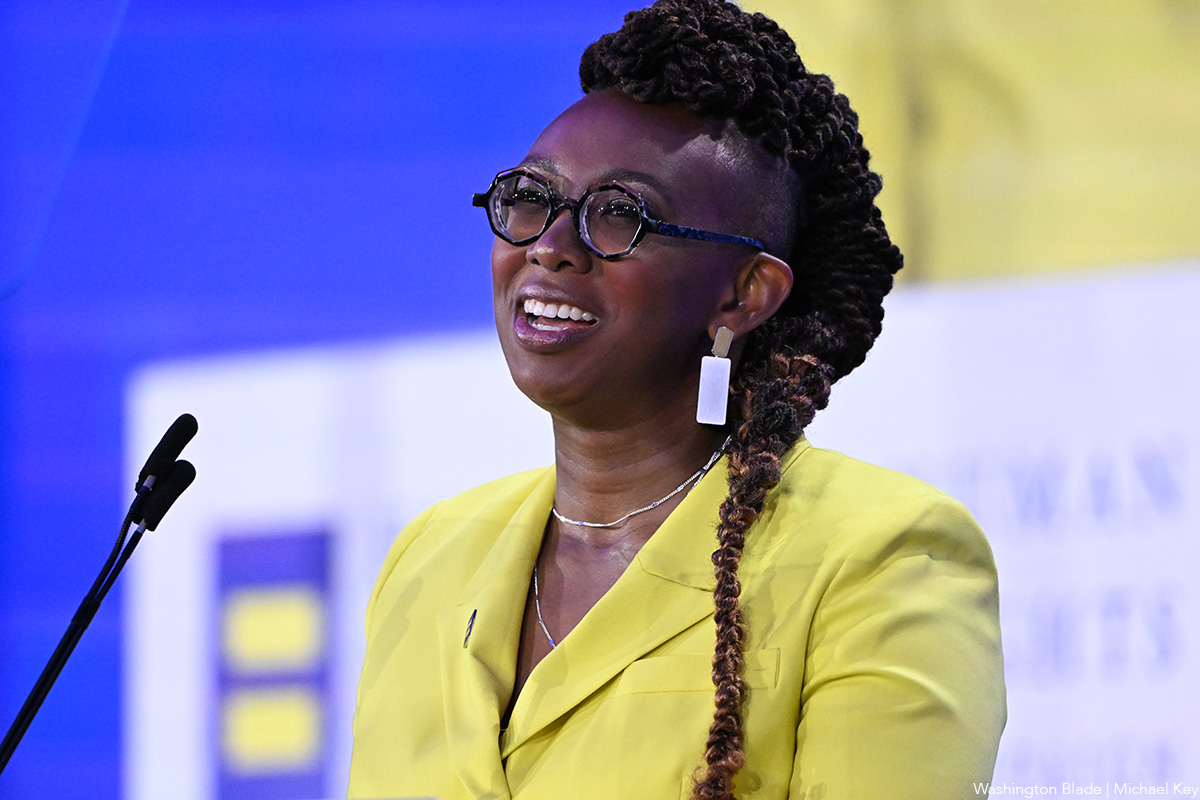
As President Donald Trump begins the second year of his second term, LGBTQ advocacy organizations say they are shifting into a more aggressive posture — armed with new data that shows how quickly hard-won progress is eroding under the Trump-Vance administration.
The Human Rights Campaign hosted its 2026 Election Strategy Kick-Off meeting last week at the National Press Club in Washington, where leaders shared fresh polling data detailing how Trump’s first year back in office has affected LGBTQ Americans — and how pro-equality candidates can respond heading into the midterms.
HRC President Kelley Robinson hosted the event, joined by MSNBC’s Jonathan Capehart, Reproductive Freedom For All President Mini Timmaraju, and Joey Teitelbaum of Global Strategy Group. Together, they laid out what they described as a dire political and cultural moment for LGBTQ people — and the concrete steps campaigns must take to counter a surge of anti-LGBTQ rhetoric and policy coming from the GOP.
“The emergency that we warned about is no longer a warning — it is the reality that we are living inside,” Robinson said. “Donald Trump may not have started this fire, but he surely poured gasoline on it.”
New data collected by HRC and Democratic pollsters at Global Strategy Group (GSG) paints a grim picture of life for LGBTQ Americans in Trump-era America — particularly when it comes to visibility, safety, and economic security.
Acceptance and visibility declining
One of the clearest trends from the survey is a decline in perceived acceptance. The data found that 21.6% of all U.S. adults say acceptance of LGBTQ+ people has declined in the past year. Among LGBTQ+ adults themselves, that number jumps to 29.7%.
That erosion of acceptance is translating into tangible changes in behavior. Nearly half of LGBTQ+ adults surveyed — 47.5% — reported being less out in at least one area of their lives over the past 12 months, at least in part due to cultural shifts or executive actions taken by the Trump-Vance administration.
The survey found that 26.5% of LGBTQ+ people are less out at work than they used to be, 25.4% are less out in healthcare settings, and 28.3% feel less out in public spaces. While the choice to be out varies by person and circumstance, researchers note that higher levels of being openly LGBTQ — particularly when safety is assured — have historically been linked to greater societal acceptance.
Visibility is slipping even more broadly. More than half of LGBTQ+ adults — 51.1% — say they are less visible than they were a year ago. Among LGBTQ+ parents with school-aged children, 40.1% reported being less visible at their children’s schools — the highest rate of retreat in any measured environment.
“Nearly half of LGBTQ+ people say they are less out than they were just a year ago,” Robinson said. “Visibility — something we fought generations to build — is slipping before our very eyes.”
Capehart emphasized that these numbers have real-world consequences beyond personal identity.
“Half the community retreating back into the closet is distressing, but understandable in these times,” Capehart said. “The danger is when people disappear from public life, because it becomes easier to ignore their suffering.”
Decades of research from organizations such as Gallup and PRRI have consistently shown that increased visibility correlates with greater public support for LGBTQ+ rights. When people personally know someone who is LGBTQ+, they are significantly more likely to support equality — creating what advocates describe as a positive feedback loop. The new data suggests that loop is now reversing.
Voters are ahead of politicians
Despite the cultural retrenchment reflected in the data, GSG’s findings also offer a clear political opening for candidates who run unapologetically on equality — particularly in competitive districts.
According to the polling, voters in battleground and purple districts “overwhelmingly support” nondiscrimination protections and LGBTQ equality. These voters, the data show, are deeply wary of politicians inserting themselves into people’s personal lives while failing to address urgent issues like the cost of living, healthcare, and public safety — especially when those intrusions target transgender people.
Teitelbaum, GSG’s senior vice president for research, said the polling makes clear that Republican messaging on transgender issues is far out of step with the electorate.
“In no state have we ever seen more than 18% of voters say being transgender should be illegal,” Teitelbaum said. “That means more than 80% of Americans are not where Republicans are — and that gives us room to go on offense.”
HRC leaders pointed to the recent Virginia gubernatorial race as a case study in how candidates can successfully navigate anti-trans attacks. Democratic Gov.-elect Abigail Spanberger faced a barrage of anti-trans messaging from her opponent, yet refused to cede ground on equality — instead redirecting her campaign toward economic concerns and quality-of-life issues.
“Look at Virginia and the good governor that’s about to be inaugurated, Abigail Spanberger,” Robinson said. “She faced a flood of anti-trans attacks. More than half of her opponent’s ad budget was spent trying to divide and mislead voters, but she didn’t flinch. She stood her ground, and voters rewarded her by a win of over 15 points in Virginia.”
Economic, healthcare impacts deepen
Beyond cultural shifts, the survey shows that the administration’s policies are having measurable economic and health impacts on LGBTQ Americans.
LGBTQ+ adults are twice as likely as non-LGBTQ+ adults to say their financial situation has worsened over the past year. Advocates pointed specifically to the administration’s hardline rollback of diversity, equity, and inclusion initiatives as a key driver of workplace hostility. Among LGBTQ+ workers whose employers ended or scaled back DEI programs, 57.4% reported experiencing stigma or bias at work.
Healthcare access is also deteriorating — not only due to Trump’s aggressive push against gender-affirming care, but across other critical areas as well. Access to HIV prevention and treatment has become significantly more difficult. LGBTQ+ adults on Medicare or Medicaid are more than twice as likely to report barriers to HIV care compared to those with other forms of insurance. Among LGBTQ+ adults earning less than $75,000 per year, 41.5% reported difficulty accessing HIV prevention or treatment.
“Since Donald Trump returned to office, LGBTQ+ Americans are worse off in every area this survey measures than we were one year ago,” Robinson said. “We are less visible, less safe, and less economically secure.”
A playbook for going on offense
In response, HRC is urging more pro-equality candidates to run — and to do so strategically. The organization outlined a campaign playbook designed to help candidates define themselves early, counter anti-trans attacks, and proactively promote their values rather than playing defense.
The framework centers on five core pillars:
- Share your story before attacks come
- Lead with your values
- Address concerns directly
- Turn the tables and gain voters
- Go big
U.S. Rep. Julie Johnson of Texas joined the meeting virtually, echoing the call for more openly pro-LGBTQ leadership in Congress.
“They’re banking that the politics of hate and division can distract voters from their failure to address soaring health care costs, high grocery bills, and the scourge of gun violence — and we cannot let them win,” Johnson said. “The answer is not to hide or stay silent. The answer is to be prepared.”
Johnson, the first out LGBTQ member of Congress from the South, said real change in Washington begins with elections.
“We need to flip the House to a pro-equality majority that will focus on the needs of all Americans, without exception,” she said. “With HRC’s help, candidates like me can go on offense and lean into our values, because the American people want real leadership, full equality, and a commitment to freedom.”
Robinson closed the event with a blunt assessment of the moment ahead.
“This is a different United States of America than it was just months ago,” she said. “Preserving democracy and protecting LGBTQ lives both require the same thing: winning power and refusing to back down.”




LGBTQ Non-Profit Organizations
Gov. Whitmer to serve as keynote speaker for Saturday’s HRC National Dinner
This year’s dinner will include Marcia Gay Harden, André De Shields, Junior LaBeija
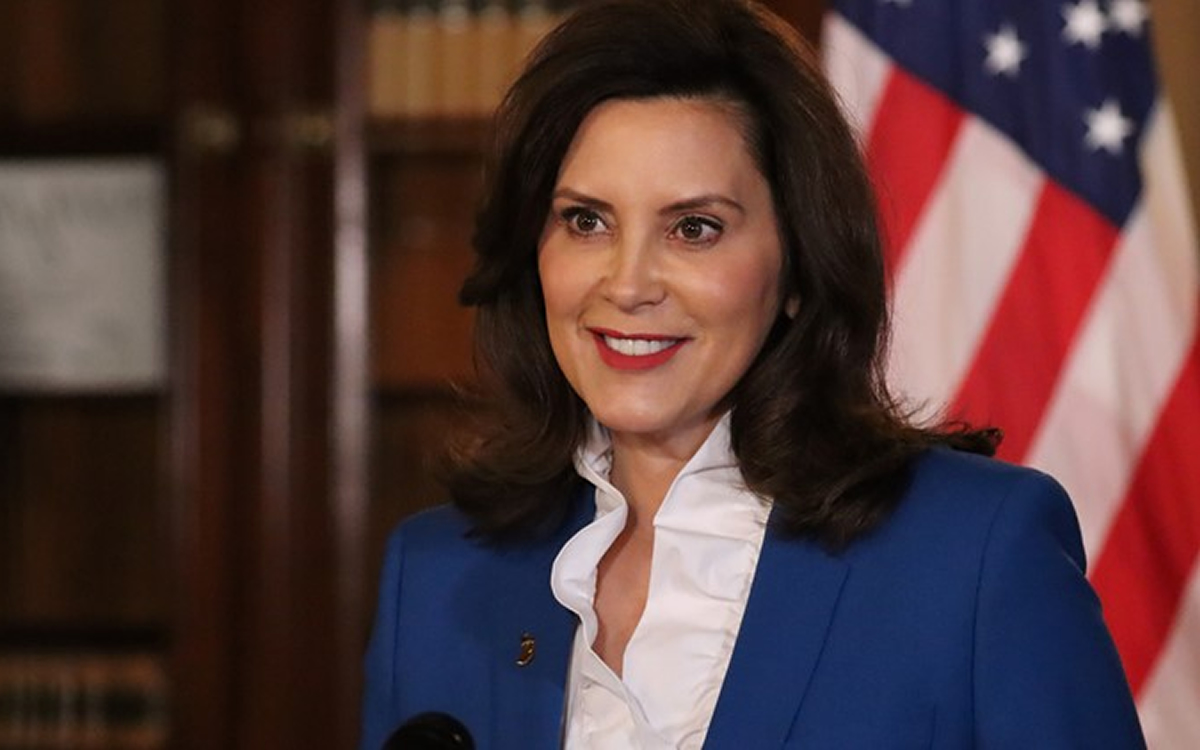
The Human Rights Campaign (HRC), the nation’s largest LGBTQ rights organization, announced on Wednesday that Michigan Gov. Gretchen Whitmer will be the keynote speaker at its annual National Dinner fundraiser in Washington, D.C.
The dinner is one of the biggest nights for the HRC — where thousands of LGBTQ civil rights advocates, elected officials, celebrities and community leaders mingle in the nation’s capital to raise money for the ongoing fight against LGBTQ discrimination.
This year’s dinner will take place at the Washington Hilton.
Alongside Whitmer, HRC will honor changemakers and LGBTQ+ allies and icons Marcia Gay Harden, André De Shields, and Junior LaBeija at the event.
Whitmer is a strong ally and proud mother of an LGBTQ+ child whose pro-equality leadership has led to critical civil rights protections for Michigan’s LGBTQ+ community.
HRC President Kelley Robinson issued a statement explaining why they chose the straight Michigander to deliver the headlining keynote address — pointing to her long track record and unwavering support in recent years, as anti-LGBTQ sentiment has not only grown but become more divisive in American politics. This is particularly important now as GOP leaders continue to attack and minimize rights for transgender people across the country.
“Gov. Gretchen Whitmer exemplifies the kind of allyship our community needs in this moment. She is a proud parent of an LGBTQ+ child and a governor whose leadership and commitment to equality have advanced crucial civil rights protections for LGBTQ+ people in Michigan,” Robinson said. “We are thrilled to have her join us at this year’s National Dinner and look forward to hearing how we can take Michigan’s lessons to create safe and welcoming spaces across the country.”
Some of those lessons Whitmer helped push include signing legislation that expanded the Elliot-Larsen Civil Rights Act to include sexual orientation, gender identity, and gender expression, signing executive directives to strengthen protections against anti-LGBTQ+ discrimination in state employment, and prohibiting the Michigan Department of Health and Human Services from using state or federal funds for harmful “conversion therapy” practices on youth.
She was also the first governor to fly the Pride flag on a Michigan state building in 2019.
“I’m a proud mom of a gay daughter, so it is personal when politicians try to tell people who they can be or who they can love,” said Whitmer. “In Michigan, we didn’t just talk about equality, we wrote it into law. We expanded Elliott-Larsen so no one can be fired or evicted for who they are. None of that happened by accident, and none of it is guaranteed. That’s why I’m proud to stand with HRC to organize, turn out, and win this November, because every right we’ve won is on the ballot.”
For tickets to the dinner, visit HRC.org.
LGBTQ Non-Profit Organizations
Anti-LGBTQ commentator Tyler O’Neil to testify in Southern Poverty Law Center probe
House Judiciary Committee will hold hearing on group on Wednesday

The man behind some of the strongest push against the Southern Poverty Law Center, who has an extensive anti-LGBTQ history, is being asked to speak before the House Judiciary Committee as part of its ongoing investigations into the nonprofit legal organization.
Last month, the Justice Department indicted the SPLC on 11 counts of wire fraud, false statements made to a federally insured bank, and conspiracy to commit money laundering related to payments to informants.
The DOJ alleges the civil rights group defrauded donors by using their money to fund the extremist groups it claims to be fighting. It also alleges the SPLC used more than $3 million paid to informants through a now-defunct program designed to infiltrate white supremacist and other extremist organizations.
Since then, the House Judiciary Committee, which says its main goals are to “protect constitutional freedoms and civil liberties, provide oversight of the U.S. Departments of Justice and Homeland Security, and manage legal and regulatory matters” has launched its own investigation into the ongoing litigation against the civil rights organization and tapped far-right journalist Tyler O’Neil to speak on the matter on Wednesday.
O’Neil has worked for several outlets that advance far-right perspectives, including the Washington Free Beacon and Fox News, and is currently the senior editor at the Daily Signal.
The Daily Signal began as a newsletter for the conservative Heritage Foundation, which authored Project 2025, a policy blueprint for a second Trump administration that outlines expanded executive power, increased conservative control of federal agencies, reduced civil and human rights protections, and a vision of the U.S. as a Christian nationalist nation.
O’Neil has written extensively about progressive organizations — most notably the SPLC. He authored the book “Making Hate Pay: The Corruption of the Southern Poverty Law Center,” in which he argues that the organization’s “hate map,” which identifies extremist groups — including neo-Nazis, Ku Klux Klan groups, and openly antisemitic organizations — is “an organ of disinformation” for also including mainstream conservative groups. He also did an interview with the Heritage foundation in 2022 about his work on the civil rights group, where it was called a “left-wing smear factory.”
In addition to his work on the SPLC, O’Neil has a long history of anti-LGBTQ — and specifically anti-transgender — commentary. At one point, he spotlighted the Reintegrative Therapy Association, a practice likened to conversion therapy by the Global Project Against Hate and Extremism. The American Medical Association has condemned the practice, stating: “Professional consensus rejects pathologizing homosexuality and gender nonconformity and evidence does not support the efficacy of changing sexual orientation.”
He has also attacked Christian groups that actively support LGBTQ people, particularly the Episcopal Church. He called the church “one of the most flaccid and spineless of the dying mainline Protestant denominations” and criticized its theology as a “watered-down bastardization of Christianity.”
O’Neil has also defended the anti-LGBTQ “pro-family” policies of former Hungarian Prime Minister Viktor Orbán, who had been in office from 2010 until earlier this month. Orbán and his government faced widespread criticism for policies including banning Pride celebrations and restricting legal gender recognition for trans and intersex people.
The European Commission in 2022 sued Hungary, a member of the EU, over the country’s 2021 anti-LGBTQ propaganda law.
Vice President JD Vance spoke at an April rally for Orbán, supporting the hardline anti-transgender approach the former prime minister has taken in Hungary.
Overall, O’Neil’s work reflects a clear pattern of endorsing anti-LGBTQ rhetoric, defending groups organizations have labeled as hate groups, and consistently writing through a Christian conservative nationalist lens.
Kyle Herrig of the Congressional Integrity Project, an organization “committed to exposing the reality behind Republicans’ politically motivated oversight and investigations,” gave a statement about the Judiciary Committee’s decision to have O’Neil testify, saying it further endangers those most vulnerable.
“House Republicans can’t find credible witnesses for their anti-civil rights crusade next week because they have no credible case. They’re giving a microphone to one of the far-right’s most discredited, anti-LGBTQ+ extremists and dressing it up as congressional oversight. It’s all in service of the Trump administration’s backwards prosecution of the Southern Poverty Law Center, the premiere organization tracking the very extremism people like Tyler O’Neill support. Attacking the SPLC doesn’t do anything to make Americans safer. It just makes it easier for racist, anti-LGBTQ+ organizations to operate in the dark.”
A Judiciary Democrats spokesperson provided a statement to the Washington Blade on O’Neil’s relationship and anti-LGBTQ rhetoric:
“Mr. O’Neil is no stranger to the committee — he has already testified twice in this Congress and has become something of a default witness for people who want to support and platform far-right extremist rhetoric. Judiciary Republicans’ decision to rely on him again here suggests a shortage of both new evidence and credible claims against the Southern Poverty Law Center.
Committee Democrats remain focused on protecting civil rights and resisting political efforts to discredit organizations that track and combat extremism, hate, and discrimination. As in prior hearings, Democrats are prepared to carefully scrutinize Mr. O’Neil’s hateful and out-of-touch ideas and debunk his false allegations about organizations dedicated to defending all of our civil rights.”
A Judiciary spokesperson [Republican] also provided the Blade with a comment, ultimately agreeing with O’Neil that the characterisation of some conservative groups by the Southern Poverty Law Center is unfair.
“We always knew the Southern Poverty Law Center was wrongfully targeting conservative groups as hate groups. Now we know the SPLC funneled money to extremists, raising questions whether the SPLC has been artificially elevating the domestic extremist threat and misleading its donors.”
The Blade reached out to O’Neil and the Daily Signal about O’Neil’s slated testimony for the committee.
LGBTQ Non-Profit Organizations
Lambda Legal names new deputy policy director
Group continues to fight against anti-LGBTQ federal actions.
Lambda Legal announced Wednesday that it has a new Deputy Legal Director of Policy.
Cathryn “Kate” Oakley, a former staff member at the Human Rights Campaign, is now Deputy Legal Director of Policy at Lambda Legal.
Oakley has covered extensive ground in the fight for LGBTQ rights in the courtroom and beyond. Since joining HRC in 2012, she has held several advocacy roles, including Senior Director of Legal Policy, Senior Counsel, and State Legislative Director. Throughout her career, Oakley has worked to advance LGBTQ equality in federal and state legislative offices across the country.
Working on landmark legislation like the Respect for Marriage Act and the Virginia Values Act, while fighting discriminatory efforts such as North Carolina House Bill 2, Oakley also served as a founding author of HRC’s Municipal Equality Index and co-author of the State Equality Index, two of the organization’s most widely accessed resources. She has also provided on-the-spot legal analysis of landmark U.S. Supreme Court decisions, including U.S. v. Skrmetti, Obergefell v. Hodges, and U.S. v. Windsor.
Now, Oakley is looking toward changing federal policy to “stand up for the LGBTQ+ community and everyone living with HIV.”
“Freedom and equality are hanging in the balance in America, and LGBTQ+ people are on the frontlines,” Oakley said. “Lambda Legal has been at the forefront of fighting for LGBTQ+ civil rights for decades, and the nation needs that leadership now more than ever. I am honored to join this powerful team and look forward to fiercely and passionately defending the communities we serve together.”
In addition to her extensive work creating protections LGBTQ people across the country have used to stay safe against anti-LGBTQ politicians and policies, Oakley is also a member of the Virginia Bar. Prior to joining the Human Rights Campaign, Oakley practiced domestic relations law at the Law Offices of Jay B. Myerson in Fairfax County.
In addition to practicing law, Oakley has also worked to educate the next generation of lawyers while serving as an adjunct professor at George Washington University since 2014. There, she has co-taught the Sexual Orientation, Gender Identity, and the Law course in the Women’s, Gender, and Sexuality Studies Program.
“Kate Oakley is exactly the kind of leader Lambda Legal needs at this moment,” said Kevin Jennings, chief executive officer at Lambda Legal. “Her command of nondiscrimination law and her years on the front lines fighting anti-transgender legislation make her an outstanding addition to our team. We are thrilled to welcome her.”
Douglas Curtis, chief legal officer at Lambda Legal highlighted Oakley’s experience within the LGBTQ rights arena as a major draw for the nonprofit”s newest policy head.
“Kate’s experience is a tremendous asset to Lambda Legal,” Curtis said. “She has spent her career turning legal expertise into real wins for LGBTQ+ people at every level of government, and I could not be more excited to have her alongside us in this fight.”
Lambda Legal currently has multiple ongoing cases against the Trump-Vance administration challenging a range of anti-LGBTQ policies pushed by the White House. The organization is involved in seven open cases against the administration, centered on trans rights and related federal policy shifts, with five preliminary injunctions granted in current cases.

Grace Meng sharply criticizes DOJ over hospital settlements

‘Star Trek: Strange New Worlds’ star Celia Rose Gooding breaks down that finale time travel twist

Center for Black Equity’s annual gala to take place Oct. 3

Charles Bowers, former owner of Baltimore gay bar the Hippo, dies