Middle East
LGBTQ groups in Israel respond to war
Hamas militants launched surprise attack on Saturday
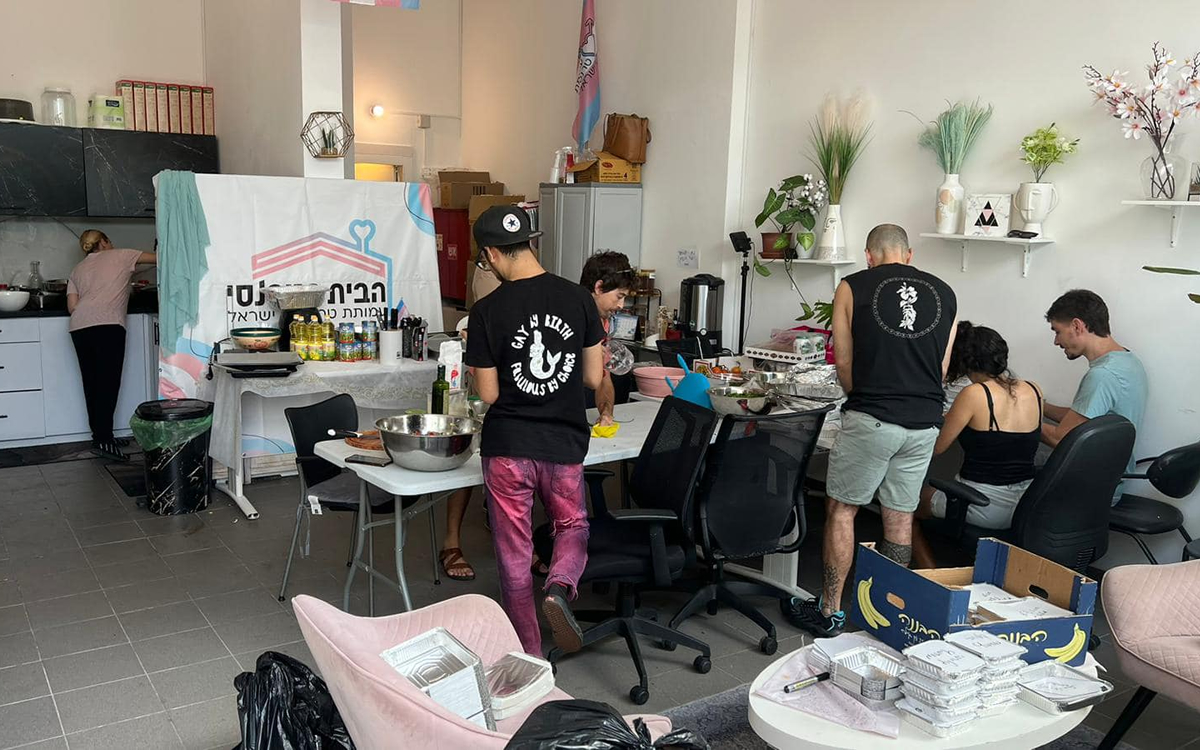
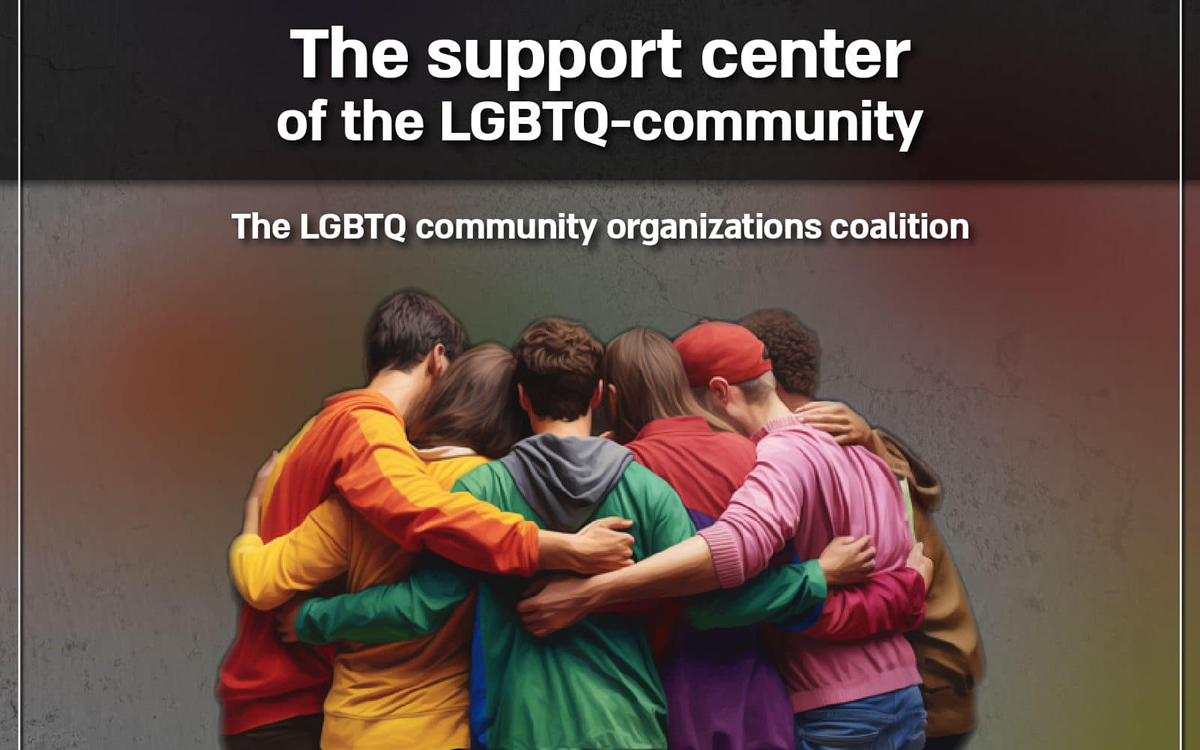
LGBTQ rights groups in Israel have rallied to support to those who have been impacted by their country’s war against Hamas that began Saturday.
Hila Peer, chair of the Aguda, the Association for LGBTQ Equality in Israel, on Monday said her organization and other Israeli LGBTQ rights groups have launched an “operation to take in people” who have been evacuated from communities in southern Israel that are near the Gaza Strip. The Aguda has also encouraged anyone to reach out if they want to donate food or equipment to members of the Israel Defense Forces or offer “a listening ear.”
“We are here for each other,” reads a post to the Aguda’s Facebook page. “Let’s not go through this alone.”
“We’re keeping safe, trying to do everything we can to help our friends in reserves right now and people in active service,” Peer told the Washington Blade.
Hoshen, an advocacy group that works in secular Israeli schools, on its website also encouraged its members to donate food and equipment and host evacuees from southern Israel. Hoshen, like the Aguda, has also pledged to help Israelis who the war has directly impacted.
“Our role as a community is to stand together, hand in hand and heart to heart, to help, assist, support and encourage them,” said Hoshen.
Maya Arbel, executive director of Ma’avarim, a transgender rights group, on Tuesday said she and her colleagues are cooking meals for IDF soldiers and collecting donations.
“[During] these times, it’s crucial for the transgender community in Israel to be part of Israeli society and contribute to civic efforts, fostering a sense of unity with the hope and goal of coming together and improving our situation during this crisis,” Arbel told the Blade.
Arbel said Ma’avarim is also working to ensure trans people continue to have access to health care and other basic needs during the war.
“The transgender community in emergency situations are especially vulnerable, as not every space is accommodating to transgender identities, and those who rely on medical resources may be marginalized due to the emergency situation,” said Arbel. “These days of chaos emphasize the importance of preparedness and know-how for aid and calmness.”
A Wider Bridge — a U.S.-based organization that seeks to build “a movement of LGBTQ people and allies with a strong interest in and commitment to supporting Israel and its LGBTQ communities” — is accepting donations on its website that it will send to Israeli advocacy groups.
Hamas, which the U.S. and Israel have designated a terrorist organization, on Saturday launched a surprise attack against communities in southern Israel from Gaza.
The Israeli government has said more than 1,200 people have been killed, including at least 260 people who Hamas militants murdered at an all-night music festival in a kibbutz near the border between Israel and Gaza. The Israeli government also says more than 3,000 people have been injured in the country since the war began and Hamas militants kidnapped at least 150 others.
Hamas rockets have reached Tel Aviv, Jerusalem, Ben Gurion Airport and other locations in central and southern Israel. The AP reports IDF forces and Hezbollah, another militant group, have exchanged fire across the Israeli-Lebanese border.
The Palestinian Health Ministry on its website says Israeli airstrikes in Gaza have killed 1,055 people and injured 5,184 others. The Israeli government has cut electricity and water to the territory and has stopped food and fuel shipments.
“As a community, we stand with the people of Israel and condemn those who choose terror and torture over peace,” said Congregation Bet Mishpachah, an LGBTQ synagogue in D.C., on Tuesday in a statement sent to the Blade. “For many, Israel not only represents the homeland of the Jewish people, but also stands out as a beacon of freedom, hope and acceptance for LGBTQ+ Jews and non-Jews alike in the Middle East and around the world.”
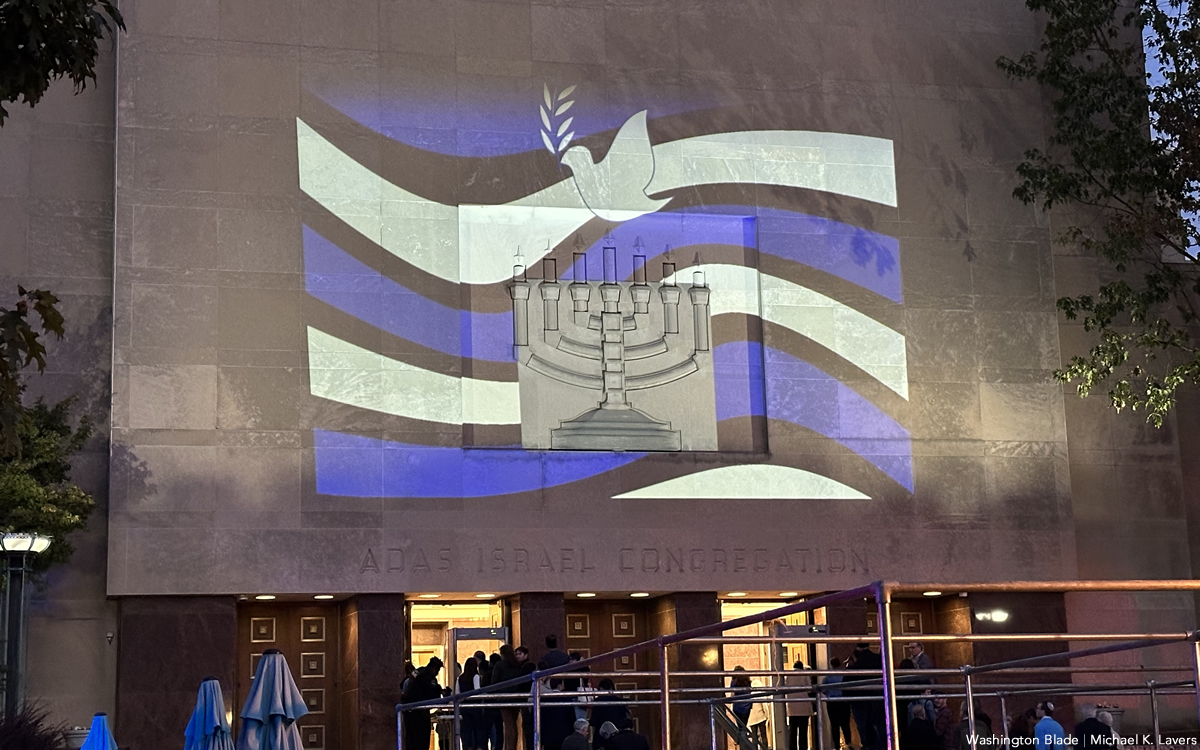
Rabbi Jake Singer-Beilin joined D.C. Mayor Muriel Bowser and Eliav Benjamin, the deputy chief of mission for the Israeli Embassy in Washington, among thousands of others, at a prayer vigil that took place at Adas Israel Congregation in Northwest D.C. on Tuesday.
“We recognize the necessity for the people and State of Israel’s right to defend themselves against groups who wish to take away those freedoms and seek the total annihilation of the Jewish people,” said Bet Mishpachah in its statement. “Our hearts mourn the loss of innocent lives in Gaza as well.”
HRC president: ‘Loss of life unfolding in the Middle East is heartbreaking’
Human Rights Campaign President Kelley Robinson is among those outside of Israel who have publicly responded to the war.
“The loss of life unfolding in the Middle East is heartbreaking and the human rights violations are appalling,” she said on Monday in a thread on her X account.
“Hamas killed hundreds of Israeli civilians over the weekend in a terrorist attack,” added Robinson. “And now countless more Palestinian and Israeli people are dying as the violence escalates while Jewish, Arab and Muslim people in the U.S. and around the world fear backlash and hate-motivated crimes.”
West Hollywood (Calif.) Mayor Sepi Shyne, a lesbian woman who was born in Iran, on Saturday condemned “the attacks by Hamas and the terror groups from Gaza on Israel and her people” and stressed the U.S. “stands with the people of Israel as they once again bravely face horrific violence.”
“As someone who has experienced this kind of terror and violence, these actions never lead to peace and my heart goes out to both the Israeli and Palestinian civilians caught in this horrible conflict,” she added in her statement. “Israel has the right to defend itself and this violence must be universally condemned.”
Georges Azzi, co-founder of Helem, a Lebanese LGBTQ rights group, on Monday used the hashtag #IStandWithHumanity in his own tweet.
“You can support Palestinians and their right to end occupation and not support Hamas, you can advocate for Palestinian rights without endorsing Hezbollah,” said Azzi. “You can condemn terrorism and the killing of civilians and still believe in one’s right to resist. These stances are not mutually exclusive.”
Hasan Kilani, a Jordanian Palestinian queer activist, on Wednesday expressed concern about LGBTQ people who cannot leave Gaza.
“There is no exit for LGBTQ individuals from Gaza to leave as Israel bombed all exits for Gazans,” Kilani told the Blade. “Israel must allow those who want to escape the bombing to do so. That’s the minimum we can ask.”

Iran and Egypt on Friday faced off during the World Cup’s “Pride Match” in Seattle.
Iran is among the handful of countries in which consensual same-sex sexual relations remain punishable by death. Discrimination and persecution based on sexual orientation and gender identity is commonplace in Egypt.
Friday’s match coincided with Pride weekend in Seattle. The Egyptian Football Association and the Football Federation Islamic Republic of Iran both objected to playing in the “Pride Match.”
Egypt and Iran tied 1-1.
FIFA, for its part, allowed Pride flags inside the stadium during the match.
“The FIFA World Cup 2026 is an inclusive event that welcomes people from all backgrounds,” a FIFA spokesperson told the Washington Blade in a statement. “Fans of all sexual orientations and gender identities are welcome at matches and events. General statements of human rights, including rainbow flags and other flags representing sexual orientation and gender identity, are permitted under the FIFA World Cup 2026™ Stadium Code of Conduct and may be displayed inside stadiums provided they are used in a manner consistent with the code.”
Human Rights Watch welcomed FIFA’s decision to allow Pride flags inside the stadium. Outright International, a global LGBTQ and intersex rights group, distributed Pride flags in Seattle on Friday, which was Pride Match Day.
“Visibility matters,” said Outright International Executive Director Maria Sjödin. “Pride is now being celebrated in more than 100 countries, including this weekend in Seattle. For many LGBTIQ people, seeing a Pride flag in public is a reminder that they are not alone, and that their rights and dignity are recognized.”
FIFA President Gianni Infantino earlier this year told Die Weltwoche, a Swiss magazine, that “there will be no ‘Pride Match’ at the (FIFA) World Cup.”
“There will be a FIFA World Cup match in Seattle, and on the same day, events organized by external organizations will be taking place in the city,” said Infantino. “But that has nothing to do with the match itself.”
Peter Tatchell, a long-time LGBTQ activist from the U.K. who is director of the Peter Tatchell Foundation, was among those who traveled to Seattle for Friday’s match. Tatchell accused FIFA of not vetting World Cup teams — specifically Iran, Egypt, Saudi Arabia, Ghana, Senegal, Qatar, Tunisia, Morocco, Iraq, Uzbekistan, and Algeria — over whether they would allow gay players.
“FIFA is protecting LGBT+ visibility in the stands while failing to protect LGBT+ players on the pitch,” said Tatchell.
Lebanon
Lebanese LGBTQ group responds to latest war
Helem’s Beirut community center ‘a vital crisis hub’
A Lebanese advocacy group is providing support to LGBTQ people who have been displaced during the latest war between Israel and Hezbollah.
Helem Executive Director Sandy Mteirik on Monday told the Washington Blade her group, in partnership with another NGO, has “shifted our programs to focus entirely on emergency response.”
Helem has opened what Mteirik described as a “lifesaving, inclusive shelter specifically for transgender individuals who find collective shelters unsafe or inaccessible.”
Mteirik noted Helem’s community center in Beirut, the Lebanese capital, “now serves as a vital crisis hub where” LGBTQ people “can find physical safety, psychological support, and relief assistance.” she told the Blade that Helem is also offering “confidential emotional support, assessing immediate needs, and connecting individuals with emergency housing and protection services.”
“We also continue to monitor and document protection risks to prevent further exclusion and harm,” said Mteirik.
‘Displacement crisis has intensified’
The U.S. and Israel on Feb. 28 launched airstrikes against Iran. One of them killed Supreme Leader Ayatollah Ali Khamenei.
Hezbollah, an Iran-backed Shia militant group the U.S. has designated a terrorist organization, in response launched rockets into Israel. The Jewish State on March 2 began to carry out airstrikes against Hezbollah in Lebanon.
The Lebanese Health Ministry on Tuesday said Israeli airstrikes have killed 2,124 people and wounded 6,921 others. Lebanese officials have also indicated the war has displaced more than 1 million people in the country.
Israeli airstrikes in Beirut and elsewhere in the country on April 8 killed more than 300 people and injured upwards of 1,100.
President Donald Trump the day before said “a whole civilization will die tonight” if Iran did not agree to end the war and end its blockade of the Strait of Hormuz, a strategic waterway that connects the Persian Gulf and the Gulf of Oman through which roughly 20 percent of the world’s crude oil passes.
Trump less than two hours before the deadline announced a two-week ceasefire with Iran that Pakistan helped broker. Trump said the deal did not include Lebanon, even though Pakistan insisted it did.
Hamas militants on Oct. 7, 2023, killed upwards of 1,200 people when they launched a surprise attack against Israel from the Gaza Strip. Hezbollah the following day began to launch rockets into Israel.
An Israeli airstrike in Beirut on Sept. 27, 2024, killed Hassan Nasrallah, Hezbollah’s long-time leader. Iran four days later launched upwards of 200 ballistic missiles at Israel.
The U.S. helped broker a ceasefire between Israel and Lebanon that took effect on Nov. 27, 2024. Israel nevertheless continued to carry out airstrikes in Lebanon.
Lebanese Ambassador to the U.S. Nada Hamadeh Moawad met with Israeli Ambassador to the U.S. Yechiel Leiter on Tuesday at the State Department. The meeting is the first time the two countries have held direct diplomatic talks since 1993.
Mteirik told the Blade that Helem’s community center “has not been damaged yet” in the latest war. She said, however, the impact of the April 8 airstrikes “mirrors the ongoing war Lebanon has endured since 2024.”
“The intensity of these recent strikes and the resulting massacres in ‘relatively’ safe areas of Beirut have been devastating,” said Mteirik.
“With over 300 victims, the displacement crisis has intensified,” she added. “When state responses are not inclusive, LGBTQIA+ individuals face amplified risks, including exclusion from collective shelters, homelessness, exposure to violence, loss of income, and barriers to essential healthcare.”
Helem: Lebanese government war response must be LGBTQ-inclusive
Article 534 of Lebanon’s Penal Code states “any sexual intercourse contrary to the order of nature is punishable” by up to a year in prison. Several judges in recent years have opted not to use the statute to prosecute LGBTQ people who have been charged under it.
Helem on March 4 called upon the Lebanese government and international NGOs to develop a response to the Israeli airstrikes that is “comprehensive, fair, and inclusive of all groups, without exception or discrimination.” Helem’s specific requests include:
• Integrating a rights-based, non-discriminatory approach into all stages of emergency planning.
• Training response staff on protection principles regarding gender-based violence and discrimination.
• Reassessing the “traditional family” shelter model that systematically excludes non-traditional families and individuals.
• Involving specialized civil society organizations in the design and monitoring of response plans.
• Establishing clear accountability standards to prevent discriminatory practices.
“Past experiences show that state response plans often fail to include displaced LGBTQ+ individuals,” said Mteirik.
Mteirik conceded the “conclusion of this conflict remains uncertain.” She stressed Helem “remains committed to standing with our community.”
“In these difficult times, we reaffirm our call for humanitarian solidarity that transcends identities,” said Mteirik. “Our work is an extension of our rejection of violence, occupation, and the exploitation of individuals and their lives.”
Iran
LGBTQ groups condemn Trump’s threat to destroy Iranian civilization
Ceasefire announced less than two hours before Tuesday deadline

The Council for Global Equality is among the groups that condemned President Donald Trump on Tuesday over his latest threats against Iran.
Trump in a Truth Social post said “a whole civilization will die tonight” if Tehran did not reach an agreement with the U.S. by 8 p.m. ET on Tuesday.
Iran is among the handful of countries in which consensual same-sex sexual relations remain punishable by death.
Israel and the U.S. on Feb. 28 launched airstrikes against Iran.
One of them killed Supreme Leader Ayatollah Ali Khamenei. Iran in response launched missiles and drones against Israel and other countries that include Kuwait, Bahrain, Qatar, the United Arab Emirates, Jordan, Saudi Arabia, Azerbaijan, and Cyprus.
Gas prices in the U.S. and around the world continue to increase because the war has essentially closed the Strait of Hormuz, a strategic waterway that connects the Persian Gulf and the Gulf of Oman through which roughly 20 percent of the world’s crude oil passes.
Trump less than 90 minutes before his deadline announced a two-week ceasefire with Iran that Pakistan helped broker.
“We the undersigned human rights, humanitarian, civil liberties, faith-based and environmental organizations, think tanks and experts are deeply alarmed by President Trump’s threat regarding Iran that ‘a whole civilization will die tonight’ if his demands are not met. Such language describes a grave atrocity if carried out,” reads the statement that the Council for Global Equality more than 200 other organizations and human rights experts signed. “A threat to wipe out ‘a whole civilization’ may amount to a threat of genocide. Genocide is a crime defined by the Genocide Convention and by the Rome Statute of the International Criminal Court as committing one or more of several acts ‘with intent to destroy in whole or in part a national, racial or religious groups as such.'”
The statement states “the law is clear that civilians must not be targeted, and they must also be protected from indiscriminate or disproportionate attacks.”
“Strikes on civilian infrastructure — such as the recent attack on a bridge and the attacks President Trump is repeatedly threatening to carry out to destroy power plants — have devastating consequences for the civilian population and environment,” it reads.
“We urge all parties to respect international law,” adds the statement. “Those responsible for atrocities, including crimes against humanity and war crimes, can and must be held accountable.”
The Alliance for Diplomacy and Justice, Amnesty International USA, Human Rights Watch, the American Civil Liberties Union, the NAACP, MADRE, and the Robert and Ethel Kennedy Human Rights Center are among the other groups that signed the letter.

Annapolis Pride arrives this weekend

Calendar: October 2-8

Renee Good’s family files two federal lawsuits

House Democrats urge White House to confront Turkish government over anti-LGBTQ crackdown

988 restores crisis services for LGBTQ youth

HRC National Dinner 2026: A night of music, activism, LGBTQ history

Lesbian Bar Project co-founder: purity politics could destroy our remaining spaces

529 openly LGBTQ candidates running in Brazilian election

HRC report: LGBTQ students face ‘far greater challenges’ in non-supportive states

Meet the LGBTQ candidates running for U.S. House, Senate
-

 LGBTQ Non-Profit Organizations5 days ago
HRC National Dinner 2026: A night of music, activism, LGBTQ history
-
Bars & Parties4 days ago
Lesbian Bar Project co-founder: purity politics could destroy our remaining spaces
-
Brazil4 days ago
529 openly LGBTQ candidates running in Brazilian election
-
National5 days ago
HRC report: LGBTQ students face ‘far greater challenges’ in non-supportive states