U.S. Federal Courts
Federal hate crimes charges filed against Club Q shooter
Anderson Lee Aldrich pleaded guilty to state charges
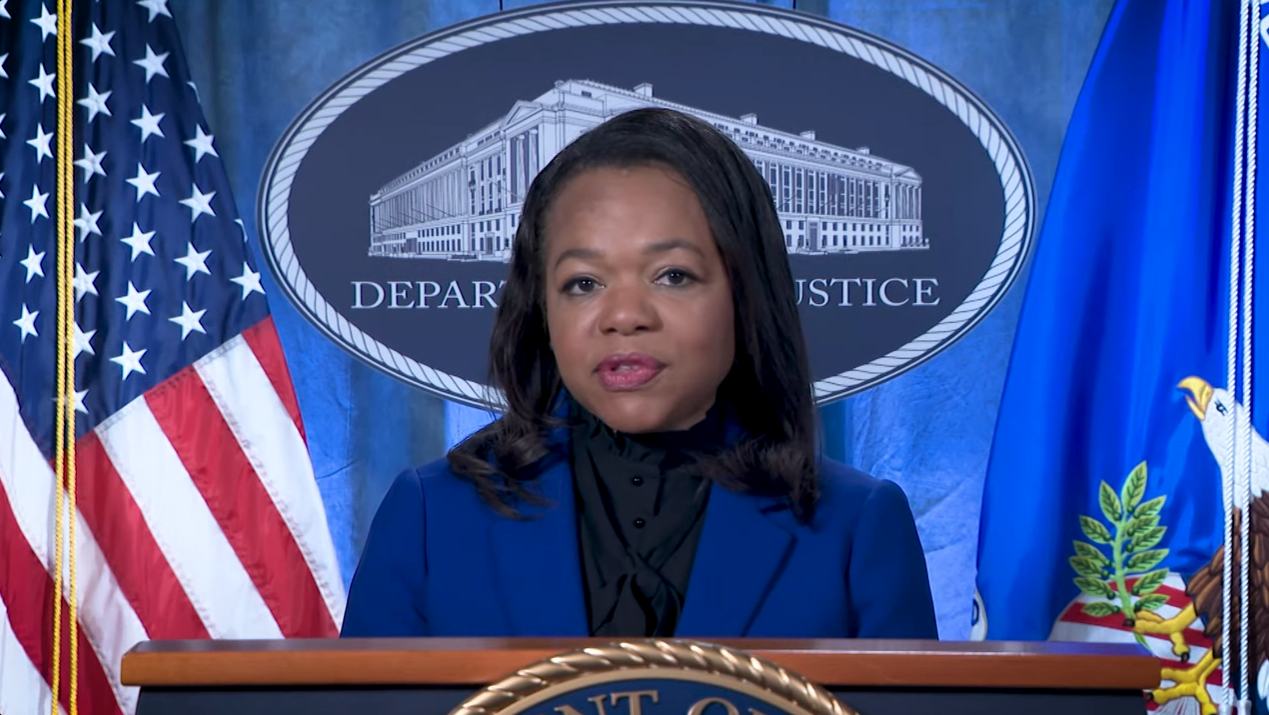
Assistant United States Attorney General Kristen Clarke of the Justice Department’s Civil Rights Division announced Tuesday federal hate crimes and firearms charges were made against the shooter related to the mass shooting at Club Q, an LGBTQ nightclub in Colorado Springs, Colo., on Nov. 19, 2022.
Anderson Lee Aldrich, 23, is currently housed in a Wyoming prison after pleading guilty to Colorado’s state-level charges in the Club Q shooting, which garnered him a life sentence without the possibility of parole.
Aldrich was moved to the Wyoming State Penitentiary last year according to the Colorado Department of Corrections due to concerns about threats to Aldrich’s safety in Colorado’s prison facilities.
In this latest legal development, the Justice Department entered 50 hate crimes charges and 24 weapons charges — Aldrich used a semiautomatic rifle in the attack. According to the announcement by Clarke, Aldrich filed a notice of disposition and requested that the court schedule a change of plea hearing.
In consultation with the victims of this incident, the parties jointly filed a motion requesting that the U.S. District Court schedule the change of plea and sentencing hearings on the same date, which the court granted.
The parties further informed the court that there is a plea agreement in this matter, and it is anticipated that the defendant has agreed to plead guilty to all charges in the information. The time for the entry of the guilty plea has not yet been set.
Brandon Wolf, the national press secretary for the Human Rights Campaign, in an emailed statement to the Washington Blade reacted to the news saying:
“The attack on Club Q was a horrific act of hate — the kind of anti-LGBTQ+ hate we must work to combat across the country. It matters to have a Justice Department pushing back against hate instead of fomenting it. It matters to have policies like the Matthew Shepard/James Byrd Jr Hate Crimes Prevention Act that protect communities and hold perpetrators accountable. These charges won’t bring back those stolen from their loved ones, but they mark a step toward justice. Our fight to honor the victims and survivors with action continues.”
The court filing charges that Aldrich murdered five people, injured 19 and attempted to murder 28 more in a willful, deliberate, malicious and premeditated attack at Club Q. According to the filing, Aldrich entered Club Q armed with a loaded assault weapon and began firing. Aldrich continued firing until Aldrich was subdued by patrons of the club. The information also alleges that Aldrich committed this attack because of the actual or perceived sexual orientation and gender identity of any person.
During the state court trial in El Paso County Superior Court in Colorado Springs last year, Aldrich identified as nonbinary. El Paso County District Attorney Michael Allen told reporters that he believed Aldrich claimed to be nonbinary to avoid being charged with hate crimes under the state’s laws. There was no indication Aldrich identified as nonbinary before the shooting, the district attorney added.
The FBI Denver Field Office and Bureau of Alcohol, Tobacco, Firearms and Explosives investigated the case.





U.S. Federal Courts
Three overlooked court rulings limited White House anti-trans policies
Supreme Court narrowed trans rights, advocates saw victories in other decisions

While the U.S. Supreme Court’s decision in West Virginia v. B.P.J. continues to dominate headlines about transgender rights, three recent federal court cases produced significant rulings that limited or temporarily blocked Trump-Vance administration policies attacking trans Americans.
Talbott v. USA
Trump issued Executive Order 14183, “Prioritizing Military Excellence and Readiness,” on Jan. 27, 2025, banning trans people from serving in the military. The following day, GLAD Law and the National Center for LGBTQ Rights filed a federal lawsuit in the U.S. District Court for the District of Columbia challenging the ban on behalf of six active-duty service members and two individuals seeking to enlist. The organizations argue the policy violates the Fifth Amendment’s guarantee of equal protection under the law.
The plaintiffs sought a nationwide preliminary injunction — a temporary block on enforcement of the executive order while the litigation continued. The district court granted that injunction and later rejected the Trump-Vance administration’s request to dissolve it, temporarily protecting trans service members from being discharged solely because of their gender identity.
That protection, however, was short-lived. In Shilling v. Trump, the Supreme Court stayed the lower court’s injunction, allowing the military to begin enforcing the trans service ban while litigation continued. The U.S. Air Force subsequently required trans service members facing involuntary separation proceedings to appear in uniforms and grooming standards corresponding to their sex assigned at birth and, in some cases, used their deadnames during those proceedings.
Despite that setback, the plaintiffs secured two significant legal victories during Pride month.
On June 1, a federal appeals court blocked the discharge of the trans service members involved in Talbott. Then, on June 30, a federal district court certified the case as a class action on behalf of all currently serving trans service members. That means future rulings in the case will apply not only to the original six plaintiffs but to all active-duty trans military personnel covered by the class.
The case remains ongoing, but class certification significantly strengthens the ability to protect trans service members as the litigation continues. Currently, there are 28 plaintiffs in total, including the two still attempting to enlist.
Z.A. v. Blanche
In Z.A. v. Blanche (formerly Z.A. v. Lucile Salter Packard Children’s Hospital at Stanford), the U.S. District Court for the Northern District of California issued an emergency order one day before a federal grand jury subpoena was set to be enforced on July 2. The order blocked the Department of Justice from obtaining confidential medical records belonging to California families whose children receive gender-affirming care.
The ruling relied in part on protections established under the Health Insurance Portability and Accountability Act (HIPAA), the 1996 federal law governing the privacy and security of medical records.
The decision represented a significant check on the administration’s efforts to obtain sensitive patient information, protecting the privacy of trans patients and their families while the legal challenge proceeds.
Doe v. Blanche
Doe v. Blanche, which remains ongoing, challenges Trump’s executive order, Defending Women From Gender Ideology Extremism and Restoring Biological Truth to the Federal Government. Under policies implementing that order, many trans women in federal custody would be housed in men’s prisons.
A federal district court in D.C. granted a preliminary injunction blocking enforcement of a Bureau of Prisons policy that would require incarcerated trans women to be housed in men’s facilities regardless of individualized safety assessments or the risk of sexual assault.
The Bureau of Prisons policy also conflicts with the goals of the Prison Rape Elimination Act (PREA), enacted by Congress in 2003 to address sexual abuse in correctional facilities through standards, research, funding, and prevention measures. Federal data has consistently shown that trans people in custody experience sexual assault at dramatically higher rates than the general prison population.
Cuba
Trans parent charged with kidnapping, allegedly fled to Cuba with child
Cuban authorities helped locate Rose Inessa-Ethington
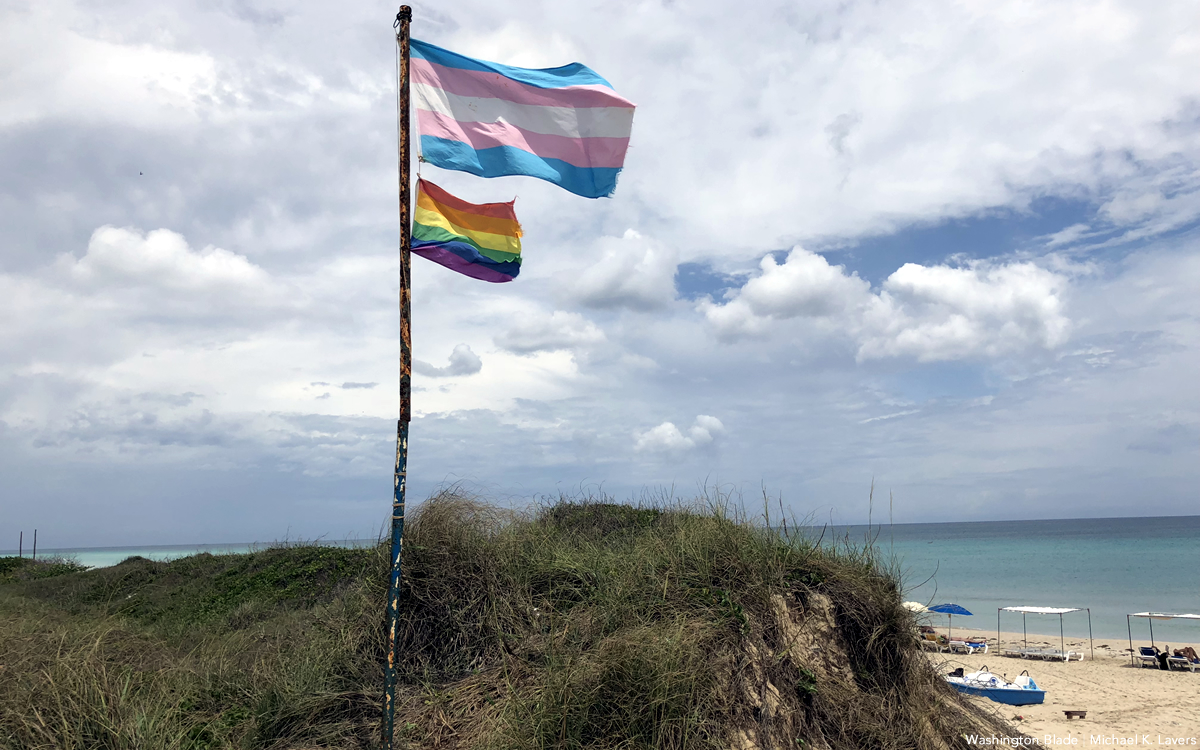
Federal authorities have charged a transgender woman with kidnapping after she allegedly fled to Cuba with her 10-year-old child.
An affidavit that Federal Bureau of Investigation Special Agent Jennifer Waterfield filed in U.S. District Court for the District of Utah on April 16 notes the child is a “biological male who identifies as a female” and “splits time living with divorced parents who share custody” in Cache County, Utah.
Waterfield notes the child on March 28 “was supposed to be traveling by car to” Calgary, Alberta, “for a planned camping trip with his transgender mother, Rose Inessa-Ethington, Rose’s partner, Blue Inessa-Ethington, and Blue’s 3-year-old child.”
The affidavit notes the group instead flew from Vancouver, British Columbia, to Mexico City on March 29. Waterfield writes the Inessa-Ethingtons and the two children then flew from Mérida, Mexico, to Havana on April 1.
The 10-year-old child called her biological mother on March 28 after they arrived in Canada. The custody agreement, according to the affidavit, required Rose Inessa-Ethington to return the child to her former spouse on April 3.
“Interviews of MV [Minor Victim] 1’s family members provided significant concerns for MV 1’s well-being, as MV 1 was born a male, however, identifies as a female child, which is largely believed to be due to manipulation by Rose Inessa-Ethington,” reads the affidavit. “Concerns exist that MV 1 was transported to Cuba for gender reassignment surgery prior to puberty.”
The affidavit indicates authorities found a note in the Inessa-Ethingtons’ home with “instruction from a mental health therapist located in Washington, D.C., including instruction to send the therapist the $10,000.00 and instructions on gender-affirming medical care for children.”
The affidavit does not identify the specific “mental health therapist” in D.C.
A Utah judge on April 13 ordered Rose Inessa-Ethington to “immediately” return the child to her former spouse. The former spouse also received sole custody.
“Your affiant believes that due to the extensive planning and preparation exhibited by both Rose Inessa-Ethington and Blue Inessa-Ethington to isolate MV 1 and take MV 1 to Havana, Cuba, without notifying or requesting permission from MV 1’s mother indicates they are likely not planning to return to the United States,” wrote Waterfield.
The affidavit notes Cuban authorities found the Inessa-Ethingtons and the child.
A press release the U.S. Attorney’s Office for the District of Utah issued notes the Inessa-Ethingtons “were deported from Cuba” on Monday “with the assistance of the FBI.”
The couple has been charged with International Parental Kidnapping. The Inessa-Ethingtons were arraigned in Richmond, Va., on Monday. The press release notes a federal court in Salt Lake City will soon handle the case.
The New York Times reported the child is now back with their biological mother.
“We are grateful to law enforcement for working swiftly to return the child to the biological mother,” said First Assistant U.S. Attorney Melissa Holyoak of the District of Utah in the press release.
The case is unfolding against the backdrop of increased tensions between Washington and Havana after U.S. forces on Jan. 3 seized now former Venezuelan President Nicolás Maduro and his wife, Cilia Flores.
President Donald Trump shortly after he took office in January 2025 issued an executive order that directed the federal government to only recognize two genders: male and female. A second White House directive banned federally-funded gender-affirming care for anyone under 19.
The U.S. Supreme Court last year in the Skrmetti decision upheld a Tennessee law that bans gender-affirming care for minors.
Cuba’s national health care system has offered free sex-reassignment surgeries since 2008.
Activists who are critical of Mariela Castro, the daughter of former President Raúl Castro who spearheads LGBTQ issues as director of Cuba’s National Center for Sexual Education, have previously told the Washington Blade that access to these procedures is limited. The Blade on Wednesday asked a contact in Havana to clarify whether Cuban law currently allows minors to undergo sex-reassignment surgery.
Puerto Rico
The ‘X’ returns to court
1st Circuit hears case over legal recognition of nonbinary Puerto Ricans

Eight months ago, I wrote about this issue at a time when it had not yet reached the judicial level it faces today. Back then, the conversation moved through administrative decisions, public debate, and political resistance. It was unresolved, but it had not yet reached this point.
That has now changed.
Lambda Legal appeared before the 1st U.S. Court of Appeals in Boston, urging the court to uphold a lower court ruling that requires the government of Puerto Rico to issue birth certificates that accurately reflect the identities of nonbinary individuals. The appeal follows a district court decision that found the denial of such recognition to be a violation of the U.S. Constitution.
This marks a turning point. The issue is no longer theoretical. A court has already determined that unequal treatment exists.
The argument presented by the plaintiffs is grounded in Puerto Rico’s own legal framework. Identity birth certificates are not static historical records. They are functional documents used in everyday life. They are required to access employment, education, and essential services. Their purpose is practical, not symbolic.
Within that framework, the exclusion of nonbinary individuals does not stem from a legal limitation. Puerto Rico already allows gender marker corrections on birth certificates for transgender individuals under the precedent established in Arroyo Gonzalez v. Rosselló Nevares. In addition, the current Civil Code recognizes the existence of identity documents that reflect a person’s lived identity beyond the original birth record.
The issue lies in how the law is applied.
Recognition is granted within specific categories, while those who do not identify within that binary structure remain excluded. That exclusion is now at the center of this case.
Lambda Legal’s position is straightforward. Requiring individuals to carry documents that do not reflect who they are forces them into misrepresentation in essential aspects of daily life. This creates practical barriers, exposes them to scrutiny, and places them in a constant state of vulnerability.
The plaintiffs, who were born in Puerto Rico, have made clear that access to accurate identification is not symbolic. It is a basic condition for moving through the world without contradiction imposed by the state.
The fact that this case is now being addressed in the federal court system adds another layer of significance. This is not a pending policy discussion or a legislative proposal. It is a constitutional question. The analysis is not about political preference, but about rights and equal protection under the law.
This case does not exist in isolation.
It unfolds within a broader context in which debates over identity and rights have increasingly been shaped by the growing influence of conservative perspectives in public policy, both in the United States and in Puerto Rico. At the local level, this influence has been reflected in legislative discussions where religious arguments have begun to intersect with decisions that should be grounded in constitutional principles. That intersection creates tension around the separation of church and state and has direct consequences for access to rights.
Recognizing this context is not an attack on faith or religious practice. It is an acknowledgment that when certain perspectives move into the realm of public authority, they can shape outcomes that affect specific communities.
From within Puerto Rico, this is not a distant debate. It is a lived reality. It is present in the difficulty of presenting identification that does not match one’s identity, and in the consequences that follow in workplaces, schools, and government spaces.
The progression of this case introduces the possibility of change within the applicable legal framework. Not because it resolves every tension surrounding the issue, but because it establishes a legal examination of a practice that has long operated under exclusion.
Eight months ago, the conversation centered on ongoing developments. Today, there is already a judicial finding that identifies a violation of rights. What remains is whether that finding will be upheld on appeal.
That process does not guarantee an immediate outcome, but it shifts the ground.
The debate is no longer theoretical.
It is now before the courts.

Over 2,000 turn out for Hands Around the Kennedy Center protest

Furries take over the Metro

A roundup of fall events not to be missed

Activists protest outside Turkish Embassy in D.C.

Republican challenger misgenders McBride during forum, forced to leave

Acclaimed Chef Patrick O’Connell’s memoir reveals the arc of a life well lived

78th annual Emmy Awards recapped

LGBTQ issues, attacks on Democrats dominate unusual RNC midterm convention

Hands Off the Arts to form ‘human chain’ around Kennedy Center

Advocate, Out parent company adds Trump supporter to board, prompting outrage
-

 a&e features5 days ago
Acclaimed Chef Patrick O’Connell’s memoir reveals the arc of a life well lived
-
Arts & Entertainment5 days ago
78th annual Emmy Awards recapped
-
2026 Midterm Elections5 days ago
LGBTQ issues, attacks on Democrats dominate unusual RNC midterm convention
-
District of Columbia5 days ago
Hands Off the Arts to form ‘human chain’ around Kennedy Center