Politics
Republican delegate discusses GOP platform and Project 2025 at RNC
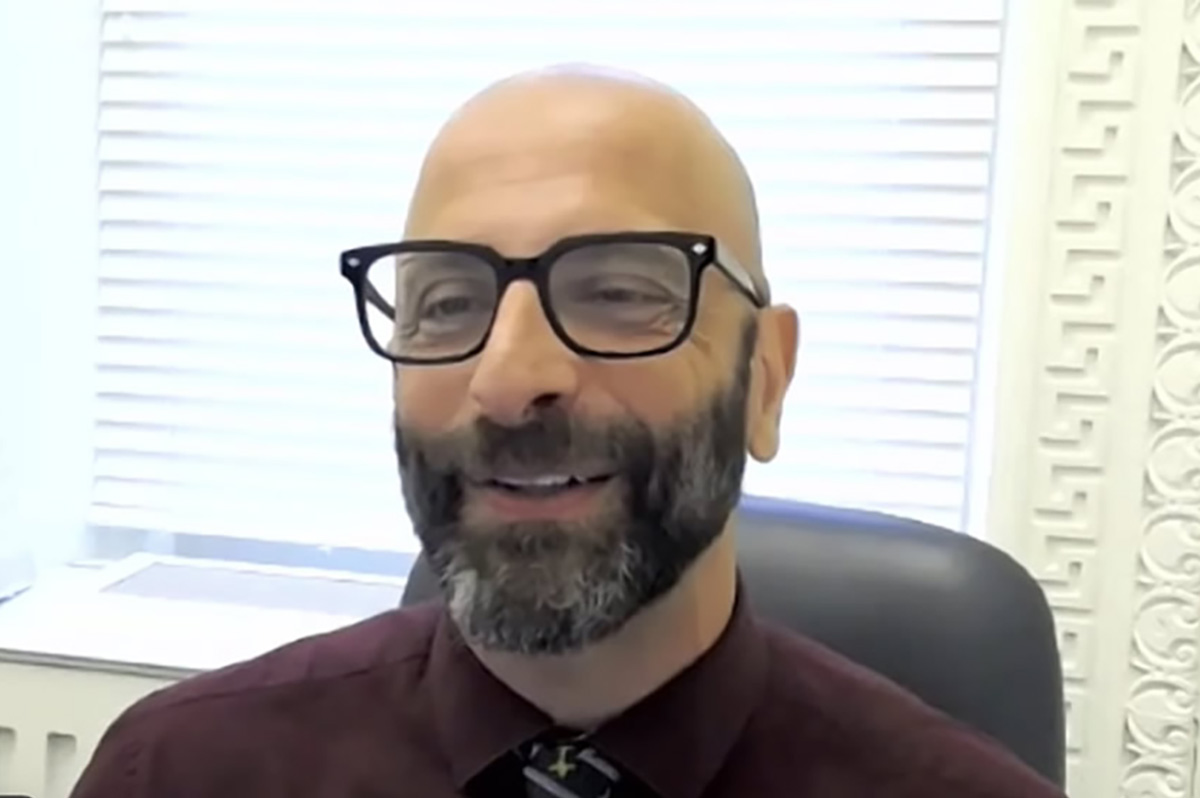
Weymouth, Mass., Mayor Bob Hedlund spoke with the Washington Blade

MILWAUKEE — Log Cabin Republicans, the conservative LGBTQ group, hosted a Big Tent Event on Wednesday offsite from the Republican National Convention, atop the Discovery World Science and Technology Museum with panoramic views of Lake Michigan.
Before the luncheon began — with remarks from GOP members of Congress and the organization’s leadership, along with former U.S. Ambassador to Germany Ric Grenell, who served as acting director of national intelligence — the Washington Blade spoke with a Republican delegate, Weymouth, Mass., Mayor Bob Hedlund.
“I bumped into, this morning, a former colleague of mine,” he said, referring to LCR Board Chair Richard Tisei, who served in the Massachusetts Senate with Hedlund and invited him to the event.
Several of the speakers would later tout the 2024 Republican party platform’s omission of references to same-sex marriage, a departure from the party’s longstanding position. And Hedlund recalled how heated the debates were in 2004 when Massachusetts became the first U.S. state to legalize marriage equality.
“I was in the Senate when that debate went on and the court decision and multiple votes, so we were kind of at the forefront of that at the time,” he said. “It was a vote I struggled with. I probably received more pressure on that issue than anything else in my 21 years in the legislature. I had neighbors that never talked politics with me grabbing me and stopping my car one morning on the week of the vote and voicing their opinion. That was a difficult time.”
Hedlund explained that while his hometown of Weymouth was the bluest in his Senate district, the community is, and was, blue collar with a heavy Irish-Italian-Catholic bent. Twenty years ago, the town had five Catholic parishes, he said, “so there was a lot of opposition to [same-sex marriage] at the time.”
More than the volte-face on gay marriage, what stood out to the mayor about the GOP platform — the party’s first since 2016 — was how “quiet” the fight was, in contrast with the heated battles through which previous iterations were produced.
As LCR President Charles Moran previously told the Blade, Hedlund said the language of the new document, concise as it is, is a clear reflection of the values and priorities of the party’s 2024 nominee, former President Donald Trump.
“I think they can smell victory and they want to just get across the finish line,” Hedlund said, referring to the officials involved in drafting the platform.
While the document does not take a position against same-sex marriage, it does call for banning transgender girls and women from competing in girls and women’s sports, as well as a proposal to cut federal funding for “any school pushing critical race theory, radical gender ideology, and other inappropriate racial, sexual, or political content on our children.”
Addressing the proposed sports ban, Hedlund said “I think you don’t have any consensus in the populace over how you handle that issue. I mean, I think that’s a jump ball.”
He added that if residents in Weymouth were polled on the issue, or if it came up in a referendum, he imagines they would favor a ban. Neighboring towns have experienced controversies involving trans athletes, he said.
Personally, Hedlund said he believes there should be rules for participation in athletics that are drawn based on “some defining line as to when someone may be transitioning” and in the meantime “it’s hard to pigeonhole a party or an entity on that [issue] because people are still grappling with it.”
“I don’t know how you deal with it if someone’s fully transitioned,” the mayor said, because in that case “I think that’s a different story” and a ban might not be necessary or appropriate.
Compared to the platform, Project 2025, the Heritage Foundation’s governing agenda for a second Trump administration, contains far more policies sought by the conservative Christian wing of the Republican Party, including restrictions on abortion and pornography as well as LGBTQ rights.
“I didn’t know anything about Project 2025 until about a week before Trump said he didn’t know anything about it,” Hedlund said. “Honestly.”
“I’ve been aware of the Heritage Foundation for 40 years and read some of the newsletters in the past,” he said. “And I’m way more informed than the average citizen. And I’m probably way more informed than most delegates.”
While the former president has sought to distance himself from the document as it has increasingly earned blowback, CNN notes that “six of his former Cabinet secretaries helped write or collaborated on the 900-page playbook” while “four individuals Trump nominated as ambassadors were also involved, along with several enforcers of his controversial immigration crackdown. And about 20 pages are credited to his first deputy chief of staff.”
“At least 140 people who worked in the Trump administration had a hand in Project 2025,” according to a CNN review, “including more than half of the people listed as authors, editors, and contributors to ‘Mandate for Leadership,’ the project’s extensive manifesto for overhauling the executive branch.”
Asked whether he expects Project 2025 or the party platform would be a more accurate guide to a second Trump term, Hedlund said he was not sure — but added the focus on Project 2025 is misguided because “you’ve got organizations, advocacy groups, think tanks on the left, same thing on the right, that publish policy papers.”
“When those on the left complain about Project 2025, I’d like to see the media ask the same questions, ‘what are the policy papers coming out of the Council on Foreign Relations? Or out of George Soros’s foundation? And how much of the Democratic Party is adopting those policy papers or initiatives?”
Hedlund added, “I don’t know if Trump knew about it or didn’t know about it, but it’s not the Republican Party platform. It’s a separate entity.”
“Are they going to have people involved in the Trump administration that are going to be influential?” he asked. “Yes. But if you look at some of the things in Project 2025, [many require] legislative action” and looking at Trump’s “first term, I mean, what did he do, really, administratively or through executive action or by fiat that was so radical?”





Politics
Log Cabin Republicans remove transgender rights from mission
Decision made after ‘significant discussion’ with members, board

Log Cabin Republicans, an organization that formerly represented LGBTQ conservatives, has removed advocating for transgender and queer rights from its “renewed” national advocacy focus.
In an opinion piece written by Log Cabin Republicans President Ross Hemminger for the conservative media outlet Town Hall, he announced that trans rights would no longer be part of what the organization advocates for through conservative leadership and candidates.
In his piece, Hemminger wrote that after “significant discussion” with members and Log Cabin Republicans’ board of directors, the organization’s leadership voted to “refine Log Cabin Republicans’ national advocacy focus to concentrate specifically on issues of sexual orientation and conservative values,” a focus that does not include trans people.
“We have fought for the right to legally marry who we love, serve our country and our communities openly and proudly, and to enjoy the same inalienable rights afforded to all law-abiding Americans — and we succeeded,” Hemminger wrote. “However, the new era of gender identity politics is not the movement we supported and fought for. Gay men and women are losing public support across the country, and support for gay marriage and other once-widely accepted rights is eroding. Why? Because many voters today weren’t alive or cognizant of the politics of gay marriage winding its way through the courts and gaining ground in public opinion. Their view of the gay community is based on today’s radical transgender activists with their unnecessary and discomfiting focus on America’s youth.”
Hemminger then went on to argue that trans advocacy has shifted to focusing primarily on minors — a characterization that does not reflect the breadth of issues trans advocates address.
“They push schools to teach radical gender ideology; they want biological men in women’s sports regardless of the consequences; perhaps most offensively, they support gender reassignment treatments for minors, often without the knowledge or consent of the parents, knowing full well these treatments are mostly irreversible,” he wrote.
Hemminger and many right-wing political leaders have continued to assert this false reality as fact.
A Harvard-affiliated study found approximately 2.1 gender-affirming surgeries occur per 100,000 trans and gender-diverse minors diagnosed with gender dysphoria, underscoring how uncommon these procedures are among minors. In addition to the option of surgery for those who think it’s right for them, there is an array of other medically sound options to treat gender dysphoria, which according to KFF, an independent source for health policy research and polling, includes “medical, surgical, mental health, and non-medical services for transgender and nonbinary people.”
Additionally trans advocacy is not as narrow as Hemminger makes it seem in his opinion piece.
There are a slew of issues the trans community faces — and fights for — on a daily basis that have nothing to do with healthcare. Those include obtaining government documents that accurately reflect one’s gender identity, multiple elements of family law that include the right to marry and adopt children as straight couples can, protections from violence, hate crime protections, the right to serve in the military, access to bathrooms corresponding with their gender, and the right to education.
Despite the overwhelming number of issues trans people — regardless of political affiliation — have to struggle with as a result of systemic gaps in protections that are supposed to be afforded to everyone under the law, they remain vulnerable to unequal treatment.
Despite this shift, Log Cabin Republicans has committed to standing with the Republican Party rather than LGBTQ people as a whole. The organization was initially founded as a loosely connected network of local California social clubs made up of LGBTQ conservatives in the late 1970s before eventually emerging as a national political organization in the early 1990s under its founding executive director, Rich Tafel.
As the organization continued to gain momentum, it endorsed a handful of Republicans who voted against the Respect for Marriage Act, the 2022 law that federally recognized marriage equality for same-sex couples.
The Washington Blade reached out to Log Cabin Republicans for comment but did not hear back by the time of publication.
White House
Trump-Vance administration’s LGBTQ brain drain: what you need to know
Several high profile figures have left government since January 2025
Uncloseted Media published this article on Aug. 21.
By SPENCER MACNAUGHTON and HOPE PISONI | Since President Donald Trump regained office in January 2025, he and his administration have waged an all-out war against the LGBTQ community.
This has led queer Americans to move to other countries at unprecedented rates — Rainbow Railroad, a Canadian nonprofit that supports LGBTQ asylum seekers, reported receiving a huge increase in inquiries from the U.S. last year.
The same pattern is playing out within the government. And it’s leading to a brain drain of competent queer employees and allies who are either resigning or being fired, often because of their LGBTQ identity or their belief that queer people deserve basic human rights.
Here are six examples of federal workers who had a messy exit from Trump 2.0:
Demetre Daskalakis
- WHAT HE DID: Dr. Daskalakis is one of the foremost LGBTQ health professionals in the U.S. Under Trump’s first term, he was appointed director of the Division of HIV/AIDS Prevention at the Centers for Disease Control and Prevention. Under Biden, he also served as the deputy response coordinator for mpox at the White House.
- WHAT HAPPENED: While he continued a lot of this work under Trump 2.0, he didn’t last long. In August 2025, he resigned from the CDC, writing in his resignation letter that he was “unable to serve in an environment that treats CDC as a tool to generate policies and materials that do not reflect scientific reality and are designed to hurt rather than to improve the public’s health.”
- BOTTOM LINE: I recently interviewed Daskalakis, where he told me that leadership from RFK Jr.’s Health and Human Services Department justified HIV cuts by saying the virus is “just too woke.”
Julia Curlee
- WHAT SHE DID: Julia Curlee worked in intelligence for nearly two decades between the CIA and the National Security Council. Earlier this week, she wrote an article in The Atlantic explaining how she had served as Mike Pence’s daily briefer and the NSC’s director for intelligence programs. During Trump 1.0, she briefed the president on Air Force One.
- WHAT HAPPENED: Curlee told CNN this week that in Trump’s second term, her treatment by the federal government transformed. She was no longer allowed to use the women’s bathroom on federal property and had to leave her workplace to relieve herself. Her passport was also reissued to read “male,” which led to complications when traveling abroad. In March 2025, less than 70 days into Trump’s second term, Curlee says she received a call while at a rib joint in Virginia with her family informing her that her White House tour was over and that they couldn’t tell her why. She continued to work for the CIA for some months, but she later resigned.
- BOTTOM LINE: Curlee wrote that moments after she learned she was fired from the White House, she saw a post from right-wing political activist Laura Loomer that read “A transgender, Biden holdover who hates President Trump is still working in the NSC intel office. I’m told there are several NSC staffers who have complained that this trans Biden holdover hasn’t been fired yet, but nothing is being done about it.”
Marc Seawright
- WHAT HE DID: Marc Seawright worked for more than eight years at the U.S. Equal Employment Opportunity Commission. Most recently, he served as the EEOC’s director of information governance and strategy, where he oversaw tech policy to help combat workplace harassment and discrimination.
- WHAT HAPPENED: During Trump 2.0, Seawright was ordered to develop technology that would erase any mention of LGBTQ identities from EEOC outreach materials. “[My expertise] was being leveraged to perpetuate discrimination against people like me,” he told the Associated Press. In that article, Seawright and other transgender and gender nonconforming federal employees described their “fear, grief, frustration, and distress working for the federal government at a time when it rejects them — often with no clear path for recourse or support.”
- BOTTOM LINE: Seawright quit in June, citing a hostile work environment. “It became overwhelming. It felt insurmountable,” he told the AP. He has now hired lawyers at Katz Banks Kumin and has filed a discrimination complaint.
David Maltinsky
- WHAT HE DID: Until 2025, Maltinsky worked for more than 16 years at the FBI as an intelligence specialist. In 2025, he was training to become a special agent, but three weeks ahead of graduation, he was fired.
- WHAT HAPPENED: On Oct. 1, he was delivered a letter from FBI Director Kash Patel informing him that he was being fired for an “inappropriate display of political signage.” The signage in question, according to Maltinsky, was a Pride flag displayed in his work station at a previous post in Los Angeles. The flag had been given to him by the FBI’s LA Field Office, and Maltinsky says he had been told by multiple supervisors that displaying it would not be a violation.
- BOTTOM LINE: Maltinsky is currently suing the FBI and the Department of Justice, arguing that his firing constituted unlawful discrimination.
Mary Brinkmeyer
- WHAT SHE DID: Brinkmeyer had been working as a psychologist for the Department of Veterans Affairs since 2008. She held multiple leadership roles, including the LGBTQ veteran care coordinator at the Hampton VA Medical Center. She established the first military support group for trans servicemembers and was awarded Navy Psychology Civilian Psychologist of the Year in 2016.
- WHAT HAPPENED: Following an early Trump executive order directing the federal government to purge any practices promoting “gender ideology,” Brinkmeyer says staff at her workplace were told to remove all LGBTQ-affirming materials from both public and private areas, as well as to identify “anything in medical records, training materials, or patient resources that could be considered ‘gender ideology.’” When she refused to comply and confronted her supervisor, she says her concerns were dismissed.
- BOTTOM LINE: Brinkmeyer resigned in February 2025, stating that she “didn’t want to be complicit in something that I knew was wrong.”
Amy Paris
- WHAT SHE DID: Paris was the second-highest ranking trans woman in the federal government, serving as a deputy digital services lead in the HHS Department, where she oversaw the safety of organ donations. Prior to that, she worked in a number of tech-related roles across the federal government since the Bush administration. She helped create cross-agency spending trackers, streamlined unemployment insurance during the pandemic and implemented trans-inclusive policies like gender-neutral passports.
- WHAT HAPPENED: Paris was fired as part of a string of mass layoffs across the federal government in February 2025. While the HHS did not publicly comment on why she was fired, Paris says she was told it was because of her performance, despite the fact that she got a 4.75 out of five on her last performance review and was praised for her work by multiple Biden administration officials.
- BOTTOM LINE: Paris told the 19th she suspected her firing was politically motivated, saying the Trump administration is “trying to sow discord and disrupt confidence in the workings of the federal government.”
White House
White House targets gender-affirming care funding, states fight back
Attorneys general from Md. and elsewhere are fighting directives

The Centers for Medicare and Medicaid Services announced last week that federal funding could no longer be used to pay for gender-affirming care through Medicaid or the Children’s Health Insurance Program.
The rule prohibits federal Medicaid dollars from covering puberty blockers, hormone therapy, and rare instances of surgery for enrollees under the age of 18 in the Medicaid program and under the age of 19 in CHIP. It does not prohibit coverage of counseling or psychotherapy as part of gender-affirming care.
The decision to restrict what healthcare is covered by federal dollars is part of a longer, more aggressive stance the Trump-Vance administration is taking toward LGBTQ healthcare.
Since taking the White House back for his second term, Trump has signed three executive orders that directly target transgender Americans. They include Executive Order 14168, “Defending Women From Gender Ideology Extremism and Restoring Biological Truth to the Federal Government” that requires the federal government to recognize only a person’s sex at birth, not their gender identity; Executive Order 14183, “Prioritizing Military Excellence and Readiness,” which attempts to remove transgender service members from the military and prevent them from enrolling; and an executive order that helped spur this change by restricting gender-affirming care.
The administration’s choice to villainize gender-affirming care, despite it being considered a best medical practice recommended by nearly every major medical group for gender dysphoria or gender incongruence, including the American Medical Association, American Academy of Pediatrics, and American Psychological Association, comes as KFF, a source for health policy research and polling data, estimates about 130,000 young trans people with Medicaid or CHIP coverage could be impacted by the policy.
“Today, we are ending federal taxpayer funding for sex-rejecting procedures on children,” U.S. Department of Health and Human Services Secretary Robert F. Kennedy, Jr., said last week when announcing the change. “These interventions carry serious risks and can cause irreversible harm. The federal government will no longer use Medicaid and CHIP dollars to fund procedures that fail to meet the evidentiary standard our children deserve.”
“Children deserve our protection, not experimental interventions that pose serious risks and convey no proven benefits,” said CMS Administrator Mehmet Oz. “By cutting off federal funds for these sex-rejecting procedures, we’re following the science, saving taxpayer dollars, and, most importantly, protecting children from potentially irreversible harm so they can truly flourish.”
The administration’s push is having a chilling effect on state healthcare legislation — more states now prohibit gender-affirming care than ever before. States with gender-affirming care restrictions jumped from four in 2023 to 27 states today.
The funding change has been met with fierce pushback from LGBTQ advocates, health experts, and government officials across the country before the rule goes into effect.
Some of the first actions against this policy began in July 2025.
Twenty-one states have attempted to restrict this effort in some fashion from going through as the White House intends. They include Arizona, California, Colorado, Connecticut, Delaware, Illinois, Maryland, Massachusetts, Maine, Michigan, Minnesota, Nevada, New Mexico, New Jersey, New York, Oregon, Rhode Island, Vermont, Washington, and Wisconsin, as well as Pennsylvania Gov. Josh Shapiro on behalf of his state.
The coalition of attorneys general filed lawsuits challenging nine separate provisions of the final rule, arguing that they would make it harder for consumers to get coverage through the ACA, increase costs for states, and weaken key ACA protections.
The U.S. District Court for the District of Massachusetts on Aug. 15 struck down a key provision of a Trump-Vance administration final rule that would have excluded coverage of certain types of gender-affirming care as essential health benefits under the Affordable Care Act. Essential health benefits are subject to the ACA’s financial protections, including limits on out-of-pocket costs.
“Everyone deserves access to health coverage,” said California Attorney General Rob Bonta. “The Trump administration tried to exclude gender-affirming care from qualifying as an essential health benefit. We fought back, and the court’s ruling means this care can — and in many states must — qualify for the ACA’s financial protections, ensuring transgender people have an equal opportunity to benefit from the ACA.”
“The Trump administration tried to make essential care unaffordable for transgender Marylanders by stripping it out of the ACA’s cost protections,” said Maryland Attorney General Anthony Brown. “We fought to keep that care covered, and we won. My Office will always defend Marylanders’ right to the care they need.”
The final rule at issue — the “Marketplace Integrity and Affordability” rule — was proposed by the Trump-Vance administration in March 2025, purportedly to “curb ACA enrollment fraud” and reduce federal spending on subsidies that help consumers afford ACA coverage. Among other changes, the rule would have removed certain types of gender-affirming care from the ACA’s 10 essential health benefit categories.
“This president would rather target young people than lower costs or expand access to health care. It is reprehensible that our federal government is intent on hurting and isolating the adolescents it is supposed to protect. I will use every tool at my disposal to fight this proposal and protect transgender Americans and their families,” said New York Attorney General Letitia James in December after the policy was announced.
In addition to state government resistance to the change, multiple LGBTQ advocates have committed to protecting the right to healthcare for LGBTQ children.
Rocky Mountain Equality CEO Mardi Moore affirmed those in Colorado would continue to help people most at risk if the change goes through.
“First, to the families impacted by this news: you will not be cut off immediately. The rule takes effect Oct. 13, 2026, and providers can continue to bill Medicaid and CHIP for youth already receiving gender-affirming care for up to six months after that. Rocky Mountain Equality is here, and we can help you understand your options to continue your child’s care.
“This is discrimination dressed up as rule-making. Government healthcare policy should expand what people can access, not strip away care that families and doctors have already determined is medically necessary,” Moore added. “We’ve seen this pattern before with other kinds of essential care, and it rarely stops with just one restriction. Any effort to ban or limit care opens the door for more restrictions on more kinds of care.”
The Human Rights Campaign, the largest LGBTQ lobbying group in the U.S., issued multiple statements following the announcement, and has filed a similar lawsuit against the federal government for prohibiting gender-affirming care to federal employees using federal health plans.
HRC President Kelley Robinson said taking a hard stance against what the administration is presenting as a win for the American people that will ultimately restrict healthcare options for thousands of Americans.
“Every young person is entitled to the health care that they, their parents, and their medical providers agree that they need, without politicians interfering with these important and highly personal decisions. And yet, rather than working to make healthcare more affordable and accessible, the Trump administration continues to obsess over the healthcare needs of trans youth, this time by cutting off health insurance coverage for those who rely on Medicaid and CHIP to access that care,” Robinson said. “The Trump administration is terrorizing trans youth and their families with these kinds of actions, and it has to stop.”

Exploring Renée Richards’s life through lens of a trans author

Log Cabin Republicans remove transgender rights from mission

Not all trans people are the same

Queer team brings girl power to fully baked ‘The Wrong Girls’

Democrat Maureen ‘Mo’ Madden takes on longtime GOP stronghold in Delaware’s 38th

Russian LGBTQ rights group to shut down

Winsome Earle-Sears ‘Life and Marriage Tour’ to include Northern Va. stops

White House targets gender-affirming care funding, states fight back

Madonna nominated for 11 MTV VMAs

Man charged with anti-gay assault in D.C. accepts plea offer
-

 Russia5 days ago
Russian LGBTQ rights group to shut down
-
Virginia4 days ago
Winsome Earle-Sears ‘Life and Marriage Tour’ to include Northern Va. stops
-
White House4 days ago
White House targets gender-affirming care funding, states fight back
-
Celebrity News4 days ago
Madonna nominated for 11 MTV VMAs