Brazil
Former Brazilian President Jair Bolsonaro convicted of attempted coup
Supporters stormed Congress, Supreme Court, presidential palace in 2023
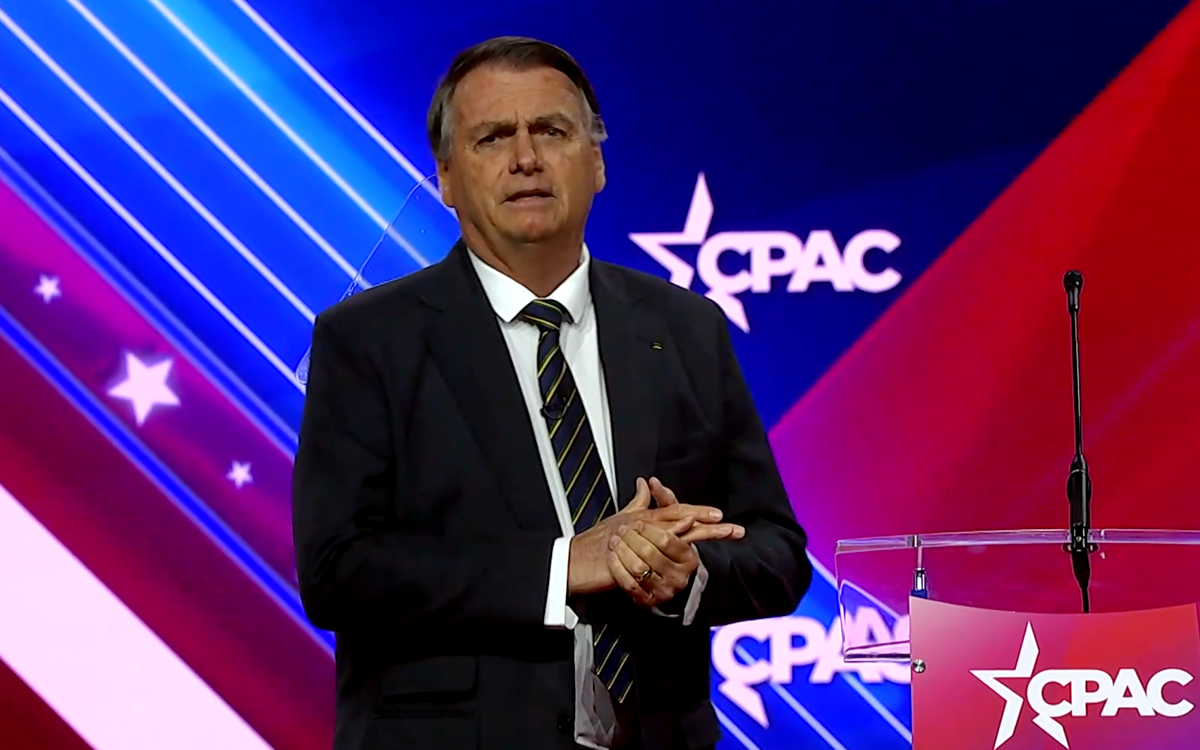
The Brazilian Supreme Court on Thursday convicted former President Jair Bolsonaro on charges that he tried to overturn the results of the country’s 2022 election.
The New York Times notes four of the five justices who heard the case voted to convict Bolsonaro and seven others implicated in the plot. The Supreme Court sentenced Bolsonaro to 27 years in prison.
Bolsonaro, a right-wing former Brazilian Army captain who represented Rio de Janeiro in Congress for nearly three decades, became the country’s president in 2018. Bolsonaro, among other things, faced sharp criticism over his rhetoric against LGBTQ Brazilians, women, and other groups.
Luiz Inácio Lula da Silva, a member of the leftist Worker’s Party who was Brazil’s president from 2003-2010, in 2022 defeated Bolsonaro in the presidential election’s second round.


Da Silva took office on Jan. 1, 2023. Bolsonaro did not attend the inauguration.
Thousands of Bolsonaro supporters a week later stormed Congress, the presidential palace, and the Supreme Court. LGBTQ activists are among those who condemned what they described as an attempted coup.
Brazil’s Superior Electoral Court in June 2023 banned Bolsonaro from running for president until 2030.
“Papuda is waiting for you, Bolsonaro,” said transgender Congresswoman Erika Hilton on X, referring to the Papuda Penitentiary Center in the Federal District in which Brasília, the country’s capital, is located.
🚨 BOLSONARO, A PAPUDA TE ESPERA!
A Primeira Turma do Supremo Tribunal Federal acaba de definir a pena total de 27 anos e 3 meses de reclusão em regime FECHADO ao condenado Jair Bolsonaro.
Bolsonaro e seus aliados foram condenados pelos crimes de tentativa de golpe de Estado,… pic.twitter.com/5yzin5kzRb
— ERIKA HILTON (@ErikakHilton) September 11, 2025
The Trump-Vance administration last month imposed tariffs against Brazil in response to the Bolsonaro trial. The White House also sanctioned Supreme Court Justice Alexandre de Moraes, who oversaw the proceedings.
Secretary of State Marco Rubio on Thursday said on X the U.S. “will respond accordingly to this witch hunt.”
“The political persecutions by sanctioned human rights abuser Alexandre de Moraes continue, as he and others on Brazil’s supreme court have unjustly ruled to imprison former President Jair Bolsonaro,” said Rubio.



Brazil
US official protested at 2026 International AIDS Conference
White House funding cuts have adversely impacted global HIV/AIDS fight
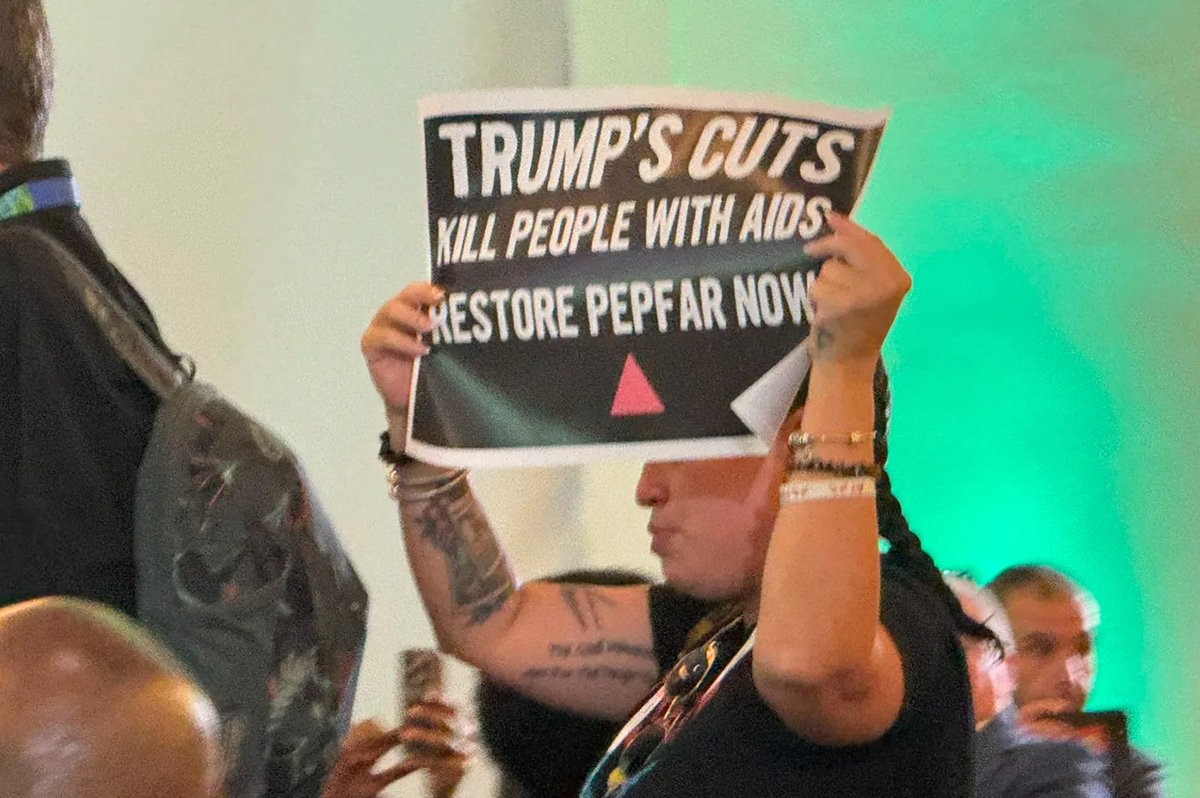
HIV/AIDS activists on Sunday protested a Trump-Vance administration official at the 2026 International AIDS Conference in Rio de Janeiro.
Health GAP Executive Director Asia Russell and others disrupted U.S. Global AIDS Coordinator Jeff Graham, who is leading the Trump-Vance administration’s AIDS 2026 delegation, as he spoke. They were protesting the Trump-Vance administration’s cuts to U.S. foreign aid that they maintain have had a devasting impact on the global HIV/AIDS fight.
“The U.S. government has stolen HIV treatment from 77,163 HIV positive children, slashed PrEP enrollment by 42 percent, closed 1,700 PEPFAR HIV treatment sites, decimated programs led by and for key populations, implementers report slashing condom programming by 93 percent, and so much more,” said Russell in a Bluesky post that contained pictures of her and other activists on stage at AIDS 2026.
The US government has stolen HIV treatment from 77,163 HIV positive children, slashed PrEP enrolment by 42%, closed 1700 PEPFAR HIV treatment sites, decimated programs led by and for key populations, implementers report slashing condom programming by 93% and so much more
— Asia Russell (@asia-ilse.bsky.social) July 26, 2026 at 2:26 PM
Secretary of State Marco Rubio shortly after the Trump-Vance administration took office issued a waiver that allowed PEPFAR and other “life-saving humanitarian assistance” programs to continue to operate during a freeze on nearly all U.S. foreign aid spending. HIV/AIDS service providers around the world with whom the Washington Blade has spoken say PEPFAR cuts and the loss of funding from the U.S. Agency for International Development, which officially closed on July 1, 2025, has severely impacted their work.
The International AIDS Society in a press release it issued last week noted PEPFAR “has saved more than 26 million lives” since President George W. Bush implemented it in 2003, “and changed the trajectory of the HIV pandemic.” The group also said PEPFAR “was a a success under the first Trump administration, with major progress toward the 95-95-95 goals.”
The UNAIDS’s 95-95-95 goals are 95 percent of people with HIV knowing their status, 95 percent of people with HIV having access to antiretroviral therapy, and 95 percent of those receiving ART having suppressed viral loads by 2030.
“Since the start of the second Trump administration, however, it has undergone major disruptions,” added the International AIDS Society.
“No one has to accept being lied to by this administration, particularly not the scientists and communities and activists who know the best what is at stake and what is actually happening,” said Russell on Bluesky.
many many people stood up and applauded during our protest, and thanked us afterward.
No one has to accept being lied to by this administration, particularly not the scientists and communities and activists who know the best what is at stake and what is actually happening
— Asia Russell (@asia-ilse.bsky.social) July 26, 2026 at 2:45 PM
AIDS 2026 will end on Friday.
Brazil
2026 International AIDS Conference to take place in Rio
US funding cuts have significantly impacted global HIV/AIDS fight
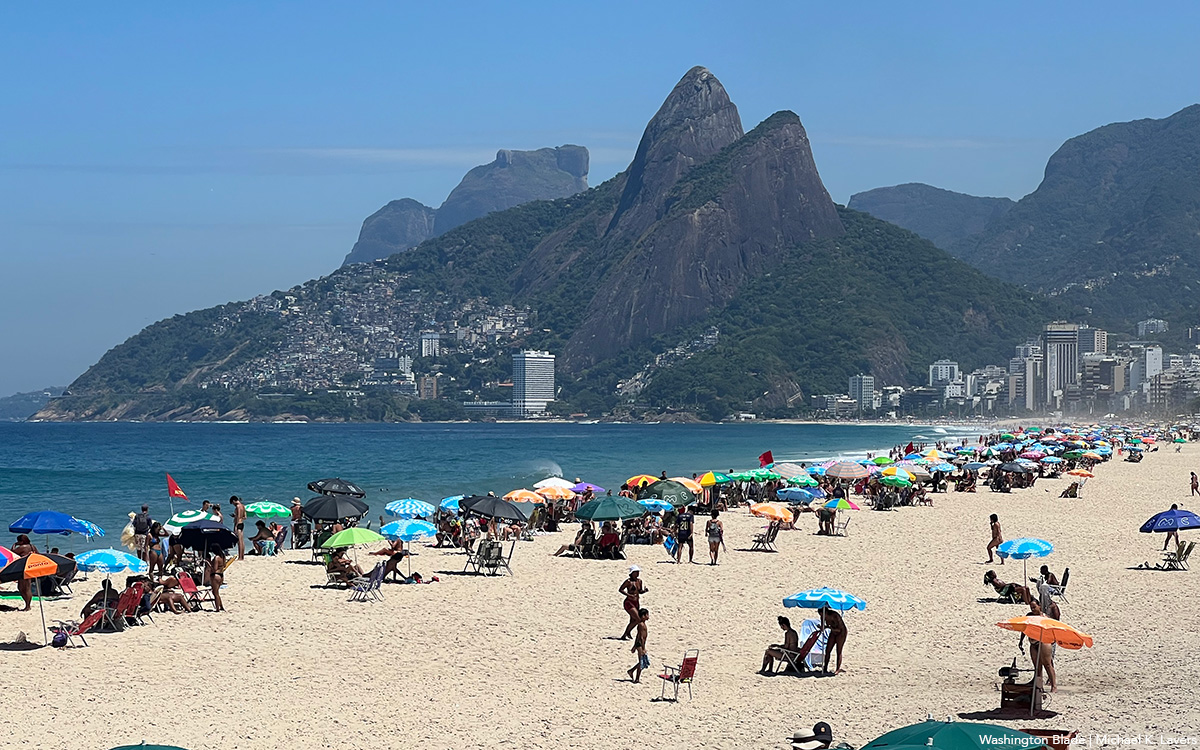
The 2026 International AIDS Conference will take place next week in Rio de Janeiro.
Francisco Ruiz, the former director of the White House Office of National AIDS Policy, and UNAIDS Executive Director Winnie Byanyima are among those scheduled to speak at the conference that will take place in the Brazilian city from July 26-31. Other scheduled speakers include Spanish Health Secretary Javier Padilla, World Health Organization Director-General Tedros Adhanom Ghebreyesus, South African Deputy Health Minister Mathume Joseph “Joe” Phaahla, and Alexus D’Marco of the United Caribbean Trans Network.
The International AIDS Society-organized AIDS 2026’s theme is “Rethink. Rebuild. Rise.”
AIDS 2026 will take place against the backdrop of U.S. funding cuts that have significantly impacted the global HIV/AIDS fight.
Secretary of State Marco Rubio shortly after the Trump-Vance administration took office issued a waiver that allowed PEPFAR and other “life-saving humanitarian assistance” programs to continue to operate during a freeze on nearly all U.S. foreign aid spending. HIV/AIDS service providers around the world with whom the Washington Blade has spoken say PEPFAR cuts and the loss of funding from the U.S. Agency for International Development, which officially closed on July 1, 2025, has severely impacted their work.
The International AIDS Society in a press release it issued on Tuesday noted PEPFAR “has saved more than 26 million lives” since President George W. Bush implemented it in 2003, “and changed the trajectory of the HIV pandemic.”
“PEPFAR was a success under the first Trump administration, with major progress toward the 95-95-95 goals,” it said.
The UNAIDS’s 95-95-95 goals are 95 percent of people with HIV knowing their status, 95 percent of people with HIV having access to antiretroviral therapy, and 95 percent of those receiving ART having suppressed viral loads by 2030.
“Since the start of the second Trump administration, however, it has undergone major disruptions,” added the International AIDS Society.
Eswatini is among the African countries that have received doses of lenacapavir, a groundbreaking HIV prevention drug that users inject twice a year, through PEPFAR since the Trump-Vance administration took office.
The White House last month announced it will end PEPFAR funding for South Africa.
President Ronald Reagan in 1985 implemented the global gag rule, also known as the “Mexico City” policy, that banned U.S. foreign aid for groups that support abortion and/or offer abortion-related services. The Trump-Vance administration earlier this year expanded the prohibition to include groups that promote “gender ideology” and support gender-affirming care and diversity, equity, and inclusion programs.
The International AIDS Society in its press release notes 52 percent of “all implementing partners had at least once terminated award,” while 77 percent of them “had been asked to restrict their work to comply with an additional U.S. policy.” The International AIDS Society notes 1,010 public health facilities, 325 “access points” and 126 “drop-in centers” around the world have closed because of U.S. funding cuts.
“Science is moving fast, giving us more powerful HIV prevention and treatment tools. But these advances cannot save lives if they never reach the people who need them,” said International AIDS Society President Beatriz Grinsztejn, who co-chairs AIDS 2026 and is the director of Rio de Janeiro’s Evandro Chagas National Institute of Infection Diseases’ HIV/AIDS Clinical Research Unit. “That requires robust, stable financing and steadfast political commitment.”
Brazil
Trailblazing trans Brazilian lawmaker refuses to set foot in Trump’s America
Erika Hilton says US president’s rhetoric fuels global wave of transphobic violence

Erika Hilton, the first Black transgender woman elected to the Brazilian Congress, in April 2025 prepared to speak at the annual Brazil Conference at Harvard University and the Massachusetts Institute of Technology in Cambridge, Mass.
As part of her official diplomatic duties, Hilton required a diplomatic visa to enter the U.S. However, the U.S. Embassy in Brasília issued the document with a glaring discrepancy: the congresswoman’s gender was listed as “male,” directly contradicting her official Brazilian identification, which legally recognizes her gender as “female.”
Hilton in response canceled her participation in the conference and filed a formal report with the United Nations, characterizing the incident as a violation of the Brazilian state’s diplomatic prerogatives and an act of institutional transphobia. The Brazilian Foreign Ministry last month issued a new diplomatic passport to the congresswoman in an act of symbolic reparation, a move intended to reaffirm her official status and legal identity in the wake of the U.S. embassy’s actions.
Despite the restorative gesture from the Brazilian government, Hilton told the Washington Blade that she has no intention of entering the U.S. in the near future — at least not while President Donald Trump remains in the White House.
“I am afraid of what might happen to someone like me under an administration like Donald Trump’s,” Hilton said. “It is an authoritarian, anti-democratic government that has no respect for international law.”
“We’ve seen, for example, how ICE (U.S. Immigration and Customs Enforcement) acted with extreme violence against people who held tourist visas and were simply visiting the country,” she added. “There is a deep-seated fear of how people are treated by immigration authorities and law enforcement. All of this is terrifying, and it has convinced me that I should not set foot in the United States as long as a fascist government is in power.”
While her travel to the U.S. remains on hold, the congresswoman has been exceptionally active in Brazil.
Hilton last month made history once again by becoming the first trans woman elected to chair the Chamber of Deputies’ Commission on the Defense of Women’s Rights. This appointment marks the first time a trans person has led a standing committee in the Brazilian Congress — the latest milestone in a career defined by its pioneering spirit.
“This is a milestone in my story. It’s a milestone for that dreamy young girl who, at 14, was forced into sex work on a street corner to survive, and who today returns to make peace with her past. But even from where I stand now, I am looking back and pointing toward those who are still out there on those street corners, to remind them: we are capable of so much more. We are capable of building something far greater than the limited spaces that hatred and discrimination have reserved for us,” she told the Blade.
Erika Hilton speaks at a rally for now President Luiz Inácio Lula da Silva in São Paulo on Oct. 5, 2022. She was elected to the Brazilian Congress two days earlier. (Washington Blade video by Michael K. Lavers)
Unlike the Congressional Caucus for Women’s Issues in the U.S., which functions primarily as a platform for advocacy and lobbying, Brazil’s Commission on the Defense of Women’s Rights wields significant institutional power. Within the Brazilian legislative system, this body holds “conclusive authority,” a specialized power that allows it to bypass the general floor of the Chamber of Deputies. If the commission approves a bill, it can be sent directly to the Senate for a vote, bypassing a full house plenary session.
Beyond this autonomy, the commission possesses what is effectively a pocket veto: if it rejects a proposal on constitutional grounds or deems it detrimental to women’s protections, the bill is shelved immediately. This powerful committee has been the primary vehicle for landmark legislation, including the Equal Pay Act (Law 14,611/23) and critical laws targeting the political harassment of women.
Defining womanhood beyond biology
Hilton emphasizes that her election as chair of the Women’s Rights Commission was no easy feat, but a grueling struggle. The battle began within her own party, as she worked to convince colleagues that she was not only a viable candidate but an essential one.
The hostility intensified significantly following her nomination.
Far-right conservative sectors orchestrated what the congresswoman denounced as a systematic, sponsored wave of attacks that transcended social media, spilling into the very halls of Congress. The rhetoric her opponents used leaned heavily on biological determinism — a strategy that attempts to reduce womanhood to reproductive functions or genetic characteristics.
Hilton’s election on March 11 laid bare a deeply fractured Congress.
With 11 votes in her favor and 10 lawmakers casting blank ballots, the result served as an explicit form of protest. In the context of these internal elections, the blank votes did not signal indecision; rather, they represented a calculated attempt by the opposition to strip the incoming chair of her political legitimacy. It was a clear warning that Hilton will face fierce institutional resistance throughout her tenure — a reality that has already manifested during her first weeks at the helm of the commission.
Hilton in her inaugural address promised an inclusive leadership.
“Here we will address the issues facing poor women, Black women, trans women, cis women, mothers, and breastfeeding women. All of them, without exception,” she said.
However, the most resonant moment of her speech was her historic tribute to Sojourner Truth, the Black abolitionist and human rights activist who, in 1851, delivered the iconic “Ain’t I a Woman?” speech at a women’s rights convention in the U.S. Paraphrasing Truth, Hilton argues that contemporary transphobia is deeply rooted in 19th century racism.
“Truth was a cisgender woman and a mother, but in that context, her biology did not grant her legitimacy or the right to challenge the status quo of womanhood because of her race. If we broaden our perspective, we must recall the eugenicist pseudo-science that deemed Black people inferior based on skull measurements, and the brutal gynecological experiments performed on enslaved women. Those women were not considered ‘women’ by the society of that era either,” Hilton told the Blade, explaining the historical framework behind her address.
“We, as trans women and travestis, are the targets of this historical moment,” she added. “I invoked Truth’s words to remind everyone that we are all victims of the same systemic oppression and the same denial of our right to our own identity — this did not start with us. Yesterday, she was targeted because of the color of her skin; today, I am targeted because of my body’s anatomy.”
Hilton concluded her inaugural address by reaffirming that her chairmanship will bring visibility to the identities that the commission has historically neglected. She emphasized that the trans struggle is a matter of survival in a country that leads the world in rates of violence against this community.
“We no longer accept being rendered invisible; we no longer accept having our identities violated. We refuse to live in a country that leads the world in killing us, by shooting us in the face, ripping out our hearts, and dragging us through the streets,” she declared.

Since Hilton became chair, committee sessions have been marked by an atmosphere of turmoil and legislative gridlock — a dire situation for a country that, over the past year, has set records for femicides. In Brazil, femicide is a specific legal classification for the murder of women motivated by gender, designed to ensure harsher criminal penalties.
Opposition lawmakers, who rarely attended commission sessions before Hilton’s election, have begun showing up en masse to coordinate attacks against her, prioritizing obstructionism over the urgent need to address gender-based violence.
Tensions reached a fever pitch on April 8 when right-wing Congresswoman Rosana Valle threatened Hilton by invoking one of the country’s most significant legal provisions: the Maria da Penha Law. Recognized by the United Nations as one of the most progressive pieces of legislation in the world, the statute was designed specifically to protect women from domestic and family violence.
In a move that Hilton described as “a mockery,” Valle stated that she would invoke the law against the committee chair herself if Hilton were ever to confront her, claiming that her colleague possessed “the strength of a man.”
“At the end of the day, their goal is to prevent me from delivering results. They work to stall the agenda so they can later claim, ‘Look, she didn’t do anything for women; she didn’t discuss anything relevant.’ It is not a lack of will on my part; it is a coordinated effort to block progress. But I am already developing strategies to overcome this roadblock. We are going to move forward and get the projects that really matter off the ground,” Hilton told the Blade.
The MAGA playbook in Brazil
Transphobia is nothing new in Brazil.
For years, the country has consistently ranked as the deadliest in the world for trans people; in 2024, according to the National Association of Travestis and Transsexuals (ANTRA), 122 fatalities were recorded. However, the vitriol appearing on social media following Hilton’s election as chair of the women’s commission is strikingly familiar. The arguments and tactics being deployed in Brazil are mirror images of the far-right playbook currently being used in the U.S.
Brazilian lawmakers have deliberately adopted strategies from the “culture wars” that fuel the MAGA movement. This includes stoking moral panic over bathroom access, pathologizing gender identities, and attempting to bar transgender women from competitive sports.
For Hilton, Trump is the catalyst.
“When a government with the reach and power of the United States uses state institutions to roll back rights, it creates a ripple effect that fuels violence worldwide. It feels as if our historic achievements are being systematically dismantled,” said Hilton.
“Since the day after the inauguration, the Trump administration has signed executive orders denying basic rights and issued official statements that dehumanize the transgender community, branding us as ‘enemies of society,’” she added. “The U.S. government legitimizes, incites, and encourages the hatred directed at a group that is already marginalized. In doing so, it fuels that hatred further, as it takes such rhetoric out of the shadows of anonymity and places it in the mouth of the president of a global superpower.”
Preserving hard-won rights
Brazilians in October will head to the polls for general elections, a high-stakes cycle that will decide the presidency and the makeup of the legislature.
Hilton predicts an election season marked by escalating violence and targeted attacks against transgender people. She also notes the current global climate demands an even greater mobilization to defend the hard-won rights secured by the LGBTQ community.
“The situation is too volatile and turbulent for us to find even a glimmer of opportunity to establish new rights,” Hilton told the Blade. “For now, we must focus on safeguarding our existing protections so that, further down the road, we have the chance to secure new victories. History is cyclical. First comes a great wave of violence, repression, and attack. But following that, come the waves of victory.”
Hilton, meanwhile, will remain on the front lines of this battlefield, stepping into a spotlight that she knows brings less glory than it does pain and violence. But that does not seem to weigh on her.
“In a sense, life’s cruelty has been kind to me,” Hilton reflects. “By forcing me to experience that cruelty when I was still a child, it was kind enough to teach me how to survive it. I am immune now, and therefore, I am prepared to face these obstacles.”

For lesbian victims of domestic violence, competent care is scare

UN human rights chief sounds alarm over ‘comprehensive onslaught’ against LGBTQ rights

White House press pool pushes back after Trump bars three outlets

PHOTOS: Shenandoah Valley Pride

Long-time DignityUSA executive director announces retirement

Jeremy Moss looks to bring LGBTQ advocacy from Lansing to Capitol Hill

Republican challenger misgenders McBride during forum, forced to leave

Queer mega stars coming to D.C. this fall

Activists protest outside Turkish Embassy in D.C.

A roundup of fall events not to be missed
-

 Congress5 days ago
Jeremy Moss looks to bring LGBTQ advocacy from Lansing to Capitol Hill
-
Delaware4 days ago
Republican challenger misgenders McBride during forum, forced to leave
-
Music & Concerts4 days ago
Queer mega stars coming to D.C. this fall
-
Turkey4 days ago
Activists protest outside Turkish Embassy in D.C.