Opinions
Why we need to recognize and celebrate Lesbian Day of Visibility
Fighting erasure inside and outside of the LGBTQ community
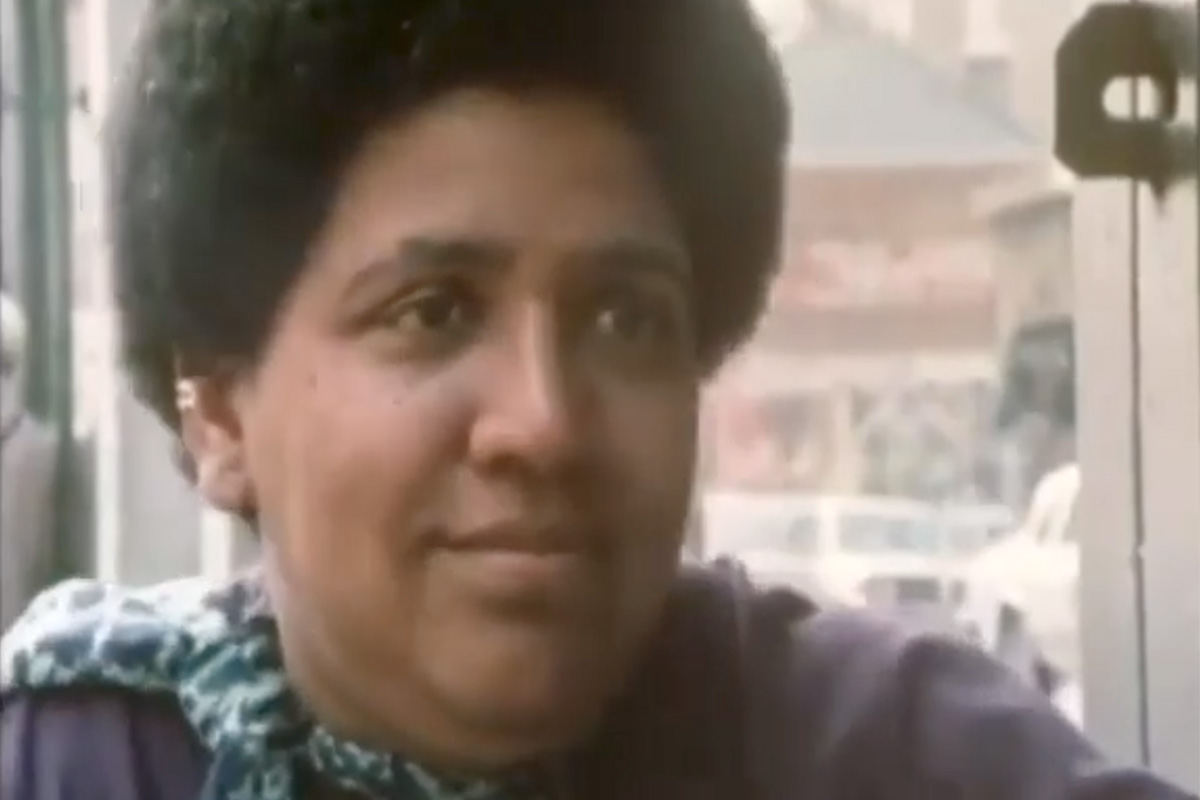
Sunday, April 26 is Lesbian Visibility Day. It concludes Lesbian Visibility Week that started this past Monday. Originally founded back in 2008 by the National Coalition for LGBT Health — and separately by a group of American lesbian activists who ran a social media campaign called “I am a Lesbian” that same year — Lesbian Visibility Day fights lesbophobia, or hatred, discrimination, and violence toward lesbians, and the erasure of lesbians inside and outside of the LGBTQ community.
Amid the rise of anti-LGBTQ and reproductive healthcare legislation and court decisions, there has never been a better time to reflect on the intersectionality of fighting for queer people’s and women’s rights and recognizing the queer women who were integral in the feminist movement that made America what it is today.
From the very beginning, lesbians have been critical to American liberation movements. Lesbian and queer women were key leaders and organizers of the women’s suffrage movement, including Dr. Anna Howard Shaw, Jane Addams, Annie Tinker, Alice Dunbar-Nelson, Molly Dewson, and Sophonisba Breckinridge. Some of these women even lived in same-sex partnerships, known as “Boston marriages,” during a time when homosexuality was illegal.
Similarly, during the Second Wave Feminist movement, lesbians were key activists that fought to integrate issues of LGBTQ equality into the women’s movement.
Lesbian and queer organizers like Audre Lorde, Adrienne Rich, Barbara Smith, and Rita Mae Brown fought for intersectional activism, noting how sexism, racism, homophobia, and ableism intersect to keep women and other marginalized individuals down. But many of these lesbian activists faced backlash from the mainstream women’s movement, called a “lavender menace” that threatened the women’s movement’s progress.
Betty Friedan, then president of The National Organization for Women (NOW), first used this term in 1969 — ironically the same year as the Stonewall Riots — to refer to the danger that integrating lesbian issues into the mainstream women’s movement might pose to the success and timeliness of women’s rights. Friedan and other NOW members worried that intentionally including lesbians in NOW and its objectives would create the impression that the movement was full of misandrists and “a bunch of dykes.”
That same year, NOW removed the Daughters of Bilitis, the first American lesbian organization, from their list of sponsors for the First Congress to Unite Women in November 1969.
In response, a group of lesbian radical feminists reclaimed the term during their protest at the Second Congress to Unite Women in 1970. The group, called Radicalesbians, along with people from the Gay Liberation Front and other allied groups, burst into the Second Congress and demanded that NOW accept and intentionally include lesbians and queer women in the feminist movement. Lesbians, queer women, and allies lined the aisles of the auditorium holding signs and shouting “We are all lesbians” and “Lesbianism is a women’s liberation plot.”
As Karla Jay, another member of the Lavender Menace who stood up in the audience, said, “Yes, yes, sisters! I’m tired of being in the closet because of the women’s movement.”
Not only was this moment a critical challenge of the movement’s tendency to foreground white, straight women’s experiences and rights, and was applauded by feminists of color who routinely felt their voices remained unheard and experience unrepresented in the movement, but it also invited members of the feminist movement to confront their own lesbophobia. The rest of the Second Congress to Unite Women was replaced by workshops on issues lesbian women are facing and a dance hosted by the Gay Liberation Front at the Church of the Holy Apostles.
At the end of the conference, members of the Lavender Menaces shared the resolutions that they and NOW members developed in those two days of workshops to the leaders of NOW, and by 1971, NOW passed a resolution to support lesbians. However, Friedan did not acknowledge the critical contributions of lesbian women in the feminist movement until six years later at the 1977 National Women’s Conference.
Many have pointed out how Friedan and other feminists’ fear about and exclusion of lesbian and queer women in their movement is deeply connected to present opposition against including trans women in modern feminist circles. Often called TERFS or Trans-Exclusionary Radical Feminists, feminists prioritizing womanhood based solely on sex assigned at birth perpetuate the same gender policing of women’s spaces that Friedan and others did over 50 years earlier — this time, excluding not just trans women but also intersex women and denying how transphobia is a critical feminist issue. Black cis women are especially vulnerable to transphobic violence.
Never has it been clearer that women’s liberation is lesbians’ liberation is BIPOC women’s liberation is trans women’s liberation. In fact, the fourth and fifth wave feminist movements that first emerged in the early 2000s strive to re-center the movement on collective, intersectional action rather than individual empowerment. Some feminists have even joined the trans-led Gender Liberation Movement, founded by Raquel Willis and Eliel Cruz in 2024, that fights for bodily autonomy and pushes for organizing and policy that frees all people from gendered expectations.
Lesbophobia remains alive and well
Protecting lesbian, bisexual, and queer women’s rights has never been more timely because lesbophobia is not a thing of the past. Recent backlash to Netflix announcing that the next season of Bridgerton will feature a sapphic storyline makes it clear that lesbophobia is alive and well, even as stories featuring bisexual and gay men are receiving critical and fan praise. In fact, television shows featuring lesbian and queer women were significantly cut. In 2022, more than two-thirds of all cancelled LGBTQ shows featured queer women. Lesbophobia is alive and well sadly, along with the fetishization of lesbian and queer women online.
And just how Friedan and other NOW leaders’ fears around lesbians resonate with current TERF action against trans women, the “Lavender Scare” or systematic firing of LGBTQ employees during the McCarthy Era is making a comeback. Many of the people who were fired by the federal government during this time are still alive and have never been given an apology for how they were treated and discarded by the federal government.
The current administration’s attempts to terminate anyone working in Diversity, Equity, and Inclusion initiatives, disband LGBTQ employee resource groups, and earlier this month, requesting access to the medical records of millions of federal workers, retirees, and their family members, recall another history of excluding LGBTQ people.
As CNN reported earlier this month, a notice that was sent to insurers that offer Federal Employees Health Benefits of Postal Service Health Benefits plans this past December asks them to provide “service and cost data,” which the Office of Personnel Management (OPM) argues will be used to ensure “competitive, quality, and affordable plans.”
Michael Martinez, senior counsel at Democracy Forward, told CNN earlier this month that OPM has given no insight into how they would use and protect this information, and warns that it could be used to target people who have sought or had abortions or those who have had or are inquiring about gender affirming care, again tying together trans liberation with women’s liberation and the protection of bodily autonomy.
So as we celebrate Lesbian Visibility Week, it is critical to acknowledge how lesbian women calling for intersectionality (along with Black, Indigenous, and Latina women who have done this work for centuries), fundamentally changed the trajectory of the feminist movement —and how their call for intersectionality is still timely and important.
Emma Cieslik is a museum worker and public historian.



Opinions
Black Educated Lesbians: A movement rooted in community
Organization’s annual conference is part of a much larger mission
When people hear the word “conference,” they often imagine a weekend event that begins on Friday and ends on Sunday. For Black Educated Lesbians (BEL), our annual conference is only one part of a much larger mission.
BEL was founded because Black lesbians deserve spaces intentionally created with us in mind. Too often, we are overlooked in conversations about health, leadership, philanthropy, education, and community. We exist at the intersection of multiple identities, yet organizations and institutions frequently assume our needs are being met by broader groups. Our lived experiences tell a different story.
BEL is a national nonprofit organization dedicated to creating opportunities for Black lesbians and Black queer women through leadership development, wellness programming, research, education, and community building. While our conference has become one of the few events in the country centered specifically on Black lesbians, our work continues year-round.
Throughout the year, BEL hosts virtual wellness sessions, leadership development opportunities, financial education workshops, community discussions, and mentorship programs designed to help our members thrive personally and professionally. We are also investing in the next generation through our EmpowerHER initiative, connecting Black queer youth with mentors, resources, and leadership opportunities.
Research is another critical part of our work. We are committed to ensuring Black lesbian voices are included in conversations about healthcare, mental health, economic opportunity, and overall well-being. Data drives policy, funding, and services. If our experiences are absent from the research, our needs often remain invisible.
Our annual conference, taking place Sept. 18–20 in Hapeville, Ga., brings this mission to life. Attendees will participate in conversations about physical and mental health, healthy relationships, financial literacy, entrepreneurship, leadership, aging, women’s health, and sexual wellness. The conference also creates opportunities to build meaningful relationships, support Black-owned businesses, and connect with professionals and organizations that understand our community.
Creating spaces like this is not easy. As a small nonprofit, every workshop, meal, scholarship, and resource requires fundraising, partnerships, and countless volunteer hours. Yet we continue because our community deserves spaces where they can simply exist, learn, heal, and grow without explanation.
What makes BEL unique is not simply that we serve Black lesbians. It is that Black lesbians lead every aspect of our organization. We understand the importance of creating programs that reflect our lived experiences rather than asking our community to fit into spaces never designed for them.
Community is not built during moments of crisis. It is built through consistent investment, authentic relationships, and showing up year after year. That is the work BEL is committed to doing.
Whether someone joins us as an attendee, sponsor, volunteer, donor, or community partner, they become part of something much larger than a conference. They become part of a movement dedicated to ensuring Black lesbians are seen, heard, valued, and supported.
As we prepare to welcome attendees from across the country this September, we invite readers to learn more about BEL, support our mission, and help us continue building spaces where Black lesbians don’t just survive, they thrive.
LaJoya Johnson is founder and executive director of Black Educated Lesbians, a national nonprofit dedicated to advancing leadership, wellness, and education for Black lesbians and Black queer women.
Opinions
I respect AOC, even though I often disagree with her
She should work toward House leadership role and skip presidential run
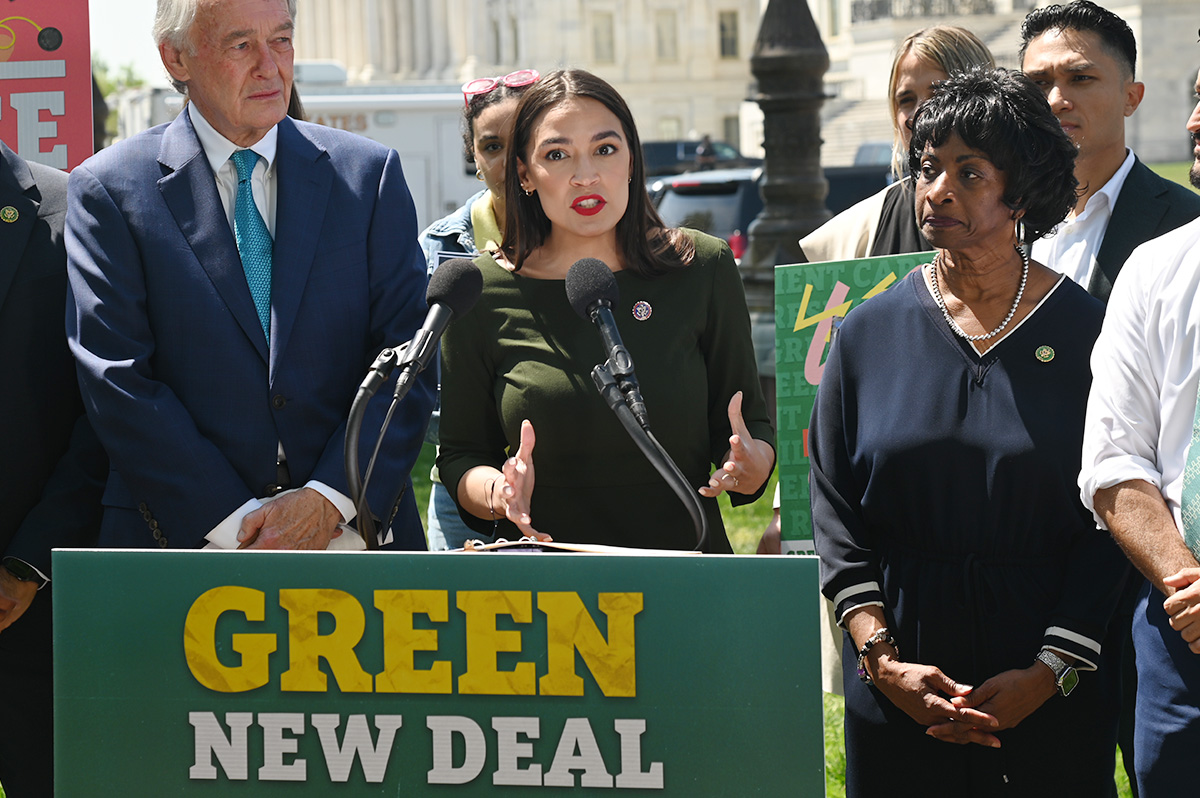
There is a column in the New York Times asking, “Is Ocasio-Cortez ready for the glass cliff?” The author thinks it’s a great idea for her to run for president. I believe it’s a bad idea for her personally, and a disastrous idea for the Democratic Party. However, that is not the only column written recently about Ocasio-Cortez, discussing her options and private life. I think it is cringeworthy what social media, and even some mainstream media, are focusing on these days.
Politicians have become fodder for what were once just stories about Hollywood, and loud showmen like the felon in the White House. Now, like the showman, those like AOC, can’t claim they aren’t asking for it by striving for the biggest online following possible. They obviously see that as a way to validate themselves; politicians use it as a way to raise money, become influencers, and get their message out.
But they also open themselves up to even more intrusion into their private lives. Those who do that also open the door for all politicians to have their private lives made public. Running for president, which the column suggests AOC should do, and which she herself has said she isn’t ruling out, is a great way to grab a headline, and leads to reporters digging to find every little fact about her. AOC is trying to get ahead of the curve by talking about a breakup, and then about harvesting her eggs — topics once considered private that should stay that way. There was once just the National Enquirer, but today every news outlet incorporates what the Enquirer did, as it makes for great clickbait.
I feel for her, thinking all this has to be public, when a single woman wants to run for higher office. We have seen married women, including Geraldine Ferraro, Sarah Palin, Hillary Clinton, and Kamala Harris, run and be subjected to dealing with questions about their husbands, their former boyfriends, and in some cases, more reporting about those things than what they stood for. Maybe for AOC, that would be a good thing, as the country is far from ready for a candidate who up until now, proudly represents the Democratic Socialists of America (DSA). Yes, she is trying to step away from them a little, but I don’t think that is possible, which is why I feel it is a disaster for her to run, both for herself, and the Democratic Party. She could decide to run for the Senate if Chuck Schumer (D-N.Y.) understands it is time for him to retire. Even that could be a difficult race. She might win a primary, which another progressive representative, Bella S. Abzug (D-N.Y.), tried and lost in 1976, if she gets a big enough New York City vote. Should she try, we would see how much change there has actually been.
Back when JFK had women in and out of the White House, Ronald Reagan got Nancy pregnant before they married, and George H.W. Bush allegedly had a mistress traveling with him, those were not the headlines. I think we were all better off. Gary Hart asked for it when he told the press to follow him, and they caught him with a woman not his wife. Again, he asked for that. Then we got to the Clinton era and the right wing, actually David Brock, got the information on Paula Jones, and it all exploded, eventually cascading down to harm Hillary. They tried to find anything they could on Jimmy Carter, George W. Bush, and Barack Obama, but couldn’t find the salacious bits they were looking for. But I bet they will find some things that sound salacious on AOC, even if they have to make them up. She appears to be a normal, highly intelligent, motivated, single woman.
Recent primaries in Michigan and Wisconsin, and general election results, will clearly impact what she decides to do. DSA candidates are not an easy sell to most Democrats, let alone the general electorate. We will find out how Dr. El-Sayed does in the general election. While I didn’t support him in the primary, I do in the general election. Those results, and looking back at other women who have run, may give AOC second thoughts about giving up working toward seniority in the House. I predict she could be much more impactful than one of her idols, Bernie Sanders, has been. He has been there for 40 years and accomplished nothing. I think AOC could accomplish a lot.
Peter Rosenstein is a longtime LGBTQ rights and Democratic Party activist.
Opinions
Will Michigan save the GOP?
We must stop fighting each other as Democrats and rid country of Trump
Last week in Michigan we saw how dramatically wrong, and misleading, political polling can be. Because of that, and the media hype, it might have made a difference in the Democratic primary for the United States Senate. Haley Stevens lost by about 16,000 votes, and the second Democrat closest to Stevens’s views, withdrew from the race, but her name was still on the ballot, and she received 61,000 votes. So, what would have happened if she had withdrawn in time to keep her name of the ballot? We will never know.
The media have been hyping the few wins the DSA, and far-left Democratic candidates, have had, to the point you might think they are winning hundreds of primaries around the country. I think they have won fewer than 15. But those 15, and the hype, could actually make a difference in the general election. They could make a difference because they clearly divided the Democratic Party, and we don’t know if it will come back together in time to rid ourselves of the control of the felon, his fascist advisers, and their sycophants in Congress, now running our country.
While strongly opposed to parts of the platform of the Democratic Socialists of America, (DSA), and those who would espouse them, I am even more opposed to the felon in the White House who has proven he has no redeeming values. The DSA platform is a mixed bag. In my view there are some frightening parts such as calling for total defunding of the police, for workers to own every business, for the abolishment of the State of Israel, telling their endorsed candidates they may not meet with any Zionist organization, and now, elimination of the United States Senate. Before you respond telling me about what is not in the platform, please just read some of it. But then I am for the parts calling for universal healthcare, a higher minimum wage, strong union support, and working toward affordable housing, and a decent life for all.
So, what do the candidates who won with the support of the DSA do between now and Nov. 3? They must be very clear which parts of the DSA platform they believe in, and tell voters clearly, how they will govern and legislate. Make clear their priorities. That is the only way we will unite Democrats in time to win the general election.
Then those who lost to them should do what Rep. Stevens did in her concession statement in the Michigan U.S. Senate primary. It was a classy statement responding to the election results. She said: “I want to congratulate Abdul El-Sayed on winning the Democratic nomination for U.S. Senate. He is a doctor, a community health official, a Rhodes Scholar, and a dedicated Michigander. I am proud to offer my support as he takes on Mike Rogers in the general election. This was a thorough and rigorous campaign that brought out the full span of views within the Democratic Party – and that is why we have primaries. I am proud to have put up my hand to serve, and prouder to continue to work together to make sure this Senate seat remains blue, that we flip the United States Senate and continue the work for Michigan. Now I hope Dr. El-Sayed will run a campaign understanding which voters he needs to appeal to in order to win, and to keep the Michigan United States Senate seat in Democratic hands. When a vote is split 50/50, which was basically the case in this race, reading the 50% who voted against you correctly, is the key to winning. Many of those voters didn’t trust Dr. El- Sayed for a multitude of reasons. But he must now convince them, even with what they didn’t like about him, he is still a better choice than the Republican candidate. This is no different than in so many races around the nation, although it might be harder for a very far-left candidate to sway more moderate voters.”
I would say to the voters of Michigan, “While I did not support Dr. El-Sayed in the primary, I would definitely vote for him in the general election. The goal is saying to the felon in the White House that we will not let you continue to destroy our country. We Democrats may speak with a host of different voices, but they should all say to the felon: you are a loser, and we will see you, your fascist government, and your sycophants in Congress, defeated.”
We must stop fighting each other as Democrats, at least long enough, to accomplish this goal.
Peter Rosenstein is a longtime LGBTQ rights and Democratic Party activist.

Black Educated Lesbians: A movement rooted in community

Hegseth uses transphobic slur while campaigning for Iowa congressman

What ‘Queer Eye for the Straight Guy’ can still teach us

I respect AOC, even though I often disagree with her

Chicago’s LGBTQ+ youth: Why their zip code still matters

PHOTOS: Nellie’s Drag Brunch

‘Maddie’s Secret’ defies campy expectations

Remembering Barbara ‘Boo’ Price, a pioneering force in women’s music

White House targets gender-affirming care funding, states fight back