District of Columbia
Aparna Raj expected to become second LGBTQ member of D.C. Council
Winner of primary would also be first Asian American to serve on body
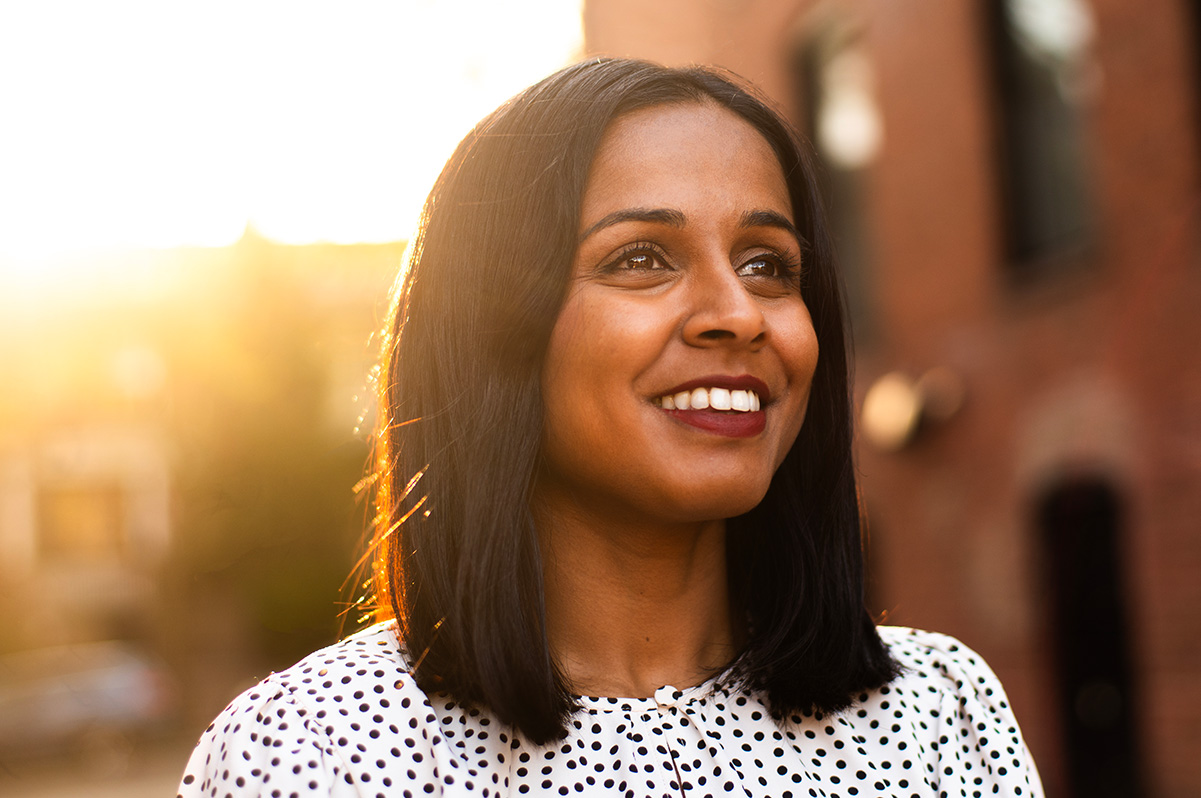
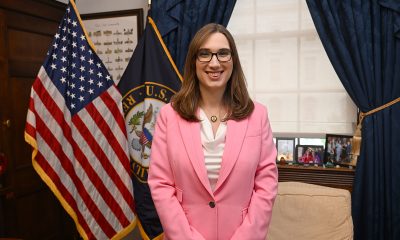
Ward 1 D.C. Council candidate Aparna Raj, who describes herself on her campaign website as a “renter, union member and queer woman of color,” emerged as the winner in the city’s June 16 Democratic primary.
She won in a five-candidate race with 52 percent of the vote in the fourth round of the vote count under the city’s newly implemented ranked choice voting system.
In a ward with an overwhelming majority of voters registered as Democrats, Raj, who identifies as bisexual, is expected to win in the November general election to become the Council’s second LGBTQ member.
She is running against two lesser-known candidates – Republican Jett James Jasper and Statehood Green Party candidate Jude Crannitch.
Her victory would mark the first time since 2015 that the Council has had two LGBTQ members. At 32, she would also become the Council’s youngest member and its first Asian-American member. She was born and raised in West Chester, Pa., in a family that came to the U.S. from India.
The current gay D.C. Council member, Zachary Parker (D-Ward 5), won the June 16 Democratic primary against two lesser-known opponents with 77.5 percent of the vote and is expected to easily win re-election in the November general election.
Gay healthcare leader Jim Graham, who for many years served as executive director of D.C.’s Whitman-Walker Clinic, served as the Ward 1 Council member from 1999 to January 2015. Graham lost his re-election bid in 2014 to incumbent D.C. Council member Brianne Nadeau (D-Ward 1), who chose not to run for re-election this year. Graham passed away in June 2017.
Gay attorney David Catania served on the Council from 1997, when he won in a special election as a Republican, until 2015 after becoming an independent and giving up his Council seat to run for mayor in 2014. He lost his mayoral bid to incumbent D.C. Mayor Muriel Bowser.
Raj, who also identifies as a democratic socialist, is among D.C. Democratic mayoral candidate Janeese Lewis George and Democratic At-Large D.C. Council candidate Oye Owolewa who are also democratic socialists and who won in the primary and are expected to win in November.
Political observers have said their primary victories and expected victories in the general election indicate many D.C. voters are seeking candidates with a perceived liberal, leftist perspective to address concerns, among other things, over the high cost of living, especially housing and rental costs.
Like nearly all candidates running for public office in D.C., those identifying as democratic socialists, especially Raj, have expressed strong support on LGBTQ issues.
Raj currently serves as communications manager for a progressive policy advocacy organization called Local Progress, which represents local elected officials throughout the country “fighting for racial and economic justice,” according to its website.
In an interview with the Washington Blade, Raj said she believes many LGBTQ D.C. residents are facing the same economic hardships as non-LGBTQ residents, and she plans to address those issues if elected.
“You know, we see it in D.C., in New York, in Philly, in Colorado, that it is getting very difficult for people to live and afford necessities like housing and childcare,” she told the Blade. “And over the past two years, where it felt like establishment Democrats on a national level were unwilling to stand with immigrants or queer and trans people, democratic socialists have been constantly fighting for everybody – for immigrants, for people of color, for queer and trans people, for women, for people who need abortions – things like that,” she said.
“I think that D.C. has done a really important and good job of trying to protect LGBTQ+ residents across D.C. in the face of the Trump administration,” Raj added.
“But I think especially with the Supreme Court decision around trans people and with just always the ongoing threat that the Trump administration could start bearing down on, like transgender affirming care and things like that, the next Council is going to have a really important task behind it to make sure that we’re trying to protect queer and trans people across D.C. as much as possible – including by making sure the Office of Human Rights has the support that they need,” she said.
Raj said the economic policies she plans to push for will help small businesses, including LGBTQ-owned businesses such as bars.
“I support making sure that workers have the stability that they need with dignified wages and with benefits,” she said. “And at the same time finding ways to cut costs for small businesses – whether exploring commercial rent stabilization, pushing back on costs of utilities, helping raise revenue by bringing back Streeteries and things like that,” she said.
The following interview has been edited for length. For the full interview, visit washingtonblade.com.
BLADE: As you may know, the LGBTQ Victory Fund, which endorsed you and gay candidate Miguel Deramo in the June 16 primary, issued a statement after the primary saying they are pleased that you will likely become the first female LGBTQ member of the D.C. Council. But with that as a backdrop, are you aware of any other news media outlet aside from the Washington Blade that have identified you as an LGBTQ candidate as you self-identify on your campaign website as a queer woman of color? We are not aware of any other media reports on your LGBT identity.
RAJ: I think – I can’t list them off – but I think other publications have included the fact that I’m bi and I consider myself queer and their outreach about it.
BLADE: With that as a backdrop, where do you see things stand now going forward to the next D.C. Council session that you are expected to be on, where do you see things stand for LGBTQ residents of Ward 1 as well as citywide?
RAJ: I think that D.C. has done a really important and good job of trying to protect LGBTQ+ residents across D.C. in the face of the Trump administration. But I think especially with the recent Supreme Court decision around trans people and with just always the ongoing threat that the Trump administration could start bearing down on, like transgender affirming care and things like that, the next Council is going to have a really important task behind it to make sure that we’re trying to protect queer and trans people across D.C as much as possible – including by making sure the Office of Human Rights has the support that they need.
Trying to invest in and supporting housing vouchers, especially for LGBTQ+ youth, who are often more faced with homelessness than other youth. And that we are supporting schools and health clinics to make sure that LGBTQ+ students and patients are able to feel safe in good institutions.
BLADE: To go back to the D.C. primary election, a single Republican candidate named Jett Jasper ran unopposed for the Ward 1 Council seat. Do you know anything about him?
RAJ: Yeah, Jett and I have been in a debate back in March with all of the Democratic primary candidates … and he and I went around a little bit. So, I’ve met him.
BLADE: One of the interesting outcomes of the June 16 D.C. Democratic primary is the victories of candidates who like you and mayoral candidate Janeese Lewis George — and at least two others — identify as democratic socialists. What message do you see that as providing the city?
RAJ: I think it is an important message that I think people see democratic socialist candidates as the candidates who will fight for them in the face of a cost-of-living crisis that is driving people out of D.C. and in the face of the Trump administration that’s threatening our community.
BLADE: What response do you have to those, including some in the business community, who have said the policies proposed by democratic socialist candidates would hurt the city’s economy and create budget problems that can harm a lot of people, including the LGBTQ community?
RAJ: I would say that the economic crisis that we’re seeing right now is a result of a combination of conservative, neoliberal economic policies at the local level and of the fascists in office at the federal level. You know, we are in tough economic times, not because of democratic socialism but because of rigid capitalism right now.
And I think we learned from the ‘80s and Reagan that trickle-down economics doesn’t work. And so, when people are suffering, when people are getting laid off, when people are getting health care funding cut, what we need to do at the local level is invest in people and make sure that our recovery is centered on making sure that people have housing, making sure that people have health care, making sure people have food assistance, instead of just giving money to the top and hoping that it tickles down.
BLADE: The city’s chief financial officer has said the city may be facing a significant budget deficit in the next fiscal year possibly because of congressional action in cutting the city’s budget. What are your thoughts on that?
RAJ: I think there are all these options ahead of us. I think what this past year has shown us is that D.C. needs to have a much more proactive relationship on the Hill. And especially next year we will likely be coming into a Democratic Congress. We need to be advocating for ourselves in building those relationships with Congress members, with senators. I think we took a very localized approach prior to the Trump administration.
And that put us on the defense with a lot of the budget cuts and things they were bringing to us. And now is the time when we need to proactively advocate for D.C. and advocate for eventually statehood so that we have totally the economy that we need. And in the meantime, there are a number of revenue raisers available to us that we have not been exploring. They are mainly trying to implement a business activity tax that would affect specifically large businesses that don’t pay franchise tax in D.C.
They are exploring a capital gains tax. Trying to put or institute a wealth tax, trying to put in a tax like in New York where people who have secondary residences here would be taxed on those secondary residences. And so, we have options available to us. And I think it’s a matter of if we have the political will or whether our Council is willing to explore those in the next year or two.
BLADE: One issue raised by the local LGBTQ group GLAA D.C. is whether candidates for the D.C. Council would support decriminalizing sex work among consenting adults. Did you address that in their candidate questionnaire?
RAJ: Yes, I do support decriminalizing sex work. I think there are a number of reasons. Sex work disproportionately impacts transgender women, especially trans women of color. And it leads to health and safety issues when we criminalize sex work. People can’t seek the healthcare that they need. People can’t report violence that they are facing. And so, I support decriminalizing sex work as part of a crime reduction in a way to allow people to be able to keep themselves safe.
BLADE: Regarding economic issues and local businesses, we now have at least 20 gay or LGBTQ bars or nightclubs in the city. Some have said they would be negatively impacted by the so-called tip wage issue that could require them to pay a full minimum wage. What are your thoughts on that?
RAJ: My perspective is like – Ward 1 has like seven or eight LGBTQ businesses and also there are also so many small businesses in general that I want to make sure that we support. And we can both support small businesses and workers at the same time. I support making sure that workers have the stability that they need with dignified wages and with benefits. And at the same time finding ways to cut costs for small businesses – whether exploring commercial rent stabilization, pushing back on costs of utilities, helping raise revenue by bringing back Streeteries and things like that.
BLADE: One of the Ward 1 LGBTQ business owners, David Perruzza, owner of the LGBTQ bars Pitchers and A League of Her Own, has said he has been negatively impacted by high rents.
RAJ: Yeah, exactly. So, I think rent is one of the biggest costs that small businesses face. And within D.C. there are a lot of vacant store fronts, and commercial rent stabilization is a very new idea. And landlords look at it differently. But I think it is a way we should look at supporting small businesses.
BLADE: Do you have any thoughts on how our new mayor should address and continue the Mayor’s Office of LGBTQ Affairs, which has been in place now for 20 years? The new mayor will have to decide whether to retain or appoint a new director of that office.
RAJ: I can’t speak to those specific decisions. But I’m really excited to work with our incoming mayor, because she has been a really strong advocate for the LGBTQ+ community over the years. And I trust that she will maintain and support the Mayor’s Office of LGBTQ Affairs. I would also like to see the continued support of the expansion of a lot of the programs of that office. and especially supporting organizations and supporting a possible LGBTQ fund for services and organizations in D.C.
BLADE: Will the budget issue play a role in that?
RAJ: Yeah – but I think especially right now in the political moment we’re in with the Trump administration, to just make sure we’re celebrating the trans and queer communities and maintaining or expanding programs at that office will really be important.
BLADE: Do you have any thoughts on the criticism Mayor Bowser has received from some local activists who say she has not spoken out strongly enough against the Trump administration’s attempts to curtail D.C. home rule while her supporters argue that she has helped to discourage Trump from taking further action to curtail D.C. home rule?
RAJ: From my perspective in Ward 1, I have seen nearly a year of my neighbors getting disappeared and living in terror. And I don’t believe that that is worth any sort of hypothetical threat of what Trump might do in our trying to protect home rule. I understand wanting to be strategic. But our responsibility as elected officials is to stand up for our communities whenever they are under threat.
BLADE: Are the individuals you are referring to who disappeared and who are under threat immigrants?
RAJ: Yes.
BLADE: Is there anything else you might want to say regarding your constituents in Ward 1, particularly the LGBTQ constituents?
RAJ: I’ll just add maybe one last note. We talk about the affordability crisis and that again bears down on the queer and trans community especially. A lot of people are struggling with housing costs and utilities. A lot of queer and trans people specifically are more likely to live in poverty and not make enough in wages. And so, we are trying to tackle the cost-of-living crisis that I think impacts the LGBTQ+ community as well.

District of Columbia
Over 2,000 turn out for Hands Around the Kennedy Center protest
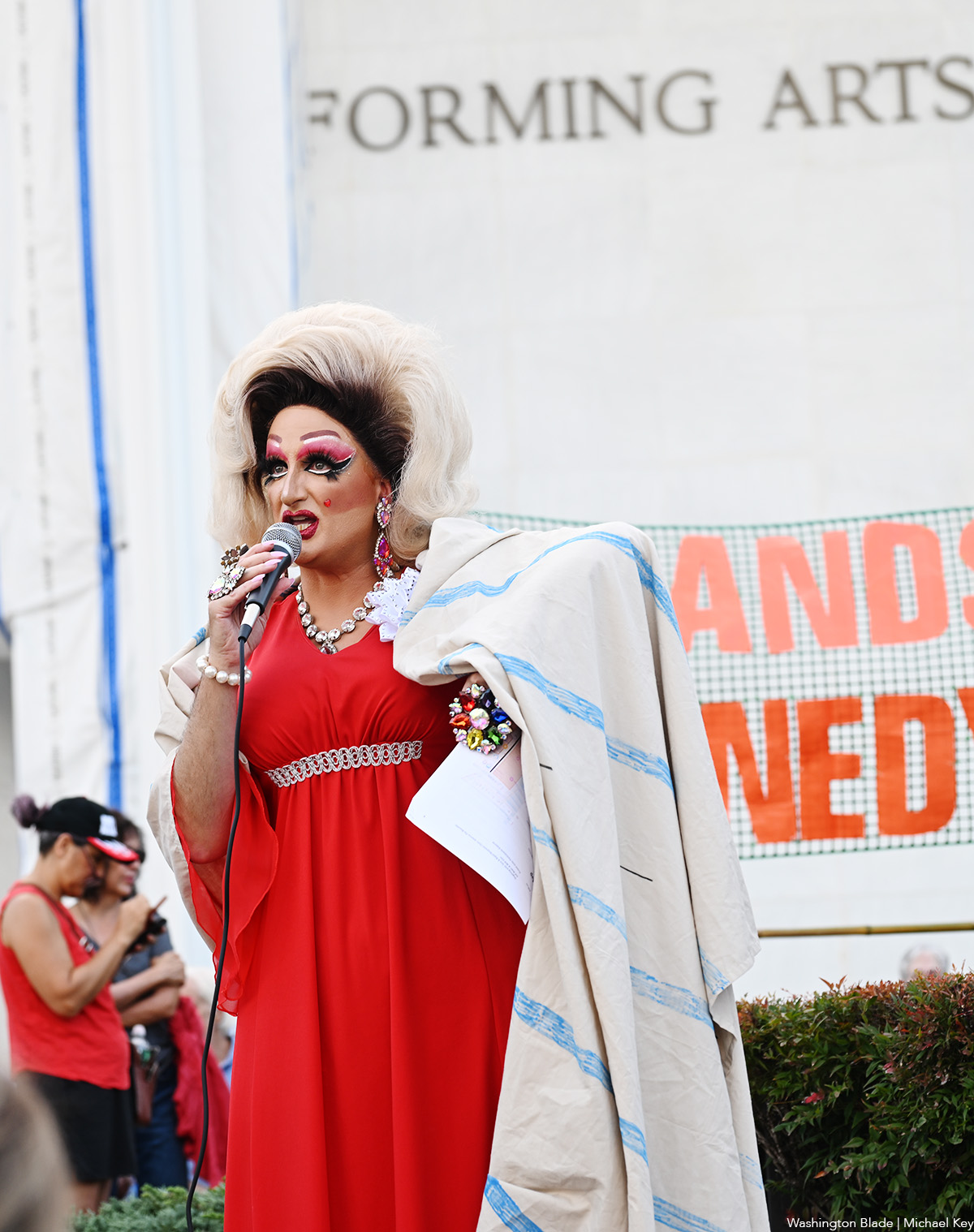
Drag performer Tara Hoot serves as MC, Gay Men’s Chorus of DC performs, attendees shout for Trump to keep ‘hands off’ Kennedy Center
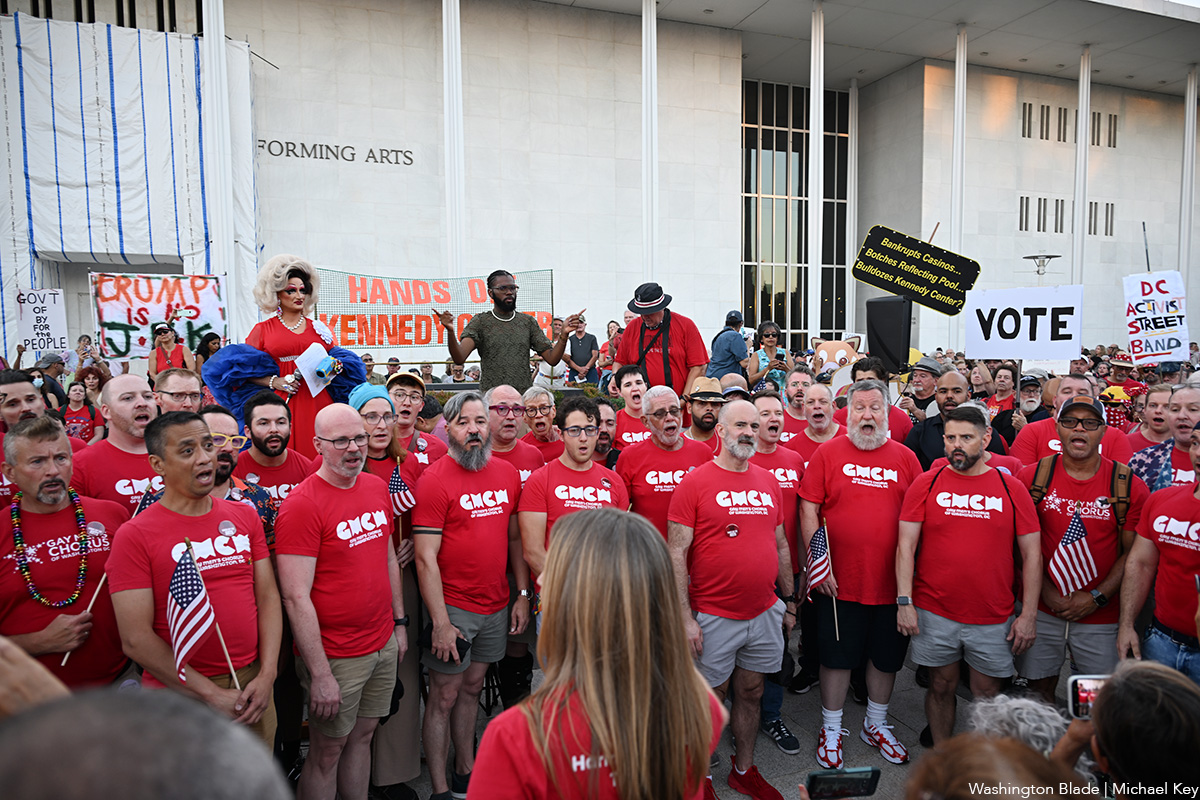
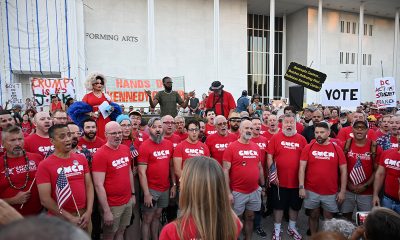
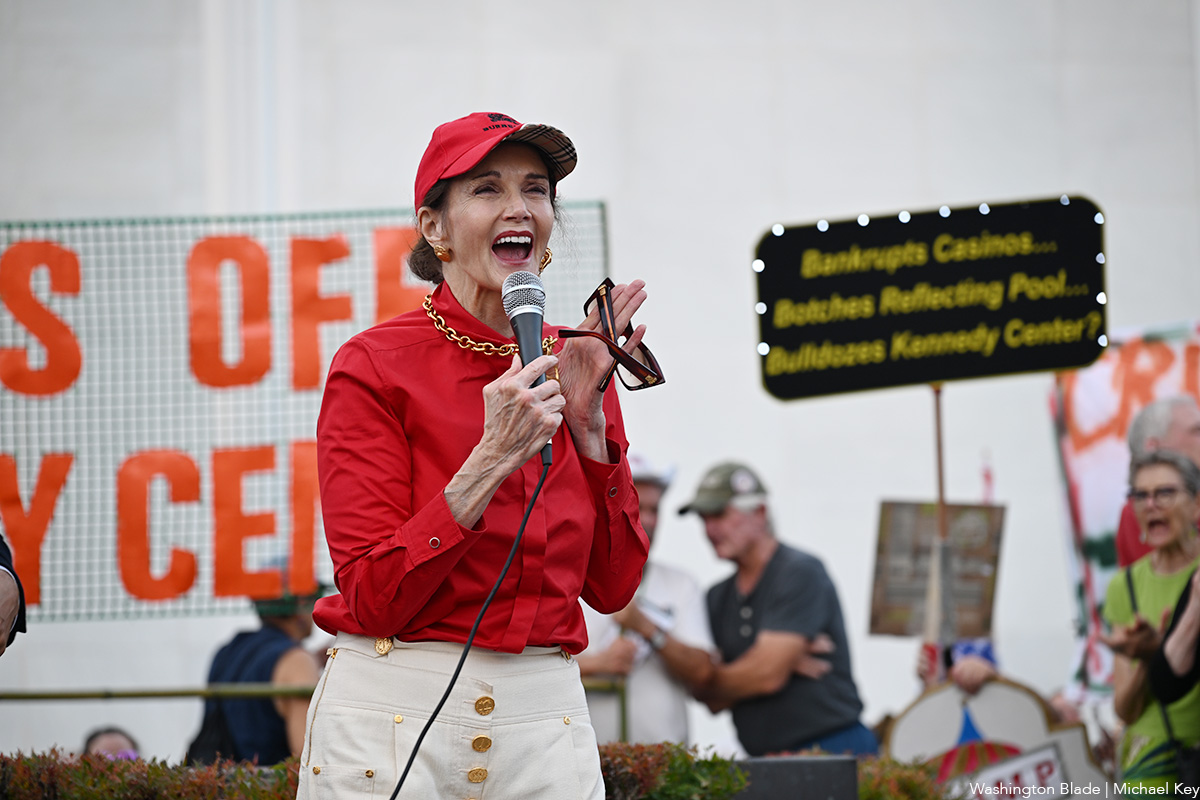
More than 2,000 supporters of the John F. Kennedy Center for the Performing Arts turned out on Sept. 18, for a rally in support of the performing arts center and a vocal protest against President Donald Trump’s threats to permanently close the center and possibly demolish it.
The event was organized by a group called Hands Off the Arts, which initially called for participants to form a “human chain” around the Kennedy Center’s main building following a rally on the plaza in front of the building.
However, due to a decision by the Trump-controlled Kennedy Center’s board of trustees to close the center earlier in the week and install fencing around part of the building, participants could only form the chain around part of the building, according to organizers.
Drag performer Tara Hoot, who co-organized the event and served as master of ceremonies for the rally preceding the “human chain,” said the large turnout could have fully surrounded the building at least twice had the fencing not prevented a full encirclement.
Among the musicians and singing groups that performed at the rally was the Gay Men’s Chorus of Washington, which, like other rally performers, had performed at the Kennedy Center in past years. They drew loud applause after singing one of their favorite songs from the Broadway musical show Ragtime, which includes the lyrics, “Will justice be demanded by 10 million men? Make them hear you. When they hear you, I’ll be near you again.”
View on Threads
Prior to their performance, Gay Men’s Chorus of Washington’s artistic director, Thea Kano, spoke at the rally, reminding participants that shortly after the Trump takeover of the center last year, Kennedy Center officials cancelled a concert the chorus was scheduled to perform there for World Pride 2025.
A Kennedy Center spokesperson said the cancellation was due to a scheduling conflict, but chorus members and LGBTQ activists believe it resulted from policies put in place by Trump and his leadership team at the Kennedy Center following Trump’s statements that he would end controversial “woke” performances that he claimed the majority of Americans disapprove of.
“Now this building sits empty in silence,” Kano told the crowd at the rally. “Let us raise our voices together and bring back the Kennedy Center as it was intended, a place where American culture could be celebrated and elevated, embracing the vibrancy with the spectrum of identify without censure and without politics,” she said.
Among the others who spoke at the rally were U.S. Rep. Don Beyer (D-Va.), U.S. Rep. Jonathan Jackson (D-Ill.), and D.C. Councilmember Robert White (D-At-Large).
Most speakers, along with LGBTQ participants in the hands-around-the-building event expressed strong opposition to Trump’s demand that the Kennedy Center name be changed from the John F. Kennedy Center for the Performing Arts to the Donald J. Trump and the John F. Kennedy Center for the Performing Arts.
At Trump’s request, his appointed board initially made that name change and placed Trump’s name on the front wall of the building along with the Kennedy name. But following legal action taken by opponents who pointed out that Congress must approve such a name change, a judge ordered the removal of Trump’s name from the building. Trump has said he will take steps to reverse that order and has said he will stop plans to renovate the Kennedy Center building and possibly demolish it if his name is not restored in the Kennedy’s Center’s official name.
Throughout the Sept. 18 rally, LGBTQ participants repeatedly responded to the Trump threats by shouting, “Hands Off!”
Chris Raleigh, one of the founders of Hands Off the Arts and a lead organizer of the Sept. 18 event at the Kennedy Center who spoke at the event told the Washington Blade that more similar events are being planned and he welcomes the support the event has received from the LGBTQ community.
“The LGBTQ community was here first, and we’re following them,” he said. “They’ve been the spearhead; they’ve been the vanguard. And I’m so thankful for heroes like Tara Hoot,” he said, adding, “It’s because they know what it means and how this is a safe place – the theater – for many LGBTQ people.”
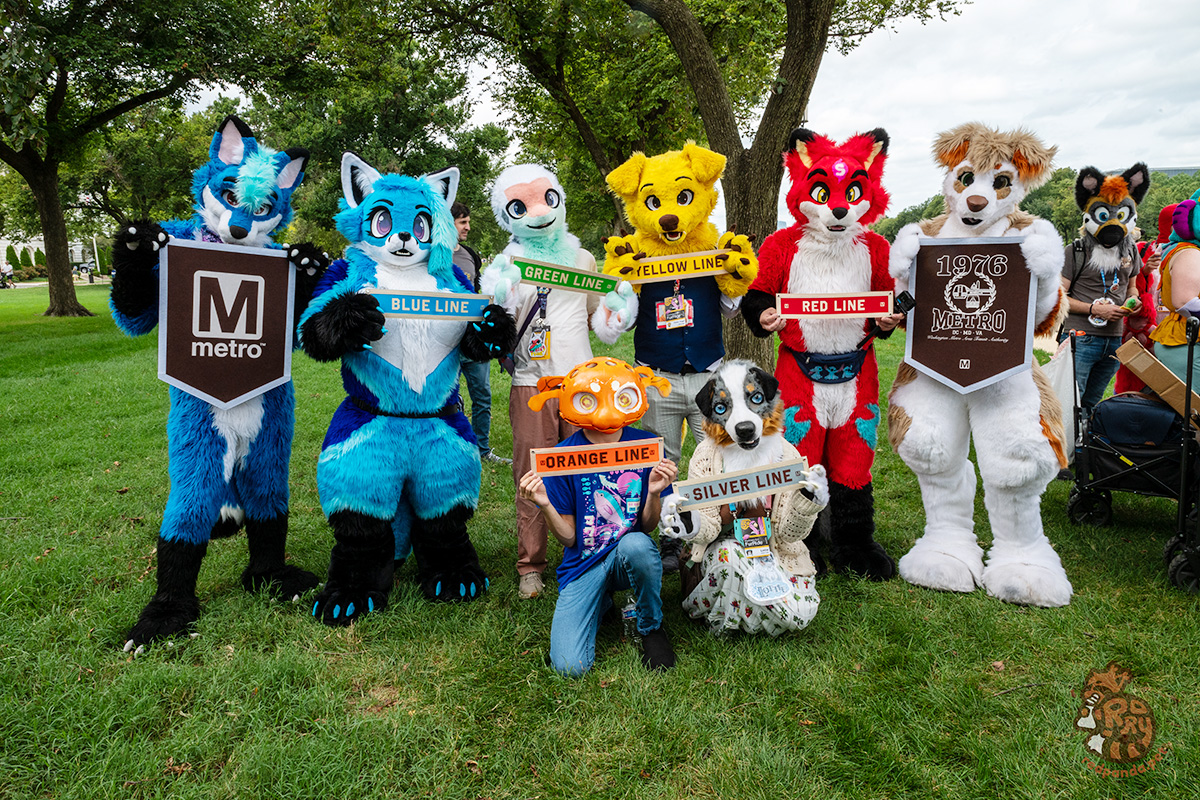
The DMV’s own furry group was on full display on the Metro on Sept. 12.
Shutterpaws is a volunteer-led 501(c)(3) non-profit organization located in Maryland.
The furry group has been doing the FurRide event since 2024 and has blown up in popularity for furries around DMV. They showcased themselves on the Silver and Blue Lines near the Smithsonian on Sept. 12.
“A lot of careful planning goes into running these events, with the goal being a seamless and enjoyable experience for everyone who attends,” says Zayre, a Shutterpaws staff member. “There’s a lot that you learn just by trial and error, and as Shutterpaws hosts more and more events, our team of event organizers continues to learn and refine our approach to keep things running smoothly and finding new ways to engage with our community.”
With a larger growth of participation in the community comes many challenges with the group, especially when it comes to the Metro rides and organizing.
“The biggest challenge that we face as organizers is keeping things fresh and finding new and engaging venues to host events,” says Zayre. “Recently we saw a lot of success hosting a meet at On Target Battlezone, an indoor NERF gun battle arena where our crew was welcome to show up and play both with and without a fur suit.”
Nevertheless, Shutterpaws receive overwhelming support from the community and partners.
“Across the DMV there are so many amazing places to host a Shutterpaws event so we can pursue our mission of helping connect fur suiters and photographers, and we’re blown away with the amount of support we’ve received from our community partners,” says Zayre.
Shutterpaws plans to do more events for anyone in the DMV who is interested.
Their next event in collaboration with DC Fur Meet will take place at Pitchers (2317 18th St., N.W.) on Saturday. Visit Shutterpaws’ website for more information.
District of Columbia
Hands Off the Arts to form ‘human chain’ around Kennedy Center
Drag performer Tara Hoot among event organizers
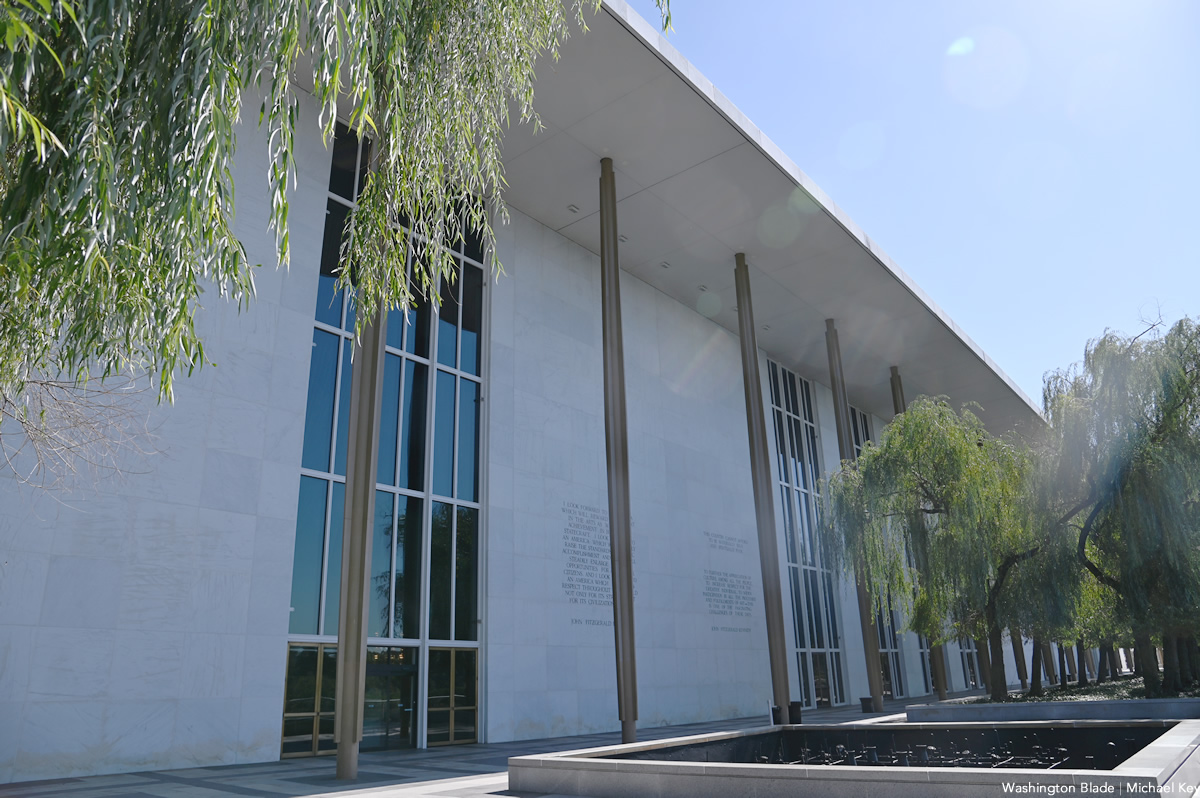
An organization called Hands Off the Arts has announced it is holding a protest on Friday, Sept. 18, in which between 400 and 800 participants are expected to create a “human chain” around the Kennedy Center to voice their strong objection to President Donald Trump’s call for possibly demolishing the Kennedy Center.
“Hands Off the Arts is organizing a rally Sept. 18 against the president’s defacing of JFK’s memorial, his removal and censorship of art, and the threat to demolish the center if he can’t remake the site in his image,” a statement released by the group says.
The statement says the event will start with a rally at 6:30 p.m. on the Kennedy Center steps and culminate with a “human chain” around the building. “There will be musical performances, testimonials from current and former employees, along with other special guest speakers,” it says
A separate announcement by the group says longtime D.C. drag performer Tara Hoot, who has performed at the Kennedy Center in past years, was among the organizers of the Sept. 18 protest.
The planned protest follows Trump’s decision last year to use his authority to replace the existing members of the Kennedy Center’s board of directors with new members loyal to him. Over the objection of longtime Kennedy Center supporters, the Trump-appointed board changed the name of the center, at Trump’s request, from the John F. Kennedy Memorial Center for the Performing Arts to the Donald J. Trump and the John F. Kennedy Center for the Performing Arts.
But following the threat of legal action by opponents who pointed out that the name change could not be legally made unless approved by Congress, the name change was cancelled, with Trump saying he would take steps to restore it later.
The Washington Post, meanwhile, reports in a Sept. 13 news story that because of negative publicity related to Trump’s actions, the Kennedy Center was facing “fiscal collapse” and possible bankruptcy and could be forced to shut down as early as this week.
According to the Post report, a 57-page document presented to the Kennedy Center’s board of trustees says the center was facing a financial and structural building crisis, with the recent collapse of part of the building’s inside ceiling, indicating the building was unsafe for employees and the public. Among other things, the document says the Kennedy Center may not be able to make payroll or pay for routine maintenance “within a matter of weeks,” the Post reports.
Some LGBTQ advocates were among those who joined others in boycotting the Kennedy Center to express their objections to Trump’s actions, including a statement by Trump that he objected to the Kennedy Center’s practice of hosting drag performances.
The Gay Men’s Chorus of Washington has been among the LGBTQ performing arts groups and artists that have performed at the Kennedy Center.
“With the future still very much uncertain, now more than ever, the Center needs you to stand up for freedom of expression and against authoritarian overreach into arts and culture institutions,” the Hands Off the Arts group says in its announcement of the Hands Around the Kennedy Center protest.
“You have the opportunity to make a difference — show up with Hands Off the Arts and show your power as part of Hands Around the Kennedy Center,” it says.
A spokesperson for the Kennedy Center couldn’t immediately be reached for comment.

What LGBTQ veterans are building after ‘Don’t Ask, Don’t Tell’

Over 2,000 turn out for Hands Around the Kennedy Center protest

Furries take over the Metro

A roundup of fall events not to be missed

Activists protest outside Turkish Embassy in D.C.

78th annual Emmy Awards recapped

Advocate, Out parent company adds Trump supporter to board, prompting outrage

Indonesia’s top Muslim clerical body proposes criminalizing LGBTQ people, advocacy

Trump’s Cabinet: Dumb, dumber, dumbest, and evil

More than 150 people detained outside Istanbul courthouse
-

 Arts & Entertainment5 days ago
78th annual Emmy Awards recapped
-
News5 days ago
Advocate, Out parent company adds Trump supporter to board, prompting outrage
-
Indonesia5 days ago
Indonesia’s top Muslim clerical body proposes criminalizing LGBTQ people, advocacy
-
Opinions4 days ago
Trump’s Cabinet: Dumb, dumber, dumbest, and evil