New York
NYC lawmakers seek to repeal bathhouse ban
Current policy enacted in 1980s in response to AIDS crisis
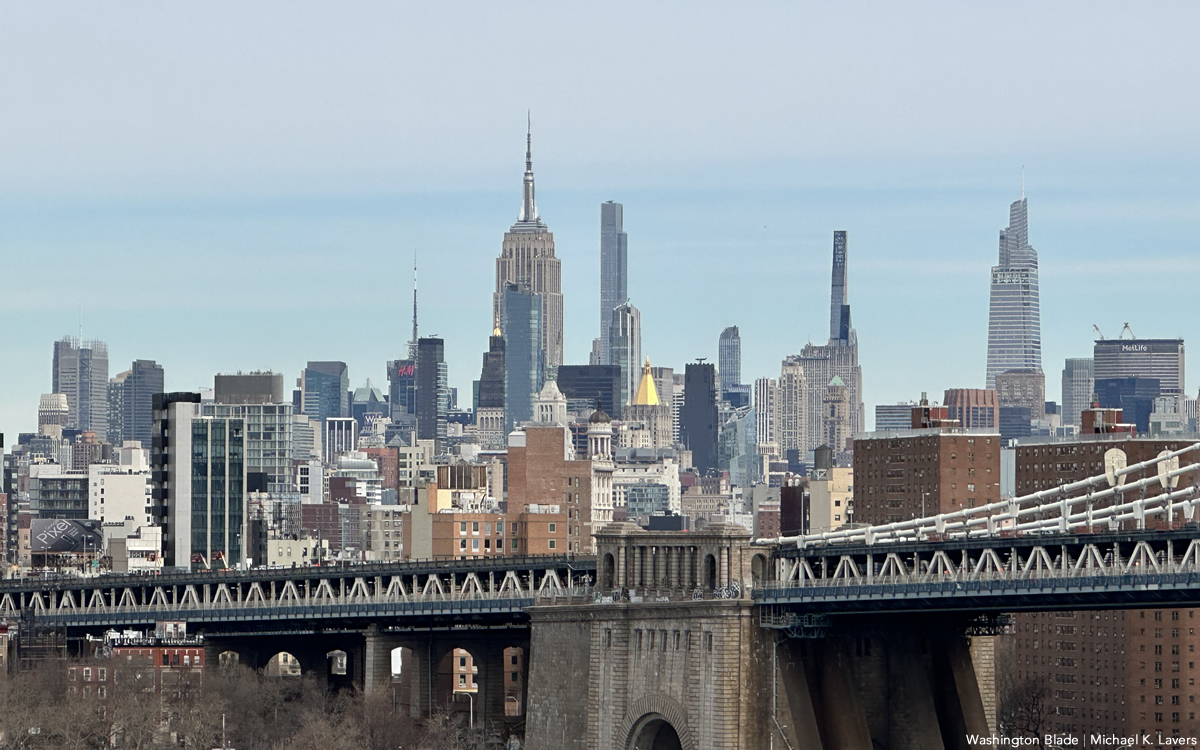
New York City lawmakers are pushing to repeal a decades-old prohibition on adult bathhouses, arguing the regulation was created during the height of the AIDS crisis and no longer reflects modern science or public health practices.
Erik Bottcher, the openly gay New York state senator who represents the 47th District that includes the Upper West Side, Chelsea, Hell’s Kitchen and portions of the West Village in Manhattan, is leading the charge to remove the decades-old ban. (Openly gay state Assemblymember Tony Simone has sponsored the repeal bill in the New York State Assembly.) Bottcher sat down with the Washington Blade to discuss why he is advocating for more bathhouses in New York City.
“This is simply about ensuring that our public health policy is in line with today’s science,” he told the Blade. “The prohibition on adult bathhouses was put into place in 1985 at the height of the the AIDS epidemic, when there was very little information, very little treatment options, few treatment options, and great deal of fear. Science has changed. Treatment has changed, and the laws need to change too.”
The proposed legislation would direct the New York State Department of Health to repeal the 1985 regulation and establish a new framework for regulating bathhouses.
“Municipalities around the country and all around the world allow for adult bathhouses. There’s no reason why New York City alone needs to maintain this outdated prohibition. Our bill orders the New York State Department of Health to strike the 1985 regulation and replace it with a regulated public health framework that’s grounded in science.”
Under the proposal, bathhouses would operate as licensed and regulated facilities subject to health and safety standards. Backers of the proposal say that framework could also give public health officials greater access to people who may otherwise be difficult to reach through traditional health care settings.
“What the Department of Health would do is work with public health experts and advocates to develop a regulatory framework that allows licensed regulated facilities to operate under clear health and safety standards — and under this — it would allow public health agencies to have greater opportunities to provide STI and HIV prevention resources, connect people to testing and treatment, conduct instructions, and address legitimate health concerns.”
Supporters of the repeal also argue banning bathhouses does not eliminate the sexual activity that takes place in them or elsewhere. Instead, they say, it pushes those activities into the shadows, where public health officials have fewer opportunities to provide life-saving services that include STI and HIV testing.
“This is also about a safer alternative than pushing activity into unregulated settings where there’s little opportunity for public health engagement because these activities are happening, but they’re happening in the shadows,” Bottcher continued. “We know that the best public health policy is to establish clear public safe public health guidelines that allow for public health intervention.”
Demetre Daskalakis, a physician and longtime HIV prevention advocate who has worked to create sexual healthcare opportunities in bathhouses, also worked with Bottcher on the proposal.
Daskalakis was a high level Centers for Disease Control and Prevention employee until 2025, when he left federal health landscape after the Trump-Vance administration ousted then-CDC Director Susan Monarez. There he worked as director of the National Center for Immunization and Respiratory Diseases and was director of the Division of HIV Prevention at the National Center for HIV/AIDS, Viral Hepatitis, STD, and TB Prevention.
Daskalakis explained his experience has shown him the potential for these spaces to become points of contact for people who do not regularly access traditional health care.
“I’ve seen what happens when you push sex into the underground,” he said. “From my perspective, this is a great opportunity to be able to reach people who really will not come to normal clinical care and won’t go to normal routine places for testing or screening.”
“As a public health person, I look at it as a great opportunity,” added Daskalakis. “If there’s like regulation of those venues, and if there’s like a prevention plan that sort of sprouts in those places with really solid public health and clinical partners, I think it’s a great opportunity for public health good.”
Daskalakis said a regulated bathhouse could offer more than HIV and STI testing, potentially creating spaces where people could access prevention medications and other health services.
“The bottom line is if there is a good relationship between the government and the venues, we can develop spaces in the venues to actually deliver services,” he said. “It’s not just infectious disease services — I mean yes, you can do HIV testing, STI testing. You can provide doxypep and pre-exposure prophylaxis for people who are HIV negative and at risk for HIV.
“As an example, at Callen-Lorde Community Health Center (in New York City), where I’m the chief medical officer, we developed a prevention pack in a very low threshold way. We gave people enough doxypep and prep to get through Pride. You can also have Narcan and other things to reduce the risk of overdose.”
Daskalakis said that approach reflects what public health should be striving for: meeting the community where they are.
“If you have this sort of relationship with the government that’s not antagonistic, and the government, as New York is one to do, provides some regulatory oversight to these venues, I think what you’re going to have is a place that supports LGBTQ culture — which also which does include sexuality, and also creates a platform to be able to do like very solid prevention work.”
The public health landscape surrounding HIV has changed dramatically since the bathhouse regulation was adopted, Daskalakis said, pointing to advances in treatment and prevention.
“The bottom line is that HIV treatment and prevention have really converged. If you are someone living with HIV and you’re on HIV medicines and your viral load is undetectable, you don’t transmit HIV. That’s called undetectable is equal to untransmittable, or U = U. People who are on prep also have very low risk of acquiring HIV, and so you know the world is very different,” he said.
“Back in the 80s, when there was no way to impact transmission of HIV because we didn’t have effective ways to prevent it — or didn’t know very much about it at that point. It’s a very different world where we know a lot about HIV and have a lot of tools to be able to prevent transmission. Same with STIs,” added Daskalakis. “If you create a holistic strategy for prevention that is sex positive and aligned to these venues, you’re going to prevent HIV and STIs. Period.”
For supporters of the legislation, that public health argument is central to the effort to repeal the ban. Bottcher also sees the proposal as a way to restore LGBTQ community spaces at a time when many queer venues have disappeared and social interaction increasingly takes place online.
“In this era of social isolation created by social media and streaming services, people are desperate for third spaces,” Bottcher said. “Places for people to come together in person, to be together in person. That’s what this would help provide.”
Daskalakis echoed Bottcher’s point that bathhouses could transform from underground, tabooed spaces into venues that combine sexual health services with broader LGBTQ culture.
“When you make them illegal, they become seedy and dark. When you make them something that is allowed, they actually then become sites that may have sex on premises but also support other sorts of cultural things, and in a universe where people are trying to make LGBT folks seem invisible, creating a safe space for them is exactly what we need right now.”
That community-space argument is also tied to health disparities, Bottcher said, arguing that greater access to health education and prevention services could help people who are less likely to seek care through traditional medical settings.
“Creating opportunities for in-person public health education, prevention, treatment that will help improve health outcomes when you push people into less safe settings without any opportunities for education, prevention tools, or treatment. That’s when we see these disparities, these health disparities grow. So it’s very important that we be laser focused on opportunities to address these disparities and reduce them.”
He continued, explaining the proposed change is ultimately about updating public health policy as medical science evolves, just as other practices are updated when new information comes out.
“This is a matter of an outdated public health regulation and the government has a responsibility to continually revisit its public health regulation and ensure that they’re in line with modern day science,” Bottcher said. “Science and healthcare are continually evolving, and the HIV/AIDS prevention and treatment landscape has changed tremendously in the last few years. Our public health regulations need to keep pace with science.”
For LGBTQ New Yorkers who lived through the AIDS crisis, however, changing the policy could carry a different meaning.
Bottcher says the experiences of those who lived through the epidemic — one that killed nearly 300,000 gay men since the 1980s — should inform how any new system is implemented, rather than being dismissed.
“These are in order to help prevent the spread of HIV and AIDS and other STIs,” Bottcher said. “We have to bring people engaging in these activities out of the shadows and into safe settings that provide the opportunity for public health entities to engage with education, treatment, prevention — that’s what this would do.”
Daskalakis said those concerns should be approached through what he described as trauma-informed care.
“My response is that of trauma-informed care,” Daskalakis said. “We have totally been through it, but we need to sort of move past the trauma and realize that the science has changed. I’s not it’s not the ’80s anymore, but we definitely need to look at those folks who have gone through the experience (of the HIV/AIDS crisis) to make sure that what we’re building, from a public health perspective, are effective programs.”
“There’s a great opportunity to learn from folks with experience rather than to alienate them,” he added.
Bottcher also pointed out this policy revision and effort to bring regulations in line with modern science is not only happening in New York. Multiple other cities across the U.S. have moved away from bathhouse prohibitions.
“Minneapolis just passed their ordinance in June,” he said. “San Francisco, despite the fact that they repealed their prohibition some years ago, they are still working to change the policy … However, around the country, even in red states, they have bathhouses … and they haven’t presented a detriment to public health in any way.”
The proposed change could also revive a part of New York’s LGBTQ cultural history, Bottcher said.
“Bathhouses were a big part of gay culture for decades. We all know the legendary stories of Bette Midler and Barry Manilow performing at the Continental Baths. I envision a resurgence of bathhouse culture that includes things like live music, arts, and entertainment. So it’s exciting to think about.”
And if that resurgence happens, Bottcher already has a dream performer in mind to be the first to take the stage.
“Oh, that’s such a good question … Cher.”
Daskalakis picked a similarly essential female singer of gay culture that he’d like to see in the bathhouses of today.
“I feel like my list could be so long, but I think that would be a great place for Madonna.”
The debate over New York’s bathhouse regulation ultimately reflects a broader question about how public health policy should respond as science, medicine, and LGBTQ communities change.
For Bottcher, regulation, rather than prohibition, would give health officials more opportunities to provide prevention and treatment while allowing LGBTQ people to gather openly.
For Daskalakis, the central lesson from his extensive healthcare work in bathhouses is that pushing sexual activity underground will make public health outreach more difficult — the opposite of what the government and healthcare providers should be doing.
“The opportunity to create safe spaces means that we’ll have more opportunities to reach people, not just for public health, but for so many other things … The strategy of banning things that are natural really doesn’t tend to help you very much. It ends up creating misalignment between the community and policymakers.”


New York
Judge blocks DOJ from obtaining transgender patients’ medical records
Advocacy groups sued White House
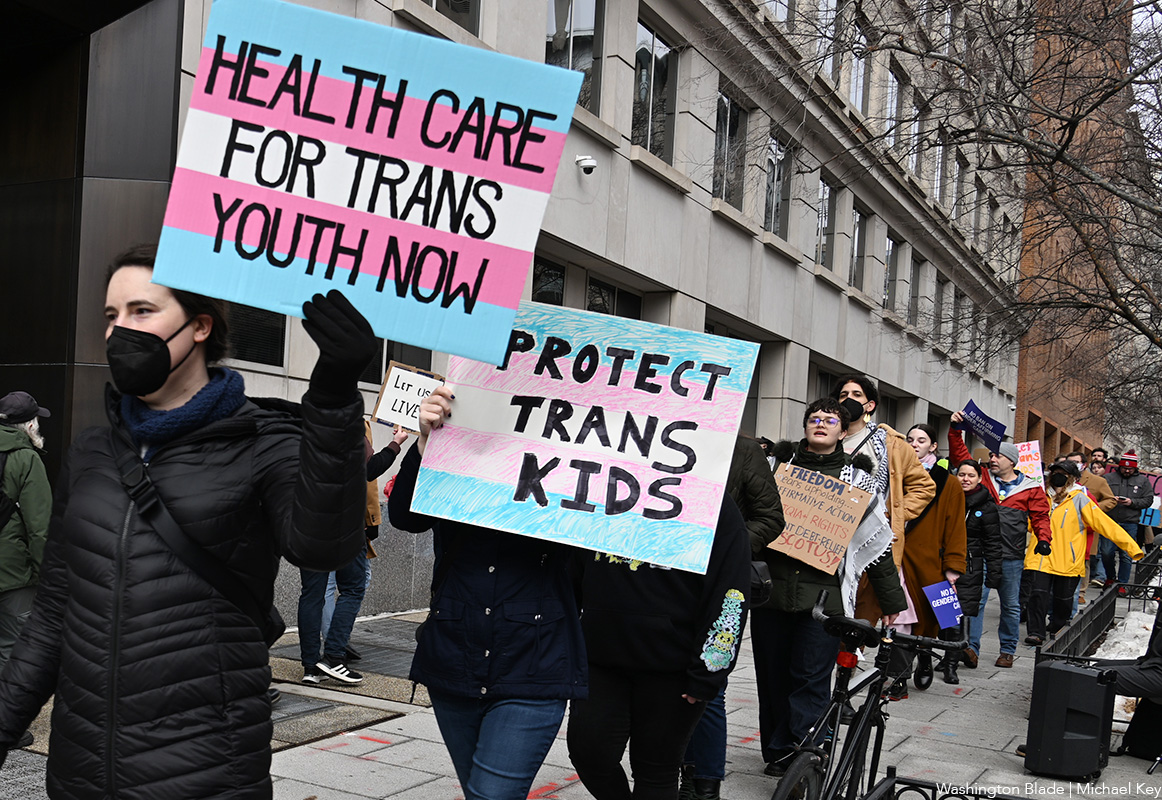
A judge for the U.S. District Court for the Southern District of New York has granted a request from multiple transgender people for a temporary restraining order, blocking the disclosure of plaintiffs’ and class members’ medical information to the Justice Department.
Judge Katherine Polk Failla approved the Temporary Restraining Order and Provisional Class Certification, preventing any further information from being provided to the Trump-led DOJ.
The medical data was requested through subpoenas issued by the Trump-Vance administration’s DOJ to multiple hospitals in New York City — most notably NYU Langone — which halted its Transgender Youth Health Program in May following a federal push to stop providing trans minors with gender-affirming care.
In May 2026, NYU Langone Hospitals received a subpoena from a federal grand jury in Fort Worth, Texas, demanding that the hospitals turn over the identities and sensitive health information of any patient who had received medical treatment for gender dysphoria while under the age of 18 at NYU Langone between January 2020 and May 2026.
Lambda Legal, the American Civil Liberties Union, and the New York Civil Liberties Union filed a lawsuit, “Coe, et al. v. Blanche, et al.,” against the Trump-Vance administration on behalf of three families with trans youth and two trans young adults who were minors when they began care, in June 2026.
The lawsuit requests a temporary restraining order blocking the DOJ from violating the patients’ constitutional privacy rights by obtaining identifying and sensitive health information as part of its investigation into unspecified health offenses. The DOJ issued subpoenas to NYU Langone and other similar healthcare institutions in New York City, including Mount Sinai, that provide or have provided gender-affirming medical care to trans minors. All plaintiffs have filed under pseudonyms to maintain their privacy and anonymity.
Multiple leaders of organizations that helped push for the restraining order provided quotes about the ongoing situation and what it means for the fight for trans children’s access to healthcare in the U.S.
“Today’s order from the court is a victory for the basic privacy of our clients and all families like theirs across New York City. It is no secret that this administration will use every lever in its power to attack transgender people and fulfill its misguided goal to ‘end’ gender-affirming medical care — care that is legal and protected in New York State. Using subpoenas to attain the identities and sensitive health information of transgender young people to effectuate such goals should send chills down the spine of every American. Our laws and our Constitution recognize that we all have a right to confidentiality about the most intimate and private information about ourselves,” said Omar Gonzalez-Pagan, senior counsel and health care strategist at Lambda Legal. “Whether a young person receives any type of medical care is a decision for that patient, their family, and their doctor, not for political appointees to decide, interfere with, or know. The government cannot abuse its powers to violate the constitutional rights of transgender young people and their families. It is an enormous relief for these families that the court has stopped them from doing so as this case proceeds.”
“We’re thankful the court has granted our emergency request to protect the privacy interests of transgender New Yorkers and their families,” said Chase Strangio, co-director of the ACLU’s LGBTQ & HIV Rights Project. “Patients and families trust their doctors with their most intimate, private information and should trust in turn that this information will be protected from impermissible and harassing demands for disclosure from the federal government or anyone else. For the past year, the Trump administration has not only decided that it knows better than these families and their doctors what their medical needs are, but has also sought to obtain troves of sensitive information about patients in New York. We will continue to fight on behalf of these families and the fundamental liberty of all transgender New Yorkers and those who come here to seek needed medical care.”
“New York’s laws recognize that transgender youth deserve fundamental privacy protections for their sensitive medical records and unobstructed access to the care they need,” said Bobby Hodgson, deputy legal director at the New York Civil Liberties Union. “As the Trump administration tries to bully transgender youth, scare families, and intimidate healthcare providers into dropping their patients, we’re thankful the court found these tactics are likely unconstitutional and put a stop to them here in New York.”
New York
N.Y. governor’s race presents stark contrast on LGBTQ rights
Democratic Gov. Kathy Hochul expected to face Republican Bruce Blakeman

As states across the country grapple with a rapidly changing federal landscape under President Donald Trump, governors have increasingly become the first line of defense — or enforcement — on issues ranging from healthcare and education to LGBTQ rights.
Nowhere is that more apparent than in New York, Trump’s home state, where the 2026 gubernatorial race is shaping up as a high-profile battle over the future of LGBTQ protections.
Incumbent Democratic Gov. Kathy Hochul is seeking a second full term as New York’s 57th governor and the state’s first female governor. She enters the race with strong support from LGBTQ advocates and organizations, including an endorsement from the Stonewall Democrats of New York City. Earlier this year, Hochul was also endorsed by progressive leaders like New York City Mayor Zohran Mamdani and U.S. Rep. Alexandria Ocasio-Cortez. She is running alongside New York City Council Speaker Adrienne Adams as her lieutenant governor candidate.
Throughout her tenure, Hochul has signed a series of measures aimed at strengthening protections for LGBTQ New Yorkers, particularly transgender residents.
Among the most notable is New York’s “Trans Safe Haven Act,” which protects out-of-state trans youth, their parents, and medical providers who travel to New York to access legally protected gender-affirming care. Hochul has also signed legislation requiring health insurance plans to cover HIV prevention medications, including PrEP and Post-Exposure Prophylaxis (PEP), without out-of-pocket costs.
Additionally, Hochul signed a Long-Term Care Bill of Rights that prohibits discrimination against LGBTQ seniors and people living with HIV in long-term care facilities.
“As the birthplace of the LGBTQ+ rights movement, New York has long been at the forefront of advancing equality,” Hochul said in a statement during Pride month. “During Pride month, we celebrate New York’s vibrant LGBTQ+ community and acknowledge the importance of protecting the rights and freedoms of LGBTQ+ New Yorkers. This month and every month, we proudly stand with the LGBTQ+ community and remain committed to building a more inclusive and equitable future for all where everyone can live freely with dignity, safety, and respect.”
On the Republican side, Nassau County Executive Bruce Blakeman has emerged as the party’s leading candidate. Blakeman is running with Madison County Sheriff Todd Hood as his lieutenant governor pick.
Blakeman, Nassau County’s 10th county executive, was first elected in 2021 after defeating Democratic incumbent Laura Curran. He previously served as a commissioner of the Port Authority of New York and New Jersey, a Nassau County legislator, and a Hempstead town councilman.
A longtime supporter of Trump, Blakeman appeared alongside the president during a 2024 event honoring slain NYPD Officer Jonathan Diller.
LGBTQ advocates have frequently criticized Blakeman for his positions on trans issues, particularly his opposition to trans women participating in women’s sports.
In February 2024, Blakeman signed an executive order barring women’s sports teams that include trans women from using Nassau County athletic facilities. The policy applies to youth, collegiate, and professional teams. Teams that include trans men were not affected. The order has since been halted by the New York State Appellate Division swiftly issued an injunction halting enforcement while the plaintiffs appeal the decision
Ahead of announcing the order, Blakeman repeatedly referred to trans women as “biological males” and argued they should compete on men’s or co-ed teams. LGBTQ rights groups condemned the policy, saying it discriminates against trans athletes and contributes to the marginalization of trans youth.
Trump endorsed Blakeman’s gubernatorial campaign in December 2025, shortly after U.S. Rep. Elise Stefanik (R-N.Y.) announced she would not seek the Republican nomination. The president made his endorsement via Truth Social that “Bruce is MAGA all the way, and has been with me from the very beginning.”
The Washington Blade contacted Blakeman’s campaign seeking comment on his LGBTQ policy priorities and views on issues including nondiscrimination protections, trans rights, and healthcare access. The campaign did not respond.
The race highlights two sharply different approaches to LGBTQ policy in a state widely regarded as the birthplace of the modern LGBTQ rights movement, home to the 1969 Stonewall uprising that helped launch the contemporary movement for LGBTQ equality.
Despite the ideological contrast, early polling suggests Hochul remains the clear favorite. Most public surveys show the incumbent holding a double-digit advantage over her potential Republican challengers, with some polls placing her lead at roughly 20 percentage points ahead of the November election.
New York
Gay ICE detainee freed after 150 days in detention
Cayman Islands native taken into custody before green card interview
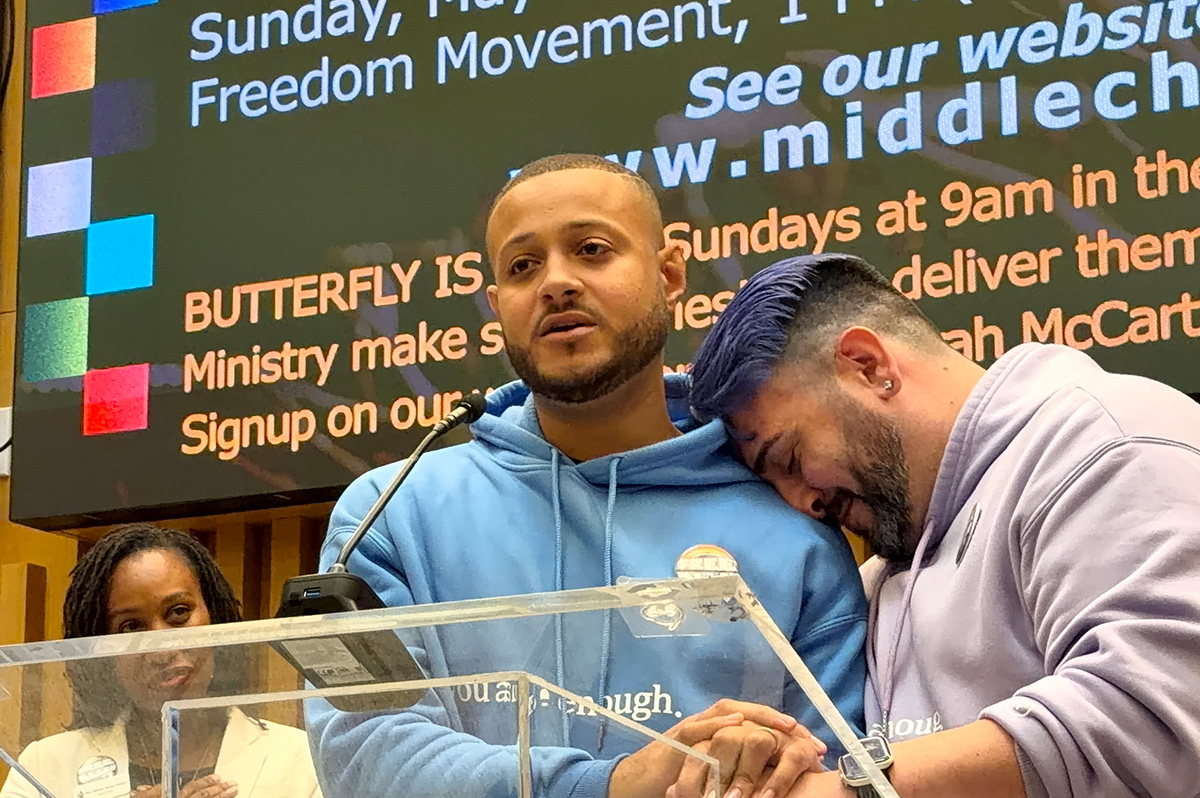
Following nearly half a year in U.S. Immigration and Customs Enforcement detention, Allan Marrero has been released and is back home with his husband in New York.
Marrero spent 150 days in ICE custody, held in multiple detention centers across the U.S. after missing an immigration court hearing while in a rehabilitation program for alcohol addiction — a circumstance widely considered “good cause” for failing to appear.
The Washington Blade first reported on Marrero’s case in March after the Cayman Islands native was detained by ICE officers during what was supposed to be a routine marriage-based green card interview at 26 Federal Plaza in New York City.
Marrero had been married to his husband, Matthew Marrero, for two years at the time of the interview. But almost immediately, the experience turned hostile.
The Rev. Amanda Hambrick Ashcraft, a minister at Middle Church in Manhattan who accompanied the couple to provide spiritual support, later described the process as “dehumanizing” and “barbaric.”
During the interview, it became clear the couple was facing an uphill battle. At one point, when asked how they met, Matthew Marrero instinctively looked over at his husband and was “snapped at” and told not to look at him. As the interview continued, the outlook only grew more grim.
Unaware that he had a prior removal order tied to the missed court date while he was in rehab, Allan Marrero was detained on the spot.
Over the following months, Allan Marrero was transferred through multiple detention facilities, including centers in Arizona and Texas, the Everglades Detention Facility — also known as “Alligator Alcatraz,” which has been described as having “unsanitary inadequate conditions” — and ultimately a detention center in Mississippi.
While in custody, Allan Marrero was denied access to prescription medication and, according to advocates, was psychologically pressured by ICE agents to self-deport rather than remain detained while his legal case proceeded.
Although a judge later reopened his case and granted bond after Allan Marrero provided proof that he had been in rehab — a valid medical reason for missing his court date — ICE used procedural mechanisms to keep him detained. A separate judge later issued a ruling denying relief, leaving Allan Marrero in custody.
On the outside, Matthew Marrero said his life felt as though it had been put on pause so ICE could meet enforcement quotas.
“[It feels like] somebody came in and kidnapped someone close to you and took away all of your control and power,” Matthew Marrero told the Blade on March 7. “You shouldn’t be able to have this much control over somebody’s life, especially if they are trying to do the right thing … You’re not going after criminals, you’re not going after the worst of the worst. You’re trying to fill a quota.”
Alexandra Rizio, Allan Marrero’s attorney with Make the Road New York, a progressive grassroots immigrant-led organization, told the Blade that “there seems to be an underlying element of cruelty baked into not only this administration, but everything.”
“It didn’t have to go down that way,” Rizio continued. “If someone goes in for a green card interview and their marriage interview, and they learn that they have a removal order, what the USCIS officer could have done is say, ‘Look, you have a removal order in your name. You need to go hire an attorney right away to get this taken care of. I can’t adjudicate your green card…’ And if you hire a lawyer, you know, you might be able to get it straightened out. Of course, that’s not what happened. And so ICE, which was in the building, were called and they did arrest Allan.”
The Marreros are scheduled to hold a press conference on Tuesday at Middle Church, where Allan Marrero will speak publicly for the first time about his detention.
For additional information on the press conference please visit middlechurch.org.

NYC lawmakers seek to repeal bathhouse ban

Black Educated Lesbians: A movement rooted in community

Hegseth uses transphobic slur while campaigning for Iowa congressman

What ‘Queer Eye for the Straight Guy’ can still teach us

I respect AOC, even though I often disagree with her

‘Maddie’s Secret’ defies campy expectations

PHOTOS: Nellie’s Drag Brunch

Remembering Barbara ‘Boo’ Price, a pioneering force in women’s music

White House targets gender-affirming care funding, states fight back