
Opinions
Role of ‘dirty money’ in marriage fight
Should LGBT groups take cash from conservatives?

At a book salon hosted by Donald Hitchcock and Paul Yandura, Juan Ahonen-Jover, Ph.D., discussed his book, “The Gay Agenda 2012: All Out.” Juan has written an interesting book with some theories that will gain the support of many activists while not necessarily finding favor with the leaders of the more prominent LGBT organizations.
Juan talked about his ideas with regard to where the LGBT community needs to go from here and then opened the floor to a broader discussion. There were about 30 or so LGBT advocates in the room and one of the more interesting issues that arose was whether or not the LGBT community should be taking what some referred to as “dirty money” for marriage equality campaigns. It was an interesting discussion and as is often the case with such a touchy issue people’s opinions were all over the map.
The people who used the term “dirty money” were talking about money and support that comes from individuals like Ken Mehlman, Ted Olson (who coached Paul Ryan in his debate prep) and Paul Singer. There is a strong difference of opinion over whether or not to take money and support from them. The “them” refers to those who support marriage equality but who also support candidates pledged to prevent marriage equality from happening and want to turn back any movement on LGBT civil and human rights. Many in the room felt that while they appreciated the support, gay organizations should not take money directly from these individuals and organizations. There were strong feelings that there is too much hypocrisy making it impossible in good conscience to accept this money.
Although I agree that LGBT organizations shouldn’t take the money, there is no reason that we would turn our backs on or try to stop anyone who wants to donate to or support marriage equality. We need all the support we can get and clearly all the money we can get to fight for our civil rights. There are ways for this money to come into campaigns other than through LGBT organizations and hedge-fund manager and billionaire Paul Singer has found a good one. In a June 2012 article by Frank Bruni in the New York Times, Singer says he provided $1 million to start a new “Super PAC” with several Republican compatriots. Named American Unity PAC, its sole mission is to encourage Republican candidates to support same-sex marriage, in part by helping them to feel financially shielded from any blowback from well-funded groups that oppose it.
He told Bruni that he’s confident that in congressional races, which would most likely be the Super PAC’s initial focus, there are more than a few Republicans “who could be on the verge of support” or are “harboring and hiding their views.” “And this kind of effort could be catalytic in generating some more movement,” he said.
This is also the way to have those like Singer, who has a gay son, pour money into marriage equality campaigns and influence their outcome in a positive way. This issue reminds me of what many organizations, particularly those in the area of education and children’s issues, faced when they gave up tobacco money. People wanted to find a way for tobacco companies to contribute to good works in other ways.
Such a Super PAC allows someone like Mehlman, who came out as gay in 2010, but has yet to separate himself totally from all Republican candidates who want to keep him a second-class citizen, to work on the issues he currently feels comfortable with like marriage. Mehlman has said, “I can’t change the fact that I wasn’t in this place personally when I was in politics, and I genuinely regret that. It was very hard, personally.” Mehlman has also said, “As I’ve been involved in the fight for marriage equality, one of the things I’ve learned is how many people were harmed by the campaigns in which I was involved. I apologize to them and tell them I am sorry.” What I have never heard Mehlman say or apparently come to grips with is that he came up with those campaigns and led them. But we can still thank Mehlman for what he is willing to do today.
While these individuals shouldn’t become icons within the LGBT community, it is important to encourage everyone who wants to support the forward movement of civil and human rights for the LGBT community to participate in the fight. There are clearly ways to do that on separate paths for those who are not yet ready to see this fight as the overriding mission that it must be for LGBT organizations.




Opinions
Fact: The next president will be Biden or Trump
One candidate is clearly better for the future of the world
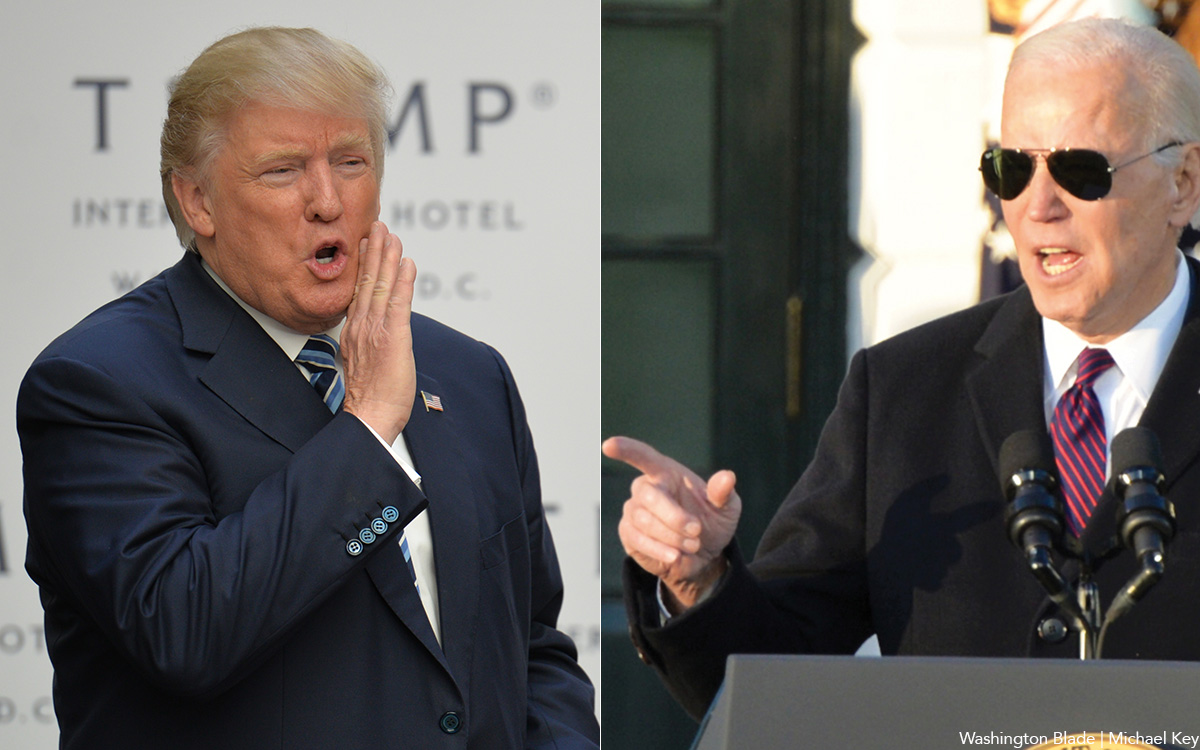
Like it or not, the next president will be either Joe Biden or Donald Trump. In our system, third-party candidates are simply spoilers, they don’t win. The last time a third-party candidate won was 1856. It has been 36 years since a third-party candidate even got more than 5% of the vote. So, it’s time to face reality and choose; for your future, do you want Biden or Trump?
I was prompted to write this column because I see the media interviewing young people about who they want as their president. I have great respect for the young people of today. In many ways, they are smarter than my generation was. But it’s clear, some don’t fully understand the presidential election process. I hear many complain about Biden, and then follow that up and say they will never vote for Trump. Some then say they will vote for a third-party candidate. They need to understand their third-party candidate will not win, but their vote could help elect Trump. I hate to say it, but in 2024, voting for a third-party candidate is the equivalent to flushing your ballot down the toilet.
I am an unabashed Biden supporter. I see the great things he has done, including: getting us through the fallout from the pandemic, passing an infrastructure bill, forgiving billions in student loans, ensuring our economy is the best in the world with more than 13 million jobs created, and increasing wages. He supports unions, being the first president to walk a picket line with the UAW. His administration is working to deal with climate change. He is fighting for a woman’s right to control her own body and healthcare, and supports full equality for the LGBTQ community. In this dangerous world he has kept our troops out of war.
Then there is Trump. To be clear; I see him as a racist, sexist, misogynistic, homophobic, pig. OK, so maybe I don’t have strong feelings about him. Trump has been found liable for sexual assault and has been indicted on 91 counts. He proudly claims credit for having taken away control of their body and healthcare from women, when the justices he appointed ended Roe v. Wade. He supports states making decisions on abortion, and we see what recently happened in Arizona. He is a climate change denier and is opposed to wind and solar power. He wants to give more tax deductions to the rich and to corporations, while opposing any increase in the minimum wage. He opposes equality for the LGBTQ community, refusing to endorse the Equality Act. He opposes student debt relief.
You may see these candidates differently, and that is OK. But if you like one more than the other, fear one more than the other, or just aren’t enamored by either, you must still make a choice and vote for one of them. Staying home is abrogating your civic responsibility, and especially if you would never vote for Trump, understand your staying home helps him.
Young voters, like all voters, should take the time to do the research on both candidates. Then match what you find as close as possible to what you want to see as your future. If you want student loan relief, equality for the LGBTQ community, women having control of their body and healthcare, equal pay for women, efforts to ameliorate the impact of climate change, then clearly Trump is not your candidate.
I hear some young people say they won’t vote for Biden because of his positions on the Israel/Hamas war. I, too, have called for Israel to recalibrate how they fight this war. But I ask you to look again at Trump’s history of attachment to Netanyahu, even going so far as relocating the U.S. embassy to Jerusalem. If you want a chance for the Palestinian people to live in peace and prosperity, for Israel to remove their settlements from the West Bank, your chance of having that happen is clearly better with Biden than Trump. Don’t let your emotions today, cloud the reality of the future.
Yes, Biden is old, but so is Trump. He apparently can’t even stay awake at his own trial having nodded off two days in a row. So, since one of them will be president, with no third-party candidate having a chance, I urge you to look at them again, in a realistic way. Then make your choice. I think you may come to the same conclusion I have. Though not perfect, and no one is, Biden is the better candidate for your future, and for the future of the world.
Peter Rosenstein is a longtime LGBTQ rights and Democratic Party activist. He writes regularly for the Blade.

In 2023, the law was signed to expand the District’s medical cannabis program. It also made permanent provisions allowing residents ages 21 and older to self-certify as medical cannabis patients. Overall, cannabis is fully legal in D.C. for medical and recreational use, and 4/20 Day is widely celebrated.
Medical cannabis, for example, has a long history with the LGBTQ community, and they have often been one of the oldest supporters of marijuana and some of the most enthusiastic consumers. Cannabis use also has a long history of easing the pain of the LGBTQ community as relief from HIV symptoms and as a method of coping with rejection from society.
The cannabis culture continues to grow in the District, and as a result, so does the influence on younger people, even youth within the LGBTQ community. Drug education can play an important role and should not be avoided during 4/20 Day. Parents and educators can use drug education to help their kids understand the risks involved with using marijuana at a young age.
According to DC Health Matters, marijuana use among high school students has been on the decline in the District since 2017. In 2021, it was estimated that around 20% of high school students use marijuana, a drop from 33% in 2017. Nationally, in 2020, approximately 41.3% of sexual minority adults 18 and older reported past-year marijuana use, compared to 18.7% of the overall adult population.
When parents and educators engage with their kids about marijuana, consider keeping the conversations age appropriate. Speaking with a five-year-old is much different than speaking with a teenager. Use language and examples a child or teen would understand.
The goal is to educate them about the risks and dangers of using cannabis at a young age and what to avoid, such as edibles.
Most important, put yourself in your kid’s shoes. This can be especially important for teenagers as they face different social pressures and situations at school, with peer groups, or through social media. Make a point of understanding what they are up against.
When speaking to them about cannabis, stay calm and relaxed, stay positive, don’t lecture, and be clear and concise about boundaries without using scare tactics or threats.
Yet, it’s OK to set rules, guidelines, and expectations; create rules together as a family or class. Parents and educators can be clear about the consequences without lecturing but clearly stating what is expected regarding cannabis use.
Moreover, choose informal times to have conversations about cannabis and do not make a big thing about it. Yet, continue talking to them as they age, and let them know you are always there for them.
Finally, speak to them about peer pressure and talk with them about having an exit plan when they are offered marijuana. Peer pressure is powerful among youth, and having a plan to avoid drug use helps children and students make better choices. Ultimately, it is about assisting them in making good choices as they age.
Members of the LGBTQ community often enter treatment with more severe substance use disorders. Preventative measures involving drug education are effective in helping youth make good choices and learn about the risks.
Marcel Gemme is the founder of SUPE and has been helping people struggling with substance use for over 20 years. His work focuses on a threefold approach: education, prevention, and rehabilitation.
Opinions
Walking the pathway to national cannabis legalization
Social equity needs to be front and center in our efforts

As we gear up for a major election year, the buzz around cannabis legalization is getting louder. Policymakers are starting to see the need for comprehensive reform, while advocates and small business owners in the industry are cautiously optimistic about the future. But let’s not kid ourselves, this system was designed to keep certain communities out, and it’s crucial that we continue to address these deep-rooted inequities as we blaze the trail forward. A step toward legalization that doesn’t prioritize equity and dismantle the barriers that have held back marginalized groups would be a major bummer. In this op-ed, we’re going to take a groovy journey through the evolution of grassroots organizing in the cannabis industry and highlight the importance of social equity in achieving true national cannabis legalization and boosting our humanity along the way.
Over the years, I’ve been right in the thick of it, helping to build grassroots organizations like Supernova Woman and Equity Trade Network. These groups have been on the frontlines, fighting for cannabis programs in Oakland and San Francisco. I’ve also rocked my own brand, Gift of Doja, and organized the first Cannabis Garden at a major neighborhood street fair, Carnaval San Francisco. I even served as chair of the first Cannabis Oversight Committee in the nation. But the real magic has always happened in when working in coalitions. Each individual and organization brings a unique piece to the puzzle. Grassroots organizing is as challenging as crafting a democratic society but is worth the effort in generating workable implementable solutions. Collective efforts have been game-changers in shifting public opinion and paving the way for major policy changes at both the state and local levels.
As we navigate the path toward cannabis legalization, lobbyists and lawmakers can’t forget about the small business owners who have been grinding to build their dreams. Political advocacy and lobbying are important, but if we’re not uplifting the voices and experiences of those who have been fighting on the ground, we’re missing the mark. Big companies can hire lobbyists, but small business owners don’t have that luxury and if we are not in the room we are on the table. Coalitions allow for us to be in the room when we can’t physically be there. Our communities, especially people of color, have been hit hard by systemic oppression, from over-policing to mass incarceration and limited economic opportunities to limit our ability to be in the room of power and decision making.
Social equity needs to be front and center in any cannabis legalization efforts. It’s not enough to just remove criminal penalties or create a legal market. We need to actively work on repairing the damage caused by years of prohibition. That means fighting for resources, investment, and low-interest loans for small businesses. It means creating a tiered fee and tax structure that doesn’t crush the little guys. And it means opening up equity programs to all industries, not just cannabis. Social justice without economic access and repair is like a joint without a lighter – it just won’t spark the change we need. We have a responsibility to evolve the economy and break down unnecessary barriers. Activism, social justice, and economic reform are all connected, man.
Industry leaders, culture creators, advocates, and consumers alike, we all need to step up and promote social equity. It’s on us to support initiatives that provide resources, mentorship, and funding for individuals from affected communities to enter the legal cannabis market. And let’s not forget the power of our wallets. Buying from companies that align with our values and support the work we believe in can send a powerful message. Voting with our dollars might just be more impactful than showing up at the ballot box.
As we head into a major election year, the cannabis industry is at a crossroads. It’s a time for drumming up voter interest and for candidates to make promises that grassroots organizations have fought hard for. Small business owners will be navigating a tricky landscape, but we can’t lose sight of the power of collective work. By keeping social equity at the forefront, we can undo the harms of the past while building new frameworks that will shape a brighter future for all.
In conclusion, grassroots organizing has been the driving force behind shifting public perception and pushing for policy changes in the cannabis industry. But let’s not forget that true national cannabis legalization can only be achieved if we address social equity. It’s time for us to come together, listen to the voices of those most impacted, and walk the high road towards a future where cannabis legalization isn’t just about business opportunities, but also about healing and empowerment for all communities. Let’s light up a joint of social justice and blaze a trail towards a better tomorrow.
Nina Parks is co-founder of Equity Trade Network & Supernova Women. Reach her at [email protected].

Four states to ignore new Title IX rules protecting transgender students

Bisexual former umpire sues Major League Baseball for sexual harassment

Argentina government dismisses transgender public sector employees

Eastern Shore chef named James Beard Finalist

Fact: The next president will be Biden or Trump

State Department releases annual human rights report

Joe Vogel campaign holds ‘Big Gay Canvass Kickoff’

Smithsonian staff concerned about future of LGBTQ programming amid GOP scrutiny

Catching up with the asexuals and aromantics of D.C.
Argentina government dismisses transgender public sector employees
-
 State Department3 days ago
State Department releases annual human rights report
-
 Maryland5 days ago
Joe Vogel campaign holds ‘Big Gay Canvass Kickoff’
-
 Politics4 days ago
Smithsonian staff concerned about future of LGBTQ programming amid GOP scrutiny
-
 District of Columbia1 day ago
Catching up with the asexuals and aromantics of D.C.