News
European court rules religion cannot justify anti-gay discrimination
Four British Christians claimed unfair job discrimination because of their beliefs

The European Court of Human Rights on Tuesday ruled religion cannot justify discrimination against same-sex couples. (Photo by CherryX via Wikimedia Commons)
The European Court of Human Rights on Tuesday ruled religious beliefs cannot justify discrimination against same-sex couples.
The tribunal in Strasbourg, France, ruled against two British Christians who claimed their employers unfairly discriminated against them because of their opposition to relationship recognition for gays and lesbians and homosexuality.
Registrar Lillian Ladele claimed the Borough of Islington outside London unfairly disciplined her because she refused to officiate civil partnership ceremonies for same-sex couples after the United Kingdom’s civil partnership law took effect in 2005. Gary McFarlane accused the Relate Federation, an English counseling service, of firing him in 2008 because he said he may object to providing sex therapy to gay and lesbian couples because of his religious-based opposition to homosexuality.
“We welcome the ECHR’s ruling,” Relate Chief Executive Ruth Sutherland said in a statement. “We believe that it is further endorsement that Relate acted in an appropriate manner and fully in compliance with the law in the case regarding Gary McFarlane. The ruling supports our view that Relate acted properly and that it was Mr. McFarlane who was in breach of his agreed terms and conditions of employment. For Relate, this case has always been about protecting the right that every Relate client has to impartial, unbiased and empathetic counseling and sex therapy in line with our charitable aims.”
The court also ruled against a nurse who claimed she lost her job at an English hospital because she refused to remove her necklace with a cross. British Airways employee Nadia Eweida received €32,000 in damages after the airline suspended her for wearing a cross necklace to work.
“Today’s judgment is an excellent result for equal treatment, religious freedom and common sense,” Shami Chakrabarti, director of Liberty, a British human rights group, said in a statement. “Nadia Eweida wasn’t hurting anyone and was perfectly capable of doing her job whilst wearing a small cross. She had just as much a right to express her faith as a Sikh man in a turban or a Muslim woman with a headscarf.”
The Religion News Service reported that Alliance Defending Freedom, an American anti-gay organization, said “Christian employees should not be singled out for discrimination,” but categorized the court’s decision to reject the other three cases as “extremely disappointing.”
LGBT rights advocates in the U.K. and across Europe quickly applauded the decision.
“With this ruling, the court has established that freedom of religion is an individual right,” Sophie in ‘t Veld, vice-president of the European Parliament’s LGBT Intergroup, said in a statement. “It is emphatically not a collective right to discriminate against LGBT people, women, or people of another faith or life stance. Religious freedom is no ground for exemption from the law. The court showed conclusively that the principle of equality and equal treatment cannot be circumvented with a simple reference to religion.”
Ben Summerskill, chief executive of the British LGBT advocacy group Stonewall, agreed.
“Today’s judgment rightly confirms that it’s completely unacceptable in 2013 for public servants to pick and choose who they want to serve on the basis of sexual orientation,” he said. “Gay people contribute over £40 billion annually to the cost of public services in this country. They’re entitled to nothing less than equal treatment from those services, even from public servants who don’t happen to like gay people.”
The court’s ruling coincides with the expected introduction of a bill in the British Parliament in the coming weeks that would extend marriage rights to same-sex couples in England and Wales. Scottish lawmakers are expected to consider a similar measure this year.
French legislators on Jan. 29 will begin to debate a proposal that would extend marriage and adoption rights to same-sex couples in France. More than 350,000 people marched through the streets of Paris on Sunday in opposition to the bill.
COC Netherlands, a Dutch LGBT advocacy group, said the European Court of Human Rights’ decision “clears the way” to repeal the exemption to the country’s 2001 same-sex marriage law that allows civil servants to refuse to marry gays and lesbians.
“Now that even the European Court rules against civil servants that refuse to marry gay couples, the way to ending this phenomenon in the Netherlands has been cleared,” COC Netherlands President Tanja Ineke told the Washington Blade. “We call on the Dutch government to take measures to end this phenomenon immediately and put an end to this long lasting debate.”
Tamás Dombos of the Hungarian LGBT advocacy group Háttér noted to the Blade that the Constitutional Court of Hungary has ruled registrars cannot legally discriminate against couples based on their sexual orientation. The country’s domestic partnership law took effect in 2009, but a new constitution with an amendment that defines marriage as between a man and a woman took effect last January.
“We welcome the decision, although the reasoning of the court is quite moderate claiming that national authorities have the power to settle the clash between the two competing claims (non-discrimination and freedom of religion,)” Dombos said in reference to the European Court of Human Rights decision. “So it is questionable whether the decision can be used later to fight national decision that prioritize religious freedom instead.”




District of Columbia
Imperial Court of Washington drag group has ‘dissolved’
Board president cites declining support since pandemic

The Imperial Court of Washington, a D.C.-based organization of drag performers that has raised at least $250,000 or more for local LGBTQ and non-LGBTQ charitable groups since its founding in 2010, announced on Jan. 5 that it has ended its operations by dissolving its corporate status.
In a Jan. 5 statement posted on Facebook, Robert Amos, president of the group’s board of directors, said the board voted that day to formally dissolve the organization in accordance with its bylaws.
“This decision was made after careful consideration and was based on several factors, including ongoing challenges in adhering to the bylaws, maintaining compliance with 501(c)(3) requirements, continued lack of member interest and attendance, and a lack of community involvement and support as well,” Amos said in his statement.
He told the Washington Blade in a Jan. 6 telephone interview that the group was no longer in compliance with its bylaws, which require at least six board members, when the number of board members declined to just four. He noted that the lack of compliance with its bylaws also violated the requirements of its IRS status as a nonprofit, tax-exempt 501(c) (3) organization.
According to Amos, the inability to recruit additional board members came at a time when the organization was continuing to encounter a sharp drop in support from the community since the start of the COVID pandemic around 2020 and 2021.
Amos and longtime Imperial Court of Washington member and organizer Richard Legg, who uses the drag name Destiny B. Childs, said in the years since its founding, the group’s drag show fundraising events have often been attended by 150 or more people. They said the events have been held in LGBTQ bars, including Freddie’s Beach Bar in Arlington, as well as in other venues such as theaters and ballrooms.
Among the organizations receiving financial support from Imperial Court of Washington have been SMYAL, PFLAG, Whitman-Walker Health’s Walk to End HIV, Capital Pride Alliance, the DC LGBT Community Center, and the LGBTQ Fallen Heroes Fund. Other groups receiving support included Pets with Disabilities, the Epilepsy Foundation of Washington, and Grandma’s House.
The Imperial Court of Washington’s website, which was still online as of Jan. 6, says the D.C. group has been a proud member of the International Court System, which was founded in San Francisco in 1965 as a drag performance organization that evolved into a charitable fundraising operation with dozens of affiliated “Imperial Court” groups like the one in D.C.
Amos, who uses the drag name Veronica Blake, said he has heard that Imperial Court groups in other cities including Richmond and New York City, have experienced similar drops in support and attendance in the past year or two. He said the D.C. group’s events in the latter part of 2025 attracted 12 or fewer people, a development that has prevented it from sustaining its operations financially.
He said the membership, which helped support it financially through membership dues, has declined in recent years from close to 100 to its current membership of 21.
“There’s a lot of good we have done for the groups we supported, for the charities, and the gay community here,” Amos said. “It is just sad that we’ve had to do this, mainly because of the lack of interest and everything going on in the world and the national scene.”
National
What to watch for in 2026: midterms, Supreme Court, and more
Federal policy battles carry grave implications for LGBTQ Americans
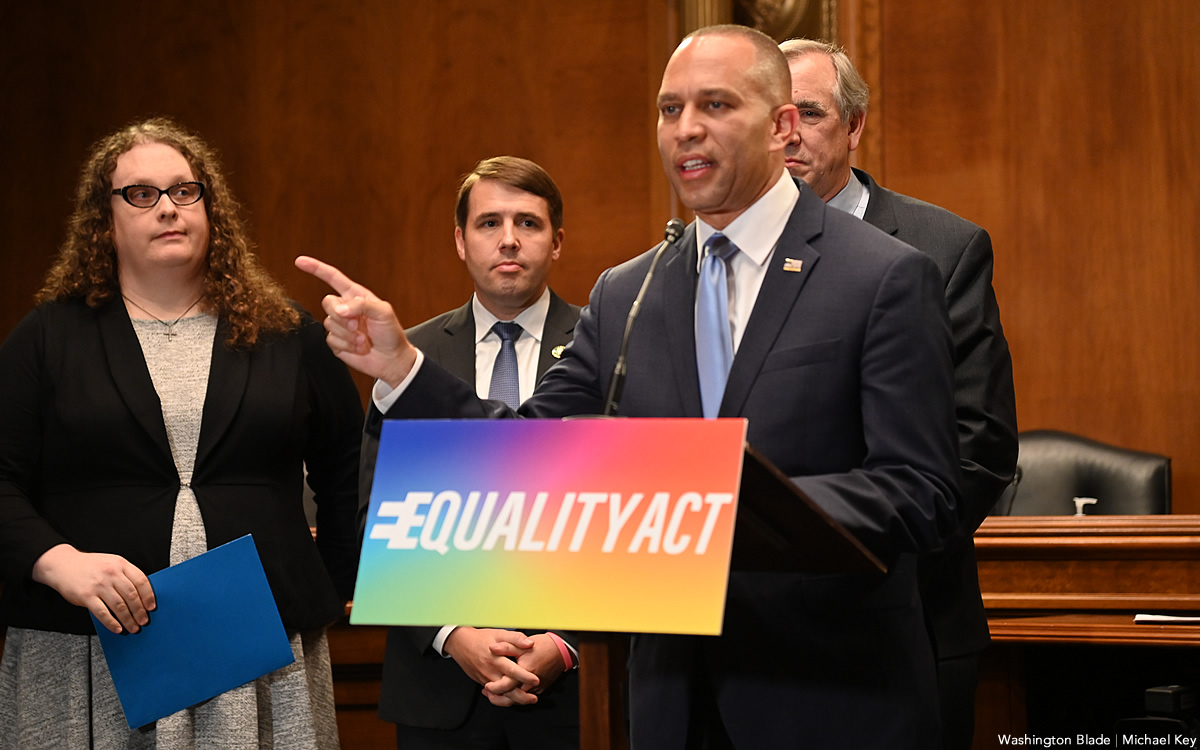
With the start of a new year comes a new slate of legal and political developments poised to change our world. From consequential Supreme Court cases and a potential House of Representatives leadership flip to preparations for the United States’s 250th anniversary, 2026 is expected to be a critical year—particularly as LGBTQ rights, and transgender rights specifically, remain a focus of national debate.
Across Congress, the courts, federal agencies, and statehouses, decisions made this year are poised to shape the legal and political landscape for LGBTQ Americans well beyond the next election cycle.
Congress
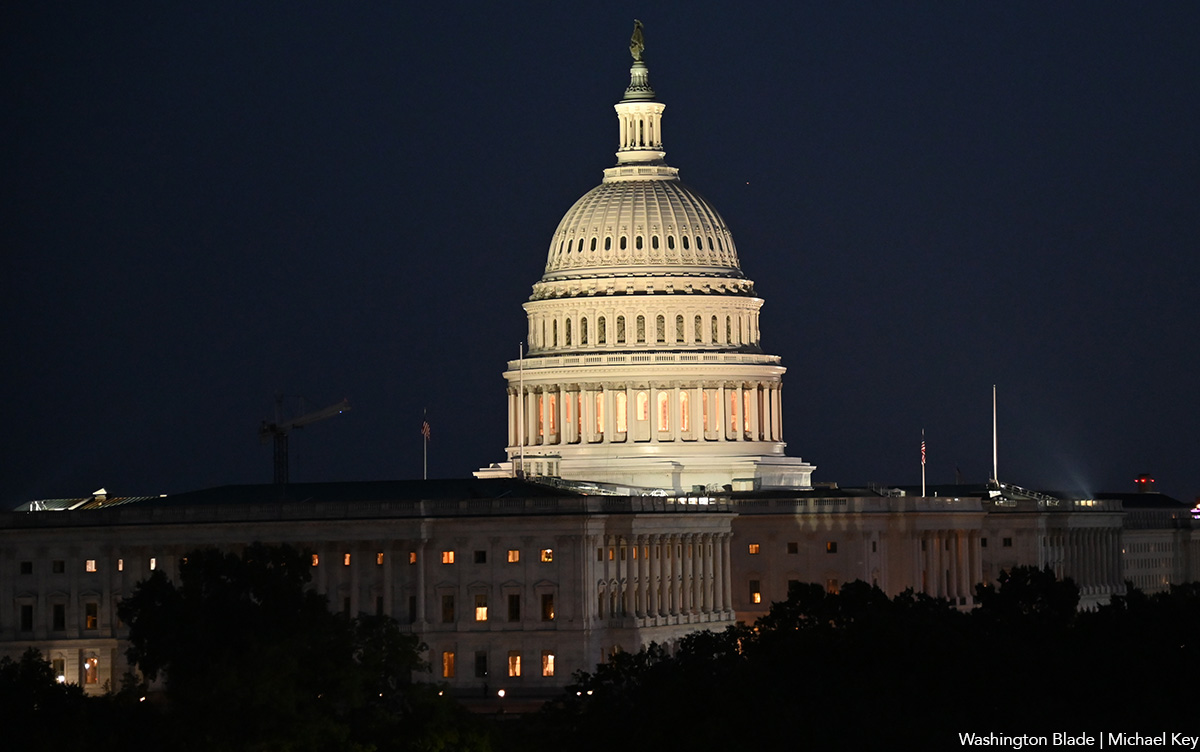
In 2026, a sizable number of federal seats will be up for grabs. All 435 districts in the U.S. House of Representatives will be on the ballot, offering Democrats a chance to flip the chamber and reclaim a measure of control from Republicans, who have held the House since 2022. Control of the House will be especially critical as lawmakers weigh legislation tied to civil rights, health care access, and the scope of federal protections for LGBTQ Americans.
A Democratic majority would also determine committee leadership, oversight priorities, and the ability to block or advance legislation related to transgender health care, education policy, and federal nondiscrimination protections.
Several House races are expected to be particularly significant for LGBTQ representation and leadership, including contests in Texas’s 32nd Congressional District, New York’s 17th, and Illinois’s 9th.
In Texas’s 32nd District, Democratic incumbent Julie Johnson is seeking reelection in the northeastern Dallas-area seat. Johnson is the first openly LGBTQ person ever elected to Congress from Texas or the South, according to her congressional website. Her reelection bid comes amid Republican efforts to redraw the district to consolidate GOP power, following demands from President Trump — moves that have made the race increasingly challenging.
While in office, Johnson has pushed for expanded Medicare access, stronger LGBTQ rights protections, and broader health care equity. The race has become a key test case for LGBTQ incumbents navigating increasingly hostile political and electoral environments, particularly in southern states.
In New York’s 17th Congressional District, Democrat Cait Conley is mounting a challenge against Republican incumbent Mike Lawler in the lower Hudson Valley, just north of New York City. Conley is a former active-duty Army officer who was deployed six times and has leaned into that experience to connect with the district’s mixed constituency.
The district has frequently flipped between parties and includes a politically influential conservative Hasidic community, making it one of the more competitive seats in the region. An out lesbian, Conley has spoken forcefully in support of LGBTQ rights and has received the endorsement of LPAC, positioning herself as a pro-equality candidate in a closely watched race that could help determine control of the House.
The Illinois 9th Congressional District is also shaping up to be a competitive open-seat contest. The district spans parts of Cook, Lake, and McHenry counties and includes much of Chicago’s North Side. In 2025, Democratic Rep. Jan Schakowsky announced she would not seek reelection after representing the district since January 1999.
Mike Simmons, who was elected to the Illinois State Senate in 2021, is seeking the seat. Simmons was the first openly LGBTQ person and the first Ethiopian American elected to the state Senate, where he has focused on expanding LGBTQ rights, strengthening democratic institutions, and addressing cost inequities in health care, housing, and support for community-based organizations. Given the district’s suburban makeup, the race could emerge as a frontline contest for pro-equality legislative influence.
If Democrats are successful in reclaiming control of Congress, the outcome would reshape leadership at the highest levels. One potential result would be Hakeem Jeffries becoming the first elected Black Speaker of the House, a historic milestone with implications for legislative priorities, representation, and the direction of Democratic leadership.
Beyond the House, control of the U.S. Senate will also be in play. In total, 35 of the Senate’s 100 seats will be up for election in 2026. Of those, 33 are regularly scheduled races, with two additional special elections set to take place in Florida and Ohio. Several of these contests are expected to hinge on issues such as abortion access, federal oversight, judicial confirmations, and the future of LGBTQ protections at the national level. Political observers view the Senate as a tougher flip for Democrats but not an impossible task.
Governorships
Gubernatorial races will further shape the policy environment across the country. A total of 36 states and three U.S. territories could elect new governors in 2026, many of whom will have significant influence over education policy, health care access, and the enforcement—or rollback—of civil rights protections.
One notable development is Republican Sen. Marsha Blackburn’s entry into Tennessee’s gubernatorial race. Blackburn has been an outspoken opponent of LGBTQ rights and has previously proposed constitutional amendments aimed at banning same-sex marriage, making the race one to watch closely for LGBTQ advocates.
Two races to watch

Colorado governor’s race:
Jared Polis made history in 2018 as the first openly gay man elected governor in U.S. history, but his tenure in the Mile High State is coming to a close. Polis cannot run for reelection in 2026 because of term limits. U.S. Sen. Michael Bennet and Colorado Attorney General Phil Weiser are the Democratic frontrunners in a race that could determine whether the state continues its trajectory on LGBTQ-inclusive policy.
Iowa Senate seat:
Zach Wahls is running for Iowa’s U.S. Senate seat. An Iowa State Senator, Wahls has built a record focused on expanding health care access, minimizing government corruption, and protecting LGBTQ equality. Wahls, who was famously raised by two lesbian moms, has frequently pointed to his family as shaping his advocacy, positioning his campaign around personal experience as well as legislative record.
SCOTUS
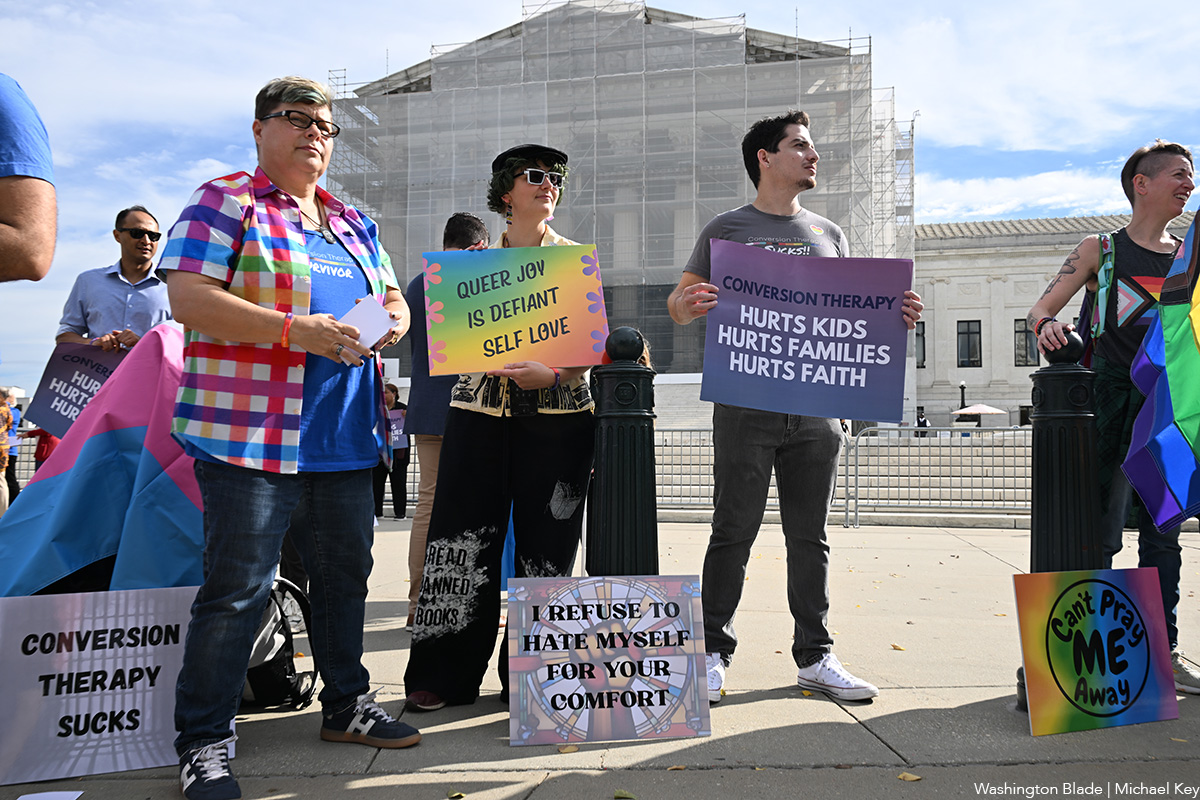
The Supreme Court is expected to issue several rulings this year that could have far-reaching consequences for LGBTQ rights nationwide. Two of the most closely watched issues involve transgender athletes in school sports and the legality of conversion therapy bans.
Two cases heard in 2025 involving transgender athletes in school sports—West Virginia v. B.P.J. and Little v. Hecox—are expected to receive rulings later this year. Oral arguments are scheduled for Jan. 13, with the Court poised to determine whether states can ban transgender girls and women from participating on girls’ sports teams.
Legal experts have warned that the decisions could carry broader civil rights implications beyond athletics, potentially reshaping interpretations of sex discrimination and Title IX protections across education and employment.
The Court is also expected to rule on the future of conversion therapy bans and whether such restrictions are protected under the First Amendment. In October 2025, the justices heard oral arguments in Chiles v. Salazar, a case that will determine whether state and local bans on conversion therapy for LGBTQ youth violate free speech or free exercise of religion protections. A ruling in favor of the plaintiffs could weaken or overturn bans that have been enacted in dozens of states and municipalities.
Federal policy changes
Several new federal policies are being implemented as the year takes shape, with some of the most immediate impacts falling on LGBTQ people. One of the most significant changes is the elimination of gender-affirming care coverage for federal employees.
The policy, put into place by President Trump’s Office of Personnel Management, eliminates health insurance coverage for most gender-affirming medical care in the Federal Employees Health Benefits (FEHB) and Postal Service Health Benefits (PSHB) programs. The change affects hundreds of thousands of federal workers and their families.
The Human Rights Campaign has filed a lawsuit against the OPM policy, alleging that the change violates Title VII’s ban on sex discrimination in employment. Advocates argue that the policy not only limits access to medically necessary care but also signals a broader federal retreat from LGBTQ-inclusive health protections.
Similar proposals are under consideration for the broader American public, including efforts to restrict Medicaid and Medicare coverage for gender-affirming care—moves that could disproportionately impact low-income transgender people, people with disabilities, and those living in rural areas.
Historic anniversaries
In 2026, several historic anniversaries will take place nationwide. The most prominent is the United States’ Semiquincentennial, marking 250 years since the Declaration of Independence. Events are planned across the country, from small-town commemorations to large-scale national celebrations in Washington, D.C.
Among the most anticipated events is the July 4 celebration commemorating 250 years since independence from Great Britain, which is expected to be one of the largest national events of the year.
However, the anniversary planning has already created ripple effects. Capital Pride—Washington’s annual Pride celebration—was forced to move from the second week of June to the third week after the White House announced plans for a large June 14, 2026 celebration on the South Lawn marking President Trump’s 80th birthday.
The White House said the event will include a large-scale Ultimate Fighting Championship (UFC) exhibition involving boxing and wrestling competitions, a decision that has drawn scrutiny from LGBTQ advocates amid ongoing concerns about federal priorities and messaging during a landmark year for the nation.
It also marks 11 years since SCOTUS ruled same-sex marriage is legally protected nationwide with Obergefell v. Hodges.
Colombia
Claudia López criticizes Trump over threats against Colombian president
Presidential candidate would become country’s first lesbian head of government
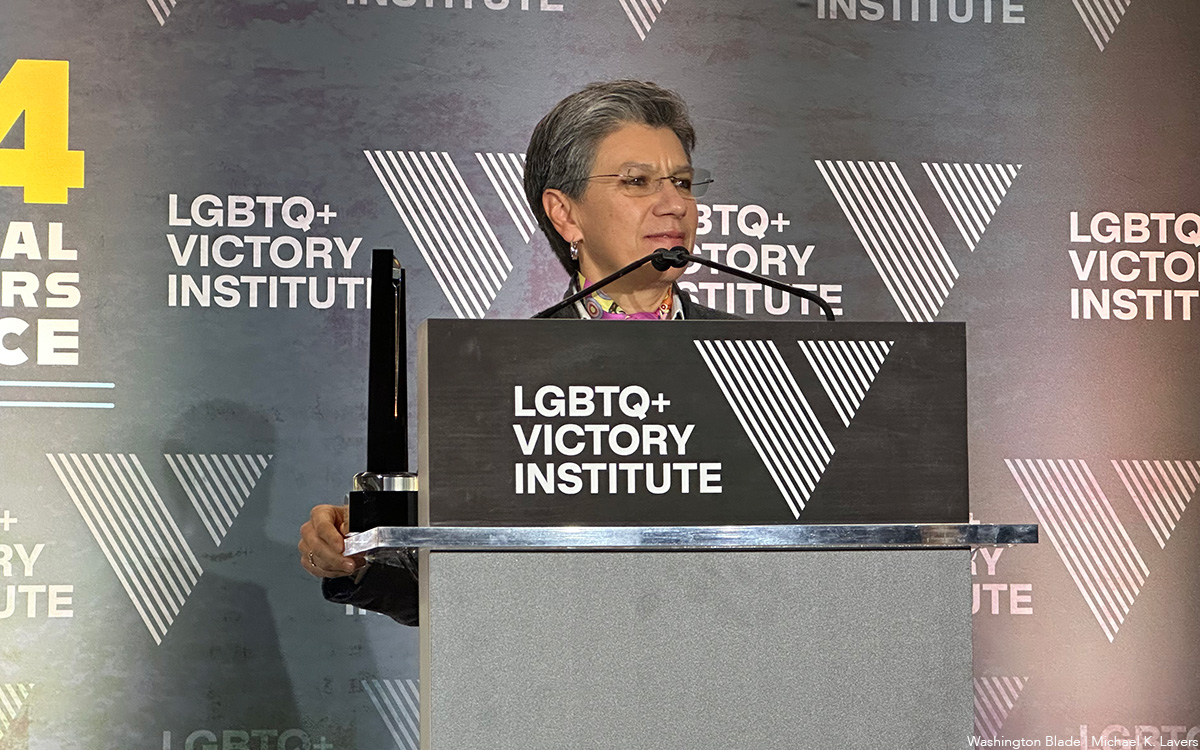
BOGOTÁ, Colombia — Colombian presidential candidate Claudia López has criticized President Donald Trump after he suggested the U.S. will target Colombian President Gustavo Petro.
“Colombia is very sick, too, run by a sick man, who likes making cocaine and selling it to the United States, and he’s not going to be doing it very long,” Trump told reporters on Air Force One on Sunday.
Trump made the comments a day after American forces carried out an overnight operation and seized now former Venezuelan President Nicolás Maduro and wife, Cilia Flores, at their home in Caracas, the Venezuelan capital.
Maduro and Flores on Monday pleaded not guilty to federal drug charges in New York.
Petro is a former Bogotá mayor and senator who was once a member of the M-19 guerrilla movement that disbanded in the 1990s. He has urged Colombians to take to the streets and “defend national sovereignty.”
“Colombians are the ones who decide who governs Colombia,” said López on her X account. “President Gustavo Petro won free elections and has a constitutional mandate.”
López did not mention Trump by name in her comment.
The first-round of Colombia’s presidential election will take place on May 31. The country’s 1991 constitution prevents Petro from seeking re-election.
López in 2019 became the first woman and first lesbian elected mayor of Bogotá, the Colombian capital and the country’s largest city. She took office on Jan. 1, 2020, less than a month after she married her wife, Colombian Sen. Angélica Lozano.
“This year we will decide at the polls what direction (the country) is heading and what leadership will advance Colombia,” said López in her X post. “Supporting soft dictatorships and attacking democracies is an absurd and unacceptable political action by the United States towards Colombia, Venezuela, and Latin America.”
Quién gobierna en Colombia lo decidimos los colombianos.
El presidente @petrogustavo ganó unas elecciones libres y tiene un mandato constitucional. Este año decidiremos en las urnas qué rumbo y a cargo de qué liderazgo avanza Colombia.
Sostener dictablandas y atacar democracias… https://t.co/K61G2QUcck— Claudia López Hernández (@ClaudiaLopez) January 5, 2026
López would be Colombia’s first female president if she wins the election. López would also become the third openly lesbian woman elected head of government — Jóhanna Sigurðardóttir was Iceland’s prime minister from 2009-2013 and Ana Brnabić was Serbia’s prime minister from 2017-2024.
The LGBTQ+ Victory Institute in 2024 honored López at its annual International LGBTQ Leaders Conference in D.C. The Washington Blade interviewed her during the gathering.

PHOTOS: Freddie’s Follies

Imperial Court of Washington drag group has ‘dissolved’

What to watch for in 2026: midterms, Supreme Court, and more

A reminder that Jan. 6 was ‘textbook terrorism’

Claudia López criticizes Trump over threats against Colombian president

D.C.’s 10 best theater productions of 2025

A look back at the best books of 2025

The year in photos

Safer Ways to Pay for Online Performances and Queer Events