Local
Court strikes down Va. sodomy law
Ruling in case of straight man said to apply to gays
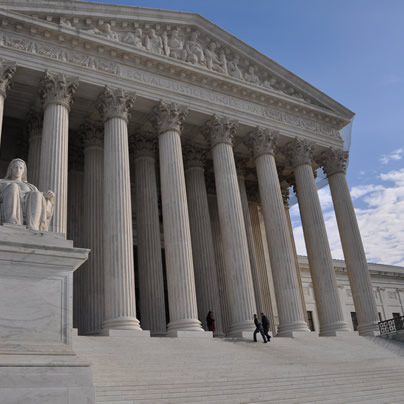
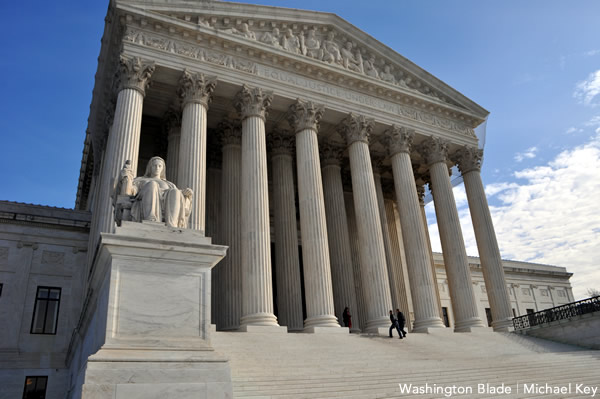
The U.S. Supreme Court struck down sodomy laws as unconstitutional back in 2003, but such laws remain on the books in some states. (Washington Blade file photo by Michael Key)
A federal appeals court handed down a 2-1 decision on Tuesday striking down a section of Virginia’s “Crimes Against Nature” statute that outlaws sodomy between consenting adults, gay or straight.
The 4th U.S. Circuit Court of Appeals issued its ruling in a case in which a 37-year-old married man was charged in 2005 with soliciting another woman, who was 17, to engage in oral sex.
William Scott MacDonald, who lived at the time in the City of Colonial Heights, was convicted of a misdemeanor offense of contributing to the delinquency of a minor and of a felony offense of solicitation for sodomy.
The 4th Circuit federal appeals panel overturned his conviction by a trial judge on the solicitation charge and reversed two lower court rulings that upheld the trial court decision – all on grounds that the 2003 U.S. Supreme Court ruling of Lawrence v. Texas rendered the Virginia anti-sodomy law unconstitutional.
“It is shameful that Virginia continued to prosecute individuals under the sodomy statute for ten years after the Supreme Court held that such laws are unconstitutional,” said Rebecca Glenberg in a statement on behalf of the ACLU of Virginia. The ACLU filed a friend-of-the-court brief supporting MacDonald’s appeal.
“This ruling brings an end to such prosecutions,” she said
The New York-based gay litigation group Lambda Legal Defense and Education Fund also submitted a friend-of-the-court, or amicus, brief on MacDonald’s behalf, according to a notation on the federal appeals court’s 30-page opinion.
A spokesperson for Lambda couldn’t immediately be reached for comment.
“In Lawrence, the Supreme Court plainly held that statutes criminalizing private acts of consensual sodomy between adults are inconsistent with the protections of liberty assured by the Due Process Clause of the Fourteenth Amendment,” said the majority opinion in Tuesday’s appeals court ruling.
Judge Robert King, who wrote the majority opinion, and Judge Diana Gribbon Motz, who joined King in the ruling, rejected arguments by the Virginia Attorney General’s office and rulings by two lower courts that the Lawrence decision didn’t apply to cases involving minors.
King noted in his opinion that current Virginia law, under the parameters of the Lawrence decision, can only prohibit an adult from soliciting sodomy from someone under the age of 15, which is the legal age of consent in the state.
“Thus, although the Virginia General Assembly might be entitled to enact a statute specifically outlawing sodomy between an adult and an older minor, it has not seen fit to do so,” he wrote in his opinion.
Brian Gottstein, a spokesperson for the Virginia Attorney General’s office, told the Richmond Times Dispatch the office “was reviewing the decision and will consider our options.”
The Times Dispatch reported that MacDonald and his wife have since moved to North Carolina. The paper reported that the wife, Carolynn MacDonald, said her husband is a combat veteran suffering from post-traumatic stress disorder.
“He’s enjoying today, but having a difficult time with it,” the Times Dispatch quoted her as saying.
In its summary of the background of the case, the 4th Circuit Appeals Court opinion states that it was MacDonald who triggered an investigation that led to his arrest. It cites trial court records as showing the 17-year-old girl turned down MacDonald’s request that she perform oral sex on him and appeared to let the matter drop.
But according to court records, MacDonald later called the police to report that the 17-year-old solicited him for sex. In an official police report, he told a detective that the 17-year-old “forcibly removed his penis from his pants and performed oral sex against his will.”
After interviewing the 17-year-old, the detective determined that her strong denials that she sought to have sex with MacDonald had far more credibility than MacDonald’s allegations. The detective obtained warrants for MacDonald’s arrest, starting the chain of events that led to Tuesday’s court ruling overturning the state sodomy law.




Rehoboth Beach
HISTORIC: Susan Stewart elected Rehoboth’s first out mayor
Thanks LGBTQ supporters and vows to protect city’s small town charm
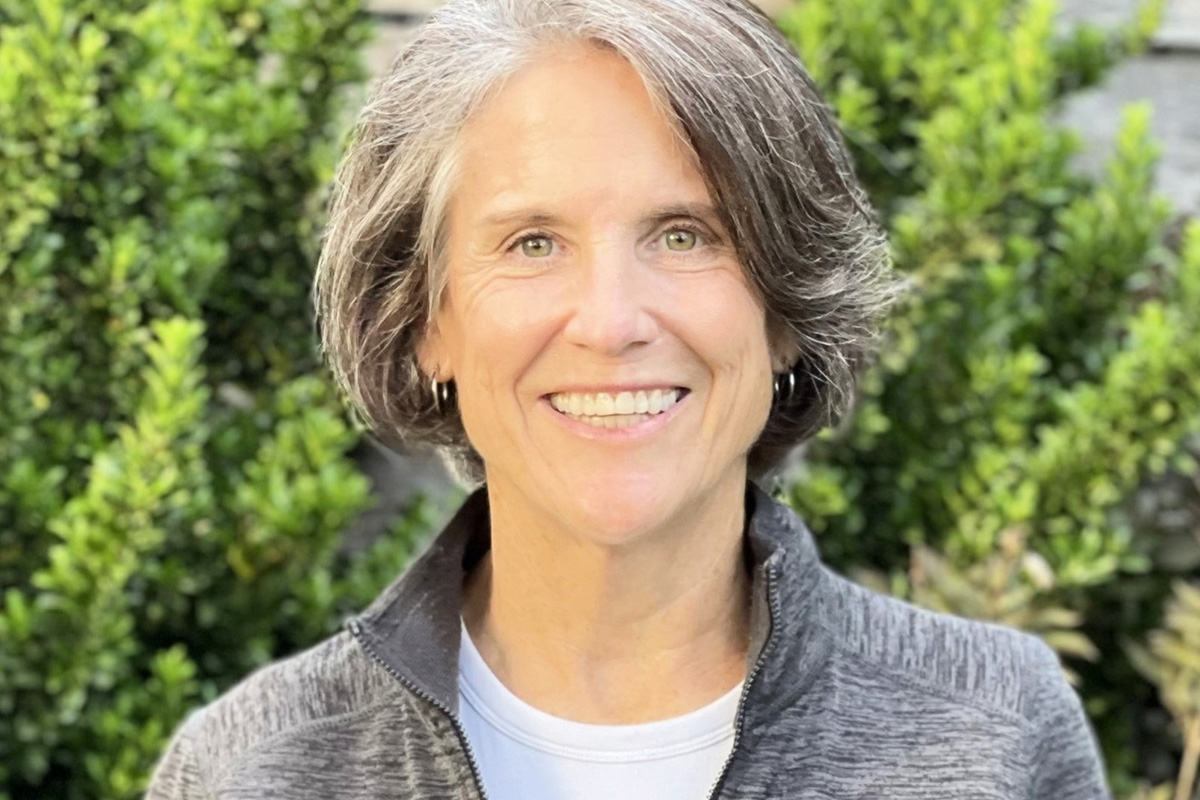
Residents of Rehoboth Beach elected City Commissioner Susan Stewart with 61% of the vote on Aug. 8, making her the city’s first openly gay mayor.
Stewart beat fellow commissioners Craig Their and Suzanne Goode in the race, as well as newcomer Jake Raak.
The final mayoral vote results were:
- Susan Stewart: 632
- Craig Their: 203
- Suzanne Goode: 177
- William “Jake” Raak: 23
“I’m very grateful because the LGBTQ+ community not only voted for me, but also supported me,” said Stewart.
Stewart said that she is particularly grateful for the support she received on social media from members of the LGBTQ+ community.
“I’ve had incredible support,” said Stewart.
Stewart said that her campaign showed her just how much residents of Rehoboth are engaged and care about the city.
“They really want to see what’s best for the community,” said Stewart.
Stewart spoke about the master planning initiative she has been working on as a commissioner, which she plans to continue as mayor.
“We’ve undertaken rewriting the commercial zoning code, and that’s foundational to the next step of the initiative,” said Stewart.
She said that she was proud of the results of charette week that was held last month where residents and business owners had the opportunity to speak with hired urban planners to give feedback for a zoning code update.
Stewart said that Rehoboth is at a tipping point as the city must find a way to balance the growth of the commercial district while improving the quality of life for residents.
“I don’t believe there needs to be tension between the business community and the residential experience,” said Stewart.
“I’m excited about a new master plan because we have a couple hotels coming, and we also have Clear Space Theatre looking for a new home, and we’re working with them,” said Stewart. “We want businesses to stay here.”
Stewart also said that she aims to embrace the concept of a ‘15-minute city,’ making the city much more accessible in terms of transportation in the downtown area for residents.
“The goal is to protect the small town charm and natural beauty of Rehoboth,” said Stewart. “I want to keep the momentum going.”
The Blade asked Stewart about any concerns she might have working with Commissioner Goode, whom she has criticized for sending inappropriate and offensive emails to city staff. Goode finished a distant third in the mayoral race and her husband fell short in his bid for a Commissioner’s seat. In that race, Jeffrey Goode received 239 votes; Patrick Gossett, who’s gay, received 813 votes and Mark Saunders 852. Saunders and Gossett will be sworn in next month.
“I’m really eager to move past this issue with Commissioner Goode,” said Stewart.
She said that she’s heard ‘loud and clear’ from the city that they want to move past this situation as best as they can while Goode remains in her seat as commissioner.
“There are no mechanisms for us to remove a sitting commissioner. Our laws don’t allow it,” said Stewart.
Stewart clarified that she has always focused on Goode’s behavior toward city staff.
“One thing I feel really passionate about is that the city employees have to know that they are heard. They are real people with real jobs, real professional reputations, and they’ve been harmed,” said Stewart.
The Blade also asked if Stewart had made a final decision on whom she plans to nominate to fill her Commissioner seat.
“I’m considering who to appoint and I have not made any final decisions,” said Stewart.
She noted that, as mayor, she only has the power to nominate a candidate and that the board of commissioners will have the final vote on whom to appoint to the board.
Stewart shared that she has received interest from a number of people and finds that to be a good sign.
“I think that’s a great sign because people want to serve. I’m eager to have someone in that seat who’s smart and has the best interests of the city,” said Stewart.
Stewart will be sworn in during the Board of Commissioners meeting on Sept. 18.
District of Columbia
D.C.’s Mary’s House For Older Adults names new executive director
Charlene Leach to succeed Imani Woody as leader of LGBTQ-supportive seniors home

The board of directors of Mary’s House for Older Adults, the D.C.-based home dedicated to providing affordable housing for LGBTQ seniors, has announced it has named longtime nonprofit organization leader A. Charlene Leach as its new executive director.
Leach, who is now serving in the executive director’s position, is succeeding Dr. Imani Woody, the Mary’s House founding president and CEO, who announced her retirement from her official leadership role at Mary’s House on July 7.
Woody, who holds a PhD in Human Services, is credited with playing the lead role over many years in arranging both city and private funding needed to construct and operate the Mary’s House three-story building located at 401 Anacostia Road, S.E., in the city’s Fort DuPont neighborhood.
“With over three decades of nonprofit experience and 15 years serving as an executive director, Charlene brings a wealth of knowledge in organizational leadership, program development, and community engagement,” the Mary’s House board says in a statement.
“Her proven track record of building impactful programs and leading mission-driven organizations makes her uniquely suited to guide Mary’s House into its next phase of growth,” the statement continues. “Charlene is deeply aligned with the mission of Mary’s House and is committed to advancing its work to provide safe, inclusive housing and supportive services for LGBTQ+ older adults,” it says. “Under her leadership, the organization will continue to expand its impact while remaining grounded in the values that define our community.”
Leach’s LinkedIn page shows she has most recently served since 2022 as executive director of the African American AIDS Task Force in Minneapolis. Prior to that, it shows she served as executive director of the Fredericksburg Area Health and Support Services organization in Fredericksburg, Va., and before that as director of development for the D.C.-Baltimore area Women’s Collective.
Her LinkedIn page says she has been involved with Mary’s House as a volunteer and grant writer since 2016.
The newly built and enlarged Mary’s House, which opened in March 2025, with a grand opening ceremony held in May 2025 attended by D.C. Mayor Muriel Bowser, includes 15 single-occupancy residential apartments and more than 5,000 square feet of shared communal living space.
An earlier statement released by the Mary’s House board announcing Woody’s retirement said Woody would continue to be involved with the organization as a member of the board. The earlier statement and board’s more recent statement on July 29 announcing Leach’s appointment as executive director did not say whether the board plans to name someone else as president and CEO, the title that Woody held before her retirement. But the latest statement says Leach will be running Mary’s House’s day-to-day operations as Woody did.
Virginia
Doug Ollivant to face Eugene Vindman in Va. 7th Congressional District
Republican defeated challengers in Tuesday’s primary
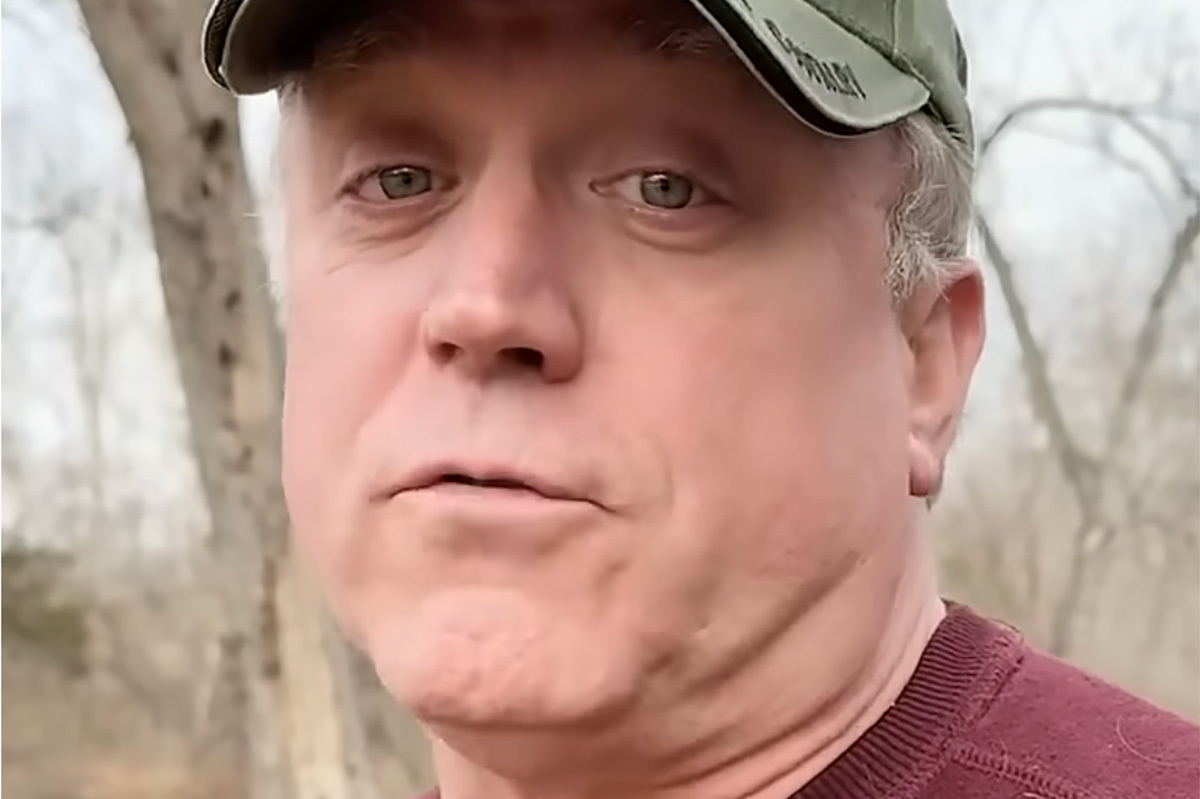
Republican Doug Ollivant will face off against incumbent U.S. Rep. Eugene Vindman (D-Va.) in Virginia’s 7th Congressional District.
Ollivant defeated his Republican opponents in Tuesday’s primary. Vindman ran unopposed.
Vindman in 2024 ran to succeed then-Congresswoman Abigail Spanberger in the U.S. House of Representatives after she ran for governor. Spanberger succeeded Republican Gov. Glenn Youngkin in 2025.
U.S. Sen. Mark Warner (D-Va.) on Tuesday easily won his primary. All other Democratic incumbent members of Congress from Northern Virginia also won their respective primaries.

2 former NBA players launch cheap anti-trans stunt to exploit WNBA rules

Same-sex couples challenges India income tax law

HISTORIC: Susan Stewart elected Rehoboth’s first out mayor

Todd Blanche’s record on LGBTQ issues comes under scrutiny as he takes over DOJ

Don’t miss summer productions at Clear Space in Rehoboth Beach

Greg Araki still wants your sex

Calendar: August 7-13

Insured on paper, excluded in practice

Mr. Henry’s to host 60th anniversary party