National
Groups link Utah polygamy ruling to gay marriage
NOM, FRC blame LGBT advocates for opening ‘path’ to bigamy, incest
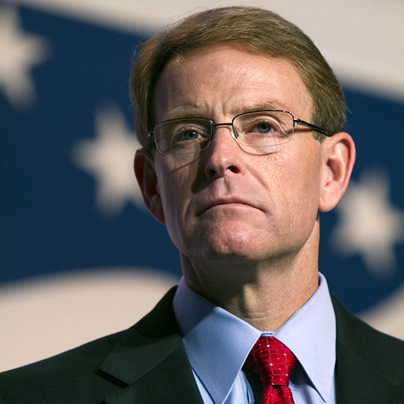
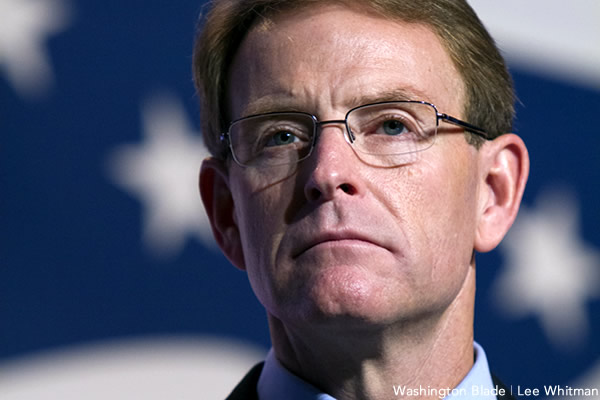
FRC President Tony Perkins says the legalization of same-sex marriage will lead to legalized polygamy. (Washington Blade file photo by Lee Whitman)
Two of the nation’s leading anti-LGBT groups — the National Organization for Marriage and the Family Research Council — said a decision by a federal judge in Utah last week overturning part of the state’s law banning polygamy was made possible by earlier court rulings supportive of same-sex marriage.
An official with the marriage equality group Freedom to Marry disputed that assertion, saying the Utah ruling was limited to the right of people to choose personal living arrangements unrelated to marriage.
But statements by NOM and FRC linking the Utah ruling to same-sex marriage were reported widely in the media, with cable news outlets inviting FRC President Tony Perkins to appear on news programs to express his views on the issue.
Judge Clark Waddoups of the U.S. District Court of Utah ruled on Dec. 13 that a section of Utah’s anti-polygamy law that prohibits “cohabitation” violates the U.S. Constitution’s First Amendment guarantee of freedom of religion as well as the Constitution’s due process clause.
Waddoups’ ruling left in place the anti-polygamy law’s provisions prohibiting someone from obtaining two or more valid marriage licenses to marry more than one person.
In a statement released by the National Organization for Marriage, the group’s president, Brian Brown, called Waddoups’ ruling the first step in an effort by polygamists to bring a test case to the Supreme Court to obtain legal recognition of “plural” marriages.
“There’s no doubt that the arguments for same-sex marriage were a template for this case,” Brown said. “People in polygamist, plural marriages are just a short step away from winning official marriage rights. Adult incest practitioners will have similar claims, as will adult siblings and other close relations,” he said.
“This decision is the next step along the path blazed by same-sex marriage advocates who have convinced federal judges to transform the societal norm of marriage as the union of one man and one woman designed primarily for the benefit of any children produced of their union into an institution that recognizes intimate, romantic relationships between consenting adults,” Brown said.
Evan Wolfson, founder and president of the same-sex marriage advocacy group Freedom to Marry, said Brown’s interpretation of Waddoups’ ruling was incorrect.
“Contrary to yet another predictable breathless rush to misrepresent from NOM and its anti-gay ilk, this decision is no more about marriage than NOM is,” Wolfson told the Blade in an email.
“It’s about cohabitation, that is, whom you may choose to live with,” he said. “As anyone reading the judge’s ruling can see, the decision leaves intact other prohibitions on bigamy, polygamy, and fraud. Instead it’s about choices people make about living together, not marrying.”
Wolfson added, “Do the NOM/FRC crowd really believe that in a free country the government should be dictating to Americans – married or otherwise, religious or otherwise – whom they may even live with?”
The challenge to the Utah polygamy law stems from a lawsuit filed by Kody Brown, the lead figure in the reality television show “Sister Wives,” in which Brown stars with people he identifies as his four wives and 17 children.
Brown and his family are members of the Apostolic Brethren Church, a breakaway sect from the Mormon Church whose members embrace polygamy as part of their religious beliefs. The Mormon Church ended its support for polygamy in the 1890s when Congress required the then territory of Utah to prohibit polygamy as a condition for becoming a state.
George Washington University law professor Jonathan Turley represents the Brown family in connection with their lawsuit. He argued before the court that the provision of the Utah polygamy law prohibiting cohabitation violated the family’s right to privacy and religious freedom.





National
Top 10 LGBTQ national news stories of 2025
Trump, Supreme Court mount cruel attacks against trans community
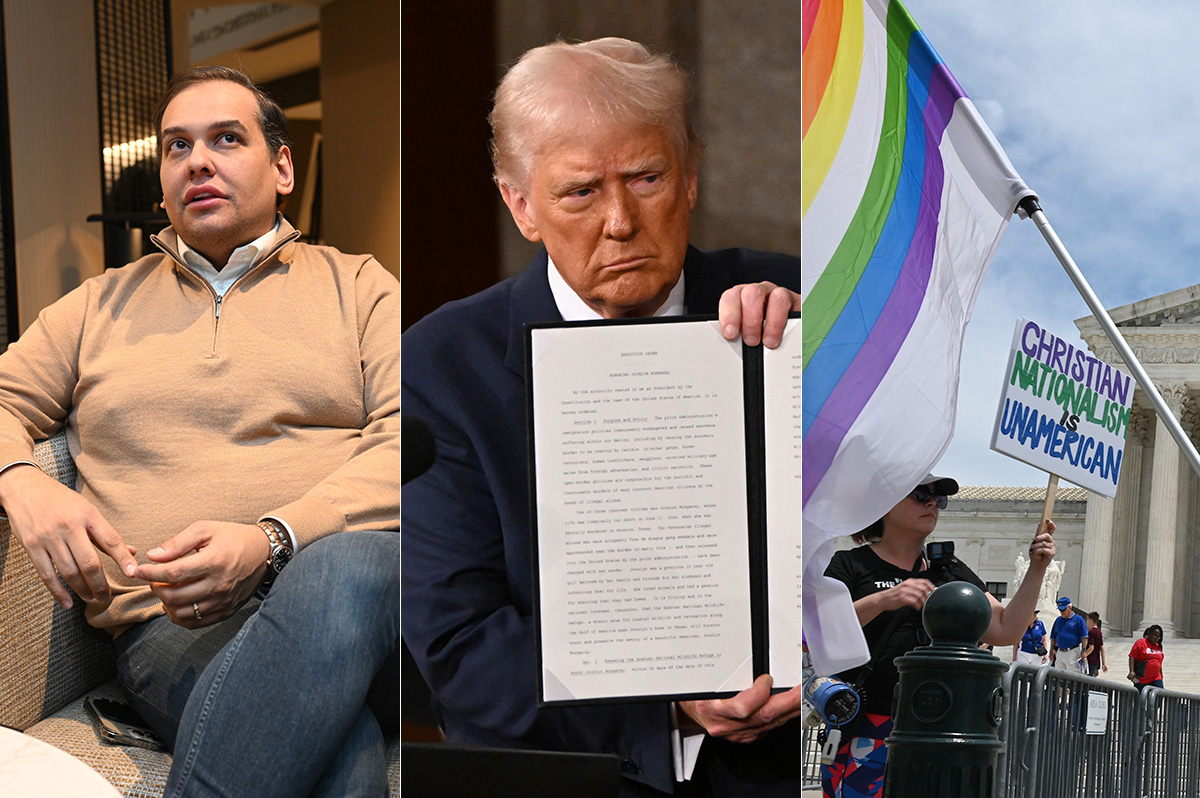
President Trump’s anti-LGBTQ agenda dominated national news in 2025, particularly his cruel attacks on trans Americans. Here are our picks for the top 10 LGBTQ news stories the Blade covered in 2025.
10. Trump grants clemency to George Santos
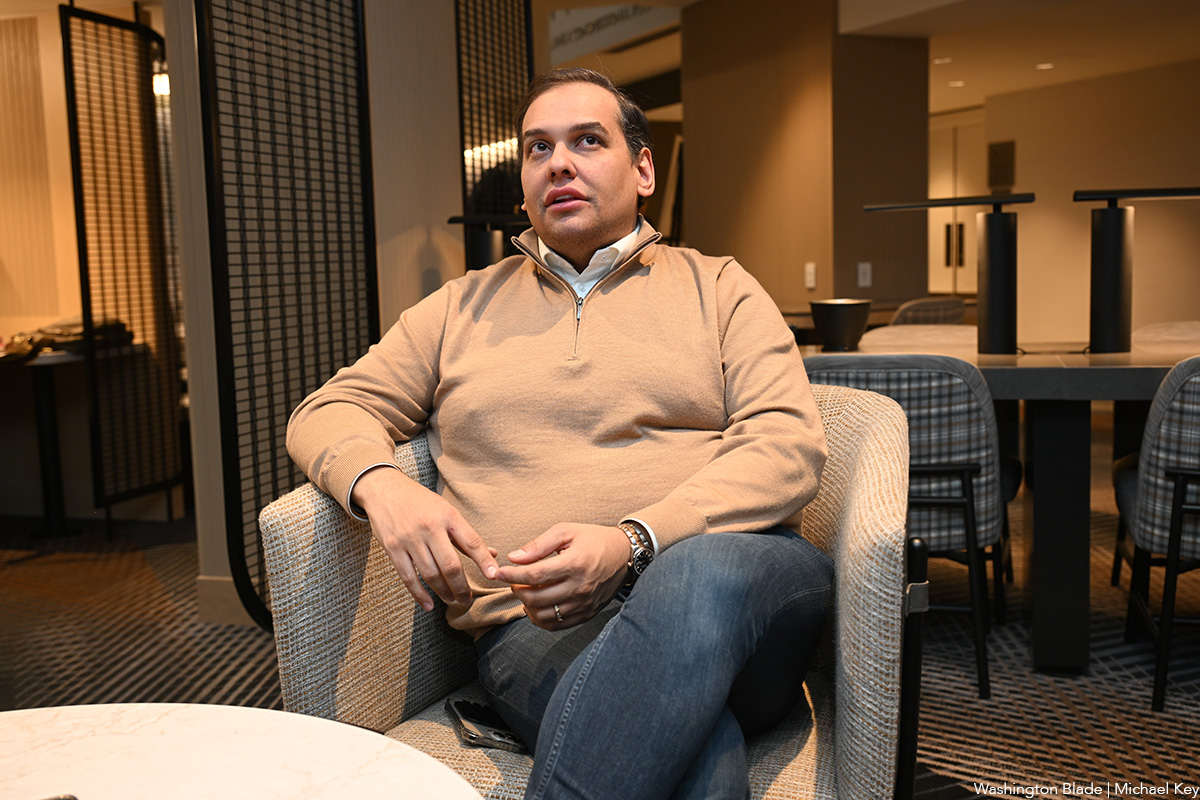
President Donald Trump granted clemency to disgraced former Long Island Rep. George Santos. Santos was sentenced to 87 months in federal prison after pleading guilty to wire fraud and aggravated identity theft and had served just 84 days of his more than seven-year sentence. He lied to both the DOJ and the House Ethics Committee, including about his work and education history, and committed campaign finance fraud.
9. U.S. Olympics bans trans women athletes
The United States Supreme Court decided in 2025 to take up two cases — Little v. Hecox and West Virginia v. B.P.J.— both of which concern the rights of transgender athletes to participate on sports teams. The cases challenge state laws under the Equal Protection Clause of the 14th Amendment, which prevents states from offering separate boys’ and girls’ sports teams based on biological sex determined at birth. Both cases are set to be heard in January 2026. The developments follow a decision by the United States Olympic & Paralympic Committee to change eligibility rules to prohibit transgender women from competing in women’s sporting events on behalf of the United States, following Trump’s Executive Order 14201, “Keeping Men Out of Women’s Sports.”
8. FDA approves new twice-yearly HIV prevention drug
The U.S. Food and Drug Administration on June 18 approved a newly developed HIV/AIDS prevention drug that needs to be taken only twice a year, with one injection every six months. The new drug, lenacapavir, is being sold under the brand name Yeztugo by pharmaceutical company Gilead Sciences. According to trial data, 99.9 percent of participants who received Yeztugo remained HIV negative. This emerging technology comes amid direct cuts to HIV/AIDS research measures by the Trump–Vance administration, particularly targeting international HIV efforts such as PEPFAR.
7. LGBTQ people ‘erased’ from gov’t reports
Politico reported in March that the Trump–Vance administration is slashing the State Department’s annual human rights report, cutting sections related to the rights of women, people with disabilities, the LGBTQ+ community, and more. Members of Congress objected to the removal of the subsection on “Acts of Violence, Criminalization, and Other Abuses Based on Sexual Orientation, Gender Identity or Expression, or Sex Characteristics (SOGIESC)” from the State Department’s Annual Country Reports on Human Rights Practices.
In a Sept. 9 letter to Secretary of State Marco Rubio, U.S. Reps. Robert Garcia (D-Calif.), Julie Johnson (D-Texas), and Sarah McBride (D-Del.) urged the department to restore the information or ensure it is integrated throughout each report, noting that the reports serve as key evidence for asylum seekers, attorneys, judges, and advocates assessing human rights conditions and protection claims worldwide.
6. Trump admin redefines ‘sex’ in all HHS programs
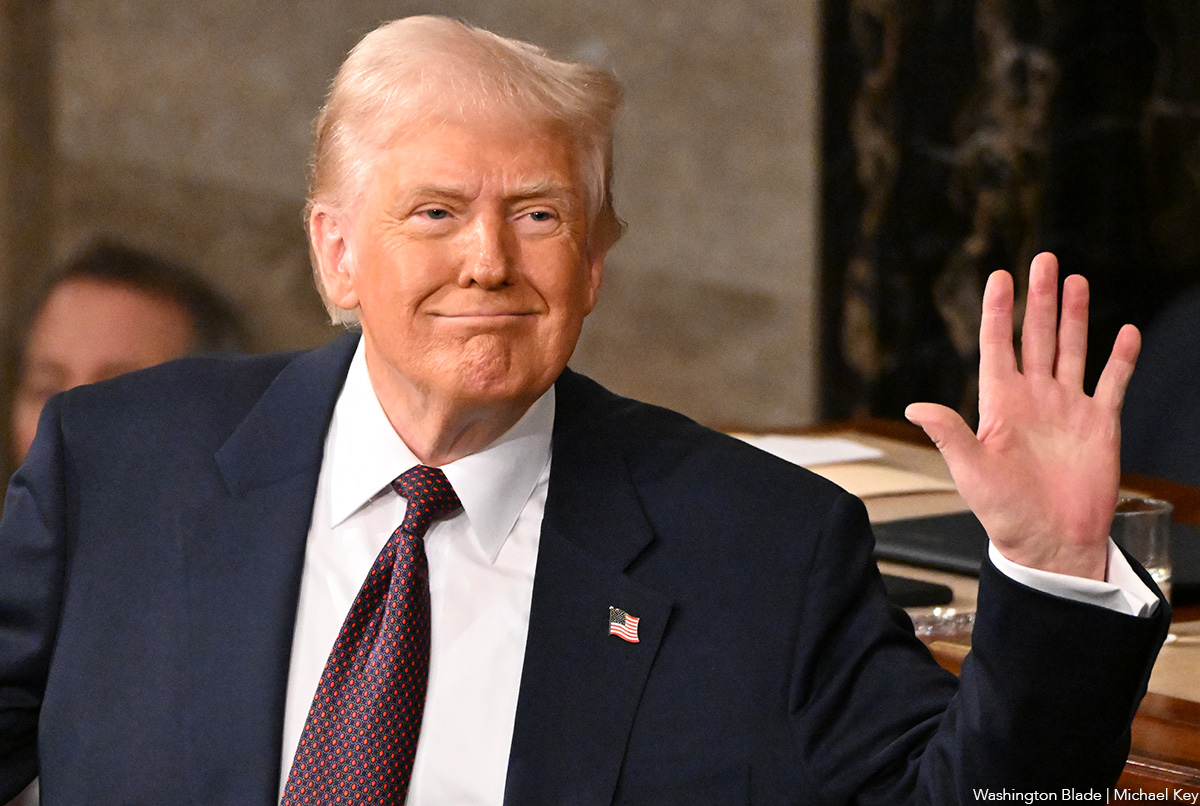
The Trump administration canceled more than $800 million in research into the health of sexual and gender minority groups. More than half of the National Institutes of Health grants scrapped through early May involved studies of cancers and viruses that disproportionately affect LGBTQ people.
The administration is also pushing to end gender-affirming care for transgender youth, according to a new proposal from the Department of Health and Human Services, NPR reported. The administration is considering blocking all Medicaid and Medicare funding for services at hospitals that provide pediatric gender-affirming care. “These rules would be a significant escalation in the Trump administration’s attack on access to transgender health care,” said Katie Keith, director of the Center for Health Policy and Law at Georgetown University.
5. FBI plans to label trans people as ‘violent extremists’
The Human Rights Campaign, Transgender Law Center, Equality Federation, GLAAD, PFLAG, and the Southern Poverty Law Center condemned reports that the FBI, in coordination with the Heritage Foundation, may be working to designate transgender people as “violent extremists.” The concerns followed a report earlier this month by independent journalist Ken Klippenstein, who cited two anonymous national security officials saying the FBI is considering treating transgender subjects as a subset of a new threat category.
That classification—originally created under the Biden administration as “Anti-Authority and Anti-Government Violent Extremists” (AGAAVE) — was first applied to Jan. 6 rioters and other right-wing extremists. Advocates said the proposal appears to stem from the false claim that the assassination of Charlie Kirk was committed by a transgender person.
4. Pentagon targets LGBTQ service members

Acting in agreement with the growing anti-LGBTQ sentiment from the Trump administration, during a televised speech to U.S. military leaders at Marine Corps Base Quantico in late September, Defense Secretary Pete Hegseth denounced past military leadership for being too “woke,” citing DEI initiatives and LGBTQ inclusion within the Department of Defense. During the 45-minute address, Hegseth criticized inclusive policies and announced forthcoming directives, saying they would ensure combat requirements “return to the highest male standard only.”
Since 2016, a Navy replenishment oiler had borne the name of gay rights icon Harvey Milk, who served in the Navy during the Korean War and was separated from service under other than honorable conditions due to his sexuality before later becoming one of the first openly LGBTQ candidates elected to public office. In June 2025, the ship was renamed USNS Oscar V. Peterson.
The U.S. Air Force also announced that transgender service members who have served between 15 and 18 years would be denied early retirement and instead separated from the military without benefits. Transgender troops will be given the option of accepting a lump-sum payout offered to junior service members or being removed from service.
In February, the Pentagon said it would draft and submit procedures to identify transgender service members and begin discharging them from the military within 30 days.
3. Trump blames Democrats, trans people for gov’t shutdown
Republicans failed to reach an agreement with Democrats and blamed them for the government shutdown, while Democrats pointed to Republicans for cutting health care tax credits, a move they said would result in millions of people paying significantly higher monthly insurance premiums next year. In the White House press briefing room, a video of Democrats discussing past government shutdowns played on a loop as the president continued to blame the Democratic Party and “woke” issues, including transgender people.
“A lot of good can come from shutdowns. We can get rid of a lot of things. They’d be Democrat things,” Trump said the night before the shutdown. “They want open borders. Men playing in women’s sports. They want transgender for everybody.”
2. Supreme Court joins attacks on LGBTQ Americans
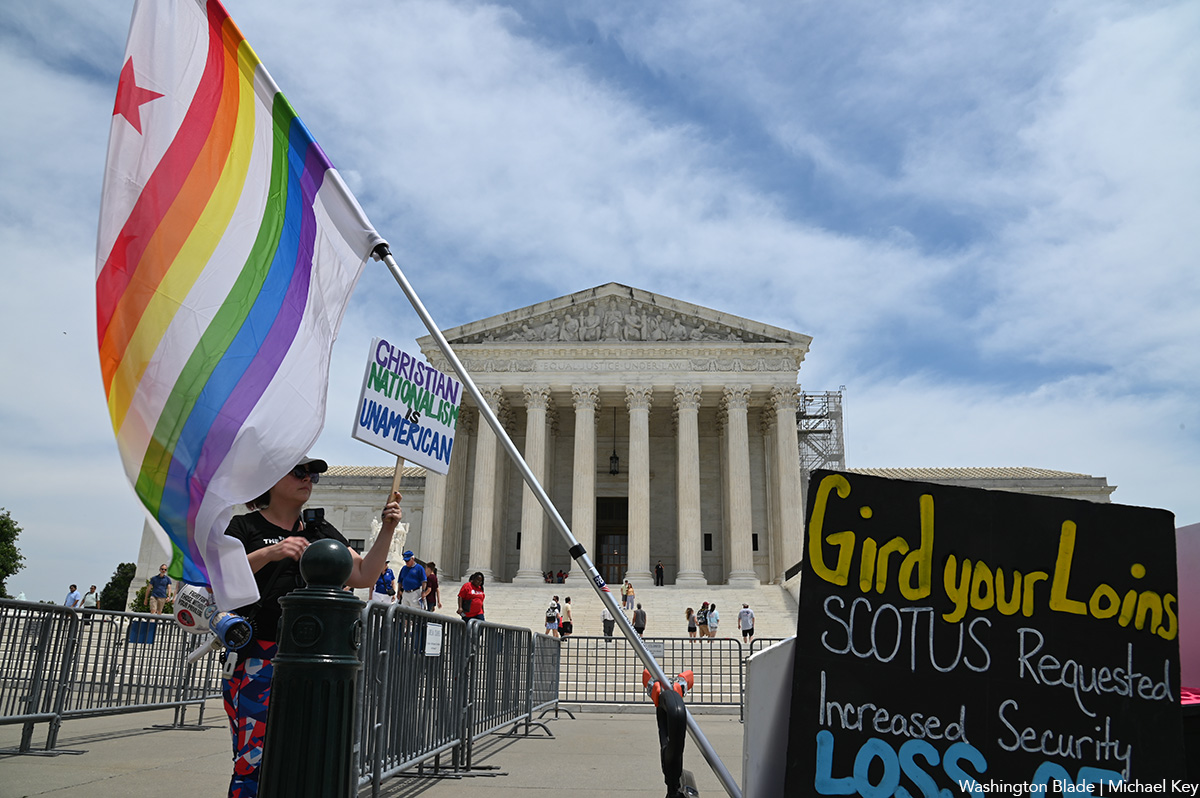
The U.S. Supreme Court issued multiple rulings this year affecting LGBTQ people. In Mahmoud v. Taylor (6–3), it ruled that public schools must give parents advance notice and the option to opt children out of lessons on gender or sexuality that conflict with their religious beliefs. The case arose after Montgomery County, Md., schools added LGBTQ-inclusive storybooks to the elementary curriculum.
In June, the court upheld Tennessee’s ban on gender-affirming care for transgender minors, protecting similar laws in more than 20 states. Lawmakers and advocates criticized the ruling, and a coalition of seven medical associations warned it strips families of the right to direct their own health care.
The Court also allowed the Trump administration to enforce a ban on transgender military personnel and to implement a policy blocking passports with “X” gender markers, with the federal government recognizing only male and female designations.
1. Trump inaugurated for second time
President Donald Trump became the 47th president after winning Wisconsin, securing 277 of the 270 electoral votes needed. His guidebook, Project 2025, outlined the Republican Party’s goals under his new leadership, with a particular focus on opposing transgender rights.
Trump nominated openly gay hedge fund executive Scott Bessent as U.S. Treasury Secretary, a role he eventually assumed. Bessent became the highest-ranking openly gay U.S. government official in American history.

Honorable mention: The war on rainbow crosswalks escalates around the country
Florida Gov. Ron DeSantis (R) ordered state transportation officials to remove a rainbow-colored crosswalk in Orlando next to the Pulse gay nightclub, where 49 mostly LGBTQ people were killed in a 2016 mass shooting. The move follows a July 1, 2025, announcement by U.S. Transportation Secretary Sean Duffy that, with support from President Trump, the department adopted a “nationwide roadway safety initiative” that political observers say could be used to require cities and states to remove rainbow street crosswalks.
Federal Government
Holiday week brings setbacks for Trump-Vance trans agenda
Federal courts begin to deliver end-of-year responses to lawsuits involving federal transgender healthcare policy.

While many Americans took the week of Christmas to rest and relax, LGBTQ politics in the U.S. continued to shift. This week’s short recap of federal updates highlights two major blows to the Trump-Vance administration’s efforts to restrict gender-affirming care for minors.
19 states sue RFK Jr. to end gender-affirming care ban
New York Attorney General Letitia James announced on Tuesday that the NYAG’s office, along with 18 other states (and the District of Columbia), filed a lawsuit to stop U.S. Health and Human Services (HHS) Secretary Robert F. Kennedy Jr. from restricting gender-affirming care for minors.
In the press release, Attorney General James stressed that the push by the Trump-Vance administration’s crusade against the transgender community — specifically transgender youth — is a “clear overreach by the federal government” and relies on conservative and medically unvalidated practices to “punish providers who adhere to well-established, evidence-based care” that support gender-affirming care.
“At the core of this so-called declaration are real people: young people who need care, parents trying to support their children, and doctors who are simply following the best medical evidence available,” said Attorney General James. “Secretary Kennedy cannot unilaterally change medical standards by posting a document online, and no one should lose access to medically necessary health care because their federal government tried to interfere in decisions that belong in doctors’ offices. My office will always stand up for New Yorkers’ health, dignity, and right to make medical decisions free from intimidation.”
The lawsuit is a direct response to HHS’ Dec. 18 announcement that it will pursue regulatory changes that would make gender-affirming health care for transgender children more difficult, if not impossible, to access. It would also restrict federal funding for any hospital that does not comply with the directive. KFF, an independent source for health policy research, polling, and journalism, found that in 2023 federal funding covered nearly 45% of total spending on hospital care in the U.S.
The HHS directive stems directly from President Donald Trump’s Jan. 28 Executive Order, Protecting Children From Chemical and Surgical Mutilation, which formally establishes U.S. opposition to gender-affirming care and pledges to end federal funding for such treatments.
The American Medical Association, the nation’s largest and most influential physician organization, has repeatedly opposed measures like the one pushed by President Trump’s administration that restrict access to trans health care.
“The AMA supports public and private health insurance coverage for treatment of gender dysphoria and opposes the denial of health insurance based on sexual orientation or gender identity,” a statement on the AMA’s website reads. “Improving access to gender-affirming care is an important means of improving health outcomes for the transgender population.”
The lawsuit also names Oregon, Washington, California, Colorado, Connecticut, Delaware, the District of Columbia, Illinois, Maine, Maryland, Massachusetts, Michigan, Minnesota, New Mexico, Pennsylvania, Rhode Island, Vermont, and Wisconsin as having joined New York in the push against restricting gender-affirming care.
At the HHS news conference last Thursday, Jim O’Neill, deputy secretary of the department, asserted, “Men are men. Men can never become women. Women are women. Women can never become men.”
DOJ stopped from gaining health care records of trans youth
U.S. District Judge Cathy Bissoon blocked an attempt by the Department of Justice (DOJ) to gain “personally identifiable information about those minor transgender patients” from the University of Pittsburgh Medical Center (UPMC), saying the DOJ’s efforts “fly in the face of the Supreme Court.”
Journalist Chris Geidner originally reported the news on Dec. 25, highlighting that the Western District of Pennsylvania judge’s decision is a major blow to the Trump-Vance administration’s agenda to curtail transgender rights.
“[T]his Court joins the others in finding that the government’s demand for deeply private and personal patient information carries more than a whiff of ill intent,” Bissoon wrote in her ruling. “This is apparent from its rhetoric.”
Bissoon cited the DOJ’s “incendiary characterization” of trans youth care on the DOJ website as proof, which calls the practice politically motivated rather than medically sound and seeks to “…mutilate children in the service of a warped ideology.” This is despite the fact that a majority of gender-affirming care has nothing to do with surgery.
In United States v. Skrmetti, the Supreme Court ruled along party lines that states — namely Tennessee — have the right to pass legislation that can prohibit certain medical treatments for transgender minors, saying the law is not subject to heightened scrutiny under the Equal Protection Clause of the Fourteenth Amendment because it does not involve suspect categories like race, national origin, alienage, and religion, which would require the government to show the law serves a compelling interest and is narrowly tailored, sending decision-making power back to the states.
“The government cannot pick and choose the aspects of Skrmetti to honor, and which to ignore,” Judge Bissoon added.
The government argued unsuccessfully that the parents of the children whose records would have been made available to the DOJ “lacked standing” because the subpoena was directed at UPMC and that they did not respond in a timely manner. Bissoon rejected the timeliness argument in particular as “disingenuous.”
Bissoon, who was nominated to the bench by then-President Obama, is at least the fourth judge to reject the DOJ’s attempted intrusion into the health care of trans youth according to Geidner.
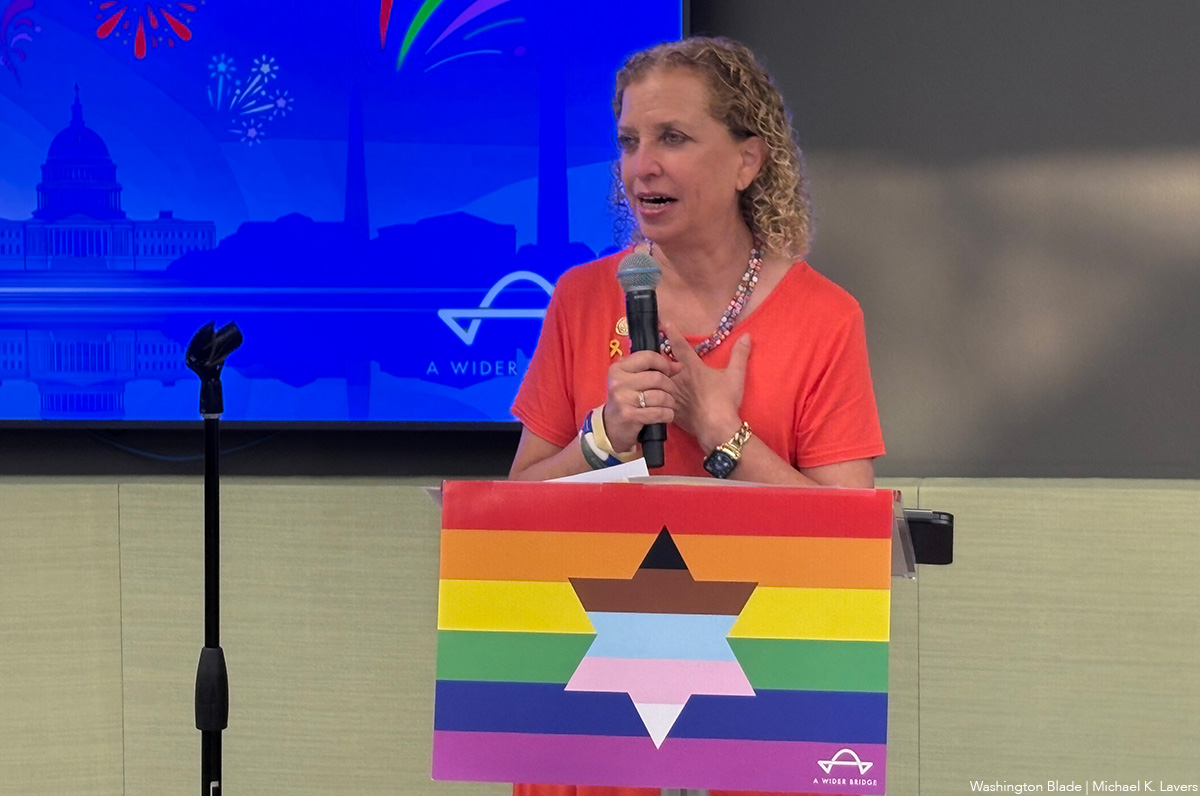
A Wider Bridge on Friday announced it will shut down at the end of the month.
The group that “mobilizes the LGBTQ community to fight antisemitism and support Israel and its LGBTQ community” in a letter to supporters said financial challenges prompted the decision.
“After 15 years of building bridges between LGBTQ communities in North America and Israel, A Wider Bridge has made the difficult decision to wind down operations as of Dec. 31, 2025,” it reads.
“This decision comes after challenging financial realities despite our best efforts to secure sustainable funding. We deeply appreciate our supporters and partners who made this work possible.”
Arthur Slepian founded A Wider Bridge in 2010.
The organization in 2016 organized a reception at the National LGBTQ Task Force’s Creating Change Conference in Chicago that was to have featured to Israeli activists. More than 200 people who protested against A Wider Bridge forced the event’s cancellation.
A Wider Bridge in 2024 urged the Capital Pride Alliance and other Pride organizers to ensure Jewish people can safely participate in their events in response to an increase in antisemitic attacks after Hamas militants attacked Israel on Oct. 7, 2023.
The Jewish Telegraphic Agency reported authorities in Vermont late last year charged Ethan Felson, who was A Wider Bridge’s then-executive director, with lewd and lascivious conduct after alleged sexual misconduct against a museum employee. Rabbi Denise Eger succeeded Felson as A Wider Bridge’s interim executive director.
A Wider Bridge in June honored U.S. Rep. Debbie Wasserman Schultz (D-Fla.) at its Pride event that took place at the Capital Jewish Museum in D.C. The event took place 15 days after a gunman killed two Israeli Embassy employees — Yaron Lischinsky and Sarah Milgrim — as they were leaving an event at the museum.
“Though we are winding down, this is not a time to back down. We recognize the deep importance of our mission and work amid attacks on Jewish people and LGBTQ people – and LGBTQ Jews at the intersection,” said A Wider Bridge in its letter. “Our board members remain committed to showing up in their individual capacities to represent queer Jews across diverse spaces — and we know our partners and supporters will continue to do the same.”
Editor’s note: Washington Blade International News Editor Michael K. Lavers traveled to Israel and Palestine with A Wider Bridge in 2016.

Blade travels to Colombia after U.S. forces seize Maduro in Venezuela

LGBTQ groups to join Spanberger inaugural parade

Queer highlights of the 2026 Critics Choice Awards: Aunt Gladys, that ‘Heated Rivalry’ shoutout and more

Two pioneering gay journalists to speak at Thursday event