National
Rejected gay judicial nominee speaks out
Alter says media ‘falsely reported’ anti-Christian views

A gay New York attorney whose nomination to the federal bench was rejected by the White House over anti-Christian comments he allegedly made claims that media outlets mischaracterized his views.
In an Oct. 21 letter to the Washington Blade, Daniel Alter said media outlets misrepresented his views on inclusion of the phrase “under God” in the Pledge of Allegiance and the practice of wishing shoppers “Merry Christmas” during the holidays.
The Blade this week published those reported statements as they were presented in a 2005 article from Cybercast News Online and a 2004 article in The New Republic.
“Having read the [Blade] article, I am concerned that other readers might come away believing that I am hostile to the seasonal greetings ‘Merry Christmas’ and that I personally object to the Pledge of Allegiance,” Alter writes. “Neither is true.”
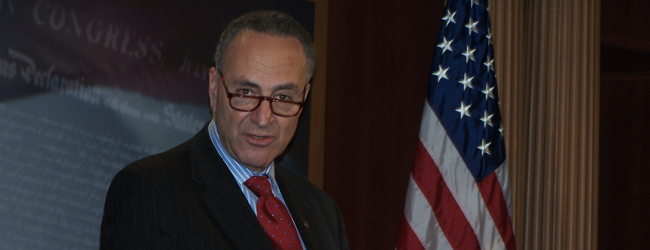
In February, Sen. Chuck Schumer (D-N.Y.) announced his recommended nomination of Alter to serve as a judge for the U.S. District Court in the Southern District of New York.
But informed sources told the Blade the White House rejected the nomination over the statements perceived as anti-Christian.
Alter was previously an assistant U.S. attorney for the Southern District of New York and specialized in First Amendment and terrorism issues. He also served as national director of the civil rights division of the Anti-Defamation League, an organization that works to fight anti-Semitism.
Had the Senate confirmed Alter to the position, he would have become the first openly gay male to serve on the federal bench.
In his letter to the Blade, Alter says the CNS article that quotes his views on “Merry Christmas” took his “words entirely out of context.”
“As National Civil Rights Director for the Anti-Defamation League, it was my job to express ADL’s view that — especially at holiday time — people should appreciate that different faith traditions celebrate differently, and children’s schools and other public institutions should try to acknowledge these diverse customs when they sponsor holiday events,” Alter says. “In short, the message was that holiday time should be a time for warmth and inclusion, not division and exclusion.”
The quote from the 2005 CNS article reads: “Our diversity has made us great and will continue to make us great and [‘Merry Christmas’] undermines both the holiday spirit as well as the message I think Americans should be sending to each other.”
Alter attached to his letter to the Blade a 2005 e-mail he sent to the communications staff at the Anti-Defamation League saying CNS News “falsely reported” his remarks.
“I feel strongly that we should send a correction for the record,” Alter said at the time. “I do not want to go down as someone who is hostile to ‘Merry Christmas.’”
Deborah Lauter, current director of civil rights for the Anti-Defamation League, has told the Blade her organization “should have insisted” the record be corrected at the time.
CNS News didn’t immediately respond to the Blade’s request for comment on the accuracy of the Alter quote.
In the letter to Blade, Alter also takes issue with the way his views of the phrase “under God” in the Pledge of Allegiance were presented in the 2004 article in The New Republic and says his fidelity to the pledge has “never waivered.”
“Not while I recited it on a daily basis in elementary school, not while I served in the United States Department of Justice for almost eight years, and not while I worked at ADL earnestly defending the fundamental right of all who live in this nation to practice their faith freely and enthusiastically, or not to be religious, depending upon their individual conscience,” Alter says.
In his letter, Alter doesn’t explicitly state that he was misquoted in The New Republic article in 2004 or that the piece merited a correction.
Lauter has told the Blade that Alter said he doesn’t recall speaking to The New Republic reporter who quoted him in the article.
The New Republic article quotes Alter as saying that the U.S. Supreme Court case Elk Grove United School District v. Newdow, which challenged inclusion of “under God” in the Pledge of Allegiance, was “a good case at the wrong time.” Additionally, the article reports that Alter was “relieved” the Supreme Court decision “left open a window for future challenges.”
The New Republic didn’t immediately respond to the Blade’s request for comment on whether it stands by its reporting from 2004.
Based on the reported statements, the White House and Schumer reportedly determined that Alter wouldn’t be able to reach the 60-vote threshold needed in the Senate to overcome a filibuster of his nomination. It’s unclear when the decision to reject Alter was made.
The rejection disappointed many of his supporters, who urged the White House and Schumer to reconsider the decision and push him through the Senate. Schumer has since recommended the nomination of another openly gay man for the position on the judiciary.
Shin Inouye, a White House spokesperson, addressed the rejection of Alter’s nomination in a statement to the Blade.
“The White House does not comment on Presidential appointments that have not been announced,” Inouye said. “But all potential nominees are considered on the basis of their qualifications.”
Inouye said the president is committed to appointing “highly qualified individuals” for each post and “is proud that his appointments reflect the diversity of the American public.”
“We have already made a record number of openly LGBT appointments — including appointments to the judicial branch — and we are confident that this number will only continue to grow,” Inouye said.
Tennessee
Tenn. lawmakers pass transgender “watch list” bill
State Senate to consider measure on Wednesday
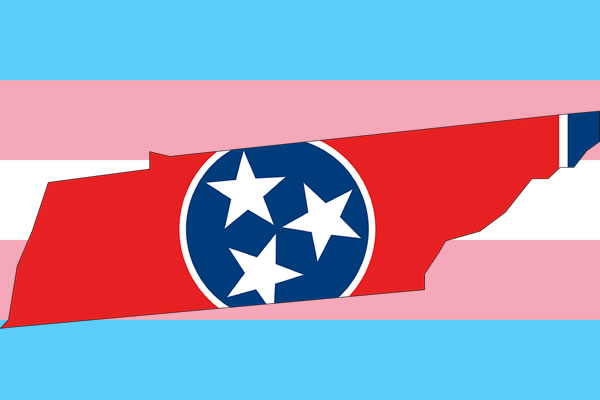
The Tennessee House of Representatives passed a bill last week to create a transgender “watch list” that also pushes detransition medical treatment. The state Senate will consider it on Wednesday.
House Bill 754/State Bill 676 has been deemed “ugly” by LGBTQ advocates and criticized by healthcare information litigators as a major privacy concern.
The bill would require “gender clinics accepting funds from this state to perform gender transition procedures to also perform detransition procedures; requires insurance entities providing coverage of gender transition procedures to also cover detransition procedures; requires certain gender clinics and insurance entities to report information regarding detransition procedures to the department of health.”
It would require that any gender-affirming care-providing clinics share the date, age, and sex of patients; any drugs prescribed (dosage, frequency, duration, and method administered); the state and county; the name, contact information, and medical specialty of the healthcare professional who prescribed the treatment; and any past medical history related to “neurological, behavioral, or mental health conditions.” It would also mandate additional information if surgical intervention is prescribed, including details on which healthcare professional made a referral and when.
HB 0754 would also require the state to produce a “comprehensive annual statistical report,” with all collected data shared with the heads of the legislature and the legislative librarian, and eventually published online for public access.
The bill also reframes detransitioning as a major focus of gender-affirming healthcare — despite studies showing that the number of trans people who detransition is statistically quite low, around 13 percent, and is often the result of external pressures (such as discrimination or family) rather than an issue with their gender identity.
This legislation stands in sharp contrast to federal protections restricting what healthcare information can be shared. In 1996, Congress passed the Health Insurance Portability and Accountability Act, or HIPAA, requiring protections for all “individually identifiable health information,” including medical records, conversations, billing information, and other patient data.
Margaret Riley, professor of law, public health sciences, and public policy at the University of Virginia, has written about similar efforts at the federal level, noting the Trump-Vance administration’s push to subpoena multiple hospitals’ records of gender-affirming care for trans patients despite no claims — or proof — that a crime was committed.
It has “sown fear and concern, both among people whose information is sought and among the doctors and other providers who offer such care. Some health providers have reportedly decided to no longer provide gender-affirming care to minors as a result of the inquiries, even in states where that care is legal.” She wrote in an article on the Conversation, where she goes further, pointing out that the push, mostly from conservative members of the government, are pushing extracting this private information “while giving no inkling of any alleged crimes that may have been committed.”
State Rep. Jeremy Faison (R-Cosby), the bill’s sponsor, said in a press conference two weeks ago that he has met dozens of individuals who sought to transition genders and ultimately detransitioned. In committee, an individual testified in support of the bill, claiming that while insurance paid for gender-affirming care, detransition care was not covered.
“I believe that we as a society are going to look back on this time that really burst out in 2014 and think, ‘Dear God, What were we thinking? This was as dumb as frontal lobotomies,’” Faison said of gender-affirming care. “I think we’re going to look back on society one day and think that.”
Jennifer Levi, GLAD Law’s senior director of Transgender and Queer Rights, shared with PBS last year that legislation like this changes the entire concept of HIPAA rights for trans Americans in ways that are invasive and unnecessary.
“It turns doctor-patient confidentiality into government surveillance,” Levi said, later emphasizing this will cause fewer people to seek out the care that they need. “It’s chilling.”
The Washington Blade reached out to the American Civil Liberties Union of Tennessee, which shared this statement from Executive Director Miriam Nemeth:
“HB 754/SB 676 continues the ugly legacy of Tennessee legislators’ attacks on the lives of transgender Tennesseans. Most Tennesseans, regardless of political views, oppose government databases tracking medical decisions made between patients and their doctors. The same should be true here. The state does not threaten to end the livelihood of doctors and fine them $150,000 for safeguarding the sensitive information of people with diabetes, depression, cancer, or other conditions. Trans people and intersex people deserve the same safety, privacy, and equal treatment under the law as everyone else.”
National
Glisten’s 30th annual Day of Silence to take place April 10
Campaign began as student-led protests against anti-LGBTQ bullying, discrimination

Glisten’s 30th annual Day of Silence will take place on April 10.
The annual Day of Silence began as a student-led protest in response to bullying and discrimination that LGBTQ students face. It is now a national campaign for the LGBTQ community and their allies to come together for LGBTQ youth.
It takes place annually and has multiple ways for supporters to get involved in the movement.
Glisten, originally GLSEN, champions LGBTQ issues in schools, grades K-12. Glisten’s mission is to create more inclusive and accepting environments for LGBTQ students through curriculum, supportive measures, education campaigns, and engagement, such as the Day of Silence.
There are three main ways for the community to get involved in the Day of Silence.
Glisten has a Day of Silence frame, a series of pictures used as profile photos across social media that feature individuals holding signs. The signs allow for personalization, by providing a space to put the individual’s name, followed by filling in the prompt “ … and I am ENDING the silence by…”
Participants are encouraged to post the photo on social media and use it as a profile picture. The templates can be found on Google Drive through this link.
Using #DayOfSilence and #NSCS, as well as tagging Glisten’s official Page @glistencommunity, is another way to participate in the Day of Silence.
Glisten also encourages participants to tag creators, friends, family and use a call to action in their caption, to call attention to the facts and stories behind the Day of Silence.
“Today’s administration in the U.S. wants us to stay silent, submit to their biased and hurtful conformity, and stop fighting for our right to be authentically ourselves,” said Glisten CEO Melanie Willingham-Jaggers. “We urge supporters to use their social platforms and check in with local chapters to be boots on the ground to help LGBTQ+ students feel seen, heard, supported, and less alone. By participating in the ‘Day of Silence,’ you are showing solidarity with young people as they navigate identity, safety, and belonging. Our voices matter.”
South Carolina
Man faces first S.C. ‘hate intimidation’ charge
Timothy Truett allegedly shot at gay club in Myrtle Beach on April 1

A South Carolina man remains in custody on a more than $300,000 bond after he allegedly opened fire at a Myrtle Beach nightclub on April 1, according to WMBF.
Reports say 37-year-old Timothy James Truett Jr., of Clover, S.C., was detained by the Myrtle Beach Police Department after the April 1 incident outside Pulse Ultra Club. He was later arrested and charged with possession of a weapon during a violent crime, discharging a firearm into a dwelling, discharging a firearm within city limits, malicious injury to real property valued over $5,000, and assault or intimidation due to political opinions or the exercise of civil rights.
At 10:57 a.m. on April 1, officers responded to a call about a possible shooting at Pulse Ultra Club, located in the 2700 block of South Kings Highway.
In an affidavit released later, the club’s owner, Ken Phillips, said he was doing paperwork that morning when he heard “five or six” gunshots. He went outside and found a window and the windshield of his SUV shattered by bullets. An SUV with blue plastic covering one window was left at the scene.
Police later reviewed footage that showed a silver vehicle stopping in the middle of the road. The video appeared to capture muzzle flashes coming from the passenger-side window.
According to the affidavit, an officer later pulled over a vehicle driven by Truett and found spent shell casings in the back seat, along with a gun.
Documents do not detail why Truett was ultimately charged under the state law covering assault or intimidation tied to political opinions or the exercise of civil rights.
As of April 1, records show Truett is being held in Horry County on a combined bond of more than $312,000.
WMBF spoke with Phillips after the incident and asked whether there was any prior conflict that might have led to the shooting.
“I don’t know if it’s personal, I don’t know if it’s related to being gay, I don’t know if it’s related to the bar issues,” Phillips told WMBF. “Anybody with a mindset of pulling out a weapon in broad daylight is not right.”
“My primary concern has and always will be the safety of my community and my customers,” he added. “It’s given me great concern … as to how far people will go.”
WMBF also spoke with Adam Hayes, vice chair of Myrtle Beach’s Human Rights Coalition, who was involved in pushing for the ordinance. He said that while the incident itself is troubling, it shows the policy is being put to use.
The ordinance is intended to deter “crimes that are motivated by bias or hate towards any person or persons, in whole or in part, because of the actual or perceived” identity, in the absence of a statewide hate crime law.
“It’s nice to see that something we put into policy is not just a piece of paper, that it’s actually being used,” said Hayes.
He said the shooting underscores the need for a statewide hate crime law in South Carolina and added that the incident has left the local LGBTQ community shaken.
South Carolina and Wyoming are the only two states in the U.S. without a comprehensive statewide hate crime law.
Truett remains in jail as of publication.

Trump’s war threats trigger rare 25th Amendment discussion

A Sondheim masterpiece ‘Merrily’ rolls onto Netflix

ROSENSTEIN: Vote McDuffie for mayor of D.C.

New book celebrates 1970s dance music icons