National
DOJ appeals lesbian Air Force officer’s reinstatement
But Witt able to resume service in U.S. military
The Obama administration is appealing a federal district court’s decision to reinstate back into the U.S. Air Force a lesbian nurse who was discharged under “Don’t Ask, Don’t Tell.”
On Tuesday, the U.S. Justice Department filed an appeal notice with the U.S. Ninth Circuit Court of Appeals asking the appellate body to reconsider a decision by a Washington State district court to allow Maj. Margaret Witt back into the Air Force.
The three-page notice gives no explanation for why the Obama administration is appealing Witt v. Air Force and simply states that “notice is hereby given” that the Justice Department has made the filing.
In September, U.S. District Court Judge Ronald Leighton ruled that Witt, who was discharged in 2006 after serving in the Air Force for 19 years as a flight nurse, should be allowed back into the military.
White House Press Secretary Robert Gibbs said in a statement the administration filed the appeal as it “traditionally does when acts of Congress have been held unconstitutional,” but said this filing “in no way diminishes” President Obama’s commitment to repealing “Don’t Ask, Don’t Tell” legislatively this year.
“Indeed, it clearly shows why Congress must act to end this misguided policy,” Gibbs added.
Gibbs said the president and administration officials “have been working with the Senate” to move forward during the lame duck session with passage of the fiscal year 2011 defense authorization bill, which contains repeal language.
But Jon Davidson, legal director for Lambda Legal, blasted the Obama adminstration for appealing to a higher court the decision to reinstate Witt.
“Notwithstanding President Obama’s concession that the military’s current anti-gay policies are hurting national security, his administration is continuing to pursue the discharge of a decorated officer who did not ‘tell,’ who would not have even been investigated under the military’s current guidelines, and whose discharge has been found not to promote unit cohesion or morale,” Davidson said.
Davidson called the decision to appeal the district court’s ruling — in addition to not suspending discharges pending review of “Don’t Ask, Don’t Tell — a “significant failure on the part of our nation’s Commander in Chief.”
Doug NeJaime, who’s gay and a law professor at Loyola Law School, said he thinks the decision to appeal the Witt ruling is consistent with the Obama administration’s decision to appeal U.S. District Court Judge Virginia Phillip’s recent ruling that struck down “Don’t Ask, Don’t Tell.”
“So just as the government is appealing the substance of Judge Philip’s decision …, the government is appealing the substantive decision here as well,” NeJaime said. “While disappointing, it is in some ways consistent with the appeal in Log Cabin Republicans.”
In a statement, Witt said she’s “thrilled” to be able to resume her service in the Air Force and said the people in her unit “are like family members.”
“Thousands of men and women who are gay and lesbian honorably serve this country in our military,” she said. “Many people forget that the U.S. military is the most diverse workforce in the world — we are extremely versed in adaptation.”
According to the ACLU of Washington, which represented Witt in the litigation, Witt will be the first openly gay person to serve in the military due to a court order.
NeJaime said he thinks the Obama administration’s decision not to seek a stay on Witt’s reinstatement as it appeals the case is the result of pressure to repeal “Don’t Ask, Don’t Tell.”
“Given all the pressure on the administration in light of the failed attempts to repeal [‘Don’t Ask, Don’t Tell’], it seems appropriate that the government would not seek to prevent Major Witt’s service pending appeal,” NeJaime said.




National
Man charged in Mall of America shooting plot inspired by Pulse massacre: report
Suspect exchanged hundreds of messages, pledged loyalty to ISIS
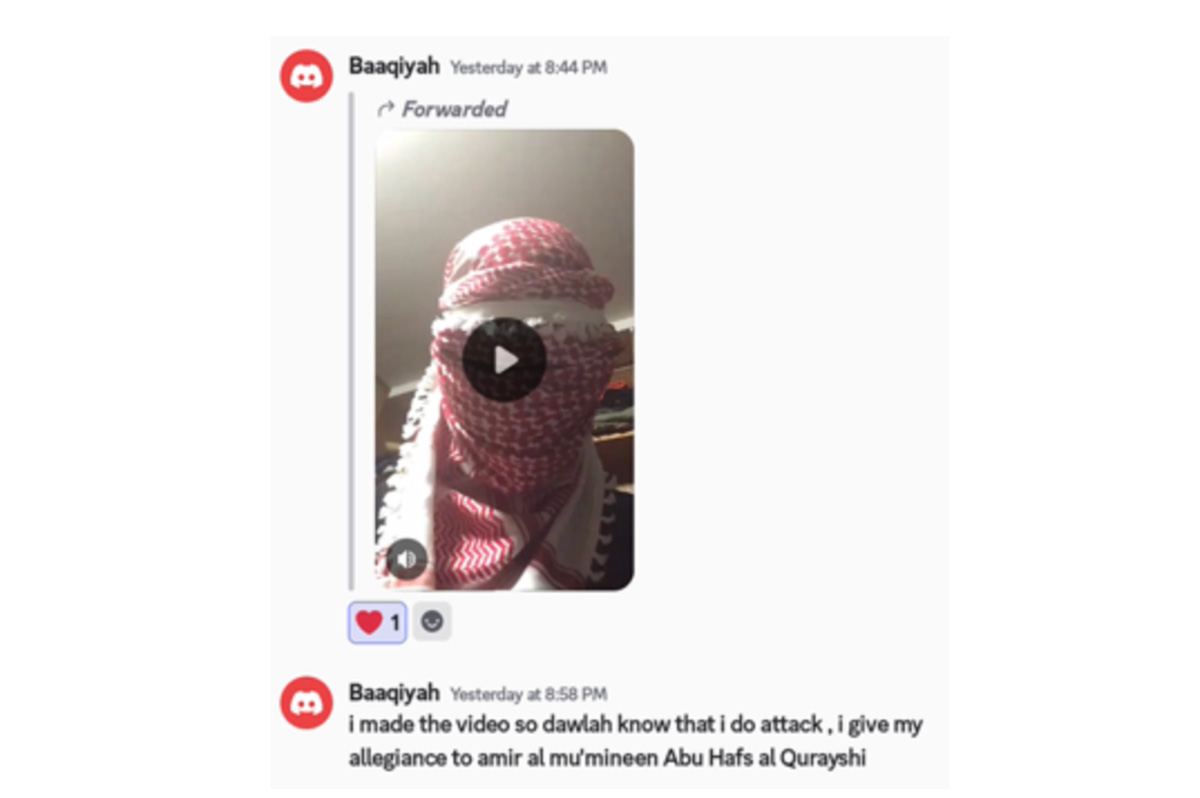
The U.S. Department of Justice charged Sheikhdoon Abdullahi Mohamud, 18, of Richfield, Minn., on Oct. 7 with one count of knowingly receiving a firearm and ammunition in order to commit a federal crime of terrorism. Mohamud allegedly planned to carry out a mass-casualty attack in support of ISIS, inspired in part by the Pulse nightclub massacre that took place on June 12, 2016 when then-29-year-old Omar Mateen murdered 49 people and wounded 58 – one of the deadliest mass shootings in U.S. history, and the deadliest targeting the LGBTQ+ community.
According to a DOJ statement release, Mohamud was arrested on Oct. 6 by the FBI, which had arranged to sell him an AK-47 assault rifle, magazines, and ammunition through an undercover FBI employee. Mohamud was arrested shortly after paying $600 in cash and taking possession of those items; he reaffirmed his intention to shoot people at the Mall of America during the transaction.
“Mohamud allegedly sought to carry out a mass-casualty shooting at the Mall of America, expressing a desire to emulate some of the most horrific ISIS-inspired attacks in the United States, including the atrocities at Pulse Nightclub and 2025 New Year’s Day attack in New Orleans,” said Assistant Attorney General for National Security John A. Eisenberg in the statement by the DOJ. “The National Security Division will continue to work closely with the FBI and Joint Terrorism Task Force to track down and prosecute ISIS-inspired terrorists in the United States.”
According to the complaint, beginning on or about December 2024, Mohamud had exchanged hundreds of messages through multiple social media and messaging apps with a confidential source, and expressed a desire to travel to Somalia to join a designated foreign terrorist organization to fight on their behalf.
The defendant stated many times that if he was unable to travel overseas because of a lack of funds, he planned to carry out a mass-casualty event in Minnesota in support of ISIS.
According to the DOJ, “In July 2026, Mohamud sent messages discussing his intent to carry out a mass-casualty shooting attack at the Mall of America because he claimed it was owned by Jews. He wrote that [he] wanted to kill 30 to 60 people so no one would go there.”
“During the course of his communications, Mohamud stated that he wanted to commit an attack similar to those of the Pulse Nightclub mass-shooting in Orlando, the Bondi Beach mass-shooting in Australia, and the New Year’s Day vehicle-ramming attack in New Orleans.”
This case is being prosecuted by Trial Attorney Ryan White of the National Security Division’s Counterterrorism Section and Assistant U.S. Attorney Benjamin Bejar for the District of Minnesota.
California
Calif. GOP gubernatorial candidate ad ‘disgusting attempt to exploit lesbian intimacy’
Activists, anti-LGBTQ religious leaders criticized Steve Hilton spot

Two women sit on a bed, a Pride flag hanging behind them. One is nervous; the other tells her to be calm and that she’ll do “all the work.” The music swells. The two hold hands and — fill out a ballot voting for Steve Hilton?
This is the new advertisement from the Hilton gubernatorial campaign that is drawing rebuke from both sides of the aisle, but for very different reasons.
Jorge Reyes Salinas, the communications director at Equality California, said the ad was an insult to the queer community.
“This ad is a disgusting attempt to exploit lesbian intimacy for political attention,” he said. The advertisement plays on media tropes that Salinas says “reduce lesbian and bisexual women … to sexual entertainment,” rather than showing them as well-rounded characters. “Any group of the LGBTQ+ community deserves the same dignity and respect as everyone else,” he said.
The ad is truly hyper-sexualized. It ends with one woman telling the other, “Now lick it.” The two pause and stare before she reveals an envelope to send the ballot, and large text pops up saying, “Just try it!”
Salinas characterized the ad as a desperate attempt to get attention from a candidate who is trailing far behind in the polls in heavily Democratic California. The Democratic candidate Xavier Becerra, who is endorsed by Equality California, holds a 25-point lead over Hilton according to recent polling by the UC Berkeley Institute of Governmental Studies.
Conservatives have also criticized the ad.
Influential evangelical Pastor Jack Hibbs thought the ad was distasteful and said, “lesbianism among college girls and some high school girls that right now is an actual pandemic of social ill.” Republican attorney general candidate Michael Gates said it undermines “the sanctity of the relationship between parents and their children.” This criticism is rather confusing because although the ad features two relatively young women, they both appear to be adults, not minors.
“The comments from Pastor Jack Hibbs should be criticized because there is nothing wrong with two women being attracted to each other,” Salinas said. “We’re calling out the ad’s stereotypes, while also rejecting the homophobia in the response to it … by other Republicans.”
The backlash from Hilton’s own party and supporters shows that an advertisement full of queer innuendo was ill-considered, considering the national GOP’s attacks on LGBTQ people in recent years. Hilton himself has been campaigning against transgender girls and women competing in school sports and using locker rooms that correspond with their gender identity. This context might be why Hilton’s political base responded to the ad just as poorly as the liberal voters he was attempting to court.
Hilton says the ad is part of a new series rolling out before Election Day, showing stereotypical California liberal archetypes voting for Hilton. He claims these ads are authentically filmed with real actors, as opposed to being A.I. generated, like many of his previous ads. One other advertisement has been released so far by the campaign showing a man at a spiritual retreat also being swayed to vote for Hilton, although it is notably absent of sexual innuendo.
Caleb Kaufman is a California Local News Fellow placed with the Los Angeles Blade. The California Local News Fellowship is a state-funded initiative to support and strengthen local news reporting. Learn more about it at fellowships.journalism.berkeley.edu/cafellows.
2026 Midterm Elections
Trump uses anti-trans slur against Democratic Senate candidate
President mocked Annie Andrews

President Donald Trump used an anti-trans slur against Democratic South Carolina Senate candidate Annie Andrews on Monday as he sought to rally support for Republicans in the state’s Senate race.
In a post on Truth Social, Trump attacked Andrews three times, referring to her as “trannie” while promoting U.S. Sen. Darline Graham (R-S.C.)’s campaign.
Andrews is running against Graham for a Senate seat in the solidly Republican state.
Earlier this year, Graham was specially appointed to the seat following the death of her brother, Lindsey Graham, who represented South Carolina in the Senate from 2003 to 2026.
Andrews, the Democratic nominee from the state, is a pediatrician that lives in Charleston with her three children. She told NBC News that she will “work with anyone to put South Carolina first.”
“As a mom and a pediatrician, I’m in this race to fight for my patients, my three kids, and South Carolina,” Andrews said, adding that “lowering costs and making life better for families across our state is going to take all of us working together.”
Andrews used the attention from the president’s attack to emphasize what she described as a focus on policy issues rather than the culture wars that have dominated much of the political debate.
“If you care more about your bills than the politics in Washington, this campaign is for you,” she added.
Trump’s remarks have drawn criticism from leaders on both sides of the aisle.
Senate Minority Leader Chuck Schumer (D-N.Y.) condemned Trump’s words Monday night on social media, calling his attacks on Andrews “despicable.”
“Annie Andrews is a mom and pediatrician who’s always put her community first — and she’s exactly who South Carolina needs representing them in the Senate,” Schumer said on X.
Former South Carolina Gov. David Beasley, a Republican, also criticized the president’s attack on Andrews, urging voters to “reject politics based on division and hate.”
“This is abhorrent. Elections don’t have to be about cruelty and lies. South Carolina deserves better,” Beasley wrote Monday night on X.
South Carolina has not elected a Democratic senator in nearly three decades.
Andrews’s campaign website does not mention her positions on LGBTQ issues.
The Washington Blade reached out to Andrews’s campaign for comment on Trump’s attack and her positions on transgender rights but did not hear back by time of publication.

Bet Mishpachah participates in D.C. Oct. 7 commemoration ceremony

Man charged in Mall of America shooting plot inspired by Pulse massacre: report

Bar Betsie, inviting and intimate, marks one-year anniversary

Trump, Netanyahu, and Putin are all war criminals

Center Arts Gallery celebrates 10 years with reception, auction

Eliot Glazer’s new book an engaging collection of essays

Equality Chamber hosts Pride in Business Expo and Profits & Pours

‘Merrily’ is for Sondheim super fans, the uninitiated, and anyone in between

The financial realities facing LGBTQ+ first-time buyers

Lula, Flávio Bolsonaro to face off in second round of Brazilian presidential election
-

 Books5 days ago
Eliot Glazer’s new book an engaging collection of essays
-
Out & About5 days ago
Equality Chamber hosts Pride in Business Expo and Profits & Pours
-
Theater5 days ago
‘Merrily’ is for Sondheim super fans, the uninitiated, and anyone in between
-
Real Estate5 days ago
The financial realities facing LGBTQ+ first-time buyers