Living
Techie wonders
Here are several red hot stocking stuffers that’ll have you surfing, texting and gaming in new, fun ways

Editor’s note: part two (of five) of our gift guide. Next week — gifts for kids. Last week’s on books, movies and CDs is here.
As Black Friday and Cyber Monday come up again, a lot of retailers will be offering big sales. Here are some electronics to look for that will likely be offered at some great prices.
eReaders
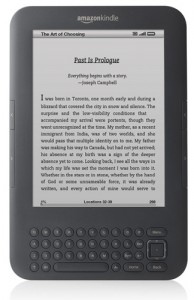
Kindle
Amazon’s Kindle with WiFi now comes in a different color, graphite. The new reader is smaller, but has the same 6-inch screen. It’s 17 percent lighter and has double the storage. Out-of-copyright books are free as well as samples and all other books are $9.99 or less. The Kindle is $139 and can be bought at amazon.com or Staples.

NOOK
Barnes & Noble’s NOOK now comes with a 7-inch color touchscreen. The NOOKcolor includes a new feature, NOOKkids, which brings picture books to life for children and will even read the books out loud. Books are $9.99 or less. NOOKcolor with wifi is $249 and can be purchased from b&n.com or other stores including Best Buy.
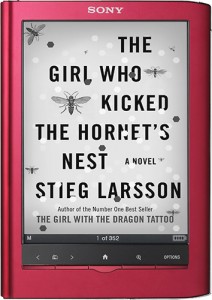
Sony Reader
Sony’s Reader Touch Edition features a 6-inch clear touch screen that “reads like a real book.” Coming in two colors, red or black, the Reader can hold up to 50,000 books, allows for freehand highlight and note taking, and can play MP3 audio files. The Reader costs $229.99 and can be purchased as sony.com or many other stores including Wal-Mart.
Video Games
 Playstation 3 has come out with new hardware giving games a more interactive feel with Move. Amazon.com is offering a bundle with a 320 GB console and a Move starter pack which includes the EyeCam, Move controller and Sports Champions game for $399.
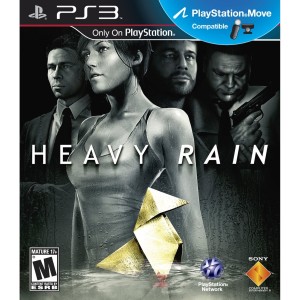
Heavy Rain
PS3 game, “Heavy Rain” ($59.99), is an action-packed adventure with four playable characters with savable chapters. It has become Move compatible through a Playstation Network software update.
 In celebration of the 25th anniversary of the “Super Mario Bros.” game, Ninetendo is releasing a special limited edition red Wii bundle this holiday season. The bundle includes red versions of the console, Wii remote, nunchuck and a copy of New Super Mario Bros. Wii and Wii Sports ($199.99).

Donkey Kong Country Returns
“Donkey Kong Country Returns” ($49.99) is on Wii and is the first time in the franchise history that two people can play together at the same time, one as Donkey Kong and one as Diddy Kong.
 Xbox 360 also has new hardware to make its games more interactive with Kinect, which makes the player the controller. Microsoft is offering a bundle with a 250 GB console, the Kinect censor, “Kinect Adventures” game and a choice of a second game, including “Kinect Sports,” all for $449.98.
 “Dance Central” is a new game with a soundtrack that spans today’s current pop, hip-hop and R&B artists with dance routines that incorporate authentic choreography without the use of any controller.
Apple
 Apple has redesigned its iPod Nano. Now just big enough to fit a small touchscreen, the Nano no longer has the click wheel like the Classic and you can shuffle through songs with a quick shake. You can even listen to FM radio. Also has a built-in clip to listen hands free. An 8GB nano is $149 and a 16GB is $179.
 iPod Touch has received an update as well. It now features FaceTime, HD video recording and a dual camera for taking pictures on either side of the iPod. An 8GB Touch is $229, a 32GB is $299 and a 64GB is $399.
 Apple iPad, starting from $499, has a 9.7-inch Multi-Touch display and features many of the same apps as an iPhone, with some apps only compatible on the iPad. Makes for a great photo album or screen to watch movies. The iPad comes in 16GB, 32GB and 64GB models.
 Apple TV ($99) hooks up to your television at home giving you instant access to HD movies on iTunes as well as Netflix, YouTube and more. Have an iPod, iPhone or iPad? Download the remote app and control Apple TV with one touch.
10 Interesting Apps on iTunes
Robot Unicorn Attack by Adult Swim features a robot unicorn that runs and jumps through the sky collecting fairies and rainbow-attacking giant stars all to the tune of “Always” by Erasure ($1.99). A Heavy Metal edition featuring “Battlefield” by Blind Guardian can also be purchased.
Scene It? Happy Potter is the perfect app for any Harry Potter fan. Includes 30 distinct quiz sets with 16 puzzle types. This app features questions based on movie clips, images and more ($1.99). There is an HD version of this game for the iPad that costs $4.99.
Angry Birds has been on iTunes top paid apps for a long time now and is in the essentials group, Hall of Famers. Angry Birds has 195 levels that require logic, skill and brute force (99 cents).
Trivia Master! features more than 3,000 questions falling into one of eight categories, general knowledge, entertainment, arts and literature, sports, science and nature, geography, history and politics and food and drink ($1.99).
Tetris is now on iPhone with this app that features classic marathon mode and new magic mode with includes five new versions. You can even listen and control your music while playing ($2.99). There’s an iPad version for $7.99
Food Network: In the Kitchen features recipes from Food Network stars like Paula Deen, Bobby Flay and Guy Fieri. Not only do you get the recipes, the app lets you click and save ingredients to your phone for shopping trips and cool tools such as a unti converter, cooking timer and more ($1.99).
Lady Gaga Revenge 2, from the developers of Tap Tap Revenge, this game includes “Bad Romance,” “Alejandro” and eight other tracks never before put on a Tap Tap game plus four boss tracks ($4.99).
Grindr X(tra), compatible with iPhone, iPod touch and iPad, this is a premium version of Grindr with extras like push notification, swiping through profiles, no ad banner and 11 more guys in your area ($2.99).
Instapaper allows you to save web pages for offline reading. This paid edition allows for sharing via email, Tumblr or Twitter, download up to 500 articles and store unlimited on the website and rotation lock ($4.99).
Nike + GPS, compatible with iPhone and iPod touch, tracks indoor and outdoor workouts without a sensor. This app will record pace, distance and run route using the GPS and accelerometer technology ($1.99).
Kitchen Appliances
 Nostalgia Electrics has brought a little piece of the movie theater to home with its Hollywood Kettle Popcorn Maker ($99.99) which makes eight popped cups of popcorn and features a light-up marquee. Add your name or a fun message with 150 vinyl letters included. Available at bedbathandbeyond.com.
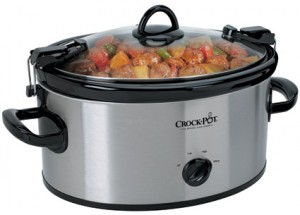 Crock-Pot’s Cook and Carry Slow Cooker is a six quart cooler with removable oval stoneware, lid-mounted locking system, convenient warm setting and has a dishwasher safe stoneware and lid. Don’t forget to down load the free Recipe Finder app from iTunes.
Gadgets and Accessories
 Heartbeats are high performance in-ear headphones designed by Lady Gaga. These give pitch-perfect highs and club caliber bass. Available in Black Chrome, Bright Chrome and Rose Red with or without ControlTalk, a built-in mic that enables hands-free calls and chat ($119.95 or $149.95).
 C.H.I.M.P Rearview Monitor Mirror, available at thinkgeek.com, is a mirror that fits easily on either corner of a monitor with velcro to see who is coming up from behind ($7.99).
 Mimobot offers a variety of designer USB Flash Drives including characters from Hello Kitty, Star Wars, Halo and Happy Tree Friends as well as original characters like Fairybit (seen here). Prices range from $24.95 for a 2GB drive to $79.95 for 16GB. Visit mimoco.com to purchase.
 KIWI U-Powered ($59.99) can be charged by USP port, car charger, solar energy and a wall charger then will hold its power for at least six months. Compatible with phones, iPods, iPad, GPS and more, the charger comes with a pack of 11 different tips to charge all your electronic gadgets. Find at kiwichoice.com.
 The Harmony One Advanced Universal Remote ($249.99) from Logitech features a backlit, full-color touch screen, can control up to 15 devices and recharges with included base, getting rid of the need for batteries. Available at logitech.com.
 Thinkgeek.com’s Retro Phone Handset ($29.99) connects to most cell phones via a 2.5mm jack, but not some newer Blackberry models, RAZR or Nokia phones and no batteries required. You can also get the Bluetooth Retro Handset which works with Bluetooth V1.0, 1.1 and 1.2 with a USB charged battery ($29.99).



Michael,
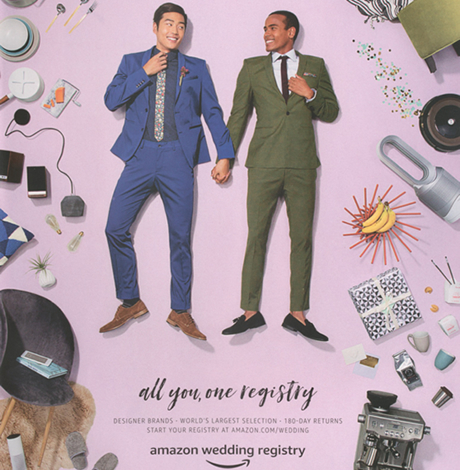
I’m 34, and after being on the dating scene for about 12 years, I’m coming to the conclusion that I don’t want to be in a relationship.
I don’t love hanging out with the same person over and over again. I don’t feel all gooey when I’ve been with someone for a while. I run out of things to say, and also, it just gets boring.
I like my space. I don’t like having to share the bathroom or have someone next to me all night, especially when they want to go to sleep holding me. I know that sounds like heaven to a lot of people but it just feels intrusive to me.
It’s a pain to have to compromise what I want to do. When I want to go someplace on vacation, or try a restaurant, or get up early to go to the gym, or sleep in, I don’t want to have to run that by someone else and get their OK. Life’s short. I want to do what I want to do.
I feel like we are constantly bombarded with the message to date and find a mate, but I don’t really see the point. I don’t think I’m an introvert—I have a lot of friends—but I also like to spend time by myself and not be accountable to anyone.
When I think about marriage, it seems like a very old-fashioned concept, developed for straight people who want to have children. Historically you needed one person to work and another one to stay home and raise the kids. And you needed to stay together to give your kids two parents and a stable home. I get that.
But if I’m not having kids, what’s the point? I don’t need a husband to have sex. I can and do hook up all the time. It’s so easy to find someone online. And I get to have a lot more variety when I’m single than when I’m dating. Even though my relationships are always open, when I am dating someone, I always hook up a lot less, because I have to worry about the boyfriend’s feelings being hurt if I hook up “too much.”
I know I sound unromantic and maybe selfish but this is how I see it.
My friends are all about having a boyfriend. They think I’m being ridiculous. Can I get another opinion?
Michael replies:
You make great points. Relationships do require us to give up some of our independence. They can feel stifling at times. And when the excitement of a new partner fades, things will at times feel “boring” in all sorts of ways, including sex. You can choose to avoid all of this by remaining single.
But relationships also give us tremendous overlapping opportunities to grow, including:
Being pushed to develop a clear sense of self: When we must constantly decide what we are willing to do or not do as part of a couple; and when our partner inevitably and frequently has interests, values, and priorities that conflict with ours, then we are challenged, over and over, to decide what is most important to us and how we want to live our lives.
Frequent opportunities to build resilience: All those old issues from our past that get us upset or riled up? We have to work through them so that we can stay (pretty) calm rather than losing our minds when our buttons are pressed.
Improving our ability to have hard conversations – and without rancor: Unless we’re able to disagree, speak up, or confront when it’s important to do so, we are going to twist ourselves into a pretzel striving to accommodate the other person. And being able to engage in tough talks in a loving way is necessary if we want to have a loving relationship.
Becoming a more generous person: You wrote that you like to have things your way. But part of life, whether or not we are partnered, involves being thoughtful, considerate, and willing to put someone else first at times. Great relationships require us to do all of these things regularly—and many of us find that contributing to the happiness of someone we care about can increase our own happiness.
Besides these ongoing challenges, relationships give us the experience of someone knowing us deeply, and knowing someone deeply. There can be great comfort in going through life with someone with whom we have this intimate connection, along with ongoing shared experiences of trust, support, comfort, and love. Long-term companionship is also an adventure: Can we keep the relationship vibrant and fun as we both keep changing over time?
If you choose to remain single: Many people play their friendships on the easy setting, keeping things pleasant, on-the-surface, and non-confrontational; and cutting people off when things aren’t going well. Hanging in there to deal with the rough stuff can lead to deeper, longer friendships, and plenty of personal growth.
I do have a question for you: I am curious what sort of relationships you saw growing up, and what your own relationship experiences have been.
Intimate relationships aren’t for everyone, and you get to decide what is right for you. But if your negative view of relationships is influenced by having witnessed or experienced intrusive or just plain awful relationships, maybe you want to do some work (therapy, for example) to heal from this stuff, rather than letting your past limit your future. A healthy relationship means being part of a couple while also remaining a vibrant individual, not being stifled, bored, and losing your independence.
(Michael Radkowsky, Psy.D. is a licensed psychologist who works with couples and individuals in D.C., Maryland, Virginia, and New York. He can be found online at michaelradkowsky.com. All identifying information has been changed for reasons of confidentiality. Have a question? Send it to [email protected].)
Autos
Wagons ho! High-class, head-turning haulers
Automakers still offer a few good traditional station wagons
As a teenager, one of the first cars I drove — and fell in love with — was our family’s hulking full-size wagon. It stretched over 19 feet in length and weighed a whopping 5,300 pounds. That’s three feet longer and 1,000 heavier than, say, a Ford Explorer today.
But this Leviathan felt safe and practical, especially when tootling around town with my crew or traveling solo cross-country. Of course, this hauler was also an eco-disaster.
Luckily, that’s not the case today. And even though the number of traditional station wagons keeps shrinking, automakers are still offering a few gems.
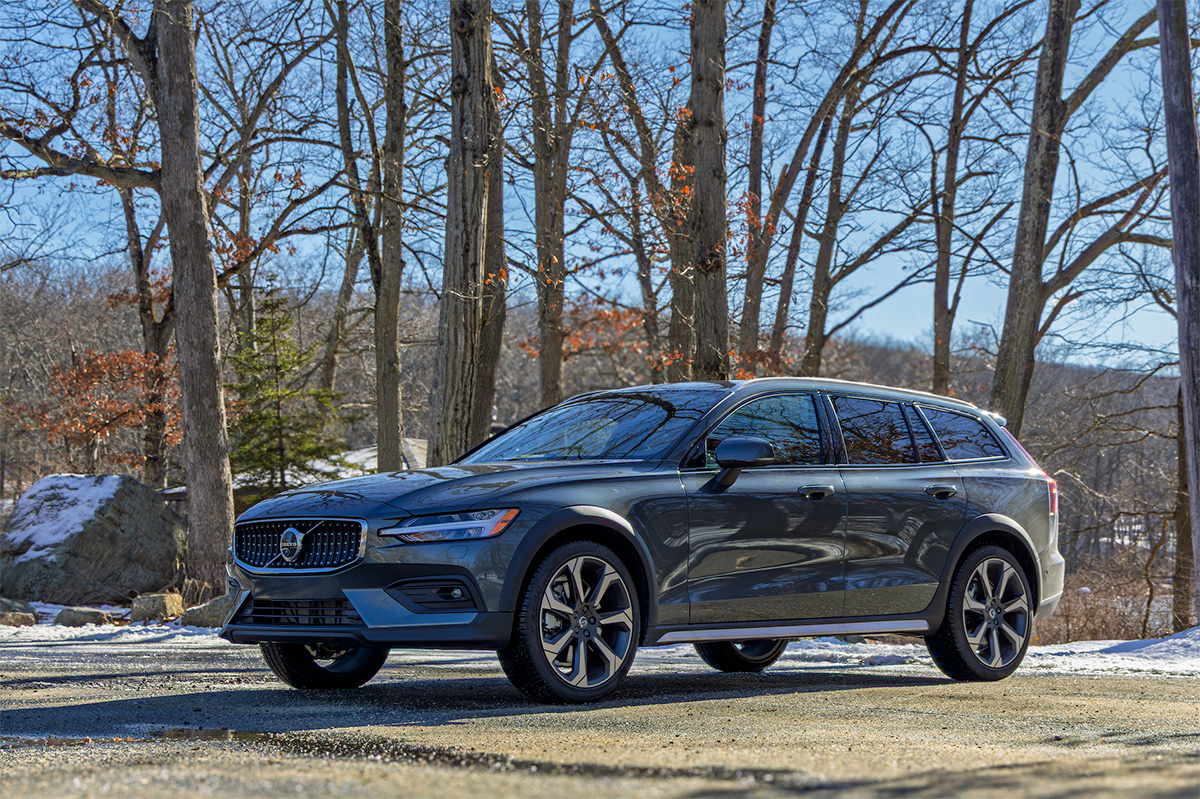
VOLVO V60 CROSS COUNTRY
$54,000
MPG: 23 city/31 highway
0 to 60 mph: 6.6 seconds
Cargo space: 51 cu. ft. (rear seats folded)
PROS: Elegant design. Composed handling. Top safety features.
CONS: So-so power. Modest rear legroom. Only two trim levels.
The 2026 Volvo V60 Cross Country doesn’t cry for attention — and that’s the point. This is the automotive equivalent of Kristen Stewart, a celebrity who’s confident in her own skin and sees no need to post about it.
Under the hood, there’s a four-cylinder turbo engine paired with a mild-hybrid system, producing 247 horsepower. You won’t outrun other drivers, but there is a sense of calm authority when accelerating. The standard all-wheel drive and 8.1 inches of ground clearance mean this wagon is ready for dirt roads, bad weather or a spontaneous weekend jaunt.
And inside? Scandinavian minimalism at its finest. Clean lines. Gorgeous materials. Google-based infotainment that mostly works — though occasionally the system could be a bit faster, at least for my taste. The ride is smooth, composed and quiet, even if acceleration feels more “measured sip” than “espresso shot.”
But here’s the twist: After more than a decade, this is the final Volvo wagon in the U.S. Its farewell tour ends in 2026. That alone gives it collector-car status.
MERCEDES-AMG E53 WAGON

$95,000
MPG: 21 city/25 highway
0 to 60 mph: 3.4 seconds
Cargo space: 64.6 cu. ft. (rear seats folded)
PROS: Supercar vibe. Hybrid versatility. Stunning interior.
CONS: Some fussy controls. Can feel heavy when cornering.
If the Volvo V60 Cross Country is subtle, the 2026 Mercedes-AMG E53 Wagon is a screamer. It’s like being at a Lil Nas X concert: flashy, high energy, and full of shock and awe.
This performance wagon — a plug-in hybrid, no less — pushes well over 500 horsepower (and in some configurations over 600 horsepower), launching from 0 to 60 mph as fast as a $300,000 Aston Martin supercar.
Yes, deep down, this is still a wagon. But you also can do a Costco run in something that could embarrass sports cars at a stoplight. That duality is delicious.
Inside, Mercedes leans all the way in. The high-tech Superscreen setup stretches across the dash. Ambient lighting glows like a curated art installation. The 4D surround-sound audio literally pulses through the seats. It’s immersive. Borderline excessive. And entirely the point.
Rear-axle steering helps mask the size of this car, but there’s no hiding the weight — it’s a big, powerful machine. Still, this hauler handles far better than physics suggests it should.
PORSCHE TAYCAN CROSS TURISMO

$121,000
Range: 265 miles
0 to 60 mph: 2.8 seconds
Cargo space: 41 cu. ft. (rear seats folded)
PROS: Lightning fast. Space-age design. EV smoothness.
CONS: Very pricey. Options add up quickly. Limited rear visibility.
The Porsche Taycan Cross Turismo completely rewrites the wagon formula. Fully electric. Shockingly fast. Designed like it belongs in the Louvre.
Performance is instant. Depending on trim level, you’re looking at 0-to-60 mph in less than 3 seconds. No exuberant engine noise — just that smooth, purring EV surge.
Handling? Pure Porsche. Low center of gravity thanks to the battery-pack placement. Precision that makes winding roads feel like choreography. And then — hello — there’s also a Gravel Mode for light off-road use.
Inside, the style is restrained but high-tech. Digital displays dominate, including a 10.3-inch passenger side touchscreen. Yet the layout feels intentional rather than overwhelming. Build quality is exceptional. Options, including leather-free materials and an active-leveling system for hard cornering, are endless — and expensive.
Range varies by model. But as with any EV, your lifestyle (and charging access) matters.
Overall, this is a wagon that looks and behaves like one helluva class act.
Advice
My family voted for Trump and I cut off contact
Now my father is ill and I don’t know what to do

Dear Michael,
I stopped talking to my family last year because they all voted for Trump. It’s not like they didn’t know whom they were voting for — they’d already had four years of seeing him in action.
I decided that I couldn’t remain in contact with people whom I felt wanted to take away my rights as a gay man. That is what they essentially did by voting for Trump.
They had come to my wedding in 2012, they had welcomed my husband and me into their homes for the holidays for our entire relationship, so I couldn’t believe how little they actually cared about me and my community. I was profoundly hurt.
They’ve reached out but I have been too angry at their hypocrisy to engage in more than a perfunctory way. I miss them, sure, but as I’ve watched our community be attacked, I just get so angry that I don’t want to talk. I certainly don’t want to hear them justify bigotry and hatred.
Now one of my siblings has reached out to let me know that my father’s health is rapidly declining. I’m wondering if I should rethink my decision and reach out to him, maybe even visit, before he dies.
But then I think of ICE’s attack on our country and the removal of the Pride flag from Stonewall and I don’t want to talk to people who support what is happening to vulnerable, marginalized people and the LGBTQ community.
My father was a good father to me. Even when I first came out to him, he was loving and supportive. I can’t square his behavior personally toward me with his support of this regime. The hypocrisy makes me so angry. How could he purport to love me and then vote against my freedoms?
I would love some suggestions about how to square my two opposing viewpoints.
Michael replies:
Many years ago, a great mentor taught me that the one thing you can count on in a relationship is learning to tolerate disappointment: Both being a disappointment, and being disappointed in the other person. This is true for love relationships and it’s also true for other significant relationships. All of us are different in some major ways and so we are bound at times to disappoint our loved ones in major ways, and to be disappointed by them in major ways.
That is why I’m not a fan of purity tests. To expect that someone must think like you (much less vote like you) in order for you to have a relationship with them is unrealistic, impractical, and sometimes damaging.
Of course, a person may hold some beliefs that give you reason not to want to have any connection to them. But is that the case here?
From your description, your family has always been loving and supportive of you as a gay man. That is no small thing. They seem to care about you enough to have continued to reach out, even though you have stopped talking to them.
Perhaps they had some other reasons for voting as they did, other than to roll back LGBTQ rights and to attack immigrants.
Instead of wondering how they could be so hypocritical, how about talking with them and striving to understand their choices? I don’t know what they will say, and you may hear different answers from your various family members. But at least you will get some clarity, rather than presuming that they made their voting choices from a place of malice. Then you will be in a better position to decide if you want a relationship going forward.
Another point to consider: Very few things are set in stone. Even if your family made their voting choices based on holding positions that you neither like nor respect, they may be open to shifting their views over time. One way to perhaps influence their thinking is by engaging with them, sharing your thoughts, and asking them to consider the possible consequences of their actions. If you choose to re-engage with them, two points to consider:
First, don’t expect that you will change their minds. You can advocate for what you want, but you have to let go of the results.
Second, they are more likely to consider your points if you do not approach them from a judgmental, self-righteous stance.
Many years ago, when I was newly a vegetarian, I was eager to challenge and “educate” friends who weren’t following my dietary ideas. Guess what? It didn’t work. Then I got some great advice: A great way to influence others to consider eating fewer animals was to serve them delicious vegetarian food.
The same point is true here. We can’t beat people over the head to agree with us. But if we approach them with some kindness, rather than with the certainty that we hold the moral high ground, we may help them see a bigger picture.
And sometimes, we too may see a bigger picture.
Michael Radkowsky, Psy.D. is a licensed psychologist who works with couples and individuals in D.C., Maryland, Virginia, and New York. He can be found online at michaelradkowsky.com. All identifying information has been changed for reasons of confidentiality. Have a question? Send it to [email protected].

Key West Pride’s state funding pulled

DOE investigates Smith College’s trans-inclusive policy

A reign defined by commitment and human impact

Ukrainian MPs advance new Civil Code without protections for same-sex couples

Gay ICE detainee freed after 150 days in detention

Republicans attach five anti-LGBTQ riders to State Department funding bill

Tennessee’s trans data bill a frightening omen

New Zealand blood donation rules shift

The university that refuses to let go